Reviewed · JDM & CAR CULTURE
Private Drifting Lesson w/ OG Pro Instructor Tokyo Drift Japan
Tokyo’s Matenro Drift Racing puts you in the driver’s seat of a real JDM drift car, not just in the passenger seat for a flashy ride. You’ll work one-on-one with an OG drift instructor, practice donuts or figure eights, and finish with a graduation challenge course.
In This Article
- Key points to know before booking
- Taking the wheel instead of watching the drift
- What your six hours are likely to include
- Choosing between a 350Z, MX-5, RX-8, or 180SX
- The police car finish adds a playful Tokyo touch
- Why private instruction changes the experience
- The value of $789.35 per person
- Who will get the most from this lesson
- Practical details that affect your day
- How the graduation challenge works
- My take: should you book it?
- FAQ
- How long does the drifting lesson last?
- What cars might I drive?
- Is the activity private?
- Can beginners join?
- What can intermediate drivers practice?
- Is pickup included?
- Are helmets and gloves provided?
- Is food included?
- What happens if the weather is poor?
- What is the cancellation policy?
I like the private format, which gives you room to ask questions and repeat a skill until it begins to make sense. I also like the free pickup and drop-off within Tokyo, plus the chance to drive cars such as a Nissan 350Z or Mazda MX-5 rather than simply admire them.
The main consideration is the price: $789.35 per person is a serious spend for a six-hour activity, and the driving depends on good weather. Car and instructor assignments also vary by day, so you should book for the teaching and access, not one guaranteed model.
Key points to know before booking

- Drive a JDM drift car: Possible cars include a Nissan 350Z, Mazda MX-5 NB, Mazda RX-8, or Nissan 180SX.
- Private instruction: Only your group takes part, so you can ask questions freely and work at your own pace.
- Beginner-friendly progression: Start with a donut, then move to a figure eight if you master the basics.
- More for intermediate drivers: Practice e-brake techniques and higher-gear changes with the instructor’s guidance.
- A proper finish: Everyone gets a graduation challenge course to test the skills learned during the session.
- Tokyo pickup included: Free pickup and drop-off are offered from your desired location in Tokyo.
Taking the wheel instead of watching the drift

Many Tokyo car experiences are built around watching modified cars, riding through the city, or meeting local enthusiasts. This one asks you to do the hard part yourself. You sit behind the wheel of a Japanese drift car and learn how to control a slide under professional supervision.
That difference matters. Drifting looks simple from the roadside, but the car’s movement comes from timing, steering, throttle control, and sometimes the handbrake. A private lesson gives you a better chance to understand those pieces instead of relying on a quick thrill.
The school is run by Matenro Drift Racing, an OG drift team from Tokyo. The tone is meant to be social as well as instructional. Hiro, who helps with the experience, is described as especially friendly and quick to put people at ease. That is useful here, since a nervous first attempt can make even a basic donut feel far more difficult than expected.
You do not need to arrive as an expert. The program accepts beginners and intermediate drivers, with the lesson adjusted to your level. For a first-timer, the target is a proper donut. Once you can hold that movement, the instructor may take you toward a figure eight. For a driver with more experience, the lesson can include e-brake work and higher-gear changes.
A few more Tokyo tours and experiences worth a look

What your six hours are likely to include
The full experience lasts about six hours, though the stated driving practice is about three hours. The remaining time is likely used for transportation, preparation, instruction, changing drivers if needed, and the final challenge. Because the experience is private, the exact rhythm can depend on your group.
Your day begins with pickup from your desired location in Tokyo. That is a useful benefit in a city where getting across town can take time and where a circuit may not be close to your hotel. You also receive drop-off afterward, so you do not have to arrange a separate return journey.
The activity takes place on a circuit, where the instructors can focus on car control rather than city traffic. You receive a safety helmet and gloves. No food is provided, so plan to eat before pickup or bring whatever you need within the rules of the activity.
The core lesson is hands-on. The instructor works with you on the proper technique for initiating and maintaining a drift. Beginners are taught to perform a donut, a controlled circular slide around a fixed point. If that becomes manageable, the next step is a figure eight, which demands smoother transitions as you move from one direction to the other.
The program does not promise that every driver will master both skills. That is an important point. Your result will depend on your prior driving experience, confidence, and how quickly you respond to instruction. The value is in having time to practice, rather than being pushed through a single rushed attempt.
Choosing between a 350Z, MX-5, RX-8, or 180SX
The possible cars are a Nissan 350Z, Mazda MX-5 NB, Mazda RX-8, or Nissan 180SX. These are all recognizable choices for anyone who follows Japanese performance cars, but you should not book expecting a particular one.
The vehicle and instructor vary according to the day. That uncertainty is a drawback for anyone who has built the entire purchase around driving a 350Z or a 180SX. It is also part of the experience’s honest character. You are joining a working drift school with available cars, not reserving a specific showroom model.
For many people, the car’s exact badge will matter less once the lesson starts. The useful question is how much driving time you receive and how clearly the instructor explains the technique. The private setup gives you a better chance to ask why the car is behaving a certain way and what you should change on the next attempt.
If you are an intermediate driver, tell the instructor what you already know. The lesson can move beyond the beginner donut toward e-brake use and higher-gear changes. If you are new to drifting, do not feel embarrassed about starting with the basics. The program is designed to build from a simple controlled movement.
The police car finish adds a playful Tokyo touch

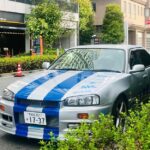
One of the more unusual parts of the session is the replica undercover police vehicle. At the end, the team can create the feel of an actual police chase, with the police car involved in a drift pursuit.
This is not presented as a separate driving qualification or a real police activity. It is a themed finale that adds some drama after the technical practice. I see it as a fun bonus, especially for visitors who know Tokyo through car culture, films, and the famous street-racing image linked with Japanese performance cars.
The strongest part of the day should still be your own driving. The police pursuit works best as a capstone after you have tried the donut, figure eight, or more advanced exercises. It gives the session a memorable story, but it should not be the main reason you pay the full price.
Why private instruction changes the experience

A private booking means only your group participates. That affects more than comfort. You can ask as many questions as you like, and the instructor can focus on your mistakes rather than giving a general speech to a large class.
If you are learning something physical, repetition matters. You may need several attempts before the steering and throttle inputs begin to feel connected. A private session gives your group a better setting for that process, though the provided details do not guarantee that every participant gets the same amount of wheel time.
If several people book together, ask how driving time will be shared. The experience is priced per person, and group discounts may be available, but the practical question is how many people will be driving and how long each person will have at the controls. Since the activity is private, the group size is not mixed with unrelated participants.
I would also tell the instructor your comfort level at the start. A beginner needs clear, calm steps. An intermediate driver may prefer fewer basic explanations and more time working on transitions, e-brake technique, and gear changes. The private format should make that conversation easy.
Other private tours in Tokyo



The value of $789.35 per person

At $789.35 per person, this is one of Tokyo’s higher-priced special-interest activities. You are paying for more than a ride. The package includes private transportation, a private drift lesson, safety equipment, roughly three hours of practice, access to a JDM drift car, and guidance from an OG professional instructor.
That can be reasonable for someone who has always wanted to drive a drift car and sees the lesson as a major trip event. The included pickup and drop-off also remove transportation costs and planning time. Meeting local OG drift drivers adds a cultural element that a generic driving lesson may not offer.
Still, the price deserves a clear-eyed look. You do not receive food, and the exact car is not guaranteed. The full experience lasts about six hours, but only about three hours are identified as practice time. If your group includes several drivers, you should think carefully about how that driving time is divided.
I would book this for the experience itself, not because it is a cheap way to fill an afternoon. If you are comparing it with a passenger ride or car meet, this offers far more control and instruction. If you simply want a quick taste of car culture, the price may feel hard to justify.
Who will get the most from this lesson

This is a strong fit for a dedicated car enthusiast who wants genuine time behind the wheel. It also suits a curious beginner who wants to learn a new driving skill in a controlled setting with a professional nearby.
Intermediate drivers may find the advanced options more appealing. E-brake work and higher-gear changes provide a path beyond the first donut, though the available progression depends on your ability and the instructor assigned that day.
The experience also works well for a small private group. Friends can share the day without strangers joining the lesson, and the graduation challenge gives everyone a clear target. Group discounts may be offered, which can help soften the per-person cost.
I would hesitate to recommend it to someone who dislikes performance driving, wants a relaxed sightseeing day, or needs a guaranteed specific car. I would also be cautious if your Tokyo schedule has no flexibility, since the activity requires good weather and may need to move if conditions are poor.
Practical details that affect your day

The listed operating hours are Monday through Friday, from 8:00 AM to 4:00 PM. The stated operating period runs from October 2, 2024, through September 2, 2027. Check the available date and start time when booking, since the hours do not suggest a late-evening session.
Confirmation is provided at booking, and the meeting area is near public transportation. Pickup and drop-off are offered from your desired location in Tokyo, which is more convenient than meeting at a distant circuit on your own.
Wear something suitable for driving and be ready to listen carefully. A helmet and gloves are included, but the supplied details do not specify other clothing requirements. Since no food is available, eat beforehand and plan around the six-hour outing.
The activity requires good weather. If poor conditions cancel the session, you can choose another date or receive a full refund. For your own plans, that means leaving some flexibility around the booking is wise.
Free cancellation is available until 24 hours before the start time. A cancellation inside that window is not refunded, and late changes are not accepted. The cut-off follows Tokyo local time.
How the graduation challenge works
The graduation challenge course gives the lesson a finish line. Instead of practicing separate movements with no clear endpoint, you get a chance to show how much control you gained during the session.
The details of the course are not specified, so I would not assume it is a formal test with a certificate or score. Think of it as a practical final run. Beginners can try to apply their donut or figure eight skills, while intermediate drivers can see how well their more advanced work holds together.
This feature is valuable because it turns instruction into a small personal goal. You are not just burning through attempts. You are building toward a final challenge that can make the day feel complete.
My take: should you book it?
I would book this if driving a JDM drift car is high on your Tokyo wish list and you value private teaching over a lower-cost sightseeing activity. The combination of professional instruction, free transportation, local drift connections, and a playful police pursuit makes it more substantial than a quick passenger ride.
I would skip it if the $789.35 price would make the rest of your trip uncomfortable, or if you need a specific car, guaranteed sunshine, or a full six hours of continuous driving. Before paying, confirm how your group’s wheel time will be shared and understand that the car and instructor can change.
For the right buyer, this is a focused, hands-on car experience with a clear learning path: donut, figure eight, advanced technique, then the graduation course. That makes the cost easier to defend for a serious enthusiast, while the weather and vehicle variables keep it from being a perfect fit for everyone.
FAQ
How long does the drifting lesson last?
The experience lasts approximately six hours. About three hours are set aside for driving practice and skill development.
What cars might I drive?
You may drive a Nissan 350Z, Mazda MX-5 NB, Mazda RX-8, or Nissan 180SX. The car varies by day and is not guaranteed in advance.
Is the activity private?
Yes. Only your group participates in the private tour and activity.
Can beginners join?
Yes. The lesson is open to beginners as well as intermediate drivers. Beginners are taught to perform a donut and may progress to a figure eight.
What can intermediate drivers practice?
Intermediate drivers may work on e-brake techniques and higher-gear changes, depending on their experience and the instructor’s plan for the day.
Is pickup included?
Yes. Free pickup and drop-off are offered from your desired location in Tokyo.
Are helmets and gloves provided?
Yes. Safety helmets and gloves are included.
Is food included?
No. Food is not available as part of the experience.
What happens if the weather is poor?
The experience requires good weather. If it is canceled because of poor conditions, you can choose a different date or receive a full refund.
What is the cancellation policy?
You can cancel at least 24 hours before the start time for a full refund. Cancellations or changes made less than 24 hours before the start time are not accepted for a refund.
More Workshops & Classes in Tokyo





More Private Tours in Tokyo
More JDM & Car Culture in Tokyo



More tours in Tokyo we've reviewed



JDM & Car Culture, compared.
 ★ 4.8Tokyo: Fast & Furious Tokyo Drift 3 Experience (Kaila Yu SP)From $157
 ★ 4.8Tokyo: FAST&FURIOUS EXPERIENCE Daikoku Tokyo Car ClubFrom $157
 ★ 4.8Tokyo Drift: GT-R Car Club R35 Liberty Walk Daikoku meetingFrom $240
 ★ 4.8Tokyo: Daikoku JDM Fast Furious Drift Style Car ExperienceFrom $123
 ★ 4.8Tokyo Drift: GO Daikoku Car Meet R34 Skyline Car ClubFrom $246
 ★ 4.7Tokyo Drift: Daikoku PA Supreme Car Experience 大黒PAFrom $583 hours