Reviewed · SUMO EXPERIENCES
Tokyo: Not a show- a professional sumo practice with experts
Tokyo’s sumo world is usually kept behind closed doors, but this three-hour experience gives you a rare look inside a working stable. You sit close to the wrestlers at Takasago-beya, watch serious morning practice, then discuss what you saw with Shinya, a sumo specialist and former national newspaper journalist.
In This Article
- Key points to know before booking
- Why this is different from a sumo show
- Meeting in Ryogoku, Tokyo’s sumo neighborhood
- Inside Takasago-beya for two hours
- What Shinya adds after the practice
- Photos with the wrestlers
- The 15-minute Kokugikan visit
- Ryōgoku Edo NOREN and the final half hour
- Is the $103 price fair?
- Practical advice for a comfortable visit
- Who should book this sumo experience?
- FAQ
- How long does the sumo experience last?
- Where do I meet the guide?
- Is the sumo practice a staged show?
- Can I take a photo with a sumo wrestler?
- Do I sit on the floor?
- Are food and drinks included?
- Should you book it?
I like the genuine training session, not a staged bout, and the chance to ask detailed questions after seeing the action. I also like the small-group format, limited to 10 people, which makes the wrestler photo and conversation feel more personal.
The main drawback is simple: you sit on the floor for much of the stable visit. Cushions are provided, but this can be hard on your knees, hips, or back after 90 minutes. The practice itself is also quiet, so you may want more live explanation during the bouts.
Key points to know before booking

- Real stable, real practice: Watch professional wrestlers train at Takasago-beya rather than attend a staged sumo demonstration.
- Shinya adds rare context: His work as a sumo reporter and photographer gives the tour useful insight into wrestlers, tournaments, rituals, and customs.
- Very close viewing: You may sit only a few inches from the wrestlers, so the force of each bout is easy to appreciate.
- Small group size: With no more than 10 participants, the tour avoids the feel of a large bus excursion.
- Floor seating matters: A cushion is available, but this is not the best choice if you struggle to sit low for a long period.
- Ryogoku finish: The walk includes the Kokugikan area and Ryōgoku Edo NOREN, a handy place to browse after the tour.
Why this is different from a sumo show

Many Tokyo sumo experiences are built for easy entertainment. You see demonstrations, comic touches, or retired wrestlers performing for an audience. That can be fun, especially for families, but it is not the same as entering a working stable during its morning routine.
This tour takes you into Takasago-beya, where the wrestlers train as part of their daily life. The mood is quiet and formal. You are there to watch, not to cheer or ask the wrestlers to repeat a move for the camera. That distinction is important.
I like this format because it shows sumo as a demanding discipline rather than a theatrical curiosity. You see warmups, practice bouts, mentoring between older and younger wrestlers, and the physical effort behind the sport. The training can look repetitive, but that repetition is the point. Sumo depends on balance, timing, strength, and technique polished over many hours.
You should also adjust your expectations. This is not a match with a winner, a referee, or a tournament crowd. It is a practice session. The wrestlers may not explain what they are doing while they train, and the room is expected to remain quiet. One useful improvement would be more commentary during the practice itself, but the guide’s explanations before and afterward help fill in much of the picture.
A few more Tokyo tours and experiences worth a look
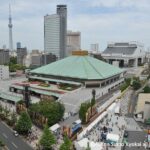
Meeting in Ryogoku, Tokyo’s sumo neighborhood
The meeting point is at the ground-level A2 exit of Ryogoku Station on the Toei Oedo Line. From the east exit of JR Ryogoku Station, allow about five minutes on foot. The operator sends the exact pre-tour details, so check your message carefully before setting out.
Ryogoku is the right setting for this experience. The neighborhood is closely tied to professional sumo, and the National Sumo Hall, Ryogoku Kokugikan, is nearby. Even before entering the stable, you are walking through an area where the sport is part of the local identity.
The group is small, with a maximum of 10 participants. That matters here. A large group would make the stable feel crowded and could make it harder to hear the guide or get a clear view. A smaller group also helps preserve the respectful atmosphere required inside the building.
Be punctual. One participant who arrived late was helped by the guide, but you should not count on that. A morning appointment inside a working stable is more rigid than an ordinary sightseeing stop.
Inside Takasago-beya for two hours

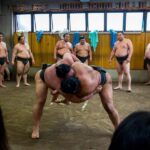
The stable visit takes about two hours, making it the heart of the experience. You enter a place where wrestlers live and train, then sit on a floor cushion to observe the session.
The viewing position can be remarkably close. Some seating may put you only a few inches from the wrestlers, allowing you to see the speed and impact of each exchange without the distance of a stadium. You will notice the sound of feet, the slap of bodies, the pause before a charge, and the concentration between bouts.
Do not treat the session like a performance. Keep your phone turned off, stay quiet, and follow the guide’s instructions. Smoking indoors is not permitted. The etiquette is mostly common sense, but it is worth taking seriously because you are entering a professional workplace, not a tourist theater.
The practice can include warmups, bouts, and cooldowns. You may also see senior wrestlers working with younger members. That mentoring offers one of the clearest glimpses into how the stable functions as a training community.
The intensity may surprise you. A short bout can look explosive, but the physical work between bouts is no less important. The tour helps you see that sumo is not just about size. Footwork, pushing technique, balance, grip, and the ability to absorb force all matter.
The quiet creates one limitation. During the practice, you may have questions that cannot be answered at once. One practical suggestion is to note them mentally or on paper and bring them up during the Q&A. The guide may not be able to provide a running explanation while the wrestlers are training.
What Shinya adds after the practice

The guide is a major part of the value. Shinya works as a sumo specialist and has experience as a national newspaper reporter and photographer covering the sport. That background gives him more to offer than basic explanations of rules.
You can ask about traditions, tournament life, wrestlers, training customs, and details that are hard to understand from a museum display. His stories also help connect what you have just watched with the wider world of professional sumo.
I would especially recommend this tour to people who already know a little about sumo. Beginners get a clear introduction, but experienced fans can bring more specific questions. One participant with substantial sumo knowledge found that Shinya could answer complicated questions that had not been easy to resolve elsewhere.
English is offered, along with Japanese. The quality of the experience depends partly on how comfortable you are following spoken English, but the guide’s enthusiasm and examples make the discussion approachable. He also knows Tokyo well enough to offer useful general suggestions for the rest of your visit.
The timing of the Q&A may vary within the three-hour schedule. Much of the discussion takes place after practice and during the later walk, so do not expect a long lecture in one seated block.
Photos with the wrestlers
A photo with a sumo wrestler is included. This is a memorable keepsake, but the timing and manner matter. You are visiting a stable during its workday, so the photo opportunity should be treated as a polite courtesy rather than a meet-and-greet session.
The close viewing already gives you the main benefit. The photograph is an extra moment that lets you mark the experience without turning the entire visit into a photo stop. Follow the guide’s instructions and be ready when the opportunity comes.
If you are traveling with children, note that the experience is not suitable for children under five. Older children may find the training fascinating, but they must be able to sit quietly and respect the stable’s rules. The floor seating and formal atmosphere may be more difficult for very young children than a staged show.
A few more Tokyo tours and experiences worth a look



The 15-minute Kokugikan visit

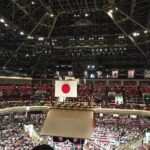
After leaving the stable, the group walks to the Ryogoku Kokugikan area for a guided visit of about 15 minutes. The hall is central to Tokyo’s sumo world, so this stop gives you useful physical context after seeing training up close.
The visit is brief, not a full arena tour. Think of it as a short orientation to the building and the surrounding sumo district. Your guide can connect the stable experience with the public tournament side of the sport.
That contrast is valuable. At Takasago-beya, you see the private discipline behind the sport. Around the Kokugikan, you see where that work becomes a public event. If you want to attend a full tournament, this stop can also help you understand the setting, though tournament admission is not included.
Ryōgoku Edo NOREN and the final half hour

The route continues to Ryōgoku Edo NOREN, where you spend about 15 minutes on a guided visit followed by roughly 30 minutes for shopping and sightseeing. This gives the tour a more relaxed finish after the strict silence of the stable.
You can browse the building and take in its sumo-related atmosphere, then use the remaining time to look around at your own pace. Food and drinks are not included, so this is a practical place to plan your own refreshment afterward, though you should budget separately.
The tour ends at Ryogoku Station. That makes it easy to continue sightseeing in the area or connect to another part of Tokyo. Since the activity lasts three hours, check the start time carefully when choosing your date. Availability and morning scheduling can change.
Is the $103 price fair?

At $103 per person, this is not a cheap Tokyo activity. You are paying for access to a setting that most independent visitors cannot simply enter, a small group, an English-speaking guide, a wrestler photo, and specialist interpretation.
The value depends on what you want. If you only want to see a sumo bout, a tournament ticket or a less expensive demonstration may suit you better. If you want a polished family show with constant commentary, this may feel too quiet and formal.
I think the price makes sense for someone who values access over spectacle. The stable visit is the rare part. Seeing professional wrestlers train from close range, while sitting in an authentic workplace, cannot be replicated by watching a staged performance. Shinya’s reporting background adds another layer, particularly if you want details about customs and the people behind the sport.
There are no included meals or drinks, and tips are not included. Plan for those separately. The booking also offers cancellation up to 24 hours before the start for a full refund, plus a reserve-now, pay-later option, which is useful when you are arranging a busy Tokyo schedule.
Practical advice for a comfortable visit

Wear clothes that let you sit comfortably on the floor. Cushions are provided, but they do not turn floor seating into a chair. If you are tall, heavy, stiff, or simply unused to sitting low, the two-hour stable visit may become uncomfortable.
Arrive at the station meeting point early. The route includes walking, and one part of the journey may feel brisk, especially when crossing streets. Stay with the group rather than assuming every traffic light will allow you to catch up.
Turn your phone off before entering the stable. Keep your voice low, avoid sudden movement, and do not expect the wrestlers to pose throughout the session. You are observing a real training period, and that respect is part of the experience.
Bring questions. Ask about the rituals you see, the difference between training exercises, the role of senior wrestlers, and how stable life connects with tournaments. The more specific your questions, the more you can get from the discussion with Shinya.
Who should book this sumo experience?
I would book this if you want authentic access, close viewing, and a serious explanation of sumo culture. It suits adults, older children, first-time visitors, and fans who already follow the sport.
I would think twice if you need accessible seating, dislike sitting on the floor, or want a lively show with narration throughout. The stable has its own pace, and quiet observation is part of the deal.
For families, age matters more than enthusiasm. Children under five cannot join, and older children need enough patience to sit still during practice. For couples and solo visitors, the small group and question time make this a particularly strong choice.
FAQ
How long does the sumo experience last?
The activity lasts three hours. About two hours are spent watching practice at Takasago-beya, followed by short guided visits to Ryogoku Kokugikan and Ryōgoku Edo NOREN, plus time for sightseeing and shopping.
Where do I meet the guide?
Meet at the ground-level A2 exit of Ryogoku Station on the Toei Oedo Line. The meeting point is about a five-minute walk from the east exit of JR Ryogoku Station. The operator sends additional details before the tour.
Is the sumo practice a staged show?
No. You watch professional morning practice at a real sumo stable. The session is not arranged as a performance, so you should remain quiet and respectful while the wrestlers train.
Can I take a photo with a sumo wrestler?
Yes. A photo with a sumo wrestler is included in the activity.
Do I sit on the floor?
Yes. You sit on the floor to watch the practice, and a floor cushion is available. The seating may be uncomfortable for anyone who has trouble sitting low for more than 90 minutes.
Are food and drinks included?
No. Food and drinks are not included. Tips are also separate. The tour finishes at Ryogoku Station after the visit to Ryōgoku Edo NOREN.
Should you book it?
Book this tour if you would rather see real training than a tourist performance. The close view, access to Takasago-beya, and Shinya’s first-hand sumo reporting make it a strong choice for anyone curious about the sport’s discipline and customs.
Skip it if floor seating will cause real discomfort or if you need constant commentary during the practice. For everyone else, this is one of the more unusual ways to spend a morning in Tokyo, with substance behind the photo opportunity.
More Shows & Entertainment in Tokyo
More Shows & Performances in Tokyo
More Sumo Experiences in Tokyo
More tours in Tokyo we've reviewed












Sumo Experiences, compared.
 ★ 4.8Tokyo: Sumo Show Experience with Chicken Hot Pot and a PhotoFrom $1032 hours
 ★ 4.8Tokyo: Sumo Show and Dining ExperienceFrom $7990 minutes - 2 hours
 ★ 5.0the SUMO showFrom $89
 ★ 5.0Tokyo Sumo Entertainment Show with Chicken Hot Pot and PhotoFrom $106
 ★ 4.6Tokyo: Sumo Tournament Tour with Chair Seat TicketsFrom $141
 ★ 5.0Tokyo Grand Sumo Tournament Viewing Tour with TicketsFrom $124