Reviewed · SHOW
Traditional Japanese Music ZAKURO SHOW in Tokyo
Japanese music comes alive at the Zakuro Show through the sound of taiko drums, koto, shamisen, shakuhachi, and other traditional instruments. This is not a silent recital where you are left guessing at what you hear. Musicians explain their instruments, musical customs, and the ideas behind each selection, with English interpretation throughout.
In This Article
- Key points to know before you book
- What the Zakuro Show actually gives you
- Hearing the koto, shamisen, and shakuhachi
- Why the explanations matter
- A program that mixes old Japan with new ideas
- The Omotesando setting and one-hour schedule
- Is $39.64 a fair price?
- Who will get the most from this performance?
- Practical details for planning your visit
- How Zakuro compares with a simple cultural show
- Should you book the Zakuro Show?
- FAQ
- Where is the Traditional Japanese Music Zakuro Show held?
- How long does the Zakuro Show last?
- Which Japanese instruments are featured?
- Is the performance explained in English?
- Does the program include only ancient Japanese music?
- How much does the experience cost?
- Can I cancel for a full refund?
I like the one-hour format, which fits neatly between sightseeing in Omotesando and an evening meal. I also like the close setting, where the musicians and their instruments are right in front of you rather than far away on a large theater stage. The main consideration is that the show may leave you wishing for more music, especially if you already have an interest in Japanese performance traditions.
Key points to know before you book

- Traditional instruments up close: Hear koto, shamisen, shakuhachi flute, taiko drums, and other wagakki played by skilled musicians.
- English explanations throughout: The concert includes commentary and interpretation, so you learn what the instruments do instead of simply listening without context.
- A compact Omotesando outing: The approximately one-hour performance fits easily into a Tokyo day.
- Music from old and new Japan: The program includes traditional pieces, modern Japanese music, and a Western hit arranged for Japanese instruments.
- Colorful kimono and an intimate room: The performers, their instruments, and their presentation are part of the experience.
- Strong value at $39.64: The ticket combines a concert and cultural introduction at a price that is reasonable for a central Tokyo activity.
What the Zakuro Show actually gives you

Many cultural performances ask you to admire an unfamiliar art form from a distance. Zakuro takes a more welcoming approach. The musicians play, then explain what you have just heard and how the instrument works. That small change makes a big difference.
You do not need prior knowledge of Japanese music. The presentation is designed for an international audience, with dialogue, interpretation, and simple explanations of musical and cultural details. I would think of it as a short concert paired with a live introduction to Japanese instruments.
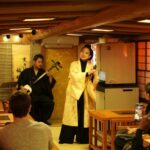
The performers wear colorful kimono and sit or perform close to the audience. The supplied information does not specify the exact seating arrangement or group size, so I would not book this expecting a particular seat. Still, the format promises a more personal view than a large stage production, especially when an instrument such as a koto or shamisen is being discussed right in front of you.
The show takes place in Omotesando, a useful location for a city itinerary. You can pair it with shopping, galleries, cafes, or a meal in the area. Since the performance lasts about an hour, it does not require you to give up half a day of sightseeing.
A few more Tokyo tours and experiences worth a look

Hearing the koto, shamisen, and shakuhachi
The program features a range of wagakki, the Japanese word for traditional Japanese musical instruments. Each one offers a different sound and playing style, which helps keep the hour varied.
The koto is a long stringed instrument often described as a Japanese harp, though that comparison only goes so far. Its notes can sound delicate and spacious, while the physical size of the instrument gives the performance a strong visual presence.
The shamisen is a three-stringed instrument with a distinct tone and a more percussive attack. It can sound crisp and lively, and its role helps show that Japanese traditional music is not limited to slow or solemn pieces.
The shakuhachi is a bamboo flute. Its breathy sound gives the music a completely different character from the plucked instruments. Hearing it alongside koto and shamisen lets you compare the way Japanese musicians use strings, wood, and breath.
Then come the taiko drums, which bring physical force to the program. The drums are not only something to hear. You can feel how rhythm changes the mood of the concert and how a performance can shift from subtle to powerful within moments.
The exact order of the instruments is not provided, so you should not expect a fixed sequence. What is clear is that the show is built around variety, with the musicians introducing their tools and explaining their place in Japanese music.
Why the explanations matter

The commentary is one of the best reasons to choose this show instead of simply finding a traditional music recording online. A short introduction can tell you what to listen for, how an instrument is played, or why a certain sound matters.
The English interpreter has received particularly strong praise for making the explanations easy to follow. That matters because Japanese music can use structures and sounds that are unfamiliar to many visitors. Without context, you may enjoy the performance but miss the choices being made by the musicians.
The explanations also connect music with Japanese culture and history. You learn not only the names of the instruments, but also something about the traditions around them and the craft required to play them. The musicians discuss technical points, cultural background, and the secrets of their instruments in a format intended to be clear and enjoyable.
I would especially recommend this approach for families, first-time visitors to Japan, and anyone who wants more than a decorative cultural show. The talk gives children and adults something concrete to follow. It also makes the concert easier to remember afterward because you leave with names, sounds, and images attached to the experience.
A program that mixes old Japan with new ideas

Zakuro does not limit itself to one kind of traditional music. The program includes ancient and modern Japanese pieces, which gives you a broader view of how these instruments can be used.
That distinction is important. A show made up entirely of formal classical pieces might appeal most to people who already know the tradition. By adding modern material, the musicians show that the koto, shamisen, shakuhachi, and taiko are not museum objects. They can still carry melody, rhythm, drama, and humor for a modern audience.
The most unexpected choice is a cover of a Western hit. One account identifies a version of a Nirvana song, though the exact program can change, so I would not book solely on the promise of hearing that particular song. The larger point is the contrast: you hear a familiar Western melody translated through Japanese instruments.
This kind of arrangement is useful for the listener. You may not recognize every traditional form, but you can recognize the basic shape of a familiar song. That makes it easier to notice how the instruments alter the mood and texture of the music.
The mix also prevents the performance from feeling like a lecture with music added as decoration. The educational material supports the concert, while the varied program keeps the hour moving.
The Omotesando setting and one-hour schedule

The concert is held in a beautiful, cozy setting in Omotesando. The supplied details do not name the exact hall or describe its seating, so you should check your confirmation for the precise meeting location and arrival instructions.
The area itself makes the show easy to combine with other plans. An hour-long performance is short enough to place before dinner, after shopping, or between nearby sights. That is a real benefit in Tokyo, where long cross-city journeys can consume more time than expected.
The compact schedule also makes this a good choice for a first or last evening in the city. If you are still finding your footing, the show offers a clear cultural activity without a complicated full-day commitment. If you are leaving Japan soon, it can provide a fitting final look at an art form that is difficult to encounter casually.
There is a tradeoff. One hour is enough for an introduction, but not enough for a full concert and extended discussion of every instrument. If you want a long, formal recital, this may feel brief. The format is better suited to a well-paced cultural sampler with genuine performance value.
A few more Tokyo tours and experiences worth a look



Is $39.64 a fair price?

At $39.64 per person, the Zakuro Show sits in a reasonable range for a central Tokyo cultural activity. You are paying for live music, skilled performers, an English-friendly presentation, and a convenient one-hour schedule.
The value is strongest if you would otherwise struggle to fit a traditional performance into your trip. Tokyo has many cultural options, but not all are easy to understand without Japanese language skills. Here, the interpretation removes much of that barrier.
The price also makes more sense when you view the show as two experiences in one. You receive a concert, but you also get an introduction to the instruments, the history of Japanese music, and the way different sounds are produced. That added context is what separates this from simply listening to a playlist.
Still, expectations matter. This is not presented as a full evening of theater, a large-scale taiko spectacle, or a long formal concert. If your main goal is maximum performance time, the hour may seem short. If your goal is an approachable introduction with live music, the price is easier to justify.
A mobile ticket is included, and confirmation is received at booking. Since the experience is often booked about 33 days ahead, I would reserve early if the timing is important to your itinerary.
Who will get the most from this performance?

I would recommend the show most strongly to you if:
- You want a cultural activity that does not require a full afternoon.
- You enjoy live music but do not know much about Japanese instruments.
- You want English explanations instead of a performance with no translation.
- You are curious about the difference between koto, shamisen, shakuhachi, and taiko.
- You are visiting Tokyo with children or mixed interests and need something accessible.
- You want an indoor Omotesando activity that can fit around meals and sightseeing.
Music lovers should find plenty to enjoy, but you do not need to be an expert. The presentation is built to explain the instruments while letting the musicians demonstrate their skill.
I would be more cautious if you want a long, quiet recital with no spoken commentary. The explanations are central to the format, not an interruption between serious musical numbers. Also, anyone hoping for a particular song should treat the Western cover as a pleasant possibility rather than a guaranteed headline.
Practical details for planning your visit

The experience lasts approximately one hour. That makes it easy to schedule, but allow enough time to reach the venue in Omotesando and find the entrance. The activity is near public transportation, and the exact location should be checked on your booking confirmation.
A mobile ticket is accepted. Confirmation arrives at the time of booking, which is useful when you are arranging several Tokyo activities in advance.
Most people can participate, according to the available information. No special accessibility details are provided, so if you have specific mobility, seating, or assistance needs, contact the provider before booking rather than assuming the venue will meet them.
The provider is Traditional Japanese Music Events ZAKURO SHOW. Free cancellation is available up to 24 hours before the local start time for a full refund. Cancellations or changes made less than 24 hours before the start are not accepted for a refund.
The activity is recommended by 97 percent of customers and has a 4.9 rating from 67 reviews. The most consistent praise focuses on three things: the musicians, the clarity of the English interpretation, and the way each instrument is explained before or between pieces. One person also bought the concert CD afterward, which suggests that the music itself can make a lasting impression, though the availability of merchandise is not guaranteed by the supplied details.
How Zakuro compares with a simple cultural show
A standard cultural performance may give you costumes, music, and a few impressive movements, then send you on your way. Zakuro aims for a more useful introduction. You see the performers in kimono, but you also learn what they are playing and why the instruments sound so different.
That makes the experience less passive. You can listen for the plucked notes of the koto, the sharper tone of the shamisen, the breath of the shakuhachi, and the pulse of the taiko. The explanations give you a set of listening tools.
The program also has enough range to suit different tastes. A quiet flute passage may appeal to you if you like atmosphere, while the drums and modern arrangements provide energy. The Western cover gives the concert a playful turn without abandoning its focus on Japanese instruments.
The setting and length keep the experience approachable. You are not committing to an elaborate formal event, and you do not need to understand Japanese etiquette or musical vocabulary before arriving. You simply take a seat, listen, and let the musicians explain what is happening.
Should you book the Zakuro Show?
Book it if you want an accessible, well-explained introduction to Japanese music in central Tokyo. The strongest reasons are the close presentation, the range of instruments, the English interpretation, and the thoughtful mix of old, modern, and Western material.
The $39.64 price is fair for a live one-hour concert with cultural commentary, especially if you value experiences that teach you something while entertaining you. The main limitation is length. This is an introduction rather than a complete survey of Japanese music, and the concert may finish just as you are ready for more.
For a first visit to Japan, a family itinerary, or a music lover who wants to hear traditional instruments performed by top-level musicians, I would make room for it. If your schedule is tight, the one-hour format makes Zakuro one of the easier cultural performances to fit into a Tokyo day.
FAQ
Where is the Traditional Japanese Music Zakuro Show held?
The concert is held in Omotesando, Tokyo, in a beautiful and cozy setting. The exact venue details should be checked on your booking confirmation.
How long does the Zakuro Show last?
The performance lasts approximately one hour.
Which Japanese instruments are featured?
The program features instruments including the koto, shamisen, shakuhachi flute, and taiko drums, along with other traditional Japanese instruments known as wagakki.
Is the performance explained in English?
Yes. The musicians provide explanations and dialogue during the show, with English interpretation for an international audience.
Does the program include only ancient Japanese music?
No. The program includes ancient and modern Japanese traditional music, as well as a Western hit arranged for traditional Japanese instruments.
How much does the experience cost?
The listed price is $39.64 per person.
Can I cancel for a full refund?
Yes. You can cancel at least 24 hours before the experience start time for a full refund. Cancellations or changes made less than 24 hours before the start time are not accepted for a refund.
More Shows & Entertainment in Tokyo
More Shows & Performances in Tokyo
More tours in Tokyo we've reviewed












Show, compared.
 ★ 4.0Mt Fuji & Hakone Cruise, Drum Show Bullet Train 1 Day from TokyoFrom $149
 ★ 4.8Tokyo: Sumo Show Experience with Chicken Hot Pot and a PhotoFrom $1032 hours
 ★ 4.8Tokyo: Sumo Show and Dining ExperienceFrom $7990 minutes - 2 hours
 ★ 5.0the SUMO showFrom $89
 ★ 4.5Tokyo: Samurai Restaurant Show Ticket with 2 DrinksFrom $551h 30m
 ★ 4.0Mt Fuji & Hakone Cruise, Drum Show Bus 1 Day from TokyoFrom $122