Reviewed · KAMAKURA & ENOSHIMA DAY TRIPS
From Tokyo: Kamakura and Enoshima Full-Day Private Trip
Kamakura gives you Japan in several strong flavors in one day: a giant bronze Buddha, quiet temple gardens, a bamboo grove, a major Shinto shrine, and the sea air of Enoshima. This private trip also takes the strain out of linking these places from Tokyo, where train changes and crowded roads can eat up your day.
In This Article
- Key points
- Why Kamakura and Enoshima Work as a Pair
- The Great Buddha at Kōtoku-in
- Hase-dera’s Gardens and Coastline Views
- Hokokuji Bamboo Forest
- Tsurugaoka Hachimangu and Kamakura’s Main Streets
- Two Hours on Enoshima Island
- What the Private Car Changes
- The Guides and Style of Explanation
- Walking, Weather, and What to Bring
- Who Will Get the Most from This Day
- What the Price Includes and Leaves Out
- Should You Book This Kamakura and Enoshima Tour?
- FAQ
- How long does the Kamakura and Enoshima tour last?
- What time is pickup?
- Where is hotel pickup available?
- Is the tour private?
- Is the tour conducted in English?
- Is lunch included?
- Are temple admission fees included?
- Is the activity wheelchair accessible?
- What should I bring?
I like the private vehicle and hotel pickup, especially for families or groups of up to five. I also like the flexible feel of the day, with guides such as Shoan, Timur, and Ali praised for clear explanations, patience, and helping people walk less when needed. The main caution is cost: $451 per group is fair for five people, but less attractive for one or two, and lunch plus entry fees are extra.
Key points
- The Great Buddha leads the day: Spend about an hour at Kamakura’s famous bronze Daibutsu.
- Three very different temple stops: Hase-dera offers gardens and views, while Hokokuji brings you into a peaceful bamboo grove.
- A private car saves energy: Pickup and drop-off cover Tokyo’s 23 wards, with the driver parking close to several sights.
- Enoshima adds a coastal finish: You get roughly two hours for sightseeing, shopping, paths, and ocean views.
- Guiding is a major strength: Shoan, Timur, and Ali have all been praised for clear history, friendly service, and family-friendly pacing.
- Budget for extras: Lunch and listed admission fees are not included in the $451 price.
Why Kamakura and Enoshima Work as a Pair
Kamakura is about temples, shrines, old streets, and the Great Buddha. Enoshima shifts the mood toward the coast, with scenic paths, shopping, and sea views. Together, they make a more varied day than a temple-only excursion.
The distance from Tokyo is manageable, but the stops are spread around southern Kanagawa. A private car matters here. You are not spending the day figuring out which train, bus, or local connection comes next, and you can return directly to your Tokyo hotel after a long day on your feet.
The tour lasts 10 hours and begins with an 8:30 a.m. pickup. Traffic can delay pickup by as much as 30 minutes, so do not schedule a tight morning appointment. Pickup and drop-off are offered within Tokyo’s 23 wards. If your hotel is outside that area, contact the provider before booking.
A few more Tokyo tours and experiences worth a look
The Great Buddha at Kōtoku-in
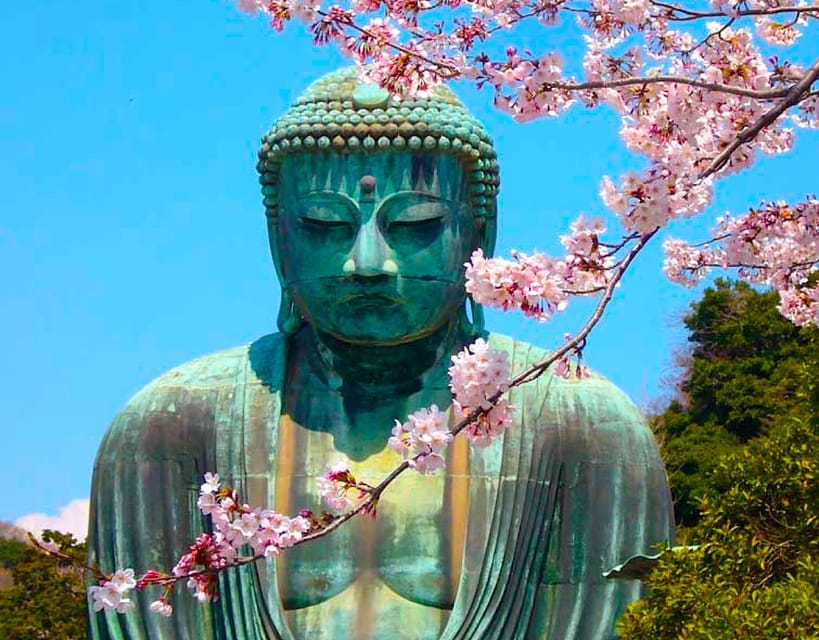
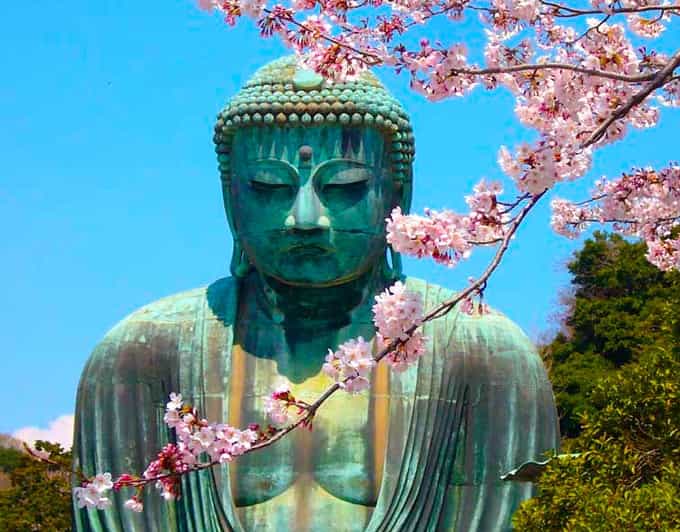
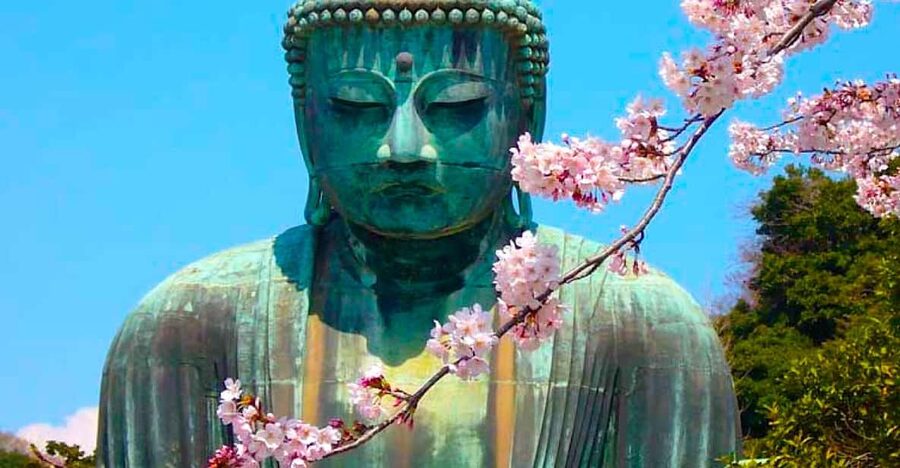
The first major stop is Kōtoku-in, home of the Great Buddha of Kamakura, known in Japanese as the Daibutsu. You have about an hour here, which gives you time to see the statue, take photographs, and listen to the guide explain why it became such a powerful symbol of Kamakura.
The statue is the visual anchor of the day. It is not tucked away in a dark hall, so you can appreciate its size from several angles in the open temple grounds. Your guide may also use charts or other visual aids to make Kamakura’s long and complex past easier to follow. That can be especially helpful if you want more than a quick photograph.
The listed admission fee is 300 yen and is not included. An hour is enough for the main sight, though the visit will feel short if you prefer to linger, sketch, or study every detail.
Hase-dera’s Gardens and Coastline Views
Next comes Hase-dera, with about an hour to explore. This temple is known for its gardens and views toward the coastline, giving you a calmer setting after the imposing Buddha.
I like the contrast. Kōtoku-in is a single, unforgettable object. Hase-dera asks you to slow down and pay attention to the setting: paths, planted gardens, temple buildings, and the changing view as you move through the grounds. The guide can add context about religious traditions and local customs, which helps turn a pleasant walk into a more meaningful stop.
You should wear shoes that are comfortable for walking. The day includes several temple and shrine grounds, and the total effort adds up even when the vehicle brings you close to each entrance. Hase-dera admission is extra, with the supplied information listing a fee of 400 yen.
Hokokuji Bamboo Forest
Hokokuji Temple provides the day’s most concentrated nature stop. You get around an hour to visit the temple and its bamboo forest, a narrow, restful setting that feels very different from the open grounds at Kōtoku-in.
The grove is one of those places where a short visit can feel refreshing. Tall bamboo changes the light and muffles the sense of the town nearby. You do not need a long hike to enjoy it, but comfortable shoes still matter because the day involves repeated walking between outdoor sights.
Admission is not included, and the listed fee is 300 yen. If bamboo is high on your Kamakura wish list, this stop deserves your attention. If you are more interested in broad temple complexes or long walks, the one-hour visit may feel brief.
Tsurugaoka Hachimangu and Kamakura’s Main Streets
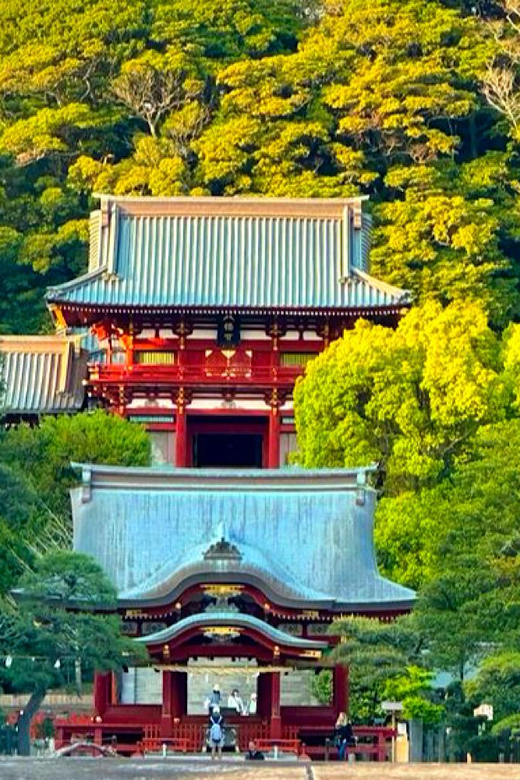
Tsurugaoka Hachimangu is scheduled for about 30 minutes. It is an important Shinto shrine surrounded by trees and open space, and it gives you a useful change of pace after three Buddhist temple visits.
Thirty minutes is enough to get a first look, follow the approach, and hear the guide explain the shrine’s role. It is not enough for a slow, detailed exploration of every building and path. That is one of the tradeoffs of fitting Kamakura and Enoshima into one day.
The tour also includes time around Kamakura’s charming streets, where you can browse small shops, cafes, local snacks, and souvenirs. The exact length of this shopping time may depend on traffic and how long earlier visits take. You should treat it as a pleasant part of the day rather than a dedicated shopping tour.
Lunch is planned at a local restaurant, but it is not included in the price. Your guide can help with restaurant advice and practical needs such as finding a restroom. Since no fixed restaurant or menu is specified, plan to pay for your own meal and keep your expectations open.
Other private tours in Tokyo


Two Hours on Enoshima Island
The final major stop is Enoshima, with about two hours for sightseeing, shopping, and exploring the island. This is where the tour leaves temple history behind and brings in ocean views, paths, and a more open coastal mood.
Two hours gives you a useful introduction, but Enoshima is not a place to explore without limits in that amount of time. You may need to choose between scenic walking, shops, snacks, and particular viewpoints. Your guide can help you decide what fits your pace.
This stop has worked well for families. A nine-year-old was reported to stay engaged through the day and especially enjoy Enoshima. That makes sense: the island adds movement and variety after the more reflective temple visits.
Ask your guide about the best use of your time when you arrive. Depending on the day’s traffic and your energy, you might focus on the scenic paths, local food, or the views over the water. The supplied plan does not promise specific island attractions or ticketed activities, so do not assume that every Enoshima feature is included.
What the Private Car Changes
The air-conditioned vehicle is more than a comfort feature. It lets you cover several locations that are not next door without asking you to manage each transfer yourself. Hotel pickup and drop-off also save you from beginning and ending a long day at a station.
The private format means the pace can be adjusted for your group. Ali, one of the named drivers, was praised for parking close to the sites and reducing the amount of walking. That is useful for families, older adults, and anyone who has already spent several days walking around Tokyo.
The group limit is five people. At the full capacity, $451 works out to about $90 per person before lunch and admission fees. For five, that can be a reasonable price for a private vehicle, a 10-hour day, hotel service, and an English-speaking guide. For two people, the same total works out to about $225.50 each, so you should compare it with public transportation and a self-guided day.
The car does not remove every practical issue. Tokyo traffic can be heavy, and the pickup may run 30 minutes late. The more stops you attempt, the less spare time you have if roads slow down. The value is greatest when convenience and personal guidance matter more to you than the lowest possible price.
The Guides and Style of Explanation
The guide is central to this experience. Shoan has been associated with patient, personal touring and clear explanations at the Great Buddha and Enoshima. Timur has been praised for taking care of the group during a busy day, while Ali has been noted for flexible routing, close parking, and keeping children involved.
One particularly useful detail is the use of charts to explain Kamakura’s long, complicated past. That is a smart approach because the city’s temples, shrines, and political importance can blur together if you only receive short facts at each stop.
The guide can also help with local food, restrooms, and practical navigation. You should still be ready to speak up about your interests. If you want more time at the bamboo forest, less shopping, or a slower pace for a child, say so early.
The tour is in English. The guide may be different depending on availability, so do not book on the assumption that a specific person is guaranteed unless the provider confirms it.
Walking, Weather, and What to Bring
Bring comfortable shoes, water, sunscreen, and a camera. This is not a coach tour where you step off, take one photograph, and sit down again. You will walk through temple gardens, shrine grounds, shopping streets, and Enoshima paths.
Check the forecast and dress for the conditions. The itinerary includes outdoor time at every stage, and the coastal portion may feel different from central Tokyo. Smoking is not allowed during the activity.
The tour is marked wheelchair accessible. If you require specific support at the temples, shrine, or Enoshima, contact the provider before booking so the route and vehicle arrangements can be discussed clearly.
Who Will Get the Most from This Day
I would recommend this trip to a family that wants to see a lot without managing trains and local connections. It also suits a small group of friends, first-time Japan visitors, and anyone who wants a guide to explain the cultural meaning behind the buildings.
It is a particularly good choice if you have only one day for the Kamakura area. You get the city’s best-known sights plus a coastal stop, rather than spending the entire day in one temple district.
I would think twice if your main goal is slow photography, long temple visits, or a relaxed day with no fixed movement. Five major stops in 10 hours is efficient, but it is still a full schedule. Independent visitors who enjoy public transportation may find the private price hard to justify for a small party.
The same applies to dedicated Enoshima explorers. Two hours is enough for an introduction, not for every path, shop, and attraction. For a first look, the combination works well. For detailed study, book a separate day.
What the Price Includes and Leaves Out
The $451 price covers the group, up to five people, rather than charging each person separately. It includes an air-conditioned vehicle, private transportation, hotel pickup and drop-off, and an English-speaking guide.
You pay separately for lunch and the listed admissions:
- Kōtoku-in Great Buddha: 300 yen
- Hokokuji Temple: 300 yen
- Hase-dera Temple: 400 yen
The price does not list a separate admission for Tsurugaoka Hachimangu or Enoshima, and the supplied details do not promise that any optional island attraction tickets are included. Keep some Japanese yen available for entry fees, food, and small purchases.
Cancellation is flexible up to 24 hours before departure for a full refund. You can also reserve and pay later, which helps if your Tokyo plans are still shifting.
Should You Book This Kamakura and Enoshima Tour?
Book it if you value a private car, direct hotel service, clear English guidance, and a full day that covers both temple-filled Kamakura and coastal Enoshima. The strongest reasons are the practical routing, flexible attention from guides such as Shoan, Timur, and Ali, and the ability to reduce walking when needed.
Skip it if you are traveling alone or as a couple on a tight budget and feel comfortable using trains. You will also want another plan if you prefer to spend hours at one temple or explore Enoshima at a very slow pace.
For a group of five, the numbers make much more sense. Add lunch and roughly 1,000 yen in the three listed temple fees per person, then decide if the convenience is worth the premium. For families and small groups, I think the answer is often yes. For solo visitors, the private format is a luxury rather than a bargain.
FAQ
How long does the Kamakura and Enoshima tour last?
The activity lasts 10 hours, including pickup from Tokyo and return to Tokyo.
What time is pickup?
Pickup is scheduled for 8:30 a.m. Traffic can cause a delay of up to 30 minutes.
Where is hotel pickup available?
Hotel pickup and drop-off are available within Tokyo’s 23 wards. For locations outside Tokyo, you should contact the provider before booking.
Is the tour private?
Yes. It is a private group experience for up to five people.
Is the tour conducted in English?
Yes. An English-speaking live guide is included.
Is lunch included?
No. Lunch is not included, so you pay for your own meal at a local restaurant.
Are temple admission fees included?
No. The listed fees are 300 yen for Kōtoku-in, 300 yen for Hokokuji, and 400 yen for Hase-dera.
Is the activity wheelchair accessible?
The activity is marked wheelchair accessible. Contact the provider in advance if you need specific arrangements at individual sites.
What should I bring?
Bring comfortable shoes, water, sunscreen, a camera, and clothing suited to the weather. Smoking is not allowed.
More Full-Day in Tokyo

More Private Tours in Tokyo
More Kamakura & Enoshima Day Trips in Tokyo


More tours in Tokyo we've reviewed












Kamakura & Enoshima Day Trips, compared.
 ★ 4.5Tokyo: Kamakura & Enoshima Day Trip including Temple TicketsFrom $589 hours - 570 minutes
 ★ 5.0Mount Fuji, Kamakura, Big Buddha, & Lake Ashi Day TripFrom $109
 ★ 4.7Tokyo: Mt Fuji, Kamakura, Lake Ashi & Big Buddha Guided TourFrom $50
 ★ 4.5From Tokyo: Kamakura & Enoshima 1-Day Bus TourFrom $66
 ★ 4.9Tokyo:Sea of Mount Fuji, Hakone Ropeway, Ōwakudani, EnoshimaFrom $5010 hours
 ★ 5.0Kamakura 8 hr Private Walking Tour with Licensed Guide from TokyoFrom $201