Reviewed · SUMO EXPERIENCES
Tokyo Sumo Morning Practice: Viewing & Exclusive Interaction
At an active sumo stable in Sumida, you watch professional wrestlers train at close range, not actors performing for a dinner audience. The morning includes hard warmups, repeated clashes, rituals, and the quiet focus of athletes doing serious work. Seeing practice rather than a staged show is the main reason to book it.
In This Article
- Key points for choosing this sumo experience
- Why watching practice beats a sumo dinner show
- Meeting at Narihira Park in Sumida
- Inside the stable: rituals, force, and concentration
- Choosing between zabuton cushions and stools
- Meeting the wrestlers after practice
- The banzuke souvenir and final park conversation
- Is $93 a fair price?
- Who should book this morning tour?
- Practical rules that shape the visit
- Should you book Tokyo Sumo Morning Practice?
- FAQ
- Where does the sumo tour meet?
- How long does the experience last?
- What happens during the stable visit?
- Can I sit on a chair?
- Can I talk to the sumo wrestlers?
- Can I take photos with the wrestlers?
- Can I record the training session?
- Is food included?
- Is the tour suitable for young children?
I like the access to active wrestlers after practice, when you can ask about training and daily life, and I like the practical seating choice: front-row zabuton cushions or stools at the back. The main consideration is the early start and strict rules inside the stable. You must stay quiet during practice, and food, recording, alcohol, drugs, and flash photography are not allowed.
Key points for choosing this sumo experience
- Real morning training at a working sumo stable, rather than a performance made for sightseeing.
- Direct questions and photos with active wrestlers after practice, with the guide helping bridge the language gap.
- Choice of floor cushions or stools, useful if sitting on the floor is uncomfortable.
- A professional banzuke ranking sheet in a souvenir folder gives you a meaningful keepsake.
- A final guide-led Q&A at Narihira Park lets you ask about sumo or get Tokyo suggestions.
- An early finish near Tokyo Skytree and Asakusa, making this easy to pair with another sightseeing plan.
Why watching practice beats a sumo dinner show
Sumo is easy to encounter in polished forms around Tokyo. You can see images of wrestlers, attend themed meals, or watch tournament coverage on television. Those options have their place, but a morning practice session shows the sport before it becomes a public spectacle.
You see wrestlers work through the basics with concentration. The sound of bodies meeting the floor and the force of each clash explain more than a museum label can. Practice also gives you a better sense of sumo as a demanding athletic routine, not simply a ceremonial contest between large men.
The stable is a serious working space. That changes your role as a visitor. You are not there to cheer, interrupt, or expect a show built around your schedule. You are present to observe, follow instructions, and appreciate the discipline of the room.
That is why the guide briefing matters. At Narihira Park, your guide explains sumo history, rules, manners, and the behavior expected inside the stable. You get context before you arrive, so the movements and silence make more sense once practice begins.
A few more Tokyo tours and experiences worth a look
Meeting at Narihira Park in Sumida
The meeting point is near the multipurpose restroom at Narihira Park. Your guide checks your name, gives you sumo-related materials, and explains the important rules before the short walk to the stable.
This arrangement is simple, but it helps you arrive prepared. You are not trying to learn stable etiquette while a training session is already under way. Listen closely to the instructions about photography, seating, and quiet behavior.
Transportation to the meeting point is not included, so you need to plan that part yourself. Check the starting time when booking, since the exact time can vary. The tour lasts about three hours and normally wraps up around 11:00 AM.
The location gives you a useful Tokyo morning plan. Afterward, you can continue toward Tokyo Skytree or Asakusa. If you want a full day of sightseeing, this tour uses the early hours well and leaves much of the afternoon free.
Inside the stable: rituals, force, and concentration
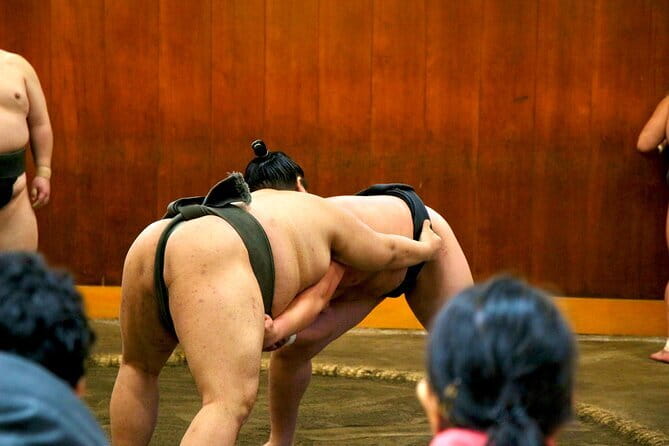
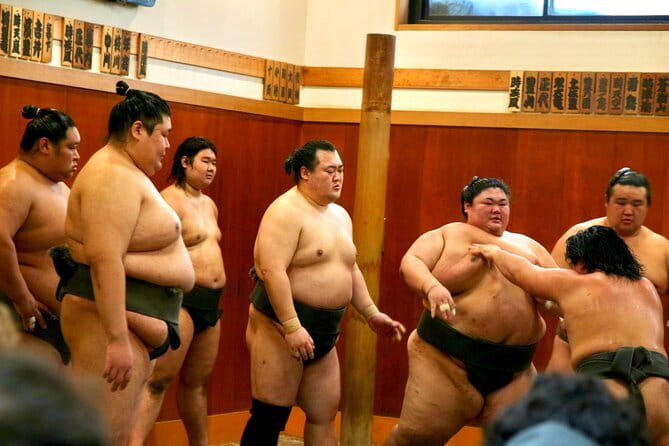
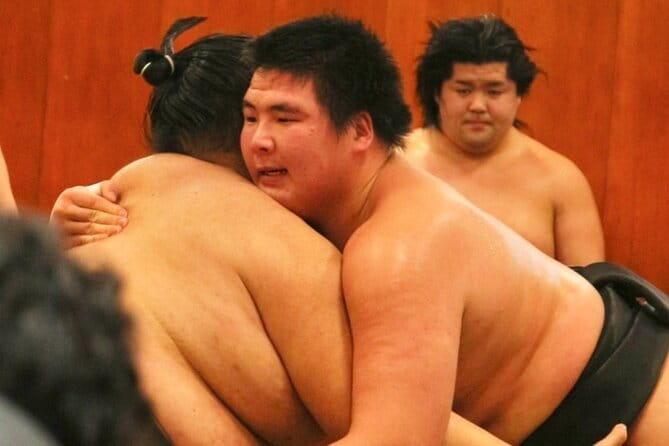
The central portion is the training session. You watch wrestlers warm up, practice, and spar. The session can feel intense because the contact is real and the work is repetitive. That repetition is the point: sumo technique depends on timing, balance, strength, and habits built over many training sessions.
You may find the experience quieter than expected. The stable is not a theater, and there is no running commentary from the wrestlers. The English-speaking guide helps before and after the session, but during practice your job is mainly to watch.
This quiet can make the experience more powerful. You notice the ritual around the movement, the controlled preparation, and the way wrestlers focus on the work in front of them. A guide who explains what you are seeing turns unfamiliar actions into understandable parts of the sport.
The session is also a useful correction to the idea that sumo is only about size. The training shows athletic effort, not just mass. You see bodies collide, recover, repeat, and continue. That physical commitment is one of the clearest reasons this experience feels different from a standard cultural demonstration.
Practice length changes during the Grand Sumo Tournament periods, which occur for about two weeks in January, May, and September. At those times, practice starts 30 minutes earlier and viewing lasts about one hour. Check the schedule carefully if your visit falls during one of those periods, because the timing and viewing portion are different.
Choosing between zabuton cushions and stools
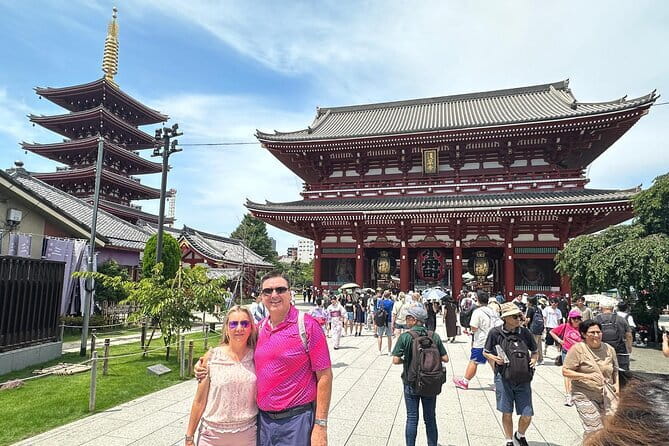
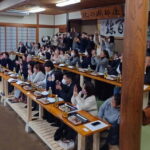
You have two seating options. Zabuton cushions in the front row place you close to the action and give the visit a traditional feel. Stools at the back are available if you prefer not to sit on the floor.
The front row is likely the best choice if you want the most immediate view and are comfortable sitting low. The back stools are the sensible option for anyone who finds floor seating difficult or wants an easier position for the full session.
Your seating position comes with responsibilities. Follow the guide’s directions, stay quiet, and respect the stable’s rules about photography and movement. The purpose of offering choices is comfort, not freedom to shift around whenever you like.
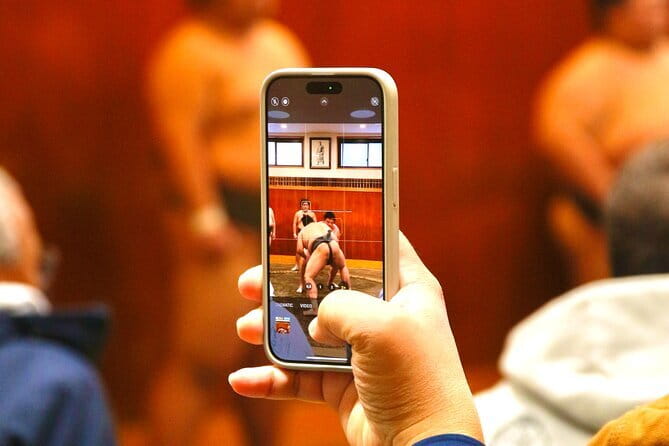
Photography is allowed, but flash photography is not. You cannot make video or audio recordings. These restrictions protect the training environment and keep your camera from distracting wrestlers during demanding work.
Meeting the wrestlers after practice
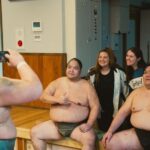
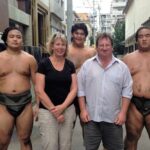
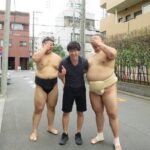
After the training session, the tone changes. You have a chance to speak directly with active wrestlers and take commemorative photos with them. Questions can cover training, daily life, athletic goals, or the mental approach required for sumo.
The guide helps manage this exchange, especially for English-speaking visitors. Guides named Haru, Momo, Sana, Sarah, and Ryoko have been praised for clear explanations, friendly assistance, and professional handling of the visit. The guide is especially useful here, since a good question can turn a quick photo opportunity into a worthwhile cultural conversation.
The interaction is the strongest personal feature of the tour. Watching from the edge of a stable gives you an impression of the sport. Asking a wrestler about life inside that world gives the experience a human side.
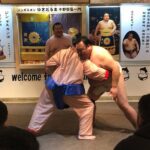
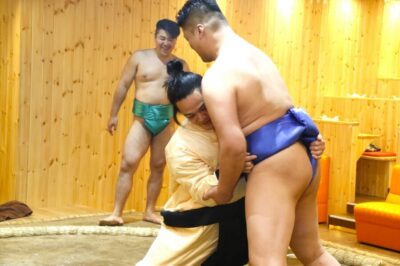
Some sessions may include a light invitation for male audience members to try a brief wrestling exchange with a professional. This is not presented as a guaranteed part of every visit, so do not book solely for that possibility. If it happens, it can add a playful moment after the serious training, but the main value remains the viewing and conversation.
Keep expectations polite and realistic. The wrestlers have just completed hard practice, and the photo and question period still takes place within the boundaries of their working environment. Listen to the guide and follow any instructions about where to stand and when to take pictures.
A few more Tokyo tours and experiences worth a look
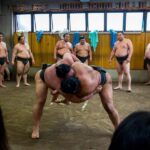
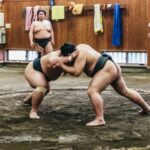

The banzuke souvenir and final park conversation
After the stable visit, you return to Narihira Park for the closing portion. You receive an official banzuke, the sumo ranking sheet, in a specially designed souvenir folder.
This is a better keepsake than a generic branded trinket because it connects directly to the sport you have just seen. It also gives you something to look at later, once you understand that sumo has an organized ranking system and a formal competitive structure.
The tour ends with a final Q&A led by your guide in the park. You can ask follow-up questions about rules, customs, training, or the wrestlers’ daily lives. You can also use this time for personalized Tokyo tips.
I like this ending because it avoids rushing you straight from the stable to a restaurant or a gift shop. The park session gives you time to process what you watched. It also helps if you thought of your best question only after seeing the practice.
The experience is advertised as about three hours and finishes around 11:00 AM, though tournament-period timing differs. From there, Tokyo Skytree and Asakusa are natural choices for the rest of your morning and afternoon.
Is $93 a fair price?
At $93 per person, this is not a cheap quick stop. The price includes the sumo stable visit fee, an English-speaking guide, and the special souvenir. Transportation to Narihira Park is extra, and the activity does not list food as included.
The value depends on what you want from Tokyo. If you only need a photograph near a sumo-themed sign, this costs too much. If you want access to actual practice, explanations of etiquette, a chance to speak with active wrestlers, and a banzuke to take home, the price is easier to justify.
The direct interaction matters most in the value calculation. Many cultural activities let you watch from a distance. This one gives you a structured chance to ask questions and take photos after practice, which makes it more personal than a simple viewing ticket.
The guide also adds practical value. Sumo customs can be confusing when you first encounter them, and the pre-visit briefing helps you behave correctly. Guides such as Haru, Momo, Sana, Sarah, and Ryoko have been singled out for their helpful approach, though guide assignments can change.
Reserve and pay later is available, and you can cancel up to 24 hours in advance for a full refund. Those terms are useful if your Tokyo schedule is still moving around, but always check the current booking conditions before paying.
Who should book this morning tour?
This is a strong choice for first-time visitors who want a cultural activity that feels connected to everyday professional life. It also suits anyone already interested in Japanese sport, ritual, discipline, or martial traditions.
Families should note that children under six are not suitable for this activity. Older children may enjoy the spectacle, but the quiet rules and serious atmosphere mean it is not a free-moving attraction. A child who expects an interactive show may find the first part slow.
You should also consider your comfort with early mornings and floor seating. Stools are available, which helps, but the stable is still a place where you must sit quietly and follow instructions. Wear an attitude suited to observation, not a loud group excursion.
This is especially useful if your Tokyo itinerary includes Skytree or Asakusa. The early finish lets you connect the tour with those areas instead of spending a separate half-day crossing the city.
Practical rules that shape the visit
The restrictions are worth taking seriously:
- Food is not allowed.
- Flash photography is prohibited.
- Video and audio recording are not allowed.
- Alcohol and drugs are prohibited.
- Photography is allowed only when you remain quiet and follow seating and flash rules.
These are not minor technicalities. A stable is a working training space, so your behavior affects the people practicing. Keep your phone ready for permitted photographs, but do not let it pull your attention away from the session.
The tour is offered with English and Japanese guidance. If you need explanations in English, select the appropriate option when booking and confirm the current language availability.
Should you book Tokyo Sumo Morning Practice?
Book it if you want to see real training rather than a staged performance, and if speaking with active wrestlers matters to you. The combination of close viewing, a guide-led explanation, photographs, questions, and a banzuke souvenir gives you more substance than a quick photo stop.
Think twice if you dislike early starts, strict quiet rules, or sitting through a serious practice session. The interaction with wrestlers is a major benefit, but it comes after you have respected the training itself.
For most culturally curious visitors, I would consider $93 reasonable for the access and personal exchange. Arrive prepared, listen to the briefing, and treat the stable as a workplace. Do that, and this can become one of the most memorable mornings you spend in Tokyo.
FAQ
Where does the sumo tour meet?
Meet near the multipurpose restroom at Narihira Park in Sumida. The guide checks your name, provides sumo materials, and explains the rules before walking to the stable.
How long does the experience last?
The standard experience lasts about three hours and normally finishes around 11:00 AM. Starting times can vary, so check availability when booking.
What happens during the stable visit?
You watch an active sumo training session, including warmups, practice, and sparring. The guide explains sumo history, rules, rituals, and proper etiquette.
Can I sit on a chair?
You can choose between traditional floor cushions called zabuton at the front and stools at the back. Stools are available if you prefer not to sit on the floor.
Can I talk to the sumo wrestlers?
Yes. After practice, you have an opportunity to ask active wrestlers questions about training, daily life, and their mindset as athletes.
Can I take photos with the wrestlers?
Yes. A commemorative photo session with active wrestlers is included after the practice. Flash photography is not allowed.
Can I record the training session?
No. Video and audio recording are not allowed. Photography is permitted when you remain quiet and follow the stable’s instructions.
Is food included?
No food is included, and food is not allowed inside the stable. The closing session takes place at Narihira Park and consists of a guide-led Q&A.
Is the tour suitable for young children?
The activity is not suitable for children under six years old. All participants must also follow the stable’s quiet and seating rules.
More Morning in Tokyo
More Sumo Experiences in Tokyo

More tours in Tokyo we've reviewed












Sumo Experiences, compared.
 ★ 4.8Tokyo: Sumo Show Experience with Chicken Hot Pot and a PhotoFrom $1032 hours
 ★ 4.8Tokyo: Sumo Show and Dining ExperienceFrom $7990 minutes - 2 hours
 ★ 5.0the SUMO showFrom $89
 ★ 5.0Tokyo Sumo Entertainment Show with Chicken Hot Pot and PhotoFrom $106
 ★ 4.6Tokyo: Sumo Tournament Tour with Chair Seat TicketsFrom $141
 ★ 5.0Tokyo Grand Sumo Tournament Viewing Tour with TicketsFrom $124

![[1 Group Only] Tokyo Shibuya Food Tour for Family - Center-gai: food, conversation, and a local view](https://tokyoezine.com/wp-content/uploads/2026/08/1-group-only-tokyo-shibuya-food-tour-for-family.jpg)