Reviewed · WORKSHOPS
Tokyo Keen Japanese Knife and Sashimi Workshop
Japanese knives are made for clean, exact cuts, and this two-hour workshop lets you feel the difference yourself. You learn how the knives are made, watch a professional demonstration, sharpen one on a wet stone, slice sashimi, and turn your work into zuke-don, a rice bowl topped with marinated fish.
In This Article
- Key points to know before booking
- Why this Tokyo knife class feels different
- Beginning with Japanese knife culture and craft
- Watching the demonstration before taking the knife
- Sharpening on a wet stone
- Making tuna zuke-don for lunch
- What you take away from the session
- Group size, language, and comfort
- Who should book this experience
- Is $130.78 a fair price?
- Timing, cancellation, and practical details
- Should you book the Tokyo knife workshop?
- FAQ
- Where does the workshop take place?
- How long does the activity last?
- How much does the workshop cost?
- How many people can join the class?
- Is lunch included?
- What is zuke-don?
- Are tools and aprons provided?
- Is a sake tasting included?
- Is the class taught in English?
- Can I cancel for a refund?
I like the mix of useful technique and Japanese food culture. I also like that lunch, drinks, tools, aprons, and a participation certificate are included. The main consideration is the price, $130.78 per person, which is fair for a small class with food and instruction, but high if you only want a quick cooking lesson.
Key points to know before booking

- Sharpening is part of the class: You use a whetstone and get help even if this is your first attempt.
- Sashimi cutting is hands-on: After watching the instructor, you practice with a Japanese knife yourself.
- Lunch comes from your own work: You prepare tuna zuke-don, served with miso soup.
- Small groups keep the class personal: The maximum is eight people, with Japanese and English instruction available.
- Chef Naoya and interpreter Hiromi lead the experience: Their patient, detailed teaching is especially useful for first-time students.
- You get a same-day shop discount: Participants receive 10% off purchases at the first-floor shop.
Why this Tokyo knife class feels different

Many cooking classes focus on a recipe. This one starts earlier, with the tool itself. You learn about Japanese knives, the customs connected with them, and the way a knife is made before you put it to work.
That approach matters. Sashimi is not simply raw fish placed on rice. The cut, angle, pressure, and sharpness of the blade all affect the texture. A dull or poorly handled knife can crush fish instead of slicing it cleanly. Here, you are shown why the technique matters, then given a chance to test it.
The class is held at Kappodo H.Q., Tokyo D Kitchen Studio in Nishiazabu, Minato City. It ends at the same place, so you do not need to plan for a second meeting point or arrange private transportation. The studio is near public transportation, but the supplied details do not identify a particular station, so allow time to find the DK Building at 2-chome 21-12 Nishiazabu.
The group limit of eight is important. Knife instruction is much less useful when you are watching from the back of a crowded room. Here, you should have a reasonable chance to see the demonstration and receive direct help while practicing.
A few more Tokyo tours and experiences worth a look
Beginning with Japanese knife culture and craft
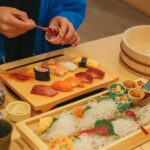
The opening section explains how a Japanese knife is made and introduces the culture and customs around these tools. This gives the class more substance than a simple cut fish and eat lunch activity.
You are not expected to arrive with knife experience. The class is designed to explain the basics before asking you to work. That makes it suitable if you cook at home but have never used a Japanese sashimi knife, and also if you have a strong interest in Japanese food but little practical skill.
The knife is treated as a working instrument, not just a souvenir. You learn why its sharpness matters and how its style of use differs from what many home cooks are used to. One useful point from the teaching is that Japanese knife work often relies on a controlled slicing motion rather than forcing the blade down through the ingredient.
The exact knife-making process covered during the session is not set out in detail, so you should expect an introduction rather than a full blacksmithing demonstration. The value is the connection between construction, maintenance, and food preparation.
Watching the demonstration before taking the knife
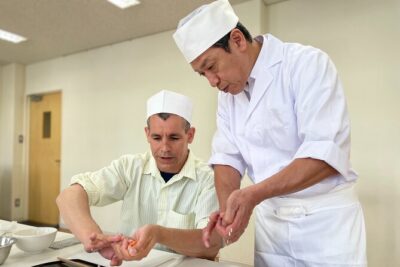
The instructor first demonstrates knife work. This is a good order for the lesson. You can watch the hand position, blade movement, and cutting rhythm before trying to copy them.
Chef Naoya leads the knife instruction, with Hiromi providing interpretation. The class is taught in Japanese and English, and the available feedback makes clear that the translation is part of the teaching rather than a rushed afterthought. That is useful for a technical lesson, where a small misunderstanding about pressure or angle can make the task harder.
You then use a Japanese knife to cut sashimi. This is the moment when the subject becomes real. A knife may look impressive on a display shelf, but you only understand its character when you place it against fish and feel how little force is needed for a clean cut.
The instructor gives you a chance to repeat the movement. That repeated practice is one of the strongest reasons to choose this class over a demonstration-only food tour. You are not simply watching an expert perform a skill that you cannot try.
Still, expect a beginner lesson, not professional chef training. Two hours is enough to learn basic handling and gain respect for the technique. It is not enough to master sashimi presentation or become fully confident with every Japanese knife style.
Sharpening on a wet stone

While the fish marinates later in the class, you learn how to sharpen a Japanese knife with a whetstone. This is one of the most practical parts of the experience because it applies to a tool you may already own at home.
The instructor helps first-time students through the process. You learn how the blade meets the stone and how to maintain the correct motion. Sharpening can feel intimidating, especially when the knife is expensive or unfamiliar, so personal guidance makes a real difference.
You also learn about different types of knives. The class does not promise that you will sharpen every kind of blade, but it gives you a better sense of how Japanese knives differ and why their care matters.
This section can be a little demanding. Knife sharpening rewards patience and light control, not speed. If you are hoping for a quick trick that produces a perfect edge in a few minutes, this may feel slower than expected. That is also the point. Good maintenance is a skill, and the workshop gives you a sound introduction rather than pretending otherwise.
All tools and aprons used in the lesson are provided. You do not need to bring your own equipment.
Making tuna zuke-don for lunch

After the knife work, you prepare zuke-don. This is a bowl of rice topped with marinated sashimi, usually tuna, although the fish can change depending on availability.
The timing works well. The fish marinates while you learn to sharpen the knife, so the class moves from cutting to cooking without wasting the short session. You get to see how the raw ingredient changes as it takes on the marinade, then eat the finished dish for lunch.
Your meal includes the tuna bowl you make and miso soup. That gives the class a proper finish rather than a small sample served after the lesson. The food also makes the knife practice feel useful. You are preparing something that you eat immediately, not cutting ingredients for a recipe that someone else completes.
The lunch is a strong part of the value at $130.78. If you bought a separate meal, paid for a cooking class, and added a guided knife lesson, the total would rise quickly. The price will still feel high to some people, especially those mainly interested in tasting Japanese food. I would book it for the instruction and the hands-on work first, with lunch as a welcome extra.
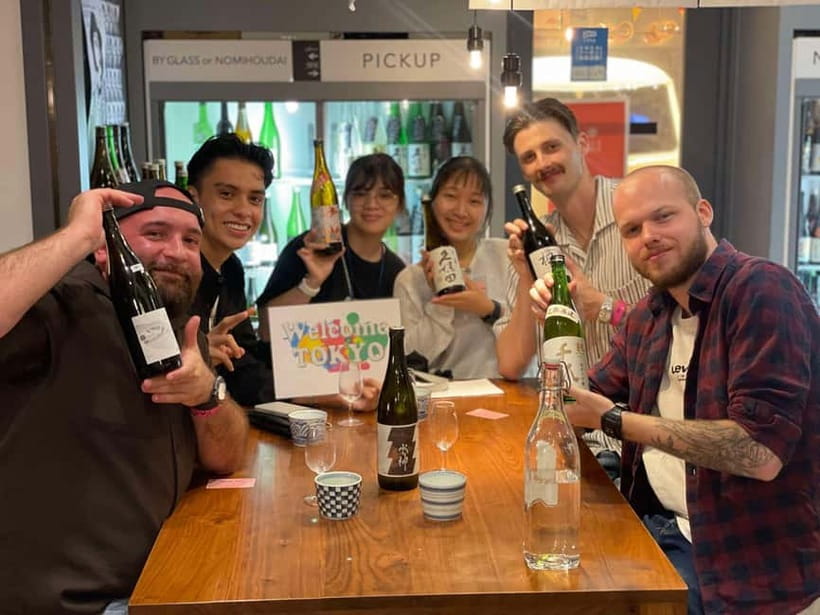
You can also taste Kappodo’s original sake. Tea is included in the meal experience according to the available details, and the sake tasting adds a small social finish. Alcohol is not the main feature, so this class can still make sense if you are more interested in knives and food than drinking.





What you take away from the session

The most useful result is not a certificate. It is a better understanding of how to treat a sharp Japanese knife.
You leave with an introduction to:
- Japanese knife construction and customs
- Knife types and their uses
- Basic sashimi cutting
- Whetstone sharpening
- Preparation of tuna zuke-don
- The connection between knife care and food texture
A certificate of participation is included. It is a nice keepsake, but you should not confuse it with a professional qualification. The lasting benefit is the practice you can apply in your own kitchen.
Participants also receive 10% off items at the first-floor shop on the same day. That can improve the value if you planned to buy a Japanese knife, sharpening tool, or related item. Do not assume the discount makes every purchase a bargain. Compare prices and choose a knife because it suits your cooking, not just because it is available after class.
Group size, language, and comfort

The maximum group size is eight people. That is small enough for questions and individual practice, though the experience may feel different with two people than with a full group. A very small booking can give you more direct time with the instructor, while a full class may create a little more waiting during hands-on turns.
Japanese and English are used in the instruction. Hiromi interprets for the class, and the teaching is structured around demonstrations, explanations, and practice. This is a good choice if you want technical information without relying on gestures alone.
The tone is patient and welcoming to visitors from abroad. That matters because knife work can feel awkward at first. You need to be comfortable asking for a correction before you can improve.
The class is not described as private. If you want a one-on-one lesson, you should confirm the booking arrangement before paying. The advertised maximum is eight, but the supplied information does not promise a private format.
Who should book this experience

I would recommend this workshop to you if you fit one or more of these descriptions:
- You enjoy Japanese food and want to understand how it is prepared.
- You own good knives but have never learned to sharpen them properly.
- You want a practical Tokyo activity rather than a sightseeing stop.
- You like small classes with an instructor-led format.
- You are interested in sashimi cutting and Japanese kitchen customs.
- You want a meal that connects directly to the lesson.
It also suits couples, families with suitable older children, and small groups of friends who enjoy learning together. Group discounts are available, though the exact discount is not specified.
I would think twice if your priority is a broad Japanese cooking course. The focus here is narrow: knives, sashimi, sharpening, and zuke-don. You will not get a full survey of sushi, ramen, tempura, or several separate recipes in two hours.
I would also skip it if you dislike raw fish or cannot drink alcohol. The meal centers on marinated sashimi, though the provided information does not state whether substitutions are available. Ask before booking if you have dietary concerns.
Is $130.78 a fair price?
At $130.78 per person, this is not a cheap lunch activity. The price makes more sense when you count what is included: roughly two hours of instruction, all tools, an apron, sashimi practice, sharpening guidance, lunch, miso soup, a sake tasting, a guide, and a certificate.
The small group limit adds value. A large classroom could offer the same recipe for less, but it would not necessarily give you repeated chances to handle the knife or correct your technique.
The price is strongest for a person who will use the skills later. If you cook at home and plan to care for Japanese knives properly, the sharpening lesson alone may justify part of the cost. If you only want a meal, you can find less expensive ways to eat tuna in Tokyo.
A same-day 10% discount at the first-floor shop may also help, especially if you already planned to shop for a knife. Treat it as a useful extra, not the reason to book.
Timing, cancellation, and practical details
The activity lasts about two hours and begins and ends at Kappodo H.Q., Tokyo D Kitchen Studio in Nishiazabu. Private transportation is not included, but the location is near public transportation.
You receive booking confirmation at the time of reservation, and a mobile ticket is available. The experience requires a minimum number of participants. If that minimum is not reached and the class is canceled, you are offered another date or experience, or a full refund.
You can cancel for a full refund up to 24 hours before the local start time. Cancellations and changes made within 24 hours are not refunded or accepted. This is worth noting if your Tokyo schedule is still shifting.
Should you book the Tokyo knife workshop?
Book it if you want to do more than eat Japanese food. The best parts are the chance to handle a Japanese knife, practice sashimi cutting, and learn whetstone sharpening with help from Chef Naoya and interpreter Hiromi.
The class offers real value for home cooks, food-focused visitors, and anyone curious about the craft behind sashimi. It is less suitable for someone seeking a broad cooking course, a low-cost meal, or a long professional knife seminar.
For the right person, this is a focused and satisfying two hours. You learn a precise skill, prepare your own lunch, taste original sake, and leave with techniques that can follow you home.
FAQ
Where does the workshop take place?
The workshop begins and ends at Kappodo H.Q., Tokyo D Kitchen Studio, located in DK Building, Nishiazabu, Minato City, Tokyo 106-0031.
How long does the activity last?
The workshop lasts approximately two hours.
How much does the workshop cost?
The listed price is $130.78 per person.
How many people can join the class?
The maximum group size is eight participants.
Is lunch included?
Yes. You prepare and eat a tuna zuke-don bowl, served with miso soup.
What is zuke-don?
Zuke-don is a rice bowl topped with marinated sashimi. Tuna is usually used, but the fish may vary depending on availability.
Are tools and aprons provided?
Yes. All tools and aprons used during the lessons are included.
Is a sake tasting included?
Yes. The experience includes a tasting of Kappodo’s original sake.
Is the class taught in English?
Instruction is provided in Japanese and English, with interpreter Hiromi supporting the class.
Can I cancel for a refund?
You can cancel at least 24 hours before the local start time for a full refund. Cancellations or changes made less than 24 hours before the start are not accepted or refunded.
More Workshops & Classes in Tokyo

More tours in Tokyo we've reviewed












Workshops, compared.
 ★ 5.0Sushi Making Tokyo Roll and Authentic Japanese Sushi ClassFrom $59
 ★ 4.9Tokyo: Roll and Authentic Sushi Making Class in AsakusaFrom $581h 40m
 ★ 4.9Tokyo: Sushi Making Class in a Happi Coat near a Famous SpotFrom $421h 30m
 ★ 4.8Chopstick Making Workshop in GinzaFrom $251 hour
 ★ 5.0Tokyo Sushi Making Class in Tsukiji with Professional ChefFrom $49
 ★ 5.0Ramen & Gyoza Cooking Class in Tokyo with Local Supermarket VisitFrom $122