Reviewed · TSUKIJI MARKET TOURS
Tokyo: Tsukiji Fish Market Seafood & Street Eats
Tsukiji is less about a single grand sight than the pleasure of knowing where to go. This small-group morning walk leads you through Tsukiji Jogai Market, where fresh seafood, sushi, grilled bites, and Japanese snacks fill the stalls. Guides such as Haru, Toko, and Ryo help you order and navigate.
In This Article
- Key points to know
- Why Tsukiji Still Deserves a Place on Your Tokyo List
- Starting at Tsukiji Hongwanji Temple
- Walking Through the Former Fish-Market District
- Tsukiji Jogai Market: The Main Food Stop
- What You Actually Eat, and What It Costs
- The Guides Make the Biggest Difference
- Why a Ten-Person Cap Helps
- Timing, Meeting Point, and Pace
- Who Will Enjoy This Tour Most
- Booking and Cancellation Details
- Should You Book the Tsukiji Walk?
- FAQ
- How long does the Tsukiji seafood tour last?
- Where does the tour begin?
- Where does the activity end?
- Is food included in the $42 price?
- What places are included in the tour?
- Is the tour conducted in English?
- How many people can join the tour?
- Can I cancel for a full refund?
I like the maximum group size of 10, which leaves room for questions and personal food advice. I also like that you control the food bill, choosing one snack or building a full seafood breakfast. The catch is simple: the $42 price does not include anything you eat or drink, and popular shops may mean waiting in line.
Key points to know
- Fresh tuna is a tour highlight: Guides can point you toward fatty tuna and other seafood choices.
- Food is purchased separately: You decide how much, or how little, to spend at the stalls.
- The tour includes two cultural stops: Tsukiji Hongwanji Temple and Tsukiji Jogai Market.
- Small groups make a difference: The group is capped at 10 people.
- Morning timing works well: The 2-hour-30-minute tour fits neatly before other Tokyo plans.
- Guide help can save time: Haru has waited in line at popular seafood shops while families explored nearby.
Why Tsukiji Still Deserves a Place on Your Tokyo List
The name Tsukiji still carries the weight of Tokyo’s old wholesale fish market, even though the famous inner market and tuna auctions moved to Toyosu. What remains at Tsukiji is the outer market, called Tsukiji Jogai Market, a maze of shops and food stalls open to the public.
You will find seafood, prepared foods, kitchen goods, and Japanese street snacks packed into a relatively small area. The appeal is direct: this is a place to eat what is being sold, watch vendors work, and learn how seafood fits into daily food culture.
I think a guide adds real value here. Without help, you can easily spend your time wandering past crowded counters without knowing what is worth trying or how to order. An English-speaking local guide can explain the market’s past, point out useful stalls, and help you make choices without turning the morning into a formal lecture.
This tour lasts about two hours and 30 minutes, with roughly 90 minutes at Tsukiji Fish Market and another hour at Tsukiji Jogai Market. It is a focused visit, not a full-day food crawl. That makes it useful early in a Tokyo itinerary, especially if you want time for Ginza, Asakusa, or another part of the city afterward.
A few more Tokyo tours and experiences worth a look

Starting at Tsukiji Hongwanji Temple
The experience begins at 3-chōme-9-10 Tsukiji, near Tsukiji Hongwanji Temple. The temple is included in the tour, and its unusual architecture gives you a useful change of pace before the food stalls take over.
Hongwanji is not a standard-looking Japanese temple. Its design has a distinctive appearance, making it an interesting first stop in a neighborhood better known for fish and sushi. Your local Japanese guide introduces the site and gives context about Tsukiji before leading you into the market area.
The temple stop also helps you get oriented. Tsukiji is easy to reach by public transportation, but the market itself can feel confusing at first. Meeting near a clear landmark gives the group a practical starting point.
No separate temple admission is listed, and admission to the included stops is covered. The tour information does not assign a precise length to the temple visit, so expect it to be an introduction rather than the main event. If your main interest is architecture or religious history, you may want extra time at Hongwanji before or after the guided portion.
Walking Through the Former Fish-Market District
The first market section lasts about one hour and 30 minutes. Here, the guide explains Tsukiji’s role in Tokyo’s seafood trade and the story of the market before taking you through food stalls and shops.
The old fish-market connection matters because it explains the area’s energy and purpose. You are not simply walking through a collection of restaurants. You are seeing a district shaped by wholesale seafood, specialist vendors, and the demand for very fresh ingredients.
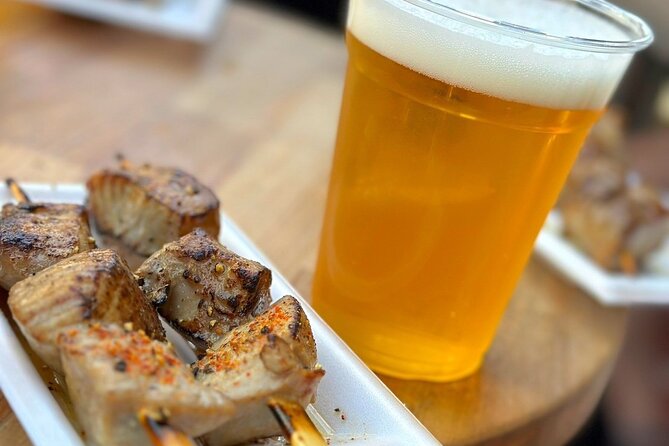
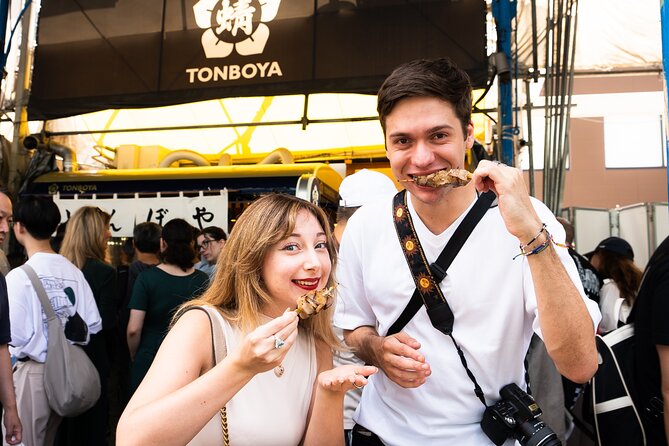
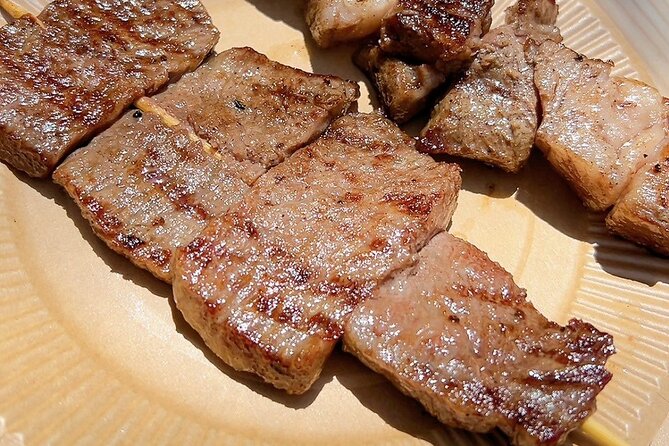
This is where the guide’s local judgment can save you from making random choices. The market offers many options, and you may find tuna sashimi, seafood rice crackers, tuna skewers, sushi, crab, eel, scallops, and other small dishes. The exact choices depend on what is available and what you decide to buy.
I especially like the flexibility of this arrangement. You are not forced into a fixed tasting menu. If you want a single taste of fatty tuna, you can keep the cost low. If you are hungry, you can turn the walk into a full seafood meal.
The tradeoff is that the tour price covers the guiding, not the food. Set your own spending limit before you arrive. A $42 tour can be a good value if the guide helps you find dishes you would have missed, but your total cost depends on how much you purchase.
Tsukiji Jogai Market: The Main Food Stop
The final hour takes place in Tsukiji Jogai Market, the public-facing market area filled with stalls and shops. This is the part most people imagine when they picture a Tsukiji food walk.
You will walk past counters selling fresh seafood and Japanese street food. The guide can explain what you are seeing and help you choose something that suits your appetite. The experience works best if you arrive ready to sample rather than expecting a sit-down restaurant meal from start to finish.
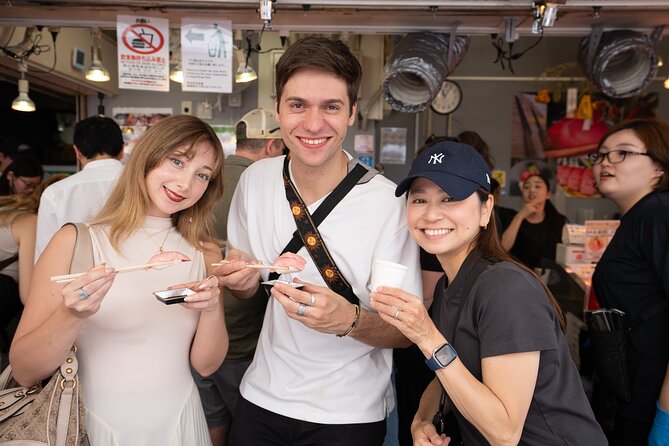
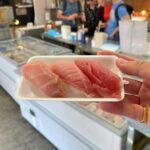
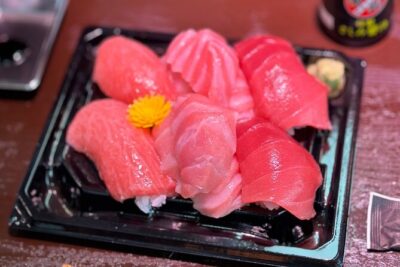
Several specific foods appear in the tour’s recommendations and guest experiences. Fatty tuna is a recurring favorite, and the guides can introduce you to different tuna cuts. One family enjoyed three types of fatty tuna sashimi, while other tastes included seafood rice crackers and tuna kabobs.
You might also find places serving large crab, eel, scallops, and other seafood dishes. These examples show the range of the market, but they should not be treated as a guaranteed menu. Shops change, availability varies, and the guide’s current suggestions will matter more than any fixed list.
One practical advantage is help with queues. Haru has waited in line at a popular tuna establishment while members of a family looked around nearby. That can be useful when you are traveling with children, older relatives, or anyone who would rather not stand in a narrow queue for every order.
Still, do not expect to skip every line. Tsukiji’s best-known shops can be popular, and waiting is part of the experience at some stalls. The guide may make the process easier, but cannot remove the market’s demand or guarantee immediate service.
What You Actually Eat, and What It Costs
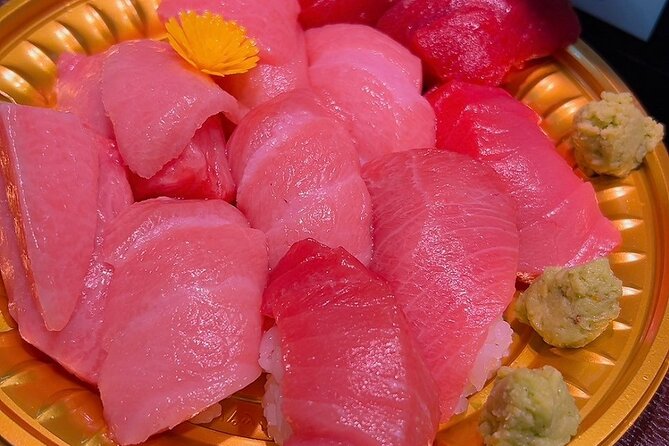
The tour fee is $42 per person, and food and drinks are not included. This structure is worth understanding before booking because it affects the final value.
I see two good reasons for the separate-food model. First, you have control. You can sample one modest item, share dishes with your group, or spend more on premium seafood. Second, you are not paying for items you would not choose.
The downside is less predictability. If you expect a complete food tour with a set number of tastings included, this is not that product. You are paying for the guide, market access, cultural explanation, and help choosing food. Your meal comes afterward as an additional expense.
For a budget-conscious visit, decide in advance how many items you want to try. For a more generous seafood breakfast, plan to spend beyond the tour price. The market format makes it easy to adjust as you go, but the choice is yours.
This approach also suits mixed groups. One person may want sushi, another may prefer grilled seafood, and a child may want a snack rather than raw fish. The guide can help you make different choices without forcing everyone into the same tasting plan.
Other shopping tours in Tokyo
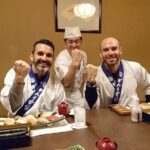
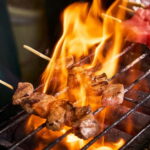
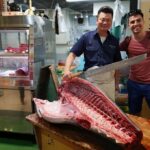
The Guides Make the Biggest Difference
The experience depends heavily on the person leading it. The listed guides include Haru, Toko, and Ryo, and each seems to bring a slightly different approach.
Haru is particularly useful for families and groups that need a flexible pace. He arrived early for one multigenerational family and adjusted when they became lost while looking for accessible subway exits. That kind of practical patience matters more than a polished speech when you are trying to get everyone through Tokyo on time.
He also helped with the food side by waiting in line at a popular tuna shop. For a group with children, older relatives, or different interests, that can make the market less tiring.
Toko is described as friendly and patient with children. If you are traveling with two kids, a guide who can keep them involved without rushing them is a meaningful advantage.
Ryo appears to suit people who want to focus on eating rather than a long history lesson. If your priority is finding excellent food and getting practical recommendations, his direct style may be a good fit.
You cannot select a specific guide from the information provided, so treat these names as examples of the kind of service you may receive, not a promise of assignment. The common thread is local guidance, English conversation, and help matching the market to your interests.
Why a Ten-Person Cap Helps
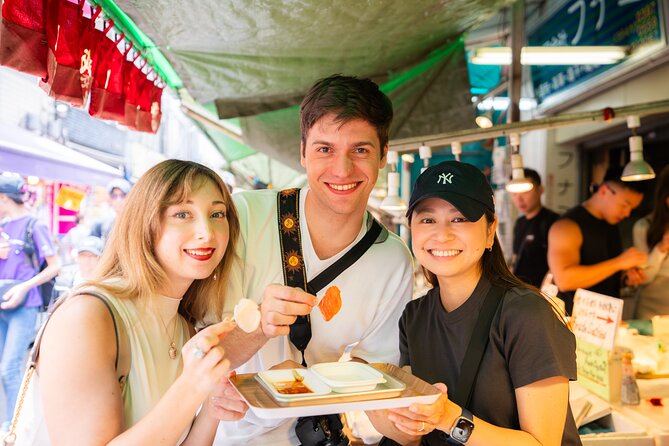
The maximum group size is 10 people. That is not a private tour, but it is small enough to keep the guide within conversation range in most situations.
At a market, group size matters. A large crowd can block narrow paths and make it hard to hear explanations. In a group of 10 or fewer, you have a better chance to ask what a particular seafood item is, how it is served, or which stall the guide recommends.
The small size is also useful during food stops. You can ask the guide to explain a dish, help with a purchase, or suggest an alternative if raw seafood is not appealing. The group will still need to move together, and a busy market will not feel quiet, but the format is more personal than a large walking tour.
The tour is open to most people, and it is near public transportation. If you have accessibility concerns, contact the provider before booking. One guide adjusted the route for a family seeking accessible subway exits, but the supplied details do not promise a fully accessible route.
Timing, Meeting Point, and Pace
This is a morning experience, lasting approximately two hours and 30 minutes. Morning is the right time for a fish-market visit because seafood activity and food stalls are central to the experience, though the exact atmosphere can vary by day.
The meeting point is 3-chōme-9-10 Tsukiji, Chuo City, Tokyo 104-0045. The activity ends back at the meeting point, which simplifies your next move. You can continue around Tsukiji, head toward Ginza, or use public transportation for another Tokyo sight.
Allow enough time to reach the starting point. The meeting area is near public transportation, but Tokyo subway stations can have several exits and long passageways. Arrive early, especially if you are traveling with children or need an accessible route.
The walking pace should suit most people, but the market has food queues and busy paths. Wear comfortable shoes and arrive hungry, while leaving room for the fact that some dishes may take time to buy.
Who Will Enjoy This Tour Most
I would choose this tour for a first visit to Tsukiji, for anyone nervous about ordering seafood in Japan, and for people who want a short food-focused activity rather than a full-day excursion.
It also suits families. The guide can keep the experience flexible, and the separate food payments let parents decide what their children should try. Haru’s patience with a multigenerational group is a useful sign for families managing different walking speeds and needs.
Food lovers who already know Tsukiji may find less value unless they want local recommendations or company. If you have spent time in the market before, the main benefit will be the guide’s personal food choices and cultural explanations.
This is less suitable if you want all tastings included, a private guide, or a formal cooking lesson. It is also not the right choice if you dislike seafood and have no interest in market food. The tour centers on seafood stalls, even though you can choose how much to eat.
Booking and Cancellation Details
You receive confirmation when you book, and the mobile ticket feature keeps the arrangement simple. The tour requires a minimum number of participants, so it can be canceled if that number is not reached. Poor weather can also lead to cancellation.
You can cancel for a full refund up to 24 hours before the start time. Changes or cancellations made less than 24 hours in advance are not accepted for a refund. The cut-off uses Tokyo local time, so check the timing carefully if you are booking from another country.
Should You Book the Tsukiji Walk?
Book it if you want a guided introduction to Tsukiji, prefer choosing your own food, and value help with the market’s many stalls. The $42 fee is reasonable when you use the guide for ordering advice, local context, and route planning, but remember to budget separately for seafood and drinks.
Skip it if you want a fixed tasting menu or already know exactly where you want to eat. For most first-time visitors, though, the small group, English-speaking guide, temple visit, and flexible food spending make this a practical way to begin a Tokyo morning.
FAQ
How long does the Tsukiji seafood tour last?
The experience lasts approximately 2 hours and 30 minutes.
Where does the tour begin?
It begins at 3-chōme-9-10 Tsukiji, Chuo City, Tokyo 104-0045, Japan.
Where does the activity end?
The activity ends back at the meeting point.
Is food included in the $42 price?
No. Food and drinks are not included and must be purchased separately.
What places are included in the tour?
The tour includes Tsukiji Hongwanji Temple, Tsukiji Fish Market, and Tsukiji Jogai Market.
Is the tour conducted in English?
Yes. A local Japanese English-speaking guide leads the experience.
How many people can join the tour?
The group has a maximum of 10 travelers.
Can I cancel for a full refund?
Yes. You can cancel at least 24 hours before the experience start time for a full refund.
More Markets in Tokyo
More Shopping Tours in Tokyo
More Tsukiji Market Tours in Tokyo
More tours in Tokyo we've reviewed












Tsukiji Market Tours, compared.
 ★ 5.0Tokyo Tsukiji Fish Market Food and Culture Walking TourFrom $99
 ★ 5.0Tokyo: Tsukiji Fish Market Food and Walking tourFrom $30
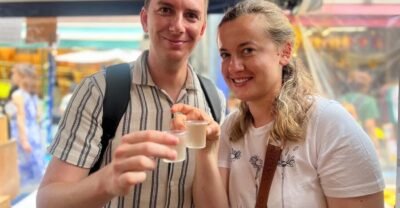 ★ 4.9Tokyo: Tsukiji Fish Market Guided Walking TourFrom $222 hours
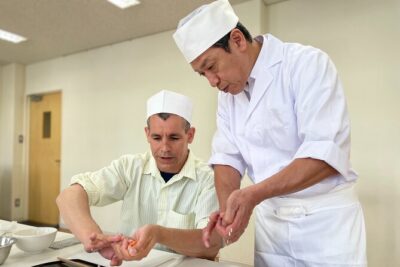 ★ 5.0Tokyo Sushi Making Class in Tsukiji with Professional ChefFrom $49
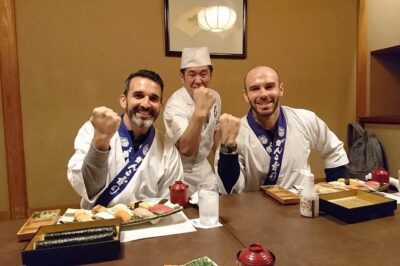 ★ 5.0Tsukiji Fish Market Guided Tour and Sushi Making with Pro ChefFrom $104
★ 4.7Tokyo: Tsukiji Fish Market Food and Culture Walking TourFrom $963 hours
★ 5.0Tsukiji Fish Market Guided Tour and Sushi Making with Pro ChefFrom $104
★ 4.7Tokyo: Tsukiji Fish Market Food and Culture Walking TourFrom $963 hours