Reviewed · GO-KARTS
Tokyo: Shibuya and Shinjuku Streets Guided Go-Karting Tour
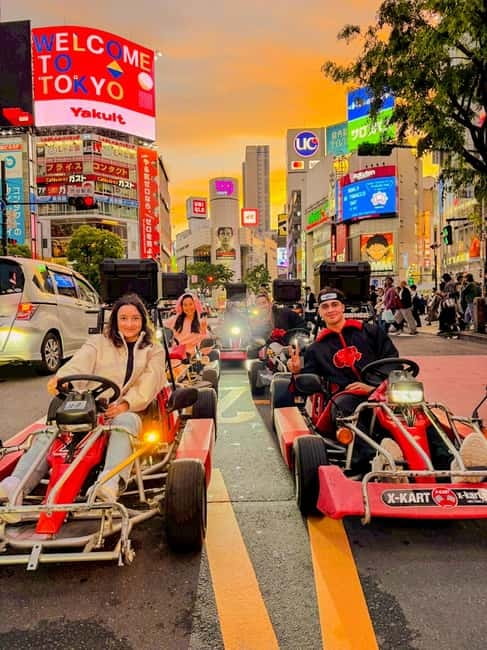
Tokyo is usually seen from trains, pavements, and observation decks. This tour gives you a very different view: you drive through Shibuya Scramble Crossing, past Shinjuku’s towers, and along the streets around Harajuku in a small go-kart convoy. A guide leads the way and takes photos while you concentrate on traffic and the city rushing past.
In This Article
- Key points to know before booking
- Starting near Shinjuku Central Park
- Why the small group matters on Tokyo streets
- From Shinjuku to Yoyogi Park
- The Shibuya Crossing moment
- Harajuku and the changing city views
- Kabukicho and Shinjuku after dark
- Costumes, photos, and the playful side
- What $72 buys you in one hour
- The driving license rules are the serious part
- Weather, clothing, and comfort
- Who will enjoy this most
- Booking advice for the best version of the ride
- Should you book the Shibuya and Shinjuku go-kart tour?
- FAQ
- Where does the go-kart tour start?
- How long does the activity last?
- Which Tokyo areas does the route cover?
- Is Shibuya Scramble Crossing included?
- Are photos included in the price?
- Are costumes provided?
- What languages are available?
- What driving documents do I need?
- Can I cancel if my plans change?
I like the small groups of up to eight people, which make the briefing and ride easier to manage. I also like the free costumes and photos, since they turn a simple drive into a playful Tokyo souvenir. The main drawback is the short one-hour duration: the route covers a lot, but stops are brief and this is not a relaxed sightseeing tour.
Key points to know before booking
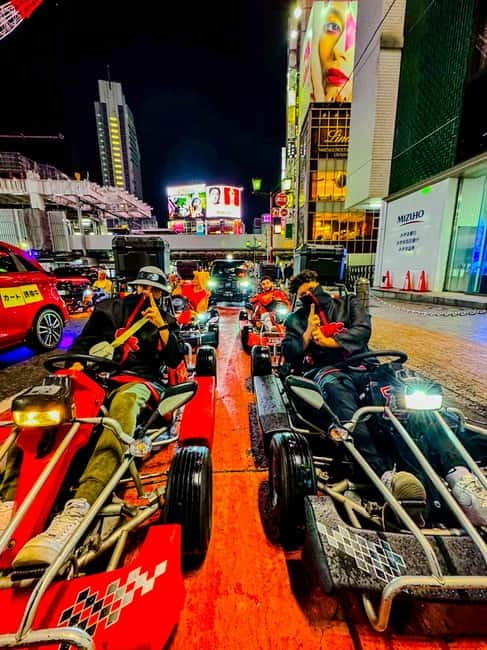
- Shibuya Crossing is the headline moment: You pass one of Tokyo’s best-known street scenes from behind the wheel.
- The route covers several famous districts: Shinjuku, Yoyogi Park, Shibuya, Harajuku, Kabukicho, and the Tokyo Metropolitan Government area all fit into one outing.
- Your guide also works as your photographer: Free photos are taken along the route, with guides such as Shingo praised for taking plenty of good shots.
- Costumes are part of the fun: You can choose free costumes and headwear before setting out.
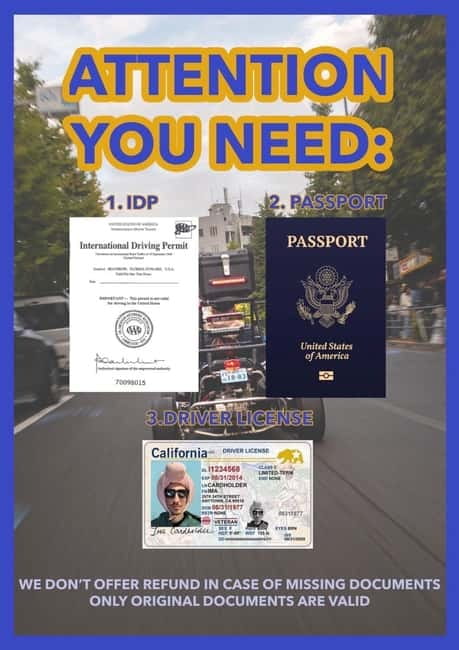
- You need the correct Japanese driving documents: An original license, a booklet-style IDP under the 1949 Geneva Convention, and your passport are generally required.
- A 6pm departure may give you both daylight and city lights: Starting times vary, so check the available slots before booking.
Starting near Shinjuku Central Park
The meeting point is the provider’s store at 4-chōme-18-2 Nishishinjuku, near Shinjuku Central Park and behind The Knot Tokyo Shinjuku. It is described as about a 20-minute walk from Shinjuku Station, so leave time to find the shop and complete the pre-ride steps.
You do not get hotel pickup or drop-off. That is easy enough for anyone staying around Shinjuku, but it matters if you are coming from another part of Tokyo. I would plan the route to the store before the day of the tour, especially if you have a tight evening schedule.
The first part in Shinjuku includes a 15-minute safety briefing. This is not wasted time. You need to understand the kart, the road rules, the hand signals or directions used by the guide, and how the group will move through city traffic. If you feel nervous about driving, tell the staff before departure. Patient instruction was a repeated strength, and some participants arrived unsure of themselves but became comfortable by the end.
A few more Tokyo tours and experiences worth a look
Why the small group matters on Tokyo streets
The tour accepts no more than eight participants, though the operator may divide a larger booking into smaller groups for safety. That limit is useful here. Driving through central Tokyo takes more attention than sitting in a sightseeing bus, and a compact convoy is easier for the guide to watch.
You follow a professional guide rather than choosing your own route. The guide handles navigation while you watch the road, keep your place, and enjoy the views when traffic allows. English and Japanese guiding are available.
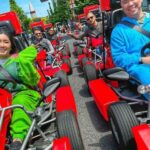
The guide also takes photos during the ride and at stops. This is one of the tour’s best practical features. You do not need to ask another participant to photograph every costume, crossing, or skyline moment, and the photos give you a record of the outing after you return to the shop.
Several guides have made a strong impression, including Shingo, who was praised for taking many photos and offering helpful support. Another guide identified as KURODAGTR35 received warm praise for driving and leading the group. Guide assignments can change, so book this for the format and route rather than expecting a particular person.
From Shinjuku to Yoyogi Park
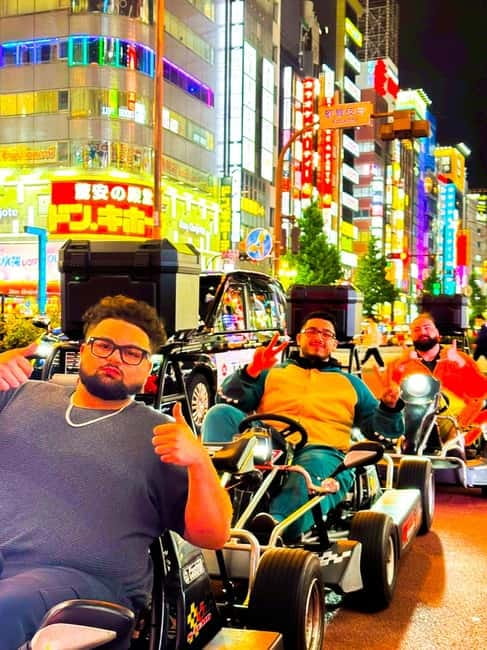
Once the briefing is over, the route begins around Shinjuku. The district is a fitting starting point, with tall buildings, broad roads, and a steady flow of vehicles and pedestrians. You get a quick sense of Tokyo as a working city before the route moves toward the next major stop.
Yoyogi Park brings a change of pace. You pass the park area and stop for photos, rather than spending a long period walking through it. The park is one of the useful visual breaks in the route, giving you greenery and open space between the dense streets of Shinjuku and Shibuya.
Keep your expectations in check. This is a scenic drive and photo stop, not a park tour. If you want time among the trees, shrines, or walking paths, plan a separate visit. On this tour, Yoyogi Park works best as part of the changing scenery.
The Shibuya Crossing moment
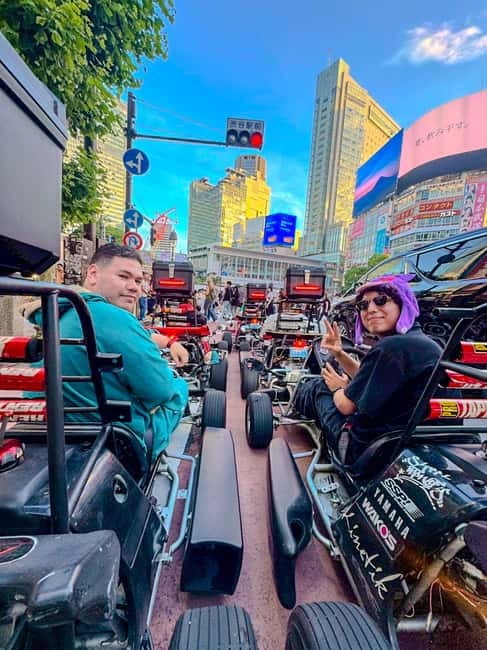
Shibuya Crossing is the central event of the ride. The tour takes you through the Shibuya area and past the famous intersection, with time for a photo stop and guided sightseeing. Seeing the crossing from a go-kart gives you a more active role than watching the crowds from a nearby café or crossing on foot.
You should expect traffic, pedestrians, and a busy road environment. The guide is there to keep the group organized, but you still need to drive carefully and follow instructions. This is not a place to focus only on taking pictures. Your guide handles the camera work while you keep your attention on driving.
The crossing itself is one short part of a wider route, so do not book this expecting a long stop at Shibuya. The value is in the whole sequence: driving into the district, passing the surrounding streets, seeing the famous crossing, and continuing through central Tokyo in costume.
Harajuku and the changing city views
After Shibuya, the route continues through Harajuku. This section adds another side of central Tokyo, with its youth culture, fashion streets, and strong contrast between busy commercial roads and nearby open spaces.
The itinerary allows for a photo stop, guided sightseeing, and a scenic drive. As with Yoyogi Park, the stop is brief. You see Harajuku as part of a moving city portrait rather than as a shopping visit, so I would not schedule your Takeshita Street shopping or Meiji Jingu visit during the same hour.
This is where the tour’s format works well. In a single outing, you move between districts that many first-time visitors explore separately. You will not study each area in detail, but you will get a memorable sense of how quickly Tokyo’s character changes from one neighborhood to the next.
A few more Tokyo tours and experiences worth a look

Kabukicho and Shinjuku after dark

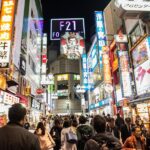
The route returns through Shinjuku and includes Kabukicho, the district known for its dense nightlife streets and bright signs. The tour also passes near the Tokyo Metropolitan Government Building before returning to the shop.
The timing can change how this section feels. A daytime ride gives you clearer views of buildings and streets. An evening slot brings illuminated signs and city lights, which several participants found especially appealing. A departure around 6pm may offer a mix of daylight and night scenes, depending on the season and schedule.
One participant wished for a night ride after taking a daytime slot, while another specifically recommended around 6pm for the combination of light conditions. That is useful advice, but do not assume every 6pm outing will have identical sunset views. Check the available start time and remember that Tokyo’s daylight changes by season.
Kabukicho is a pass-through and sightseeing section, not a nightlife stop. You will not leave the group to explore bars or restaurants. The point is to see the district from the road, then continue with the guide.
Costumes, photos, and the playful side
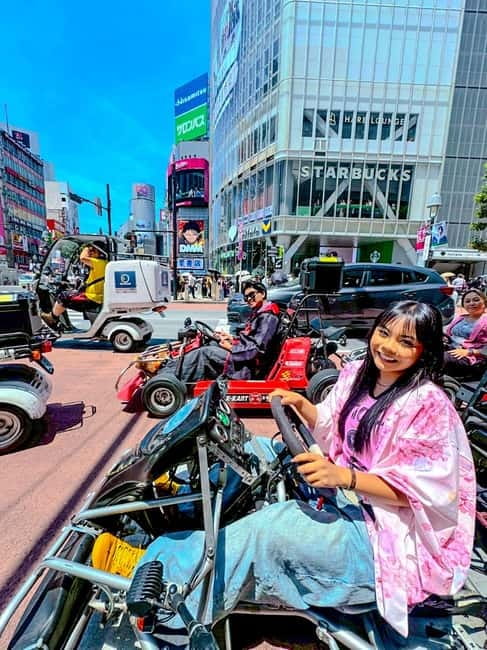
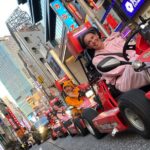
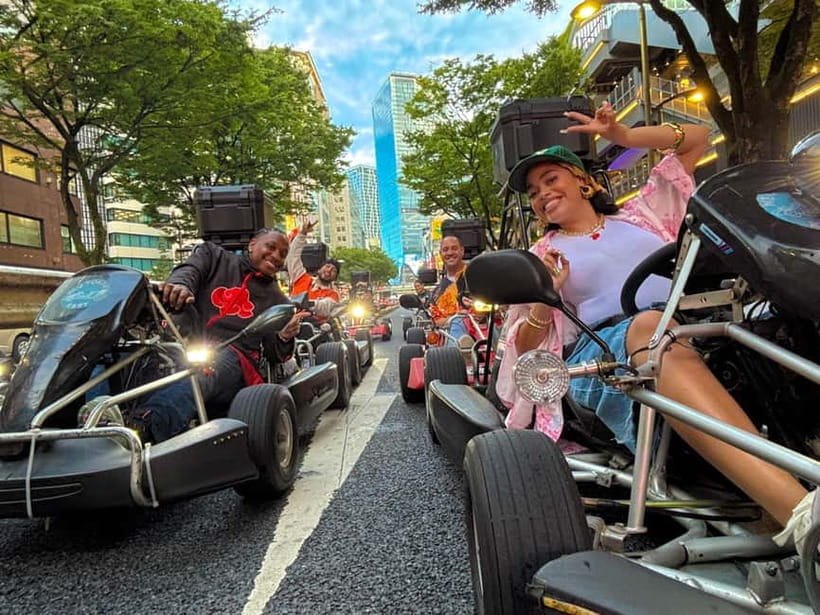
Free costumes and headwear are included. You can choose something before the ride, and I think you should consider doing so if you are comfortable with the idea. The costume is not a minor extra here. It helps explain why this feels more like a special event than ordinary transport.
The photos add real value. The guide takes action shots along the route and at selected stops, so you can remember the drive without trying to operate a phone while moving. Photos are included rather than sold as a separate package.
Still, this part will not suit everyone. If you prefer quiet sightseeing, dislike dressing up, or feel uneasy drawing attention in public, you may find the format tiring. The costumes and karts are designed to be noticed, and the fun depends partly on accepting that you are taking part in a public spectacle.
What $72 buys you in one hour
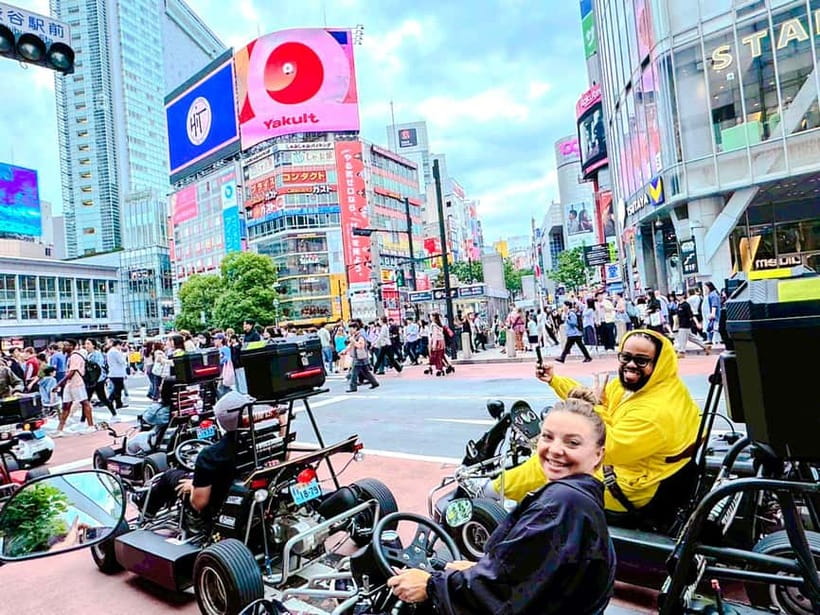
At $72 per person, this is not a cheap way to get from one Tokyo district to another. Tokyo’s trains and walking routes cost far less. You are paying for a guided activity, the kart, the route planning, the safety briefing, the guide’s help, the photo service, and the chance to drive through several famous areas.
The value is strongest if you want one memorable activity rather than a standard sightseeing transfer. In one hour, you cover a route that includes Shinjuku, Yoyogi Park, Shibuya, Harajuku, Kabukicho, and the Tokyo Metropolitan Government area. You also receive photos and can use the costumes at no extra charge.
The value is weaker if you want long visits at each landmark. The schedule moves quickly, and the one-hour format leaves little time for lingering. I would compare it with the cost of another paid attraction, not with the price of a train ticket.
The driving license rules are the serious part
The biggest booking issue is not the price. It is your paperwork. To drive legally in Japan, you must bring the right documents on the day of the activity. The operator says an original domestic driving license, an International Driving Permit in booklet form issued under the 1949 Geneva Convention, and your passport are required.
Do not assume a digital permit, a photocopy, or an IDP issued under a different convention will work. The operator specifically warns that incorrect or invalid documents can lead to denial without a refund.
Special rules apply to people from Switzerland, Germany, France, Belgium, Monaco, and Taiwan. You must bring:
- Your original domestic driving license
- An official Japanese translation from the authorized organization
- Your passport
For these countries, all three documents are required. The Japan Automobile Federation provides detailed guidance on driving in Japan, and you should check it before paying for the tour.
The stated restrictions include IDP holders from Brazil, China, Indonesia, Mexico, Qatar, Saudi Arabia, Bahrain, Kuwait, and Pakistan. Because license rules are easy to misunderstand, check the current JAF information and confirm that your documents match the operator’s requirements before booking. This is your responsibility, and arriving without valid paperwork does not qualify for a refund.
You also cannot drive under the influence of alcohol. Anyone found intoxicated will be refused participation without a refund. That rule is obvious but important, especially if you are planning this around a night in Shinjuku.
Weather, clothing, and comfort
The tour requires good weather. If poor conditions force a cancellation, you can receive a full refund or choose to reschedule. Since the activity takes place outdoors on an open road, weather can affect both comfort and visibility.
Dress for the forecast rather than for an indoor attraction. Gloves were provided during a cold ride, which helped, but you should still plan suitable clothing. In warm or humid weather, costumes and protective gear may feel less comfortable than ordinary sightseeing clothes.
Bring only what you can manage safely while driving. The supplied information does not specify storage arrangements, so avoid arriving with cumbersome bags unless you have confirmed where they can be kept.
Who will enjoy this most
I would recommend this to adults who already have the required driving documents and want a lively, unusual way to see central Tokyo. It suits couples, friends, and small groups who enjoy taking photos and do not mind attracting attention.
It is also a good choice for someone who has already seen Tokyo’s main sights from ground level and wants a fresh angle. The route links several familiar areas without asking you to spend half a day on a single attraction.
You may want to skip it if you are uncomfortable driving in city traffic, dislike costumes, need a slow and quiet pace, or have not confirmed your license eligibility. It is also not a good fit for anyone hoping to explore each district on foot. The tour gives you a fast visual sweep, not an in-depth neighborhood visit.
Booking advice for the best version of the ride
Check the license rules first, then choose your time slot. If the schedule allows, an early evening departure can give you both daytime views and Tokyo’s illuminated streets. A night ride may feel more dramatic, while a daytime ride can make the architecture and route easier to see.
Allow extra time to reach the store near Shinjuku Central Park. The activity itself lasts one hour, but you also need the 15-minute briefing before departure. Do not book it immediately before a train, dinner reservation, or airport transfer.
You can cancel for a full refund up to 24 hours ahead, and the reserve-now, pay-later option keeps your plans flexible. Those terms help, but they do not protect you from arriving with invalid driving documents or being refused for alcohol use.
Should you book the Shibuya and Shinjuku go-kart tour?
Book it if you want a memorable one-hour city adventure, enjoy playful photos, and meet Japan’s driving requirements. The combination of Shibuya Crossing, Harajuku, Kabukicho, free costumes, and a guide who photographs the ride gives the outing more character than a normal bus loop.
Skip it if you want a calm, detailed tour of each neighborhood or if you are not fully certain your license is valid. For the right person, $72 is fair value for the activity and the included photos. Just treat it as a fast, fun ride through Tokyo, not a substitute for exploring Shibuya, Harajuku, or Shinjuku on foot.
FAQ
Where does the go-kart tour start?
It starts at the activity provider’s store at 4-chōme-18-2 Nishishinjuku, near Shinjuku Central Park and behind The Knot Tokyo Shinjuku.
How long does the activity last?
The go-kart tour lasts one hour. A 15-minute safety briefing takes place in Shinjuku before the drive begins.
Which Tokyo areas does the route cover?
The route includes Shinjuku, Yoyogi Park, Shibuya Crossing, Harajuku, Kabukicho, and the area around the Tokyo Metropolitan Government Building before returning to the store.
Is Shibuya Scramble Crossing included?
Yes. The route includes a guided pass through the Shibuya area and a photo stop at Shibuya Crossing.
Are photos included in the price?
Yes. A professional tour guide takes photos during the ride and at photo stops, and the photos are included.
Are costumes provided?
Yes. Free costumes and headwear are available as part of the activity.
What languages are available?
Live guiding is available in English and Japanese.
What driving documents do I need?
You generally need your original domestic driving license, a booklet-style International Driving Permit issued under the 1949 Geneva Convention, and your passport. Drivers from Switzerland, Germany, France, Belgium, Monaco, and Taiwan need their original license, an official Japanese translation, and their passport.
Can I cancel if my plans change?
You can cancel up to 24 hours in advance for a full refund. If poor weather causes the operator to cancel the tour, you can receive a full refund or reschedule.
More Guided Tours in Tokyo

More Shibuya Tours in Tokyo
More Shinjuku Tours in Tokyo

More tours in Tokyo we've reviewed












Go-Karts, compared.
 ★ 5.0Flagship 2-Hours Official Street Go-Kart Tour – Tokyo Bay ShopFrom $642 hours to 2 hours 30 minutes (approx.)
 ★ 5.0Official Street Go-Kart in ShibuyaFrom $76
 ★ 5.0Official Street Go-Kart Tour – AkihabaraFrom $61
 ★ 5.0Tokyo Go Kart: Asakusa, Skytree, and Akihabara **IDP MUST**From $99
 ★ 5.0Shibuya Official Street Go-Kart in Shibuya AnnexFrom $69
 ★ 4.6Tokyo: Asakusa and Skytree Go-Kart Tour and Photo ShootFrom $67