Reviewed · TOKYO FOOD TOURS
From Ocean to Chopsticks Tsukiji Market Food Tour By Local Expert
Tsukiji is easiest to enjoy with a guide who knows how to turn its crowded lanes into a clear, tasty route. This four-hour walk pairs four or five food stops with a visit to Tsukiji Hongwan-ji Temple, giving you both the market’s flavors and its cultural setting. Guide Amber has earned special praise for her warm personality and local insight.
In This Article
- Key points to know before booking
- Why a guide helps at Tsukiji Market
- Starting at Tsukiji Hongwan-ji Temple
- Moving through Tsukiji Jogai Market
- Understanding the fish market area
- What the $195 price includes
- The guide can shape the whole morning
- Who will enjoy this Tsukiji food tour
- Practical details for a smoother visit
- Should you book this Tsukiji experience?
- FAQ
- Where does the Tsukiji food tour start?
- Where does the tour finish?
- How long does the tour last?
- How many people can join the tour?
- What food and drinks are included?
- Can I cancel for a refund?
I like the small maximum group of eight, which should make it easier to hear explanations and keep the group together. I also like that the price includes two soft drinks, water, and food chosen by the tour’s chefs. The main consideration is cost: at $195 per person, you are paying for guidance and a planned tasting route, not simply a market stroll.
Key points to know before booking
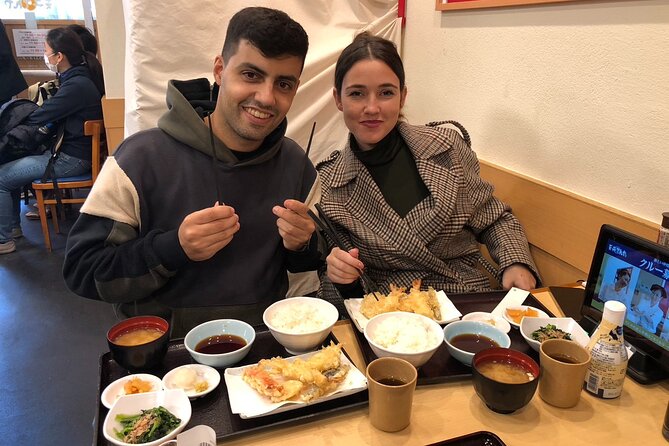
- Four to five chef-selected food stops: Your tastings are chosen to show more than one side of Japanese food.
- A useful cultural start: The tour begins at Tsukiji Hongwan-ji Temple, not directly at a food stall.
- Small groups capped at eight: This is a more personal format than a large market walk.
- Four hours on foot: You have time for the temple, market lanes, explanations, and tastings without rushing through the area.
- Drinks are included: Two soft drinks and water are part of the package, while alcoholic drinks cost extra.
- A guide can cut through the confusion: Tsukiji has shops, restaurants, seafood sellers, and kitchen stores packed close together, so a planned route has real value.
Why a guide helps at Tsukiji Market
Tsukiji is not one simple market hall. It is a district of wholesale and retail shops, seafood counters, restaurants, sushi restaurants, grocery sellers, and stores devoted to Japanese kitchen tools. That mix is part of its appeal, but it can also make a first visit feel scattered.
I like the idea of using the guide as a filter. Instead of spending your morning deciding which stall looks worthwhile, you follow a local route and learn what you are seeing as you eat. The commentary is important here. Without context, a fish counter or specialty shop may be interesting for a minute. With an explanation of its role in Japanese food culture, it becomes part of a larger picture.
The experience is also built around tasting several foods rather than sitting down for one long meal. That gives you a wider sample of Tsukiji. The exact dishes are not specified, so you should think of the menu as a chef-selected introduction rather than a fixed list of promised items. Sushi is a natural possibility in this seafood district, and the tour description specifically points to sushi and other local specialties.
The four-hour length matters. You are not being hurried through a quick bite and a few photographs. The schedule allows about one hour at the temple, followed by roughly three hours split between the Outer Market and the fish market area. Since the experience is a walking tour, comfortable shoes are a sensible choice.
A few more Tokyo tours and experiences worth a look


Starting at Tsukiji Hongwan-ji Temple
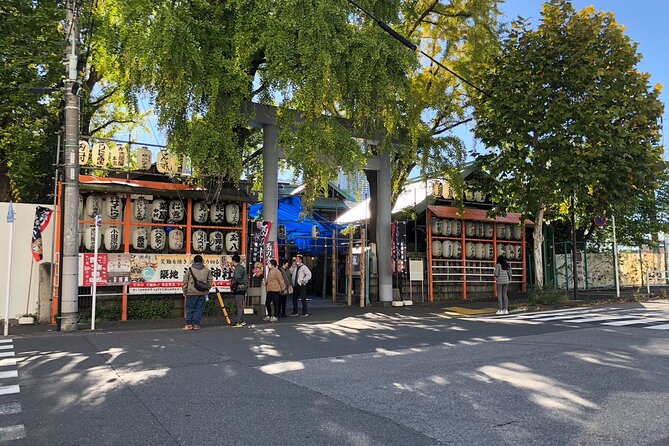
The meeting point is Tsukiji Hongwan-ji Temple, at 3-chōme-15-1 Tsukiji. The temple is next to Tsukiji Station on the Tokyo Metro Hibiya Line, so the start is convenient if you are using public transportation.
Beginning here gives the tour a better rhythm than jumping straight into food. Tsukiji is known around the world for seafood, but the neighborhood also has an important religious and cultural setting. The temple is a Jodo Shinshu Buddhist temple, and the one-hour stop gives your guide room to explain its place in the district before you enter the market lanes.
Admission is free, which means this part of the tour is not about paying to enter a famous attraction. Its value comes from the setting and the guide’s explanation. You can pause, look around, and connect the market to the wider life of the neighborhood.
This stop may feel long if your only goal is to eat. If you enjoy adding context to a food-focused morning, it is a smart choice. The temple also gives the group a calm starting point before the tighter streets and constant choices of Tsukiji.
Moving through Tsukiji Jogai Market
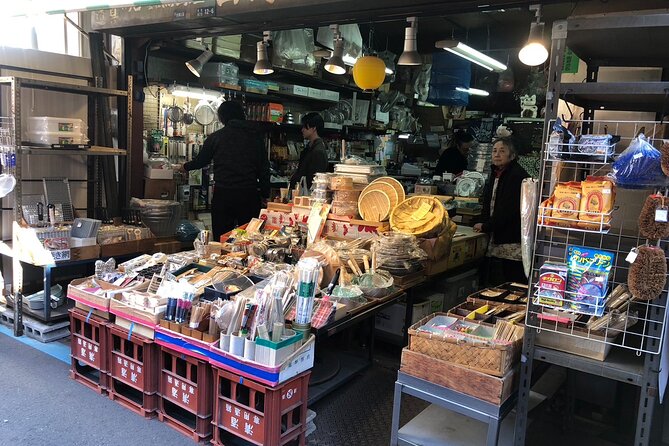
The next part takes about 90 minutes in Tsukiji Jogai Market, commonly called the Outer Market. This is the area most people picture when they think of Tsukiji today: a mixture of retail and wholesale shops, seafood sellers, restaurants, sushi restaurants, grocery shops, and kitchenware stores.
The market is called Food Town for good reason. Food is not limited to ready-to-eat snacks. You might see ingredients, tools, and prepared dishes side by side. That makes the area useful for both eating and understanding how Japanese cooking is supported by specialist shops.
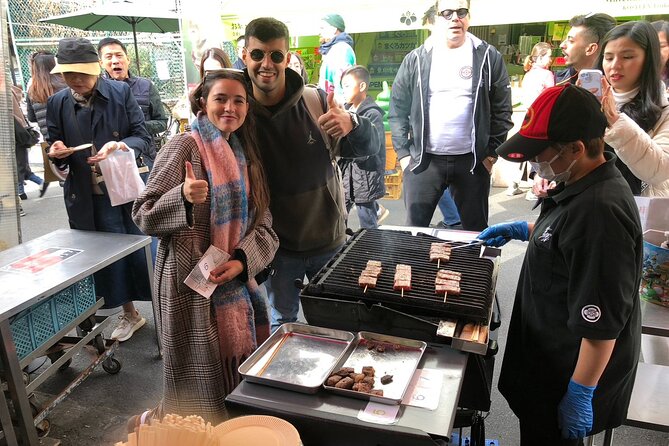
This is where the guide’s commentary can make the biggest difference. You may encounter items you do not recognize, and a quick explanation can help you decide what is worth trying. The tour’s food stops are selected by the master chefs connected with the experience, so you are not left to choose every bite on your own.
The package includes four or five food stations across the tour. That number is enough to create variety, but it does not mean four or five full restaurant meals. Portions are not described, so I would treat the tastings as a guided food crawl. If you have a large appetite, you may still want to plan another meal later.
The Outer Market portion is also useful for people who want to buy something practical. Japanese kitchen tools and groceries are part of the market mix. The tour does not promise shopping time or purchases, though, so keep your attention on the route and tastings rather than expecting a dedicated retail stop.
Understanding the fish market area
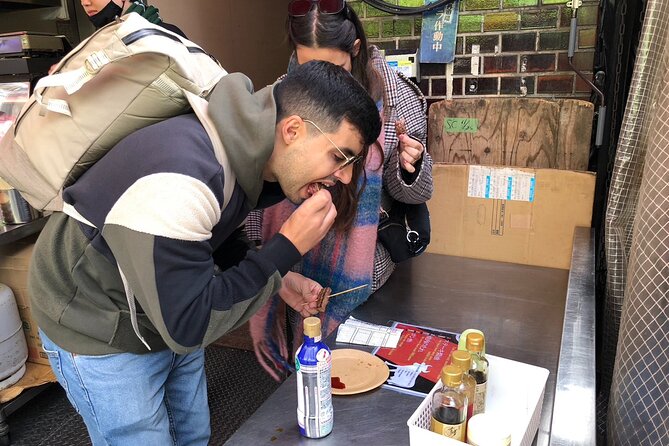
The final 90-minute section covers the Tsukiji fish market area, described as part of the Outer Market’s food district. The terminology can be slightly confusing because Tsukiji’s market functions are spread across different areas, while many people still use Tsukiji Fish Market as a broad name for the district.
For you, the practical point is simple: this is the seafood-focused part of the walk. Tsukiji is a place to try sushi as well as other Japanese foods, and the guide helps connect what you taste with the market’s role in Tokyo’s food culture.
This section should appeal most to people who like to compare flavors and ingredients rather than settle for one familiar dish. The tour is designed to show several local specialties, with chef-selected stops guiding the way. You may find seafood, prepared foods, or other market specialties, but the supplied details do not give a fixed menu, so dietary expectations should be discussed before booking if they matter to you.
A guided route is valuable here because market lanes can be crowded with choices. The group size limit of eight is especially helpful. You have a better chance of staying close to the guide, hearing the explanations, and reaching each stop together than you would in a large group.
The tradeoff is that a group route cannot meet every personal food preference. You are buying a planned introduction to Tsukiji, not a private custom tour. If you want to linger at one shop, spend a long time photographing every stall, or choose all your own dishes, the format may feel structured.
What the $195 price includes
The tour costs $195 per person. That is a serious price for a four-hour walking experience, so the value depends on how much you want help with food choices and local context.
You receive a professional guide for the full walk, two soft drinks, water, and tastings at four or five food stations. You also get a small group capped at eight people. Those inclusions make the price easier to understand than a basic sightseeing walk, but food portions and the exact dishes are not specified.
I see the strongest value for visitors who are short on time or uneasy about ordering unfamiliar foods. A good guide can help you avoid wasting time in a crowded market and can explain what makes each stop worth your attention. The cultural visit to Hongwan-ji Temple adds something beyond a simple eating tour.
The price is harder to justify if you are already comfortable navigating Tokyo’s markets and restaurants. You can explore Tsukiji independently, choose your own food, and spend less. You also pay extra for alcoholic drinks, which are available for purchase only to people aged 18 and older.
The tour is therefore best viewed as a guided tasting experience, not a bargain meal. You are paying for access to a clear route, a small group, food planning, and interpretation.
A few more Tokyo tours and experiences worth a look



The guide can shape the whole morning
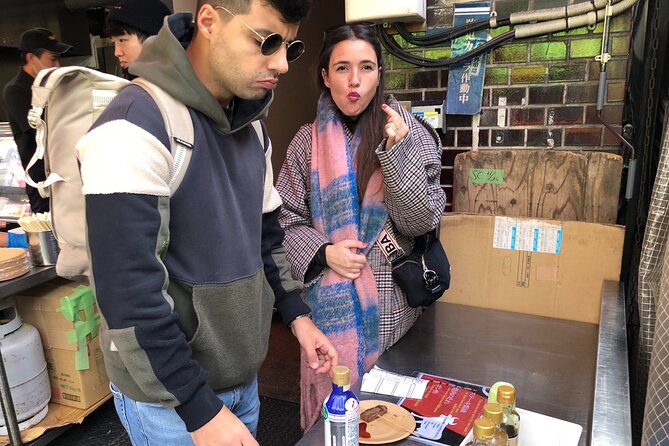
The experience is operated by Japan Local and Fun Experiences, and the guide is central to its appeal. Food is personal, and a market can feel very different depending on how well the guide reads the group, explains unfamiliar dishes, and keeps the pace comfortable.
Amber is the one guide named in the available feedback, and she received especially warm praise for her knowledge of the area and happy personality. That matters because four hours with a guide is a long stretch. A friendly, engaged guide can make the difference between a series of tastings and a connected morning in Tokyo.
Guide availability may vary, so you should not assume Amber will lead every departure. Still, her presence gives you a useful sense of the tone the operator aims for: personal, upbeat, and focused on helping you enjoy the neighborhood.
The maximum group of eight supports that style. It is small enough for questions and conversation without the high cost of a private tour. If you prefer a quiet, self-directed visit, any group tour may feel more social than you want. For most first-time visitors, though, this is a sensible middle ground.
Who will enjoy this Tsukiji food tour
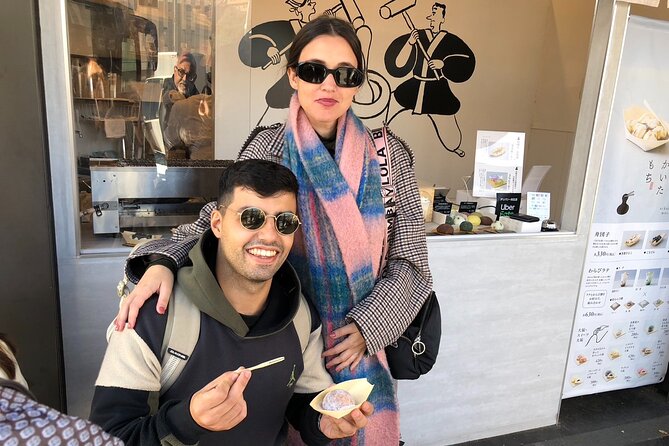
I would recommend this experience to you if you want food and context in the same morning. It suits first-time visitors to Tokyo, people who enjoy trying several small portions, and anyone who would rather have a local expert make the route simple.
It is also a good match if you are staying near a Tokyo Metro Hibiya Line stop. The meeting point beside Tsukiji Station is easy to reach, and the tour returns to the same meeting point at the end.
You should think twice if you need a fully specified menu. The tour promises four to five food stations selected by the chefs, but it does not list every dish. It may also be less suitable if you dislike walking, though most people can participate and the experience is described as a walking tour.
Food allergies and dietary restrictions are not addressed in the supplied details. If they affect what you can eat, contact the provider before booking rather than assuming substitutions will be available.
The tour also suits people who want to understand Tsukiji rather than simply photograph it. The temple stop, market explanations, kitchen shops, groceries, seafood, and restaurants create a broader view of the district.
Practical details for a smoother visit
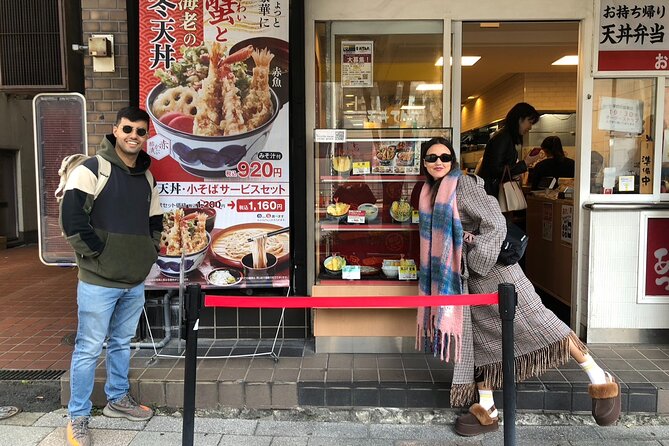
The activity lasts approximately four hours and starts and finishes at Tsukiji Hongwan-ji Temple. Confirmation is provided when you book, and the meeting point is close to public transportation.
Wear shoes you can comfortably walk in. You will spend the morning moving between a temple, market streets, and food stops. Since the itinerary divides the time between three parts of the area, arriving ready to walk will make the experience more enjoyable.
The included drinks are two soft drinks and water. Alcohol is not included and can be purchased separately by people aged 18 or older. If you want souvenirs or kitchen goods, bring room in your bag, but remember that the main purpose of the tour is tasting and interpretation.
Free cancellation is available if you cancel at least 24 hours before the start time. Cancellations or changes made less than 24 hours before the experience are not refunded or accepted, and the cut-off follows Tokyo local time.
Should you book this Tsukiji experience?
Book it if you want a guided, small-group introduction to Tsukiji with several tastings, a temple visit, and clear explanations along the way. The best reasons to choose it are the maximum of eight people, the chef-selected food stops, and the chance to make sense of a market that can otherwise feel like a maze.
Skip it if $195 feels too high for a tasting walk, if you want a fixed menu, or if you prefer choosing every restaurant and snack yourself. For the right person, though, the fee buys more than food. It buys a well-planned first look at one of Tokyo’s most important food districts, with Amber’s praised guiding style representing the warm, personal approach you should hope for from the operator.
FAQ
Where does the Tsukiji food tour start?
The tour starts at Tsukiji Hongwan-ji Temple, at 3-chōme-15-1 Tsukiji, Chuo City, Tokyo. The temple is next to Tsukiji Station on the Tokyo Metro Hibiya Line.
Where does the tour finish?
The experience ends back at the meeting point at Tsukiji Hongwan-ji Temple.
How long does the tour last?
The walking tour lasts approximately four hours. The schedule includes about one hour at Tsukiji Hongwan-ji Temple, 90 minutes in Tsukiji Jogai Market, and 90 minutes in the Tsukiji fish market area.
How many people can join the tour?
The tour has a maximum of eight people, keeping the experience relatively small and personal.
What food and drinks are included?
The price includes tastings at four to five food stations selected by the tour’s master chefs, along with two soft drinks and water. Alcoholic drinks are not included and are available to purchase for people aged 18 and older.
Can I cancel for a refund?
Yes. You can receive a full refund if you cancel at least 24 hours before the experience begins. Cancellations or changes made less than 24 hours before the start time are not refunded or accepted.
More Craft Workshops in Tokyo



More Tokyo Food Tours in Tokyo
More Tsukiji Market Tours in Tokyo

More tours in Tokyo we've reviewed












Tokyo Food Tours, compared.
 ★ 5.0Tokyo: Shinjuku Food Tour (13 Dishes at 4 Local Eateries)From $86
 ★ 4.9Tokyo: Shinjuku Food Tour (13 Dishes and 4 Eateries)From $97
 ★ 5.0Tokyo Night Foodie Tour in Shinjuku – Seasonal Sushi, Wagyu BeefFrom $111
 ★ 5.0Eat and Drink Like a Local: Tokyo Ueno Food Tour-Taverns&RamenFrom $95
 ★ 5.0Tokyo: Shibuya Food Tour (13 dishes and 4 Eateries)From $77
Tokyo: Shinjuku Food Tour – 15 Dishes, 3 Drinks, 4 EateriesFrom $723 hours
★ 5.0Tokyo: Shibuya Food Tour (13 dishes and 4 Eateries)From $77
Tokyo: Shinjuku Food Tour – 15 Dishes, 3 Drinks, 4 EateriesFrom $723 hours