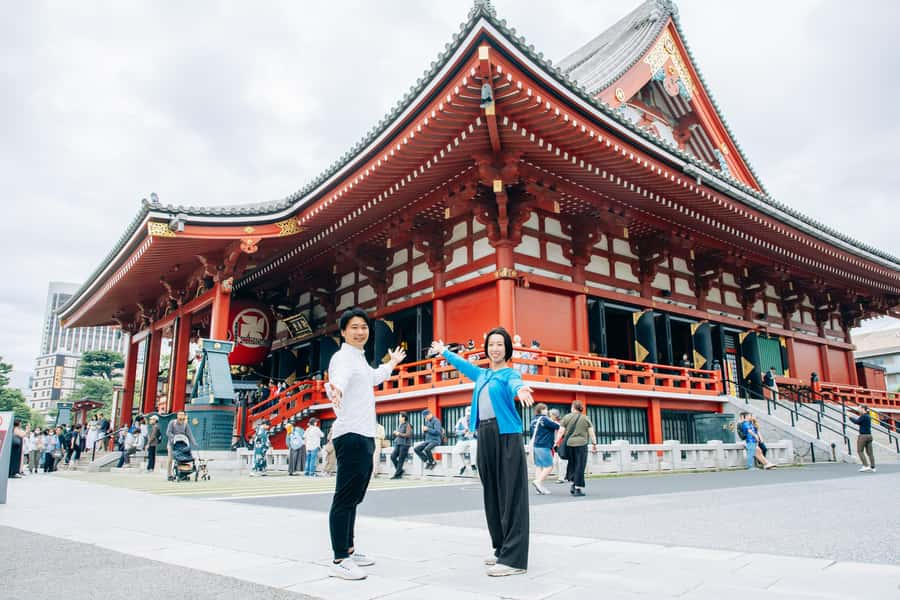
Reviewed · SUSHI MAKING CLASSES
Tokyo’s Past & Present: Asakusa, Skytree & Sushi Class
Tokyo’s story comes into focus on this small-group outing. You begin beneath the giant red lantern at Kaminarimon Gate, walk through old Asakusa, make your own hand-roll sushi, then rise 350 meters above the city at Tokyo Skytree. It is a clever way to connect Edo-era streets with modern Tokyo.
In This Article
- Key points at a glance
- Starting beneath Asakusa’s giant red lantern
- Nakamise Street and the approach to Senso-ji
- Senso-ji, incense, and the Kannon legend
- Tokyo Skytree from the 350-meter deck
- A possible photo stop at Azumabashi Bridge
- Kappabashi, where Tokyo shops for its kitchens
- Making hand-roll sushi in about 30 minutes
- What the $113 price really covers
- Who should book this Asakusa and Skytree tour
- FAQ
- Where does the tour start?
- Where does the tour end?
- Is Tokyo Skytree admission included?
- How high is the Skytree observation deck included in the tour?
- Is the sushi workshop included?
- What language is the tour conducted in?
- How many people can join the tour?
- What should I bring?
I like the maximum group size of five, which gives your guide room to adjust the pace and answer questions. I also like the small personal touches: guide Seira has tailored the day to individual wishes, helped with photos, and shared souvenir images afterward.
The main consideration is walking. You will cover several Asakusa areas on foot, and the day includes multiple stops rather than one long visit. The sushi workshop is short, about 30 minutes, so this suits you if you want a fun introduction rather than a serious cooking lesson.
Key points at a glance
- Kaminarimon starting point: Meet beneath Asakusa’s famous red lantern and get a quick orientation from your guide.
- Senso-ji and Nakamise Street: See Tokyo’s oldest Buddhist temple, traditional gates, snacks, souvenirs, and local rituals.
- Tokyo Skytree at 350 meters: Use included fast-pass entry for broad views over Tokyo, Tokyo Bay, and possibly Mount Fuji.
- Kappabashi kitchen street: Browse professional knives, tableware, cooking tools, and highly realistic food replicas.
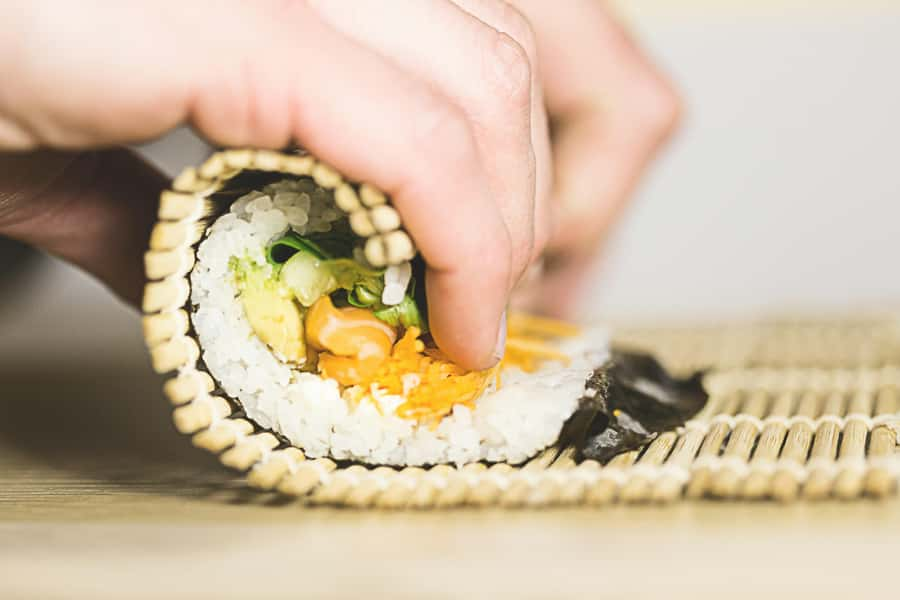
- Hand-roll sushi workshop: Choose ingredients such as salmon with avocado or tuna with cucumber, then make and eat your sushi.
- Small, photo-friendly format: The group is limited to five, and photos from the day are provided as a souvenir.
Starting beneath Asakusa’s giant red lantern
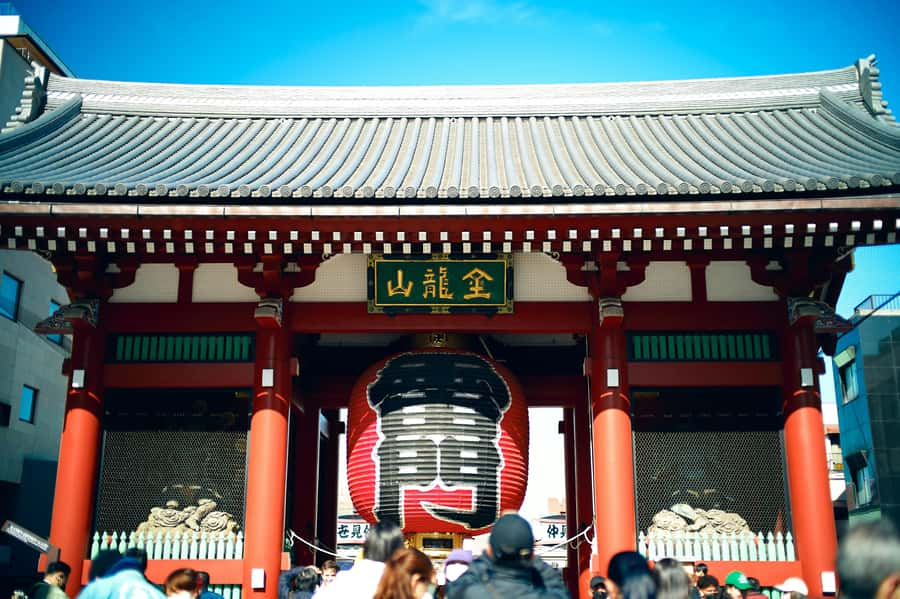
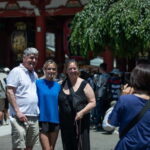
The meeting point is Kaminarimon Gate, the main entrance to Senso-ji. It is easy to recognize: look for the huge red lantern and the statues of Fujin and Raijin, the wind and thunder gods. Your guide meets you here, introduces the day, and gives you the basic plan before you set off.
This is a useful starting point because Kaminarimon is more than a convenient landmark. It gives you an immediate sense of Asakusa’s old-town character, with its grand religious entrance and stream of people heading toward the temple. It is also the best place for an opening photograph.
The tour is conducted in English, and the listed language options also include Chinese, Korean, and Japanese. Confirm your preferred language when booking if that matters to you. Since the group can be no larger than five, the guide should have time to explain details without turning the walk into a lecture.
A few more Tokyo tours and experiences worth a look
Nakamise Street and the approach to Senso-ji
From Kaminarimon, you walk along Nakamise Street, a 250-meter shopping lane leading toward Senso-ji’s main hall. Its shops sell traditional snacks, small gifts, and souvenirs, making this the place to pause if you want something more local than a standard Tokyo keepsake.
Your guide can help you choose items and explain the food culture behind the snacks. That help has real value if you cannot read Japanese packaging or are unsure what a particular treat is. You can browse on your own, but the guide adds context and helps you avoid buying a souvenir simply because it has attractive wrapping.
Nakamise can be crowded, especially around the temple approach. Keep your belongings close and expect a slower pace than the distance suggests. You will have more fun here if you treat it as a cultural walk with shopping along the way, not as a fast route to the main hall.
Senso-ji, incense, and the Kannon legend
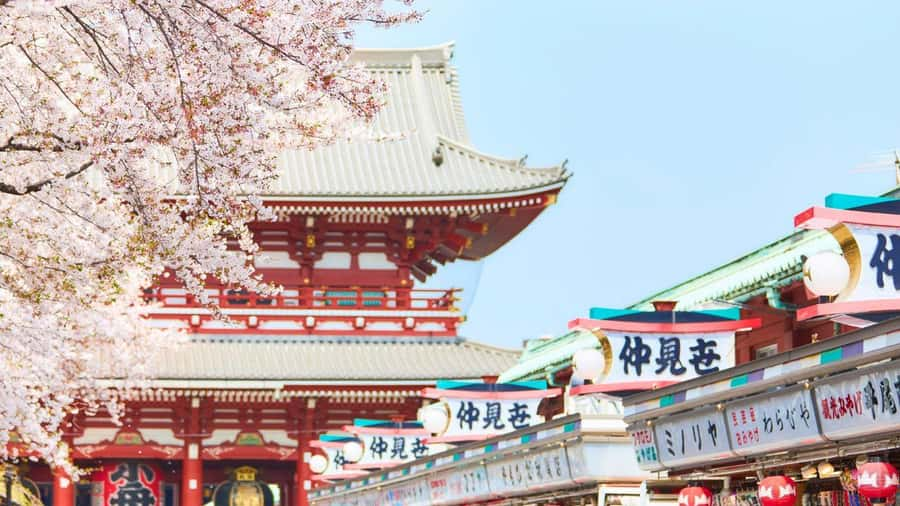
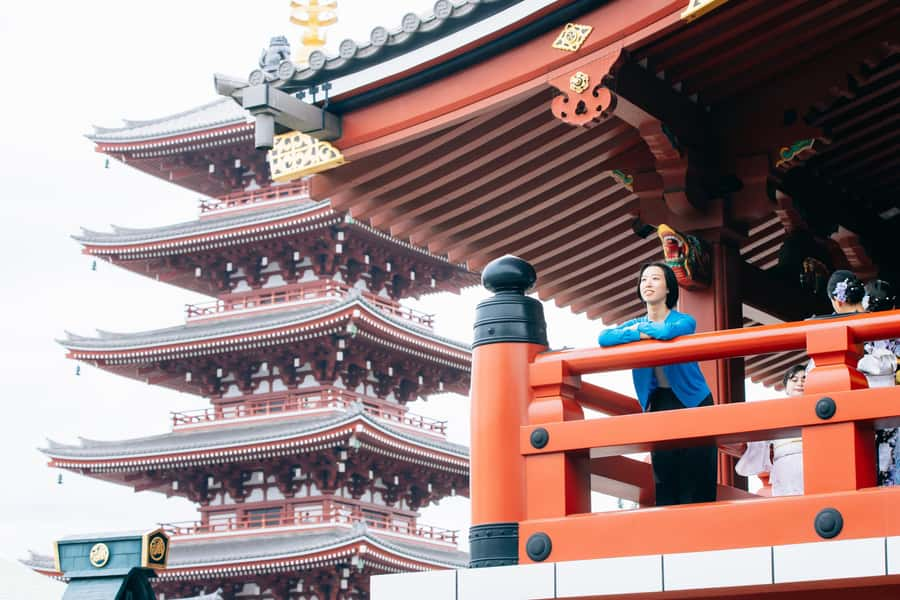
Senso-ji is Tokyo’s oldest Buddhist temple, founded in 645 AD. The main hall, Hozomon Gate, and five-story pagoda give the area a strong sense of place, even though the buildings you see today have been rebuilt over time. The temple grounds also offer some of the tour’s best photographs.
A guide is especially useful here because Senso-ji is not just a backdrop for pictures. If you wish, your guide can show you how to take part in familiar Japanese temple customs, including purification at the temizuya, wafting incense smoke, and drawing an omikuji fortune paper.
You will also hear the local legend of the Kannon statue. The story is not widely known even among Japanese people, so it gives this well-known temple a more personal point of interest. Ask questions here. The temple visit is where the tour moves beyond sightseeing and begins to explain why Asakusa matters.
The rituals are optional. You do not need to take part, and you should follow the instructions at each area. Dress and behave respectfully, particularly near worshippers and during quiet moments inside the temple.
Tokyo Skytree from the 350-meter deck
After old Asakusa, the tour shifts to Tokyo Skytree. The change is dramatic. From low temple roofs and narrow shopping lanes, you move toward one of the city’s most recognizable modern structures.
Included fast-pass entry helps reduce the uncertainty of waiting in a long admission line. That does not mean every part of the Skytree experience will be instant, but it does make the main entry process easier. Since the tower is a major Tokyo attraction, included admission is one of the strongest practical reasons to consider this tour.
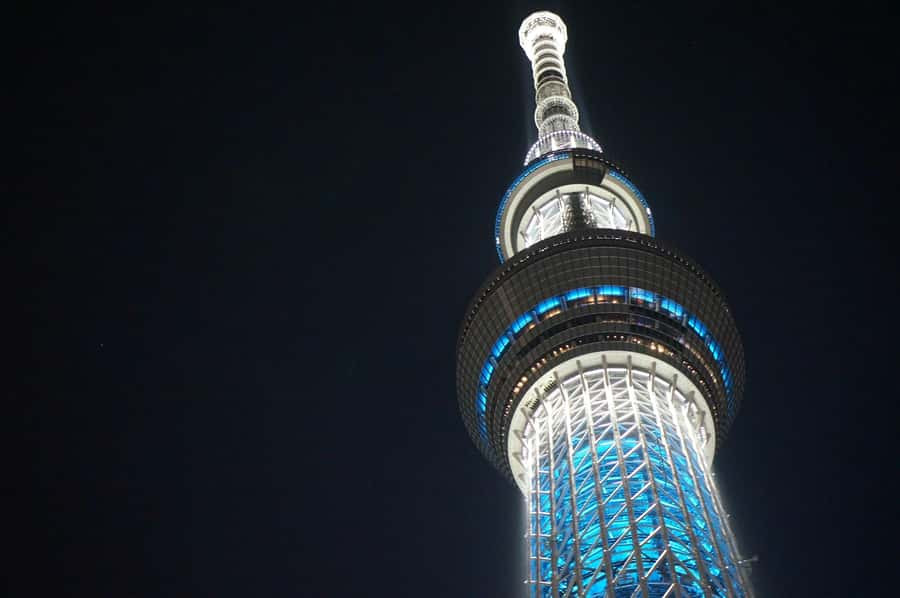
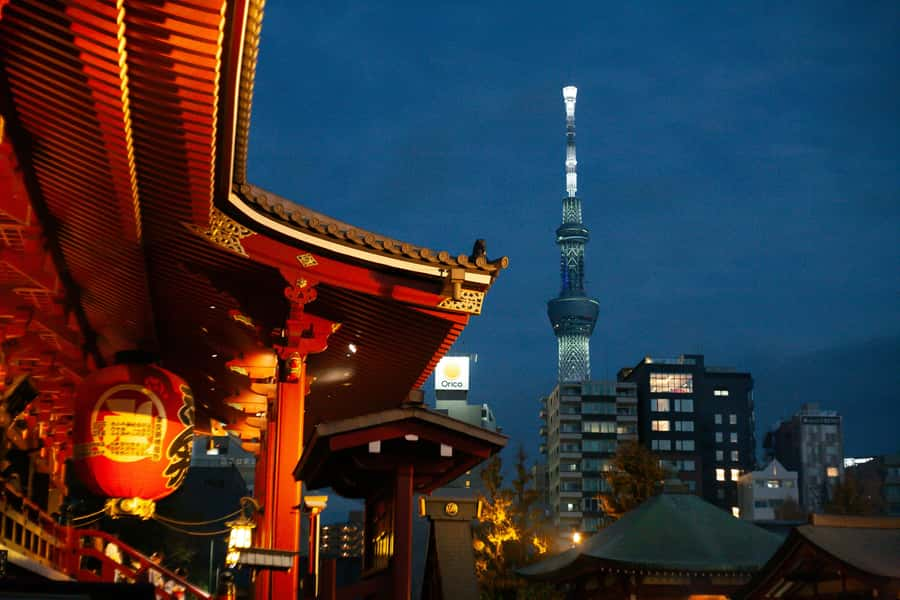
The main observation deck is 350 meters above ground. From there, you get a 360-degree view across Tokyo. On a clear day, you might see Tokyo Bay and Mount Fuji. Weather matters greatly, so keep your expectations flexible. A hazy day can still give you an impressive view of the city, but Mount Fuji is never guaranteed.
For a small thrill, step onto the glass floor. It is a quick experience, but it gives you a direct look down toward the streets below. If you want to go higher, the 450-meter observation deck is also available as an additional option, though the provided tour details do not state that it is included in the price.
The Skytree visit works well at the end of the main sightseeing portion because it lets you look back at the area you have just explored. From above, Asakusa becomes part of the wider Tokyo picture rather than an isolated old district.
A possible photo stop at Azumabashi Bridge
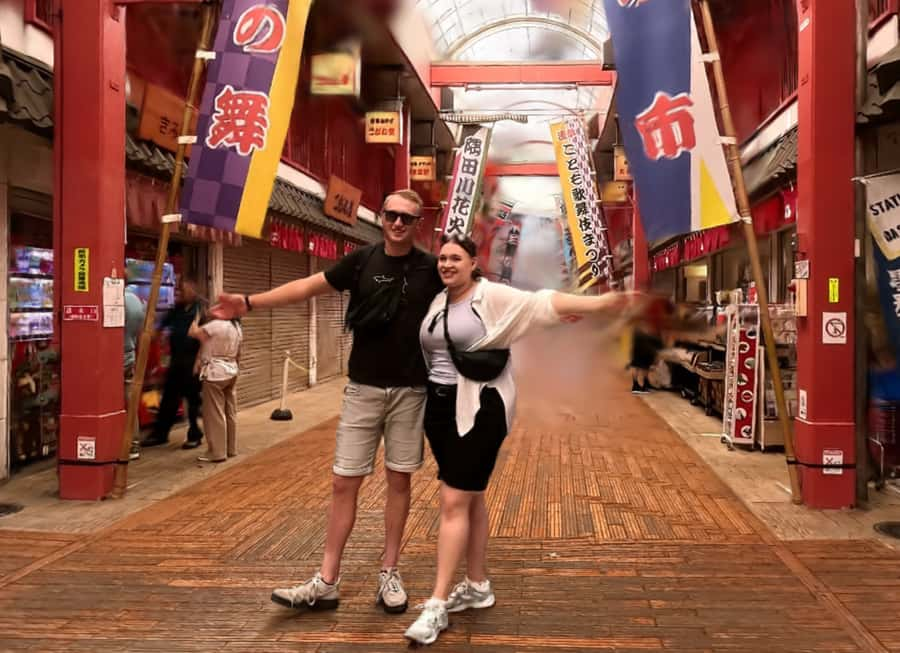
After Skytree, you return toward Asakusa. If time allows, your guide can take you to Azumabashi Bridge, where you can photograph the tower from a different angle.
This stop is not guaranteed, so do not book the tour solely for it. Its value depends on the day’s pace, crowd levels, and how much time you spend at the temple, shops, and tower. Still, it is a useful extra for anyone who wants a city photo with Skytree rising behind the riverfront area.
The guide’s photo service is another thoughtful feature. Photos were taken during the day for some participants, including memorable 3D images, and souvenir photos are provided. You should see this as a pleasant extra rather than a professional photography session. The details of how many images you receive are not specified.
A few more Tokyo tours and experiences worth a look
Kappabashi, where Tokyo shops for its kitchens
Kappabashi sits between Asakusa and Ueno and is one of the most unusual stops on the route. This shopping district is aimed at the food trade, so you can browse professional-grade knives, tableware, cooking tools, and restaurant supplies.
The food replicas are a particular attraction. Japanese restaurants often display realistic plastic models of their dishes, and Kappabashi shops sell these remarkably detailed samples. Some shops also offer food sample-making experiences, though the provided tour details do not say that one is included in your visit.
Custom-engraved knives can make memorable souvenirs, but think carefully before buying one. A professional knife is useful only if you can transport it legally and safely, and personal expenses are not included in the tour price. Tableware and small kitchen tools may be easier purchases if you want something practical.
Kappabashi gives you a look at Japanese craft and restaurant culture that you would not get from a standard temple-and-tower itinerary. It also adds a useful shopping stop for cooks, food lovers, and anyone seeking a more distinctive souvenir.
Making hand-roll sushi in about 30 minutes
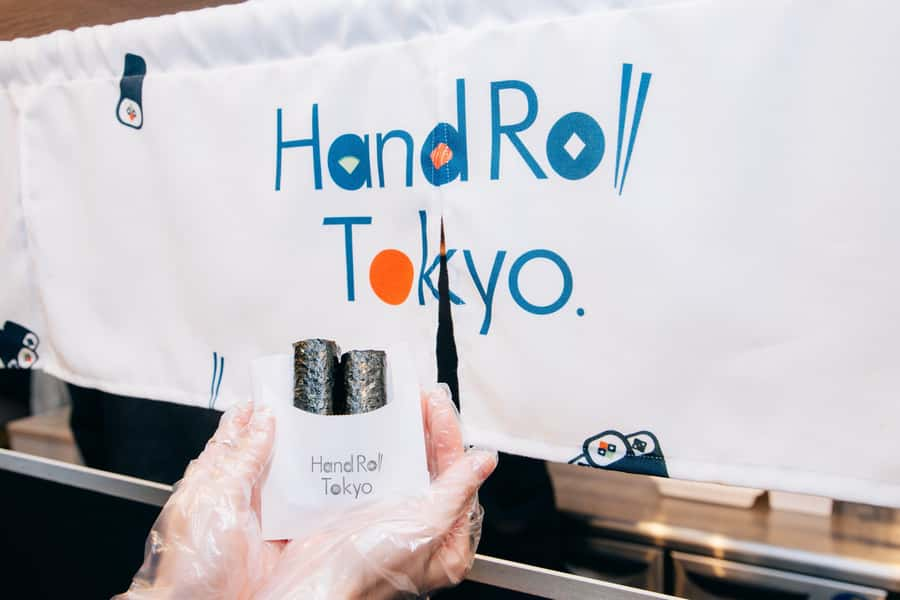
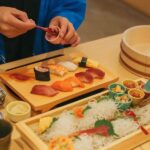
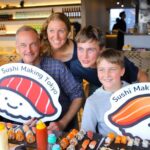
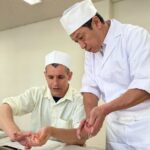
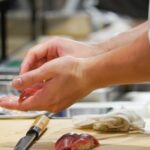
The day ends with a hands-on sushi workshop at Hand Roll Tokyo Asakusa. You choose ingredients, with examples including salmon and avocado or tuna and cucumber, then use a special sushi rolling machine to shape the roll.
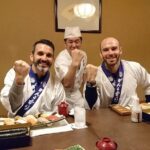
You cut the sushi with a knife and eat it in the eat-in space. The activity takes about 30 minutes, and the workshop fee is included. That last point matters because hands-on food activities can quickly make a low tour price less attractive once extra charges appear.
This is a simple class, not a full lesson in rice preparation, fish selection, knife technique, or traditional sushi craft. Its strength is that you get to make something yourself without committing half a day to a cooking school. It is a good fit for families, first-time sushi makers, and anyone who likes an activity that ends with lunch or a snack.
The choice of ingredients also gives you some control over the experience. Salmon with avocado offers a familiar combination, while tuna with cucumber keeps the roll fresh and simple. The supplied details do not promise a wide menu of choices, so ask your guide or the workshop staff about available fillings on the day.
Ending with sushi is a smart choice. After temples, shopping, and city views, you get a relaxed activity that does not require another long transfer. Your guide reviews the day, thanks you for joining, and can arrange a taxi or suggest nearby bars and restaurants if you want to continue exploring.
What the $113 price really covers
At $113 per person, this tour sits in the middle range for a small guided Tokyo experience, but the value depends on how you use the guide. The price includes the Asakusa and Skytree tour, fast-pass entry to Tokyo Skytree, and the hand-roll sushi workshop. It also gives you a private guide for a group of no more than five.
That combination would cost more if you separately paid for a Skytree visit, hired a guide, and booked a food activity. The price is strongest for you if this is your first time in Asakusa and you want someone to explain the temple customs, point out worthwhile shops, and keep the day moving.
Personal purchases are extra, including snacks, souvenirs, knives, tableware, and food replicas. Transportation to and from the Kaminarimon meeting point is also not included. You should budget for those separately.
A possible weakness is that the schedule covers many subjects in a compact outing. You may not have unlimited time at Nakamise Street, Kappabashi, or Skytree. If you prefer to linger over shopping or spend hours at one museum or temple, an independent day may suit you better.
Who should book this Asakusa and Skytree tour
I would recommend it to you if you have only a few hours in Tokyo and want a clear introduction to one of the city’s most historic districts. The itinerary gives you old temple architecture, traditional snacks, modern city views, Japanese kitchen culture, and a small food activity in one package.
It also suits you if you like a personal guide but do not want a large coach group. Seira, one of the named guides associated with the experience, has adjusted the day to individual interests and helped create photo memories. That kind of flexibility is more likely with five people than with 30.
Families and couples should find the sushi workshop easy to enjoy. Food lovers will appreciate Kappabashi, while photographers will want to allow time for Kaminarimon, Senso-ji, Skytree, and possibly Azumabashi Bridge.
I would hesitate if you dislike walking, need a fully slow-paced day, or want an advanced sushi class. Comfortable shoes are important. The tour is also less suitable if your main goal is a long shopping session, since the route has several fixed highlights.
You can cancel up to 24 hours in advance for a full refund, and the reserve-now, pay-later option helps if your Tokyo plans are still changing. Those terms add flexibility, but the main decision is simpler: do you want a guided taste of several Tokyo worlds, or do you want to explore one district at your own pace?
FAQ
Where does the tour start?
The tour starts at Kaminarimon Gate, the main gate of Senso-ji in Asakusa. Meet your guide in front of the large red lantern and the statues of the wind and thunder gods.
Where does the tour end?
The activity ends back at the meeting point.
Is Tokyo Skytree admission included?
Yes. Guided entry to Tokyo Skytree and fast-pass entry to the observation deck are included.
How high is the Skytree observation deck included in the tour?
The included observation deck is 350 meters above ground. A higher observation deck at 450 meters may also be available, but the provided details do not state that it is included.
Is the sushi workshop included?
Yes. The hand-roll sushi workshop fee is included in the tour price and takes about 30 minutes.
What language is the tour conducted in?
The tour is conducted in English. Chinese, Korean, and Japanese are also listed as available languages.
How many people can join the tour?
The maximum group size is five people.
What should I bring?
Bring comfortable shoes because the tour involves walking. Transportation to and from the meeting point and personal expenses are not included.
More Tickets & Passes in Tokyo


More Sushi Making Classes in Tokyo
More Asakusa Tours in Tokyo
More tours in Tokyo we've reviewed












Sushi Making Classes, compared.
 ★ 5.0Sushi Making Tokyo Roll and Authentic Japanese Sushi ClassFrom $59
 ★ 4.9Tokyo: Roll and Authentic Sushi Making Class in AsakusaFrom $581h 40m
 ★ 4.9Tokyo: Sushi Making Class in a Happi Coat near a Famous SpotFrom $421h 30m
 ★ 5.0Sushi Making Tokyo! Popular Maki Sushi & Japanese Sushi(+Recipe!)From $63
 ★ 5.0Tokyo Sushi Making Class in Tsukiji with Professional ChefFrom $49
 ★ 5.0Tokyo Night Foodie Tour in Shinjuku – Seasonal Sushi, Wagyu BeefFrom $111