Reviewed · KAMAKURA & ENOSHIMA DAY TRIPS
Kamakura Full Day Tour with Licensed Guide and Vehicle from Tokyo
Kamakura’s 11.4-meter Great Buddha is the headline, but the real pleasure is seeing how quickly the city shifts from temple gardens and Zen compounds to sea air, bamboo, and old shopping streets. A private car makes this long day far easier than piecing the route together by train and local transport.
In This Article
- Key points to know
- Why Kamakura works as a day trip from Tokyo
- Hasedera: gardens, sea views, and Kannon
- Meeting the Great Buddha at Kotoku-in
- Kencho-ji and Kamakura’s Zen tradition
- Tsurugaoka Hachimangu, Kamakura’s central shrine
- Hokoku-ji’s bamboo and matcha pause
- Yuigahama Beach and the taste of the sea
- Komachi Street for food and small purchases
- Eishoji, a quiet final temple
- What the private guide adds
- Is $1,026.90 good value for four people?
- Who should choose this Kamakura day?
- Should you book it?
- FAQ
- How long is the Kamakura tour?
- Is hotel pickup offered?
- Is the tour private?
- How many sites can we visit?
- Are entrance fees included?
- Is lunch included?
- Can I request a specific vehicle type?
- What happens if the weather is poor?
I like the freedom to shape the day around three or four sights, and I like having a licensed guide explain the religious details behind places such as Hasedera and Tsurugaoka Hachimangu. The main drawback is cost: at $1,026.90 for up to four people, this makes the most sense for a small group sharing the vehicle. Also, the eight-hour day includes the ride from Tokyo, and traffic can reduce your sightseeing time.
Key points to know
- Tokyo pickup with private transport: The drive to Kamakura takes about an hour, and the vehicle is reserved for your group.
- Choose three or four main sights: The day can be shaped around temples, shrines, the beach, shopping, or a mix.
- Licensed multilingual guide: Guides such as Kei and Yoshi have led days that combined major sights with local food and cultural details.
- The Great Buddha and Hasedera: These are the essential Kamakura stops, with admission paid separately.
- Komachi Street adds a local break: Leave room for noodles, sushi, Hatosabure biscuits, and small shops.
- Traffic and weather matter: The eight-hour length includes transport, and poor weather can lead to a new date or a full refund.
Why Kamakura works as a day trip from Tokyo
Kamakura was the seat of Japan’s first warrior government, and its temples and shrines still give the city a different feel from central Tokyo. You get historic religious sites, wooded hills, and the Pacific coast in one compact outing.
The private format matters here. Kamakura’s sights are spread around town, and the most famous places can become tiring when you combine trains, buses, walking, and lines. A car lets you move between districts without spending the day checking connections.
The trip from Tokyo takes about an hour, but that estimate depends on traffic. Since the total tour lasts about eight hours, you should not think of it as eight full hours inside temples. A busy road can shorten the time available at later stops, so choosing your priorities before departure is smart.
This is not a fixed group coach tour. Only your party participates, and the guide can adjust the selection from the available stops. The stated format is a custom visit to three or four sites, even though the full route includes more possibilities. A past eight-hour day managed eight destinations, but that should be viewed as an especially efficient schedule, not a promise.
A few more Tokyo tours and experiences worth a look
Hasedera: gardens, sea views, and Kannon
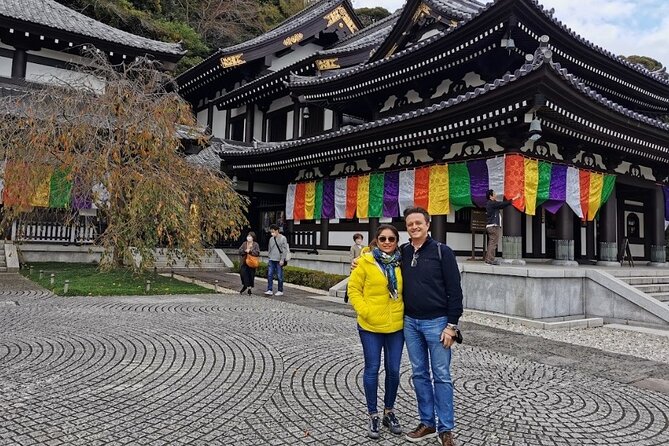
Hasedera is one of the best opening stops because it brings together religious art, gardens, and views toward the coast. The temple belongs to the Jodo sect and is known for its gilded wooden statue of Kannon, the goddess of mercy.
The eleven-headed statue measures 9.18 meters and is housed in the Kannon-do Hall. Its scale gives the visit real weight, even if you are not deeply familiar with Buddhist sculpture. Ask your guide to explain the meaning of the multiple heads and the role of Kannon in Japanese worship.
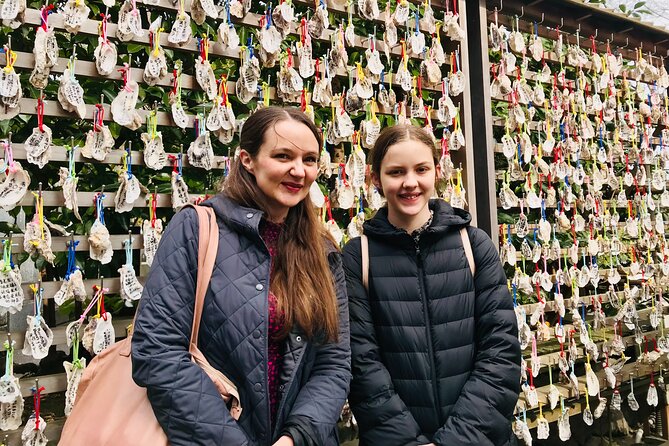
The temple is also known for its gardens. From higher points in the grounds, you can look toward the ocean, which helps explain Kamakura’s appeal as more than a collection of old buildings. You may also have a chance to write a wish on an oyster shell, a small activity that gives the visit a personal touch.
Allow about an hour here. Admission is not included, so keep money available for each temple. Hasedera can be a good choice for you if you want beauty and religious art in equal measure, rather than a purely architectural stop.
Meeting the Great Buddha at Kotoku-in
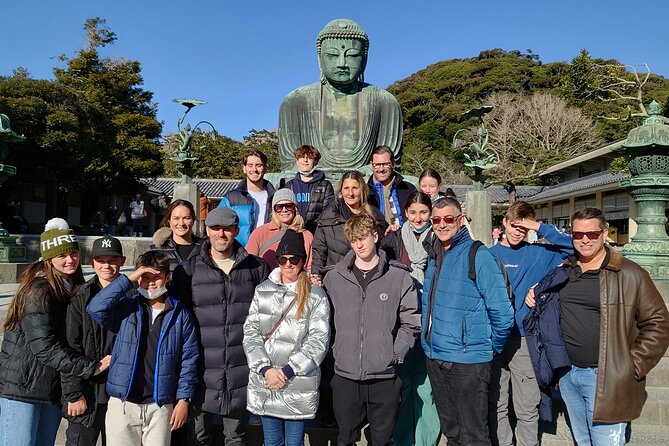
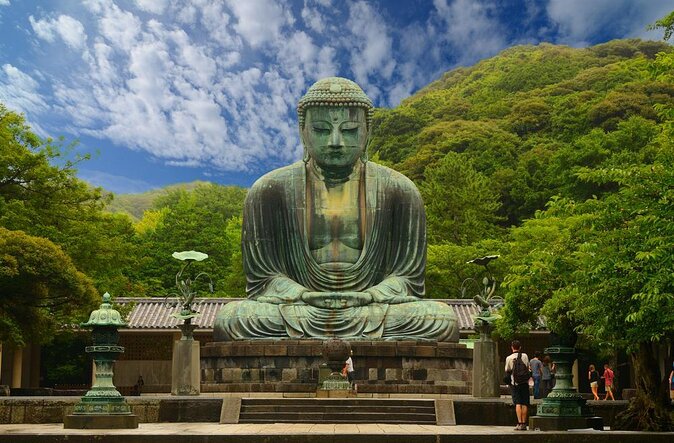
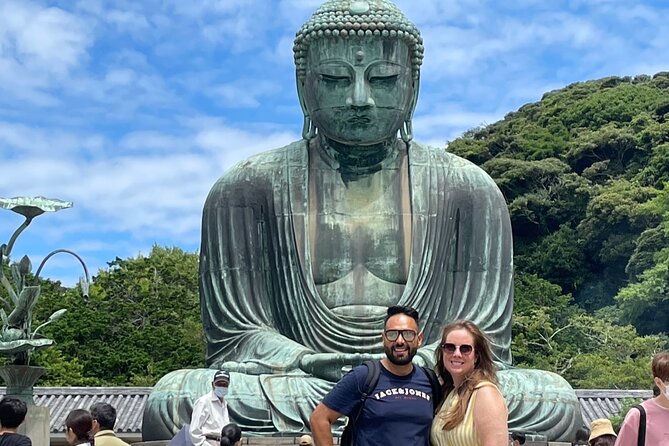
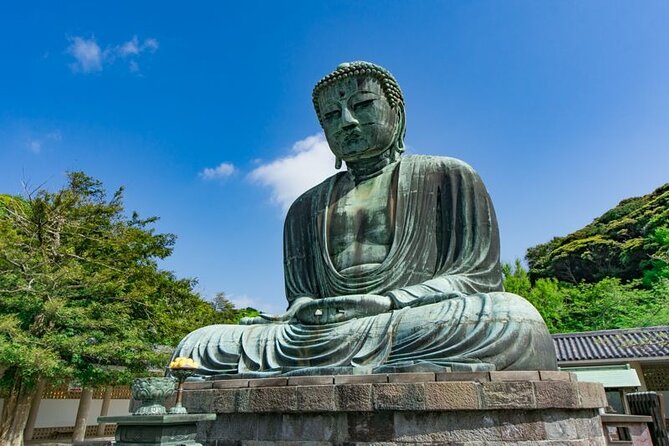
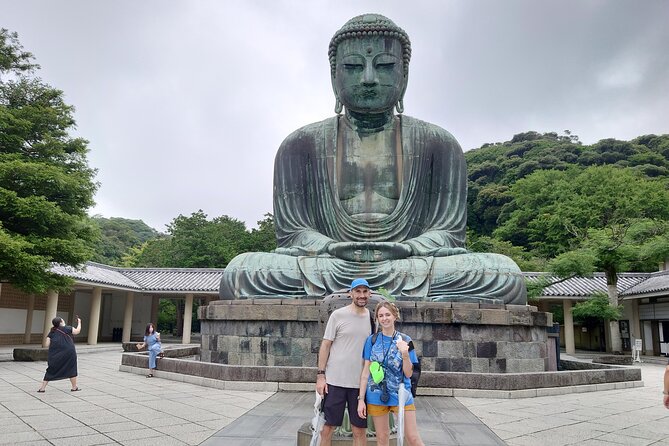
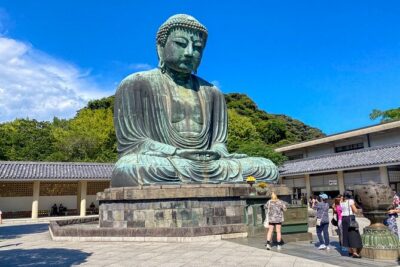
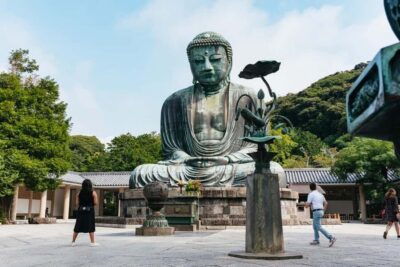
At Kotoku-in, the bronze Amida Buddha is the image most closely linked with Kamakura. The statue is 11.4 meters tall and has long been regarded as the second-tallest bronze Buddha in Japan, after the famous statue at Todaiji in Nara.
The Great Buddha is outdoors on the temple grounds, which gives you a clear sense of its size from several angles. It is an uncomplicated stop, but not a shallow one. The calm expression and weathered bronze surface make the statue feel connected to the city around it, rather than sealed away in a museum.
Plan on about an hour, including time to look carefully and hear the background from your guide. Admission is separate. This is one of the places I would protect in the schedule, especially if Kamakura is new to you.
The site can be busy, and the tour does not promise a private viewing. Your guide can help you understand what you are seeing, but the pace still depends on the crowd and traffic between stops.
Kencho-ji and Kamakura’s Zen tradition
Kencho-ji is the first of Kamakura’s five great Zen temples and the oldest Zen temple in the city. It was founded in 1253 by Hojo Tokiyori, with the Chinese Zen priest Rankei Doryu as its first head priest.
The complex begins at the Sanmon gate and extends into wooded hills. Near the entrance, look for the temple bell, or Bonsho, which is designated a national treasure. Even with only 30 minutes scheduled here, the setting gives you a quick look at the scale and order of a major Zen temple.
That short stop is the chief limitation. Kencho-ji contains many buildings and subtemples, and half an hour only scratches the surface. If Zen architecture and temple history are your main interests, you may prefer to spend longer here and drop the beach or one of the smaller temple stops.
Admission is not included. Your guide can make the short visit useful by focusing on the gate, bell, and main points rather than trying to cover the entire compound.
Tsurugaoka Hachimangu, Kamakura’s central shrine
Tsurugaoka Hachimangu is dedicated to Hachiman, the patron deity of the Minamoto family and the samurai more broadly. The shrine also enshrines the deified Emperor Ojin, Hime-gami, and Empress Jingu.
This is a useful counterpoint to the Buddhist temples. The broad shrine grounds and ceremonial approach help you see Kamakura’s political and warrior connections, while the other stops focus more on Buddhist devotion, gardens, or sculpture.
You receive about an hour here, and admission is free. That makes it a strong value stop within the day. It also pairs naturally with Komachi Street, which runs from the station area toward the shrine.
The shrine can feel more formal and open than the smaller temple grounds. I would choose it if you want context for Kamakura’s samurai past, not just postcard views.
Other guided tours in Tokyo

Hokoku-ji’s bamboo and matcha pause
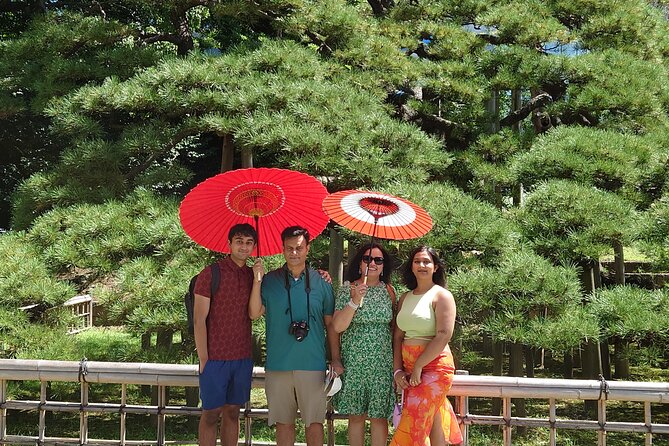
Hokoku-ji is famous for its small bamboo grove, where more than 2,000 dark green stalks rise behind the main hall. Narrow paths lead through the grove to a tea house, where you can enjoy matcha for a small additional fee while looking into the bamboo.
This stop offers a quieter mood than the Great Buddha or Tsurugaoka Hachimangu. The grove is not huge, so do not expect a long forest walk. Its appeal comes from the concentrated setting: bamboo, shade, temple grounds, and a cup of tea.
The tour allows about an hour, and admission is not included. Matcha is also an extra personal expense. If you want one of the day’s most distinct visual settings, I would put Hokoku-ji high on your list.
Behind the temple are shallow caves cut into the hillsides. They are believed to hold the ashes of later Ashikaga lords, adding another layer of history to a stop that might otherwise seem devoted only to bamboo.
Yuigahama Beach and the taste of the sea
Yuigahama is one of Kamakura’s main beaches. It is broad, flat, and close to Kamakura Station, with a 30-minute visit planned.
This is a short atmospheric stop rather than a full beach outing. You can breathe in the sea air, look across the coast, and see the side of Kamakura that temples cannot provide. The beach is also described as very crowded, so do not expect solitude.
I would include Yuigahama if the weather is good and you want variety. If temple history matters more to you, this is an easy stop to trade for extra time at Kencho-ji or another temple.
The tour requires good weather. If poor weather cancels the experience, you are offered another date or a full refund. That policy is useful here, since the beach and temple gardens are less pleasant in bad conditions.
Komachi Street for food and small purchases
Komachi-dori runs parallel to Wakamiya Oji, from Kamakura Station’s east exit toward Tsurugaoka Hachimangu. It is the day’s natural break for lunch, snacks, and shopping.
You will find traditional souvenir shops beside modern clothing stores, cafes, and restaurants. Try Hatosabure, the local dove-shaped biscuit, if you want a simple edible souvenir. One guide-led day included buckwheat noodles served with hot soup, made on site at a restaurant along the street. Another included sushi at a traditional Japanese restaurant.
Lunch is not included, so the flexibility is useful. You can spend modestly on snacks or choose a sit-down meal, depending on the rest of your plans. Tell your guide what kind of food interests you, and remember that a long meal can affect the timing of the final stops.
Komachi Street is also a practical place to buy gifts. It is more commercial than the temple grounds, but that contrast is part of the Kamakura experience. The street shows how the old capital functions as a living town, not only as a historic monument.
Eishoji, a quiet final temple
Eishoji is the only surviving nunnery in Kamakura. It was founded in the early Edo period by a woman connected with the Tokugawa family and is known as a flower temple because of its seasonal blooms.
The grounds include a peaceful bamboo grove and an Amida Buddha statue attributed to the sculptor Unkei. Only 10 minutes are scheduled here, so this is best treated as a brief atmospheric stop rather than a full temple visit.
Admission is not included. Eishoji makes sense for you if you appreciate less crowded religious sites and seasonal gardens. If you need more time at a major landmark, it is also the easiest stop to leave out.
What the private guide adds
A licensed local English-speaking guide is included, and the tour provider also works with multilingual guides. Kei and Yoshi are names associated with previous guide-led days. Kei was praised for moving efficiently between several Kamakura sights, while Yoshi was described as building an agenda around a garden, temples, a viewpoint, shopping, and a Japanese meal.
The guide’s biggest value is not simply pointing out buildings. It is helping you decide what deserves your limited time, explaining why a Buddhist temple differs from a Shinto shrine, and making room for the kind of food or shopping you prefer.
There is one important caution about language. A serious complaint described English that was difficult for the couple to understand. The tour promises an English-speaking guide, but communication quality can vary by individual assignment. If detailed explanations are central to your day, confirm the language arrangement with Japan Guide Agency before you go.
The guide’s entry fees are covered only for sights listed among the expected stops. Your own entrance fees, lunch, and personal purchases are extra.
Is $1,026.90 good value for four people?
The price is $1,026.90 per group of up to four, not per person. Split four ways, that is about $256.73 each before entrance fees and lunch. For a family or group of friends, the private vehicle and guide make the price more reasonable than it first appears.
For one or two people, the cost is much harder to justify. Kamakura can be reached independently, and public transport may cost far less, though it requires more planning and does not give you a private guide or door-to-door vehicle service.
You are paying for efficiency, privacy, and flexibility. The value improves if you want to visit several districts in one day, have limited time in Tokyo, or would rather not manage Japanese transport connections. It falls if you prefer a slow visit to one or two temples or if you are comfortable organizing the route yourself.
The exact vehicle type cannot be requested. If you need a child seat or booster seat, contact the provider before the trip. Only a limited number are available, and rear-facing seats are not offered.
Who should choose this Kamakura day?
I would recommend this experience to a group of up to four that wants a guided introduction without renting a car or navigating local connections. Families may appreciate the private setting, though you should arrange child seating early.
It also suits first-time visitors who want the Great Buddha, a major shrine, bamboo, the beach, and shopping in one day. The guide can keep the route moving and help you choose among the many possible stops.
I would be more cautious if you want long meditation time, serious temple study, or a slow photographic outing. Three or four sites in eight hours, including Tokyo transport, means the schedule is active. Traffic can make it tighter.
Only one reservation per group is allowed, and separate groups cannot be joined together. Most people can participate, and service animals are allowed. Pickup is offered, and confirmation arrives when you book.
Should you book it?
Book this tour if you are four people sharing the cost and want to see Kamakura’s main sights with minimal transport planning. Ask to prioritize Hasedera, Kotoku-in, Hokoku-ji, and either Tsurugaoka Hachimangu or Komachi Street if this is your first visit.
I would choose Kencho-ji over the beach if Zen history matters most, and Eishoji only if you prefer a short, quiet temple stop. Confirm the guide language, accept that vehicle type cannot be selected, and budget separately for admissions and lunch.
The tour is strongest as an efficient first look at Kamakura, not as an unhurried retreat. If that tradeoff suits you, the private car and local guide can make a long day from Tokyo feel manageable.
FAQ
How long is the Kamakura tour?
The experience lasts about eight hours, including travel time between Tokyo and Kamakura. The drive between the two areas takes about an hour, depending on traffic.
Is hotel pickup offered?
Yes. Pickup is offered as part of the experience.
Is the tour private?
Yes. Only your group participates, and the booking is for up to four people.
How many sites can we visit?
The tour is customizable around three or four sites from the available stops. The schedule may change because of traffic conditions.
Are entrance fees included?
No. Entrance fees are generally not included. The guide’s entry fees are covered only for sights listed under the expected stops.
Is lunch included?
No. Lunch and other personal expenses are separate. Komachi Street offers places to eat and shop.
Can I request a specific vehicle type?
No. Specific vehicle types cannot be requested.
What happens if the weather is poor?
The experience requires good weather. If it is canceled because of poor weather, you are offered a different date or a full refund. You can also cancel for a full refund up to 24 hours before the start time.
More Full-Day in Tokyo

More Guided Tours in Tokyo
More Kamakura & Enoshima Day Trips in Tokyo


More tours in Tokyo we've reviewed












Kamakura & Enoshima Day Trips, compared.
 ★ 4.5Tokyo: Kamakura & Enoshima Day Trip including Temple TicketsFrom $589 hours - 570 minutes
 ★ 5.0Mount Fuji, Kamakura, Big Buddha, & Lake Ashi Day TripFrom $109
 ★ 4.7Tokyo: Mt Fuji, Kamakura, Lake Ashi & Big Buddha Guided TourFrom $50
 ★ 4.5From Tokyo: Kamakura & Enoshima 1-Day Bus TourFrom $66
 ★ 4.9Tokyo:Sea of Mount Fuji, Hakone Ropeway, Ōwakudani, EnoshimaFrom $5010 hours
 ★ 5.0Kamakura 8 hr Private Walking Tour with Licensed Guide from TokyoFrom $201