Reviewed · SHIBUYA TOURS
Shibuya Tokyo: Modern Kintsugi Workshop in Shibuya
The best thing about this Shibuya experience is that you do not simply watch a craft demonstration. You repair a piece of crockery yourself, step by step, while learning how kintsugi treats cracks as part of an object’s story. The class brings a quiet Japanese craft into the middle of Tokyo’s busiest district.
In This Article
- Key points to know before booking
- Why modern kintsugi works well in a Tokyo itinerary
- Arriving at the studio above Shibuya Crossing
- Starting with matcha and seasonal sweets
- Choosing a piece from the crockery collection
- Watching the demonstration, then doing every step yourself
- Learning from Michiko and the teaching team
- Taking home a handmade Shibuya souvenir
- How much value do you get for $141?
- Who should book this workshop?
- Practical details that can make the class smoother
- FAQ
- How long does the modern kintsugi workshop last?
- Where does the class meet?
- Is the workshop taught in English?
- What does the price include?
- Can children join the workshop?
- What happens if I need to cancel?
- Should you book the mon cadeau kintsugi class?
I like the small class size, limited to six people, because the teacher can watch your work closely. I also like the gentle opening with matcha and seasonal sweets, which gives the class a calm start. The main consideration is that this is modern kintsugi, using contemporary materials rather than the slow traditional method, so purists may find it less authentic.
Key points to know before booking
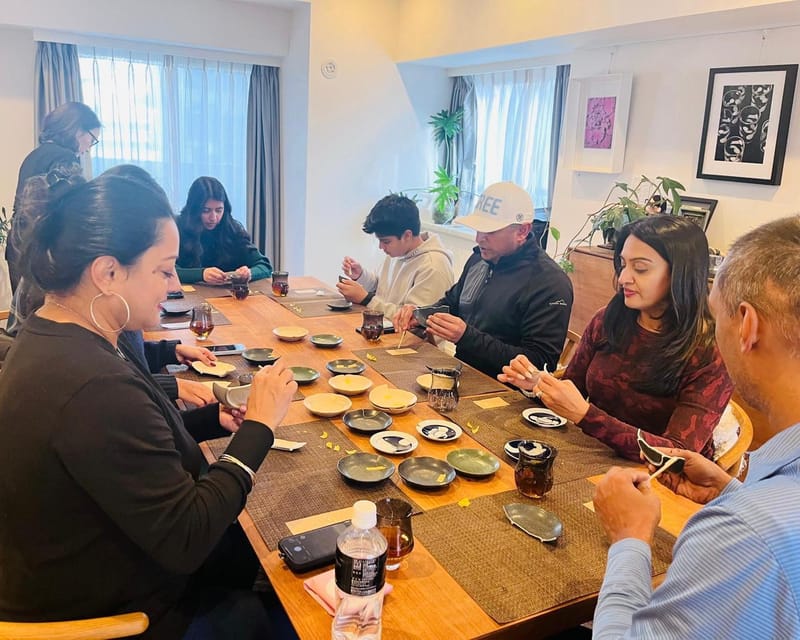
- You repair your own plate: Choose a piece from the studio’s prepared collection, then reassemble and restore it with hands-on guidance.
- The class is near Shibuya Crossing: The studio is up the hill on Bunkamura-dori, near Shoto 2-Chome Crossing.
- Groups are limited to six: You get direct help instead of being lost in a large craft class.
- Michiko is a central part of the welcome: She teaches with patience and warmth, while Yuki, Koto, and Rita may also host or assist.
- Matcha and Japanese sweets are included: The tea service adds cultural context without taking over the craft lesson.
- Your finished piece goes home with you: The crockery is packed in a special gift box, making it a useful and personal Tokyo souvenir.
Why modern kintsugi works well in a Tokyo itinerary
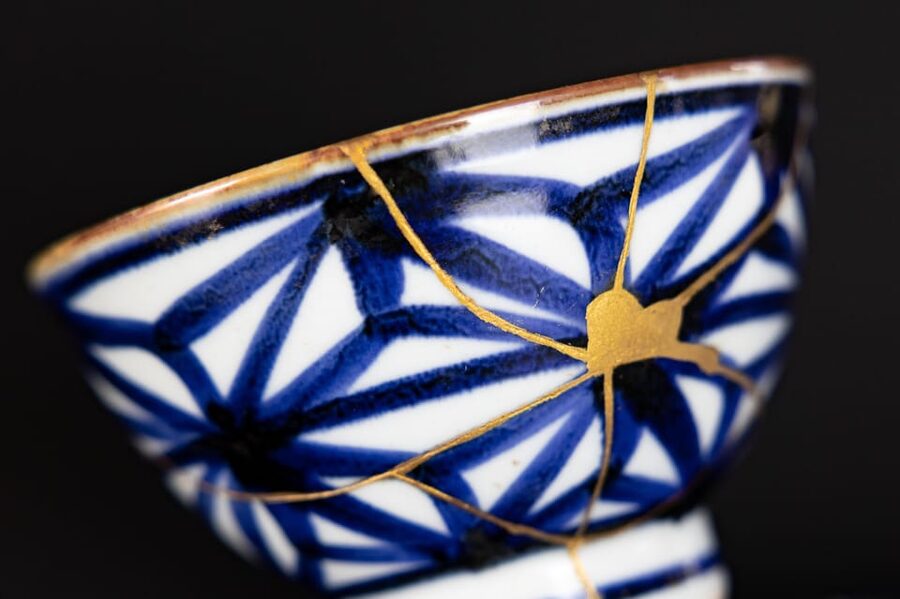
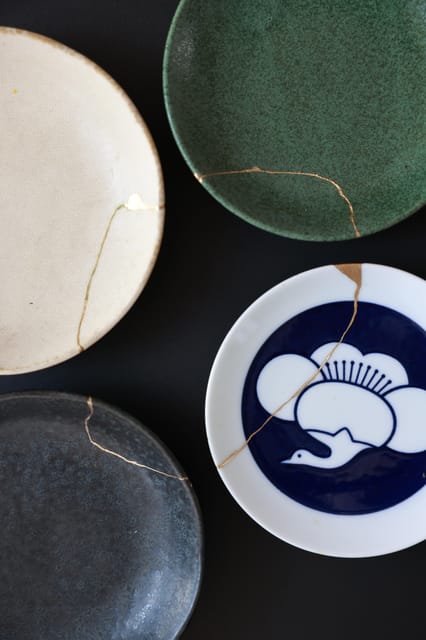
Kintsugi is often described as the Japanese art of repairing broken pottery with lines that highlight the damage instead of hiding it. The idea is closely tied to wabi-sabi, an appreciation for imperfection, age, and change.
This class gives you a practical way to encounter that idea. You are not only hearing an explanation or looking at finished examples. You handle the broken pieces, follow the repair process, and see your small plate or dish become whole again.
The workshop takes place at mon cadeau’s private studio, just up the hill from the noise of Shibuya Crossing. That location matters. You can spend part of the day among giant screens, department stores, and crowds, then walk uphill to a much quieter room where the pace slows down.
At $141 per person, this is not a bargain activity. You are paying for a two-hour private-studio lesson, an English-speaking instructor, matcha, sweets, all repair materials, and the crockery itself. The value improves if you want a hands-on cultural activity and a souvenir with a story, rather than another purchased item from a shop.
A few more Tokyo tours and experiences worth a look


Arriving at the studio above Shibuya Crossing
The studio is next door to the Central Hospital Annex building at the top of Bunkamura-dori, near Shoto 2-Chome Crossing. You meet outside the building five minutes before the lesson begins, and detailed directions are sent after booking.
Allow extra time to find it. One useful tip is to check the entrance carefully if Google Maps leads you toward a side alley. The front door is on the main street, with a tiled façade and a large brown double door that has a narrow glass panel.
This is a place where arriving early is more than a matter of politeness. You cannot join if you arrive more than 15 minutes after your reserved start time. Shibuya’s hills, crossings, crowds, and confusing exits can eat up time, so do not plan to arrive at the last minute.
Comfortable clothes are the only stated item to bring. The studio provides the crockery, tools, materials, explanation sheet, tea, sweets, and gift box. Video recording is not allowed, so plan to keep your phone away during the working portion of the class.
Starting with matcha and seasonal sweets
The class opens with matcha tea and seasonal Japanese sweets. This is not just a snack break before the real activity. It sets the tone and introduces a small piece of Japanese hospitality before you begin working with your hands.
The sweets vary by season, and the tea gives you a few quiet minutes to settle in. If you have never tried matcha, this is a low-pressure introduction. The setting is intimate, and the instructors can explain what you are being served as part of the opening welcome.
The tea service also helps distinguish this workshop from a standard craft class. You are not rushed straight to a table of tools. The experience gives you a cultural frame first, then moves into the practical lesson.
Families have found this opening approachable, too. One 16-year-old participant enjoyed the class, and children aged 10 and 13 also took part successfully. Still, the official age limit excludes children under five, and the detailed, hands-on work may suit older children and teenagers better than very young ones.
Choosing a piece from the crockery collection
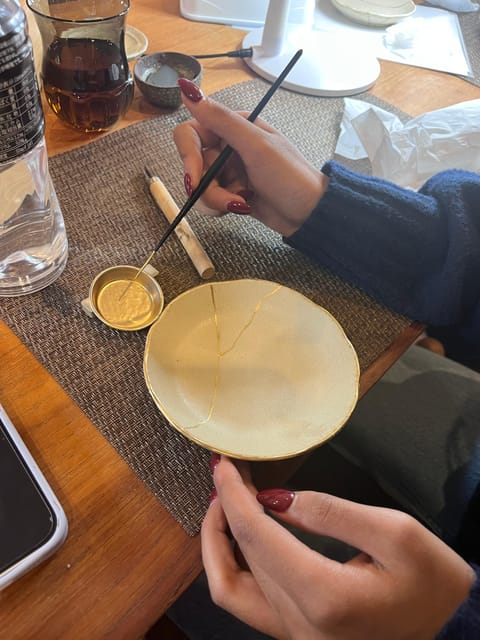
After the introduction, you select a piece of crockery to repair from the studio’s collection. The prepared pieces are small and manageable, with enough damage to make the repair meaningful without turning the class into a technical ordeal.
This choice is important because your finished object becomes your souvenir. You are not restoring a plate that belongs to the studio or completing a sample that stays behind. You take your own work home.
The pieces are selected to fit a two-hour class. Some comments about the workshop describe them as attractive and challenging without being too difficult. That balance is useful for beginners. You get the satisfaction of solving a problem, but you are not expected to master a craft in one afternoon.
The final result will reflect your own hand. The repair line may not look exactly like an expert’s work, and that is part of the point. Kintsugi gives the crack a visible role, so a slightly uneven result can feel personal rather than flawed.
Watching the demonstration, then doing every step yourself
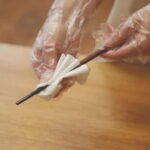
Your instructor demonstrates each stage before you try it. The process covers reassembly, repair, and restoration, with the class moving through one stage at a time.
This structure makes the activity friendly to beginners. You do not need previous pottery or craft experience, and you do not need to bring tools from home. Watch first, copy the method, and ask for help before moving forward.
The small group size is especially useful here. With a maximum of six participants, the teacher can check how you have positioned the pieces, guide your hand, and answer questions as the work develops. Michiko is described as patient and attentive, and the teaching style allows you to work without feeling hurried.
The instructors use modern materials rather than the traditional materials associated with older kintsugi practice. That makes the process faster and more accessible for a short tourist workshop. It also makes the activity less suitable if your main goal is to study traditional lacquer techniques in their full historical form.
That tradeoff is clear and fair. You get a finished object within two hours, rather than beginning a long restoration project that needs extended drying and repeated studio sessions. For a visitor with a busy Tokyo schedule, the modern approach is practical.
A few more Tokyo tours and experiences worth a look

Learning from Michiko and the teaching team
Michiko is the main teacher named in the available information, and her role goes beyond showing you where to place each material. She explains the philosophy and history of kintsugi, shows examples, and keeps an eye on each person’s progress.
Yuki is also named as an exceptional host, while Koto and Rita have helped host and teach sessions. The exact instructor may vary, so you should expect an English-language class led by one or more members of the team rather than assume Michiko will be the only person present.
The strongest part of the teaching is the personal attention. The class has a warm, relaxed feel, but it is still structured. Materials are prepared in advance, the next step is demonstrated clearly, and assistance is available without someone taking the project out of your hands.
That balance matters. Some craft classes leave you alone with a set of instructions. Others move so quickly that the instructor completes the difficult parts for you. Here, the aim is to let you do the work while giving enough support to keep the process moving.
Taking home a handmade Shibuya souvenir
At the end of the class, your repaired crockery is placed in one of the studio’s special gift boxes. That packaging is a small but useful detail, especially if you still have several days of sightseeing ahead.
A restored plate is also more meaningful than a generic souvenir. You will remember the hillside studio, the matcha, the broken pieces, and the moment the repair began to look complete. The object carries the memory of the activity because you made the key decisions and handled the process yourself.
Do not expect a large piece of tableware or a major work of ceramic art. The prepared crockery is designed for the workshop’s limited time. The reward is the personal connection, not the size or market value of the finished object.
One participant became interested enough to buy a kit for continuing kintsugi at home. That option is not listed as part of the $141 package, so treat it as an additional purchase if it is offered and appeals to you. The class itself includes everything needed for the in-studio restoration.
How much value do you get for $141?
The price places this workshop in the higher range for a two-hour Tokyo activity. It makes the most sense when you count the experience as both a lesson and a souvenir.
Your fee includes:
- A two-hour English-language class
- Matcha tea and seasonal sweets
- An introduction and explanation sheet
- All tools and modern repair materials
- One piece of crockery to repair
- A gift box for taking it home
You are also paying for a small group rather than a crowded session. If direct help is important to you, six people is a useful limit. A less expensive class might provide a demonstration, but it may not offer the same amount of individual attention or include a finished object.
The value is weaker if you mainly want a quick look at kintsugi or a cheap souvenir. You can learn the basic idea in less time elsewhere. This class earns its price through participation, careful instruction, and the calm setting.
The flexible booking terms help with planning. You can cancel up to 24 hours in advance for a full refund, and the reserve-now, pay-later option lets you hold a place without paying at once. Starting times vary, so check availability against your Shibuya plans.
Who should book this workshop?
I would choose this for someone who likes making things, wants a quieter cultural activity, or prefers a souvenir that cannot be duplicated. It is also a good choice for couples, friends, parent-and-teen combinations, and solo visitors who enjoy small classes.
It suits first-time kintsugi students because the teacher demonstrates every stage and provides the materials. You do not need to shop for broken crockery or carry supplies across Tokyo.
The class can work well after a morning around Shibuya, but remember that the studio is uphill from the crossing. If you have limited mobility, ask the provider for any additional access details before booking, since the supplied information does not describe accessibility.
I would be more cautious about booking if you want traditional kintsugi in the strictest sense. The contemporary materials make the process quicker and easier, but they are not the same as a full traditional restoration method.
You should also skip it if you dislike careful handwork or want to record every stage for social media. Video recording is not allowed, and the class depends on focused attention rather than constant phone use.
Practical details that can make the class smoother
Book enough time around the workshop to find the studio. Shibuya Crossing is easy to reach, but the walk uphill and the exact entrance can be less obvious than the neighborhood name suggests.
Wear clothes that let you sit and work comfortably. The studio provides the equipment, so there is no need to pack special craft tools, crockery, or tea supplies.
Keep your finished piece protected after class. It comes in a gift box, but you should still place it carefully in your luggage and avoid stacking heavy items on top of it.
The class lasts two hours, which is long enough for a complete project but short enough to fit into a day of sightseeing. I would not schedule a major timed attraction immediately afterward, since the workshop may leave you wanting a few extra minutes to admire and pack your piece.
FAQ
How long does the modern kintsugi workshop last?
The workshop lasts two hours. Starting times vary, so check availability when selecting your booking.
Where does the class meet?
The studio is next door to the Central Hospital Annex building at the top of Bunkamura-dori, at Shoto 2-Chome Crossing. You meet outside the building five minutes before the lesson, and directions are sent by email after booking.
Is the workshop taught in English?
Yes. English instruction is provided.
What does the price include?
The $141 price includes matcha tea, seasonal sweets, an introduction explanation sheet, all materials and tools for the repair, a piece of crockery to restore, and a special gift box.
Can children join the workshop?
Children under five cannot join. Children aged 10, 13, and 16 have taken part successfully, though the class involves careful hands-on work.
What happens if I need to cancel?
You can cancel up to 24 hours before the activity for a full refund. You can also reserve now and pay later, subject to the booking terms.
Should you book the mon cadeau kintsugi class?
Book it if you want a personal Tokyo memory rather than another purchased trinket. The combination of matcha, seasonal sweets, patient instruction, a six-person maximum, and a finished piece to take home gives the two hours a clear sense of purpose.
The biggest question is authenticity. This is modern kintsugi, not a full traditional restoration course. For most visitors, that is a benefit because the technique is accessible and the result is ready within a short class. For serious craft students seeking traditional materials and a longer process, it may feel simplified.
For a first encounter with kintsugi near Shibuya Crossing, I find the balance appealing. Arrive early, follow the main-street entrance directions, and expect to leave with a small repaired object that carries more meaning than anything you could buy in a souvenir shop.
More Workshops & Classes in Tokyo

More Craft Workshops in Tokyo
More Shibuya Tours in Tokyo



More tours in Tokyo we've reviewed







Shibuya Tours, compared.
 ★ 5.0Official Street Go-Kart in ShibuyaFrom $76
 ★ 5.0Shibuya Meltdown Nightlife Tour: All-You-Can-Drink Bar HoppingFrom $106
 ★ 4.9Tokyo: Street Kart Experience in ShibuyaFrom $99
 ★ 5.0Shibuya Official Street Go-Kart in Shibuya AnnexFrom $69
 ★ 5.0Tokyo: Shibuya Food Tour (13 dishes and 4 Eateries)From $77
 ★ 5.0Best of Shibuya Food TourFrom $217