Reviewed · MT FUJI DAY TRIPS
Tokyo: Mt.Fuji Area, Oshino Hakkai & Kawaguchi Lake Day Trip
Mount Fuji is the star here, but the best parts of this day are the smaller scenes around it: Oshino Hakkai’s clear spring pools and the flower gardens beside Lake Kawaguchi. You also get a choice between shopping at Gotemba Premium Outlets and relaxing in a hot spring with Fuji views, though the exact seasonal plan needs careful checking.
In This Article
- Key points to know before booking
- What a $68 Mt. Fuji day trip really gives you
- The first Fuji view at the fifth station
- The winter alternative at Arakurayama Sengen Park
- Oshino Hakkai and the water from Mt. Fuji
- Oishi Park beside Lake Kawaguchi
- The Maple Corridor in autumn
- A Lawson stop with a practical purpose
- Shopping or hot spring time
- Transport, group size, and the pickup problem
- Who will get the most from this day
- Should you book this Mt. Fuji excursion?
- FAQ
- How long does the tour last?
- What transportation is included?
- How much does the tour cost?
- Is a snack included?
- Which Fuji viewpoint is visited?
- How many steps are there at Arakurayama Sengen Park?
- Is the hot spring fee included?
- How large is the tour group?
- Can children and seniors join?
I like the compact group size, capped at 15 people, and the range of stops for a single day from Tokyo. I also like that the route changes with the season, sending you to Arakurayama Sengen Park from December 1 through April 25 when its famous pagoda and Fuji view are especially appealing. The main concern is reliability: the current rating is only 2.6 from five ratings, and two detailed complaints describe vague pickup directions and a changed itinerary that skipped the pagoda.
Key points to know before booking
- Mt. Fuji views depend heavily on the weather: Clear skies can reveal Fuji, Lake Kawaguchi, and the surrounding mountains, while cloud cover may hide the summit.
- The winter route uses Arakurayama Sengen Park: You climb 397 steps to see Churei Pagoda, Fuji, and the town below in one frame.
- Oshino Hakkai is the most distinctive cultural stop: Eight spring pools are fed by snowmelt filtered through Mt. Fuji’s underground rock.
- Lake Kawaguchi supplies two scenic stops: Oishi Park is best for gardens and lakeside views, while the Maple Corridor is strongest during autumn color.
- You may have a shopping or hot spring choice: Gotemba Premium Outlets and the Ki no Hana no Yu bath serve very different travel styles.
- Pickup deserves extra care: The meeting point can be confusing because several buses and tour groups gather around a large building.
What a $68 Mt. Fuji day trip really gives you
At $68 per person, this is priced as a practical shared excursion rather than a private Fuji outing. Your round-trip transport from Tokyo or Shinjuku is included, along with a snack or ice cream from Lawson, so the fare covers the long road journey as well as the sightseeing.
That matters because the Mt. Fuji area is spread across Yamanashi Prefecture. Reaching the fifth station, Oshino Hakkai, and Lake Kawaguchi in one day takes planning, transfers, and attention to departure times if you go alone. Here, you hand those details to the operator and spend your day moving between viewpoints.
The value is strongest if you want variety. In roughly nine to ten hours, you can see mountain scenery, spring pools, a lakeside park, seasonal foliage, and possibly a shopping center or hot spring. The value weakens if your one fixed goal is the Churei Pagoda view, since the route changes by season and the experience has had a reported itinerary substitution.
You should also remember that the listed cost does not cover personal purchases or the hot spring fee. Ki no Hana no Yu is listed at 1,600 yen on weekdays and 1,900 yen on weekends and holidays. Bring extra money if you want the bath, outlet shopping, meals, souvenirs, or additional drinks.
A few more Tokyo tours and experiences worth a look
The first Fuji view at the fifth station
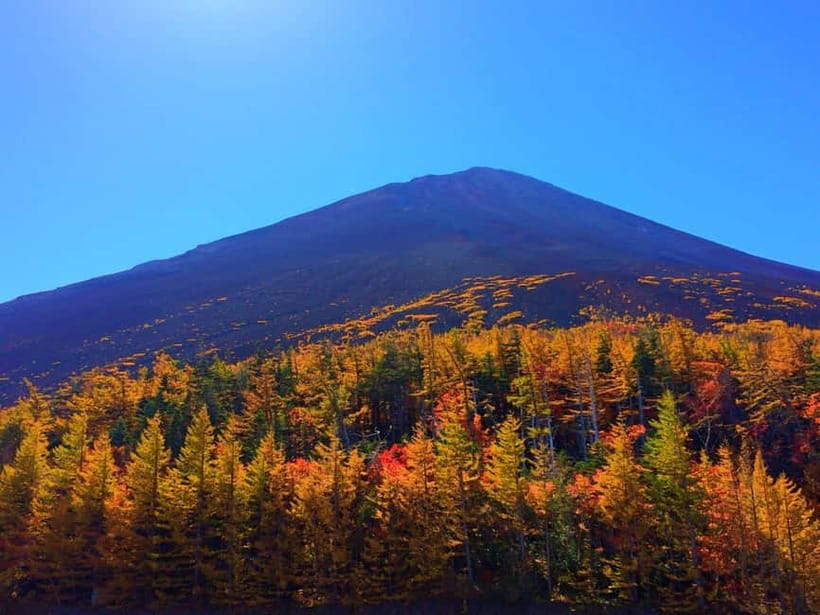
When the route visits Mt. Fuji’s fifth station, you reach an altitude of 2,305 meters, roughly halfway up the mountain. This is the highest point on the regular sightseeing route described here, and it gives you a close look at Fuji rather than the postcard view seen from the lakes.
The appeal is scale. From a distance, Mt. Fuji can look neat and almost painted. At the fifth station, its slopes feel much larger and more physical. On a clear day, you may see Lake Kawaguchi and the surrounding area below. If clouds gather, the view can change into a sea of cloud, though the mountain itself may become partly hidden.
The stop lasts about one hour and has no separate admission charge. Keep your expectations tied to weather. A ticket cannot guarantee a Fuji view, and mountain conditions can shift during the drive. You will want a warm layer even when Tokyo feels mild because the station sits high above the city.
This stop is not the same experience as hiking Mt. Fuji. It is a sightseeing viewpoint at a high elevation, useful for a close look and photographs without committing to a climb.
The winter alternative at Arakurayama Sengen Park
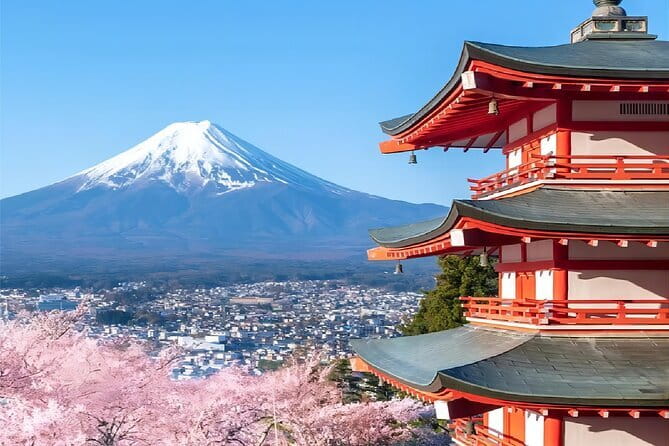
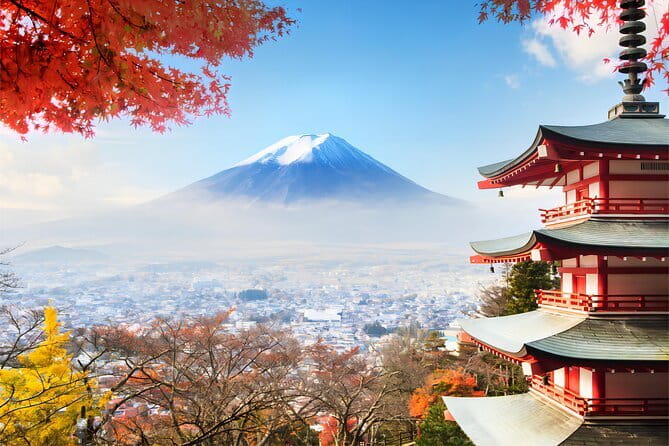
From December 1 through April 25 of the following year, the plan calls for Arakurayama Sengen Park instead of the fifth station. This is the classic composition many people picture when they think of Fuji photography: the five-story Churei Pagoda, Mt. Fuji, and the town below.
The price of this view is physical effort. You climb 397 steps near the main shrine, and the one-hour stop may feel short if you need frequent breaks or want time for photographs. The stairs are the central feature of the visit, not a minor detail.
The reward changes with the season. Spring brings cherry blossoms, summer brings fresh greenery, autumn brings red leaves, and winter can frame the pagoda and Fuji with snow. The view is particularly dependent on clear weather, and you should allow time to reach the best viewpoint before settling in with your camera.
This seasonal swap is important when choosing the tour. If you are visiting in winter, the pagoda view may be more attractive to you than the fifth station. If you want to stand closer to Fuji at altitude, you may prefer a different season or a different tour.
Oshino Hakkai and the water from Mt. Fuji
Oshino Hakkai is the most unusual stop on the route. Its eight spring pools are formed by snow water from Mt. Fuji filtering through the ground. The water emerges remarkably clear, and the pools are recognized as a nationally designated natural monument.
You get about one hour and 20 minutes here. That is enough time to walk among the springs, take photographs, and look at the way the pools connect the mountain’s snow and underground rock to the village setting.
Oshino Hakkai gives the day more substance than a series of viewpoints. You are not only looking at Fuji from another angle. You are seeing one of the natural results of the mountain itself. The clear water and surrounding scenery also make this a strong stop for anyone who prefers a quieter subject than a single panoramic photograph.
The stop can be busy, and the water is the focus, so do not expect a long guided nature walk. Treat the time as a compact visit to several spring pools. Comfortable shoes will help because the day includes walking at several locations.
Oishi Park beside Lake Kawaguchi
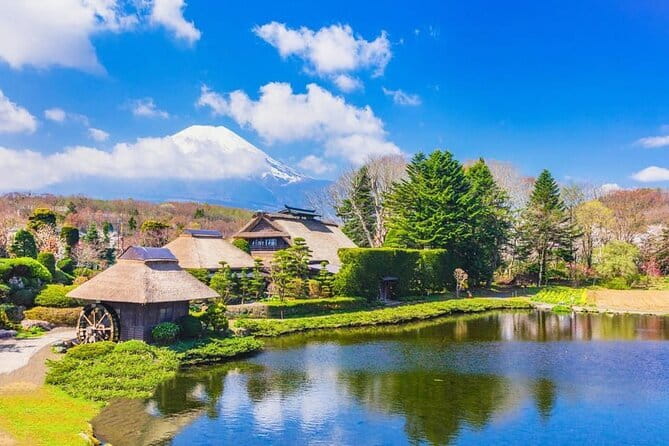
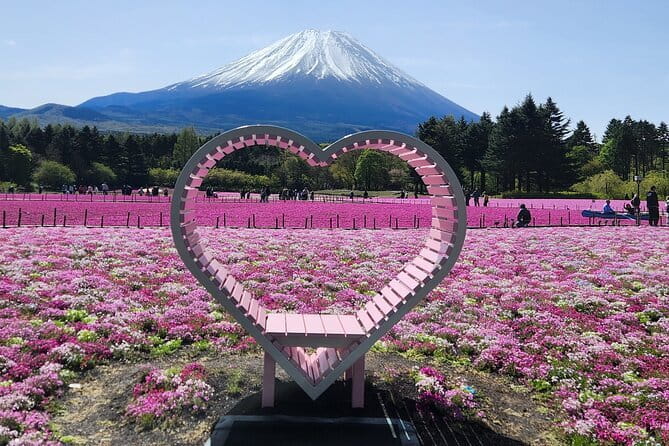
Oishi Park sits near Lake Kawaguchi and offers a broad view toward Mt. Fuji, along with flower gardens and walking paths. The stop lasts about 50 minutes, making it one of the shorter visits on the day.
This is a good place to slow down. After the road time and the more concentrated stop at Oshino Hakkai, you can walk by the lake, look across the water, and photograph Fuji if the clouds cooperate. The gardens change with the calendar, with cherry blossoms in spring and lavender in summer. Autumn brings strong color in the surrounding trees.
The park is also useful for travelers who do not want every stop to involve stairs or shopping. Its paths and lakeside setting offer a gentler break. You may find picnic areas and access to boating or fishing nearby, although those activities are not included in the tour price and the schedule may not leave room for them.
Because the visit is under an hour, plan for a walk and photographs rather than a full afternoon by the lake. Oishi Park works best as part of the larger route, not as a stand-alone Lake Kawaguchi visit.
A few more Tokyo tours and experiences worth a look



The Maple Corridor in autumn
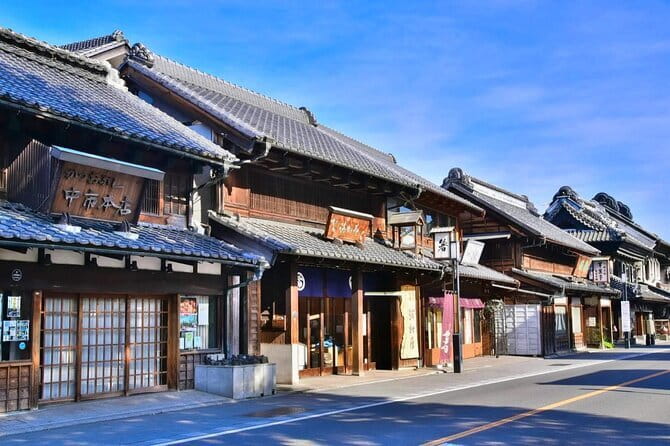
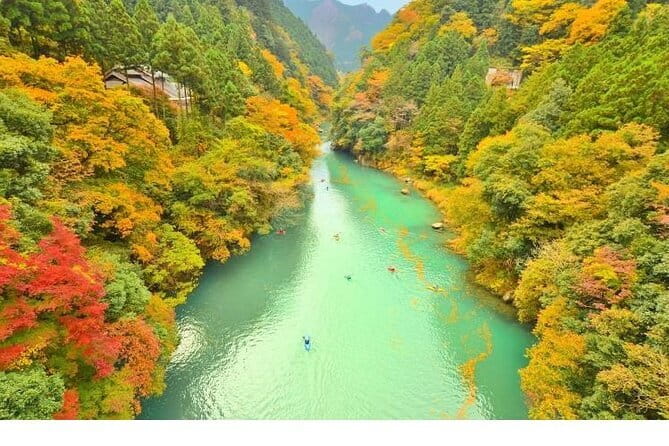
The Lake Kawaguchi Maple Corridor, or Momiji Corridor, runs along the lake’s northern shore. Its maple trees turn red, orange, and yellow in autumn, creating a short scenic walk with Fuji and the lake as a backdrop.
The scheduled visit is only 30 minutes. That is enough to stretch your legs and take pictures, but not enough for a slow, extended walk through the area. If autumn color is your main reason for booking, this limited time may feel rushed.
The corridor is most clearly a seasonal stop. Outside autumn, the trees may still make a pleasant walkway, but the famous appeal is the fall color. The route also connects naturally with Oishi Park, so the two lake stops give you different views of the same region: gardens and open lake views at Oishi, then a more enclosed tree-lined path at the corridor.
Weather again controls the result. Fuji may appear behind the trees, or the mountain may be covered by cloud. You should enjoy the corridor as a scenic walk first and treat a perfect Fuji photograph as a bonus.
A Lawson stop with a practical purpose
The visit to LAWSON Kawaguchiko Station is listed at one hour and 20 minutes, and a snack or ice cream is included. The store is near Kawaguchiko Station and sells drinks, ready-to-eat food, travel supplies, souvenirs, and local items.
This is a simple stop, but it can be useful. A long day on the road is easier when you can get a drink or extra food, and the included snack gives you a small taste of the Japanese convenience-store experience. You may also find local products that are easy to pack.
The unusually long time assigned to this stop is something I would clarify before departure. The information provided does not explain whether the time includes a meal break, free time near the station, or a pause connected to the vehicle schedule. Do not assume every minute is spent browsing Lawson.
Shopping or hot spring time
The tour overview offers a choice between Gotemba Premium Outlets and a hot spring bath with Fuji views. These are very different uses of the same part of the day.
Gotemba is the better fit if you want brand shopping, gifts, or a change from scenic stops. It can also make the day feel less focused on nature. One detailed complaint specifically described the outlet substitution as disappointing because the person had selected the trip for the pagoda and did not want a shopping stop.
The hot spring option is better for rest. Ki no Hana no Yu charges 1,600 yen on weekdays and 1,900 yen on weekends and holidays, paid separately. A bath with Mt. Fuji views can be a fine way to end a long day, but you should confirm whether the bath or outlets will be offered on your date and which option is included in the actual schedule.
This is the largest planning question in the experience. The provided route lists the scenic stops clearly, but the shopping and bathing choice is not presented with the same level of detail. Get the final plan from the operator before you leave Tokyo.
Transport, group size, and the pickup problem
The tour lasts about nine to ten hours, including transport. A maximum of 15 participants is a reasonable size for a shared bus experience. It is small enough for a guide to manage more easily than a large coach group, but it is still a group tour with fixed departure times.
The pickup instructions deserve attention. The meeting address has reportedly led people to a large building where buses for several tour groups gather at three different locations. That can create a poor start, especially in busy Shinjuku.
I would arrive early, keep the operator’s phone number ready, and call if you cannot identify the correct bus. One person was able to reach the guide by phone, which helped resolve the confusion. Do not rely on the street address alone.
No guide names are provided, so you should not book this expecting a particular named guide. The experience is described as guided, but the quality of commentary may depend on the guide assigned that day.
Who will get the most from this day
I would consider this tour for you if you have only one free day from Tokyo and want a broad introduction to the Mt. Fuji region. It suits people who prefer arranged transport, want several photo stops, and do not want to work out the connections between Fuji viewpoints, Oshino Hakkai, and Lake Kawaguchi.
Families may also find the format useful. Children aged two and under travel free if they do not occupy a seat, and most people can participate. Anyone under 18 must stay with at least one adult passenger throughout the trip. People aged 70 and above must be in suitable health and accompanied by a family member or friend over 22.
I would be more cautious if you have limited mobility. The 397 steps at Arakurayama Sengen Park can be demanding, and the day involves several stops with walking. The available information does not provide a detailed accessibility plan, so ask before booking if stairs, bus access, or walking distances matter to you.
Should you book this Mt. Fuji excursion?
Book it if you value convenience and variety more than a guaranteed exact route. The combination of Oshino Hakkai, Oishi Park, Lake Kawaguchi, and a seasonal Fuji viewpoint gives you plenty to see for $68, especially with round-trip transport from Tokyo included.
I would not book it without confirming the meeting point and the final seasonal plan. The low 2.6 rating, vague pickup directions, and two serious complaints about itinerary changes are warning signs. If the Churei Pagoda is your must-see sight, ask in writing whether Arakurayama Sengen Park is guaranteed for your travel date. If the answer is unclear, choose a tour built specifically around that viewpoint.
For a flexible first look at Mt. Fuji country, this can be a good-value day. For a carefully controlled itinerary, it needs more confirmation than the low price might suggest.
FAQ
How long does the tour last?
The total experience lasts approximately nine to ten hours, including transportation from Tokyo or Shinjuku.
What transportation is included?
Round-trip transportation from Tokyo or Shinjuku is included in the tour price.
How much does the tour cost?
The listed price is $68 per person.
Is a snack included?
Yes. A snack or ice cream from LAWSON Kawaguchiko Station is included.
Which Fuji viewpoint is visited?
The route visits Mt. Fuji’s fifth station, located at an altitude of 2,305 meters, or Arakurayama Sengen Park during the itinerary period from December 1 through April 25 of the following year.
How many steps are there at Arakurayama Sengen Park?
The route requires climbing 397 steps near the main shrine to reach the view of Churei Pagoda and Mt. Fuji.
Is the hot spring fee included?
No. Ki no Hana no Yu costs 1,600 yen on weekdays and 1,900 yen on weekends and holidays.
How large is the tour group?
The tour has a maximum of 15 participants.
Can children and seniors join?
Children aged zero to two are free if they do not occupy a seat. Minors under 18 must be accompanied by at least one adult, and people aged 70 or above must be in suitable health and accompanied by a family member or friend over 22.
More 1-Day Tours in Tokyo
More Mt Fuji Day Trips in Tokyo

More tours in Tokyo we've reviewed












Mt Fuji Day Trips, compared.
 ★ 5.0Mt Fuji and Hakone 1-Day Bus Tour Return by Bullet TrainFrom $163
 ★ 4.0Mt Fuji & Hakone Cruise, Drum Show Bullet Train 1 Day from TokyoFrom $149
 ★ 4.4Tokyo Mt Fuji 5th St & Hakone Cruise Bus Tour w/Bullet TrainFrom $15410 hours
 ★ 4.5From Tokyo: Mount Fuji Full-Day Sightseeing TripFrom $6810 hours
 ★ 4.7Tokyo: Mt. Fuji Tour, Hakone Ropeway, Owakudani, Lake AshiFrom $5410 hours
 ★ 4.4Tokyo:Mt.Fuji,Kawaguchiko Oishi Park,Arakurayama Sengen ParkFrom $5410 hours