Reviewed · SAKE TASTING
Sake Omakase in Tokyo: Guided Tasting by Certified Sommeliers
Tokyo has no shortage of sake bars, but this two-hour session makes the drink easier to understand. You taste seven Japan-exclusive sakes through four themed courses, while certified sommeliers explain rice, brewing, temperature, spices, and glassware around a handsome Showa-era wood table. Names associated with the sessions include Eric, Aaron, Frank, and Phillip.
In This Article
- Key points at a glance
- Why this sake tasting is different from a standard flight
- Starting at Linden House in Kanda
- Four courses that teach you how sake changes
- What comes with the pours
- Seven Japan-only selections and free refills
- The small group and the hosts
- Is $79.52 a fair price?
- Who will enjoy this most
- Timing, cancellation, and practical planning
- Should you book the Kanda sake omakase?
- FAQ
- Where does the sake tasting begin?
- Where does the activity end?
- How long does the tasting last?
- How many sakes are included?
- Are refills included?
- Is food included?
- How large is the group?
- Which languages are available?
- Can I cancel for a refund?
I like the six-person limit, which gives you room to ask honest questions without fighting for attention. I also like the food pairings: pickles, cheese, cured meats, and dessert help you notice why one sake works with salty food while another suits something sweet. The main consideration is simple: free-flowing sake over two hours is a lot, so this is not the best choice if you have an alcohol allergy or prefer a light, drink-free activity.
Key points at a glance
- Seven sakes, four themes: The tasting moves beyond a basic flight, comparing rice, serving temperatures, infusions, and vessels.
- Unlimited refills: You can revisit the pours during the session rather than rushing through a single sample.
- A small, social setting: The maximum group size is six, making conversation with the sommelier much easier.
- Food with every stage: Pickles, cheeses, cured meats, and dessert give each pour a practical tasting partner.
- Multilingual instruction: The hosts guide sessions in native-level English, Japanese, and Chinese.
- Central Tokyo meeting point: You meet at Linden House, 1-chome-9-9 Kanda Ogawamachi, Chiyoda City.
Why this sake tasting is different from a standard flight
A typical sake flight asks you to sample several glasses and decide which one you like. This experience takes a more useful route. It changes one factor at a time, helping you understand why a sake tastes different in a particular setting.
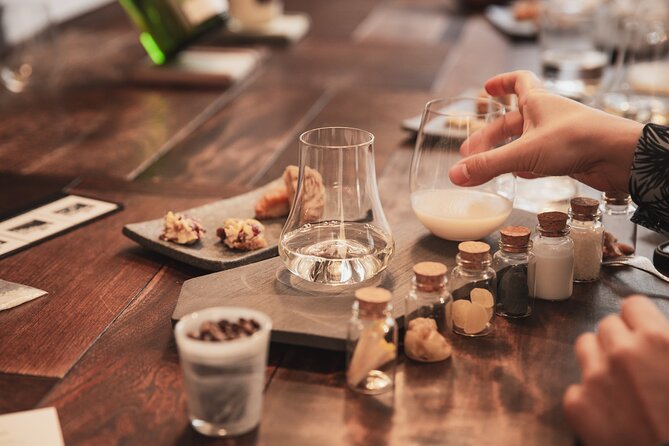
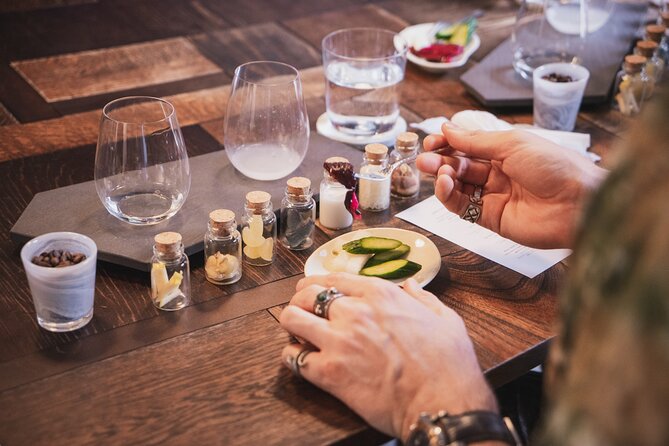
The four-course format is built around themes rather than a meal. You might compare sakes made with different rice varieties, then taste sake at five temperatures. Another section looks at spice and herb infusions, while a later comparison shows how the drinking vessel can affect your impression of the same drink.
That structure matters if you are new to sake. Instead of memorizing labels, you learn to notice sweetness, aroma, acidity, weight, and warmth. If you already have a favorite style, the session can help explain why you prefer it.
The setting adds to the occasion without turning it into a formal ceremony. The tasting room is designed around a beautiful table made from reclaimed wood from a Showa-era building. That detail gives the room a sense of place, while the small group keeps the mood friendly rather than stiff.
Other guided tours in Tokyo
Starting at Linden House in Kanda
You begin at Linden House in Kanda Ogawamachi, in central Tokyo. The activity returns to this same meeting point, so there is no need to coordinate a separate end location or arrange a ride between stops.
Transportation is not included, and neither is hotel pickup or drop-off. You will need to make your own way to the meeting point, but the location is near public transportation. A mobile ticket is provided, which keeps the arrival process straightforward.
The location also makes this a sensible evening or midday addition to a Tokyo itinerary. It is a focused indoor experience, not a sightseeing tour, so you are not losing hours to transfers. Check the meeting details carefully before setting out, since the session starts at a specific address and lasts about two hours.
Four courses that teach you how sake changes
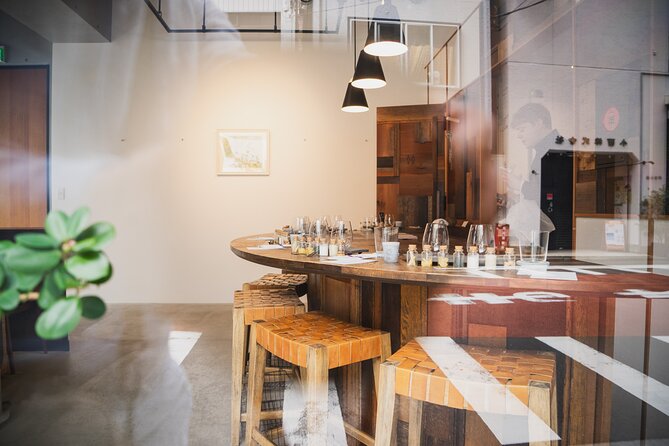
The heart of the experience is the four-course progression. These are tasting stages, each paired with small food items, rather than four large servings of lunch. You should arrive expecting snacks that support the sake, not a full meal.
The first stage introduces the selected bottles and gives you a basic way to compare them. Seven sakes are served across the experience, with the sommelier explaining their styles and brewing points as you go. This is a good moment to ask about any flavor you do not recognize. The hosts are there to answer practical questions, not just recite technical facts.
A rice comparison follows as one of the main teaching themes. Rice is central to sake production, and comparing styles can show why two bottles from Japan may have different aromas or textures. You do not need prior knowledge. The useful part is the side-by-side tasting, which gives your palate something concrete to compare.
Another stage examines sake at five different temperatures. This is one of the most valuable parts for anyone who assumes sake should always be served cold. Heat can change aroma, softness, and the way alcohol feels, while chilled sake can seem crisper or more restrained. Tasting temperature changes directly is more convincing than hearing a lecture about it.
The session also explores spice and herb infusions. These pours broaden the idea of what sake can do, especially for people who think of it as a single style of drink. The infusions may be especially useful if you enjoy cocktails or food pairing, though the experience remains centered on sake rather than mixed drinks.
Finally, the drinking vessel becomes part of the lesson. The shape and material of a cup can affect aroma and the amount of sake that reaches your palate. You may find that a familiar sake seems different when served another way. It is a small detail, but one that you can use later in restaurants and sake bars.
What comes with the pours
Each course includes small bites such as pickles, cheeses, cured meats, and dessert. These are not filler snacks. Salt, acidity, fat, and sweetness can make a sake seem drier, rounder, brighter, or more aromatic.
I especially like this approach because it connects the tasting to real dining. You are not only asking which sake you prefer on its own. You are also learning what might work with a plate of food.
Do not book this expecting a substantial meal. The food is designed to enhance the tasting, and one helpful practical tip is to eat something beforehand. One person who described the session suggested having a small meal before arriving, partly because the pours add up quickly. That is sensible advice, particularly if you are not used to drinking sake.
Seven Japan-only selections and free refills
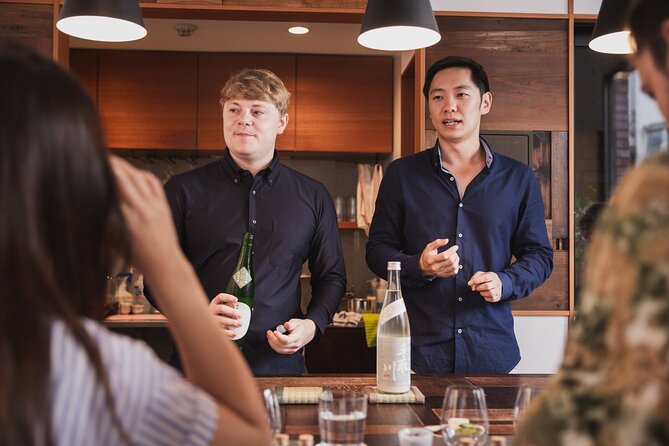
The seven bottles are described as exclusive to Japan, giving you a chance to taste selections you may not easily find at home. The important value here is not simply the number seven. It is the chance to compare several bottles in a planned order, with a sommelier helping you understand the differences.
Unlimited refills are included during the four courses. This means you can return to a pour, compare it with food, or take another taste after trying a different temperature or vessel. It also makes the session less hurried.
Still, unlimited does not mean you need to drink every pour repeatedly. You can pace yourself. The experience is more rewarding when you pay attention to how each sake feels, rather than treating it as a race through seven glasses.
The hosts have led more than 2,500 tasting experiences, and the format is designed for learning without making beginners feel out of place. You can ask why you like one sake and dislike another, or ask what to order later in Japan. That personal guidance is one of the strongest reasons to choose this over simply ordering a random bottle at a bar.


The small group and the hosts
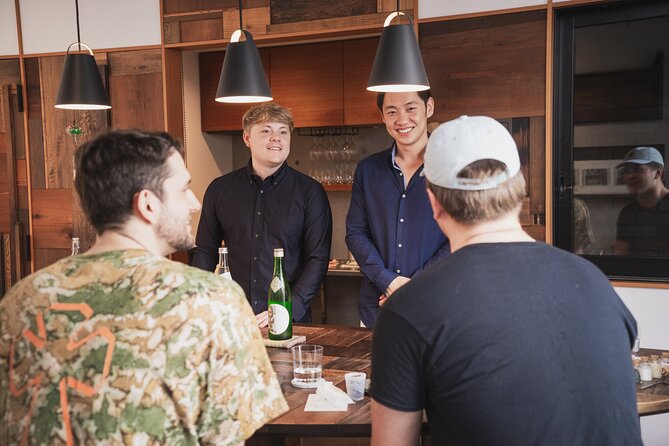
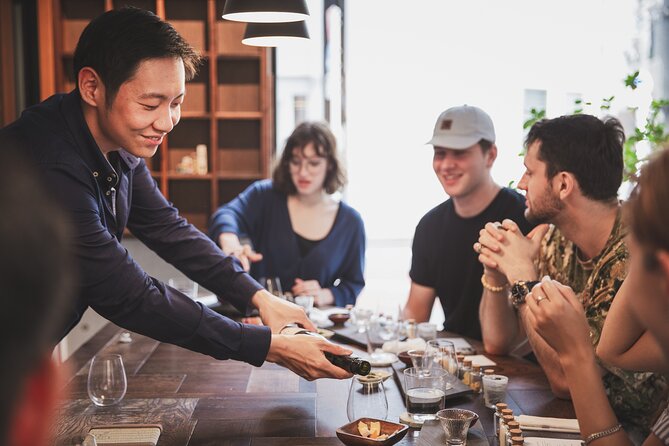
The maximum group size is six. That is a real advantage in a tasting session, where the best questions often arise after you smell or taste something unexpected. In a large group, those questions can get lost. Here, you should have a better chance to speak directly with the host.
The sessions are led by certified sommeliers who speak native-level English, Japanese, and Chinese. Names connected with the hosting team include Eric, Aaron, Frank, and Phillip. The individual host may vary, but the format is built around direct explanation and conversation.
The tone is intended to be friendly and relaxed. That matters because sake terminology can sound intimidating at first. You do not need to arrive knowing the difference between every brewing style. You can simply say that one tastes sweet, floral, sharp, warm, or heavy, and let the sommelier give you better language for it.
The social side is another plus. With only six places, you may end up talking with the other people at the table and comparing favorites. If you want a private tasting for just your own party, this may not be the right format, since the small group can include other bookings.
Is $79.52 a fair price?
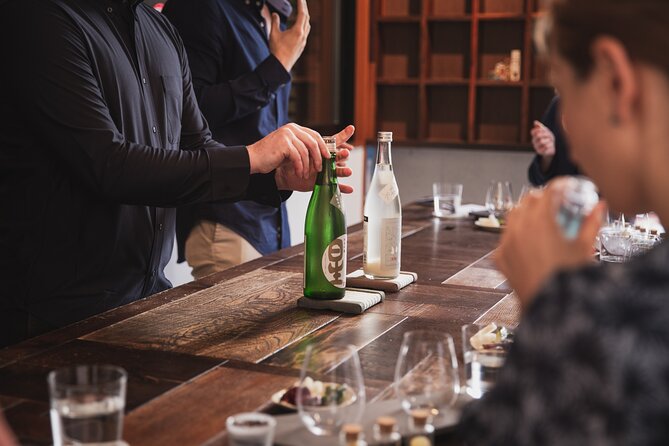
At $79.52 per person, this is not the cheapest way to drink sake in Tokyo. You could order a bottle or a few glasses for less, especially if you are only looking for alcohol rather than instruction.
The price makes more sense when you count what is included: seven selected sakes, free-flow service through four courses, snacks, a designed tasting room, and a certified sommelier guiding the session. You are paying for comparison and explanation, not just liquid in a glass.
For a first sake experience, I think the price is reasonable if you want to leave with a better sense of your own palate. The tasting can save you from ordering blindly for the rest of your trip. It may also help you buy sake at home with more confidence.
The value is weaker for a serious sake collector who already knows the major styles and mainly wants rare bottles. The experience focuses on guided discovery, not on buying bottles or visiting breweries. It is also not a full meal, so budget separately for dinner.
Who will enjoy this most
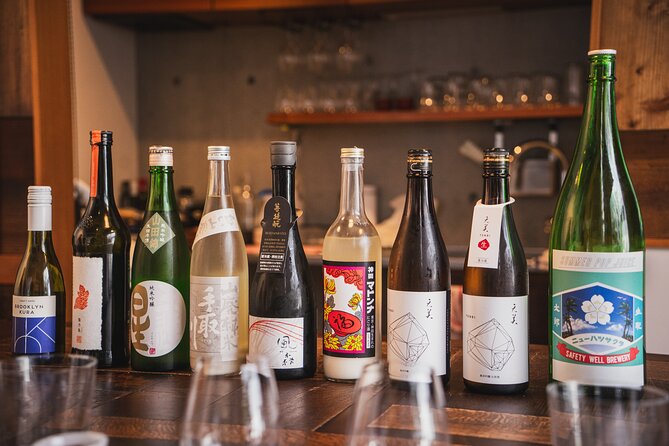
This tasting suits you if you have tried sake once or twice and want a clear introduction. It also works well for someone who already likes sake but wants to understand why certain bottles appeal to them.
I would recommend it for couples, solo visitors, and small groups who enjoy food and drink with conversation. The compact group gives solo participants an easier way to meet people, while couples get a shared activity that is more distinctive than another bar stop.
It is also a strong choice for anyone who wants instruction in English. Japanese and Chinese are available as well, making the session useful for a mixed-language group.
You should think twice if you have an alcohol allergy, since alcoholic beverages are central to every course. You should also consider the volume carefully. Seven sakes with unlimited refills can become demanding, even with snacks, so pace yourself and do not feel obliged to accept every refill.
Timing, cancellation, and practical planning
The session lasts approximately two hours. Since it ends back at the meeting point, you can plan another activity afterward without arranging transportation from a distant neighborhood.
Confirmation is provided when you book, and the activity accepts mobile tickets. Most people can participate, and the meeting point is near public transportation. No hotel pickup, drop-off, or transportation between attractions is included.
Cancellation is free up to 24 hours before the local start time for a full refund. If you cancel or request changes less than 24 hours before the start, the payment is not refunded and changes are not accepted. The activity also requires a minimum number of participants, so if that minimum is not reached, you are offered another date or experience, or a full refund.
That policy is fairly flexible, but keep the 24-hour deadline in mind when planning around weather, jet lag, or a changing Tokyo schedule.
Should you book the Kanda sake omakase?
I would book this if you want more than a quick sake flight. The strongest parts are the six-person group, the clear themed comparisons, the five-temperature tasting, and the chance to ask a sommelier which styles fit your palate.
The $79.52 price is fair for a guided two-hour session with seven Japan-only selections, unlimited refills, and food pairings. It is less attractive if you want a full meal, a brewery visit, or a quiet private tasting.
Eat a little beforehand, arrive ready to ask questions, and pace the refills. If you do that, this is a practical way to turn sake from a vague Japanese specialty into a drink you can choose and enjoy with some confidence.
FAQ
Where does the sake tasting begin?
The experience begins at Linden House, 1-chome-9-9 Kanda Ogawamachi, Chiyoda City, Tokyo 101-0052, Japan.
Where does the activity end?
The activity ends back at the meeting point.
How long does the tasting last?
The tasting lasts approximately two hours.
How many sakes are included?
Seven varieties of sommelier-selected, Japan-exclusive sake are included.
Are refills included?
Yes. The seven sakes are served free-flow through four themed courses, with unlimited refills.
Is food included?
Yes. Small bites such as pickles, cheeses, cured meats, and dessert are provided with the courses.
How large is the group?
The activity has a maximum of six participants.
Which languages are available?
The sommeliers guide the experience in English, Japanese, and Chinese.
Can I cancel for a refund?
Yes. You can cancel at least 24 hours before the local start time for a full refund. Cancellations and changes made less than 24 hours before the start are not refunded or accepted.
More Guided Tours in Tokyo


More tours in Tokyo we've reviewed












Sake Tasting, compared.
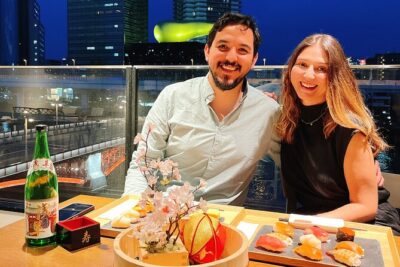 ★ 5.0Ramen and Sushi Cooking Class with Sake Pairing Set in TokyoFrom $79
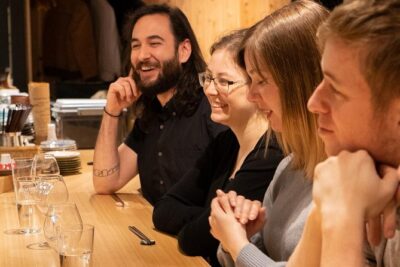 ★ 5.0Sake Tasting Masterclass in Shinjuku (8+ Varieties with a Pro)From $72
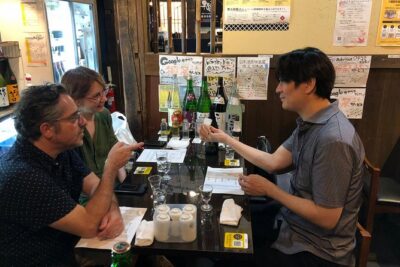 ★ 5.0Tasting All Types of Sake with SommelierFrom $62
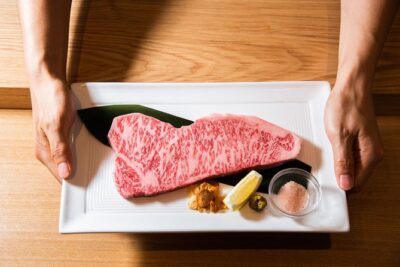 ★ 5.0Wagyu & Sake Pairing in Shinjuku – Steak, Shabu-Shabu & MoreFrom $148
 ★ 5.0Tokyo Wagyu & Sake Pairing Tasting Experience with Local FlavorsFrom $151
 ★ 4.9Tsukiji: Outer Market Walking Tour & Sake Tasting ExperienceFrom $703 hours