Reviewed · SAMURAI & NINJA EXPERIENCES
Shinjuku, Tokyo: Samurai Show Ticket in Kabukicho with 2 drinks
Kabukicho’s Samurai Restaurant turns Japanese warrior imagery into a loud, colorful stage show. Samurai, ninjas, dancers, costumes, songs, and drums arrive in quick succession, blending old Japan with modern pop theater rather than presenting a quiet history lesson.
In This Article
- Kabukicho’s Samurai Spectacle, Not a Quiet History Lesson
- Finding the Entrance in Kabukicho
- Why Early Arrival Matters
- What Happens During the Two-Hour Show
- The Show’s Strongest Qualities
- The Main Drawbacks to Consider
- Is $58.64 a Fair Price?
- Who Should Book This Experience?
- Booking and Timing Tips That Matter
- My Verdict: Book It for Energy, Not a History Lesson
- FAQ
- Where does the Samurai show take place?
- What time do the doors open?
- What time does the show start?
- How long does the experience last?
- Are seats assigned?
- What happens if I arrive late?
- Which entrance should I use?
- Are drinks included?
- Is transportation included?
- Can anyone under 18 attend?
- Can I cancel for a full refund?
I like the two included drinks, which make the $58.64 price easier to judge, and I like the compact two-hour format. The main caution is practical: the venue can be hard to find, the music is very loud, and you must show passport information to confirm your age.
- Doors open at 10:30 and the show starts at 10:50, giving you a short window to find the entrance and settle in.
- The GIRA GIRA Girls entrance is the correct entrance, located across from Family Mart.
- Seating is unassigned, so early arrival matters if you want a front-row spot.
- Two drinks are included, while food is not listed as part of the ticket.
- The show mixes samurai and ninja scenes with dance, songs, costumes, props, and Japanese drums.
- Anyone under 18 is not permitted, and an ID or passport is required for age confirmation.
Kabukicho’s Samurai Spectacle, Not a Quiet History Lesson
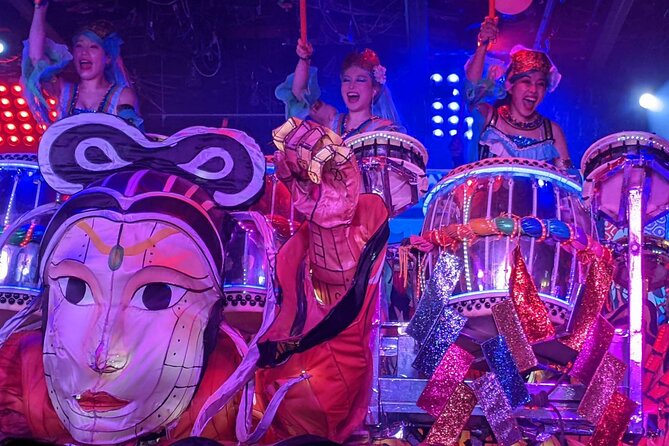
This is the kind of Tokyo night out that favors showmanship over restraint. You enter a theatrical space in the middle of Kabukicho, Shinjuku’s famous entertainment district, and watch a performance built around samurai and ninja figures, colorful costumes, dance, music, and traditional Japanese drums.
I would not book this expecting a museum-style explanation of feudal Japan. The appeal is the collision of recognizable Japanese imagery with contemporary stage energy. You get a pop-culture version of samurai tradition, presented through rapid scenes and strong visual effects.
That distinction matters. If you want careful historical context, this is not the right choice. If you want a high-energy performance that gives you a memorable taste of Japanese themes in a modern setting, it makes more sense.
The show runs for about two hours. That is long enough to feel like a proper evening activity, but short enough to fit around dinner or another Shinjuku plan. The ticket also includes two drinks, so you are not paying the admission price and then immediately adding a separate bar bill.
Finding the Entrance in Kabukicho
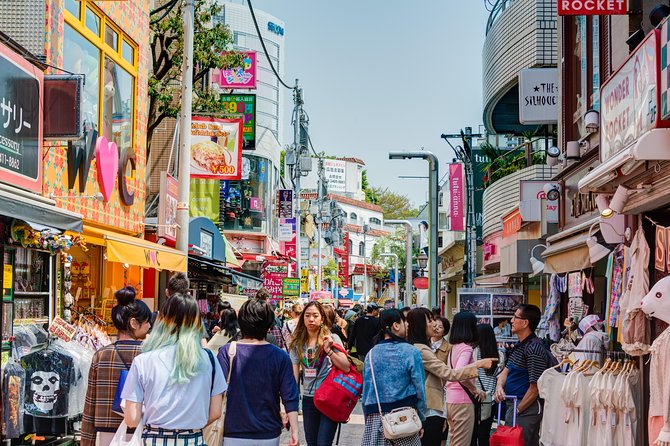
The venue is in Kabukicho, a central part of Shinjuku with plenty of nightlife and entertainment venues. That location is convenient if you are already spending time around Shinjuku Station, but the entrance is not especially obvious.
Look for the GIRA GIRA Girls entrance across from Family Mart. The reception desk is inside that entrance. This is the detail I would save in your phone before leaving your hotel, because searching for a place in Kabukicho can be more tiring than expected, especially when signs compete for your attention.
The meeting time is 10:30 am, when the doors open. The show begins at 10:50 am. That twenty-minute gap is useful, but it is not generous if you have never been to the area. Plan to arrive in Kabukicho before 10:30, then use the extra time to confirm the entrance, check in, and choose a seat.
You do not need to arrange transportation as part of the experience. Transportation to the venue is not included, so you make your own way there. The venue is near public transportation, but the booking details do not specify a particular station or walking route. I would rely on a current map and allow extra time for the final search.
A few more Kabukicho tours and experiences worth a look


Why Early Arrival Matters
Seats are not assigned. That gives you some control, but it also means the best locations go to people who arrive early. If a front-row seat matters to you, do not treat the 10:50 start time as your arrival time.
The available information does not promise that every seat is directly in front of the stage. Still, the seating arrangement is close enough to the action for the show to feel immediate, and arriving early gives you the clearest choice.
There is another reason to be punctual. If you arrive after the performance starts, you may have to wait until intermission before being seated. That protects the performance from interruptions, but it can leave you standing outside or waiting in the reception area while scenes are already underway.
For that reason, I would aim to be at the entrance shortly before 10:30. You gain a better seat and avoid starting the show in an awkward pause.
What Happens During the Two-Hour Show
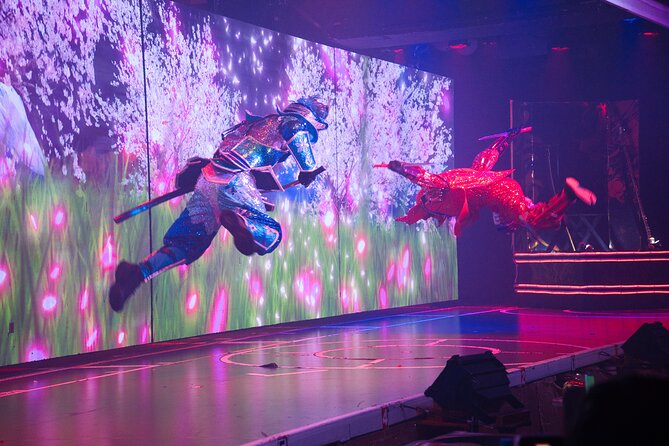
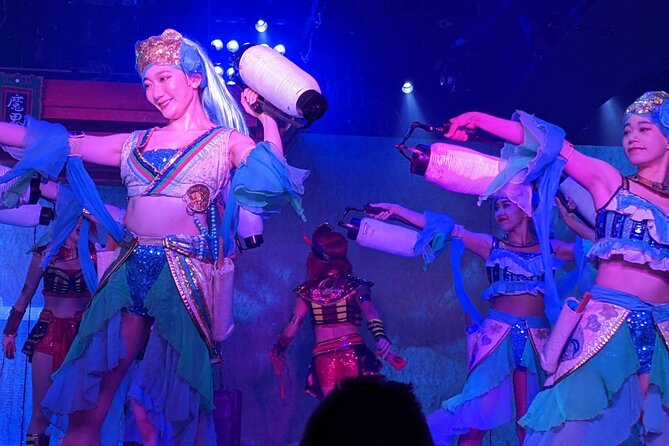
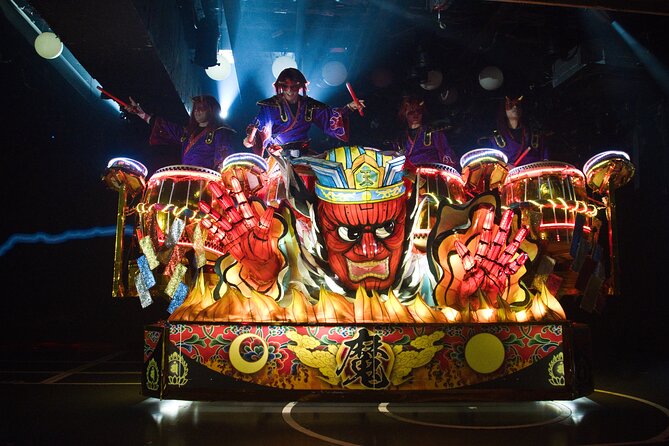
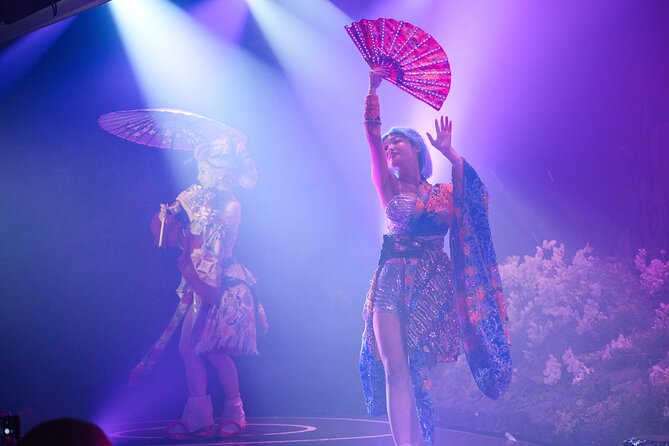
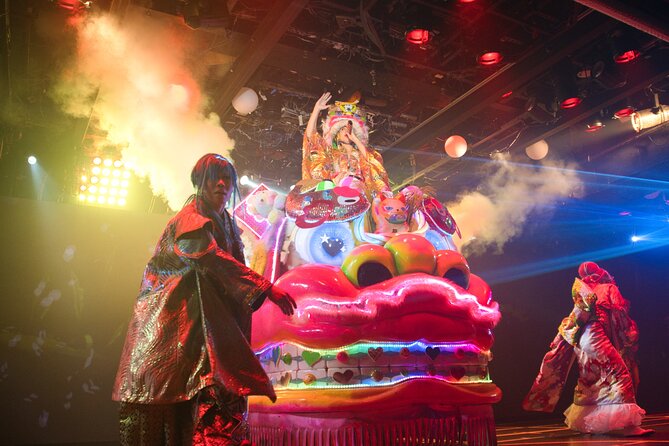
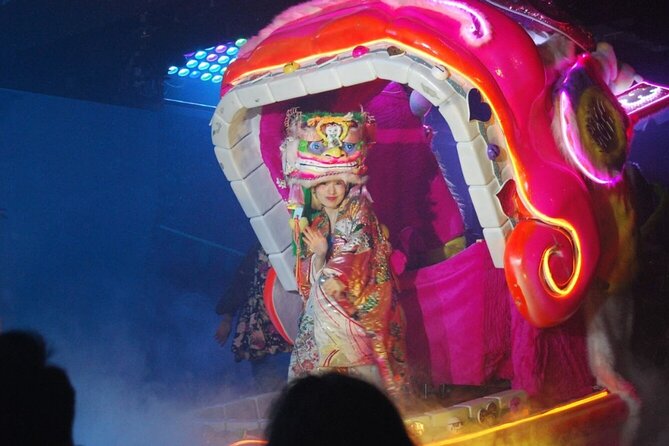
The performance is built around a series of different scenes rather than one simple samurai story. You can expect dancers in elaborate costumes, samurai performances, ninja appearances, songs, and a traditional Japanese drum segment.
The rapid changes are part of the attraction. Instead of settling into one mood, the show keeps switching themes, colors, and performance styles. That creates a strong sense of motion and gives the production its pop-theater character.
The costumes and props do much of the storytelling. You may not receive detailed spoken explanations of each historical reference, but the visual language is clear: warriors, theatrical poses, choreographed movement, music, and dramatic entrances.
The Japanese drums add a more traditional sound to a production otherwise shaped by modern stage entertainment. That contrast is one of the more interesting elements. The show does not separate old and new Japan into neat sections. It puts them together in the same fast-moving production.
You should also expect considerable volume. One audience member specifically found the music very loud and used earplugs. If you are sensitive to loud sound, bring your own ear protection. That small preparation can make the two-hour performance much more comfortable.
Food and drink service is available during the show, and the ticket includes two drinks. The available information indicates that drink and food service can be fast, which helps if you want to order without missing much of the action. Food is not included in the ticket, so treat it as an extra purchase.
The Show’s Strongest Qualities
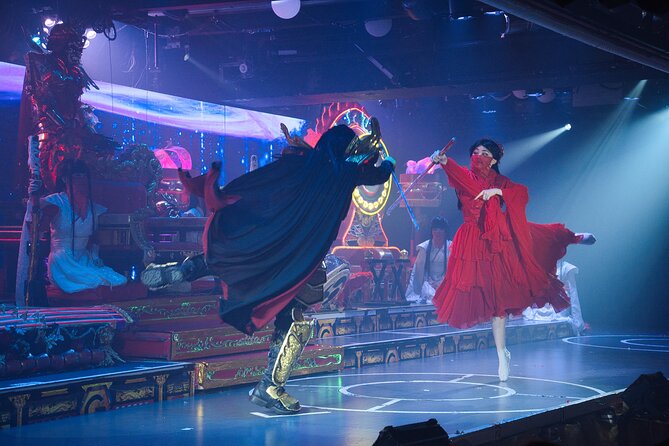
The production’s main strength is its visual energy. Costumes, colors, props, dance, music, and action all work together to keep your attention. This is not a sparse stage with a few performers standing under a spotlight.
The number of scenes also helps. You are not watching one repeated routine for two hours. The changing themes give the performance a sense of variety, and the combination of samurai and ninja imagery broadens the appeal beyond a standard sword show.
The performers are another important part of the experience. The performance requires dance, timing, physical movement, and a willingness to play the material at full volume. The result is intentionally exaggerated. If you enjoy eccentric, high-energy theater, you will probably respond well to it.
I also like that the show gives you a cultural experience without requiring a full day away from central Tokyo. You can see Japanese historical symbols, hear traditional drums, and watch a modern production without leaving Shinjuku.
That does not make it a complete introduction to Japanese history. It does make it an easy evening choice for someone who wants a memorable stage event during a short Tokyo stay.
The Main Drawbacks to Consider
The first drawback is the venue search. Kabukicho is easy to reach in general, but the specific entrance can be confusing. Save the instruction to enter through the GIRA GIRA Girls entrance across from Family Mart, and do not wait until the last minute.
The second is the sound level. The music and drums are part of the show’s force, but they may be too loud for some people. Earplugs are a sensible choice if loud performances bother you.
The third is the lack of historical explanation. The show uses samurai and ninja themes, but the focus is entertainment. You should not expect a guide, lecture, or detailed account of Japanese history.
Finally, the seats are unassigned. Early arrival solves much of the problem, but you cannot choose a specific seat in advance. If you are attending with friends, arriving together will make it easier to sit together.
A few more Kabukicho tours and experiences worth a look
Is $58.64 a Fair Price?
At $58.64 per person, this is not a budget performance. The value depends on what you want from a night in Tokyo.
The ticket covers about two hours of live entertainment and includes two drinks. That matters because many nightlife activities advertise a low entry price and then add drinks at the door. Here, part of that cost is already settled.
You are also paying for a specialized production in one of Tokyo’s best-known entertainment districts. The show combines performers, costumes, stage design, music, dance, action, and drums. If you enjoy live theater and want a polished, highly visual event, the price can be reasonable.
The value is weaker if you are mainly looking for an inexpensive cultural activity or a serious historical presentation. In that case, you may feel you are paying for spectacle rather than instruction.
I would compare it with the cost of an evening show, not with the price of a temple visit or a self-guided neighborhood walk. Judged as a two-hour theater experience with drinks, it is easier to justify.
Who Should Book This Experience?
I would recommend it to adults who enjoy bold stage productions and want something different from temples, observation decks, and food tours. It should suit couples, groups of friends, and solo visitors who are comfortable attending a lively performance.
It is especially useful for a short Tokyo visit. The two-hour length leaves room for other plans, and the Kabukicho location puts you close to restaurants, bars, and other evening entertainment.
You should also consider it if Japanese pop culture interests you. The performance does not present traditional culture in a quiet or formal way. Instead, it uses familiar warrior themes in a loud, colorful style that feels designed for a modern entertainment district.
I would hesitate to recommend it to young families because anyone under 18 is not allowed to enter. It is also a poor match for anyone who dislikes loud music, crowded entertainment areas, or theatrical exaggeration.
Booking and Timing Tips That Matter
You receive a mobile ticket, which keeps the entry process simple. Confirmation is provided at booking, but you still need to arrive at the correct entrance and bring ID or passport information for age confirmation.
The start details are easy to confuse, so remember them this way:
- Doors open at 10:30 am.
- The show starts at 10:50 am.
- Late arrivals wait until intermission to be seated.
- Seating is unassigned.
- Two drinks are included.
- Transportation and a guide are not included.
The cancellation policy is also fairly flexible if your plans change. You can receive a full refund when you cancel at least 24 hours before the local start time. Cancellations or changes made less than 24 hours before the start are not accepted for a refund.
My Verdict: Book It for Energy, Not a History Lesson
Book this Samurai Restaurant show if you want colorful costumes, nonstop action, strong music, dance, and Japanese drums in a compact Tokyo evening. The two drinks add useful value, and the central Kabukicho location makes it easy to pair with other Shinjuku plans.
Skip it if you want a quiet cultural presentation, detailed historical teaching, or a low-cost activity. The entrance takes care to find, seats are first come, first served, and the sound can be intense.
For the right audience, this is a memorable burst of modern Tokyo theater. Arrive early, bring your ID, save the entrance instructions, and pack earplugs if you need them.
FAQ
Where does the Samurai show take place?
It takes place at Samurai Restaurant in Kabukicho, Shinjuku, Tokyo.
What time do the doors open?
Doors open at 10:30 am.
What time does the show start?
The performance starts at 10:50 am.
How long does the experience last?
The experience lasts approximately two hours.
Are seats assigned?
No. Seats are not assigned, so arrive early if you want a front-row seat.
What happens if I arrive late?
If you arrive after the show has started, you must wait until intermission before being seated.
Which entrance should I use?
Enter through the GIRA GIRA Girls entrance, located across from Family Mart. The reception desk is inside that entrance.
Are drinks included?
Yes. The ticket includes two drinks.
Is transportation included?
No. Transportation to the venue is not included.
Can anyone under 18 attend?
No. Anyone under 18 is not allowed to enter. Bring ID or passport information for age confirmation.
Can I cancel for a full refund?
Yes, if you cancel at least 24 hours before the experience start time. Cancellations made less than 24 hours before the start are not refundable.
More Tickets & Passes in Kabukicho
More Samurai & Ninja Experiences in Kabukicho
More Shinjuku Tours in Kabukicho
More tours in Kabukicho we've reviewed


Samurai & Ninja Experiences, compared.
 ★ 4.5Tokyo: Samurai Restaurant Show Ticket with 2 DrinksFrom $551h 30m
 ★ 4.6Tokyo: Samurai Ninja Museum Guided tour and ExperienceFrom $27
 ★ 5.0Skip the lines Basic Ticket at SAMURAI NINJA MUSEUM TOKYOFrom $28
 ★ 5.0Tokyo: Authentic Samurai Training at a DojoFrom $211
 ★ 5.0Best Samurai Experience in TokyoFrom $65
 ★ 4.6Tokyo: Legend Samurai Entertainment Night in Kanda ShrineFrom $44