Reviewed · ASAKUSA TOURS
Tokyo:Calligraphy &Make your original folding fan in Asakusa
The best part of this Asakusa workshop is that you do not simply copy a Japanese character onto a souvenir. You learn how the brush moves, prepare traditional ink, practice on thin paper, and then choose a design for an original folding fan. It is a calm, hands-on break from Tokyo’s busy streets.
In This Article
- Key points at a glance
- Why this small Asakusa class is worth your time
- Starting with hiragana, kanji, and the spirit of brushwork
- Making ink the traditional way
- Thirty minutes of practice before the final design
- Turning your calligraphy into a folding fan
- What the $16 price includes, and what it does not
- Practical details before you go
- Who will enjoy this most
- My verdict on the Asakusa calligraphy experience
- FAQ
- How long does the calligraphy and folding fan activity last?
- How much does the experience cost?
- Is the class taught in English?
- What will I make during the session?
- Is green tea included?
- What should I wear?
- Is the activity wheelchair accessible?
I like the patient teaching and the personal finish. Mana explains the meaning behind kanji, helps you write your name in Japanese, and lets you practice until you feel ready. I also like the postcard to yourself, a small idea that gives the activity a lasting link to your trip. The main consideration is that ink can stain clothing, even though aprons are provided, and the workshop is not suitable for wheelchair users.
Key points at a glance

- Traditional ink preparation: Use water to soften a solid ink stick before practicing with brush and ink.
- A real practice period: Work for about 30 minutes on thin paper with guide sheets and personal help.
- Meaningful Japanese writing: Learn about hiragana, kanji, names, and the cultural attitude behind calligraphy.
- Two souvenirs: Take home your decorated folding fan and a postcard written to your future self.
- English instruction: Mana teaches in English and is praised for her patience, clear explanations, and warm help.
- Flexible timing: The activity lasts about 30 to 90 minutes, depending on how much you practice and create.
Why this small Asakusa class is worth your time

Asakusa gives you plenty of famous sights, from Senso-ji to the Nakamise shopping street. Those places can be noisy and crowded. This calligraphy class offers a change of pace without asking you to give up much of your day.
At $16 per person, the price is modest for an English-language cultural activity with materials, instruction, green tea, and a handmade souvenir. You are not paying only for a demonstration. You receive individual help, practice materials, and a final fan that you make yourself.
I would not choose this as a substitute for a full calligraphy course. It is a short introduction, not a serious study of Japanese brushwork. But for a first encounter, it gives you enough background to understand what your hands are doing instead of simply following a series of strokes.
The workshop also works well for mixed-age groups. A six-year-old enjoyed the session with a parent, and an older participant joined a grandchild for a first proper class. The pace can be adjusted through practice, which makes the activity more forgiving than it may sound.
A few more Tokyo tours and experiences worth a look


Starting with hiragana, kanji, and the spirit of brushwork
The session begins with an introduction to Japanese calligraphy. You learn how calligraphy connects with hiragana, kanji, and everyday Japanese culture. This matters because the characters are not just decorative marks. Their shape, balance, and meaning all play a part in the finished work.
You also study the attitude and posture used in calligraphy. You will be shown how to sit or position yourself, how to hold the brush called a fude, and how much ink to place on its tip. These points can seem minor, but they affect every line.
A useful part of the lesson is the focus on control rather than speed. The brush needs enough ink to make a clear mark, but too much can make the stroke heavy. Your instructor can correct your grip and movement before you begin working on the final design.
Mana is the named instructor associated with the class. English-speaking participants have found her explanations easy to follow, and her patient approach is especially helpful if you have never held a Japanese calligraphy brush. She also takes time to answer questions about names, kanji, food, and things to do in Tokyo.
Making ink the traditional way

Instead of beginning with a ready-made bottle of ink alone, you use water to soften a traditional solid ink stick. This is a simple task, but it gives you a better sense of the older craft behind the finished character.
You add water and work the ink until it reaches a usable consistency. The process slows the lesson down in a good way. You are preparing for the writing rather than rushing straight to the souvenir.
The workshop includes a demonstration of brush use and the basic techniques needed for the class. The program refers to eight fundamental techniques, giving you a set of movements to practice before choosing a design.
Do not expect to master all eight in one short visit. The point is to feel how the brush responds and to learn enough to make a deliberate final attempt. If you are hard on yourself, remember that calligraphy is less about producing a perfect first character and more about learning balance, pressure, and rhythm.
Thirty minutes of practice before the final design
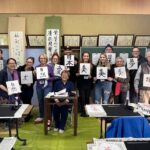
The practice section is where the activity becomes personal. You work on thin paper with guide sheets, repeating strokes and characters while the instructor offers corrections. The materials help you see where a line should begin, how it should finish, and how the parts of a character fit together.
You are given time to practice for about 30 minutes, though the full activity can last from 30 to 90 minutes. That range is important. A quick participant may finish closer to the shorter time, while someone who wants to try several designs can stay longer.
The class is not built around pressure to produce a final piece immediately. You can make several attempts and choose the one you prefer. A sample book helps you select a design, or you can ask the instructor to suggest something suitable.
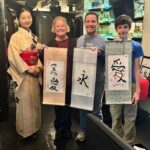
You might write a meaningful kanji, a word connected with your trip, or your name in Japanese characters. The exact choices depend on the designs available and the guidance you receive during the session. Ask about meaning before you commit to a character. A beautiful symbol is much more satisfying when you understand what it says.
This practice time is also why the class has a quiet, almost meditative quality. You focus on one stroke at a time. It is a good choice for a hot afternoon, a rainy spell, or any point in your Tokyo schedule when you want to sit down and make something with your hands.
Turning your calligraphy into a folding fan

Once you have practiced enough, you choose your favorite design for the final piece. The main included keepsake is an original folding fan featuring your calligraphy.
This is a better souvenir than a mass-produced item because you made the central design yourself. It also travels well. A folding fan is light, easy to pack, and useful during Tokyo’s warmer months.
The final fan is not the place to chase perfection. Your brush marks show that you made it during a particular trip, at a particular stage of learning. A slightly uneven character can be part of the charm, especially when the instructor has helped you understand the strokes behind it.
The class also includes writing a postcard to yourself. You can note what you felt during the calligraphy session and send it to your home address. The postcard gives you a second memory beyond the fan, and it is a thoughtful way to reconnect with the trip after returning home.
Green tea is served at the end, adding a gentle pause after the writing. Food and drinks are not allowed during the working part of the session, so treat the tea as part of the closing moment rather than something to sip while handling ink.
A few more Tokyo tours and experiences worth a look


What the $16 price includes, and what it does not

The $16 fee covers the calligraphy lesson, the introduction to Japanese calligraphy, posture guidance, traditional ink preparation, brush techniques, guide paper, custom design practice, postcard writing, and the folding fan.
That is good value if you want an activity with both instruction and a physical souvenir. Many Tokyo attractions cost more while giving you little to take home beyond a photograph. Here, the final object carries your own brushwork.
There are extra costs to watch for. Printing your design on a T-shirt is not included. If you want that option, you can buy a T-shirt at the shop and pay the clothing fee. One participant arranged a T-shirt after the class, and the instructor later hand-delivered it when the group needed to leave for Senso-ji. That kind of help may be available, but you should not assume every extra item will be ready immediately.
Pay close attention when booking. The activity information includes a henna tattoo option, but selecting that option means you do not receive the calligraphy experience. This is an important distinction, not a minor add-on.
Practical details before you go

The meeting point can vary by the option you book. The supplied location coordinates are 35.7162239, 139.7922354, so check the exact meeting instructions before setting out.
Wear comfortable clothes that can handle a little ink. Aprons are available, but the safest approach is to avoid your favorite white shirt or anything difficult to clean. One participant wished for a towel at the end, so bringing a small hand towel may be useful, although it is not listed as required.
The class is conducted in English. Pets are not allowed, except for assistance dogs. The activity is not suitable for wheelchair users, so check this carefully before booking if accessibility is important for your group.
Free cancellation is available up to 24 hours before the start time, and you can reserve now and pay later. Starting times depend on availability. These policies make it easier to fit the class into a changing Tokyo schedule, but you still need to confirm the meeting point and time for your selected option.
Who will enjoy this most

I would recommend this class to you if you want a quiet cultural activity rather than another sightseeing stop. It suits first-time visitors who want a simple introduction to Japanese writing, as well as people already interested in brushes, lettering, or traditional crafts.
Families can do well here because the practice sheets make the techniques easier to understand. The instructor’s patient manner is useful when children or older family members need more time. Couples can also make different designs and compare the final fans.
It is a good rainy-day plan and a sensible midday break from Asakusa’s outdoor sights. The class also makes sense near the end of a trip, since the fan and postcard become personal reminders of Tokyo.
I would hesitate if you want a long, formal lesson with advanced instruction. I would also skip it if you dislike sitting still, handling ink, or wearing an apron. The activity is gentle and hands-on, but it is not a sightseeing tour with constant movement.
My verdict on the Asakusa calligraphy experience

Book this if you want to make a small Japanese souvenir with real meaning behind it. The strongest parts are the patient English instruction from Mana, the chance to practice before making your final design, and the folding fan that records your own progress.
The $16 price is fair, especially when you count the materials, tea, postcard, and fan. Allow extra time if you want to practice carefully, and wear clothes that can survive a stray mark of ink.
Skip the henna tattoo option if calligraphy is your goal, and remember that T-shirt printing costs extra. For most visitors, though, this is an easy and personal addition to an Asakusa day: short enough to fit between sights, calm enough to reset your pace, and memorable enough to bring home.
FAQ
How long does the calligraphy and folding fan activity last?
The activity lasts between 30 and 90 minutes. Available starting times and the exact length depend on the option booked and how long you choose to practice.
How much does the experience cost?
The listed price is $16 per person.
Is the class taught in English?
Yes. The instructor teaches in English, and Mana is specifically associated with the class.
What will I make during the session?
You will practice Japanese calligraphy, choose a favorite design, and use it to make an original folding fan. You can also write a postcard to yourself to remember the experience.
Is green tea included?
Yes. You can enjoy a cup of green tea as part of the experience, generally after the calligraphy work.
What should I wear?
Wear comfortable clothes that can get a little dirty from ink. Aprons are provided, but clothing protection is still sensible.
Is the activity wheelchair accessible?
No. The experience is listed as not suitable for wheelchair users.
More Craft Workshops in Tokyo
More Asakusa Tours in Tokyo
More tours in Tokyo we've reviewed


Asakusa Tours, compared.
 ★ 4.8Tokyo: Japanese Dance Cabaret Theater Asakusa-Kaguwa TicketFrom $492 hours
 ★ 4.7Tokyo: Meiji Shrine, Asakusa, Skytree Bus Tour and CruiseFrom $12210 hours
 ★ 4.9Tokyo: Roll and Authentic Sushi Making Class in AsakusaFrom $581h 40m
 ★ 4.8Tokyo: Asakusa Walking Tour with Sensoji Temple VisitFrom $222 hours
 ★ 5.0Tokyo Asakusa Rickshaw TourFrom $42
 ★ 4.5Tokyo Panoramic 1 Day: Meiji Shrine, Asakusa, Odaiba and SKYTREE®From $85