Reviewed · UENO & YANAKA WALKS
Private Workshop to Create Paper Last for 1,000 years in Ueno
The most unusual part of this Ueno workshop is that you do not simply decorate finished paper. You work through the old process from tree fiber to sheet, including Hyouhitor, peeling the outer bark, and Dakai, beating the fibers. You leave with four handmade paper pieces and a better sense of why washi has lasted for centuries.
In This Article
- Key points to know before booking
- Turning a Tree into Paper in Ueno
- The Private Format Makes the Craft Easier to Follow
- Hyouhitor and Dakai: The Work Behind the Finished Sheet
- Making Two Postcards and Two Larger Pieces
- Tea, Sweets, and the Waiting Time
- Meeting Kami, the Workshop Cat
- Is $143.35 a Fair Price?
- Timing, Location, and Practical Planning
- Who Will Get the Most from This Workshop?
- Should You Book the Ueno Washi Workshop?
- FAQ
- Where does the Japanese papermaking workshop take place?
- How long does the workshop last?
- What will I make during the session?
- Is the workshop private?
- What is included during the paper-drying time?
- Is there a cat at the workshop?
I like the patient, hands-on format and the small personal touches: original Kozo-leaf tea, local sweets, and mascot cat Kami. The main consideration is the price, $143.35 per person for about two and a half hours. That is a serious spend for a short activity, though the private setting and four finished pieces make it more useful than a quick craft demonstration.
Key points to know before booking
- Make four different paper products: two postcard designs, one Rakusui paper, and one A5 sheet.
- Handle the full washi process: peel bark, beat fibers, and form sheets with a mold and deckle.
- Enjoy tea made from Kozo leaves: these are the same type of leaves connected to the papermaking material.
- Spend the session privately: only your own group takes part.
- Meet Kami the cat: tell the workshop in advance about any allergies.
- Plan around the timing: the session lasts about 2 hours 30 minutes and ends where it begins.
Turning a Tree into Paper in Ueno
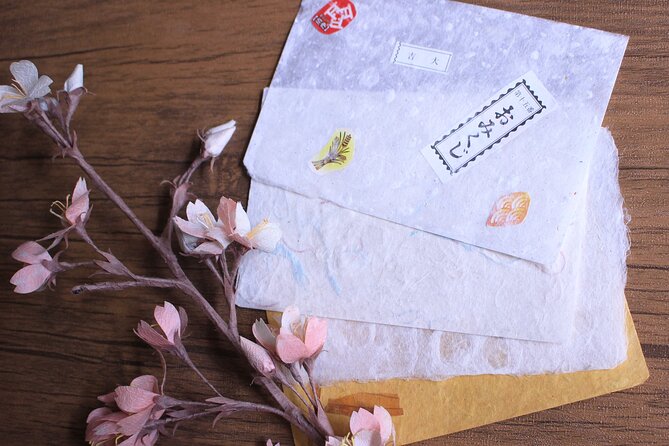
Japanese washi is often admired as a finished object, perhaps in a postcard, screen, print, or craft piece. This workshop lets you see the less glamorous work behind it. You start with plant fiber and gradually turn it into usable paper by hand.
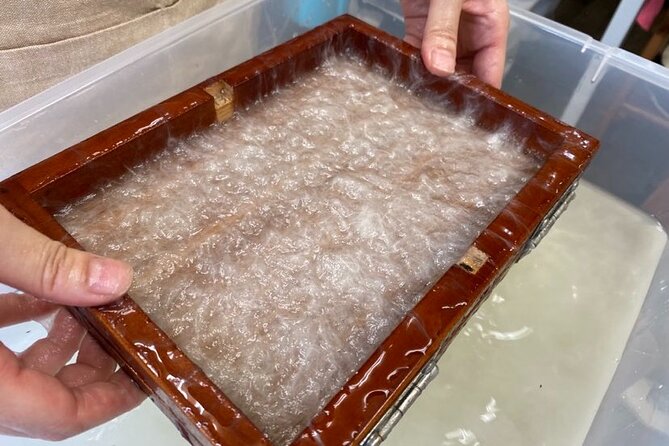
That matters because papermaking is not just a matter of pouring pulp into water. The preparation affects the final sheet. Hyouhitor removes the outer bark, while Dakai breaks down and softens the tree fibers. You then place the raw material into a paper-making mold and deckle, sift the mixture, and work toward a flat, even sheet.
The process gives you a physical connection to a Japanese craft tradition said to be more than 1,000 years old. You will not be standing behind a glass case or watching a distant demonstration. You handle the material yourself, with guidance throughout the session.
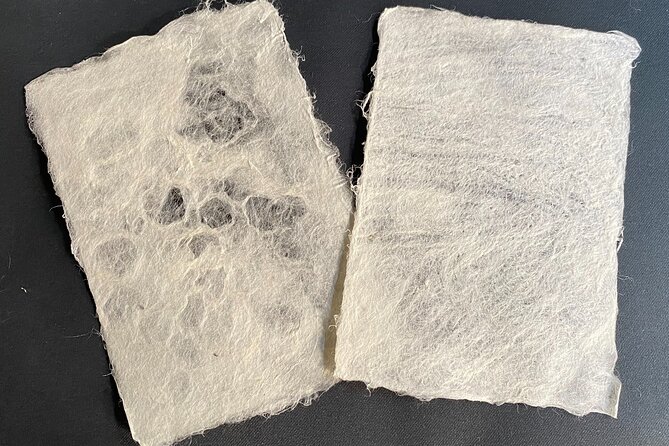
The workshop produces four separate items: two postcards with your own designs, a Rakusui paper, and an A5 sheet. That variety is useful. You can compare different formats, and the finished pieces become practical souvenirs instead of one fragile object that gets tucked into a suitcase and forgotten.
A few more Tokyo tours and experiences worth a look


The Private Format Makes the Craft Easier to Follow
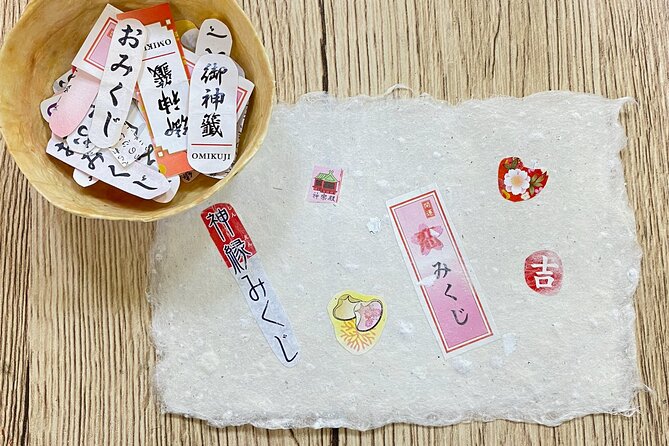
This is a private activity, so only your group participates. That is a major advantage for a craft class. You can ask questions, take your time during the steps, and receive direct help without competing with a large class.
The information provided does not name the instructor, but the workshop is designed around individual participation and clear explanations at the start. A previous participant specifically praised the teacher’s patience and kindness. That is important here because the paper-making steps may look simple at first, but forming an even sheet requires care.
A private session also works well for families, couples, or friends who want an activity with a shared result. You will be making objects side by side, but each person can create a different design. The two postcards are especially suited to this kind of personal touch.
Do not expect a quiet museum visit. You will be working with wet fibers, tools, and a mold and deckle. The charm comes from doing the work, not from keeping your hands clean.
Hyouhitor and Dakai: The Work Behind the Finished Sheet
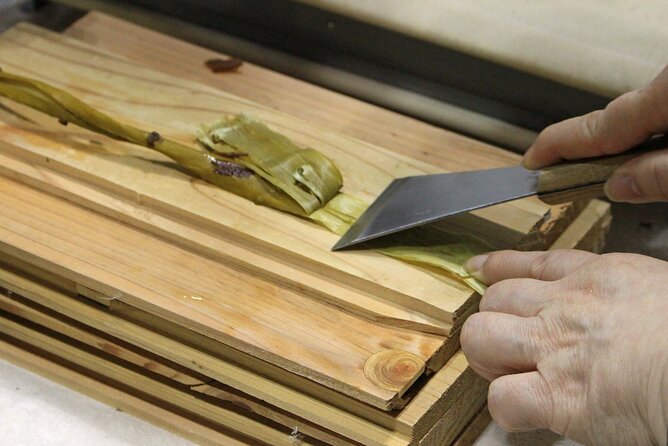
The early part of the session introduces the material itself. Hyouhitor means peeling off the outer bark. This step helps you see that washi begins with a tree, not with a ready-made white pulp that appears out of nowhere.
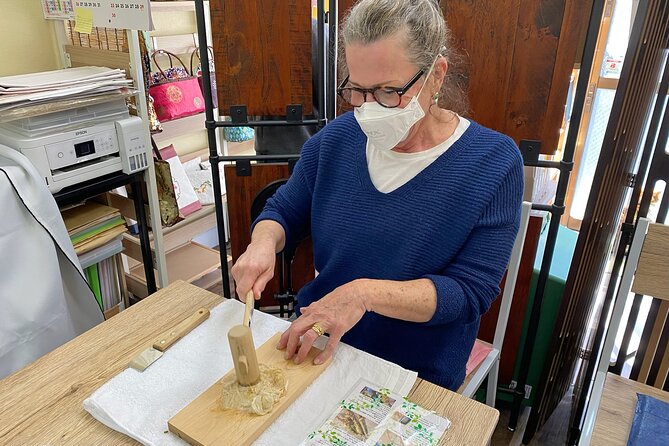
Next comes Dakai, the beating of the tree fibers. This is one of the most useful stages for understanding the craft. The fibers need to be prepared before they can spread across the screen and form paper. The action is simple enough to grasp, but it also shows why handmade paper takes time and effort.
The workshop presents the process in order, from raw material through sheet formation. That makes the session more satisfying than a craft activity that starts with pre-cut shapes or prepared blanks. You get a sense of the labor involved before you begin designing your own pieces.
The description does not specify how physically demanding the beating stage is, so you should expect some hands-on work but not assume a strenuous activity. Most travelers can participate, according to the booking information. If you have concerns about the physical steps, ask the provider before reserving.
Making Two Postcards and Two Larger Pieces
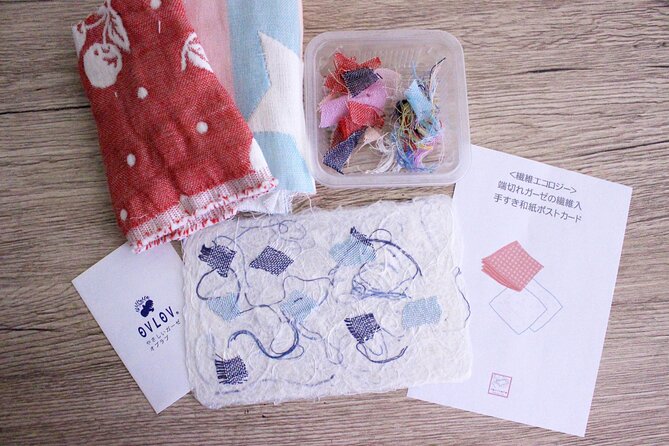
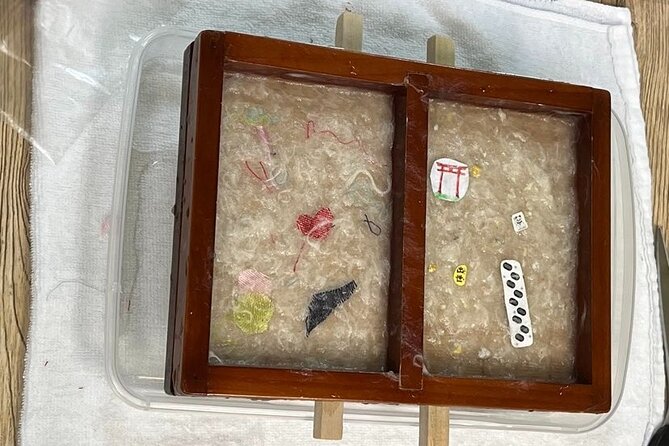
Once the material is ready, you use a mold and deckle to form sheets. The solution is sifted so the fibers spread into an even, flat layer. This is the point where the workshop moves from raw process to personal design.
You will make two postcard designs, giving you room to try different arrangements or create one for yourself and one as a gift. Handmade paper makes a thoughtful present because the irregularities are part of the object. No two pieces will be exactly alike, and the provider notes that the washi made here is unique to the workshop.
You also create a Rakusui paper and an A5 paper. The supplied details do not explain the exact design or purpose of Rakusui paper, so you should think of it as one of the workshop’s special formats rather than arrive expecting a particular finished style.
The A5 sheet gives you a larger surface for your design. It may be the best piece to protect carefully on the way home, while the postcards are easier to store in a notebook or envelope. The workshop does not state how the pieces are packaged or when they become fully dry, so bring a little patience and ask how to carry them safely before leaving.
Tea, Sweets, and the Waiting Time
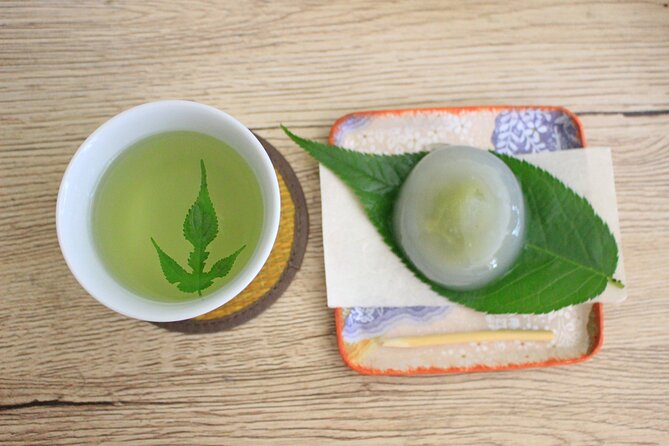
Paper needs time to dry. Instead of treating this as dead time, the workshop serves its own Japanese paper tea, made from Kozo leaves, along with Japanese sweets from a well-loved local shop.
The tea is an unusual part of the experience. Kozo is connected to the raw material used for papermaking, so the drink gives you another way to think about the plant behind the craft. The description also says this tea is not offered elsewhere, making it one of the more distinctive elements of the visit.
The sweets add a pleasant local touch, but the important practical point is that they are part of the workshop while your paper dries. You are not paying for two and a half hours of nonstop physical work. Some of the time is naturally built around the drying process, and the tea break gives the session a calmer rhythm.
If you have dietary restrictions, the available information does not list ingredients for the sweets or tea. Ask the provider before booking if that matters to you. There is also a cat in the workshop, so anyone with allergies should inform the provider in advance.
Other private tours in Tokyo




Meeting Kami, the Workshop Cat
The workshop’s mascot is a cat named Kami. The name fits a paper studio, and the cat adds a homey note to an otherwise very hands-on craft session.
You should treat Kami as part of the setting, not as a guaranteed scheduled activity. The description says the mascot welcomes visitors anytime, but it does not promise that the cat will be present for every moment of your session or available to interact with you.
The allergy warning is clear and worth taking seriously. If cat allergies could affect your visit, contact 和紙ラボTOKYO before booking. This is also a useful point for parents planning a family activity, since a child may be more sensitive than expected.
For many people, Kami will be a charming extra. For others, the cat may be a reason to choose another activity. The important thing is that the workshop gives you the information before you commit.
Is $143.35 a Fair Price?
At $143.35 per person, this is not a bargain activity. A short museum visit or a basic craft class will cost less in many parts of Tokyo. The price needs to be judged against what you actually receive.
You get about 2 hours 30 minutes of instruction in a private group, not a large shared class. You also make four paper products and take part in the full process, from bark preparation to sheet formation. Tea and sweets are included, along with the chance to work directly with an instructor.
For a solo visitor, the price may feel high unless handmade paper is a major interest. For two people who want a private, memorable activity, the cost is easier to justify. It can also work well as a special splurge during a Tokyo trip, particularly if you value a finished souvenir that you made yourself.
The value is strongest when you care about process rather than speed. You are paying for time, instruction, materials, and a small-group setting. You are not simply paying for four pieces of paper, since comparable paper products could be bought more cheaply.
The activity is booked an average of 31 days in advance, so last-minute availability may be limited. That booking pattern suggests you should reserve early if your Tokyo schedule is fixed, especially if you need a particular day.
Timing, Location, and Practical Planning
The workshop takes place at 3-chome 30-2, Ichikawa Building, Taito City, Tokyo 110-0016. It is near public transportation, but the information does not name a specific station or give walking directions. Use the full address in your map app and allow time to find the building.
The activity begins and ends at the same meeting point. That makes it easy to place before or after another stop in Ueno, since you will not need to arrange a separate return location.
A mobile ticket is provided, and confirmation arrives at the time of booking. Most people can participate, and the activity is private. The session lasts approximately two and a half hours, so leave enough room around it for arrival, the workshop itself, and any possible time needed to handle the drying paper.
The workshop requires good weather, and poor weather can lead to a change of date or a full refund. That condition is unusual for an indoor craft activity, so check the provider’s weather decision if rain is forecast. Free cancellation is available up to 24 hours before the start time. Cancellations or changes made less than 24 hours before the start are not refunded or accepted.
Who Will Get the Most from This Workshop?
I would choose this activity if you want a slower, more personal side of Tokyo. It suits visitors who enjoy traditional crafts, handmade souvenirs, and activities where the final object carries a story.
It is also a good choice for people who have already seen Tokyo’s major sights and want something that feels less standard. You will not simply buy washi in a shop. You will learn how plant fiber becomes paper, then make your own versions.
Families may enjoy the four-product structure because there is plenty to do. Couples can make matching or contrasting designs. Friends can turn the postcards into small gifts for people back home.
The workshop is less suitable if you want a fast activity, a polished sightseeing stop, or a low-cost introduction to Japanese culture. The price is high, the process takes time, and the result may have the uneven texture and handmade variation that some people love and others do not.
Cat allergies are another clear consideration. Tell the provider before booking if this could affect you.
Should You Book the Ueno Washi Workshop?
Book it if you want direct contact with a Japanese craft and like the idea of carrying home four items made during the session. The full process, private format, patient instruction, Kozo-leaf tea, sweets, and cat Kami give it more character than a standard souvenir-making class.
Skip it if $143.35 feels too high for a 2.5-hour activity or if you mainly want to see finished washi without doing the work. For the right person, this is a memorable Ueno experience built around patience, texture, and useful handmade gifts. For everyone else, Tokyo offers cheaper ways to spend an afternoon.
FAQ
Where does the Japanese papermaking workshop take place?
It takes place at Japan, 110-0016 Tokyo, Taito City, Taito, 3-chome 30-2, Ichikawa Building. The activity ends back at the meeting point.
How long does the workshop last?
The experience lasts approximately 2 hours 30 minutes.
What will I make during the session?
You will make four products: two original postcard designs, one Rakusui paper, and one A5 paper.
Is the workshop private?
Yes. Only your own group participates in the activity.
What is included during the paper-drying time?
The workshop serves original Japanese paper tea made from Kozo leaves, along with Japanese sweets from a local shop.
Is there a cat at the workshop?
Yes. The workshop has a mascot cat named Kami. You should inform the provider about any cat allergies before booking.
More Workshops & Classes in Tokyo



More Private Tours in Tokyo
More Ueno & Yanaka Walks in Tokyo
More tours in Tokyo we've reviewed



Ueno & Yanaka Walks, compared.
 ★ 5.0Eat and Drink Like a Local: Tokyo Ueno Food Tour-Taverns&RamenFrom $95
 ★ 4.5The Old Quarter of Tokyo – Yanaka Walking TourFrom $40
 ★ 5.0Yanaka Walking Tour: Historic and Traditional District of TokyoFrom $72
 ★ 4.8Tokyo: Old Quarter Yanaka Walking TourFrom $323 hours
 ★ 5.0Tokyo: Food Tour in Ueno with 10+ Tastings of Japanese ClassicsFrom $142
 ★ 4.9Tokyo:Stroll in Old traditional culture towns~Yanaka & NezuFrom $293h 30m