Reviewed · MT FUJI DAY TRIPS
Barrier-Free Private Mt. Fuji Tour for Wheelchair Users
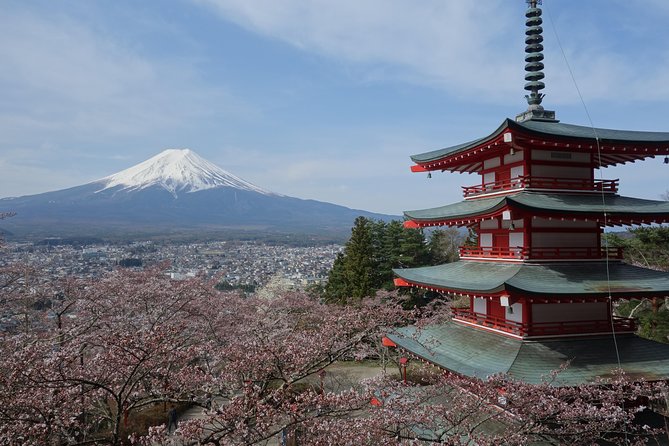
Mt. Fuji is the star, but the best part of this long private day is the freedom to see it at your own pace. You can choose the mountain’s 5th Station, a boat cruise on Lake Kawaguchiko, or Arakura Fuji Sengen, then continue to flower fields, springs, and traditional art without joining a large group. The wheelchair-friendly vehicle and hotel pickup remove much of the usual strain of getting beyond Tokyo.
In This Article
- Key points to know before booking
- Why a private Fuji day works well from Tokyo
- Reaching Mt. Fuji’s 5th Station
- Lake Kawaguchiko and your choice of Fuji viewpoint
- Oishi Park’s flowers beside the lake
- A traditional lunch with accessibility in mind
- Itchiku Kubota’s remarkable kimono art
- Oshino Hakkai and its eight clear springs
- Guides, drivers, and the real accessibility value
- What the $1,439.87 price really covers
- Weather, timing, and cancellation rules
- Who should book this tour?
- FAQ
- How long does the Mt. Fuji tour last?
- Where does the tour start?
- How many people can join the private tour?
- Is the vehicle wheelchair-friendly?
- What attractions can I choose from?
- Are meals and admission tickets included?
- What happens if the weather is poor?
- Should you book it?
I like the personal care built into the day. Guides Keita and Rie are praised for adapting the outing to each person, and Rie is noted for working closely with the driver at every step. I also like the mix of scenery and culture: Oishi Park and Oshino Hakkai give you more than a quick Fuji photo.
The main drawback is the length. At 11 to 12 hours, this is a full day on the road, and Fuji views depend on weather. Lunch, museum admission, and the boat ticket cost extra, so the final price will be higher than the headline rate.
Key points to know before booking
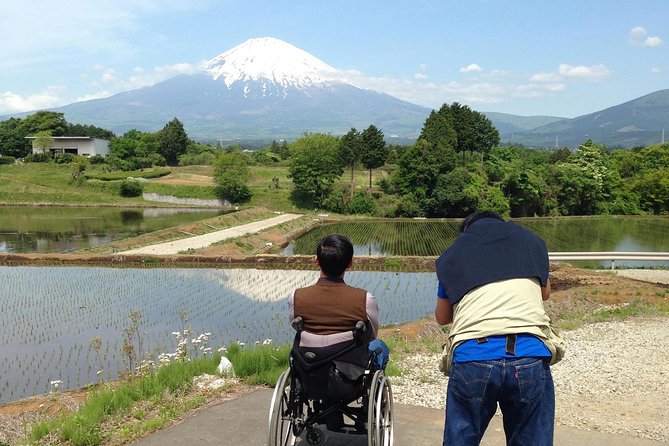
- Private transport from Tokyo: Your group of up to six rides together in an air-conditioned, wheelchair-friendly vehicle.
- Three possible Fuji-area highlights: Choose the 5th Station, a Lake Kawaguchiko sightseeing boat, or Arakura Fuji Sengen.
- A careful guide matters: Keita and Rie are named guides associated with considerate, adaptable service.
- More than mountain views: The route can include Oishi Park, the Itchiku Kubota Art Museum or Music Forest Museum, and Oshino Hakkai.
- Plan for extra costs: Food and drinks are not included. Museum admission costs 1,300 yen or 1,800 yen per person, and the boat costs 1,000 yen per person.
- Weather can change the day: Poor conditions may lead to a new date or a full refund, but clear views are never guaranteed.
Why a private Fuji day works well from Tokyo
Mt. Fuji is close enough to visit from Tokyo, but far enough away that the day requires planning. Public transport can involve transfers, crowded stations, uneven access, and waiting around. This private tour replaces much of that work with hotel pickup and drop-off, or a start at Tokyo Station at 8:00 a.m.
For a wheelchair user, that difference is not small. You are not trying to coordinate a train, bus, and sightseeing stop while also finding suitable access. You travel with your own group, and the guide can shape the pace around what you can comfortably do.
The group limit is six people. That makes the price of $1,439.87 a group cost rather than a per-person fare. For six people, it works out to about $240 per person before optional admissions and food. For two people, it is a much steeper day, but the privacy and dedicated vehicle may still justify it when accessibility is the main concern.
The day begins early and ends back at the starting point. The long duration includes considerable driving, not just time at the four listed sightseeing stops. That is normal for a Fuji outing from Tokyo, but you should book it as a full-day excursion, not a relaxed half-day trip.
A few more Tokyo tours and experiences worth a look

Reaching Mt. Fuji’s 5th Station
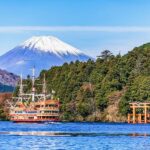
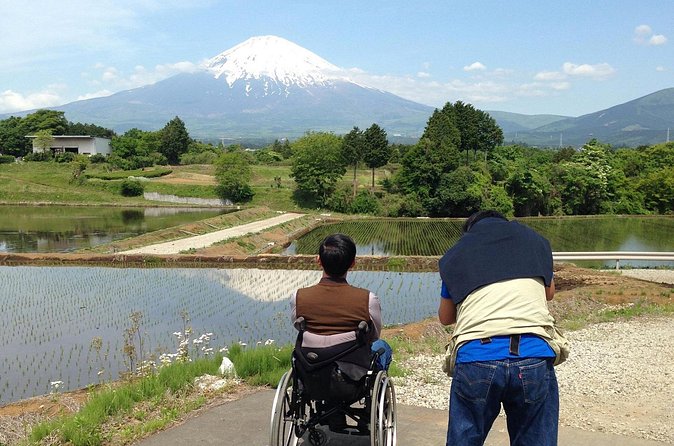
The Mt. Fuji Subaru Line 5th Station is the highest point on this route that you can reach by car. It sits partway up the mountain, below the summit, and gives you the satisfying sense of going up Fuji without attempting a hike.
You receive about one hour here. The appeal is simple: mountain air, a high viewpoint, and the chance to see Mt. Fuji from its own slopes rather than only from the lakes below. The stop also gives the day a clear centerpiece.
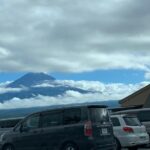
The catch is weather. Cloud can cover the mountain, as happened on one outing, yet the day can still work well because the route includes several other places. Do not book this only for one perfect Fuji photograph. Treat the 5th Station as one part of a broader day.
Accessibility details are not fully specified. The vehicle is described as wheelchair-friendly, but the information does not state the type of wheelchair accommodation, transfer arrangements, lift, ramp, or chair size limits. Contact the provider before booking with your exact needs. That is especially important if you use a full-time wheelchair or cannot transfer from your chair.
Lake Kawaguchiko and your choice of Fuji viewpoint
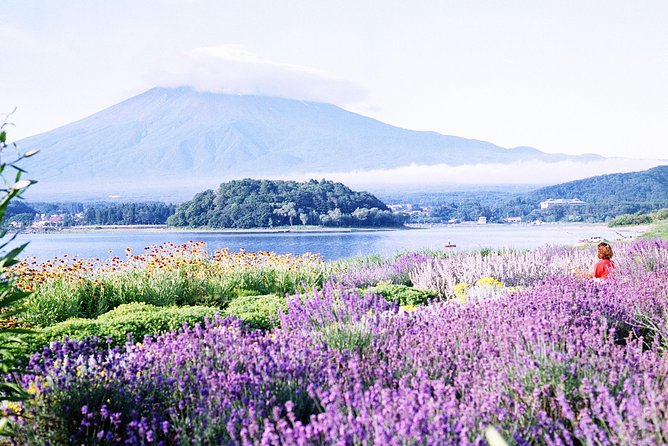
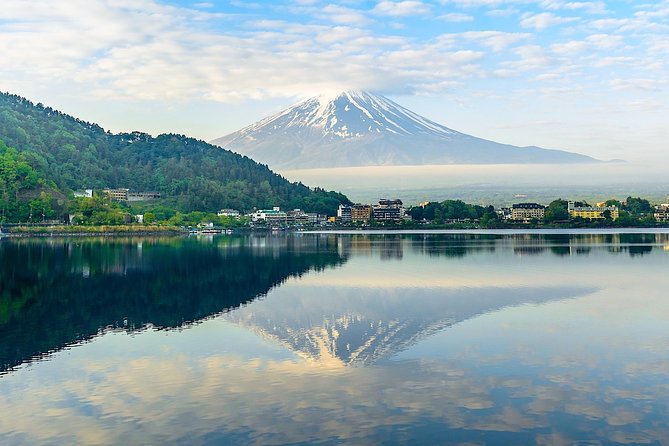
Lake Kawaguchiko adds a calmer setting after the mountain stop. The water reflects the surrounding peaks when conditions cooperate, and the route continues around the lake toward Oishi Park.
The tour lets you choose between the 5th Station and a sightseeing boat on the lake, with Arakura Fuji Sengen also listed as an alternative. These options matter because they suit different comfort levels and interests. The 5th Station gives you altitude and mountain access. The boat gives you time on the water. Arakura Fuji Sengen offers another classic Fuji-area setting.
The boat ticket costs 1,000 yen per person and is not included. Ask how boarding works for your wheelchair before choosing it. The information confirms the boat option but does not give details about boarding equipment or wheelchair storage.
The Lake Kawaguchiko portion leads to Oishi Park, with about 30 minutes listed for the stop. That is enough for photos and a look across the flower fields, but not enough for a slow garden visit. If you want extra time here, ask the guide how the schedule can be adjusted. A private tour offers flexibility, though the total day still has limits.
Oishi Park’s flowers beside the lake
Oishi Park is one of the more camera-friendly stops. Flower fields spread along the lakeshore, giving you a low-key place to pause and enjoy the view. The setting combines open space, water, flowers, and the possibility of Fuji in the background.
I like this stop because it does not ask much of you physically. You can take in the scenery without a hike or a long museum visit. The listed 30 minutes makes it a short breath of fresh air rather than a major attraction, so set your expectations accordingly.
The flowers vary by season, and the tour information does not promise a particular bloom. You will see the park, but the exact colors and fullness of the fields depend on when you go. Again, the weather can shape the Fuji view.
A traditional lunch with accessibility in mind
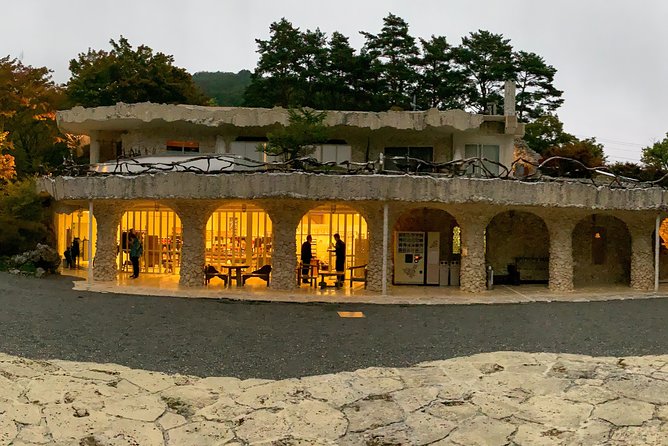
Lunch is planned at a traditional Japanese restaurant described as wheelchair-friendly. That gives the day a useful cultural pause and avoids treating food as an afterthought.
Food and drinks are not included in the tour price. The exact restaurant and menu are not specified, so you should ask about seating, table height, restroom access, and any dietary needs before the day begins. Wheelchair-friendly does not mean every detail will suit every person.
I see the lunch as part of the tour’s value, even though you pay separately. A private guide can help you manage the stop more easily than an impersonal group excursion, and a traditional restaurant offers a more local setting than eating quickly at a roadside stop. Still, the lack of a stated menu means you should budget and plan with some flexibility.
Other private tours in Tokyo

Itchiku Kubota’s remarkable kimono art
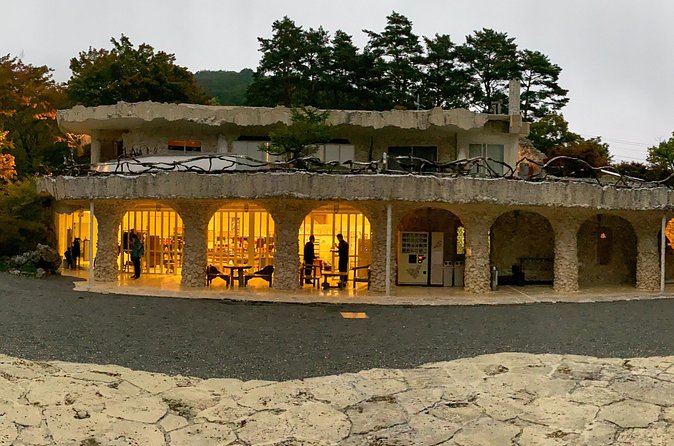
The Itchiku Kubota Art Museum is the most distinctive cultural stop on the route. Kubota revived Tsujigahana, a traditional Japanese fabric-dyeing method that flourished during the Muromachi period from 1336 to 1573 before falling out of favor.
You have about one hour here. The focus is on dyed kimono art, not a general museum collection. If you appreciate textiles, design, or Japanese craft, this may be the most memorable stop after Fuji itself.
Admission is 1,300 yen per person and is not included. The tour also offers the Music Forest Museum as an alternative, priced at 1,800 yen per person. These are not interchangeable in character. Choose the Kubota museum for textile art and traditional technique. Choose the Music Forest option if that better matches your interests.
The accessibility information confirms the vehicle, but it does not spell out every museum detail. If you need a step-free entrance, accessible toilet, or room to maneuver inside galleries, ask the provider to confirm the current arrangements.
Oshino Hakkai and its eight clear springs
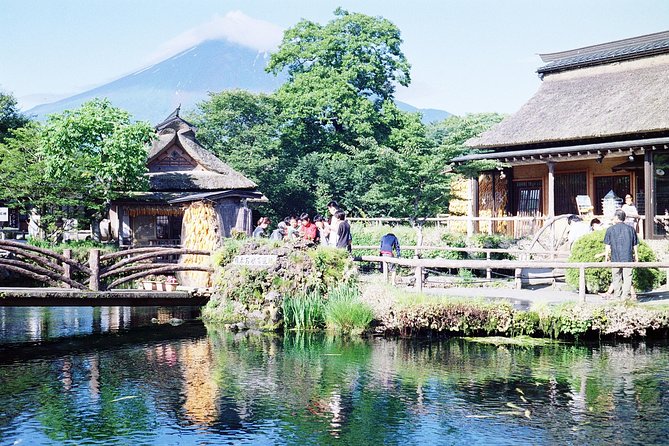
Oshino Hakkai is a small village known for eight springs filled with clear blue water. The water comes from snowmelt, and the springs were regarded as sacred places where pilgrims purified themselves.
You have about 40 minutes here. That is enough to see the springs and village setting, but it is a compact visit. The stop adds a different side of the Fuji area: water, religious tradition, and a rural village instead of a high viewpoint or formal museum.
Surfaces and access can vary in an old village setting, so this is another place where your guide’s help matters. Ask for the easiest route and tell the guide what kinds of surfaces or slopes you need to avoid. The attraction is free, but food and drinks remain your responsibility.
Guides, drivers, and the real accessibility value
The strongest part of this experience is the human attention. Keita is described as warm and welcoming, with a focus on making the day accessible. Rie is praised for customizing the outing and working with the driver to help at each step.
That matters more than a simple wheelchair-friendly label. A good accessible day depends on small decisions: where to stop, how long to remain at a viewpoint, which alternative to choose, and how to handle a difficult surface. The tour’s private format gives the guide room to make those choices with you.
At the same time, do not assume that every wheelchair need is covered just because the vehicle is described as accessible. The listing does not provide technical vehicle specifications. Before paying, explain whether you use a manual or powered chair, whether you can transfer, and whether you need a lift or ramp.
Service animals are allowed, and most people can participate. The tour is private, so only your group joins the vehicle and sightseeing day.
What the $1,439.87 price really covers
The price covers up to six people, an air-conditioned vehicle, private transportation, hotel pickup and drop-off from Tokyo, and an English-speaking guide. It does not cover lunch, drinks, museum admission, or the boat ticket.
For a full group, that can be fair value. You are paying for a dedicated vehicle and a day designed around your party rather than paying separate fares and arranging accessible transport at each stop. The value is strongest for families or friends who can share the cost.
For a small group, the price is harder to justify unless accessible private transport is difficult to arrange independently. Add 1,300 yen per person for the Kubota museum, 1,800 yen for the Music Forest Museum, or 1,000 yen for the boat if selected. You should also budget for lunch and drinks.
The experience is usually booked well ahead, about 53 days in advance on average. That suggests planning early, especially if you need a particular date or have detailed vehicle requirements.
Weather, timing, and cancellation rules
Fuji is a weather-sensitive destination. Clouds may hide the mountain, even when the rest of the day is pleasant. One outing still worked well despite a cloud-covered Fuji because the guide and driver made the wider area worthwhile.
The experience requires good weather. If the operator cancels because of poor conditions, you can choose another date or receive a full refund. You can also cancel up to 24 hours before the start time for a full refund. Cancellations or changes made less than 24 hours before departure are not accepted for a refund.
Those rules are useful, but they do not guarantee a clear view. I would choose a date with some flexibility if seeing Fuji is your main goal.
Who should book this tour?
This tour suits wheelchair users who want to leave Tokyo for a full day without managing several transport connections. It is also a good fit for families, couples, and small groups who value privacy and want the guide to adjust the day around personal needs.
You should book it if the combination of a wheelchair-friendly vehicle, hotel pickup, English-speaking guide, and private schedule solves a real problem for you. The route gives you Fuji views, a lake, flowers, springs, traditional craft, and a Japanese meal in one long outing.
You may want another plan if you need a short day, a guaranteed clear Fuji view, or detailed accessibility equipment that has not been confirmed. You should also compare the final cost carefully if only one or two people are traveling.
FAQ
How long does the Mt. Fuji tour last?
The tour lasts approximately 11 to 12 hours. It starts at 8:00 a.m. and ends back at the meeting point.
Where does the tour start?
The stated meeting point is Tokyo Station at 1 Chome-9 Marunouchi, Chiyoda City, Tokyo 100-0005. Hotel pickup and drop-off from Tokyo are also offered.
How many people can join the private tour?
The private vehicle and tour are available for your group of up to six people. Only your group participates.
Is the vehicle wheelchair-friendly?
Yes. A wheelchair-friendly car is included, along with private transportation. The available information does not specify ramp, lift, wheelchair size, or transfer details, so contact the provider with your exact requirements.
What attractions can I choose from?
You can choose panoramic views from Mt. Fuji’s 5th Station, a sightseeing boat on Lake Kawaguchiko, or Arakura Fuji Sengen. The day can also include Oishi Park, Oshino Hakkai, and either the Itchiku Kubota Art Museum or Music Forest Museum.
Are meals and admission tickets included?
No. Food and drinks are not included. The Itchiku Kubota Art Museum costs 1,300 yen per person, the Music Forest Museum costs 1,800 yen per person, and the sightseeing boat costs 1,000 yen per person.
What happens if the weather is poor?
If the tour is canceled because of poor weather, you will be offered another date or a full refund. You may also cancel up to 24 hours before the start time for a full refund.
Should you book it?
Book this tour if accessible private transport is your priority and you want a broad Fuji-area day rather than one viewpoint. The considerate service associated with guides Keita and Rie, plus the ability to choose between mountain, lake, and cultural stops, gives the outing useful flexibility.
Before booking, confirm the vehicle setup and the access details at the boat, museum, restaurant, and Oshino Hakkai. If those answers fit your needs, this is a practical way to see Mt. Fuji from Tokyo without allowing mobility concerns to dictate the entire day.
More Private Tours in Tokyo
More Mt Fuji Day Trips in Tokyo
More tours in Tokyo we've reviewed

Mt Fuji Day Trips, compared.
 ★ 5.0Mt Fuji and Hakone 1-Day Bus Tour Return by Bullet TrainFrom $163
 ★ 4.0Mt Fuji & Hakone Cruise, Drum Show Bullet Train 1 Day from TokyoFrom $149
 ★ 4.4Tokyo Mt Fuji 5th St & Hakone Cruise Bus Tour w/Bullet TrainFrom $15410 hours
 ★ 4.5From Tokyo: Mount Fuji Full-Day Sightseeing TripFrom $6810 hours
 ★ 4.7Tokyo: Mt. Fuji Tour, Hakone Ropeway, Owakudani, Lake AshiFrom $5410 hours
 ★ 4.4Tokyo:Mt.Fuji,Kawaguchiko Oishi Park,Arakurayama Sengen ParkFrom $5410 hours