Reviewed · TEMPLES & MEDITATION
Sumida Riverside Walk:Garden&Temple Ritual(4 Meeting Points)
Tokyo can feel like a city built for speed, but this three-hour outing shows you a slower side of it. You move from the carefully shaped plants of Kiyosumi Garden to the quiet banks of the Sumida River, then into Fukagawa Fudo-do, where Buddhist ritual remains part of daily life. The goma fire ceremony gives the tour its strongest sense of place.
In This Article
- Key points
- A quieter morning in eastern Tokyo
- Starting from one of four Tokyo meeting points
- Kiyosumi Garden, 40 minutes among seasonal plants
- Following the Sumida River for another 40 minutes
- Fukagawa Fudo-do and the sound of living faith
- The traditional goma fire ritual
- Hiro’s role and the small-group format
- Is $48 a fair price?
- Who should book this walk?
- Should you book the Sumida Riverside Walk?
- FAQ
- How long does the Sumida Riverside Walk last?
- Where can I meet the guide?
- Is train travel included?
- What places does the tour visit?
- How much time is spent at each main stop?
- Is the tour offered in English?
- How many people can join the tour?
- What happens if I arrive late?
I like the small group of no more than four people, which should make it easier to ask questions and keep a relaxed pace. I also like that your guide travels with you by train from one of four meeting points, including Shibuya, Shinjuku, Asakusa, and Ginza. The main drawback is the strict timing: arrive more than 10 minutes late and the group may leave without you.
Key points
- Four starting points: Meet near Shibuya TSUTAYA, UNIQLO Shinjuku West, Asakusa Culture Tourist Information Center, or Nissan Crossing.
- Kiyosumi Garden: Spend about 40 minutes learning how a preserved Japanese garden uses seasonal plants and careful design.
- Sumida River walk: Enjoy another 40 minutes beside the water, with passing boats and quieter city views.
- Fukagawa Fudo-do: Spend about 45 minutes at a temple with more than 400 years of history and an active local faith.
- Goma fire ritual: See a traditional Buddhist ceremony that gives the temple visit real spiritual weight.
- Small and flexible: The tour is limited to four participants, conducted in English, and costs $48 per person.
A quieter morning in eastern Tokyo
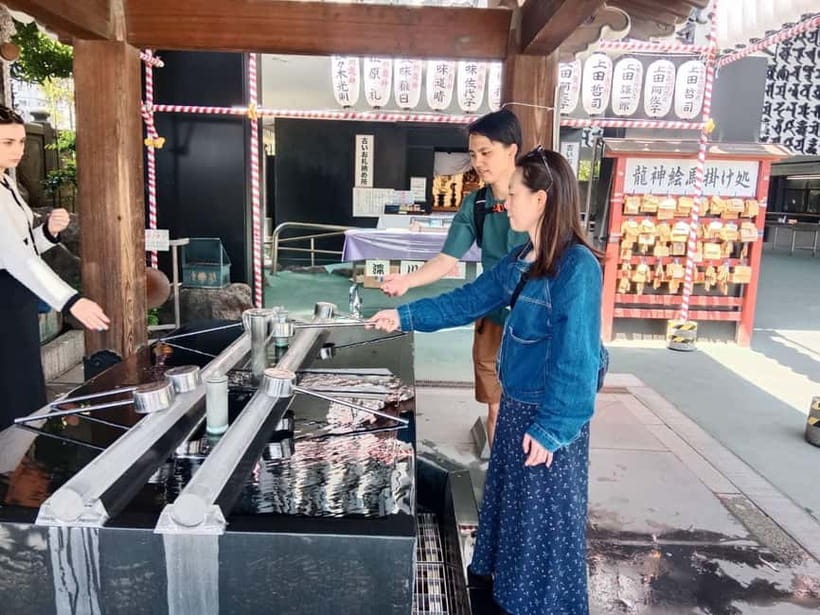
This experience is not a greatest-hits tour of Tokyo. You will not spend the morning racing between famous crossings, department stores, and observation decks. Instead, you get a short but thoughtful route through Koto Ward and along the Sumida, with nature and religious practice doing most of the talking.
That change of pace is the point. Kiyosumi Garden offers a controlled, peaceful setting, while the river walk feels more open and ordinary. At Fukagawa Fudo-do, the mood shifts again. You are no longer just looking at an old building. You are entering a place where people still come for prayer and ritual.
The three stops work well together because each shows a different part of Tokyo. The garden explains how beauty can be arranged. The river shows the city in motion, but at a gentler speed. The temple shows how older beliefs continue within a modern capital.
A few more Tokyo tours and experiences worth a look


Starting from one of four Tokyo meeting points
You can choose among four meeting locations when booking: SHIBUYA TSUTAYA, UNIQLO Shinjuku West, Asakusa Culture Tourist Information Center, or Nissan Crossing. These points cover several useful areas of central Tokyo, so you can select the one that best fits your morning plans.
The guide meets you at your selected point, then travels with you by train to Kiyosumi Garden. Your train ticket to the first destination is included, which keeps the start simple and avoids the small nuisance of figuring out the first fare while trying to find your guide.
Still, do not treat the meeting time casually. The group is tiny, and the tour may depart if you are more than 10 minutes late. I would plan to reach the meeting area early, especially if you are coming from another part of Tokyo or changing subway lines.
The four meeting options are helpful, but check the exact option you book. The meeting point varies by selection, and this is one tour where a wrong starting location could spoil the morning before it begins.
Kiyosumi Garden, 40 minutes among seasonal plants
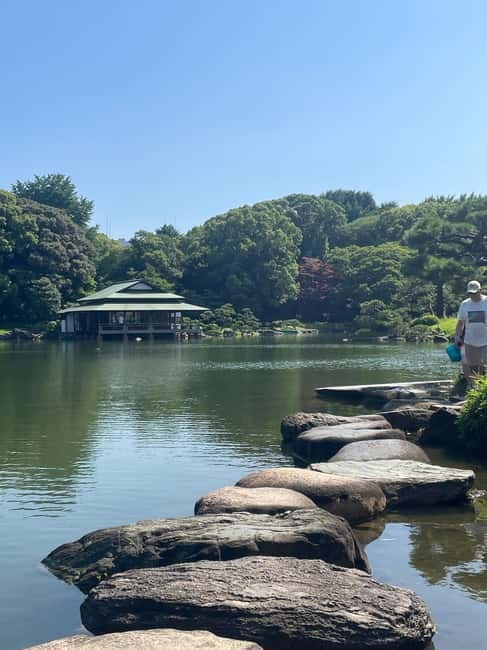
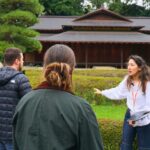
Kiyosumi Garden is the first proper stop, with a guided visit of about 40 minutes. The garden is presented as a carefully preserved Japanese space, and the guide explains both its background and the design details that are easy to miss when you walk through on your own.
That guidance matters. Japanese gardens often reward slow looking, but a first-time visitor may not know what deserves attention. Here, you can focus on the relationship between the plants, the arranged views, and the seasonal changes rather than simply taking a quick circuit and leaving.
The garden is also a good opening act for the tour. After the train ride, you get a quiet place to settle into the morning. The pace is gentle, and the setting gives you a useful contrast with the crowded parts of Tokyo.
Forty minutes is enough for an introduction, but it is not a long garden visit. If you want to study every plant or linger with a camera, you may find the schedule brisk. The advantage is that the tour does not get stuck at the first stop. You still have time for the river and temple, which are central to the experience.
Admission to Kiyosumi Garden is included in the $48 price. That helps the value, particularly for anyone who prefers a guided visit over paying admission and exploring without context.
Following the Sumida River for another 40 minutes
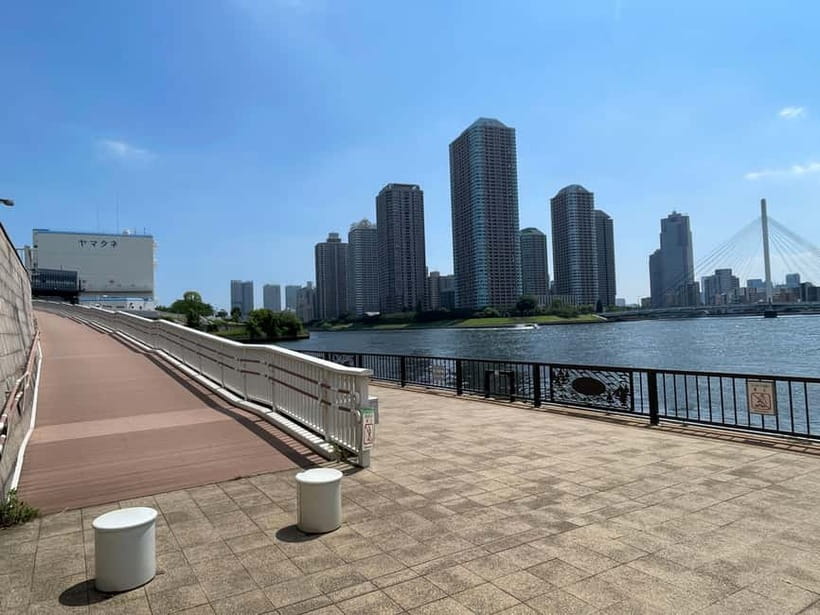
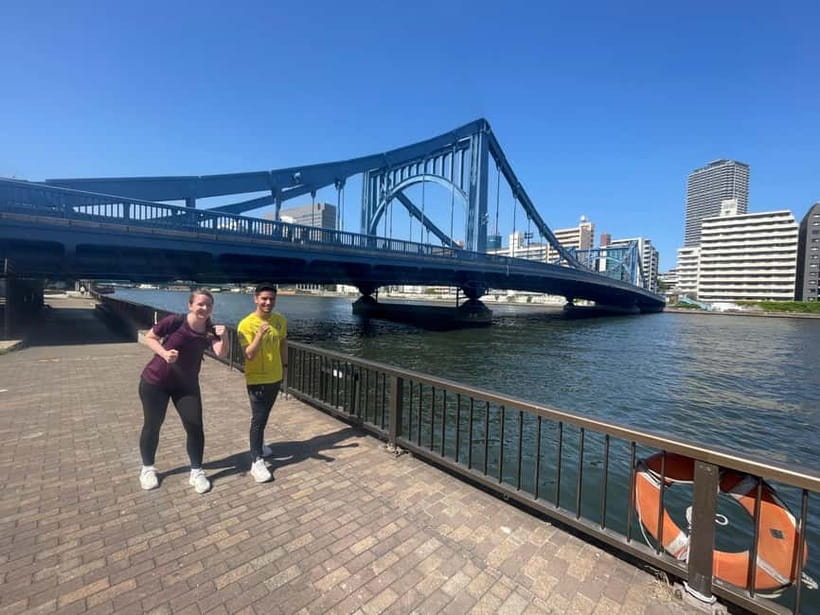
From the garden, the route continues with a guided walk along the Sumida River. This section lasts about 40 minutes and brings a different kind of calm. Instead of enclosed garden views, you get water, passing boats, and quieter city scenes.
I like this part because it gives your senses a break. The river creates a natural line through the city, and the walk lets you notice the morning rhythm without the pressure to keep shopping or sightseeing. The description promises a gentle route, so this is best understood as a relaxed urban walk rather than a strenuous hike.
The river section also helps connect the garden and temple. You are not simply being transported between three unrelated attractions. The walk gives the morning some shape and allows the neighborhood to become part of the experience.
Do keep the timing in mind. Forty minutes is a useful stroll, but it is not enough for a long riverside exploration. The route is designed as one section of a three-hour tour, not as a full-day walk along the Sumida.
The tour information does not give a precise distance or detailed accessibility notes. If you need a particular walking pace or have mobility concerns, ask before booking. The activity is a walking tour, and its schedule includes the garden, river, train travel, and temple visit within three hours.
Fukagawa Fudo-do and the sound of living faith
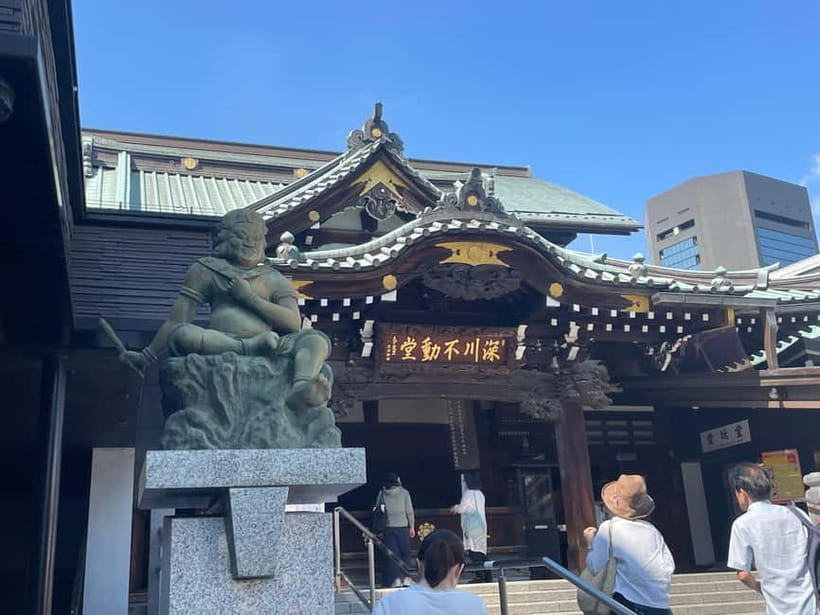
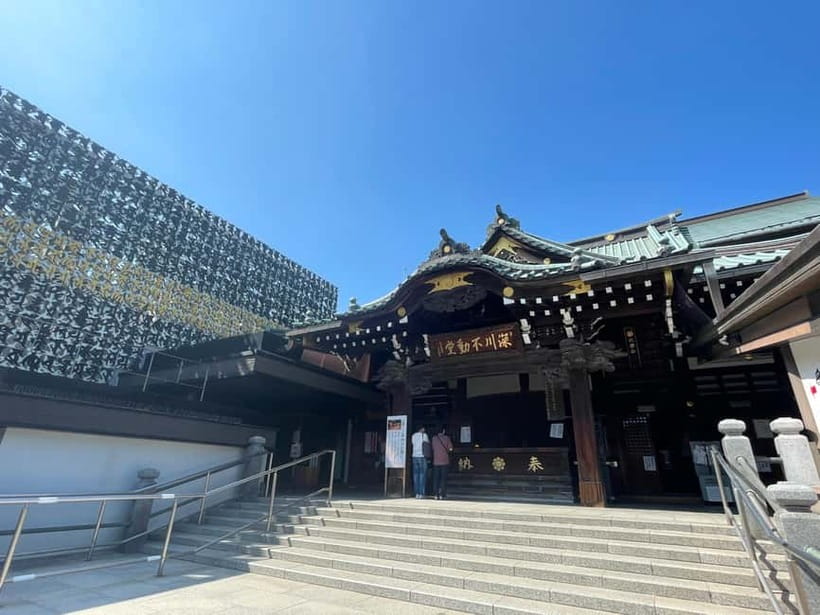
The final major stop is Naritasan Fukagawa Fudo-do, also called Fukagawa Fudoson or Fukagawa Fudo-do. The temple has more than 400 years of history and is known for powerful religious ceremonies.
This is where the tour moves beyond scenery. Your English-speaking guide explains the beliefs and practices in accessible terms, so you do not need a background in Buddhism to follow what is happening. You can approach the visit as a person of faith, a student of Japanese culture, or simply someone curious about how religion fits into city life.
The temple is described as an active center of spiritual life, not just a photo stop. That distinction is important. Many temple visits can feel like a quick look at architecture followed by the next attraction. Here, the ceremony gives the stop a clear purpose.
You should expect about 45 minutes at the temple. The admission fee is included, and the guide stays with the group to provide context. The experience is likely to be most rewarding if you watch respectfully and allow the ritual to unfold without treating it as a performance made only for visitors.
Other walking tours we've reviewed in Tokyo



The traditional goma fire ritual
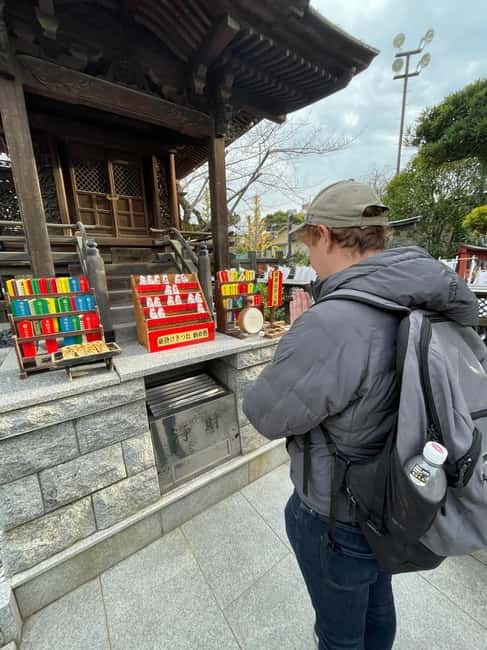
The goma fire ritual is the emotional center of the morning. In this Buddhist ceremony, fire is used within a formal religious practice, creating a strong sensory and symbolic contrast with the quiet garden and river.
The supplied details do not specify the exact time of the ceremony or how long the fire portion lasts, so you should not assume the entire 45-minute temple visit is devoted to it. Still, the ritual is a stated highlight and forms the clearest reason to choose this tour over a simple garden-and-river walk.
I value experiences like this because they show a living tradition rather than a display behind glass. You are not only hearing that the temple has a long past. You are seeing how a place of worship functions now.
The temple visit also calls for basic courtesy. Follow your guide’s instructions, keep your voice low when appropriate, and remember that this is a religious setting. You can enjoy the ceremony without pretending to share beliefs that are not your own.
Hiro’s role and the small-group format
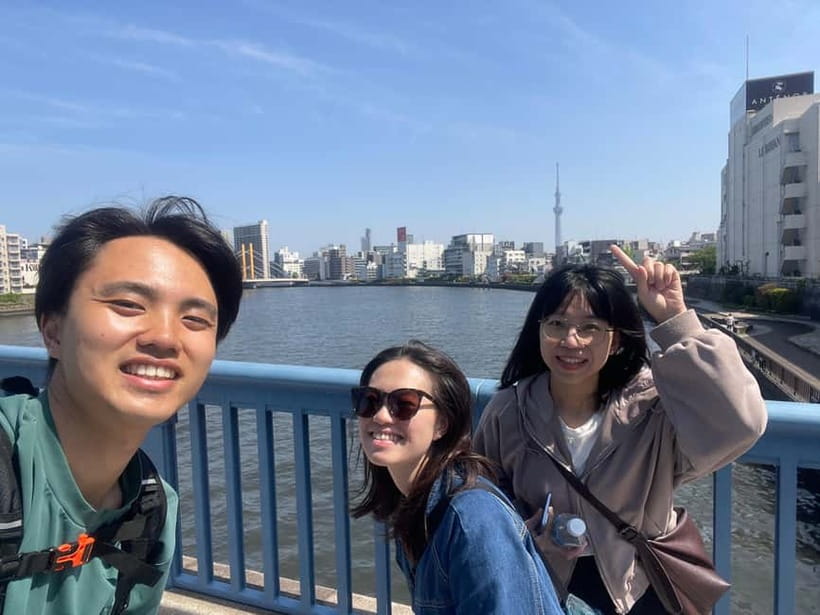
The guide is described as a Tokyo native, and booking feedback specifically names Hiro as a strong guide. One verified booking comment from Germany calls Hiro a great tour guide, while another describes the experience as excellent. There are only a few ratings available, so I would treat the perfect five-star score as encouraging rather than as a guarantee of a particular personality or style.
The small group is a real advantage. With a limit of four participants, you have a better chance of hearing explanations clearly and asking about details at the garden or temple. A small group can also keep the river walk from feeling like a line of people following a flag.
The tradeoff is that small tours are less forgiving. If you are late, the guide cannot easily wait while keeping the rest of the group on schedule. The same compact format that makes the experience personal also makes punctuality essential.
The tour is offered in English. If you want an English guide who can explain Japanese customs without turning the morning into a lecture, this format should suit you. The available information does not promise a particular level of religious instruction, so think of the temple explanations as cultural guidance rather than formal study.
Is $48 a fair price?
At $48 per person, this is not the cheapest way to visit Kiyosumi Garden or walk by the Sumida River. You are paying for more than entry tickets, though. The price includes admission to the garden, admission to Fukagawa Fudo-do, the train ticket to the first destination, and three hours of guiding.
The value depends on how you normally travel. If you are comfortable navigating Tokyo trains, reading signs, and understanding temple customs on your own, you could visit some of these places independently for less. You would then need to arrange the route, pay separate fares, and find your own explanation of the garden and goma ritual.
For many visitors, the strongest value is the time saved and context provided. The guide handles the first train journey and links three different settings into one morning. You also get a small group rather than a large coach tour.
The price is easier to justify if you care about local religious practice and not just famous sights. If your main goal is a long garden visit or a detailed riverside hike, this tour may feel too short. It works best as a compact cultural outing.
The ability to reserve now and pay later adds some planning flexibility. Cancellation is free up to 24 hours before the start, provided you follow the booking terms. Those policies are useful in Tokyo, where weather and changing plans can affect a walking morning.
Who should book this walk?
I would recommend this experience to you if you have already seen some of central Tokyo and want a quieter morning. It suits curious first-time visitors too, especially if you want help understanding a garden and temple without joining a large group.
It is a good match for:
- People who enjoy walking at an easy pace
- Visitors interested in Japanese gardens and Buddhist practice
- Solo visitors or couples who value a small group
- Anyone who wants an English-speaking Tokyo guide
- Repeat visitors seeking a less familiar side of the city
- Travelers with a three-hour window before lunch or another afternoon plan
It may not suit you if you want a packed sightseeing schedule, a long-distance walk, or an in-depth tour of many major landmarks. Babies under one year old are not suitable for the activity, and anyone who cannot arrive on time should choose a more flexible plan.
The tour is also not ideal for someone who wants complete independence. You travel by train with the guide, follow a set route, and move on according to the schedule. That structure is useful for some people and limiting for others.
Should you book the Sumida Riverside Walk?
Book it if you want Tokyo to slow down for a morning. The garden, river, and temple create a thoughtful sequence, and the goma fire ritual gives the experience a stronger cultural focus than a standard sightseeing stroll.
I would especially choose it for the small group, the four convenient meeting points, and the chance to hear Hiro explain places that can be difficult to understand at a glance. Just arrive early, wear comfortable walking shoes, and keep your expectations realistic. This is a three-hour introduction, not a full study of eastern Tokyo.
Skip it if you mainly want headline attractions or a long, unhurried visit to one site. But if you value calm streets, seasonal garden details, river views, and a real temple ceremony, $48 buys a well-shaped morning with useful guidance and very little logistical fuss.
FAQ
How long does the Sumida Riverside Walk last?
The activity lasts three hours.
Where can I meet the guide?
You can choose from four meeting points: SHIBUYA TSUTAYA, UNIQLO Shinjuku West, Asakusa Culture Tourist Information Center, or Nissan Crossing. The exact meeting point depends on the option you book.
Is train travel included?
Yes. The guide travels with you by train to the first destination, and the train ticket to that destination is included.
What places does the tour visit?
The tour visits Kiyosumi Garden, the Sumida River, and Naritasan Fukagawa Fudo-do, also known as Fukagawa Fudoson or Fukagawa Fudo-do.
How much time is spent at each main stop?
The guided visit at Kiyosumi Garden takes about 40 minutes. The Sumida River walk takes about 40 minutes, and the guided temple visit takes about 45 minutes.
Is the tour offered in English?
Yes. The tour has a live English-speaking guide.
How many people can join the tour?
The group is limited to four participants.
What happens if I arrive late?
You should arrive before the meeting time. If you are more than 10 minutes late, the tour may leave without you.
More Walking Tours in Tokyo
More Temples & Meditation in Tokyo
More tours in Tokyo we've reviewed












Temples & Meditation, compared.
 ★ 4.7Tokyo: Meiji Shrine, Asakusa, Skytree Bus Tour and CruiseFrom $12210 hours
 ★ 4.8Tokyo: Asakusa Walking Tour with Sensoji Temple VisitFrom $222 hours
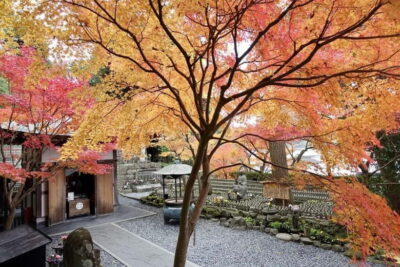 ★ 4.5Tokyo: Kamakura & Enoshima Day Trip including Temple TicketsFrom $589 hours - 570 minutes
 ★ 4.5Tokyo: Nikko Toshogu Shrine and Kegon Waterfall TourFrom $8410h 30m
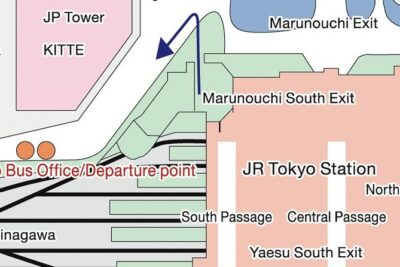 ★ 4.5Tokyo Panoramic 1 Day: Meiji Shrine, Asakusa, Odaiba and SKYTREE®From $85
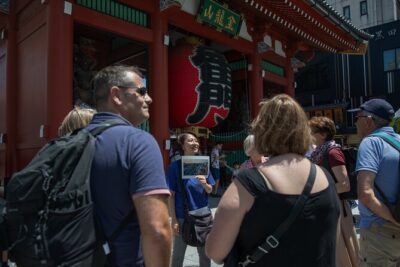 ★ 5.0Asakusa Senso-ji Temple and Old Tokyo Walking TourFrom $20