Reviewed · CITY TOURS
【50 mins】 City lights HelicopterTour: Tokyo and Yokohama plan
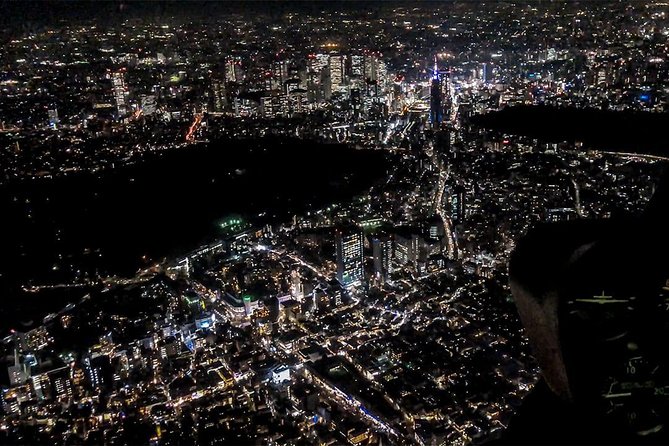
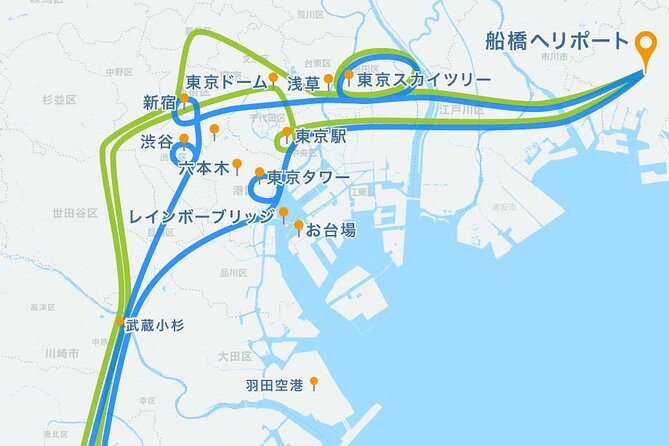
Tokyo and Yokohama look completely different from a helicopter. In one long evening flight, you can see Tokyo Skytree, Rainbow Bridge, Tokyo Tower, Shinjuku, and Yokohama Harbour from above, with the city lights spread below you instead of framed by a street or observation deck.
In This Article
- Key points to know before booking
- What the 50-minute Tokyo and Yokohama flight feels like
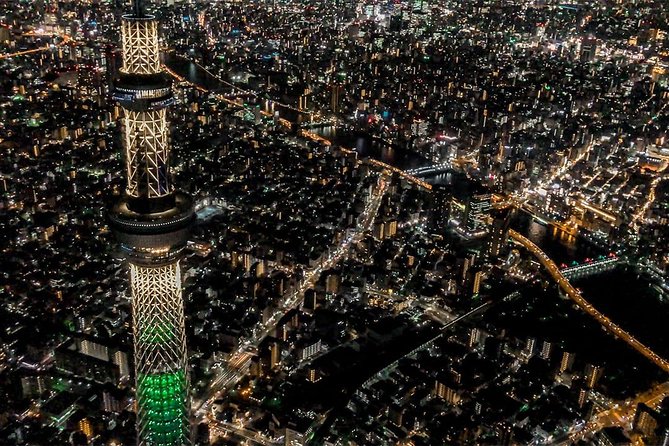
- Tokyo Skytree from above
- Rainbow Bridge and Tokyo Bay
- Tokyo Tower and the central city lights
- Shinjuku after dark
- Yokohama Harbour completes the route
- Why the private format matters
- Safety, comfort, and passenger limits
- Choosing between sunset and full darkness
- Booking, confirmation, and cancellation details
- Who will get the most from this flight
- Should you book the Tokyo and Yokohama helicopter tour?
- FAQ
- Where does the helicopter tour depart from?
- How long is the helicopter flight?
- Which sights can I see from the helicopter?
- How many people can join one booking?
- What is the price?
- Can I cancel for a full refund?
- What happens if bad weather cancels the flight?
I like two things right away: the private format for up to three people, and the generous 50 minutes in the air. You are not being rushed through a short circuit around one landmark, and a small group makes this much more personal than a standard sightseeing ride.
The main drawback is price. At $2,002.26 per group, this is a major splurge, especially for one or two people. Weather and flight operations can also change your plans, so this works best when the flight itself is the centerpiece of your evening.
Key points to know before booking
- 50 minutes in the air: The flight is long enough to cover both Tokyo and Yokohama rather than focusing on one small area.
- Private flight for up to three: Your group participates alone, making the experience well suited to a proposal, anniversary, or special family occasion.
- Departs from Funabashi Heliport: The departure point is in Funabashi, Chiba, not central Tokyo, so allow time to reach it.
- Major night views: The route includes Tokyo Skytree, Rainbow Bridge, Tokyo Tower, Shinjuku, and Yokohama Harbour.
- Sunset may be the best timing: A sunset flight can show the change from daylight to illuminated streets and buildings.
- Weather rules matter: Poor weather, aircraft problems, or other flight disruptions can lead to a new date or a full refund.
What the 50-minute Tokyo and Yokohama flight feels like
The value here comes from scale. From ground level, Tokyo is a collection of districts, towers, bridges, rail lines, and busy roads. From the air, the city becomes one broad sweep of light, with different areas taking turns below you.
You will spend about 50 minutes flying, while the total activity takes roughly 1 hour 30 minutes. That extra time covers the parts before and after the flight, so do not treat the full 90 minutes as airborne sightseeing.
This is a private activity, with no other group sharing your flight. That matters more than it might seem. You can focus on the view, talk with the pilot and hosts, and mark the occasion without having to fit around a busload of strangers.
The flight leaves from Funabashi Heliport at 1-chōme-44-2230 Kanasugi, Funabashi, Chiba. The location is near public transportation, but the available information does not give a detailed station-to-heliport route. I would check the journey carefully and build in a time cushion. Missing a flight is a costly mistake when the booking covers a private aircraft.
Other city tours we've reviewed in Tokyo
Tokyo Skytree from above
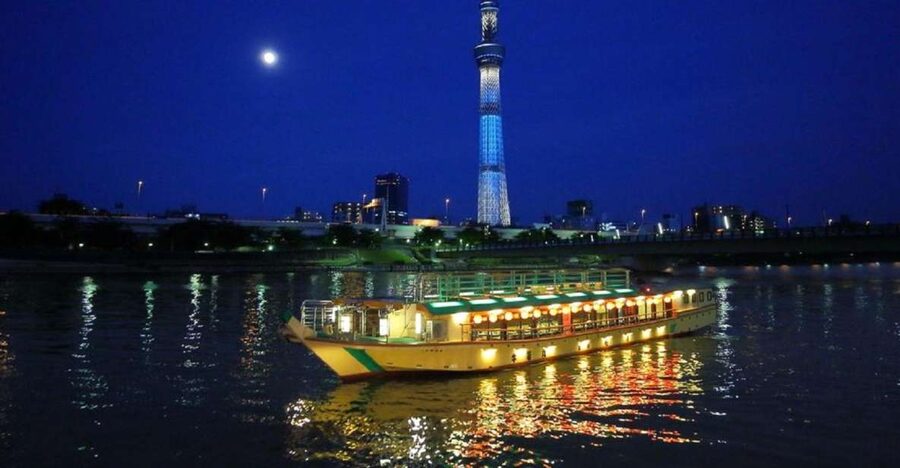
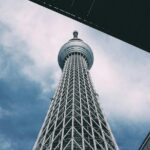
Tokyo Skytree is one of the most useful landmarks for understanding the city. Its height gives it a clear visual presence, and seeing it from a helicopter changes your sense of scale. Instead of looking up at the tower from the streets, you can place it within the wider spread of Tokyo.
At night, the tower becomes one point in a much larger field of light. I like this part of the route because it gives you a strong visual anchor early in the sightseeing circuit.
The drawback is that an aerial view is brief and constantly changing. You are not stopping beside Skytree or circling it for a long time. If you want a close look at the tower itself, a ground visit or observation deck gives you more time. The helicopter offers the broader picture, not the close-up.
Rainbow Bridge and Tokyo Bay
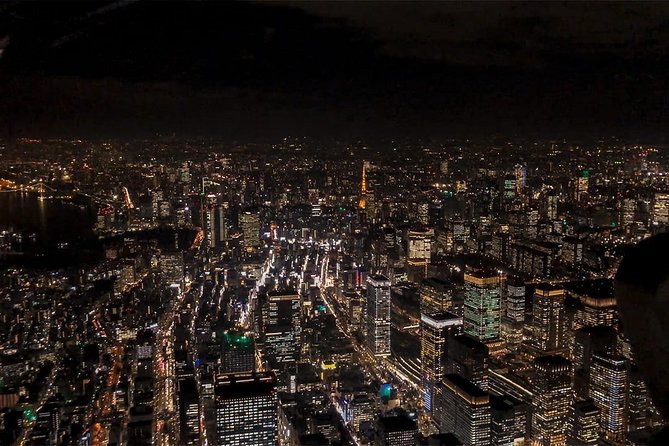
Rainbow Bridge is another strong aerial subject. From the ground, you mainly notice its roadway and sweeping structure. From above, its position across Tokyo Bay becomes clearer, especially when the surrounding roads and waterfront lights begin to glow.
The bridge is especially effective after sunset. Its illuminated structure can help organize the view, while the dark water provides contrast with the dense city lighting around it.
I would not expect a perfectly fixed sightseeing sequence. The advertised sights are things you can see during the flight, not necessarily formal stops where the helicopter lands or pauses. That is important when setting expectations. This is a cruising flight, so you will see the bridge as part of a moving route.
Tokyo Tower and the central city lights
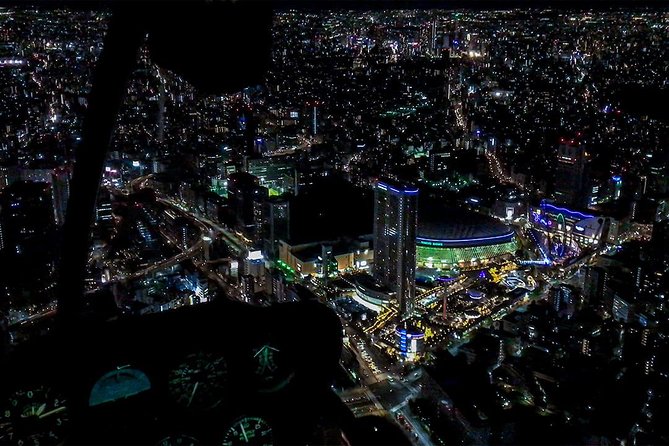
Tokyo Tower offers a different kind of night view from Skytree. It is lower and more closely surrounded by the central city, so the surrounding buildings and roads become part of the scene. From the air, you can compare the tower’s warm color and familiar shape with the brighter, wider spread of modern Tokyo.
This section should appeal to anyone who enjoys city lights more than natural scenery. Roads, towers, office buildings, and LED screens create the visual interest. One especially useful timing tip comes from the experience itself: a sunset departure can be rewarding because you may catch the last daylight, then watch the city lights take over.
There is a trade-off. A night flight gives you the strongest illumination, but some smaller details disappear in darkness. If you want to study streets and buildings, a daytime plan may suit you better. If you want the dramatic effect of a glowing city, night is the clear choice.
Shinjuku after dark
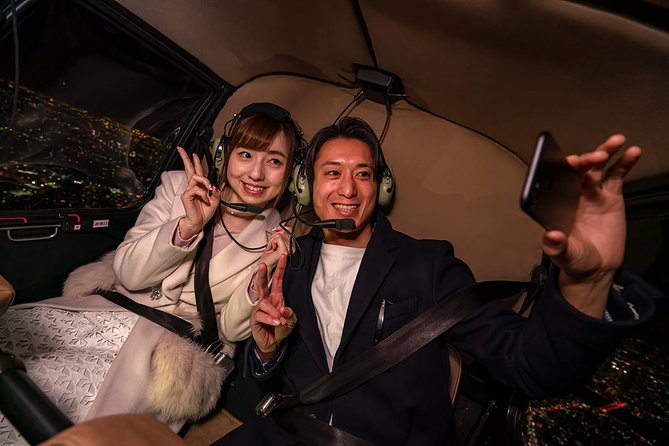
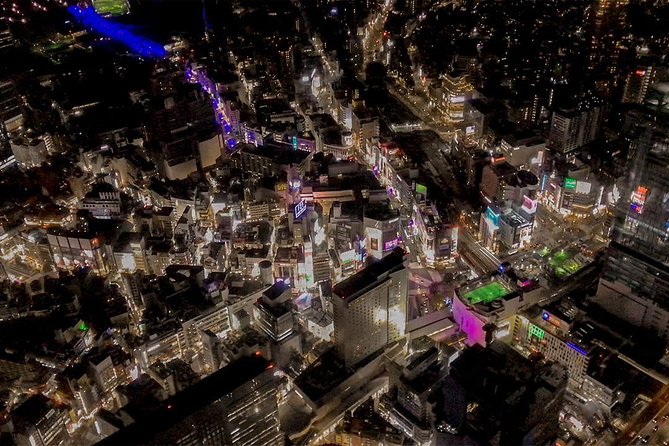
Shinjuku is one of the places where Tokyo’s size becomes hard to grasp from street level. From the air, the district’s illuminated buildings and roads create a broad urban view rather than a single attraction.
I like that this route does not rely on only one famous tower. Shinjuku adds a dense, modern city scene to the mix, while Skytree and Tokyo Tower provide distinct vertical landmarks. Together, the sights give the flight more variety.
You should keep your camera expectations realistic. Night photography from a helicopter can be difficult, and reflections, movement, and low light may affect your pictures. I would treat photographs as a bonus and pay attention to the view itself. A phone can record the moment, but it may not capture the full spread of Tokyo below you.
Yokohama Harbour completes the route
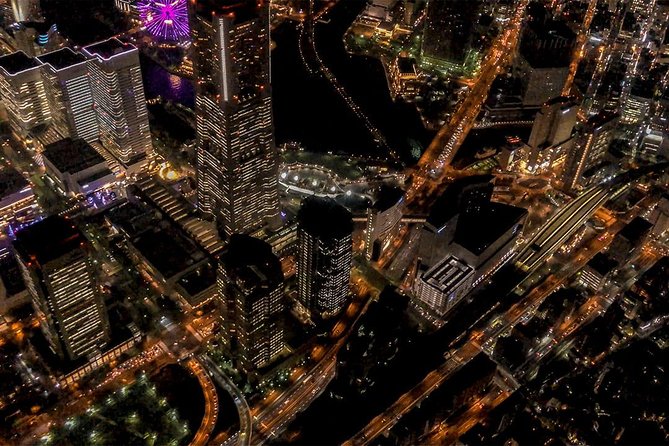
The flight’s reach toward Yokohama Harbour is what makes this more than a Tokyo skyline circuit. Yokohama brings waterfront views into the evening, giving you a contrast with the concentrated city center around Tokyo Tower and Shinjuku.
The harbour can provide a sense of openness after the tighter city scenes. Water, illuminated structures, and the edge of the city create a different visual rhythm. You are not simply seeing the same type of skyline for 50 minutes.
The distance between the Tokyo and Yokohama sights also explains part of the price. This is not a quick look at one neighborhood. The route covers a wide area and uses a helicopter to connect several major views in one flight.
At the same time, this wide route means you should not expect unlimited time over every landmark. The aircraft must cover both cities within the scheduled flight, and the route can be affected by weather and flight conditions. Think of it as a moving panorama rather than a series of long photo stops.
Why the private format matters
For a group of three, the price works differently than it does for a solo booking. At the listed group price of $2,002.26, three people would pay about $667.42 each before any additional costs. For two people, the per-person cost is about $1,001.13, and for one person, the full group price applies.
Those numbers make this a special-occasion purchase, not a casual sightseeing add-on. I can see the value for a proposal, milestone birthday, anniversary, or once-in-a-lifetime visit. One passenger used the flight as part of a surprise proposal, and the aerial view became the emotional center of the evening.
The private setting helps with that kind of plan. You are not trying to create a quiet moment in a crowded observation deck. Your group has the aircraft to itself, which gives the occasion a stronger sense of privacy.
You should still decide if the experience matters enough to justify the cost. Tokyo has many cheaper viewpoints, including observation decks and waterfront areas. None will give you the same combination of movement, height, and coverage, but most will leave far more money for meals, museums, and transport.
Safety, comfort, and passenger limits
The supplied limits need careful attention. The information gives a total passenger weight of 265 pounds, then separately lists a 220-kilogram flight limit and a 120-kilogram limit per passenger. Since 120 kilograms is roughly 265 pounds, the figures appear to refer to different parts of the aircraft rules.
I would not guess how the limits apply to your group. If passenger weights are close to the maximum, confirm the policy before booking. The combined limit matters when three people fly together, while the individual limit matters even if the group total is within range.
Most people can participate, according to the activity details. No special access restriction is stated beyond the weight rules and the prohibition on flying if you have gone scuba diving within the previous 24 hours.
The flight can be canceled because of poor weather, aircraft problems, other disruptions to flight operations, or a general flight cancellation. In those cases, you are offered an alternative date or a full refund. The notice also advises checking the forecast when booking within five days, since bad weather may cancel the flight.
That weather policy is practical, not a minor footnote. A helicopter needs suitable flying conditions, and a night tour depends on visibility for the views you are paying for. Keep some flexibility in your schedule if this is tied to a proposal or a fixed evening plan.
Choosing between sunset and full darkness
The night plan is designed for illuminated Tokyo and Yokohama. Still, a sunset departure may give you more variety. You can see the skyline before the lights fully appear, then watch street lights, building signs, and LED screens become more prominent.
I would choose sunset if you want photographs and changing color. The last daylight can help define buildings and the bay, while the later part of the flight supplies the night view.
Choose a darker departure if the main goal is a glowing city. Tokyo’s lights are the star of the experience, and a fully dark sky can make them appear stronger. The available booking information does not provide a specific departure time, so check the exact schedule before deciding how much sunset you will see.
One passenger specifically praised the skyline just after sunset, when the city lights came on. That timing makes sense: you get both the shape of the city and its evening character instead of choosing only one.
Booking, confirmation, and cancellation details
Confirmation is sent within 48 hours of booking, subject to availability. I would avoid making nonrefundable dinner or hotel plans until the flight is confirmed, especially if you are booking close to your preferred date.
The activity ends back at Funabashi Heliport. You are not dropped in central Tokyo or Yokohama, so remember that your return journey begins at the same heliport where you started.
Free cancellation is available up to 24 hours before the experience start time for a full refund. Cancellations or changes made less than 24 hours before the start time are not accepted and are not refunded. The cutoff follows local time in Japan.
The weather exception is separate from your own cancellation. If the operator cancels because conditions are poor, you receive a new date or a full refund. That protection makes the high price less risky, though it cannot prevent a disrupted evening.
Who will get the most from this flight
I would recommend this to you if you want a private event rather than a standard sightseeing stop. Couples planning a proposal or anniversary will benefit from the setting, and a family or small group of three can spread the cost more reasonably.
It also suits anyone who has already seen Tokyo from ground level and wants a new view of the city. The combination of Skytree, Tokyo Tower, Shinjuku, Rainbow Bridge, and Yokohama Harbour gives you a strong overview in a single outing.
I would hesitate if you are mainly looking for a cheap way to see Tokyo at night. The price is too high for that purpose, and public observation decks will give you longer at one viewpoint for much less.
I would also think twice if your schedule is tight or your plans cannot handle weather changes. The flight departs from Funabashi, lasts about 50 minutes in the air, and may be moved or canceled when conditions are not suitable.
Should you book the Tokyo and Yokohama helicopter tour?
Book it if the private flight is the occasion itself. The wide route, 50 minutes of air time, and mix of Tokyo and Yokohama views make this more memorable than a quick helicopter loop around one landmark. A sunset departure may be the smartest choice if you want both daylight detail and illuminated streets.
Skip it if you are comparing experiences mainly by price or if you need a guaranteed, tightly timed evening. At $2,002.26 per group, this is a luxury purchase. For the right celebration, though, the privacy, scale, and proposal-ready setting can make the cost feel justified.
FAQ
Where does the helicopter tour depart from?
The tour departs from Funabashi Heliport at 1-chōme-44-2230 Kanasugi, Funabashi, Chiba 273-0853, Japan.
How long is the helicopter flight?
The flight time is 50 minutes. The total activity lasts about 1 hour 30 minutes.
Which sights can I see from the helicopter?
The flight includes views of Tokyo Skytree, Rainbow Bridge, Tokyo Tower, Shinjuku, and Yokohama Harbour. These are viewed during the cruise rather than visited as landing stops.
How many people can join one booking?
A maximum of three people can participate in one booking. The activity is private, so only your group takes part.
What is the price?
The listed price is $2,002.26 per group of up to three people. The final cost per person depends on how many people are in your group.
Can I cancel for a full refund?
Yes. You can cancel at least 24 hours before the experience start time for a full refund. Cancellations or changes made less than 24 hours before the start time are not accepted or refunded.
What happens if bad weather cancels the flight?
If poor weather, aircraft problems, or another flight disruption prevents the activity from operating, you are offered an alternative date or a full refund.
More City Tours in Tokyo

More tours in Tokyo we've reviewed




City Tours, compared.
 ★ 4.8Tokyo: Private City Highlights Tour with Local GuideFrom $1064 - 8 hours
 ★ 4.8Tokyo: 3-Hour Bike or E-Bike City Highlights TourFrom $453 hours
 ★ 4.8Tokyo: Sumo Morning Practice Tour at Sumida CityFrom $1162 hours
 ★ 4.5Private Haneda Airport (HND) to Central Tokyo City TransferFrom $119
 ★ 4.8Tokyo: 3-hour Guided E-Bike Tour of the City’s Hidden GemsFrom $65
 ★ 5.0Tokyo: 3-Hour Bike/E-Bike Tour of the City’s HighlightsFrom $63