Reviewed · TOKYO FOOD TOURS
Eat Like a Local in Tokyo – Private & Personalized Food Tour
Tokyo’s best food moments often happen in small places you would never find by yourself. This private walk takes you through Nakano’s covered arcade, retro backstreets, and yokocho alleys, where a local host can help you order dishes, explain unfamiliar ingredients, and handle the language gap.
In This Article
- Key points
- Why Nakano makes a fine food-tour base
- Starting at Sun Mall near JR Nakano Station
- Nakano’s backstreets and smoky yakitori
- Finishing among Nakano’s yokocho alleys
- What the private format really changes
- Food translation is more useful than it sounds
- The guide can make or break the night
- Three hours, walking, and extra transport costs
- Is $222.58 per person fair?
- Who should book this Tokyo food walk?
- Booking advice for a smoother evening
- Should you book Eat Like a Local in Tokyo?
- FAQ
- Where does the tour start?
- Where does the tour end?
- How long does the experience last?
- How many people take part?
- How many dishes are included?
- Can the itinerary be customized?
- Can the host translate menus?
- Is transportation included?
- Are extra food and drinks included?
- What is the cancellation policy?
I like the one-to-one format, since your host can shape the evening around your tastes, and I like the range of food: oden, yakitori, sushi, kushikatsu, and other local specialties may all appear. The main caution is that the experience depends heavily on the host assigned to you, and public transport costs, extra food, and drinks are not included.
Key points
- Nakano instead of the standard tourist circuit: Explore a neighborhood known for arcades, small bars, and local eateries.
- Six to eight tastings: The included food and drink stops are spread across two or three places.
- A private route: Your questionnaire and pre-tour messages help shape the evening around your interests.
- Useful language help: Your host can translate menus and explain dishes you may not recognize.
- A walking evening: The tour starts and ends at JR Nakano Station, with any public transport or taxi costs extra.
- Guide quality matters: Hosts such as Mari, Yohei, Karina, Sergio, and Jonny Wu have received especially warm praise, but the experience is not identical for every booking.
Why Nakano makes a fine food-tour base

Nakano gives you a useful break from Tokyo’s most polished dining districts. The area around JR Nakano Station has a covered shopping arcade, narrow side streets, old-school drinking alleys, and small restaurants where space can be tight and menus may not be written with foreign diners in mind.
That setting is a big reason to choose this experience. You are not simply being taken to one famous restaurant for a fixed meal. You are moving through a neighborhood and seeing how food fits into ordinary evening life.
The route described for this experience centers on Nakano, though the wider company operation has also provided tours in Shibuya, Shinjuku, Tsukiji, and other parts of Tokyo. Your final plan can change based on your preferences, your host, and what makes sense for the evening.
A few more Tokyo tours and experiences worth a look

Starting at Sun Mall near JR Nakano Station

You meet your host at JR Nakano Station. From there, the first section leads into Sun Mall, Nakano’s covered arcade. It is a practical place to begin because you can walk comfortably even in poor weather, and the arcade gives you an immediate look at local shopping and dining life.
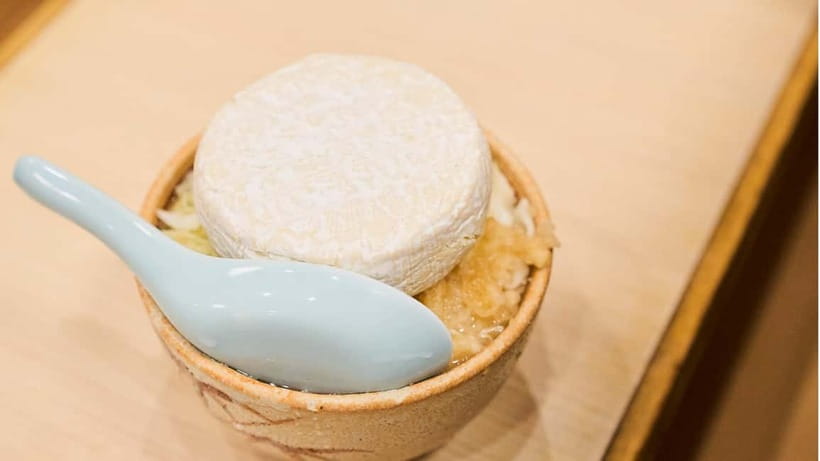
The first food stop may feature oden, a comforting Japanese dish of ingredients simmered in a light broth. Daikon, fish cakes, and other items are common choices, though the exact selection depends on the restaurant and your host.
Oden is a good opening dish because it is easy to share and does not require much explanation once you understand the basics. Your host can point out the different ingredients, tell you how to choose them, and translate the menu if the counter offers choices you cannot read.
The limitation is that oden is not a grand, showy food. It is simple and homey. If you want a dramatic sushi presentation or a famous Tokyo specialty, this stop may feel modest. If you want a taste of everyday Japanese comfort food, it makes sense.
Nakano’s backstreets and smoky yakitori
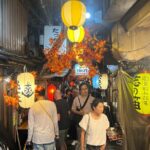
From the arcade, the route moves into quieter side streets. Here your host may choose a small place serving grilled skewers, local specialties, or yakitori.
Yakitori is one of the most approachable Japanese foods for a first evening out. Chicken is grilled over heat and served on skewers, often with either salt or a savory-sweet tare sauce. Different parts of the chicken can appear on the menu, and this is where a host is particularly useful. You can ask what each item is before ordering rather than guessing from a short Japanese name.
The food is usually served in small portions, which suits a progressive meal. You get to try several things without filling up too early. A guide can also help you order according to your comfort level, an important advantage if you are not ready for every part of the menu.
The backstreet setting adds character, but it can also mean cramped seating and a less predictable pace. This is not a polished restaurant-hopping package with a reserved table at every stop. It is a more local-style evening, and small Japanese eateries may have limited room.
Finishing among Nakano’s yokocho alleys
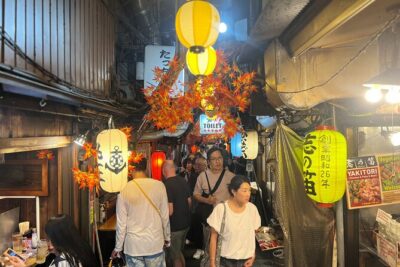
The final stop takes place in one of Nakano’s yokocho areas, where compact bars and food counters sit close together. The listed plan includes a family-run spot where you may try kushikatsu, fried skewers with a crisp coating.
Kushikatsu gives the meal a different texture from oden and yakitori. The skewers may include meat, vegetables, or other ingredients, and your host can help explain the choices and local eating customs.
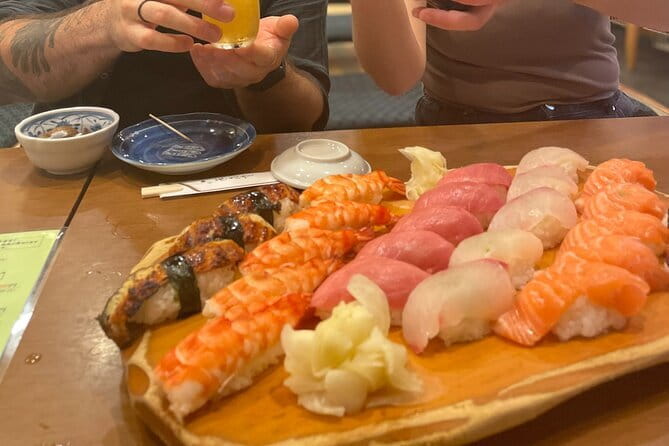
The evening may also include a tiny sushi restaurant, an izakaya, or another small local dining room. The exact food is not fixed, which is both the attraction and the uncertainty. You can end up with a more personal meal than you would get from a standard menu, but you cannot treat the itinerary as a guaranteed checklist of named dishes.
Two or three eateries over about three hours is a sensible pace. You have time to walk, talk, order, and eat without turning the night into a race. Still, you should arrive hungry. Six to eight tastings, plus drinks, can add up quickly.
What the private format really changes

A private tour is useful in Tokyo because food preferences vary widely. You may want seafood, vegetarian dishes, ramen, traditional food, sweets, or simple introductions to Japanese cuisine. The pre-tour questionnaire is designed to gather that information, and your host contacts you directly to discuss the plan.
The strongest part of the service is this early conversation. Several highly praised hosts, including Lauren, Yohei, Karina, and Mari, were noted for getting in touch before the tour and shaping the evening around personal interests.
That communication also gives you a chance to explain allergies, dislikes, and your preferred pace. The supplied information does not promise that every dietary need can be met, so you should be clear and specific before the tour begins.
The host can also suggest places for later in your trip. Gabriel, for example, recommended a ramen shop that became a successful follow-up meal. That kind of advice can be worth almost as much as one extra tasting, especially if you are new to Tokyo.
The weakness is the same feature that makes the tour flexible: the human factor. One booking may feel warm, well planned, and full of local discoveries. Another may suffer from a host change or weaker organization. The overall rating is 4 out of 5 from 26 ratings, which suggests a generally good experience with some real variation.
A few more Tokyo tours and experiences worth a look
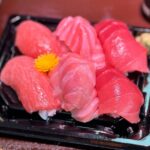
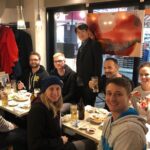

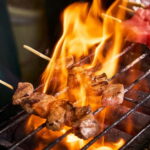
Food translation is more useful than it sounds

Tokyo menus can be easy to misunderstand. Even when a restaurant has pictures, you may not know which cut of meat you are ordering, how large the portion will be, or whether a dish is intended to be shared.
A host who translates the menu can save time and prevent expensive mistakes. You can ask what is seasonal, which items are typical, and how dishes differ from one another. This is especially helpful in izakaya, where the menu may include many small plates and unfamiliar terms.
Your host can also explain social details, such as how to order several dishes for the table or how to approach a small counter restaurant. You are not only getting fed. You are learning how to use the kind of place you may want to return to on your own.
That said, translation quality depends on the assigned host. One person may be deeply familiar with Japanese food, while another may be more focused on general conversation and neighborhood orientation. If food expertise matters to you, say so in the questionnaire and your pre-tour messages.
The guide can make or break the night

The most praised hosts in the supplied feedback include Mari, Karina, Yohei, Sergio, Jonny Wu, Gabriel, Chiria, Kieran, and Noah. Their strengths were clear: friendly company, good communication before the tour, useful local suggestions, and the ability to lead people into places they would not have found alone.
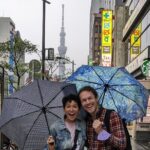
Mari was especially noted for turning a rainy evening into an enjoyable food outing, including crepes. Kieran combined market visits with help buying family gifts. Jonny Wu led an evening in Shinjuku that included three different restaurants, each offering something distinct.
You should not assume you will receive one of these named hosts. Host assignment is based on your questionnaire and availability. The company says it matches you with a like-minded local, but the experience can still vary.
There was also an unpleasant case involving a late arrival after a hotel check-in delay. Another booking involved a host change that left the guest disappointed. These examples point to two practical rules: contact your host early, and allow enough time to reach the meeting point.
Three hours, walking, and extra transport costs

The advertised duration is about three hours. The tour is primarily on foot, and it starts and ends at JR Nakano Station. That makes the meeting point straightforward if you are already in the area.
Public transport or a local taxi may be used if the food stops are spread out. Those costs are not included, so ask your host about the likely transport plan after your reservation is confirmed.
One past outing involved a complicated subway transfer and ticket trouble. The food itself went well, but the transport problems took the shine off the start and end of the experience. A simple Nakano walking route is likely easier, but you should not assume every plan will involve no train or taxi.
Wear comfortable shoes. You are walking through an arcade, side streets, and alleys, and the route may include standing or compact seating. Most people can participate, and service animals are allowed. The activity is near public transport, but no private vehicle is provided.
Is $222.58 per person fair?

At $222.58 per person, this is not a cheap way to eat in Tokyo. You are paying for more than the food: private guiding, menu help, itinerary planning, and the chance to visit several small restaurants without having to research or negotiate your way in.
The value is strongest for first-time visitors who want a confident introduction to Japanese food culture. It can also suit repeat visitors who have already seen the major sights and want a local evening in a different neighborhood.
The value is weaker if you are comfortable ordering in Japanese, already know Tokyo’s food districts, or mainly want the largest possible quantity of food for your money. You could spend less by choosing restaurants yourself.
Group discounts may be available, which could make the cost easier to justify for a small party. Still, check the final price and what the discount covers before booking. Additional food and drinks beyond the included tastings are extra, as are transport costs and optional gratuities.
The experience is often booked 77 days ahead, so planning early is sensible if your schedule is fixed or you hope for a particular type of host.
Who should book this Tokyo food walk?
I would put this tour high on the list for you if you:
- Want to try local dishes but feel uneasy reading Japanese menus
- Prefer a private evening over a large group outing
- Like small restaurants and neighborhood streets more than famous dining rooms
- Want a flexible plan built around your interests
- Are happy to sample several dishes rather than sit down for one long meal
- Need a host who can suggest places for later in your trip
I would think twice if you need a guaranteed list of restaurants, require a highly structured schedule, or have complex dietary restrictions that have not been confirmed in advance.
It also may not be ideal if you arrive tired after a long day and do not want to walk or change locations. The tour is designed as an active food outing, not a single seated dinner.
Booking advice for a smoother evening
Complete the questionnaire with useful detail. Do not simply write that you like Japanese food. Mention your favorite ingredients, foods you avoid, interest in sushi or grilled meat, comfort with unfamiliar dishes, and whether you want sweets or drinks included where possible.
Reply promptly when your host contacts you. This is your best chance to shape the route and clarify the meeting point, possible train rides, and extra transport costs.
Arrive at JR Nakano Station on time. A late start can reduce the number of stops, and the experience may not be able to run its full course if you miss the meeting window.
I would also book this early in your Tokyo stay if you want restaurant recommendations for later. Hosts such as Gabriel and Kieran have helped guests find ramen and gifts beyond the tour itself, which gives the evening value beyond its three-hour schedule.
Should you book Eat Like a Local in Tokyo?
Book it if you want a private, flexible introduction to Tokyo food and like the idea of eating in Nakano’s small local establishments. The combination of oden, yakitori, kushikatsu, sushi, and izakaya-style dishes gives you plenty of variety, while the guide handles the menus and local details.
Just keep your expectations realistic. The food is not a guaranteed menu, transport may cost extra, and the host can shape the experience for better or worse. For a first visit, a curious eater, or anyone who wants a friendly local companion for an evening, the price can be fair. For confident independent diners, it is probably better to spend that money directly on restaurants.
FAQ
Where does the tour start?
The tour starts at JR Nakano Station, at 5-chōme Nakano, Nakano City, Tokyo 164-0001, Japan.
Where does the tour end?
The activity ends back at the meeting point.
How long does the experience last?
The tour lasts approximately three hours.
How many people take part?
This is a private activity, so only your group participates.
How many dishes are included?
You receive tastings of approximately six to eight local dishes and drinks at two or three eateries.
Can the itinerary be customized?
Yes. You complete a pre-tour questionnaire about your personality and interests, and your host communicates with you to help shape a flexible itinerary.
Can the host translate menus?
Yes. Menu translation is included as part of the local host service.
Is transportation included?
No. This is primarily a walking tour, but public transport or local taxis may be used between sites at an additional cost.
Are extra food and drinks included?
No. Food, drinks, or attraction tickets beyond the included experience cost extra.
What is the cancellation policy?
You can cancel at least 24 hours before the local start time for a full refund. Cancellations or changes made less than 24 hours before the start time are not accepted for a refund.
More Private Tours in Tokyo



More Food Experiences in Tokyo
More Tokyo Food Tours in Tokyo
More tours in Tokyo we've reviewed












Tokyo Food Tours, compared.
 ★ 5.0Tokyo: Shinjuku Food Tour (13 Dishes at 4 Local Eateries)From $86
 ★ 4.9Tokyo: Shinjuku Food Tour (13 Dishes and 4 Eateries)From $97
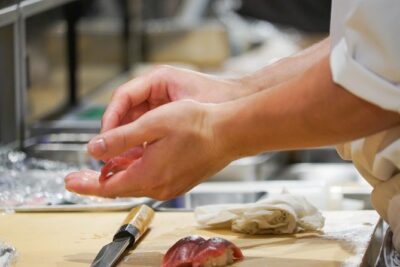 ★ 5.0Tokyo Night Foodie Tour in Shinjuku – Seasonal Sushi, Wagyu BeefFrom $111
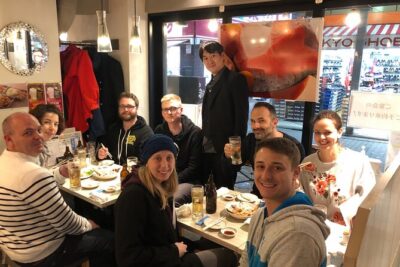 ★ 5.0Eat and Drink Like a Local: Tokyo Ueno Food Tour-Taverns&RamenFrom $95
 ★ 5.0Tokyo: Shibuya Food Tour (13 dishes and 4 Eateries)From $77
Tokyo: Shinjuku Food Tour – 15 Dishes, 3 Drinks, 4 EateriesFrom $723 hours
★ 5.0Tokyo: Shibuya Food Tour (13 dishes and 4 Eateries)From $77
Tokyo: Shinjuku Food Tour – 15 Dishes, 3 Drinks, 4 EateriesFrom $723 hours