Reviewed · TSUKIJI MARKET TOURS
Tokyo: Tsukiji Fish Market Food and Walking Tour
Tsukiji is best understood on foot, one food stall, side street, shrine, and temple at a time. This two-hour walking tour gives you a friendly local guide to help make sense of the market and point out places to eat, rather than leaving you to wander with only your appetite for direction.
In This Article
- Key points at a glance
- Why Tsukiji works so well for a first Tokyo food walk
- Meeting your guide at Lawson Tsukiji 4 Chome
- Walking through Tsukiji’s food streets
- The value of local street-food recommendations
- Seeing a Shinto shrine and a Buddhist temple
- How much context should you expect?
- Why the small-group format matters
- Is $20 a fair price?
- Who should book this Tsukiji walk?
- Should you book the Tsukiji Food and Walking Tour?
- FAQ
- How long is the Tsukiji Fish Market Food and Walking Tour?
- Where does the tour start?
- Where does the tour end?
- What languages are available?
- Is food included in the $20 price?
- Does the tour visit religious sites?
- Are photographs included?
- What happens if I arrive late?
- Can I cancel for a full refund?
I like the small-group format and the smart mix of food and culture. You get local street-food suggestions, then visit both a Shinto shrine and a Buddhist temple, which gives the outing more shape than a simple market stroll. The main drawback is that the depth of explanation may depend heavily on your guide. One detailed assessment found the market walk light on history and context, so ask questions if you want more than a visual tour.
Key points at a glance
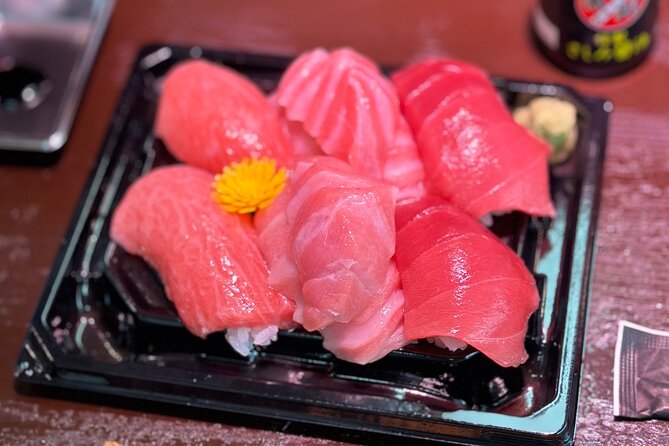
- Tsukiji market walk: Explore one of the world’s best-known food markets with a local guide.
- Street-food advice: Get recommendations for places and foods worth seeking out after the tour.
- Two spiritual traditions: Visit a Shinto shrine and a Buddhist temple within the same outing.
- Two-hour pace: A manageable introduction for your first days in Tokyo.
- Small-group attention: The format allows more room for questions than a large city tour.
- Flexible booking: Pay later and cancel up to 24 hours ahead for a full refund.
Why Tsukiji works so well for a first Tokyo food walk

Tsukiji gives you a quick lesson in how food fits into daily life in Japan. The market area is not just a place to buy seafood. It is a concentrated part of Tokyo where food shops, small eateries, religious sites, and local routines sit close together.
That makes this tour useful early in a Tokyo visit. You can get your bearings, learn how the area feels, and leave with ideas for returning on your own. The guide’s recommendations may be the most practical part of the morning or afternoon, since you can use them after the tour rather than simply taking photographs and moving on.
I also like that the walk does not treat Tsukiji as a single attraction. The market is the main draw, but the shrine and temple add a cultural counterpoint. You see how food, neighborhood life, and spiritual practice occupy the same small part of the city.
The market can feel busy, and the experience is built around walking through active streets rather than sitting in a quiet classroom. If you prefer a detailed lecture on Japanese food history, this may feel too light. If you want a short introduction with room to look, taste, and ask questions, the format makes sense.
A few more Tokyo tours and experiences worth a look


Meeting your guide at Lawson Tsukiji 4 Chome
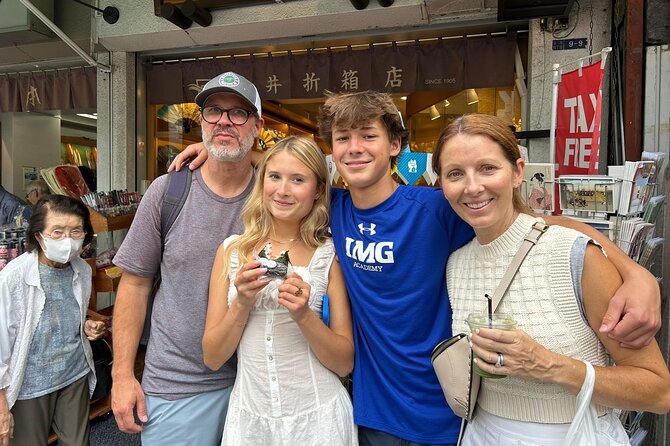
The tour begins in front of Lawson Tsukiji 4 Chome Store. This fixed meeting point is helpful in an area where several streets and entrances can look similar, but you should still arrive early enough to locate the store and guide without rushing.
The guide will be standing outside the convenience store. The scheduled tour time starts at the meeting time, not when you arrive, so lateness can reduce the time available for the walk. If you do not appear within 15 minutes, the booking is treated as a no-show with no refund.
If you know you will be late, contact the tour provider in advance. The instructions ask you to use the supplied email or emergency contact and wait for a response rather than contacting the booking agency. That detail matters in Tokyo, where a few wrong turns or a crowded pavement can cost several minutes.
The tour is offered in English or Japanese. No individual guide name is provided, so you should choose the language that lets you ask easy, specific questions. The best use of your guide will be active conversation: ask what locals buy, how the market has changed, and which foods are worth returning for.
Walking through Tsukiji’s food streets
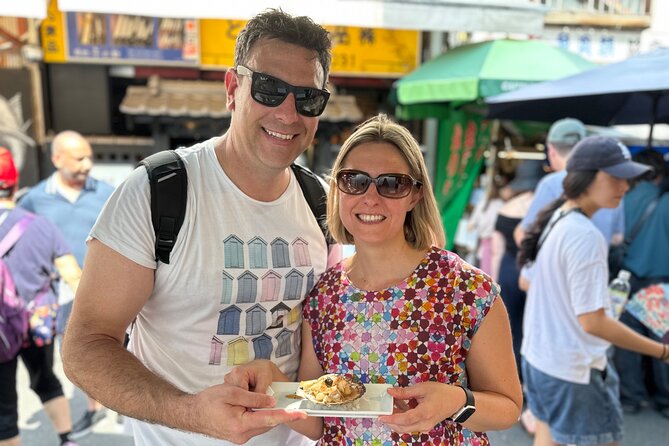
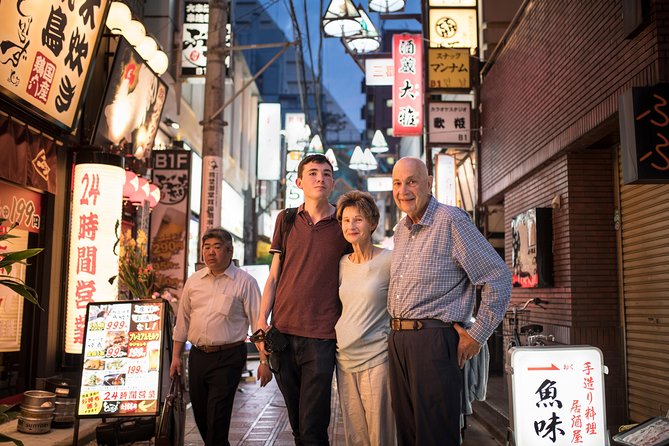
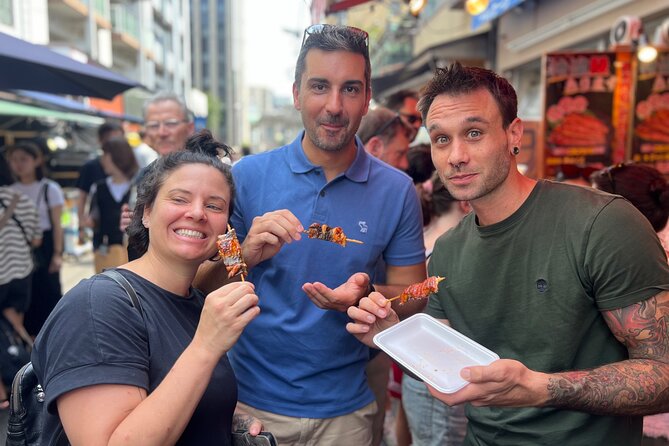
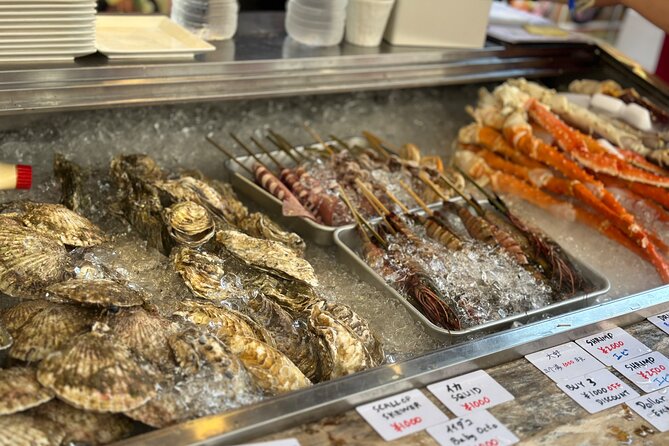
The market portion is the heart of the experience. You will explore Tsukiji with the guide, looking at the food businesses and learning where to find street food in the area.
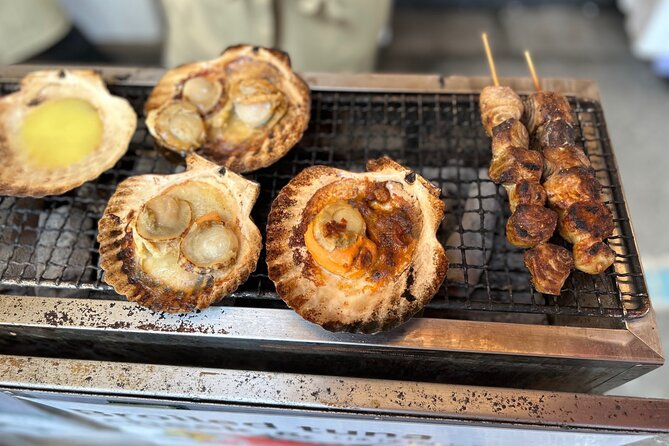
The supplied details do not promise a set tasting menu, a certain number of samples, or included food purchases. Plan on recommendations rather than a fully catered food tour. Bring money if you want to buy something along the way, but remember that any food or drinks are not listed among the inclusions.
That distinction keeps the price low. At $20 per person, you are paying mainly for local orientation and guided access to the neighborhood, not for a string of included tastings. For many people, that is good value. A single useful food recommendation can repay the cost, especially if you are unsure where to begin in Tsukiji.
The guide should help you notice more than the general spectacle. You might find yourself comparing shop fronts, watching how food is presented, and learning which corners are worth another look. Yet you should keep expectations realistic. The tour promises a walk through the market and local advice, but it does not promise a detailed seminar on seafood trade, a behind-the-scenes market visit, or an explanation of every stall.
One strong experience described seeing the whole market and trying a variety of food, with the time spent there being a particular strength. That gives you a useful clue about the pace: the walk can cover a broad section of Tsukiji rather than stopping for a long talk at one point.
The value of local street-food recommendations
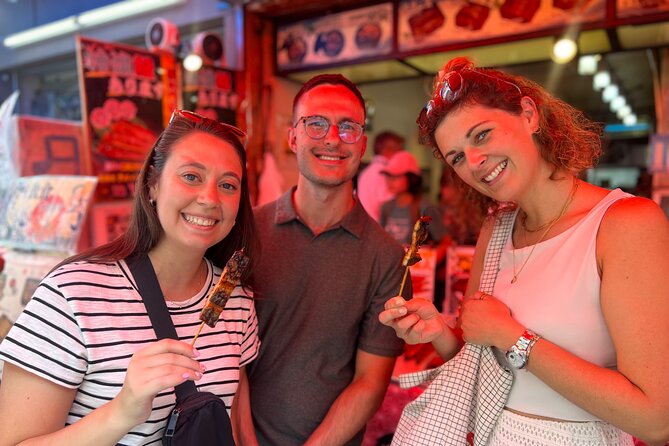
A guide’s food advice can be more useful than a long list of famous dishes. Tsukiji is the kind of place where choice can become a problem. You may see plenty of appealing options but have little idea what fits your budget, how much time a stop takes, or which foods suit your taste.
Here, you get recommendations from someone familiar with the area. The description specifically frames these as local tips, including spots that are less obvious to someone walking through for the first time. Since the tour does not list named restaurants or guaranteed dishes, treat the suggestions as an advantage rather than a fixed menu.
I would ask the guide practical questions:
- Which foods are easiest to eat while walking?
- Which stalls are worth returning to after the tour?
- What should you try if you do not eat raw seafood?
- Which recommendations work for a quick lunch?
These questions help turn a general market visit into a useful food plan. The guide may also be able to explain what you are seeing in a way that a sign or menu cannot.
There is one limit. The food advice may be stronger than the cultural storytelling, depending on who leads your tour. A detailed assessment found that the guide offered little explanation of the market’s history, culture, and daily life. If those subjects matter to you, do not wait silently for a lecture. Ask directly and use the guide’s local knowledge while you have access to it.
Seeing a Shinto shrine and a Buddhist temple
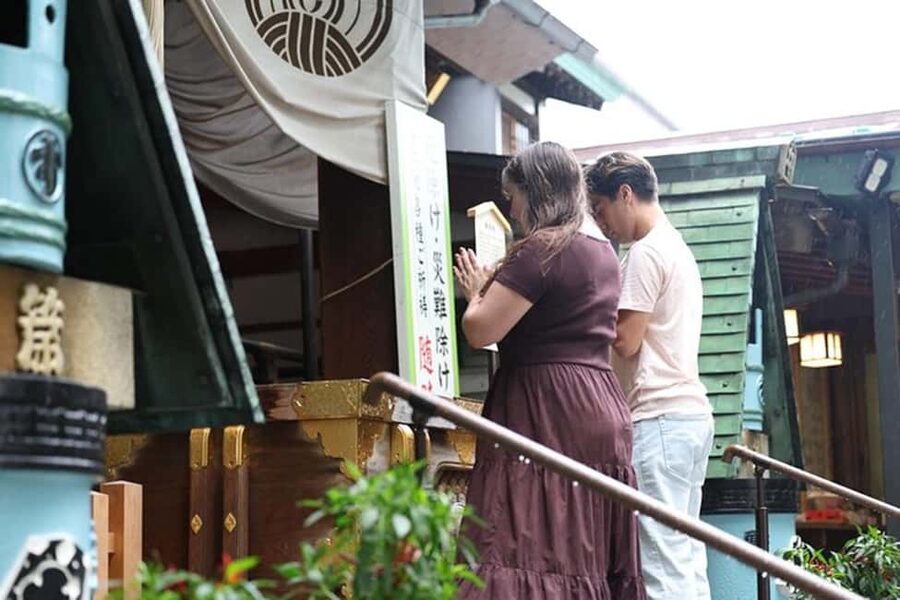
The tour’s most distinctive feature is the visit to both a Shinto shrine and a Buddhist temple. These are not interchangeable stops. Seeing both in one short walk gives you a basic way to compare Japan’s two major spiritual traditions.
You are not promised a formal religious lesson, so think of these visits as an introduction. Your guide can help explain what makes a shrine different from a temple, what kind of setting each uses, and how the two traditions appear in ordinary Japanese life.
This pairing also changes the mood of the tour. The market focuses on movement, food, and commerce. A shrine and temple offer places to pause and look at another side of the neighborhood. You get a more rounded sense of Tsukiji instead of spending the full two hours among food stalls.
It is worth asking about etiquette before you enter either site. The provided information does not specify a ceremony, prayer activity, or special access, so you should expect a visit rather than a scheduled religious event. Follow the guide’s instructions, keep your voice low when appropriate, and treat both sites as active places of worship.
For a first-time visitor, this contrast is especially useful. Tokyo can present its religious traditions in everyday settings, and this tour puts two of them within a single compact route. That is a lot of cultural context for a $20 outing, even if the explanations remain brief.
Other walking tours we've reviewed in Tokyo



How much context should you expect?
This is where I would keep your expectations in check. The tour promises a local guide and cultural insight, but the available feedback is mixed on the amount of storytelling. One assessment gave high marks to the market itself but found the guide’s explanation too thin.
That does not make the tour a poor choice. It means the experience may work better as an orientation walk than as a serious history tour. You will likely get the most from it if you want help finding your way, choosing food, and noticing the connection between market life and local religious sites.
If you want more depth, prepare a few questions before you arrive. Ask about Tsukiji’s role in Tokyo’s food culture, how the market area has changed, and how residents use the neighborhood. A guide who is excellent with questions can make the outing much more satisfying than a guide who simply points out locations.
The included photos are another small benefit. Photos are taken during the tour and sent to you afterward. This is not a major reason to book, but it gives you a record of the walk without requiring you to photograph every moment yourself.
Why the small-group format matters
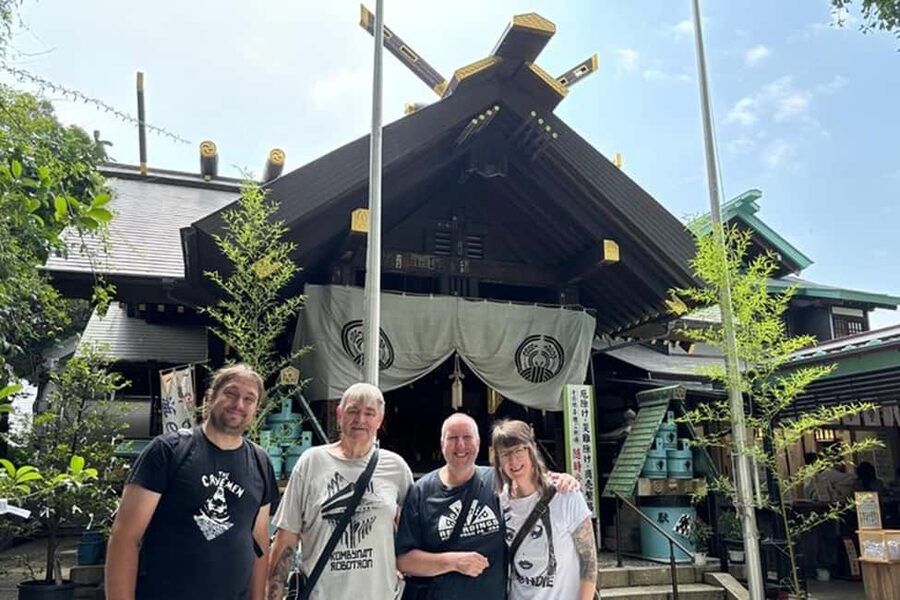
A small group is a good fit for Tsukiji. Narrow streets and busy market areas are easier to handle when you are not part of a large crowd. You can also ask questions without trying to catch a guide’s voice from the back of a long line.
The format is described as relaxed and personal, and one booking specifically notes a private tour with a small group. The exact group arrangement may depend on the booking, so I would not assume every departure is fully private. Still, the experience is clearly designed to keep the group intimate enough for personal attention.
That matters most during the food portion. A guide can respond to your interests, dietary questions, and appetite instead of giving every person the same rapid list of stops. It also makes the shrine and temple visits easier to follow.
The two-hour length is another strength. You get enough time to see the market area and visit both religious sites without committing half a day. At the same time, two hours will not allow for a long historical lecture, extensive shopping, and a leisurely meal. Think of it as a focused introduction.
Is $20 a fair price?
At $20 per person, this is a low-cost guided introduction to one of Tokyo’s best-known food districts. The price includes a local guide for two hours and photographs sent after the tour. Food, drinks, and personal purchases are not listed as included.
I consider that fair value if you want orientation and advice. You are paying for help with the layout, cultural comparison, and food choices. You are not paying for premium dining, skip-the-line access, or a specialist lecture.
The value is strongest for first-time visitors who might otherwise spend two hours wandering without knowing what they are seeing. It is also useful for solo visitors or couples who prefer a small group and want a local point of view without the cost of a long private tour.
The value is weaker if you already know Tsukiji well or want a highly detailed food-history experience. In that case, you may be paying for information you can gather on your own. The mixed feedback about depth is the key warning: the market delivers the atmosphere, but the guide’s storytelling will shape how meaningful the walk feels.
You can reserve now and pay later, which helps if your Tokyo schedule is still taking shape. Cancellation is free up to 24 hours before the tour. That gives you reasonable flexibility, but the 15-minute no-show rule remains strict.
Who should book this Tsukiji walk?
I would suggest this tour to first-time Tokyo visitors, food-focused visitors, and anyone who wants a gentle introduction to Japanese religious traditions. It is also a good choice if you have just arrived and want practical ideas for where to eat in Tsukiji.
The tour suits you especially well if you:
- Prefer a short, guided walk to exploring alone.
- Want food recommendations without paying for a full tasting tour.
- Like combining neighborhood life with cultural sites.
- Value a small group and the chance to ask questions.
- Have two hours available and want to keep the rest of the day open.
I would be more cautious if your main goal is detailed historical interpretation. The guide may offer that, but it is not guaranteed by the stated program, and one assessment found the explanations too limited. For that kind of experience, look for a tour that clearly promises a specialist guide or a longer cultural lecture.
Should you book the Tsukiji Food and Walking Tour?
Book it if you want a low-cost, two-hour introduction to Tsukiji with food advice and a useful comparison between a Shinto shrine and a Buddhist temple. The market coverage, small-group setup, and local recommendations give the tour a practical purpose beyond sightseeing.
Go in expecting a guided orientation, not a complete history of the market. Ask questions, arrive early at Lawson Tsukiji 4 Chome Store, and budget separately for anything you want to eat. With those expectations, this is a sensible first step into Tsukiji and a good way to decide where you want to return on your own.
FAQ
How long is the Tsukiji Fish Market Food and Walking Tour?
The guided walking tour lasts two hours.
Where does the tour start?
The guide will meet you in front of Lawson Tsukiji 4 Chome Store.
Where does the tour end?
The activity ends back at the meeting point.
What languages are available?
The tour is offered in English and Japanese.
Is food included in the $20 price?
Food is not listed as an inclusion. The tour provides local street-food recommendations, so you should plan to pay separately for anything you choose to buy.
Does the tour visit religious sites?
Yes. The route includes both a Shinto shrine and a Buddhist temple.
Are photographs included?
Yes. Photos are taken during the tour and sent to you afterward.
What happens if I arrive late?
The tour time starts at the scheduled meeting time. If you arrive late, adjustments may be made, but if you do not arrive within 15 minutes, it is treated as a no-show and no refund is provided. If you expect to be late, contact the provider in advance.
Can I cancel for a full refund?
Yes. You can cancel up to 24 hours in advance for a full refund. You can also reserve now and pay later.
More Food Experiences in Tokyo


More Walking Tours in Tokyo
More Tsukiji Market Tours in Tokyo


More tours in Tokyo we've reviewed












Tsukiji Market Tours, compared.
 ★ 5.0Tokyo Tsukiji Fish Market Food and Culture Walking TourFrom $99
 ★ 5.0Tokyo: Tsukiji Fish Market Food and Walking tourFrom $30
 ★ 4.9Tokyo: Tsukiji Fish Market Guided Walking TourFrom $222 hours
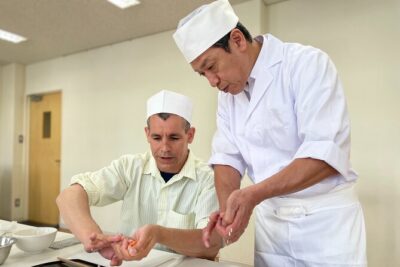 ★ 5.0Tokyo Sushi Making Class in Tsukiji with Professional ChefFrom $49
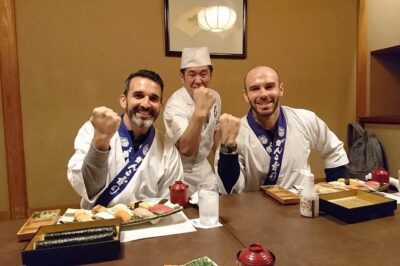 ★ 5.0Tsukiji Fish Market Guided Tour and Sushi Making with Pro ChefFrom $104
★ 4.7Tokyo: Tsukiji Fish Market Food and Culture Walking TourFrom $963 hours
★ 5.0Tsukiji Fish Market Guided Tour and Sushi Making with Pro ChefFrom $104
★ 4.7Tokyo: Tsukiji Fish Market Food and Culture Walking TourFrom $963 hours