Reviewed · ASAKUSA TOURS
Tokyo: Asakusa, Kappabashi, and Ueno Walking Tour
Tokyo’s old neighborhoods make the best setting for this three-hour walking tour, which links temples, food culture, kitchenware shops, and a postwar market. You’ll pass through Kaminarimon, follow Nakamise to Senso-ji, learn how to pray at a Japanese temple, then walk toward Kappabashi and Ueno. I especially like the mix of major sights and ordinary shopping streets, plus the chance to see real-life Tokyo through Hoppy Street and Ameyoko.
In This Article
- Key points at a glance
- Why this route works for first-time Tokyo visitors
- Kaminarimon and the first look at Asakusa
- Nakamise: sweets, crafts, and the temple approach
- Senso-ji and a simple lesson in worship
- Hoppy Street and Asakusa after the temple
- Kappabashi, where Tokyo shops for its restaurants
- The final stretch to Ueno and Ameyoko
- Guides, pace, and flexibility
- Is $41 a fair price?
- Who should book this walking tour?
- Should you book it?
- FAQ
- How long does the tour last?
- Where does the tour meet?
- Where does the tour finish?
- Which places are included?
- What languages are available?
- Are food and drinks included?
- Is the tour suitable for wheelchair users?
I also like the tour’s flexible spirit. Guides such as Yohei, Toshi, Naoko, Madokoro-san, and Mika have handled different needs, including slower walking in the rain and spending more time in Kappabashi when weather changed the plan. The main drawback is simple: you’ll walk a moderate distance, and the $41 price covers guiding but not food, drinks, or purchases.
Key points at a glance
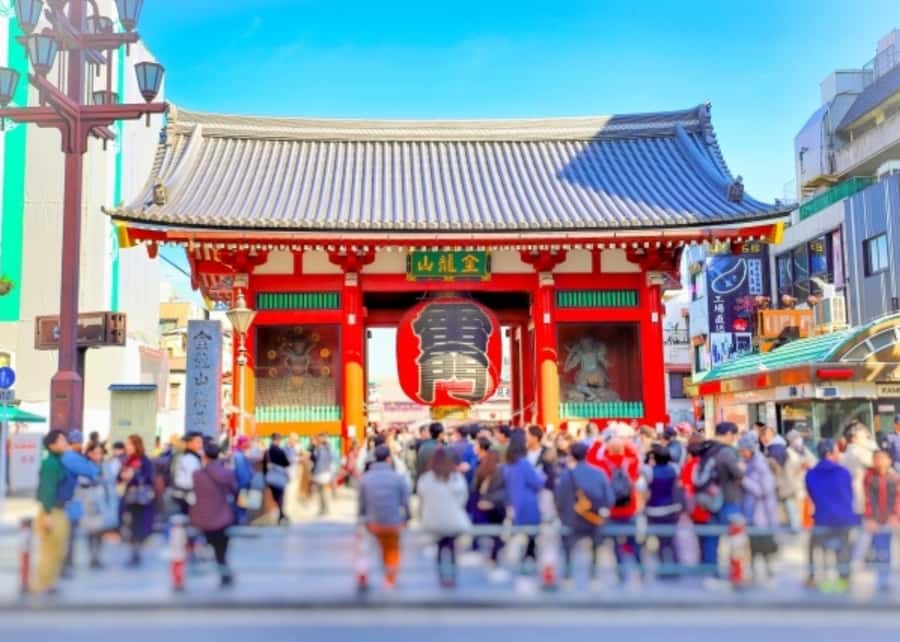
- Kaminarimon and Senso-ji: Enter Tokyo’s oldest temple area through its famous red gate and learn the basics of Japanese worship.
- Nakamise shopping street: Browse traditional sweets, small handicrafts, and souvenir shops on the approach to the temple.
- Hoppy Street: See Asakusa’s retro izakaya alleyways and a more local side of the district.
- Kappabashi kitchenware street: Shop for knives, pottery, restaurant curtains, and realistic plastic food samples.
- Ameyoko Market: Finish among produce, clothing, and other goods on a street that grew from a postwar black market.
- Multilingual guiding: Tours are offered in English, Spanish, Chinese, French, Korean, Portuguese, and Japanese.
Why this route works for first-time Tokyo visitors
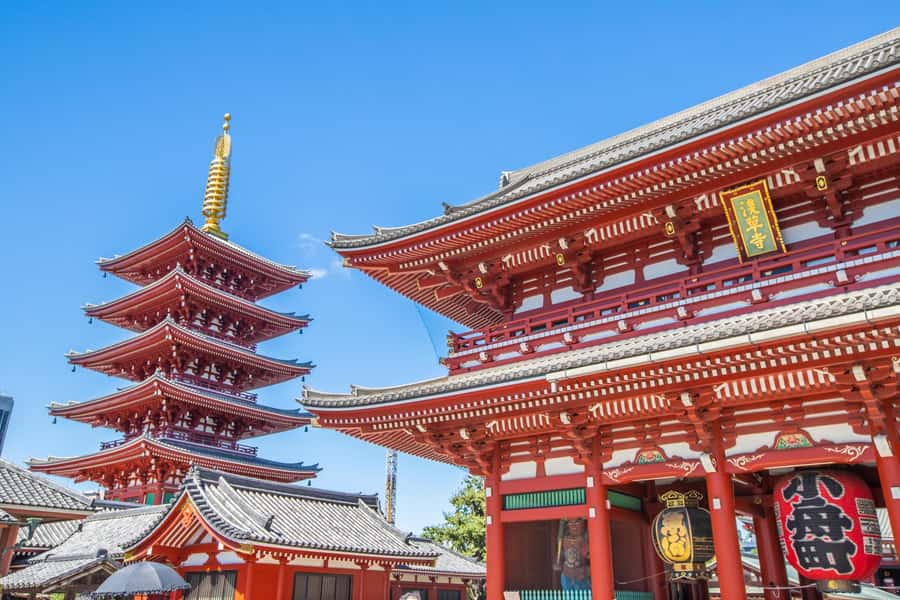
Tokyo can feel too large to grasp on a short visit. This route helps by keeping you in three connected old districts and showing how they differ. Asakusa gives you temple traditions and souvenir streets. Kappabashi focuses on the tools and presentation of Japanese food. Ueno closes the tour with a noisy, practical shopping street rather than another polished landmark.
That contrast is the real value. You are not simply moving from one famous photo stop to the next. You are seeing how worship, restaurants, food preparation, and everyday shopping fit together.
The tour lasts three hours and takes place on foot. You should wear comfortable shoes and check the forecast before leaving. Rain does not automatically ruin the outing, but it can affect the pace and the amount of time spent outdoors. One guide kept a relaxed pace in wet weather, and another adjusted the plan so more time could be spent in Kappabashi when rain arrived.
The meeting point is in front of the Starbucks Kaminarimon branch, on the left side of Kaminarimon Gate. The stated address is 1-chome-18-2 Asakusa, with coordinates 35.7114295, 139.7962295. That detail matters because Asakusa has plenty of busy streets and several temple entrances. Arrive ready to identify the guide near the gate, rather than wandering through the temple grounds looking for the group.
A few more Tokyo tours and experiences worth a look

Kaminarimon and the first look at Asakusa
The route begins with a short walk to Kaminarimon, the large red entrance gate associated with Senso-ji. The guided explanation here helps you understand that Asakusa is more than a photo stop. This is the ceremonial front door to one of Tokyo’s best-known temple areas.
You’ll have about five minutes of guided time at the gate. That is enough for orientation and photographs, but not a long historical lecture. The guide’s role is most useful here in pointing out what you are seeing and explaining the customs that make the next part of the route easier to follow.
The gate can be crowded, so keep your belongings close and stay aware of where your guide is standing. The tour does not promise a quiet visit. Its strength is that you enter the district with context instead of trying to work out the symbols and rituals alone.
Nakamise: sweets, crafts, and the temple approach
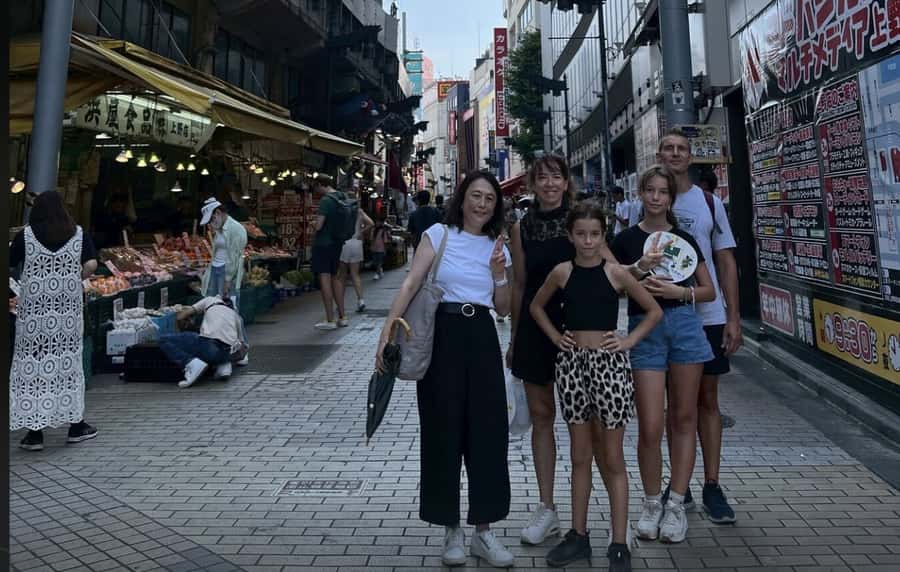
From Kaminarimon, you walk along Nakamise Shopping Street for about 15 minutes. This is an atmospheric approach to Senso-ji, lined with stalls and shops selling traditional Japanese sweets, handicrafts, and souvenirs.
I like this section because it gives you something to do while moving toward the temple. You can look at the goods, note the food displays, and ask the guide about items that catch your eye. It is also a useful place to get a first taste of old-style Tokyo commerce, even though the street is aimed at sightseers and can be busy.
Do not expect a long shopping break here. The stated time is a guided walk, not an open-ended browsing session. If a particular sweet or craft catches your eye, remember its location and ask whether there will be time to return. The tour later includes free time and shopping, especially around Kappabashi, so you do not need to make every purchase immediately.
Senso-ji and a simple lesson in worship
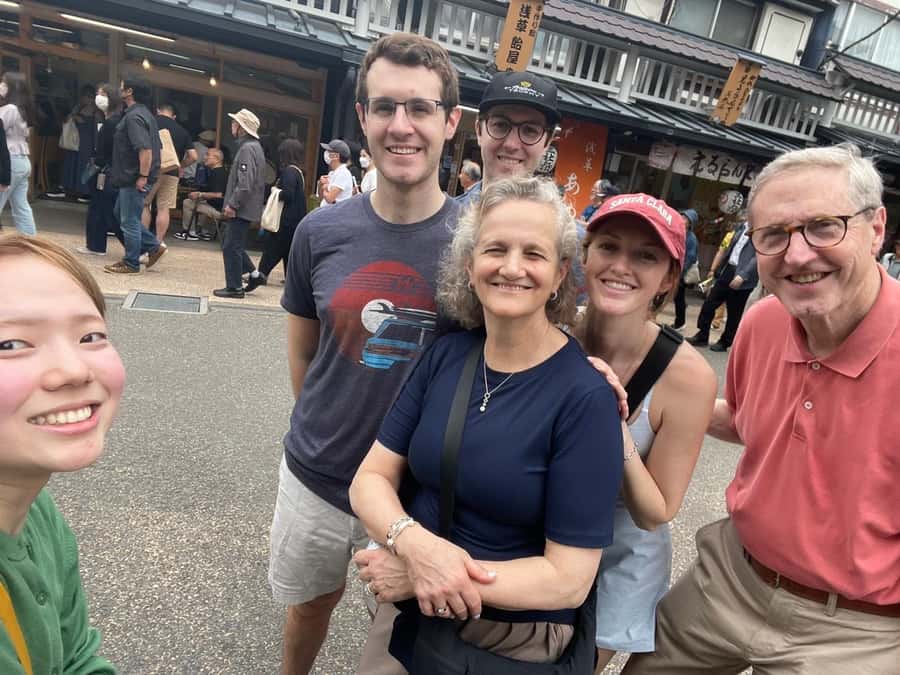
Senso-ji receives about 20 minutes, making it the longest single guided stop on the early part of the route. It is Tokyo’s oldest temple, and the guide explains both the site’s history and the basic customs of worship.
This practical instruction is one of the tour’s best features. You’ll learn how to take part in a simple prayer rather than merely photographing the buildings. The point is not to turn you into an expert in Japanese religion. It is to help you behave respectfully and understand why people pause, bow, and pray in particular ways.
The time is focused, so expect an introduction rather than a full study of the temple complex. If you want extended time for photographs, quiet reflection, or detailed architecture, you may need to return on your own. Still, for a first visit, 20 minutes with a guide can give the place much more meaning than a quick walk through the gate.
The tour then continues to Asakusa Shrine for about five minutes. Seeing the temple and shrine together gives you a useful glimpse of Japan’s different religious traditions in one compact area. The stop is brief, so treat it as a concise explanation and photo opportunity, not a separate major attraction.
Hoppy Street and Asakusa after the temple
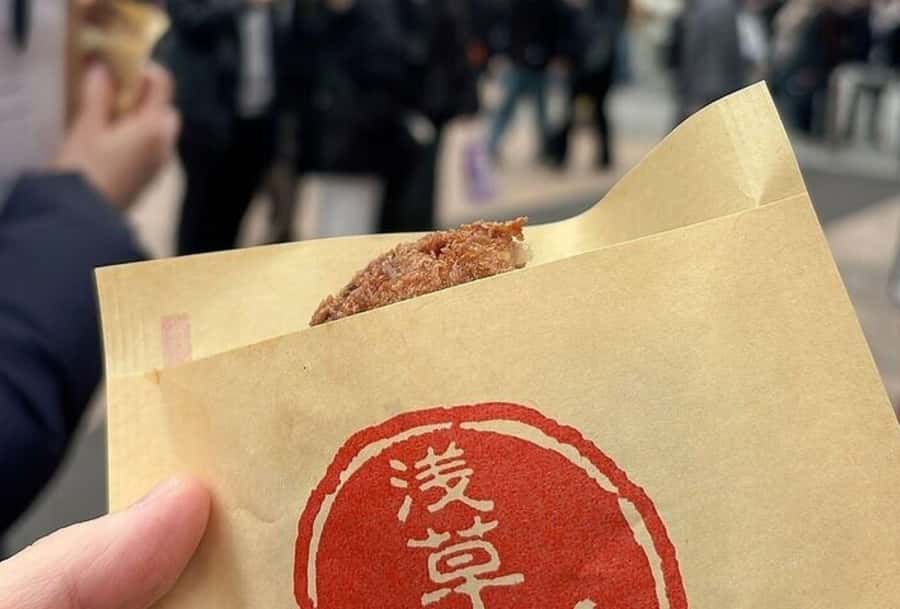
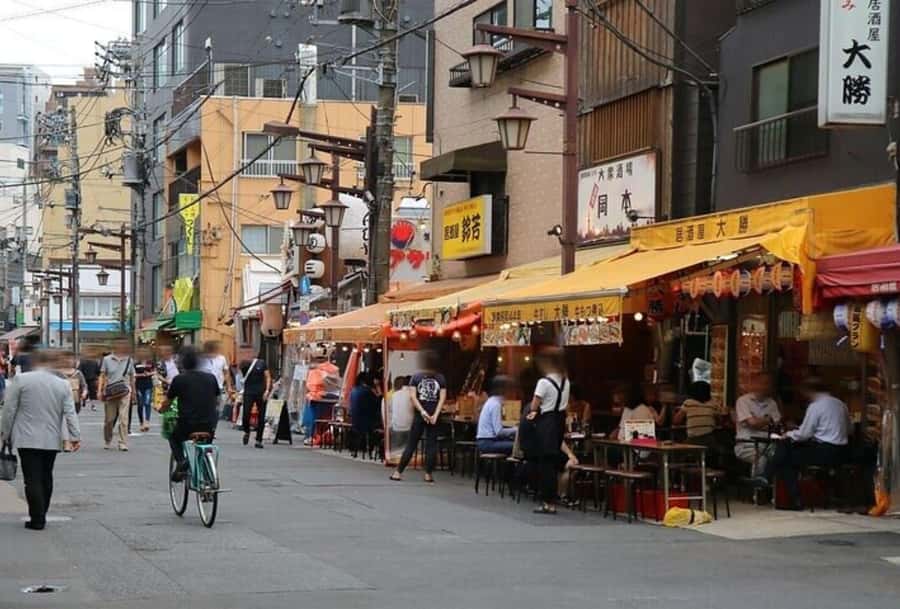
The route includes a visit to Hoppy Street, a retro alley known for old-fashioned izakayas. This is where the tour shifts away from formal sightseeing and toward the eating and drinking culture of Asakusa.
You’ll see compact restaurant fronts and a more down-to-earth side of the district. The guide can explain how the street fits into local life, while you get a feel for the atmosphere without needing to commit to a full meal during the tour.
The exact timing is not fully specified for every stop, so you should view Hoppy Street as a guided neighborhood visit rather than a guaranteed dining session. Food and drinks are not included. If you want to sample something here, budget separately and check how much free time the group has.
This part is especially useful if you want Tokyo beyond temples and department stores. It also breaks up the formal rhythm of Kaminarimon, Nakamise, and Senso-ji.
A few more Tokyo tours and experiences worth a look

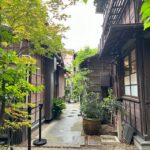
Kappabashi, where Tokyo shops for its restaurants
Kappabashi is the tour’s most distinctive stop. The district has been in business for more than 300 years and is devoted to kitchen and restaurant supplies. Shops sell knives, pottery, curtains, and the plastic food samples seen outside Japanese restaurants.
The schedule allows a substantial block of time here, with guided time, a visit, and free time for shopping totaling about 50 minutes in the middle of the route. That makes Kappabashi more than a quick glance from the sidewalk. You can compare products, ask questions, and decide if you want to buy something.
A kitchen knife is the obvious purchase, but it is not the only one. Pottery and restaurant goods can be appealing, and the food replicas are fun to examine even if you have no suitcase space left. One family used the stop to buy a special knife, which shows how practical this section can be for shoppers.
Buying a knife requires thought. You’ll need to consider price, size, packing, and your airline’s rules. The tour provides access and guidance, but purchases are your responsibility. Also remember that $41 does not cover shopping. Kappabashi can quickly become the place where your spending exceeds the tour price.
I would give this area extra weight when deciding if the tour suits you. If you enjoy Japanese food, cooking, design, or unusual souvenirs, Kappabashi may be the most memorable stop. If you mainly want temples and history, the long shopping period may feel less useful.
The final stretch to Ueno and Ameyoko
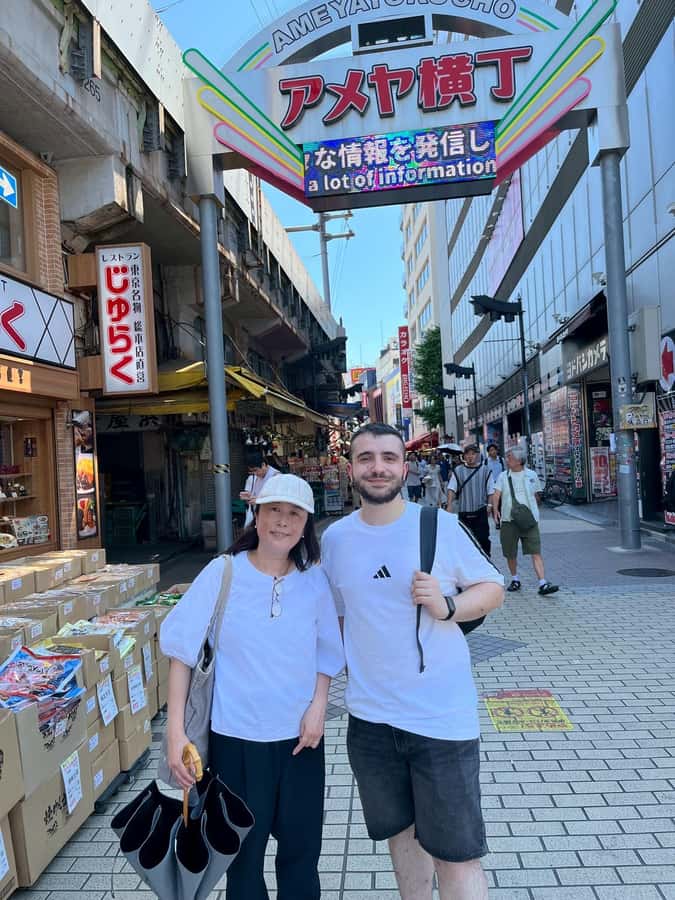
The tour ends at Ameyoko Market in Ueno, a lively shopping street that developed from a black market after World War II. You’ll see fresh produce, clothing, and other goods, with time for a little shopping and possibly street food.
Ameyoko is a good finish because it feels practical and energetic. The street is not presented as a polished historic district. It is a place to watch commerce in motion, compare prices, and see a different side of Tokyo’s food and retail culture.
The listed guided time here is about 10 minutes, followed by the end of the tour at Ameyayokocho. That is enough to orient you and identify the market’s character, but not enough for a long meal or a full exploration of every side street. Plan to continue on your own if you want to browse carefully.
Food and drinks are not included anywhere in the tour. Ameyoko is the natural place to buy a snack after the guide finishes, but the activity itself does not promise a tasting or a set meal. Bring extra yen or a payment method suitable for the shops you visit, though the supplied details do not specify which payment types each vendor accepts.
Guides, pace, and flexibility
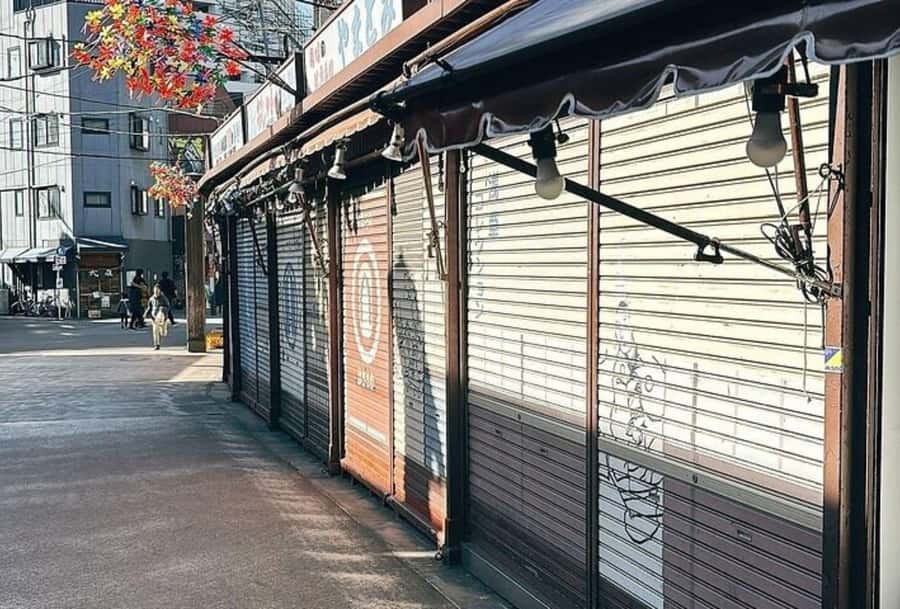
The tour is offered in seven languages: English, Spanish, Chinese, French, Korean, Portuguese, and Japanese. That makes it useful for mixed-language needs, but you should select the language that gives you the easiest access to explanations about customs and shopping.
Named guides connected with recent bookings include Yohei, Toshi, Naoko, Madokoro-san, and Mika. Their strengths differ. Yohei gave detailed explanations of Asakusa, Senso-ji, and the shrine, then offered suggestions for other parts of Tokyo and helped locate a restaurant after the tour. Toshi kept the experience enjoyable in the rain, while Madokoro-san maintained a relaxed pace in wet conditions.
Naoko was described as friendly and patient, a useful quality if you are shopping with children or need time to make a decision. Mika led a pleasant guided visit in French. These details suggest that the quality of your experience will depend partly on the individual guide and the language selected, so it is sensible to confirm the guide and language when booking if that information is available.
The tour is not designed for wheelchair users, and moderate walking is required. The streets and shops may also be crowded, especially around the temple and market. If you tire easily, ask in advance about the pace and possible adjustments.
The flexible planning is reassuring. One tour changed its original plan by skipping Ueno Park and spending longer in Kappabashi, partly because of sudden rain and partly because of the participant’s request. That means the route should be viewed as a framework, not a promise that every minute will follow the same order.
Is $41 a fair price?
At $41 per person, you are paying for a local guide who connects several districts and explains customs, history, and shopping culture. You are not paying for transport, food, drinks, temple admission, or a shopping allowance. Since the activity is a walking tour, the price is mainly about interpretation and efficient routing.
I think the value is strongest for a first visit to Tokyo or for anyone who wants help understanding Senso-ji and Japanese worship. A guide can also make Kappabashi much easier to use, especially if you are considering a knife, pottery, or another specialist purchase.
The value is weaker if you already know Asakusa well, prefer to set your own pace, or want a food tour with included tastings. Three hours can also feel short if you want long photography stops at the temple and unhurried shopping in both Kappabashi and Ameyoko.
Free cancellation up to 24 hours before the start and the option to reserve now and pay later make the booking less rigid. Still, check the available starting times and forecast before committing, since much of the experience takes place outdoors.
Who should book this walking tour?
I would recommend it to first-time Tokyo visitors who want a clear introduction to Asakusa, shoppers interested in Japanese kitchen goods, and anyone who prefers neighborhood streets to a bus-only sightseeing loop. It also suits people who want a guide to explain worship customs in plain terms.
Families can benefit from the variety. Temples, sweets, plastic food samples, knives, and market stalls give children different things to notice. Keep in mind that the route requires walking and that food and purchases cost extra.
I would be more cautious about booking if you use a wheelchair, dislike shopping stops, or need a highly fixed itinerary. The plan can change with weather and personal requests, which is helpful for some people but less appealing if you want every stop handled to the minute.
Should you book it?
Book this tour if you want context, local streets, and practical shopping, all in one compact outing. The best reason to choose it is the combination of Senso-ji, Hoppy Street, Kappabashi, and Ameyoko. Few short routes give you temple customs, restaurant culture, kitchen tools, and a postwar market in the same morning or afternoon.
Skip it if you want included food, a long temple visit, or a relaxed day with minimal walking. For most first-time visitors, $41 is a reasonable price for a guide who can make Tokyo’s old districts easier to read, especially if Kappabashi is high on your wish list.
FAQ
How long does the tour last?
The walking tour lasts three hours.
Where does the tour meet?
The guide waits in front of the Starbucks Kaminarimon branch, on the left side of Kaminarimon Gate. The listed coordinates are 35.7114295, 139.7962295.
Where does the tour finish?
The tour ends at Ameyayokocho, also known as Ueno Ameyoko Shopping Street.
Which places are included?
The route includes Kaminarimon, Nakamise Shopping Street, Senso-ji Temple, Asakusa Shrine, Hoppy Street, Kappabashi kitchenware district, and Ueno’s Ameyoko Market.
What languages are available?
Guiding is available in English, Spanish, Chinese, French, Korean, Portuguese, and Japanese.
Are food and drinks included?
No. Food and drinks are not included in the $41 price.
Is the tour suitable for wheelchair users?
No. The activity is not suitable for wheelchair users, and participants should be prepared for a moderate amount of walking.
More Walking Tours in Tokyo
More Ueno & Yanaka Walks in Tokyo
More Asakusa Tours in Tokyo
More tours in Tokyo we've reviewed



Asakusa Tours, compared.
 ★ 4.8Tokyo: Japanese Dance Cabaret Theater Asakusa-Kaguwa TicketFrom $492 hours
 ★ 4.7Tokyo: Meiji Shrine, Asakusa, Skytree Bus Tour and CruiseFrom $12210 hours
 ★ 4.9Tokyo: Roll and Authentic Sushi Making Class in AsakusaFrom $581h 40m
 ★ 4.8Tokyo: Asakusa Walking Tour with Sensoji Temple VisitFrom $222 hours
 ★ 5.0Tokyo Asakusa Rickshaw TourFrom $42
 ★ 4.5Tokyo Panoramic 1 Day: Meiji Shrine, Asakusa, Odaiba and SKYTREE®From $85