Reviewed · COOKING CLASSES
Japanese Cooking Class and Cultural Experience Around Tokyo
The best part of this Chiba cooking class is its focus on food Japanese families actually make. You learn dashi, the soup stock behind many dishes, work with familiar Japanese ingredients, and then sit down to eat what you prepared. The cultural finish is flexible: sake tasting, Japanese tea, or calligraphy.
In This Article
- Key points at a glance
- Cooking Japanese food that feels like a real meal
- Why dashi is the lesson worth remembering
- Choosing among menus A, B, C, and D
- From kitchen work to a sit-down meal
- Sake, tea, or calligraphy for the final half-hour
- A friendly format for families and small groups
- Chiba Station makes the meeting point clear
- Is $100.11 a fair price?
- Food allergies and menu planning
- Cancellation and booking details to keep in mind
- Who should book this Chiba cooking class?
- Should you book it?
- FAQ
- Where does the Japanese cooking class begin?
- How long does the experience last?
- How many dishes will I cook?
- Can I choose the menu?
- What can I do instead of sake tasting?
- Can food allergies be accommodated?
- What is the cancellation policy?
I like the small maximum of eight people, which should make it easier to ask questions and take part rather than watch from the sidelines. I also like the choice of menu and the chance to request a calligraphy activity that can include writing your name or Kanji and decorating a fan.
The main consideration is menu flexibility. You choose from menus A, B, C, or D when booking, but if another group joins the class, your group may not receive its first choice. The meeting point is also in Chiba, not central Tokyo, so check your route before booking.
Key points at a glance
- Learn dashi from scratch: See how Japanese soup stock forms the base of many home-style dishes.
- Cook 3 to 4 dishes: Choose from four menu options when the class setup allows it.
- Finish with a cultural activity: Taste locally made sake, Japanese tea, or try calligraphy.
- Small group setting: The class accepts a maximum of eight people.
- Useful for mixed-age groups: Sake can be replaced with tea or calligraphy for children and non-drinkers.
- Meet at Chiba Station: Pickup is offered, and the station is near public transportation.
Cooking Japanese food that feels like a real meal
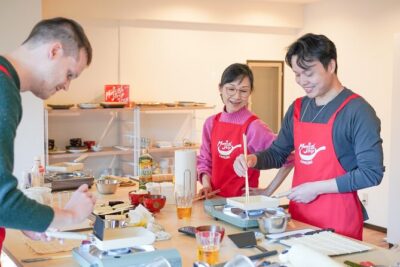
This is not designed as a restaurant demonstration where you sit quietly and take notes. You cook together, using basic methods that can help you understand Japanese food beyond sushi and ramen.
The class covers three or four home-style dishes. The exact recipes depend on the menu selected from options A, B, C, or D. The descriptions do not name each dish, so you should ask for the current menu details if a particular food matters to you.
That lack of a fixed public menu has both good and bad sides. You may get a better match for your group, and ingredients can be prepared in advance around your choice. But you should not book expecting one guaranteed signature recipe unless the host confirms it.
I like the home-cooking angle. A meal made from several everyday dishes gives you a clearer sense of how Japanese food works together. You are not just learning one impressive plate. You are seeing how stock, ingredients, seasoning, and cooking methods combine into a complete meal.
The class is described as basic but authentic. That makes it a good fit if you want clear instruction rather than advanced culinary training. If you already cook Japanese food often, the class may feel introductory, but the focus on dashi and local ingredients still gives the session a useful foundation.
If you're still narrowing it down, here are other tours in Chiba we've reviewed.

Why dashi is the lesson worth remembering
Dashi can seem like a small detail on a Japanese menu, yet it carries much of the flavor in home cooking. Learning how it is made helps explain why many Japanese soups, sauces, and simmered foods taste savory without being heavy.
Here, dashi is part of the hands-on lesson. You get to learn how the stock is made and how Japanese ingredients are used in cooking. That is more useful than simply hearing the word in a food tour explanation.
I would pay close attention during this part, even if your main interest is the final meal. Once you understand the role of dashi, Japanese dishes that once seemed subtle become easier to read. You can also take the basic idea home and use it when preparing Japanese recipes later.
The experience is not presented as a professional cooking course. Instead, it gives you a practical starting point and lets you participate in the preparation. That balance should work well for first-time cooks, families, and anyone who likes learning by doing.
Choosing among menus A, B, C, and D
At booking, you are asked to choose a cooking menu from A, B, C, or D. The host prepares ingredients beforehand, which helps the class stay within its roughly two-and-a-half-hour cooking period.
There is an important condition. If you or your group are the only people attending that day, you can choose your favorite menu. If another group is also booked, you may not receive your first choice.
That is worth discussing before you arrive. If you have a strong preference, confirm the menu and group arrangement as early as possible. If you are happy to learn any of the four popular Japanese options, the shared format should not be a serious concern.
I see this as a reasonable tradeoff for a small class. Shared groups can bring a little less control over the menu, but they can also make the cooking session more social. The maximum of eight keeps the activity from becoming a large workshop.
From kitchen work to a sit-down meal
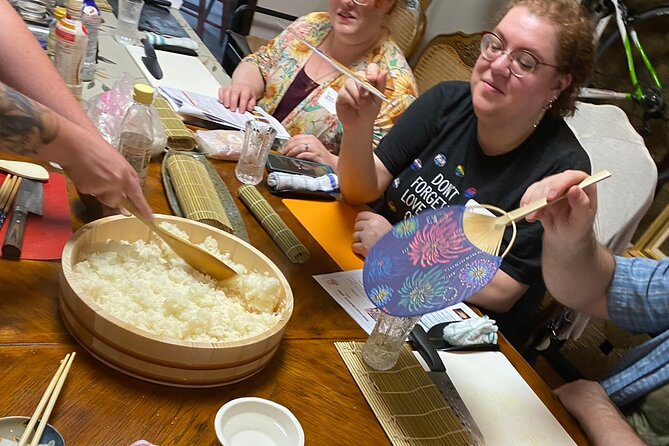
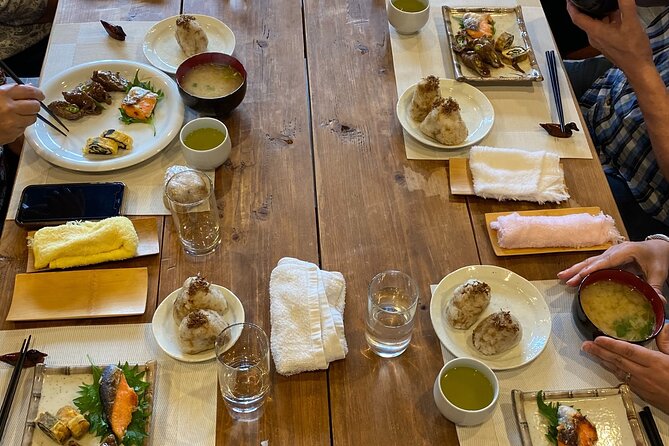
After cooking, you eat the dishes you have made. This is an important part of the experience because it connects the technique to the finished meal.
You can taste the results while the steps are still fresh. If a seasoning or cooking method surprised you, you can ask about it right away. The meal also gives the class a natural pause before the final cultural activity.
The information provided does not promise a restaurant-style setting or a formal meal service. Expect the focus to remain on food you prepare as a group. That suits people who want a working class rather than a polished dining event.
The pace is also worth considering. About two and a half hours are set aside for cooking, eating, and the related instruction. That is long enough for several dishes, but not so long that the activity takes over your entire day in Japan.
Sake, tea, or calligraphy for the final half-hour
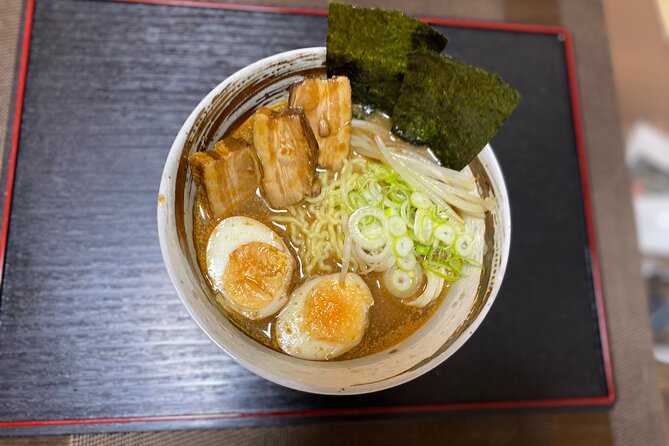
The last half-hour is reserved for a choice of sake tasting, Japanese tea tasting, or calligraphy. The sake option features locally produced sake described as rare and high quality.
You do not need to choose alcohol. Children and adults who do not drink can request Japanese tea tasting or calligraphy instead. The tea option is particularly useful for groups with different preferences, since everyone can take part in a shared cultural activity without making sake the center of the afternoon.
The tea description points out that Japan has many kinds of tea, not only green tea. That gives the tasting a wider frame than a simple cup of standard green tea, though the specific teas are not listed.
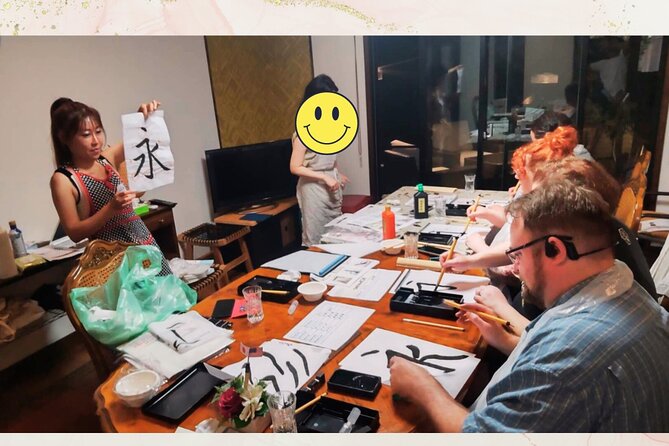
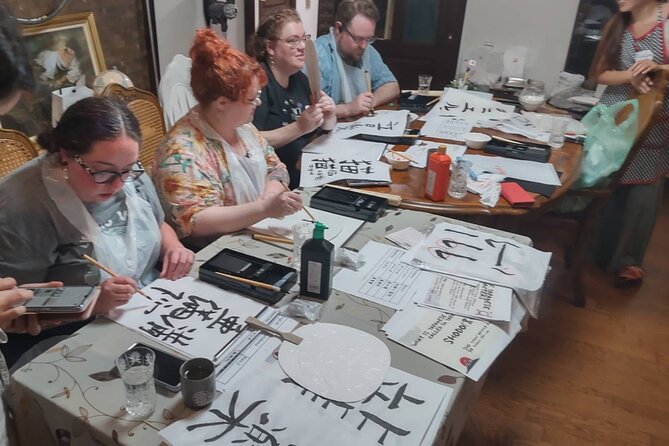
Calligraphy offers a more hands-on souvenir. You can write your name or Kanji using special brushes and ink. One completed activity included a calligraphy lesson followed by decorating a personal fan, so you might have a creative keepsake as well as a cooking memory. Confirm the fan activity if it matters to you, since it is not listed as a guaranteed part of every booking.
I like this flexible ending. A cooking class can attract people with very different interests, and the final choice lets you shape the mood. Sake works for adults curious about local drinks. Tea is calmer and alcohol-free. Calligraphy gives children and creative types something physical to practice.
A friendly format for families and small groups
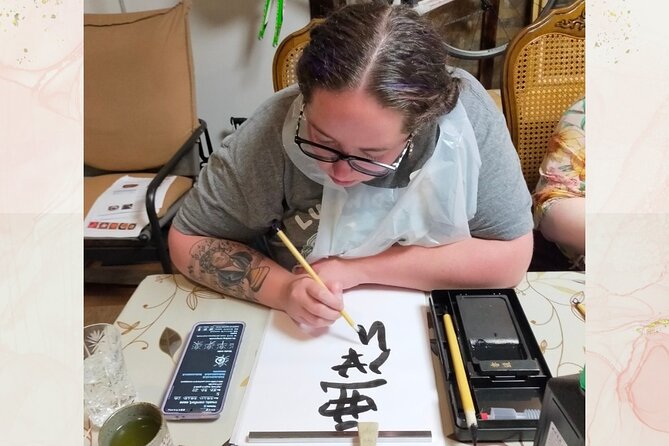
The experience received three published ratings, all at five out of five, and the strongest praise centers on the hosts being kind, engaging, and fun. One detailed visit included cooking, a calligraphy lesson, and fan decoration.
That description suggests a warm, participatory style rather than a strict classroom. You should still expect to follow instructions and share the cooking process, but the atmosphere appears suited to people who want conversation and encouragement.
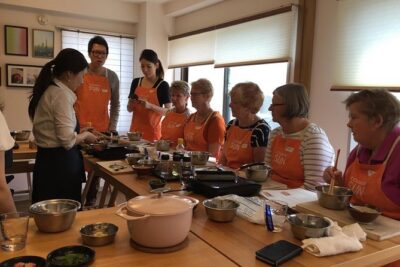
The small capacity helps here. With no more than eight people, you have a better chance to handle ingredients, ask questions, and see what is happening. Group size can make a major difference in a cooking class. An eight-person limit is not private, but it is far more manageable than a large tour bus group.
This class could work especially well for:
- Families looking for an activity beyond sightseeing
- Couples who want a practical cultural experience
- Friends who enjoy cooking together
- First-time visitors curious about ordinary Japanese food
- Non-drinkers who prefer tea or calligraphy
- People with food allergies who contact the host in advance
If your goal is a serious chef-led course with advanced knife skills, restaurant techniques, or a fixed list of dishes, this may be too simple. Its strength is approachability.
Chiba Station makes the meeting point clear
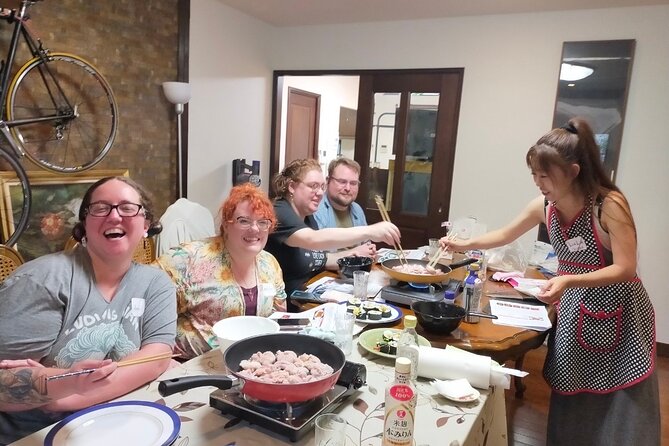
The listed starting point is Chiba Station in Chuo Ward, at 1 Chome 1 Shinchiba, Chiba, postal code 260-0031. The experience is near public transportation, and pickup is offered.
The station meeting point is practical because you do not need to search for a distant rural address on your own. Still, Chiba is separate from the central Tokyo sightseeing area, so allow enough time to reach the station. The tour lasts about three hours, but the day will take longer once you add your train journey and any pickup arrangements.
I would confirm the exact meeting instructions after booking. Confirmation is sent within 48 hours, subject to availability. Since the activity is in Chiba, this small bit of planning matters more than it would for a class directly in central Tokyo.
The mobile ticket is useful for keeping the booking details on your phone. Group discounts may lower the per-person cost for families or friends booking together.
Is $100.11 a fair price?
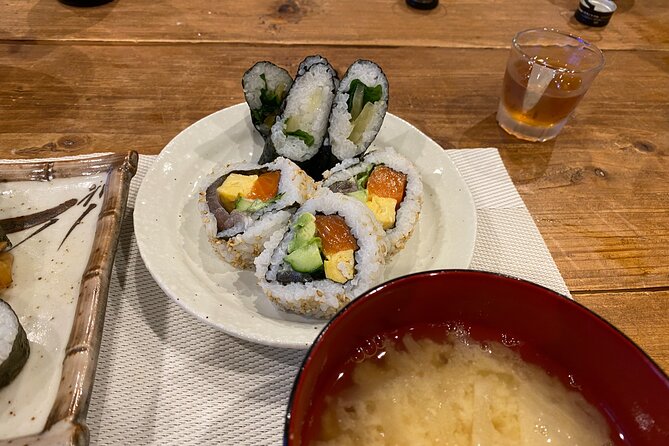
At $100.11 per person, this is not a bargain cooking demonstration. You are paying for roughly three hours, hands-on cooking, the meal, dashi instruction, and a final sake, tea, or calligraphy activity.
The value depends on how much you want to participate. If you only want to eat Japanese food, a meal elsewhere will cost less. If you want a basic lesson, personal interaction, and a cultural activity in the same booking, the price becomes easier to justify.
The class also saves you from arranging separate food and cultural experiences. You cook several dishes, eat them, and then have a tasting or calligraphy session. For a family or group, that combination can fill a useful part of the day without requiring several reservations.
I would consider the price reasonable for people who value active participation. It is less compelling for visitors who prefer sightseeing, formal instruction, or a highly specialized menu.
Food allergies and menu planning
If you have food allergies, tell the host in advance. The menu can be discussed, which is an important point for anyone who needs ingredient changes.
Do not wait until the class begins. Japanese cooking may include stocks, sauces, seafood, soy, or other ingredients that are not always obvious from the finished dish. The provided information confirms that menus can be discussed, but it does not promise that every allergy or dietary restriction can be accommodated.
The same advice applies to strong dislikes. Contact the host before your visit and ask which menu is most suitable. Since ingredients are prepared beforehand, early notice gives the host the best chance to plan properly.
Cancellation and booking details to keep in mind
You can cancel for a full refund up to 24 hours before the experience starts. Cancellations made less than 24 hours before the start time are not refunded, and changes within that period are not accepted.
The cut-off follows local time in Japan. The class also requires a minimum number of participants. If it is canceled because that minimum is not met, you will be offered another date or experience, or a full refund.
Pickup is offered, but the stated meeting point remains Chiba Station. Confirm what pickup means for your booking rather than assuming it covers your hotel or a central Tokyo address.
Who should book this Chiba cooking class?
I would recommend it to you if you want a friendly, hands-on introduction to Japanese home cooking and do not need an advanced culinary course. The combination of dashi, several dishes, a shared meal, and a flexible cultural finish gives the class more substance than a single-recipe lesson.
It is also a sensible choice for families. Children and non-drinkers can skip sake in favor of tea or calligraphy, and the small group limit should make the session easier to follow.
You may want to choose another experience if your schedule is tight around central Tokyo, if you need a guaranteed recipe, or if you want a private class with no menu uncertainty. The Chiba location and possible shared menu are the two details most likely to affect your decision.
Should you book it?
Book this class if you want to cook rather than simply watch, and if learning the everyday role of dashi sounds more interesting than chasing a famous restaurant meal. I especially like the choice between sake, tea, and calligraphy, since it lets adults, children, and non-drinkers enjoy the same final half-hour.
Before paying, contact the host about the current A to D menus, your allergy needs, the preferred final activity, and pickup details. If those points suit your group, the $100.11 price buys a useful three-hour cultural experience with a personal, home-style focus.
FAQ
Where does the Japanese cooking class begin?
The class begins at Chiba Station in Chuo Ward, Chiba, at 1 Chome 1 Shinchiba, postal code 260-0031.
How long does the experience last?
The experience lasts about three hours. Cooking takes approximately two and a half hours, followed by about 30 minutes for sake tasting, tea tasting, or calligraphy.
How many dishes will I cook?
You will cook three to four Japanese home-style dishes together.
Can I choose the menu?
You can choose from menus A, B, C, or D when booking. If your group is the only group attending that day, you can choose your favorite menu. If another group joins, your first choice may not be available.
What can I do instead of sake tasting?
You can choose Japanese tea tasting or a calligraphy experience instead. This option is available for people who do not drink alcohol and for children.
Can food allergies be accommodated?
Tell the host about food allergies in advance. The menus can then be discussed before the class.
What is the cancellation policy?
You can cancel at least 24 hours before the local start time for a full refund. Cancellations or changes made less than 24 hours before the start time are not accepted for a refund.
More Workshops & Classes in Chiba
More tours in Chiba we've reviewed
Cooking Classes, compared.
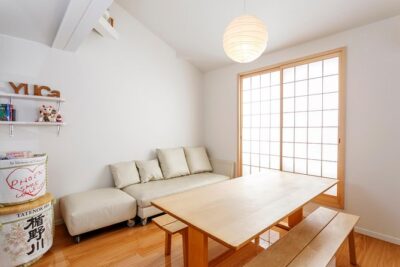 ★ 5.0Ramen & Gyoza Cooking Class in Tokyo with Local Supermarket VisitFrom $122
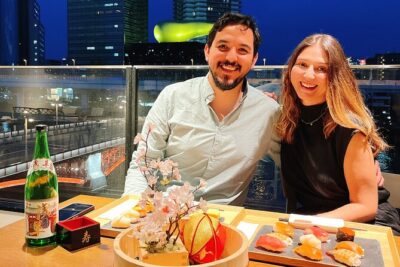 ★ 5.0Ramen and Sushi Cooking Class with Sake Pairing Set in TokyoFrom $79
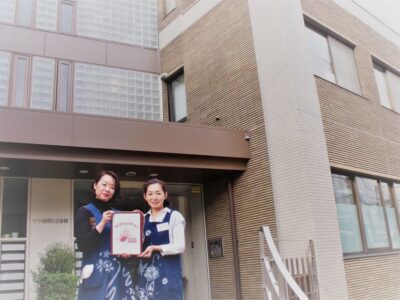 ★ 4.9Tokyo: Wagyu and 7 Japanese Dishes Cooking ClassFrom $673 hours
 ★ 5.0Tokyo Washoku 4-hour Cooking Class: From Market to TableFrom $79
 ★ 5.0Professional Ramen & Gyoza with Ramen Chef in a restaurant!From $159
 ★ 5.0Small-Group Wagyu Beef and 7 Japanese Dishes Tokyo Cooking ClassFrom $72