Reviewed · WALKING TOURS
Highlight walking Tokyo tour with National Licensed guide
Tokyo is a huge city, but this private walking tour gives you a useful first look without trapping you on a bus. In one day, you can move from seafood stalls at Tsukiji to the temple lanes of Asakusa, then on to Meiji Jingu, Harajuku, and Shibuya Crossing with a national licensed guide beside you.
In This Article
- Key points to know before booking
- A smart first day in Tokyo
- Tsukiji Jogai Market: begin with Tokyo’s food culture
- Asakusa and Senso-ji: learn how to approach a temple
- Meiji Jingu: a quieter view of Shinto
- Takeshita Street: Tokyo fashion in a compact stretch
- Shibuya Crossing: finish with Tokyo’s famous city scene
- Why public transportation changes the day
- The guide makes or breaks the experience
- Building your own version of the route
- Food, mobility, and practical planning
- Who should book this Tokyo tour
- Should you book it?
- FAQ
- Where does this Tokyo tour take place?
- How long does the tour last?
- Is hotel pickup included?
- Is transportation included?
- Is this a private tour?
- Can the itinerary be changed?
- Are meals included?
- Are admission tickets included?
- What is the cancellation policy?
I like two things right away: the guide helps you use Tokyo’s public transportation, and the route can be changed around your interests. I also like the personal touch reported by guests who toured with Maru, who helped with subway navigation, family photos, reservations, airport transfers, and translation.
The main drawback is the amount of walking and train travel packed into four to eight hours. You will need moderate fitness, and the tour does not include lunch or optional admission fees. Ask for a shorter walking plan before booking if anyone in your group tires easily.
Key points to know before booking
- Five major Tokyo stops in one private outing: Tsukiji, Asakusa, Meiji Jingu, Takeshita Street, and Shibuya Crossing cover food, religion, fashion, and city life.
- Public transportation is part of the experience: Your guide helps you manage Tokyo’s trains and subways instead of keeping you inside a vehicle.
- The schedule is flexible: You can request different destinations or tell the guide about places you especially want to see.
- Maru receives especially warm praise: Her strengths include subway help, family photos, reservations, airport arrangements, and translation support.
- The tour suits first-time visitors: A private guide can make the first day less confusing, particularly when you are still learning how Tokyo works.
- Plan for a full, active day: The listed stops total about five hours, before adding train rides, breaks, meals, and hotel pickup.
A smart first day in Tokyo
At $118 per person, this experience is not the cheapest way to see Tokyo. It can be good value for a private group that wants help with transportation, cultural explanations, and a route shaped around personal interests.
The price includes hotel pickup, a national licensed guide, and public transportation costs. That matters in Tokyo, where getting from one district to another can take planning even when the train ride itself is short. You are paying less for exclusive admission and more for a person who keeps the day moving and explains what you are seeing.
The tour lasts about four to eight hours. That wide range is useful, but it also means you should confirm the intended schedule. The five listed stops add up to roughly five hours of sightseeing. Once you include pickup, station walks, train changes, photos, food, and any requested additions, the day can become long.
Because this is a private activity, only your group participates. That gives you more control than a fixed group tour. You can ask questions freely, stop for photos, adjust the pace, or swap out a destination. Group discounts may also be available, so the per-person cost can make more sense for families or larger parties.
If you're still narrowing it down, here are other tours in Chiba we've reviewed.

Tsukiji Jogai Market: begin with Tokyo’s food culture
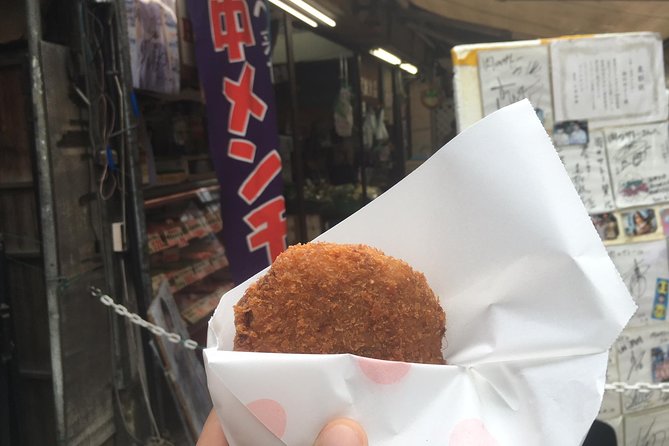
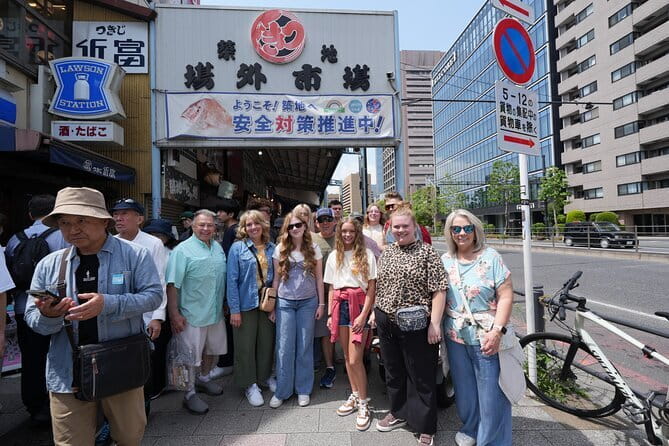
The Tsukiji Outer Market is scheduled for about one hour. It has around 400 shops, with fresh seafood, food products, and kitchen tools among the main draws.
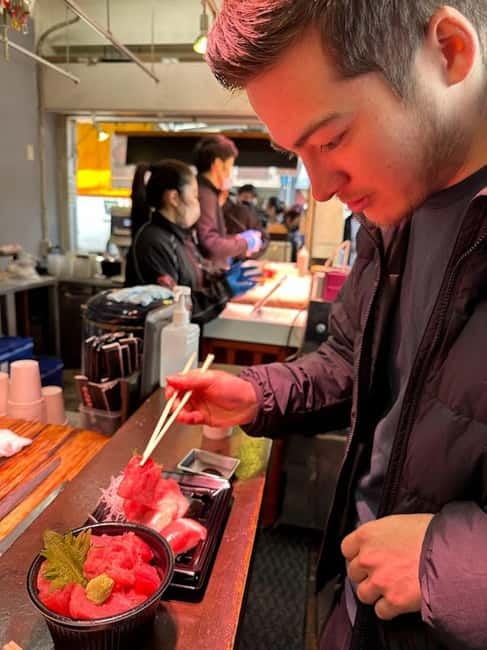
I like starting here because it gives you an immediate sense of Tokyo as a working food city. You are not only looking at a famous sight. You can browse stalls, see Japanese cooking tools, and try fresh seafood if you choose. The market also gives your guide plenty to explain, from food customs to the role of seafood in everyday Japanese meals.
The one-hour slot is enough for an introduction, but not enough for an unhurried food crawl. If you want to taste several things or shop for kitchenware, tell your guide early. Lunch is not included, so Tsukiji may be a sensible place to arrange your own meal, provided the timing allows it.
Admission is free, but your food purchases are not. Keep that distinction in mind when judging the price. The tour handles public transportation, while snacks and lunch remain your responsibility.
Asakusa and Senso-ji: learn how to approach a temple
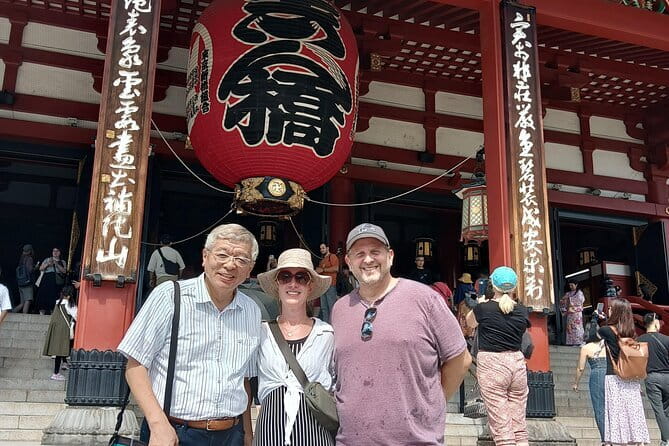
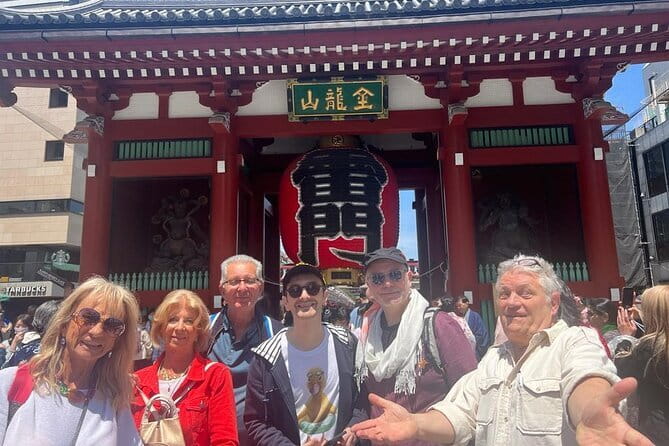
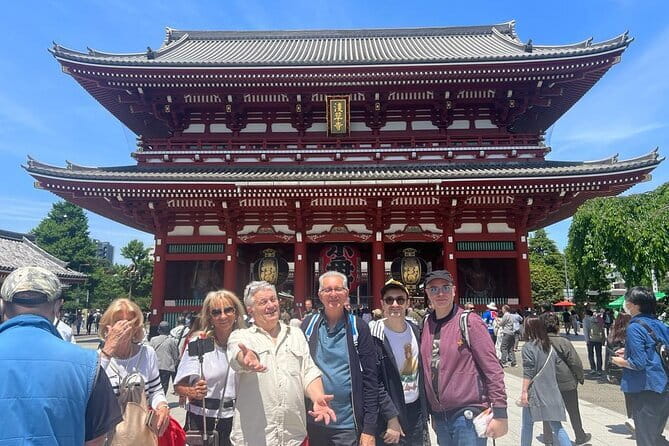
Asakusa receives about an hour and a half, making it the longest listed stop. The centerpiece is Senso-ji, Tokyo’s oldest temple.
This is where the licensed guide can add real value. You can learn the basic steps for praying at a Buddhist temple, along with general information about Japanese Buddhism. Without guidance, it is easy to copy what others do without understanding the gestures or their purpose.
Asakusa also works well for anyone looking for traditional Japanese goods. The area is presented as one of the best places on this route to check traditional items, so you may want time to browse rather than rush directly to the temple grounds.
The extra 30 minutes compared with the other main stops is welcome. Still, it is not a private temple ceremony or a specialized religious tour. You will receive an introduction, not an exhaustive study of Buddhism. If cultural background matters most to you, ask the guide to spend more time here and trim a later stop.
Meiji Jingu: a quieter view of Shinto
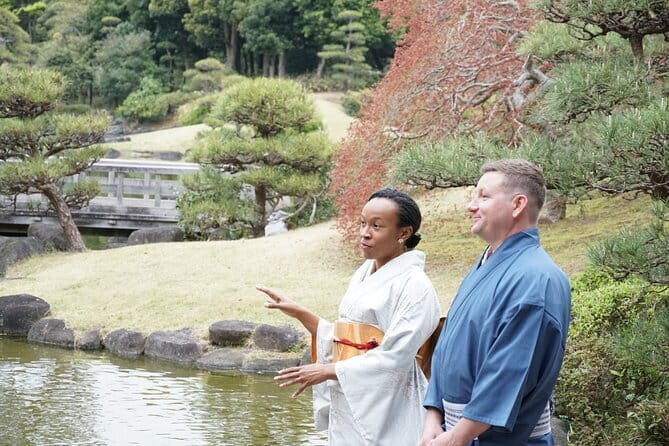
The itinerary allows one hour at Meiji Jingu, one of Japan’s important Shinto shrines. This stop shifts the subject from Buddhist practice at Senso-ji to Shinto customs and shrine architecture.
I like the contrast. Seeing both a temple and a shrine in the same day helps you understand that Japanese religious sites are not all the same. Your guide can explain how to behave at a Shinto shrine and point out architectural details that might otherwise pass unnoticed.
The shrine is also a useful pause after the crowded market and busy temple district. The listed visit is brief, so you will get an overview rather than a slow, detailed examination of every feature. If you prefer peaceful cultural sites to shopping, tell the guide. The route is described as a sample, so your priorities can shape the balance.
Takeshita Street: Tokyo fashion in a compact stretch
The tour gives Takeshita Street about an hour. This shopping street is described as the center of Japanese fashion, making it a sharp change from the religious sites earlier in the day.
You can use this stop to see a younger, more playful side of Tokyo. It is less about major monuments and more about clothing, trends, and the way popular culture appears on the street. If you want traditional crafts, Asakusa is the better fit. If you want current Japanese fashion, Takeshita Street deserves its place.
One hour is a reasonable first visit, though shoppers may want more. The route is not designed as a dedicated shopping tour, and purchases are not included in the tour price. Tell the guide if you have a particular interest in fashion or Japanese goods so the stop can work harder for you.
Shibuya Crossing: finish with Tokyo’s famous city scene
The final stop is Shibuya Crossing, with about 30 minutes set aside. The crossing is described as one of the busiest intersections in the world, with about 3,000 people crossing every two minutes.
This is a short, visual finale. You can cross with the crowd, take photos, and watch the city’s signals turn a moving mass of people into an orderly flow. The guide’s playful challenge is simple: try to cross without touching anybody.
Half an hour is enough to experience the crossing, but not much more. You should not expect a long Shibuya neighborhood tour from this schedule. If you want extended shopping, skyline views, or a restaurant stop, ask whether the plan can be adjusted.
Ending here makes sense. After temples, shrines, food stalls, and fashion, Shibuya gives you the large-scale city image many people associate with Tokyo. It is a memorable finish, but also the most crowded and least reflective stop on the route.
Why public transportation changes the day
This is a walking tour guided by public transportation, not a private car tour. That means trains and subways are part of the sightseeing day.
For a first visit, this can be especially useful. One guest described having help with the subway system on the first full day in Japan, which is exactly when many people need it most. Stations can be large, connections can take time, and the process may feel less obvious when you are tired or carrying shopping bags.
The tradeoff is that you will walk through stations and between platforms. Public transportation also makes the route feel more like ordinary Tokyo life, but it leaves you exposed to crowds, stairs, and the need to keep moving.
Tell the provider if anyone in your party does not want to walk long distances. The tour specifically invites that information, and the itinerary can be changed for weather or other reasons. Do not wait until the morning of the tour to mention mobility concerns.
The guide makes or breaks the experience
The tour includes a national licensed guide, and that credential matters most at the cultural stops. You can ask about Shinto, Buddhism, temple etiquette, shrine architecture, food customs, and the city’s transport system during one continuous day.
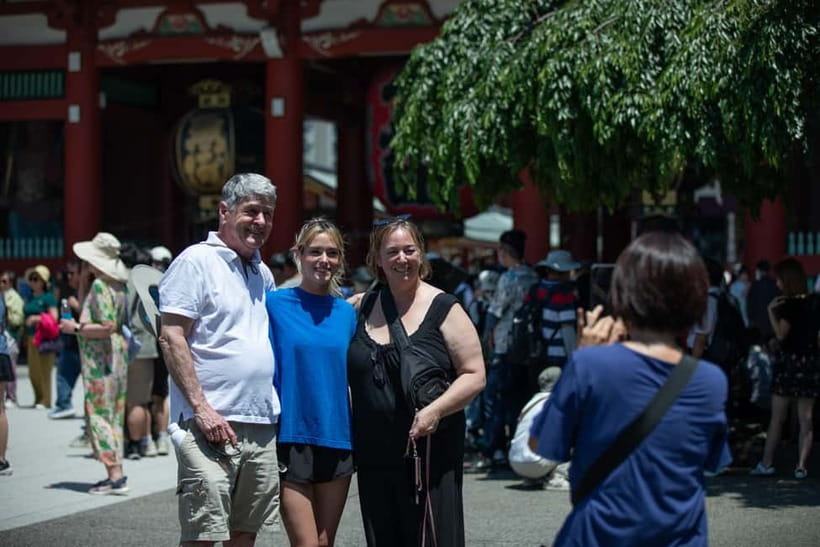
Maru is the guide most clearly praised in the supplied feedback. She is described as kind, thoughtful, smart, and committed to making the day easy and enjoyable. One family also appreciated her help with photos, a small but important service when parents want pictures with their children instead of another group selfie.
Her assistance reportedly went beyond the scheduled sightseeing on a longer four-day arrangement, including reservations, airport transfers, and translation. You should not assume all of those extras are included in this specific tour, but they suggest that it is worth asking in advance what help your guide can provide.
Guide availability is not stated, so request Maru by name if she is your first choice and confirm who will lead your date. The national license is included, but the individual guide assignment may depend on availability.
Building your own version of the route
The five stops are a sample, not a locked program. That is one of the strongest reasons to choose this experience over a standard city highlights tour.
You can tell the guide about places you want to visit and ask for a route that fits your interests. A food-focused group might give Tsukiji more time. A family interested in Japanese traditions might favor Asakusa and Meiji Jingu. A fashion-minded group might shorten the shrine visit and spend longer at Takeshita Street.
You should also discuss the physical pace. The listed schedule includes five separate areas, so even though each stop has a fixed sightseeing time, the full outing includes constant movement. A slower group may prefer fewer stops with more time at each one.
Weather can change the plan. The itinerary may be altered for weather or other reasons, and the ability to adjust is helpful in Tokyo, where outdoor market browsing, shrine visits, and crowded pedestrian areas all feel different in rain.
Food, mobility, and practical planning
Lunch is not included, but dietary restrictions can be accommodated, including vegetarian, vegan, and gluten-free needs. Put those requirements in the special requests when booking rather than bringing them up at the last minute.
Admission is free at the listed stops. The provider notes that admission fees may apply if needed, so ask about any added destination before agreeing to a revised route. Your own food, shopping, and optional paid activities are separate expenses.
Hotel pickup is included, which can simplify the start of the day. The tour is near public transportation, and service animals are allowed. The stated physical requirement is moderate fitness, so plan on walking through public areas and using trains rather than sitting in a vehicle between sights.
The cancellation policy is forgiving if your plans remain uncertain: cancel at least 24 hours before the local start time for a full refund. Cancellations or changes made inside that window are not accepted for a refund.
Who should book this Tokyo tour
I would consider this a strong choice for a first-time visitor who wants Tokyo explained while learning to use the city’s trains. It is also a good fit for families, since a private guide can help with photos, pacing, and practical questions without slowing down a larger group.
It suits you if you want a broad introduction rather than one specialist subject. In one outing, you get food culture, Buddhist and Shinto sites, fashion, and a famous urban crossing.
I would be more cautious if you dislike walking, crowds, or public transportation. The route covers a lot of ground, and the short time at each stop may feel rushed if you prefer long museum visits or slow neighborhood wandering.
Should you book it?
Book this tour if you value a private guide, want help with Tokyo’s public transportation, and like the idea of changing the route to match your group. The $118 price is easiest to justify for a family or small private party that would otherwise spend time figuring out trains, etiquette, and daily logistics alone.
Ask for Maru by name, confirm her availability, and explain your interests and walking limits before the date. If you want a relaxed day, reduce the number of stops. If you want a broad first taste of Tokyo and practical help getting around, this is a sensible starting point.
FAQ
Where does this Tokyo tour take place?
The experience is based in Chiba, Japan, and visits several major Tokyo areas, including Tsukiji, Asakusa, Meiji Jingu, Takeshita Street, and Shibuya Crossing.
How long does the tour last?
The tour lasts approximately four to eight hours. The listed sightseeing time at the five stops totals about five hours, before transportation, pickup, meals, and breaks.
Is hotel pickup included?
Yes. Hotel pickup is included.
Is transportation included?
Yes. The tour includes public transportation fees, and the guide leads the group by public transportation.
Is this a private tour?
Yes. Only your group participates in this activity.
Can the itinerary be changed?
Yes. The listed route is a sample, and you can request different destinations based on your interests. The itinerary may also change because of weather or other reasons.
Are meals included?
No. Lunch is not included. Dietary needs such as vegetarian, vegan, and gluten-free requests can be accommodated if you provide the details when booking.
Are admission tickets included?
The listed stops have no admission charge. The provider notes that admission fees are not included if a destination requiring payment is added or needed.
What is the cancellation policy?
You can cancel at least 24 hours before the local start time for a full refund. Cancellations or changes made less than 24 hours before the start time are not accepted for a refund.
More tours in Chiba we've reviewed
Walking Tours, compared.
 ★ 5.0Tokyo Tsukiji Fish Market Food and Culture Walking TourFrom $99
 ★ 4.9Tokyo: Shinjuku Local Bar and Izakaya Guided Walking TourFrom $343 hours
 ★ 5.0Tokyo: Tsukiji Fish Market Food and Walking tourFrom $30
 ★ 4.8Tokyo: Asakusa Walking Tour with Sensoji Temple VisitFrom $222 hours
 ★ 4.9Tokyo: Tsukiji Fish Market Guided Walking TourFrom $222 hours
 ★ 4.7Tokyo Castle & Imperial PalaceーShogun Walking TourFrom $232 hours