Reviewed · MUSASHINO
3-Hour Manga Drawing Workshop in Tokyo
The best part of this three-hour manga workshop is that you leave with a finished one-page comic, not just a quick sketch. A professional manga artist guides you from pencil roughs to ink, black fills, and, if time allows, concentration lines and other effects. I like the small maximum of five people, and I like that the class welcomes complete beginners while still giving experienced artists useful advice.
In This Article
- Key points at a glance
- Drawing your first manga page in Kichijoji
- What happens from pencil sketch to ink
- Learning with samples and a professional artist
- Why the group size matters
- A useful stop near the Ghibli Museum
- Is $97.73 a fair price?
- Who should book this workshop?
- Practical details before you reserve
- Should you book the three-hour class?
- FAQ
- Where is the manga workshop held?
- What time does the workshop start?
- How long does the experience last?
- What will I make during the class?
- Are tools and materials provided?
- Is the workshop taught in English?
- Can beginners take part?
- How many people can join the workshop?
- Can I cancel for a full refund?
The class takes place in Kichijoji, close to the Ghibli Museum in Mitaka, so it fits neatly into a creative day in western Tokyo. The main consideration is language: instruction is in Japanese, supported by English slides. The organizer speaks fluent English, but the manga artist may not, so you should be comfortable learning through demonstrations, visual examples, and simple questions.
Key points at a glance
- Create a complete A4 manga page: Move through sketching, inking, black paint, and added effects rather than stopping at a basic drawing.
- Learn from a professional artist: Natsuko Sensei can explain manga tools, techniques, and questions about Japan’s manga industry.
- Small class, personal help: The workshop accepts no more than five people, which gives you a better chance to ask questions.
- All materials are supplied: You can arrive with just yourself and use the specialized tools provided.
- English support is built in: The spoken class is in Japanese, while instructional slides include English.
- A souvenir with real character: Your finished manga page gives you something more personal than a standard Tokyo keepsake.
Drawing your first manga page in Kichijoji
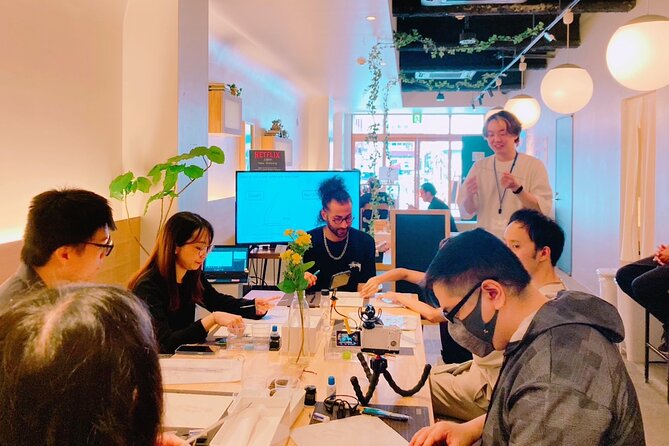
This is not a museum talk about manga or a short demonstration where you watch someone else draw. You sit down and make a page yourself. Over about three hours, the workshop takes you through the basic stages used to turn an idea into a manga image.
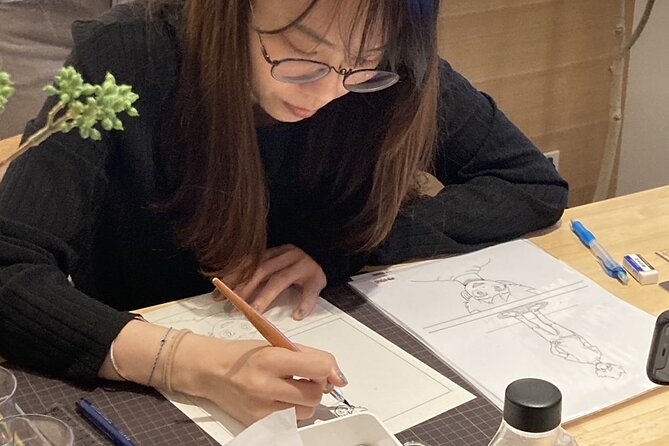
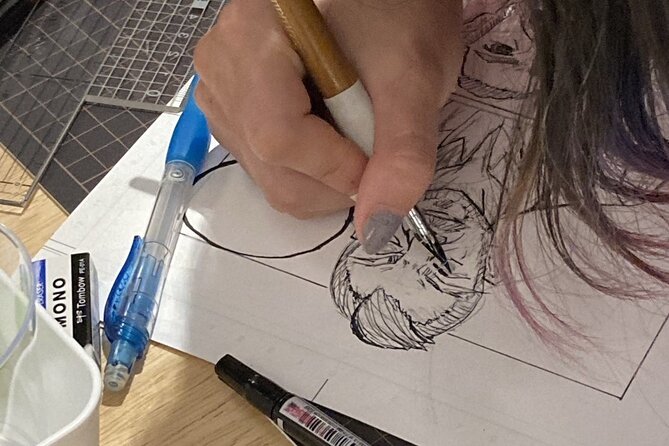
The work begins on A4 manga paper with a pencil sketch. You may use the samples prepared for different skill levels, which matters if the blank page feels intimidating. Beginners can follow the examples step by step, while more confident artists can ask for advice on their own approach.
I like this format because the finished page has a clear goal. You are not left wondering what to do next. The class gives you a simple sequence: sketch first, then ink, then add black areas, with extra effects for anyone who finishes early.
That structure also makes the three-hour length useful. A shorter activity could show you manga tools, but this class gives you time to learn how the stages connect. You can see how a loose pencil drawing becomes a clean, finished page.
If you're still narrowing it down, here are other tours in Musashino we've reviewed.


What happens from pencil sketch to ink
The first stage is the rough sketch. You work on manga paper in A4 size, using pencil to lay out the character and page. The samples help you judge how much detail is expected and how to organize the drawing before committing to ink.
This is where beginners should slow down. Manga lines can look simple when you see a finished page, but the pencil stage gives you room to correct proportions and placement. It is also the point when you can ask questions before the permanent work begins.
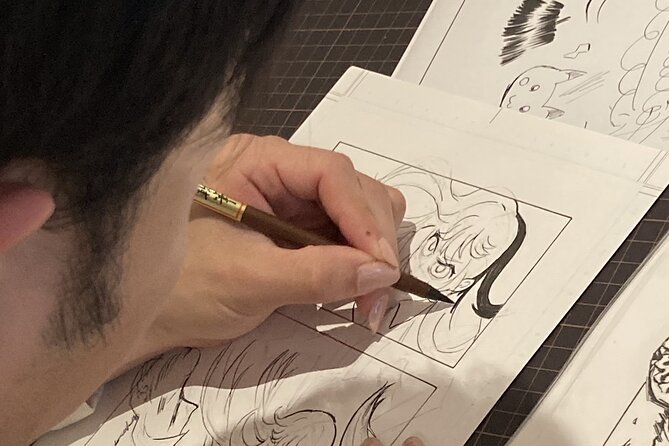
Next comes inking with a specialized manga tool. This is likely the most distinctive part of the session for anyone who has only used ordinary pens and pencils. The point is not merely to color over your sketch. You learn how a manga artist controls a line and turns a rough drawing into a sharper image.
After inking, you paint the black areas. This gives the page stronger contrast and begins to make it look like a real manga panel rather than an unfinished drawing. The process rewards patience. A heavy black fill cannot be erased as easily as a pencil mark, so the earlier sketch and inking stages matter.
If you finish these steps with time left, the artist can teach concentration lines and similar effects. These lines help suggest movement, speed, impact, or attention within a frame. They are a small detail, but they can change the feel of a page quickly.
The schedule is not presented as a rigid race. Your progress depends on your drawing level and how much detail you add. Beginners may spend most of the session on the main stages, while fast or experienced artists may have time to add more decoration.
Learning with samples and a professional artist
The workshop is designed to avoid the usual problem with art classes: feeling lost after the first instructions. Samples are available for each level, so you have a model to follow without needing to invent a whole comic from nothing.
That makes this a good choice if you enjoy Japanese manga but do not draw often. You can treat the sample as a guide rather than a test. The goal is to understand the process and finish a page, not to produce work at professional level in one afternoon.
The professional artist also adds value beyond the physical drawing lesson. You can ask questions about the Japanese manga industry, which gives the workshop a useful cultural side. If you are curious about how manga pages are made or how artists work, this conversation may be as memorable as the finished paper.
Natsuko Sensei is specifically praised for explaining manga tools and answering industry questions. The organizer is also able to speak fluent English. That combination helps, especially because the artist leading the technical instruction may not speak English fluently.
The class itself is conducted in Japanese, with English text on the instruction slides. You should expect visual teaching rather than a long English lecture. Demonstrations, samples, slides, and the chance to ask questions all help bridge the language gap, but this is still not an English-language class in the strict sense.
Left-handed artists should feel comfortable joining. Specific advice has been given to left-handed participants, which is useful because inking tools and hand position can create different problems for left-handed and right-handed people.
Why the group size matters
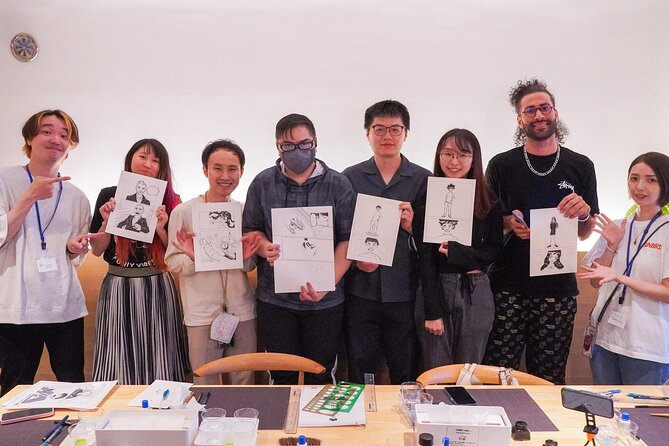
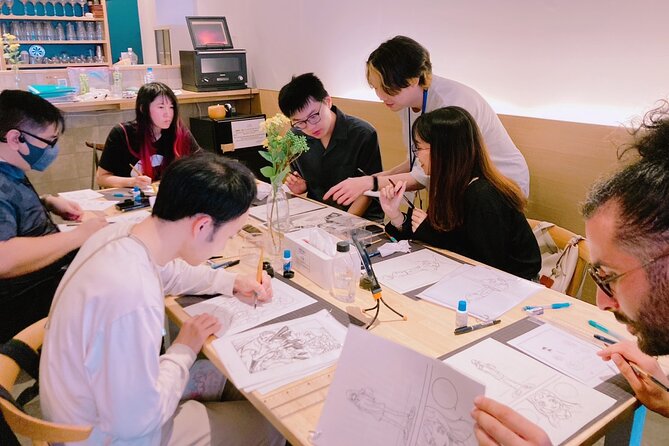
The maximum group size is five people. That is a strong feature for an art lesson, since drawing problems are often individual. You may need help with the angle of a tool, the weight of a line, or the amount of black to add. In a large class, you could spend too long waiting. Here, the format should allow more direct attention.
A small group also makes it easier to ask questions about the manga industry without having to interrupt a crowded presentation. You can compare techniques with the other people in the room while still working on your own page.
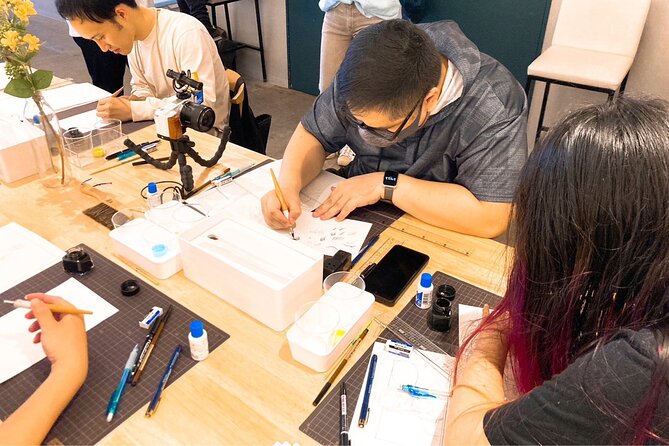
The setting is practical rather than theatrical. You are there to work. Bring your curiosity, but you do not need to pack pens, paper, or other special supplies. All tools needed for the workshop are provided.
You should still wear or bring clothing that you are comfortable working in, although no special clothing requirement is given. The key point is that the activity removes the need to shop for manga supplies before you arrive.
A useful stop near the Ghibli Museum
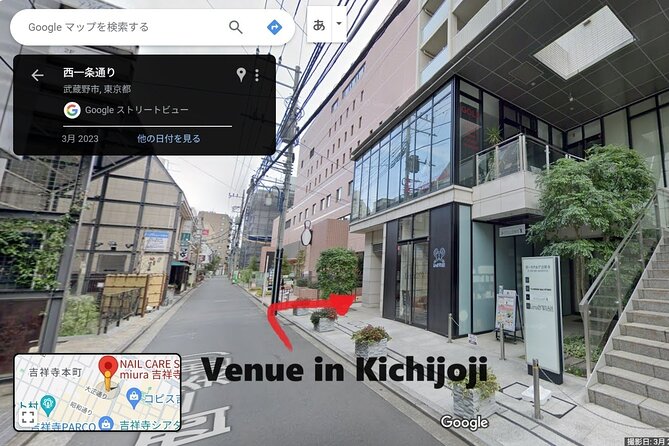
The workshop is held in Kichijoji, near the Ghibli Museum in Mitaka. This makes the location helpful when planning a day around western Tokyo. You can pair the class with other plans in the Kichijoji area, though the experience itself begins at 1:30 p.m. and runs for roughly three hours.
The stated meeting address is H-Square Kichijoji, 2-chome 46, Kichijoji Honcho, Musashino, Tokyo 180-0004. The activity ends back at the meeting point, so you do not need to arrange a separate pickup or work out where the lesson finishes.
The location is near public transportation, another practical plus in Tokyo. Give yourself enough time to find the building and settle in before the 1:30 p.m. start. The workshop has a fixed creative sequence, and arriving late could mean missing the early sketching instructions.
The Ghibli Museum connection is geographic, not part of the workshop itself. Your booking does not include a museum visit. If you plan to visit the museum too, check its separate admission and timing requirements rather than assuming the two activities are combined.


Is $97.73 a fair price?
At $97.73 per person, this costs more than a quick craft activity or a basic two-hour version of the workshop. The price makes more sense if you want instruction from a professional artist and enough time to complete a full page using proper manga tools.
You are paying for several things at once:
- About three hours of guided instruction
- A professional artist rather than only management staff
- All workshop tools and manga paper
- A completed one-page comic to take home
- Time for questions about the manga industry
- A small class capped at five people
That is a fair package for someone who wants a hands-on lesson, especially if you would otherwise need to buy specialized tools and learn the process alone. The finished page also has more personal value than a mass-produced souvenir.
The value is weaker if you only want a quick introduction or if you do not care about completing a drawing. In that case, the separate two-hour workshop may suit you better. That shorter option has management staff available to assist and costs less than the professional-artist course, according to the experience details.
The two-hour format starts with a pencil sketch already prepared. You ink it, paint black areas, add speech bubbles and lines, and possibly apply screen tones in one place. It is more affordable and less demanding, but it does not give you the same full sketch-to-finished-page process.
Choose the three-hour session if the act of drawing matters to you. Choose the shorter option if you mainly want to try manga tools and finish a simpler character page at a lower price.
Who should book this workshop?
I would recommend the three-hour class to several types of visitors.
Complete beginners get samples and a clear process. You do not need formal drawing training. The workshop is built to help you make progress even if your sketching skills are basic.
Manga fans get a more direct connection to the craft. Instead of only buying manga or visiting a themed attraction, you learn how line work, black fills, and effects shape the page.
Artists and illustrators may appreciate the chance to use specialized tools and ask technical questions. The class is not described as an advanced masterclass, so experienced artists should keep expectations sensible, but personal advice can still be useful.
Families and mixed-level groups may find the sample system helpful, though the supplied information does not state a minimum age. Confirm age rules before booking if children will attend.
The activity also suits solo visitors. With such a small group, you have a natural setting for questions without needing to bring a friend who already draws.
You may want to skip it if you need full instruction in English, dislike hands-on activities, or prefer a fast sightseeing stop. The class requires time, concentration, and a willingness to learn through Japanese speech supported by English slides.
Practical details before you reserve
Your booking confirmation arrives at the time of booking, and the experience uses a mobile ticket. Keep the ticket easy to access on your phone when you reach the meeting point.
The start time is 1:30 p.m. The duration is approximately three hours, and the activity returns you to the same meeting point. Plan any later reservation with enough spare time, since drawing progress can vary and the class is not a simple timed demonstration.
Service animals are allowed, and most people can participate. The workshop is near public transportation, which helps with access from other parts of Tokyo.
Free cancellation is available if you cancel at least 24 hours before the local start time. A cancellation made less than 24 hours in advance is not refundable, and late changes are not accepted. The class also requires a minimum number of participants. If the provider cancels because that minimum is not reached, you can choose another date or experience, or receive a full refund.
Should you book the three-hour class?
Book it if you want to make something yourself and take home a page that records your time in Tokyo. The combination of a professional artist, a five-person limit, supplied tools, and English support on the slides gives the activity real substance.
I especially like that the workshop does not stop at drawing a character. You sketch, ink, paint black, and may learn concentration lines, so you see several parts of the manga workflow. Natsuko Sensei’s help with tools and industry questions is another reason to choose this version over the shorter class.
Think carefully about the Japanese-language instruction. The English slides and fluent-English organizer help, but they do not turn the class into a fully English-led lesson. If you are happy to learn by watching, copying samples, and asking clear questions, that should be manageable.
At $97.73, it is best for someone who values instruction and a finished keepsake, not someone looking for the cheapest activity. For manga fans, curious beginners, and anyone who wants a quieter creative afternoon near Kichijoji, this is a practical and memorable choice.
FAQ
Where is the manga workshop held?
It is held at H-Square Kichijoji, 2-chome 46, Kichijoji Honcho, Musashino, Tokyo 180-0004. The venue is in Kichijoji near the Ghibli Museum in Mitaka.
What time does the workshop start?
The workshop starts at 1:30 p.m.
How long does the experience last?
The three-hour workshop lasts approximately three hours.
What will I make during the class?
You will work on a one-page manga comic on A4 manga paper. The process includes pencil sketching, inking, painting black areas, and, for those who finish early, effects such as concentration lines.
Are tools and materials provided?
Yes. All tools needed for the workshop are provided, so you only need to bring yourself.
Is the workshop taught in English?
The workshop is conducted in Japanese, but the instruction slides also include English. The organizer speaks fluent English, while the professional manga artist may not.
Can beginners take part?
Yes. Beginners are welcome, and samples are available for different skill levels to help guide your drawing.
How many people can join the workshop?
The workshop has a maximum of five participants.
Can I cancel for a full refund?
Yes, if you cancel at least 24 hours before the experience start time. Cancellations made less than 24 hours before the start are not refunded, and late changes are not accepted.
More tours in Musashino we've reviewed
Musashino, compared.
 ★ 5.0Small Town in the Big City: Tasting Tokyo’s KichijojiFrom $195
 ★ 5.0The 10 Tastings of Tokyo With Locals: Private Street Food TourFrom $199
 ★ 5.0Explore Kichijoji: Walk Through One of Tokyo’s Beloved DistrictsFrom $45
 ★ 4.5Whimsical Walk to a Hidden Anime World: Tokyo Half-Day TourFrom $43
 ★ 5.0Kichijoji Food & Anime Tour in Tokyo with LunchFrom $120
 ★ 5.0Tokyo Kichijoji Twilight: Explore Instagram-Worthy Hidden SpotsFrom $39