Reviewed · WALKING TOURS
Private Walking Tour: The Little Kyoto of Tokyo, Kagurazaka
Kagurazaka gives you a side of Tokyo that is easy to miss: cobblestone lanes, black wooden fences, shrines, temples, and old geisha-district traces tucked among modern shops. This two-hour private walk links those pieces with the story of samurai rule, Edo Castle, Japanese literature, and daily life in one of central Tokyo’s quieter neighborhoods.
In This Article
- Key points to know before you book
- Why Kagurazaka feels unlike central Tokyo
- Starting at la kagū and Akomeya Tokyo
- Akagi Shrine, a quiet religious pause
- Zenkoku-ji Temple and Bishamonten
- Tsukudo Hachiman Shrine and older beliefs
- Ushigome Gate and the walls of Edo Castle
- Food, shopping, and the pleasure of a slow route
- What the private format is worth at $104.05
- Who will get the most from this walk
- Timing, meeting point, and a few practical cautions
- Should you book the Little Kyoto of Tokyo walk?
- FAQ
- Where does the tour begin?
- Where does the tour end?
- How long does the walking tour last?
- Is this a private tour?
- Which languages are available?
- Are snacks included in the price?
- Can I cancel or change my booking?
I like the private format, since your group can ask questions and set the pace, and I like the mix of major historical sites with small streets that reward slow walking. The chance to stop for local sweets, croquettes, doughnuts, or tofu desserts adds a useful food angle, though snacks cost extra and two hours gives you only a quick introduction to the area.
Key points to know before you book
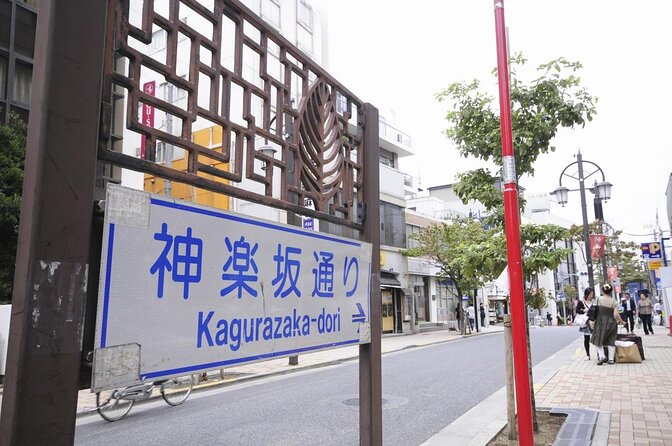
- A private route through old Kagurazaka: Only your group participates, making it easier to ask questions and pause at places that interest you.
- Five carefully chosen stops: The walk covers a modern Kengo Kuma renovation, two shrines, a temple, and the remains of an Edo Castle gate.
- A neighborhood with many layers: You hear about samurai culture, geisha traditions, Japanese modern literature, religion, shopping, and residential life.
- A multilingual guide: English, French, German, and Spanish guiding is offered. Shinya Yamada and Chiharu Iida are named among the operator’s tour team, but your assigned guide is not specified.
- A short, manageable two-hour outing: The route suits a morning or afternoon in Tokyo, but it is not long enough for a full food tour or a slow look inside every site.
- Extra food stops are paid separately: Local treats are available, but snacks are not part of the $104.05 per-person price.
Why Kagurazaka feels unlike central Tokyo
Kagurazaka began as a street constructed under the rule of Tokugawa Iemitsu, the third shogun, in 1636. That date matters because it places the neighborhood in the Edo period, when Tokyo was still called Edo and the shogunate shaped the city around its castle, military class, temples, shrines, and controlled districts.
I like this setting for a walking tour because the past is not confined to one museum room. You move between a shopping street, quiet residential lanes, religious buildings, old stonework, and places linked with geisha culture. The changes in scenery help you understand how an old district can remain part of modern Tokyo without turning into a theme park.
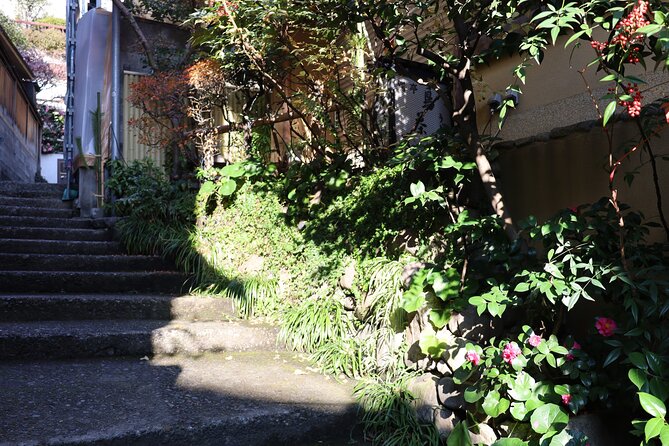
Kagurazaka is also known as the Little Kyoto of Tokyo, but the comparison needs a little care. You should not expect Kyoto’s grand temples or broad historic districts. Instead, the appeal is smaller and more personal: turning down a narrow lane, noticing a black fence, spotting a distinctive stone, or finding a shrine behind an ordinary street.
The route is described as a place of serendipity, and that is a fair way to think about it. The pleasure comes from small discoveries rather than one huge sight. You might encounter heart-shaped stones or, depending on timing and circumstance, see people connected with the neighborhood’s geisha traditions.
Other walking tours we've reviewed in Tokyo


Starting at la kagū and Akomeya Tokyo
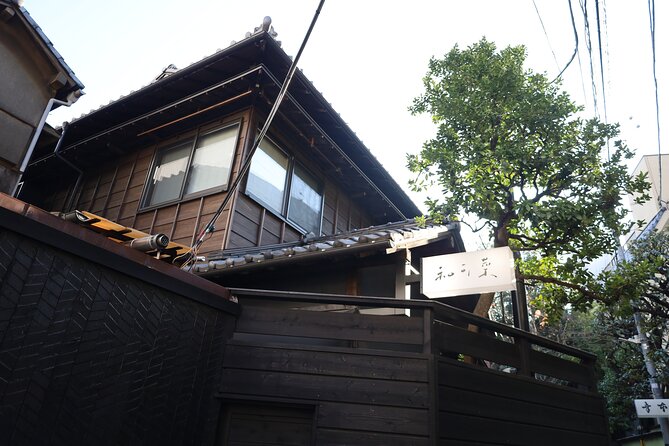
The walk begins at Kagurazaka Station, near Akomeya Tokyo in la kagū. This commercial building was renovated by architect Kengo Kuma from a warehouse once used by Shinchosha Publishing Company.
The stop lasts about 10 minutes and admission is free. It is an interesting opening because it puts old and new Tokyo side by side. The building’s earlier publishing connection also provides a natural bridge to the area’s links with Japanese modern literature, while the current shop offers high-quality rice, dashi, seasonings, and other food items.
I would treat this as an orientation stop rather than a major attraction. You will not spend long here, and the tour does not include purchases. Still, it helps you see that Kagurazaka is not simply preserved history. Contemporary design, food culture, publishing, and old neighborhood traditions share the same streets.
If you arrive early, the station meeting point gives you a practical place to get organized. The tour operates from 9:00 a.m. to 8:30 p.m. during the stated operating period, from January 27, 2024, through February 13, 2027, with availability subject to confirmation.
Akagi Shrine, a quiet religious pause
Akagi Shrine is the next listed stop, with about 15 minutes set aside for it. Its story reaches back to 1300, when Ohgoshi Hikotaro Shigeharu moved from the area below Mount Akagi in Gunma Prefecture and founded the shrine in Ushigome Waseda. It was relocated to its current site in 1555.
That background gives your guide a chance to explain how shrines could move with communities and how local religious life developed alongside the city. The stop is not just a quick photo break. It helps place Kagurazaka within a broader Japanese pattern in which neighborhood identity, ancestry, sacred sites, and daily routines overlap.
Fifteen minutes is enough for an explanation and a look around, but not a long period of quiet reflection. If you want extended time at each shrine, you may find the schedule brisk. The private format helps here because you can ask a focused question without waiting for a large group to catch up.
Zenkoku-ji Temple and Bishamonten
Zenkoku-ji Temple, also called Bishamonten, receives another 15 minutes. Tokugawa Ieyasu, the first shogun of the Edo shogunate, ordered its establishment in Nihonbashi Bakurocho in 1595. The temple was connected with protecting the nation and later moved after several fires.
This is a useful counterpoint to Akagi Shrine. In a short walk, you see both Shinto and Buddhist traditions, and your guide can explain the difference in a way that makes the sites easier to read. The temple’s connection with the Tokugawa government also keeps the story tied to the political world that shaped Edo.
I like the way this stop links religion with power and city planning rather than treating the temple as an isolated monument. At the same time, the scheduled quarter hour is limited. You should see this as an introduction to Bishamonten and Zenkoku-ji, not a detailed temple study.
Tsukudo Hachiman Shrine and older beliefs
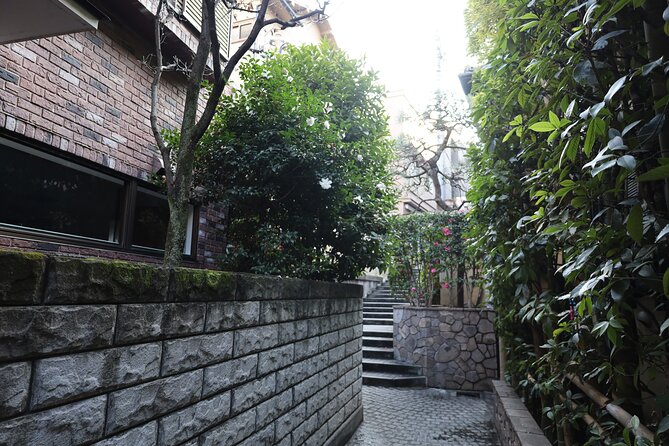
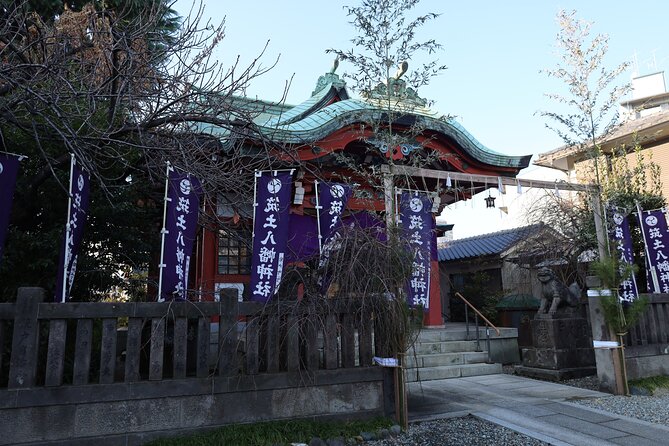
Tsukudo Hachiman Shrine adds another 15-minute stop and reaches farther back in time. It is believed to have been founded about 1,200 years ago. A small shrine here is said to contain a statue of Amitabha Buddha carved by Saicho, the Buddhist monk better known for establishing the Tendai school.
The site gives the tour another chance to show how religious traditions in Japan can overlap. A shrine associated with Hachiman and a Buddhist image connected with Amitabha point to centuries of changing beliefs and practices. Your guide can make that complicated story easier to follow while you look at the compact site.
This is one of the places where a local guide earns the tour fee. Without context, a small shrine can be easy to pass by. With context, its age and religious associations become the reason to stop.
Again, the time is short. If you are hoping to linger, pray, or study architectural details, two hours may feel compressed. The value lies in the connections between sites, not in exhaustive time at any single one.
Other private tours in Tokyo





Ushigome Gate and the walls of Edo Castle
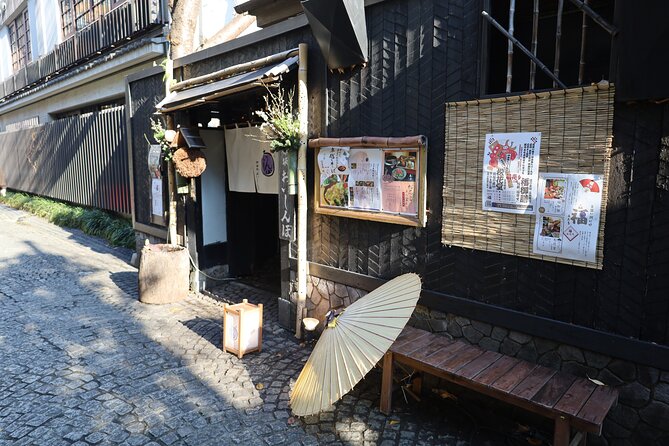
The final listed stop is the remains of Ushigome Gate, with about 10 minutes planned. The gate was built in 1636 as part of the outer moat of Edo Castle. Today, you see sections of stone walls, but even those surviving pieces suggest how large and imposing the gate once was.
I find this a strong ending because it turns the neighborhood’s earlier stories into something visible. You have heard about shoguns, samurai culture, temples, shrines, and the development of Kagurazaka. The stonework shows the defensive scale of the city that surrounded them.
Ten minutes will not allow a long exploration, but the stop works well as a final historical marker. It also leads the walk toward Iidabashi Station, where the tour ends at the JR station’s West Exit.
Food, shopping, and the pleasure of a slow route
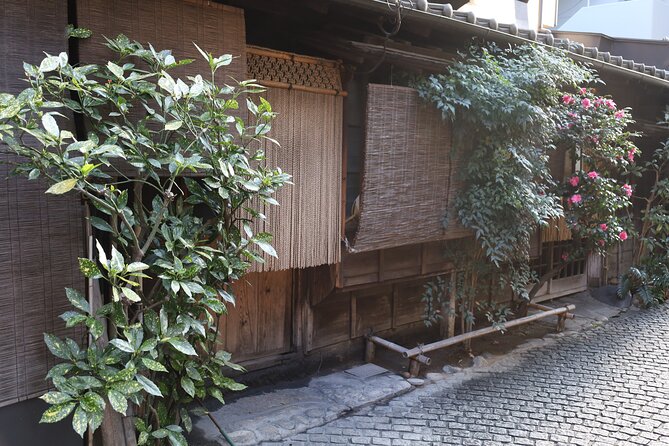
Snacks are not included, but that is not necessarily a flaw. Kagurazaka offers local foods that can turn the walk into a small tasting session if you choose to spend extra. Possibilities listed for the area include traditional Japanese sweets, doughnuts, tofu desserts, and croquettes from butcher shops.
I like having the choice. You can keep the tour focused on history, or ask your guide where to buy something small after a shrine visit. Since the outing lasts only about two hours, food purchases are best treated as optional additions rather than a promised meal.
The route also includes shopping streets and residential areas. That matters because you see Kagurazaka as a living neighborhood, not only as a chain of historic sites. A modern shop, a quiet lane, a religious building, and a local food counter may all appear within a short walk.
The tour description also points to encounters with geisha culture. You should read that as a possibility, not a guaranteed performance or meeting. The neighborhood has traditional associations, but the experience is primarily a guided walk through streets and landmarks.
What the private format is worth at $104.05
At $104.05 per person, this is not a budget stroll. The price makes more sense for a small group that values personal attention and wants a guide to explain details that are easy to miss.
You are paying for roughly two hours, a private guide, and a route that combines several parts of Japanese culture. If four people book together, the cost can feel more reasonable because you share the value of the private format across the group. Group discounts are also listed, though the exact reduction is not provided.
The private setup is especially useful if you have questions. One four-person group was able to ask many questions during the walk, and the guide adjusted the conversation to their interests. That kind of exchange is harder on a large group tour.
The price is less compelling if you only want to see one shrine or take a casual neighborhood walk on your own. Kagurazaka can be explored without a guide, and the tour does not include snacks, attraction tickets, or a longer food crawl. I would book it for interpretation and local perspective, not simply for transportation between sights.
Who will get the most from this walk
I would recommend this experience to first-time visitors who want a quieter Tokyo neighborhood after spending time around the city’s larger sights. It also suits returning visitors who have already seen the standard districts and want a more local-feeling walk.
History fans should enjoy the links to Tokugawa Iemitsu, Tokugawa Ieyasu, Edo Castle, samurai life, and the old gate. Anyone interested in Japanese religious traditions will appreciate seeing a shrine, a temple, and older beliefs placed in the same neighborhood story.
The tour also works well for couples and families who prefer a flexible private outing. Most people can participate, service animals are allowed, and the meeting point is near public transportation. The surface includes cobblestone paths, so comfortable footwear is sensible, though the available information does not provide a detailed mobility assessment.
Language should be clear at booking. Multilingual local guiding is offered in English, French, German, and Spanish. The named team members Shinya Yamada and Chiharu Iida appear in the operator’s communications, but the booking details do not promise that either person will lead your particular walk.
Timing, meeting point, and a few practical cautions
The walk begins at Kagurazaka Station, at or near Yaraicho in Shinjuku City, and finishes at JR Iidabashi Station’s West Exit. That start-to-finish design is convenient because you do not have to return to the first station after the tour.
The activity lasts about two hours. The five listed stops account for roughly 65 minutes, leaving the rest for walking, explanations, street views, and transitions. That makes the pace moderate, but you should not expect long visits at each site.
Confirmation is sent within 48 hours of booking, subject to availability. The experience is non-refundable and cannot be changed for any reason, so check your date and meeting point carefully before paying.
This is a mobile-ticket activity, and it operates near public transportation. The stated hours are broad, from 9:00 a.m. to 8:30 p.m., Monday through Sunday, during the listed operating period. Your exact departure time still needs to be confirmed when you book.
Should you book the Little Kyoto of Tokyo walk?
I would book this tour if you want context, conversation, and a private neighborhood walk rather than a checklist of Tokyo landmarks. The best parts are the mix of religious sites, Edo-period history, old stonework, modern design, and ordinary Kagurazaka streets.
I would skip it if your priority is a full meal tour, major temple interiors, or a long sightseeing day. Two hours passes quickly, and snacks cost extra. For the right group, though, the fee buys something useful: a guide who can explain why a small shrine, an old wall, or a narrow lane matters.
FAQ
Where does the tour begin?
The tour begins at Kagurazaka Station, at Yaraicho in Shinjuku City, Tokyo.
Where does the tour end?
The walk ends at Iidabashi Station, at the JR station’s West Exit.
How long does the walking tour last?
The tour lasts approximately two hours.
Is this a private tour?
Yes. Only your group participates in the activity.
Which languages are available?
A multilingual local guide is offered in English, French, German, and Spanish.
Are snacks included in the price?
No. Snacks are not included. You may purchase local foods such as Japanese sweets, doughnuts, tofu desserts, and butcher-shop croquettes separately.
Can I cancel or change my booking?
No. The experience is non-refundable and cannot be changed for any reason after booking.
More Private Tours in Tokyo
More Walking Tours in Tokyo


More tours in Tokyo we've reviewed






Walking Tours, compared.
 ★ 5.0Tokyo Tsukiji Fish Market Food and Culture Walking TourFrom $99
 ★ 4.9Tokyo: Shinjuku Local Bar and Izakaya Guided Walking TourFrom $343 hours
 ★ 5.0Tokyo: Tsukiji Fish Market Food and Walking tourFrom $30
 ★ 4.8Tokyo: Asakusa Walking Tour with Sensoji Temple VisitFrom $222 hours
 ★ 4.9Tokyo: Tsukiji Fish Market Guided Walking TourFrom $222 hours
 ★ 4.7Tokyo Castle & Imperial PalaceーShogun Walking TourFrom $232 hours