Reviewed · SUSHI MAKING CLASSES
Hands On Wagyu Sushi Making Experience
Premium Wagyu takes the place of raw fish in this hands-on sushi lesson, giving you a tasty way to learn sushi without committing to seafood. You prepare nigiri, gunkan maki, and temaki, then eat what you make for lunch.
In This Article
- Key points at a glance
- Why Wagyu sushi makes this class different
- What happens from the noon start
- Making nigiri, gunkan maki, and temaki
- Plating turns lunch into part of the lesson
- The value of $104.51
- Who should book this Tokyo cooking class
- Practical planning for the meeting point
- What the strong feedback tells you
- Should you book the Wagyu sushi experience?
- FAQ
- Where does the Wagyu sushi class take place?
- What time does the activity start?
- How long does the experience last?
- What sushi styles will I learn?
- Is lunch included?
- Are ingredients and equipment provided?
- Is hotel pickup included?
- How many people can join the class?
- Are vegan or vegetarian options available?
- Can I cancel for a full refund?
I like the small limit of six people, which should give you plenty of guidance from instructors such as Hiroko and Saori. I also like that the class supplies the food, tools, and equipment, so you can focus on shaping sushi instead of shopping for ingredients.
The main catch is simple: this is not a vegetarian-friendly activity. You need at least two people to book, and the $104.51 price is a serious spend for a 90-minute meal, even with lunch and photos included.
Key points at a glance
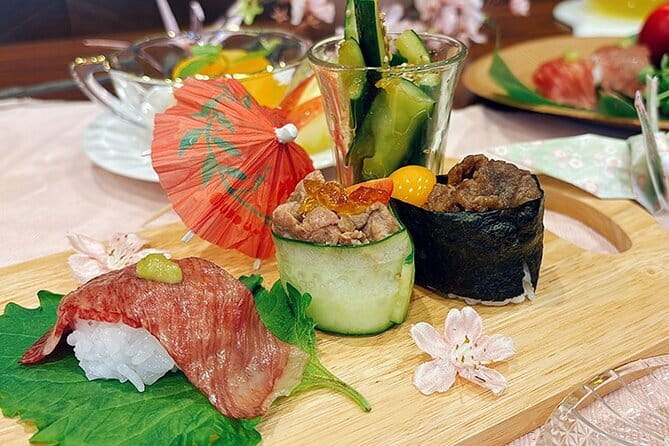
- Three Wagyu sushi styles: Practice nigiri, gunkan maki, and temaki instead of making only one basic roll.
- A very small class: The maximum is six people, allowing for direct help during each stage.
- English-friendly instruction: Hiroko and Saori have guided participants in English, which helps when learning precise sushi techniques.
- Lunch is what you make: Your finished sushi is not just for display. You can relax and eat it at the end.
- Plating is part of the lesson: You learn how to arrange the food so it looks as good as it tastes.
- Easy planning: The class starts at noon, lasts about 90 minutes, uses a mobile ticket, and ends where it begins.
Why Wagyu sushi makes this class different
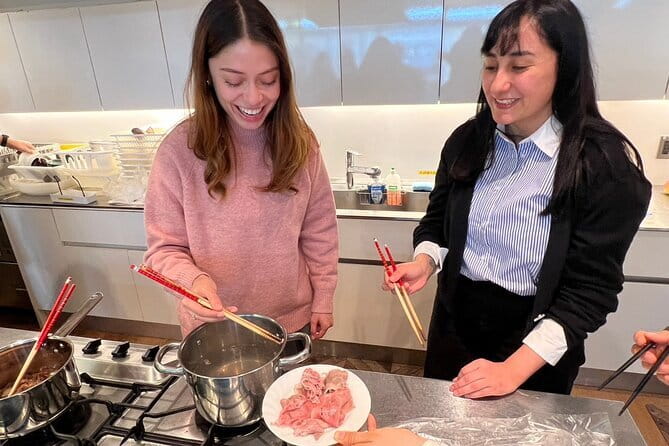
Most sushi lessons in Tokyo focus on fish, seafood, or familiar maki rolls. This class takes another route, pairing sushi rice with premium Wagyu beef. That makes it a useful choice if you enjoy Japanese food but prefer meat to fish.
The lesson is not only about placing beef on rice. You work with several sushi forms, each requiring a different approach. Nigiri calls for a neat piece of topping over a compact bed of rice. Gunkan maki uses a seaweed wrap to hold its filling. Temaki is shaped by hand into a cone.
That variety gives the 90 minutes a clear purpose. You are not repeating one simple movement until lunch. You get a taste of sushi craftsmanship, from handling the rice to arranging the finished pieces.
The Wagyu also changes the balance of the meal. Sushi rice brings a mild, slightly seasoned base, while the beef supplies a rich and savory topping. One class account also describes preparing Wagyu shabu shabu, so the food may include more than the advertised sushi styles, though you should treat the sushi lesson as the main focus.
A few more Tokyo tours and experiences worth a look
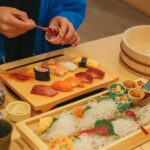
What happens from the noon start
The activity begins at 12:00 pm in Tokyo and runs for about an hour and a half. Since the meeting point is near public transportation, you can plan to arrive by train or another local connection rather than arrange a private transfer.
There is no hotel pickup or drop-off. That keeps the price focused on the cooking lesson and meal, but you need to allow enough time to find the exact meeting point. A mobile ticket makes entry simpler once you arrive.
The first stage is an introduction to the ingredients and equipment. Everything needed for the cooking activity is provided. That matters in Tokyo, where buying the correct rice, beef, seaweed, and tools for a one-time lesson would be both inconvenient and wasteful.
You then learn how to prepare the rice, known as shari. This is an important part of the class because good sushi depends on more than the topping. The rice needs to hold together without becoming heavy or mushy, and it must be shaped with enough care to support the Wagyu.
Next comes the meat. You learn how to cook the Wagyu and how to use it with the sushi rice. The exact cooking method can vary by recipe, but the central lesson is how to make the beef work with the delicate structure of sushi rather than treating it like a separate steak dish.
The instructors guide you through each step. Hiroko and Saori are specifically associated with the class, and the teaching style is described as friendly and easy to follow. That is useful for beginners, since sushi shaping can look simple until you try to form a piece that holds together.
Making nigiri, gunkan maki, and temaki
Nigiri is likely the most recognizable form in the class. You shape a small portion of rice and place Wagyu on top. The challenge is getting the size and firmness right. Too much rice overwhelms the beef, while too little can make the piece fall apart.
Gunkan maki offers a different lesson. The seaweed forms a wall around the rice and filling, creating a small vessel. This style helps you understand how sushi can be built vertically, not just rolled or topped.
Temaki is the most casual of the three. You form the ingredients into a hand roll, usually with a cone shape. It is less formal than nigiri and can be a good way to finish the practical part of the class with something that feels relaxed.
You should expect hands-on participation rather than a demonstration where you simply watch. The class provides instruction at each stage, and the small group size means you can ask for help when the rice sticks, the shape slips, or the first piece looks less tidy than planned.
Do not expect every piece to look restaurant-perfect. That is part of the value. You learn what the process requires, and the finished plate gives you a direct reward for the effort.
Plating turns lunch into part of the lesson
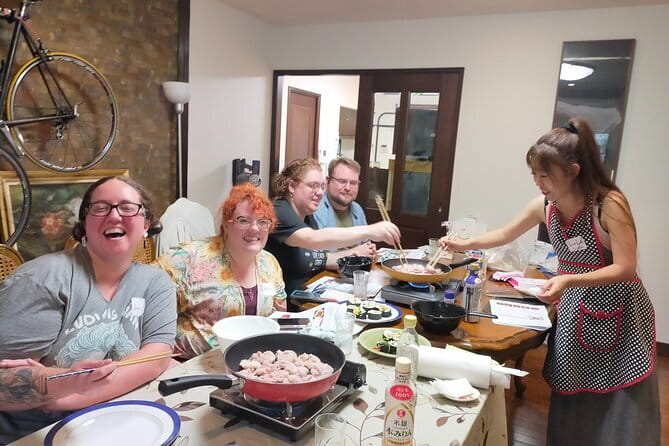
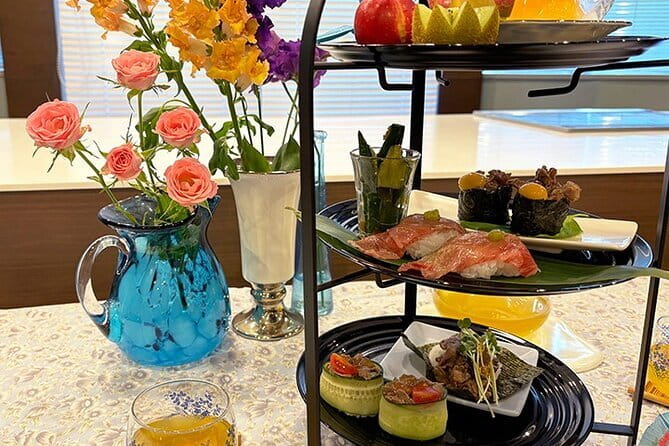
The class also teaches presentation. You arrange your Wagyu sushi into a finished plate, learning that Japanese cooking pays attention to the appearance of a meal as well as its flavor.
This may sound like a minor extra, but it changes how you look at sushi afterward. A clean arrangement helps separate the different shapes and makes the meal easier to appreciate. It also gives you better photographs at the end.
Downloadable photographs are included during the experience. The information does not specify how many photographs you receive or how they are delivered, so think of this as a useful record of the class rather than a formal photo session.
Once the cooking and plating are finished, you eat your creations for lunch. That is a practical advantage over classes where you make food and leave before trying it. Here, the meal is part of the experience and included in the price.
The value of $104.51
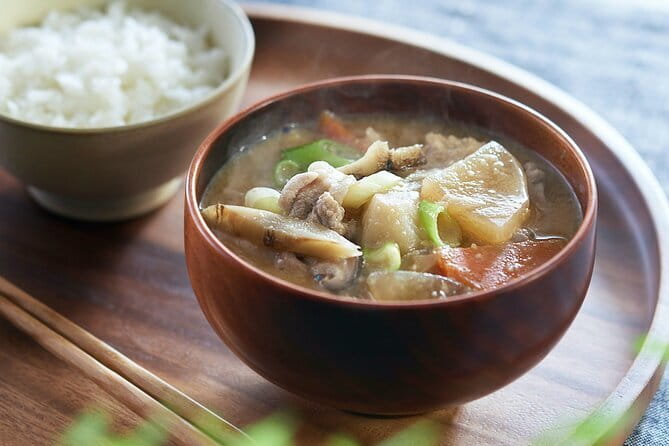
At $104.51 per person, this is not a budget lunch. You are paying for instruction, premium Wagyu, sushi ingredients, kitchen equipment, a small class, lunch, and downloadable photographs.
The maximum of six people is the strongest value point. A large group can turn a cooking lesson into a crowded demonstration, while this format should give you more time with the instructors. If you are nervous about working with sushi rice or shaping the pieces, personal guidance can make the fee easier to justify.
The meal also matters. You are not paying for a class and then buying lunch separately. You eat the Wagyu sushi you prepare, which gives the activity a clear beginning, middle, and end.
Still, the price will feel high if your main goal is simply to eat Wagyu. Tokyo has many restaurants where you can order beef without spending 90 minutes learning to shape sushi. This class makes more sense if you want a skill-based activity, a small group, and a meal connected to your own work.
For a special occasion, couples, or food-focused visitors, the cost can be reasonable. Since a minimum of two people is required, it naturally suits a pair or small party better than a solo booking.





Who should book this Tokyo cooking class
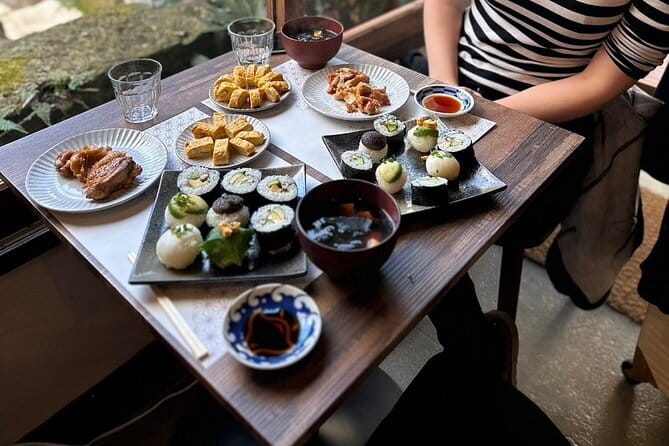
I would point this class toward several types of visitors:
- Meat lovers: If raw fish is not your favorite, Wagyu gives you a more comfortable entry into sushi making.
- First-time cooks in Japan: You receive the ingredients and equipment, and the instructors help at each step.
- Couples and small groups: The booking minimum is two, and the class maximum is six.
- Food photographers: Plating instruction and downloadable photographs add something beyond the meal.
- Repeat Tokyo visitors: If you have already eaten plenty of standard sushi, Wagyu sushi offers a different angle.
- Visitors with a midday opening: The noon start and 90-minute length fit neatly between other Tokyo plans.
I would skip it if you need a vegan or vegetarian option. None is available. I would also skip it if you dislike structured activities and would rather spend lunch choosing dishes freely at a restaurant.
The class is suitable for people who want to learn, but you do not need to arrive with sushi-making experience. The teaching covers basic preparation, shaping, cooking the meat, and plating.
Practical planning for the meeting point
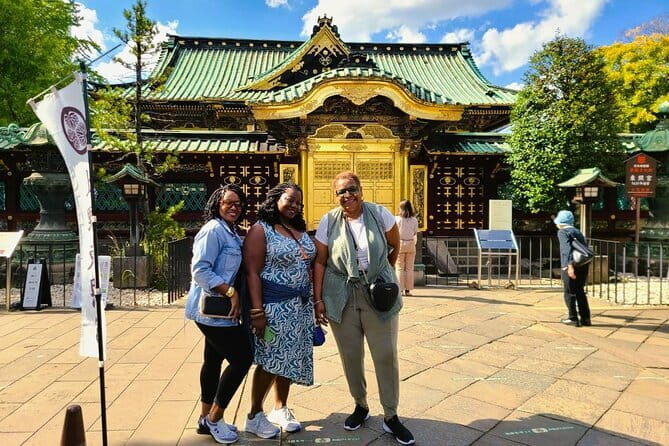
The experience starts and ends at the meeting point in Tokyo. You do not get hotel transportation, so check the route in advance and leave time for the final walk from the nearest public transportation stop.
A mobile ticket is provided, which is convenient if you are keeping bookings on your phone. Confirmation arrives at the time of booking, so you can add the appointment to your Tokyo schedule right away.
Because the class starts at noon, avoid planning a major attraction on the other side of the city immediately afterward. The lesson lasts about 90 minutes, but you still need time to arrive, settle in, and leave the area.
The activity has a minimum of two people and a maximum of six. If the minimum is not met, the class can be canceled, with a different date or experience, or a full refund offered.
Free cancellation is available up to 24 hours before the start time. Canceling later means you will not receive a refund, and changes made within that same 24-hour period are not accepted. The stated policy also notes that poor weather can lead to a new date or a full refund, even though this is an indoor cooking activity.
What the strong feedback tells you
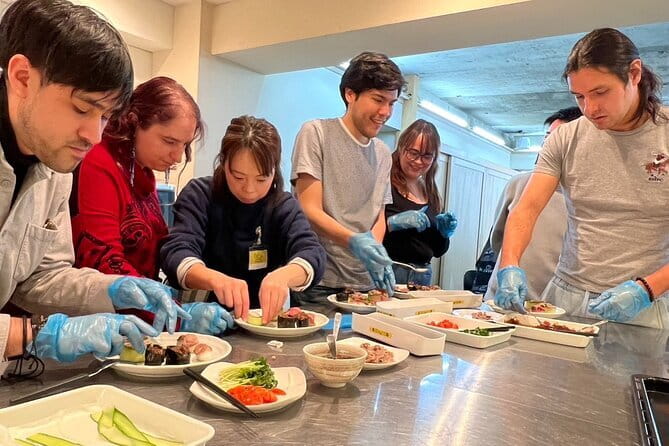
The class has a 5 rating from 16 ratings, with 100 percent recommended. The most repeated strengths are the friendly instructors, clear English guidance, quality ingredients, and delicious finished food.
Those points fit the design of the experience. Sushi making can be frustrating if the teacher moves too fast or explains only in Japanese. Direct English support from instructors such as Hiroko and Saori should make it easier to understand how to prepare the rice, cook the beef, and shape each style.
The ingredients receive particular praise, which matters here because Wagyu is the main reason to choose this class over an ordinary sushi lesson. High-quality beef can make a simple piece of sushi memorable, but the cooking still needs care. The class teaches both sides of that equation.
The friendly tone also seems important. You are learning a precise food tradition, but the atmosphere is intended to be fun rather than intimidating. That makes it a better pick for a first cooking class than a highly formal lesson where you might worry about getting every movement right.
Should you book the Wagyu sushi experience?
Book it if you want more than a meal and like the idea of making your own lunch with premium beef. The small class, English-friendly instruction, three sushi styles, plating practice, and included photographs give the 90-minute session a good range of activities.
The price is easier to defend for two people or a small group, especially if you value a guided experience and a meal in one booking. It is less attractive for anyone who only wants to taste Wagyu, needs vegetarian food, or prefers a longer cooking course.
My practical call: choose this class for a fun midday introduction to sushi technique with a meat-focused twist. Arrive ready to work with your hands, expect a few imperfect pieces, and enjoy the fact that your lunch is the result of the lesson.
FAQ
Where does the Wagyu sushi class take place?
The experience takes place in Tokyo, Japan. The specific meeting point is provided with the booking details.
What time does the activity start?
The class starts at 12:00 pm.
How long does the experience last?
The cooking experience lasts approximately 1 hour and 30 minutes.
What sushi styles will I learn?
You will learn to make Wagyu nigiri, gunkan maki, and temaki.
Is lunch included?
Yes. Lunch is included, and you can eat the sushi you prepare during the class.
Are ingredients and equipment provided?
Yes. The cooking ingredients and equipment needed for the experience are provided.
Is hotel pickup included?
No. Hotel pickup and drop-off are not included. The experience starts and ends at the meeting point.
How many people can join the class?
A minimum of two people per booking is required, and the class has a maximum of six participants.
Are vegan or vegetarian options available?
No. Vegan and vegetarian options are not available.
Can I cancel for a full refund?
Yes, if you cancel at least 24 hours before the local start time. Cancellations or changes made less than 24 hours in advance are not refunded or accepted.
More Sushi Making Classes in Tokyo
More tours in Tokyo we've reviewed












Sushi Making Classes, compared.
 ★ 5.0Sushi Making Tokyo Roll and Authentic Japanese Sushi ClassFrom $59
 ★ 4.9Tokyo: Roll and Authentic Sushi Making Class in AsakusaFrom $581h 40m
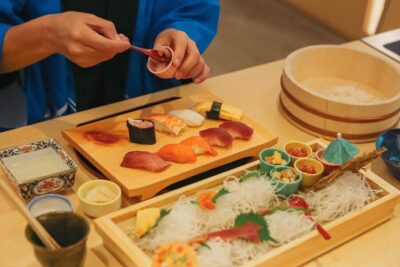 ★ 4.9Tokyo: Sushi Making Class in a Happi Coat near a Famous SpotFrom $421h 30m
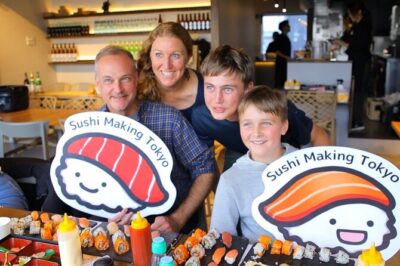 ★ 5.0Sushi Making Tokyo! Popular Maki Sushi & Japanese Sushi(+Recipe!)From $63
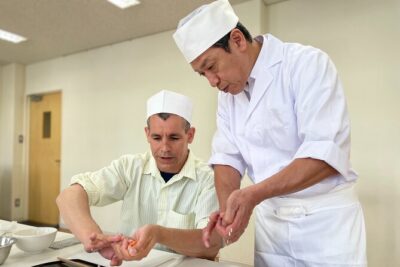 ★ 5.0Tokyo Sushi Making Class in Tsukiji with Professional ChefFrom $49
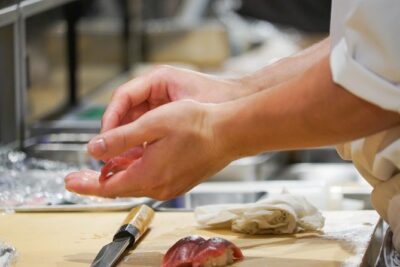 ★ 5.0Tokyo Night Foodie Tour in Shinjuku – Seasonal Sushi, Wagyu BeefFrom $111