Reviewed · SUSHI MAKING CLASSES
Giant Sushi Cooking Class: Make a 1.5m Sushi Roll in Tokyo
The main event here is wonderfully oversized: you and a small group make a 1.5-meter sushi roll, then cut it into pieces and eat the result. It turns a familiar Japanese dish into a team project, with plenty of room for mistakes, laughs and shared work.
In This Article
- Key points at a glance
- Making a giant sushi roll in Meguro
- Preparing fish, avocado, nori and sushi rice
- Building the 1.5-meter maki together
- Cutting, serving and eating the finished sushi
- Snacks, conversation and Japanese social games
- What the $50 price really covers
- Timing, group size and the unusual 12-hour listing
- Who will enjoy this class most
- Practical notes before you book
- Should you book the giant sushi class?
- FAQ
- Where does the sushi class take place?
- Where does the activity end?
- How long does the experience last?
- How much does the class cost?
- How large is the sushi roll?
- What ingredients do you prepare?
- Do I get to eat the sushi?
- How many people can join?
- Is the ticket available on a phone?
- Can I cancel for a full refund?
I like the hands-on format, since you prepare the fillings, rice, nori and sesame yourself. I also like the setting near Meguro, where the class includes Japanese snacks, conversation and social games before or around the cooking. The main drawback is practical: the experience is listed at about 12 hours, which seems unusually long for the activities described, so confirm the exact schedule before booking.
Key points at a glance
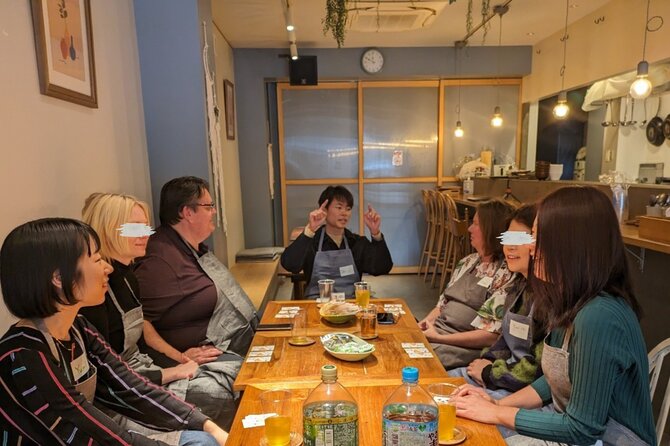
- A 1.5-meter maki is the star of the class: You roll, cut, serve and eat one giant sushi creation with the group.
- You work with basic ingredients: Prepare fish, avocado, nori, sushi rice and sesame seeds using familiar kitchen tools.
- The class is capped at 12 people: That keeps the group small enough for shared participation.
- Meguro adds an easy neighborhood setting: The cafe is about a 10-minute walk from the station, according to the available visit details.
- Hand-painted plates add a local touch: The dishware used for serving is made by Japanese artists and can be purchased onsite.
- The $50 price covers more than lunch: You get instruction, food, a group activity and ideas you can repeat at home.
Making a giant sushi roll in Meguro
Most sushi classes teach you to make neat, individual rolls. This one takes the opposite approach. The goal is a single maki measuring about 1.5 meters, long enough to require teamwork and careful coordination.
That scale changes the mood. You are not simply copying a chef’s movements at your own cutting board. You and the other participants must spread ingredients over a long run of nori, judge how much rice to use and apply even pressure as the roll comes together.
The class is held in the Meguro area at Japanese Cooking Home, also known as Wagaya. The meeting point is 2 Chome-3 Senzoku, Meguro City, Tokyo 152-0012. The cafe is near public transportation, with a walk of about 10 minutes from the station based on the available visit information.
I would allow extra time to find the address. A cooking class is not the place to arrive breathless, especially when the first part may include introductions and preparation. The exact station route is not supplied, so check your map carefully before setting out.
A few more Tokyo tours and experiences worth a look
Preparing fish, avocado, nori and sushi rice
The cooking starts with the building blocks of the roll. You prepare the fish and avocado fillings, then work with the nori sheets that will hold the sushi together.
The class also explains what makes sushi rice different. That lesson matters more than it may seem. Rice is the bulk of a maki roll, and its texture affects whether the finished sushi holds together or turns soft and loose. You are shown traditional techniques that have been passed down through generations, then use ordinary cooking equipment to make the process feel possible at home.
This is a useful feature for beginners. You do not need a professional kitchen to repeat the basic methods. The point is not only to produce an enormous roll during the class, but to leave with a clearer idea of how sushi is assembled.
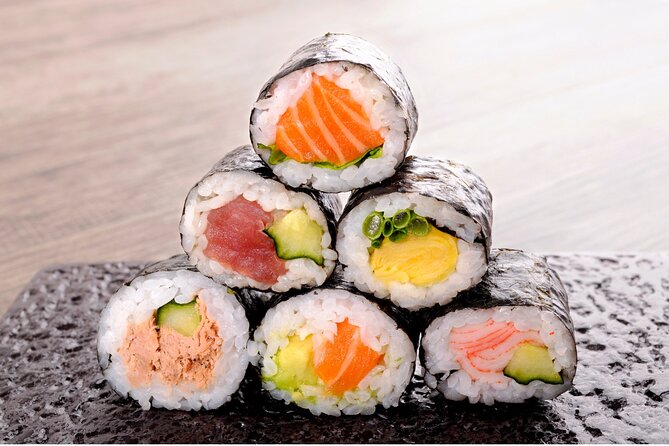
The ingredient list is straightforward: fish, avocado, nori, sushi rice and sesame seeds. The supplied details do not identify the type of fish, so you should not book this expecting a particular species or a detailed lesson on fish selection. The focus is the making and handling of the roll.
Building the 1.5-meter maki together
Once the ingredients are ready, the group lays out the nori sheets. Rice goes next, followed by the fish and avocado fillings. A final sprinkling of sesame seeds adds texture and a familiar finish.
The long format means everyone has a role. You will need to place ingredients with some care, because an uneven filling can make the roll harder to close. The hosts guide the process and explain how much pressure to use, but the group still has to coordinate its movements.
Rolling is the most memorable part. Too little pressure and the sushi may not form a firm log. Too much pressure and the filling can squeeze out. With a roll this long, the task is less about individual precision and more about moving steadily as a team.
That makes this a good choice for families, couples and solo participants who enjoy shared activities. A solo visitor is not left with a tiny personal portion of the class. You become part of the full group effort, which is useful if you want a social cooking experience rather than a private lesson.
The maximum group size is 12 people. That is large enough to make the giant roll practical, but small enough that the class should not feel like a mass demonstration. The description does not promise one-on-one instruction throughout, so expect group teaching with hands-on participation rather than a private chef lesson.
Cutting, serving and eating the finished sushi
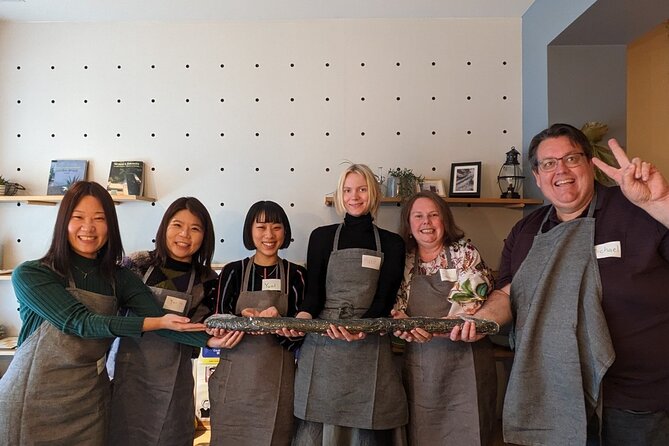
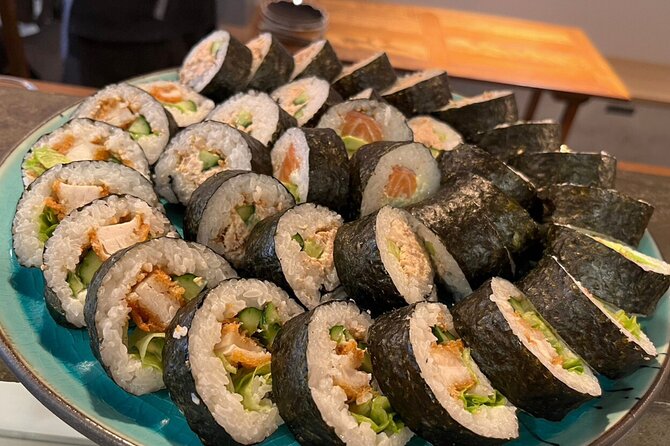
After the roll is formed, the group cuts it into pieces. This is the payoff, but it is also part of the lesson. A long maki must be portioned into manageable pieces, and the final shape gives you a clear sense of how evenly the rice and fillings were arranged.
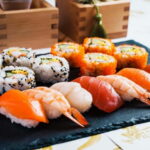
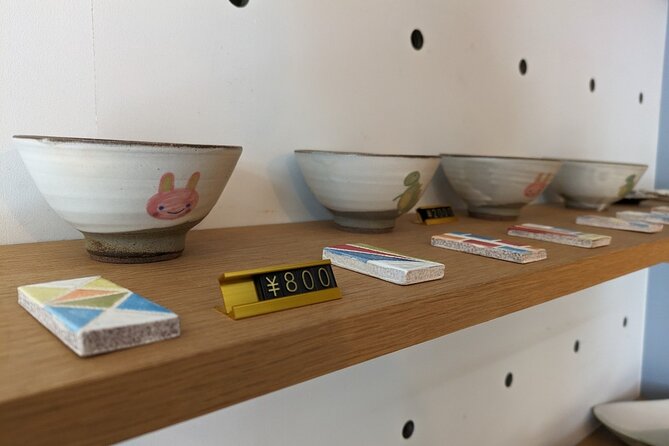
The sushi is served on Japanese dishware that is crafted and painted by hand. Each plate is a one-of-a-kind design made by local artists. That detail gives the meal a stronger sense of place than disposable plates or standard restaurant crockery would provide.
You can also purchase the plates at the onsite shop after the class. This is optional, of course, but it gives you a chance to take home something connected to the experience. The available details do not state the prices or range of designs, so treat the shop as an extra rather than part of the $50 package.
Eating the roll together is important. You get to see the result of the whole group’s work, not just your own section. The finished meal is both food and a small record of how well everyone coordinated.
Snacks, conversation and Japanese social games
The cooking is not the only part of the visit. The cafe experience can also include Japanese snacks, conversation and social games. These extras help break up the instruction and give you a chance to talk with the hosts and other participants.
I especially like this for solo visitors. A hands-on class already creates natural conversation, but shared snacks and games make the setting less formal. You have something to do while getting acquainted, rather than sitting quietly waiting for the next cooking step.
Families may also appreciate the change of pace. Children who enjoy food and group activities can take part in the rolling, then switch to a game or snack. The supplied information does not give an age range, so parents should confirm suitability for young children before booking.
The cafe is described as relatively new, but the service and experience have received strong praise. That does not tell you exactly how polished every part of the visit will be, but it does suggest that the hosts put real effort into the welcome and the social side of the class.
Other cooking classes in Tokyo


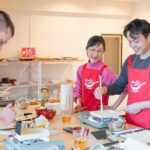
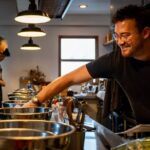
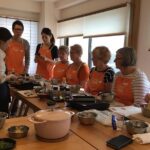
What the $50 price really covers
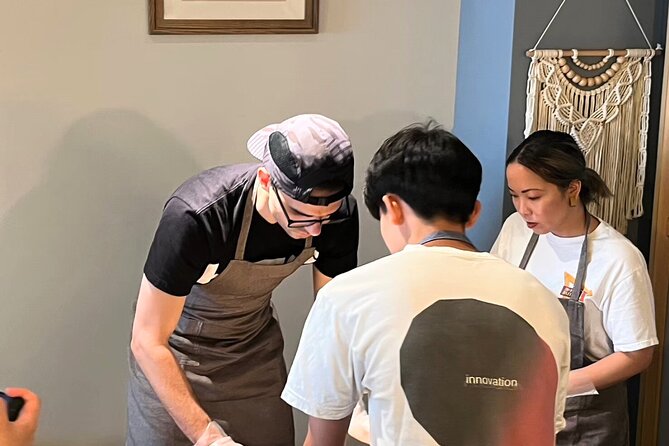
At $50, this is not simply a cheap meal. You are paying for instruction, ingredients, a group activity, the use of kitchen equipment and the chance to eat the finished sushi. You also get a cultural activity that is more distinctive than a standard restaurant lunch.
The value is strongest if you want to learn a process you can try again. The hosts use everyday utensils and equipment, so the methods are not locked inside a professional kitchen. You can take the basic approach home and adapt it to a normal-sized maki roll.
The price is less compelling if your only goal is to eat excellent sushi. A giant roll is part spectacle, part lesson and part shared meal. It is not presented as a specialist sushi tasting, a market visit or an advanced chef course.
For families and couples, the cost buys a joint memory and an activity that keeps everyone involved. For solo visitors, it includes a social setting as well as food. For serious sushi students, the traditional techniques are useful, but the class appears aimed at an accessible, playful introduction rather than expert training.
Timing, group size and the unusual 12-hour listing
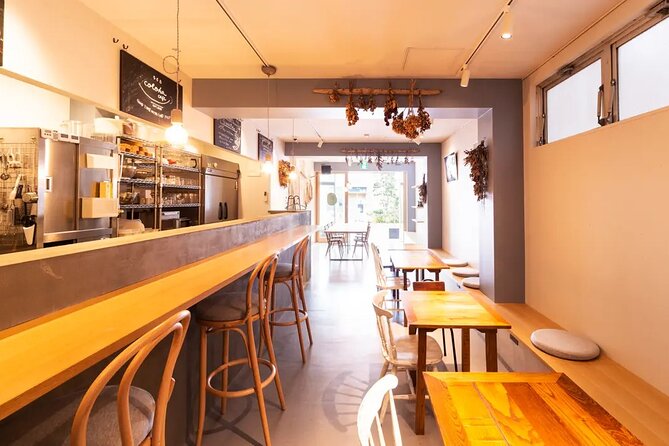
The experience is described as lasting approximately 12 hours. That is the biggest detail I would clarify before paying. The stated activities include preparation, rolling, cutting, serving, eating, snacks, conversation and games, but no full timetable is supplied.
A 12-hour duration would be a very long day for one sushi-making session. It may reflect a scheduling or booking display issue, or it may include a wider window than the active class itself. Do not assume you will spend every one of those 12 hours cooking. Confirm the start and finish times with the provider, Japanese Cooking Home, before arranging other plans.
The small maximum of 12 participants is more useful than the duration label. It tells you that this is designed around group participation. The giant roll needs several people, and the class would lose some of its appeal if you were standing far back from the action.
The activity ends at the same meeting point. That makes planning simple, especially if you want to continue around Meguro afterward. Since the nearby station and exact transport details are not specified beyond public transportation access, check the route on the day of booking.
Who will enjoy this class most
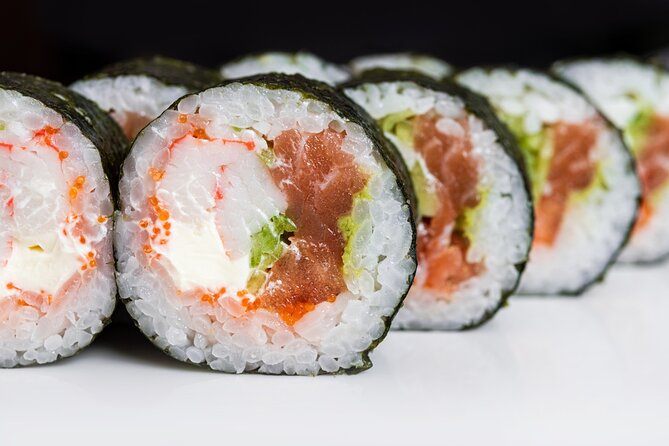
I would choose this for you if you want a cooking class with a strong visual centerpiece. The giant maki gives the session a clear goal, and you can take part even if you have never made sushi before.
It is also a good fit for:
- Families seeking an activity that combines food and games
- Couples who prefer doing something together instead of watching a demonstration
- Solo visitors who want an easy way to meet people
- First-time sushi makers who want basic techniques explained plainly
- Repeat visitors to Tokyo looking for a less routine food experience
You may want a different class if you are looking for knife skills, a long lesson on fish quality or advanced restaurant techniques. Those subjects are not promised here. The emphasis is on making one large roll as a group and learning methods you can repeat with normal home equipment.
The activity also suits people who enjoy imperfect, funny moments. A 1.5-meter roll is not the most practical form of sushi. That is exactly why it works as a group experience.
Practical notes before you book
The ticket is mobile, so you can use a digital booking confirmation rather than printing paperwork. Confirmation is received at the time of booking.
Free cancellation is available if you cancel at least 24 hours before the local start time. Cancellations made less than 24 hours before the start are not refunded, and changes inside that same window are not accepted. Keep the local cut-off time in mind if you are booking from another time zone.
The class is near public transportation, but the provided address and station note suggest a walk of around 10 minutes. Wear comfortable shoes and leave enough time for the final approach.
The activity ends where it begins, and the group limit is 12. No accessibility details, dietary substitutions or ingredient allergy information are provided, so ask Japanese Cooking Home directly if any of those points affect your booking.
Should you book the giant sushi class?
Book it if you want a social, hands-on food activity with a memorable visual trick at its center. Making and eating a 1.5-meter maki is unusual, and the snacks, games, hand-painted plates and Meguro setting add more personality than a basic roll-making lesson.
At $50, the experience offers fair value for a visitor who wants instruction and an activity, not only a meal. I would be cautious if you need a tightly timed outing, since the approximately 12-hour duration needs clarification. Confirm that detail first.
For families, couples and solo visitors who enjoy getting involved, this is an easy recommendation. For advanced cooks or sushi specialists, it may feel light. For everyone else, the giant roll provides exactly the kind of playful Tokyo memory that is hard to recreate from a restaurant table.
FAQ
Where does the sushi class take place?
The meeting point is 2 Chome-3 Senzoku, Meguro City, Tokyo 152-0012, Japan.
Where does the activity end?
The activity ends back at the meeting point.
How long does the experience last?
The experience is listed as approximately 12 hours. The exact active class schedule is not provided, so confirm the timing before booking.
How much does the class cost?
The listed price is $50.
How large is the sushi roll?
The group makes a sushi maki measuring about 1.5 meters.
What ingredients do you prepare?
You prepare fish and avocado fillings, nori, sushi rice and sesame seeds.
Do I get to eat the sushi?
Yes. After rolling the maki, you cut it, serve it and enjoy it with the group.
How many people can join?
The activity has a maximum of 12 participants.
Is the ticket available on a phone?
Yes. The experience includes a mobile ticket.
Can I cancel for a full refund?
Yes, if you cancel at least 24 hours before the experience start time. Cancellations made less than 24 hours before the start are not refunded.
More Cooking Classes in Tokyo
More Cooking Classes in Tokyo
More Sushi Making Classes in Tokyo
More tours in Tokyo we've reviewed












Sushi Making Classes, compared.
 ★ 5.0Sushi Making Tokyo Roll and Authentic Japanese Sushi ClassFrom $59
 ★ 4.9Tokyo: Roll and Authentic Sushi Making Class in AsakusaFrom $581h 40m
 ★ 4.9Tokyo: Sushi Making Class in a Happi Coat near a Famous SpotFrom $421h 30m
 ★ 5.0Sushi Making Tokyo! Popular Maki Sushi & Japanese Sushi(+Recipe!)From $63
 ★ 5.0Tokyo Sushi Making Class in Tsukiji with Professional ChefFrom $49
 ★ 5.0Tokyo Night Foodie Tour in Shinjuku – Seasonal Sushi, Wagyu BeefFrom $111