Reviewed · TRAIN EXPERIENCES
From Tokyo 1-Day Kyoto English-guided Tour by Bullet Train
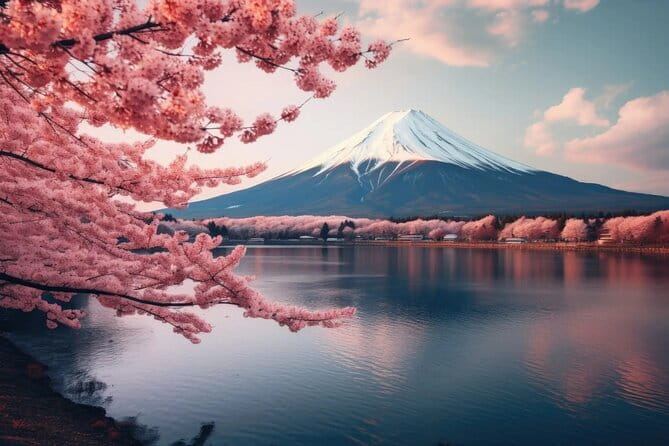
The best part of this Kyoto day trip from Tokyo is the ride itself: a fast, comfortable Shinkansen journey that lets you see Japan’s two great cities in one day. On a clear morning, keep your eyes on the right side of the train for a possible view of Mt. Fuji.
In This Article
- Key points before you book
- Tokyo to Kyoto by Shinkansen
- Lunch at Miyako Hotel Kyoto Hachijo
- Fushimi Inari and the famous red gates
- Sanjusangen-do and its 1,001 statues
- Kiyomizu-dera and Kyoto from the hillside
- A tag-team guide system that works, with limits
- What the $452.45 price really buys
- The long day and the crowd problem
- Who should choose this Kyoto day trip?
- Should you book this tour?
- FAQ
- How long does the tour last?
- Where does the tour begin?
- Where does the tour end?
- Is the Shinkansen fare included?
- Does a guide ride the Shinkansen from Tokyo to Kyoto?
- What sights are included in Kyoto?
- What type of lunch is provided?
- Can I request a vegetarian meal?
- Can I bring large luggage?
I like the careful handoffs, with staff guiding you from Tokyo City i to the train, meeting you at Kyoto Station, and helping you return. I also like the smart choice of three major sights: the orange torii gates at Fushimi Inari, the 1,001 statues at Sanjusangen-do, and Kyoto views from Kiyomizu-dera. The catch is simple: Kyoto gets only part of your day, and traffic and crowds can make that part feel rushed.
Key points before you book
- The Shinkansen does the heavy lifting: Your round-trip train fare between Tokyo and Kyoto is included, with standard and first-class options.
- Three famous Kyoto sights: You visit Fushimi Inari Taisha, Sanjusangen-do Temple, and Kiyomizu-dera.
- Several guides handle the day: A Tokyo escort helps you board, Kyoto staff meet you on arrival, and an English-speaking guide leads the sightseeing.
- Lunch is included: The 2025 version uses a Western-style semi-buffet at Miyako Hotel Kyoto Hachijo. The 2026 version changes to a vegetarian-friendly Western-style set menu.
- The pace is brisk: You have about 30 minutes at Fushimi Inari, 30 minutes at Sanjusangen-do, and 1 hour 10 minutes at Kiyomizu-dera.
- It is a long day: The listed duration is about 12 hours, with an expected return to Tokyo between 8:30 and 9:30 p.m.
Tokyo to Kyoto by Shinkansen
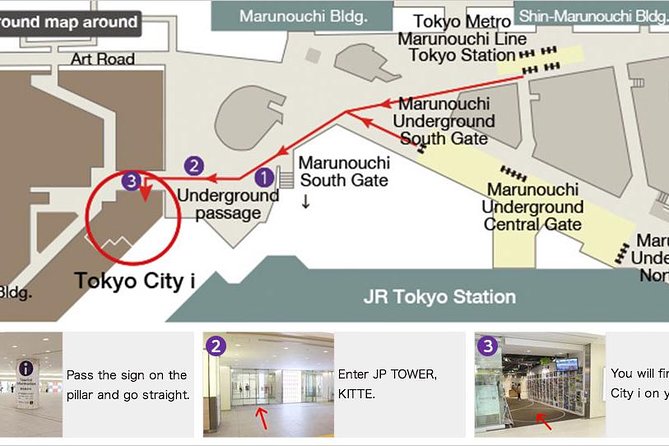
Your day begins at 9:20 a.m. at Tokyo City i, below the KITTE building near Tokyo Station. This meeting point can be tricky to find inside the station complex, so give yourself time. The English-speaking tour conductor does not ride the Shinkansen with you, but staff guide you to the correct train and remain until you board.
That escort service matters. Tokyo Station is large, crowded, and not especially forgiving when you are trying to locate the right platform, carriage, or departure time. Several people praised being walked right to the train door and given clear instructions for meeting staff in Kyoto.
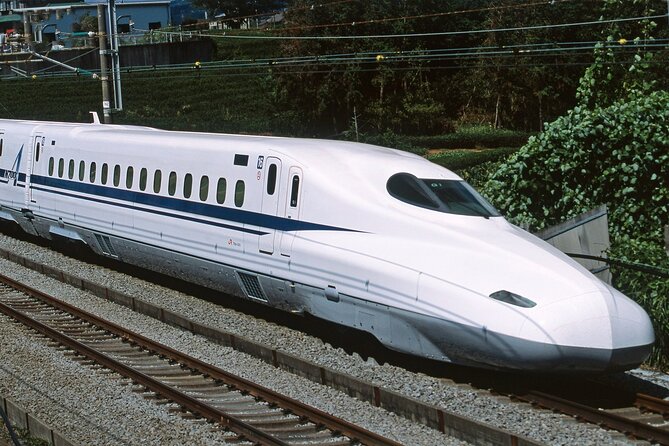
The train ride takes roughly two hours and 20 minutes each way. That means about four hours and 40 minutes of the day are spent in transit, an important point when you compare this trip with staying overnight in Kyoto. Still, the Shinkansen is part of the attraction. It is a smooth, efficient introduction to Japan’s famous high-speed rail system, and the broad window gives you a chance to watch the countryside pass by.
A first-class, or Green Car, ticket costs more, but the extra comfort may be worthwhile on a long day. One useful booking tip is to reserve your seat instead of relying on a non-reserved carriage. Seats may not be designated, and some departures have limited non-reserved seating.
Large luggage also needs planning. Bags whose combined height, width, and length exceed 160 centimeters cannot be brought onto the Shinkansen under the tour’s rules. Use a luggage delivery service on your own if you are carrying a large suitcase.
Other guided tours in Tokyo
Lunch at Miyako Hotel Kyoto Hachijo
A member of the Kyoto team meets you on the platform and walks you to Miyako Hotel Kyoto Hachijo, across from Kyoto Station. This smooth arrival is one of the tour’s strongest practical features. You do not need to decode the station, search for a restaurant, or worry about missing the next connection.
The included meal is Western-style rather than a traditional Kyoto lunch. In 2025, it is served as a semi-buffet, with the main dish available in a vegetarian version if requested during booking. Same-day menu changes are not accepted. For 2026, the menu is scheduled to become a vegetarian-friendly Western-style set meal.
The meal has earned strong praise for its quality, including fresh seafood, pastries, and desserts. It is a pleasant break after the train, though you should not book this tour expecting a small traditional restaurant or a specifically Kyoto-style meal.
Allowing only 40 minutes for lunch keeps the schedule moving. Afterward, an English-speaking staff member takes you on foot to the JTB Sunrise Tours Desk at Kyoto Avanti. There, you may join people arriving from other tours before boarding the sightseeing coach.
This is where the day can feel less personal. The tour may include up to 40 people, and the transfer period can involve waiting for other members to gather. One of the schedule’s less efficient moments can occur after lunch, when the group waits for participants from a morning tour. The organization is strong, but the format is not private or flexible.
Fushimi Inari and the famous red gates
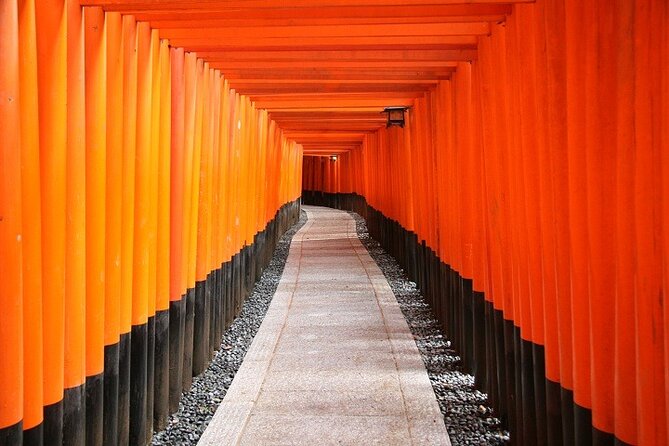
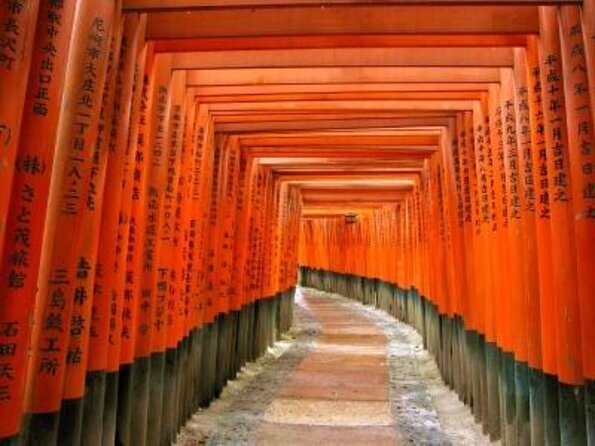
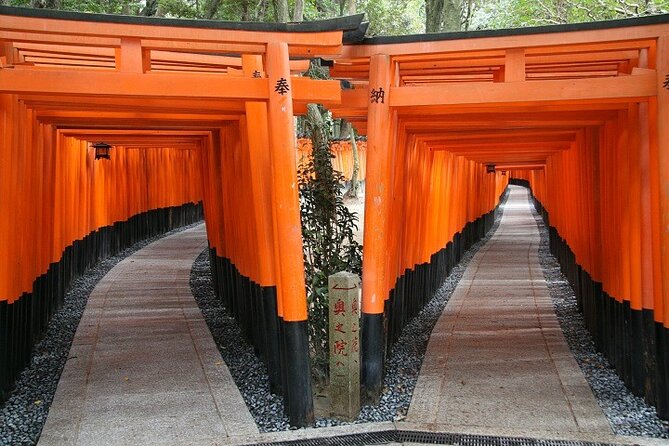
Fushimi Inari Taisha is the head shrine of roughly 40,000 Inari shrines across Japan. Its signature sight is the Senbon Torii, a long run of bright orange gates donated by individuals and businesses.
The shrine sits at the base of Mt. Inari. This visit is not a full mountain walk. You walk from the coach parking area to the shrine and see the first section of gates, with about 30 minutes allocated to the stop.
That short window gives you enough time to grasp the scale and take photographs, but not enough to wander far up the mountain. At the busiest times, even reaching the gates can be slow. You may find yourself taking a few pictures near the entrance before heading back to the coach.
I like the fact that the tour puts Fushimi Inari first. It is one of Kyoto’s most recognizable sights, and an early afternoon visit gives you a clear first taste of the city’s Shinto tradition. The drawback is that this is precisely the sort of place that rewards lingering, and the fixed schedule leaves little room for it.
Stay close to your guide and note the return instructions. Crowds, narrow paths, and a large group make it easy to lose sight of the people around you.
Sanjusangen-do and its 1,001 statues
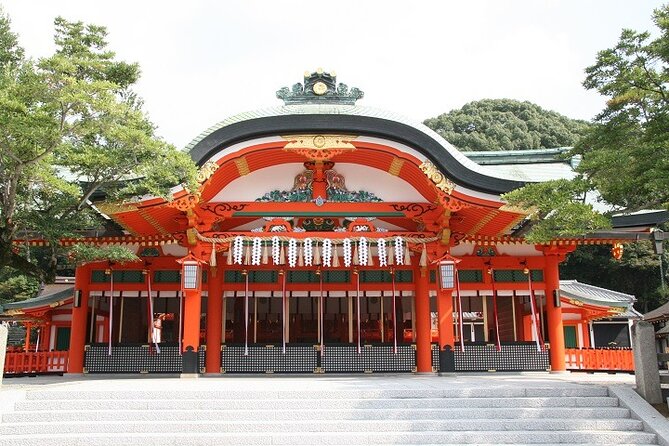
Sanjusangen-do is a sharp change of mood. The temple is famous for its long wooden hall, described as the world’s longest wooden structure, and for the 1,001 life-size statues of Kannon dating from the 13th century.
Inside, the colossal Thousand-Armed Kannon sits at the center, flanked by rows of Buddhist figures. The scale is impressive, but the room is also a place for quiet attention after the noise around Fushimi Inari.
You have about 30 minutes here. Photography is not allowed inside, so this stop is best approached as a visual and cultural experience rather than a place to collect pictures. Guides explain Buddhist beliefs, the temple’s construction, and details such as traditional archery connected with the site.
This temple can be the most rewarding stop for someone interested in religious art. It is less about a sweeping view or a famous approach street, and more about the concentration of figures inside a single long hall. The short visit works reasonably well here, provided your guide gives clear context.
A temporary closure is also a serious concern. One disappointing experience occurred when the Buddhist temple was closed, so it is sensible to understand that schedules and access can change. The tour operator may alter the order of stops because of conditions at the sites, traffic, or other operational issues.
Kiyomizu-dera and Kyoto from the hillside
Kiyomizu-dera is the grand finale, and it offers the most open view of Kyoto. The World Heritage temple sits on a hillside, with a broad outlook over the city and a historic shopping lane leading toward the entrance.
The scheduled visit lasts about 1 hour and 10 minutes, longer than the other two stops. That sounds generous, but the approach can be crowded and the path rises. You need to budget time for walking, the temple grounds, photographs, and the return to the coach.
The shopping lane is part of the appeal. You have a chance to browse souvenirs and pick up snacks, but you will need to watch the clock. At busy times, the crowd can slow every step. Some departures have reached the final stop late in the afternoon, leaving less time than expected before the group must return for the train.
I like ending here because the view gives the day a clear visual finish. You get the hilltop setting described in the tour highlights, rather than visiting only enclosed halls and shrine paths. But if Kiyomizu-dera is the sight you most want to savor, a separate Kyoto visit will serve you better.
A few more Tokyo tours and experiences worth a look


A tag-team guide system that works, with limits
This is not a single-guide tour from Tokyo and back. It uses a relay system. A Tokyo escort gets you to the Shinkansen, Kyoto staff meet you at the platform, another staff member leads you to lunch and the tour desk, a sightseeing guide handles the temples, and staff help you return to the train.
That may sound impersonal, but it reduces the risk of a wrong turn at the moments that matter. Several guides have received warm praise, including Tammy, Yumi, KC, and Momo. KC was singled out for keeping energy high in heavy crowds, while Yumi was praised for clear explanations at the shrines and temples.
English ability can vary by guide. One guide, remembered as Nobu, was friendly and helpful, but difficult for one participant to understand. The subject matter also changes from one guide to another, so the amount of detail you receive at each site may not be identical.
The group can reach 40 people. That size helps keep the price below a private tour, but it affects movement at Fushimi Inari and Kiyomizu-dera. You should be comfortable following a flag, guide, or group leader and staying alert to departure times.
What the $452.45 price really buys
At $452.45 per person, this is not a cheap way to reach Kyoto. The fare pays for a round-trip Shinkansen journey, guided sightseeing, lunch, admission fees listed in the program, and the staff support that connects Tokyo, Kyoto Station, the restaurant, the coach, and the return train.
The value depends on your priorities. If you have limited time in Japan and want a controlled first look at Kyoto without arranging rail tickets, meals, local transport, and temple admissions yourself, the package can make sense. You are paying for coordination as much as for sightseeing.
If you have two or more days available, I would put the money toward an overnight in Kyoto. You will avoid nearly five hours of return train time and gain the freedom to visit a temple early or late, when the main crowds may be lighter. You can also choose a smaller neighborhood restaurant instead of a hotel dining room.
The first-class train upgrade may be a worthwhile addition for people who value comfort. The rail journey is a central part of the day, not merely a transfer, so this is one place where spending more can improve the experience.
The long day and the crowd problem
The schedule begins at 9:20 a.m. and may end between 8:30 and 9:30 p.m. That is a full day before you add the effort of walking through stations, shrine grounds, temple approaches, and shopping streets.
Traffic can affect the coach portion, and the order of stops and arrival times may change. Kyoto’s major sights are busy even on ordinary days, and the compressed schedule magnifies the problem. You may spend more time moving with the crowd and less time standing quietly before a gate or statue.
Rain can also change the tone of the afternoon. The train, hotel lunch, escorts, and coach still provide structure, but outdoor walking at Fushimi Inari and Kiyomizu-dera becomes less pleasant. Comfortable shoes and weather protection are essential.
The tour is designed for international visitors, and residents of Japan cannot book it. Most people can participate, but anyone under 18 needs written parental permission. Children up to age five may join free, but they receive no train or coach seat and no lunch unless booked at the child rate.
Who should choose this Kyoto day trip?
I would choose it if you are based in Tokyo, have only one available day, and strongly want to see Kyoto in person. It is also a good fit if navigating Tokyo Station and Kyoto Station feels stressful, or if you prefer having train tickets, lunch, transport, and admissions arranged in one plan.
First-time visitors who value clear historical explanations should benefit from the English-speaking guide. The three stops also give you a useful spread: Shinto at Fushimi Inari, Buddhist sculpture at Sanjusangen-do, and a famous hillside temple with city views at Kiyomizu-dera.
I would skip it if your main goal is slow, quiet Kyoto. It is not ideal for serious photographers, temple enthusiasts, or anyone who wants to climb farther into the Fushimi Inari gates. It is also a poor match if nearly five hours on trains feels like too much for an afternoon of sightseeing.
Book early enough to state dietary needs, reserve seating if offered, and check the meeting point carefully. Leave large luggage elsewhere, wear shoes suited to hills and crowds, and treat the day as an introduction rather than a complete Kyoto visit.
Should you book this tour?
Book it if seeing Kyoto matters more than seeing all of Kyoto. The bullet train is exciting, the transfers are carefully managed, lunch is included, and you reach three major cultural sights without having to plan the route yourself.
Skip it if you can stay overnight. Kyoto deserves more time, and this schedule can turn beautiful places into quick stops. At this price, the tour is best understood as a high-convenience sampler for a first visit, not as the most relaxed or deeply personal way to experience the city.
Free cancellation is available up to 24 hours before the start time. Changes or cancellations inside that window are not accepted for a refund.
FAQ
How long does the tour last?
The experience lasts about 12 hours. The listed return time to Tokyo is approximately 8:30 to 9:30 p.m.
Where does the tour begin?
It begins at Tokyo City i in the basement level of KITTE, at 2-chōme 7, Marunouchi, Chiyoda City, Tokyo. The start time is 9:20 a.m.
Where does the tour end?
The tour ends at Shin-Yokohama Station, Shinagawa Station, or Tokyo Station after the return Shinkansen journey.
Is the Shinkansen fare included?
Yes. Round-trip bullet train fare between Tokyo and Kyoto is included. Standard and first-class ticket choices are available.
Does a guide ride the Shinkansen from Tokyo to Kyoto?
No. An English-speaking tour conductor escorts you to the train in Tokyo, but guides and staff do not ride on the Shinkansen. English-speaking staff meet you on the platform at Kyoto Station.
What sights are included in Kyoto?
The tour visits Fushimi Inari Taisha, Sanjusangen-do Temple, and Kiyomizu-dera Temple.
What type of lunch is provided?
In 2025, lunch is a Western-style semi-buffet at Miyako Hotel Kyoto Hachijo. In 2026, the planned meal is a vegetarian-friendly Western-style set menu.
Can I request a vegetarian meal?
For the 2025 meal, you must request a vegetarian main dish when booking, and same-day changes are not accepted. The 2026 meal is scheduled to be vegetarian-friendly.
Can I bring large luggage?
Luggage exceeding a combined height, width, and length of 160 centimeters cannot be brought onto the Shinkansen under the tour rules. A delivery service must be arranged independently for large luggage.
More 1-Day Tours in Tokyo
More Guided Tours in Tokyo



More tours in Tokyo we've reviewed












Train Experiences, compared.
 ★ 5.0Mt Fuji and Hakone 1-Day Bus Tour Return by Bullet TrainFrom $163
 ★ 4.0Mt Fuji & Hakone Cruise, Drum Show Bullet Train 1 Day from TokyoFrom $149
 ★ 4.4Tokyo Mt Fuji 5th St & Hakone Cruise Bus Tour w/Bullet TrainFrom $15410 hours
 ★ 4.2From Tokyo: Mt. Fuji & Hakone Tour w/ Return by Bullet TrainFrom $11711 hours
 ★ 4.0Mt. Fuji and Hakone Day Trip From Tokyo with Bullet Train OptionFrom $97
 ★ 4.5Mt. Fuji & Hakone Bus Tour Bullet Train Return & 28-Hotel Pick-upFrom $145