Reviewed · SUMO EXPERIENCES
Tokyo: Family Sumo Workshop & Live Wrestling Show with Lunch
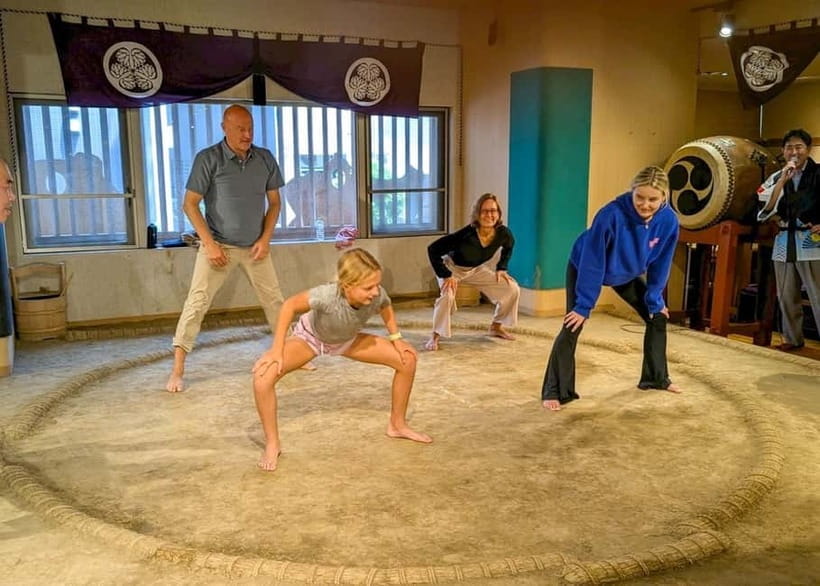
The best part of this Ryogoku sumo workshop is simple: you do not watch the sport from the far side of a stadium. You stand close to former professional wrestlers, hear the slap of feet and bodies, and can step into the ring yourself. The demonstrations have real force, but the mood stays playful and family-friendly.
In This Article
- Key Points Before You Book
- Why Ryogoku Is the Right Place for a Sumo Experience
- Shiko, Teppo, and Suri-Ashi in the Ring
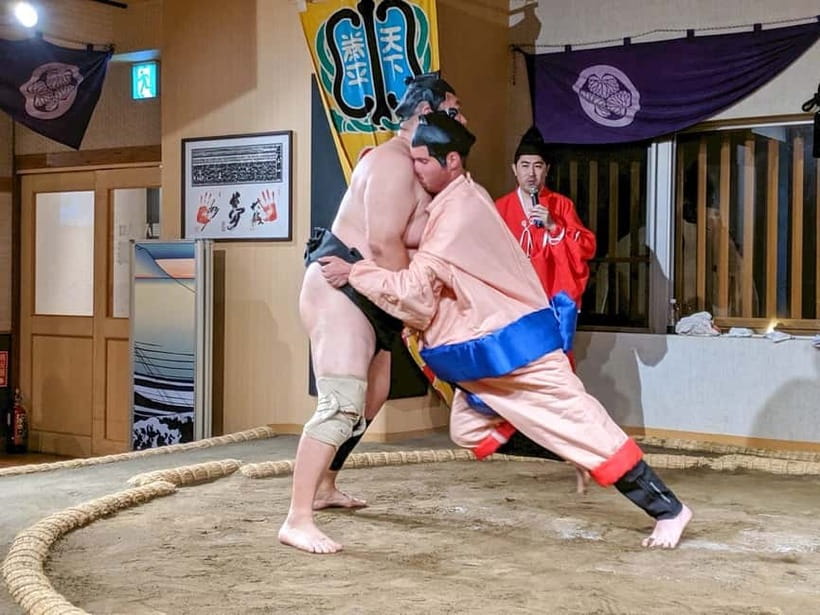
- The Exhibition Match Has Real Force
- Challenging a Former Professional Wrestler
- Chanko Nabe Is More Than a Convenient Lunch
- Is $60 a Good Value in Tokyo?
- Timing, Access, and Practical Planning
- Who Will Enjoy This Most
- Should You Book This Sumo Workshop?
- FAQ
- How long does the Tokyo sumo workshop last?
- What is included in the $60 price?
- Do I have to wrestle a sumo wrestler?
- Can children take part?
- Are vegetarian and vegan meals available?
- Is the meal officially Halal?
- Is the venue wheelchair accessible?
- How do I find the meeting point?
I like the clear mix of sumo traditions and hands-on action. You learn why wrestlers throw salt, practice the basic footwork, and then see those movements used in a full-speed exhibition bout. I also like that lunch is part of the experience. The mini chanko hotpot is hearty, and vegetarian, vegan, pork-free, and some allergy-friendly options can be arranged in advance.
The main consideration is that the ring challenge is physical, even though it is optional. You should be in good health to volunteer, and anyone who dislikes being the center of attention can remain seated and film. Also, the meal and children’s pricing rules require a little planning.
Key Points Before You Book
- Step into a real dohyo: Try the sacred ring footwork, or challenge a former professional wrestler in a padded sumo suit.
- Learn three basic drills: Shiko, teppo, and suri-ashi give you a feel for the balance, strength, and discipline behind sumo.
- Watch a close-up exhibition: The former wrestlers demonstrate training, rituals, and bouts while an English-speaking host explains what you are seeing.
- Finish with chanko nabe: The protein-rich hotpot comes with vegetables and meat, with dietary alternatives available if requested at least 48 hours ahead.
- Good for mixed-age families: Children and adults can take part at different levels, while spectators can stay seated during the physical portions.
- Budget about 105 minutes and $60: Transport, alcohol, and extra menu items cost extra, but admission, ring access, demonstrations, equipment, photos, and lunch are included.
Why Ryogoku Is the Right Place for a Sumo Experience
Ryogoku is Tokyo’s sumo district, so this activity puts you in the sport’s traditional home rather than in a general entertainment venue. The setting matters. Sumo is not simply a contest of large athletes pushing one another out of a circle. It combines ritual, posture, controlled movement, ceremony, and a strict training culture.
The workshop gives you a short, approachable introduction to that world. You meet former professional wrestlers in a small venue, where the distance between audience and performer disappears. That closeness is the big advantage over watching a tournament from high in the stands.
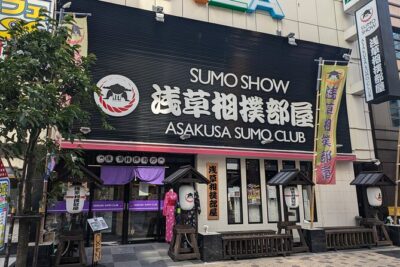
Your meeting point is in front of the face-in-hole photo board at the shop. Look for the guide holding a smartphone marked AlvaJapan. You are asked to wait outside until 10:00 AM rather than entering early, and WhatsApp is the recommended way to call if you lose your way.
The activity is conducted in English. Hosts named in the sessions include Alisa, Alyssa, Rio, Yo, Ko, and others, and the format gives the host plenty of room to explain rules, customs, and the wrestlers’ training. The tone is lively rather than academic, which works well for children and adults sharing the same group.
A few more Tokyo tours and experiences worth a look
Shiko, Teppo, and Suri-Ashi in the Ring
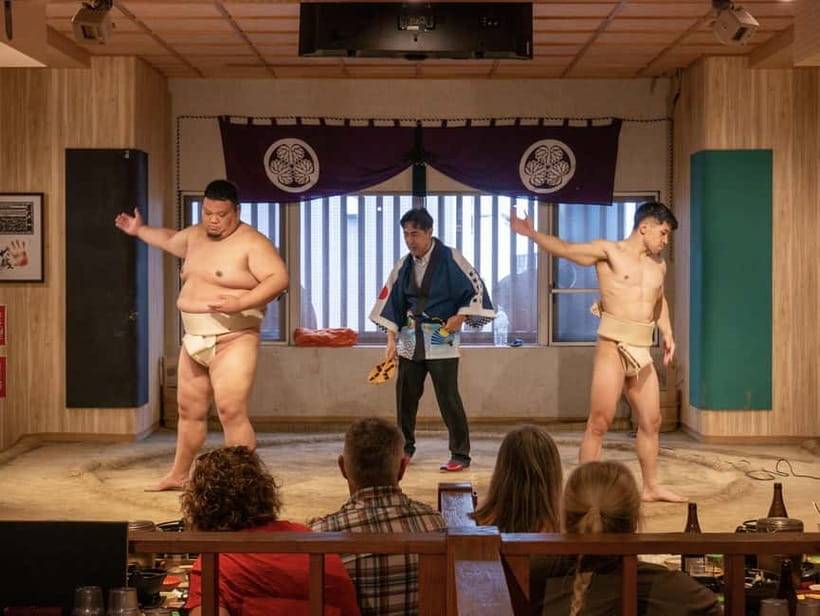
The first part lasts about an hour according to the schedule, although the overall activity is listed as 105 minutes. You begin with an explanation of the sport, then watch the former professionals show the movements that form the foundation of sumo.
Shiko is the dramatic leg lift and stomp associated with sumo training. It takes more balance and control than it looks. The host explains its place in the sport and the traditional belief that the stomp helps drive away evil spirits.
Teppo is a pushing drill used in training. It teaches the basic idea of driving through an opponent rather than simply leaning forward and hoping brute force will work. You will not become a sumo wrestler in one session, but the drill helps you understand how much effort goes into a movement that can look simple from a distance.
Suri-ashi is the sliding footwork. Your feet stay close to the floor as you move, rather than taking normal walking steps. It is a useful exercise because it shows how sumo wrestlers maintain a low, stable position.
I like this order. You first see the movements, then try simplified versions yourself, and then watch them appear in a bout. That connection makes the demonstration easier to follow, especially if you know little about sumo.
Wear loose sports clothing. Shoes come off before you enter the ring, so easy footwear is helpful. Ring drills are optional, and you can sit at the side, watch, and use your phone to film if you prefer.
The Exhibition Match Has Real Force
After the training section, the wrestlers perform an exhibition match. This is not a quiet lecture with a few symbolic pushes. Expect the sharp sound of hands striking, the heavy impact of bodies meeting, and the quick bursts of movement that make sumo more athletic than its slow ceremonial image suggests.
The English-speaking host explains the meaning of the salt throwing, shiko, and other visible customs. That commentary is important because sumo can be hard to read when you are seeing it for the first time. You get enough background to understand what is ritual, what is technique, and what is part of the contest.
The former professionals also bring humor to the presentation. They play to the audience, answer questions, and make the show feel welcoming instead of intimidating. Several sessions have included an informal question period, which is a good chance to ask about training, rules, and what is allowed in the ring.
The show is especially useful for families with different interests. One person can focus on the cultural side, another can enjoy the physical spectacle, and children can laugh at the theatrical moments. The event does not require everyone to be equally interested in the technical details.
Challenging a Former Professional Wrestler
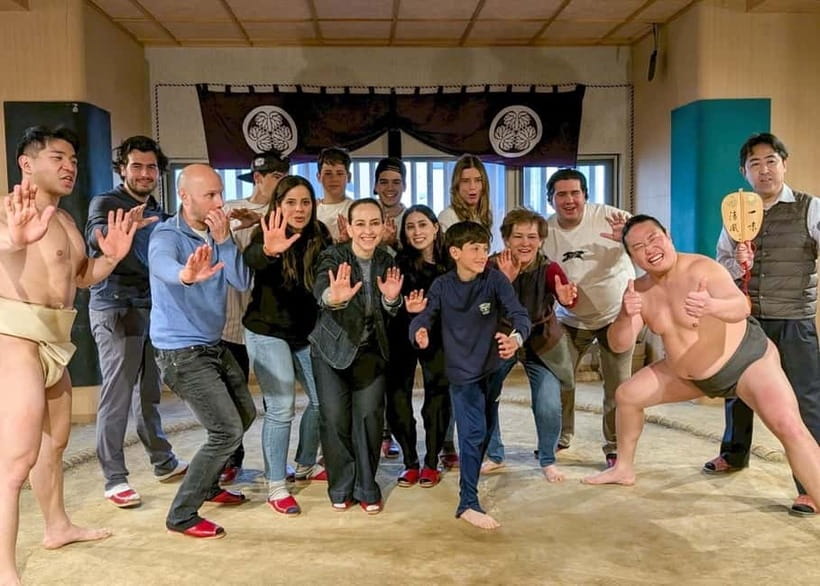
The memorable moment for many people is the volunteer challenge. You can put on the provided padded sumo suit and try to push a former wrestler out of the ring. The equipment softens the contact, and the challenge is presented as safe and funny, but the strength difference remains very real.
You may discover that size alone does not explain the result. The wrestlers know how to hold their position, use their weight, and resist a push without turning the encounter into a dangerous collision. Even a strong adult should expect to be moved around easily.
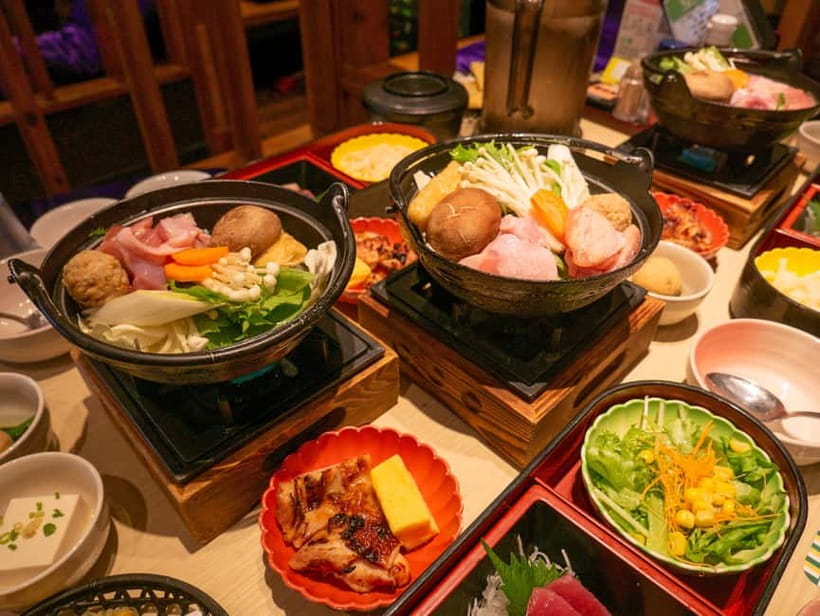
The challenge is optional. That point matters. If you are shy, have a physical limitation, or simply want to keep your clothes and dignity intact, you can stay seated and watch other volunteers. Parents may film, and photos with the wrestlers are included using your own phone or camera.
Children can enjoy the action without having to wrestle. Some families bring small children who watch the adults and then try simpler movements themselves. The activity is best for children who can follow instructions and stay comfortable around a loud, physical performance.
Volunteers should be in good health. Shoes must be removed in the ring, and loose sportswear is recommended. The padded suit is supplied, but the experience is still active, so do not treat the challenge as a completely passive photo opportunity.
Chanko Nabe Is More Than a Convenient Lunch
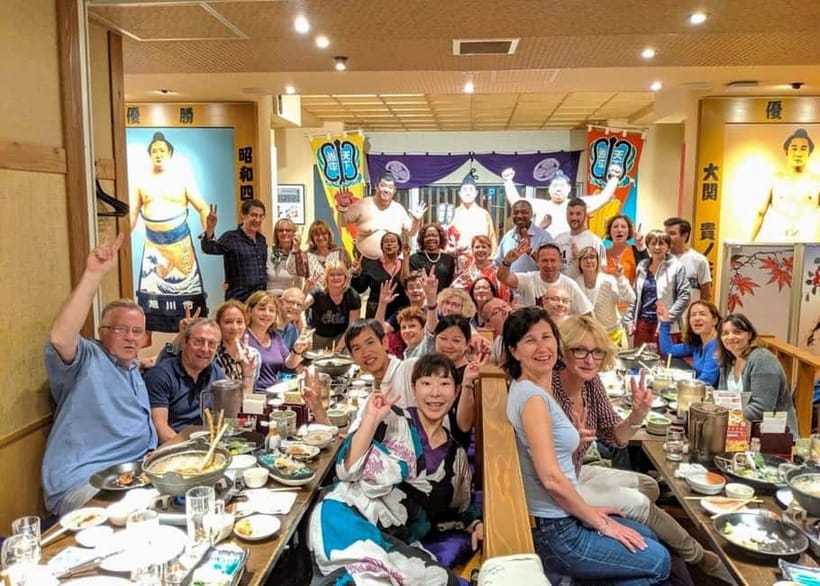
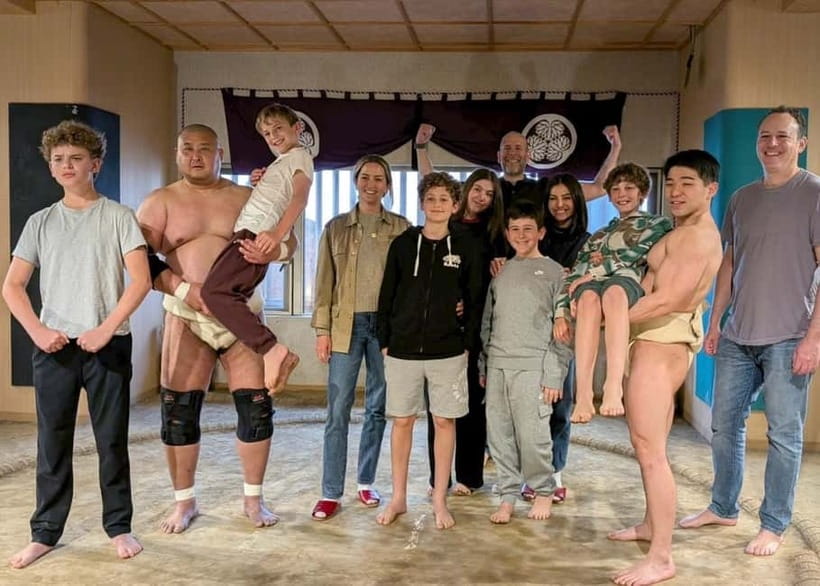
Once the ring session ends, you sit down for chanko nabe, the hotpot associated with sumo wrestlers. The meal is designed to be filling, with vegetables and meat in a steaming broth. The portion is described as a mini hotpot, but the amount can still be substantial, so arrive hungry but not overloaded from an earlier breakfast.
The host explains why chanko is linked with the wrestlers’ diet and physique. This gives lunch a useful cultural purpose. You are not just eating a Japanese hotpot after a show. You are getting a small look at the food tradition connected with life in a sumo stable.
The meal has been one of the strongest parts of the experience. It is warm, generous, and easy to share as a family. The food also gives you time to ask more questions after the energetic ring session.
Vegetarian, vegan, and other dietary requests can be arranged if you provide them at least 48 hours in advance. Pork-free and alcohol-free preparation is possible, but the provider does not hold official Halal certification. If you need strict protection from cross-contamination, the meal cannot be guaranteed, so this is an important limitation rather than a minor footnote.
Children under five do not receive a meal under the child rate. If a child under five needs lunch, book that child at the adult rate. Children aged six and older cannot be booked at the child rate. Check those rules carefully when entering your party details.
Alcohol and additional menu items are not included. You can order them on site, but the basic $60 price covers the stated meal, not extra drinks or dishes.
A few more Tokyo tours and experiences worth a look


Is $60 a Good Value in Tokyo?
At $60 per person, this is a strong value if you want a participatory cultural activity rather than a standard stage show. The price includes admission, ring access, former professional wrestlers, English commentary, training, the padded challenge equipment, photo time, and lunch.
The food changes the calculation. A Tokyo activity at this price can easily feel brief once transport and admission are separated. Here, lunch is built into the 105-minute visit, and the meal is substantial enough to serve as a real break in your day.
You should not compare it directly with tickets to an official grand sumo tournament. This is an exhibition and workshop, not a day of ranked bouts involving current top-division wrestlers. Its value comes from access, explanation, and participation.
I would call it particularly good for families, first-time visitors to Japan, and anyone who wants a cultural activity with a comic edge. Solo visitors can also fit in comfortably because the group format gives you an easy way to join the fun without arranging a private party.
The main value limit is the short duration. You get a concentrated taste of sumo, not an extended look at the sport or a visit to a training stable. If your main goal is to watch serious competition, this is not a replacement for a tournament ticket.
Timing, Access, and Practical Planning
The listed duration is 105 minutes. The schedule describes roughly 60 minutes for the ring program and 60 minutes for lunch, so the published sections do not add up exactly to the stated total. Use the 105-minute figure for planning, but allow some flexibility around the start and finish.
There is a separate entrance for the activity, which helps you avoid a regular line. Transport to the venue is not included, so you must make your own way to Ryogoku and locate the meeting point.
The venue is wheelchair accessible. Ring participation is optional, which also makes the activity workable for people who want to enjoy the presentation without physical exertion.
Free cancellation is available up to 24 hours before the start time, and you can reserve now and pay later. The event may not run if the minimum number of participants is not reached. If having the experience guaranteed is important, choose the private reservation option.
The instructions ask you not to enter the shop before 10:00 AM. Wait outside near the photo board and look for the person displaying AlvaJapan on a phone. This is a small detail, but it prevents an awkward start.
Who Will Enjoy This Most
I would choose this for families who want one activity that keeps adults and children involved at the same time. The wrestlers use humor, the host explains the customs in clear English, and the optional challenge lets people take part without forcing the whole group into physical drills.
It also suits anyone who has already seen sumo on television but does not understand how the sport works. The shiko, teppo, and suri-ashi exercises give you a physical reference point. After trying them, you watch the wrestlers with a better sense of balance, foot placement, and force.
Food-conscious visitors should contact the provider early. Vegetarian and vegan arrangements are available, and the kitchen can address several allergies when told 48 hours ahead. Strict Halal requirements are a different matter because there is no official certification and no guarantee against cross-contamination.
I would be more cautious if you want quiet cultural study, a formal historical tour, or a full professional tournament. This experience is noisy, social, humorous, and built around audience participation. That is its appeal, but it will not suit every style of sightseeing.
Should You Book This Sumo Workshop?
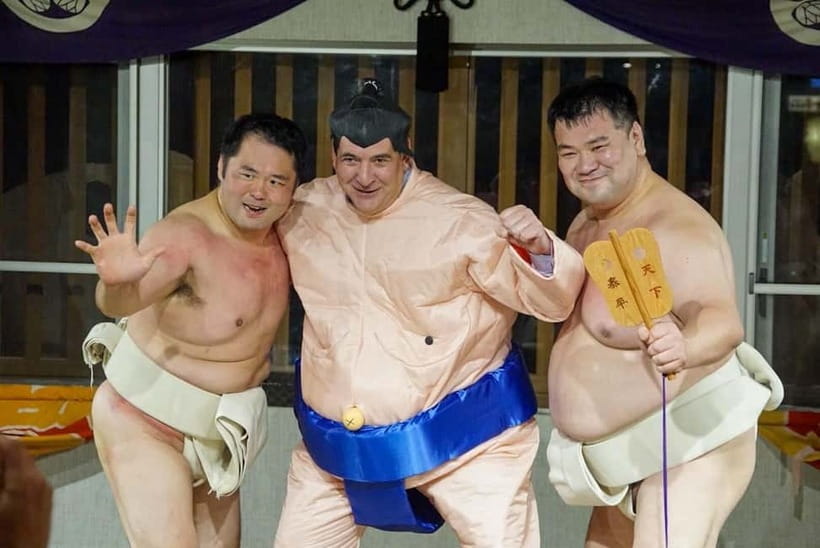
Book it if you want to get close to sumo, learn a few real training movements, and share a laugh with former professionals. The combination of ring access, live wrestling, a volunteer challenge, photos, English commentary, and chanko lunch gives you more than a short performance for the price.
Skip it if you need strict cross-contamination controls, dislike physical comedy, or want to watch official tournament competition. For most families and first-time visitors, though, this is a smart Tokyo choice: easy to understand, active without requiring everyone to participate, and grounded in Ryogoku’s sumo culture.
FAQ
How long does the Tokyo sumo workshop last?
The stated duration is 105 minutes. The schedule describes a ring program and lunch, each listed at about 60 minutes, so allow some flexibility when planning the rest of your day.
What is included in the $60 price?
The price includes admission to the venue, ring access, former professional wrestlers, English commentary, interactive drills, the padded challenge equipment, photo time, and a mini chanko hotpot lunch.
Do I have to wrestle a sumo wrestler?
No. Ring drills and the volunteer challenge are optional. You can remain seated, watch the demonstrations, and film with your own phone or camera.
Can children take part?
Yes. The activity is designed for families, and children can watch or join suitable parts of the workshop. Children under five do not receive meals at the child rate, so book them at the adult rate if they need lunch. Children aged six and older cannot use the child rate.
Are vegetarian and vegan meals available?
Yes, vegetarian and vegan options can be arranged. You must provide dietary requests at least 48 hours before the activity.
Is the meal officially Halal?
No official Halal certification is provided. The kitchen can avoid pork and alcohol, but it cannot guarantee protection from cross-contamination if strict avoidance is required.
Is the venue wheelchair accessible?
Yes, the activity is wheelchair accessible. Physical ring participation remains optional.
How do I find the meeting point?
Wait in front of the face-in-hole photo board at the shop and look for the guide holding a smartphone displaying AlvaJapan. Do not enter before 10:00 AM, and call through WhatsApp if you get lost.
More Lunch Experiences in Tokyo



More Shows & Performances in Tokyo
More Sumo Experiences in Tokyo
More tours in Tokyo we've reviewed












Sumo Experiences, compared.
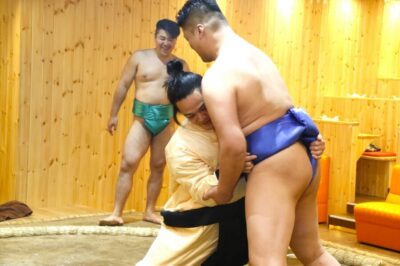 ★ 4.8Tokyo: Sumo Show Experience with Chicken Hot Pot and a PhotoFrom $1032 hours
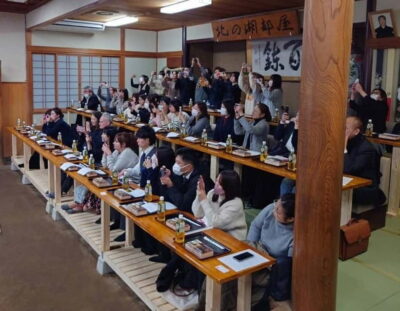 ★ 4.8Tokyo: Sumo Show and Dining ExperienceFrom $7990 minutes - 2 hours
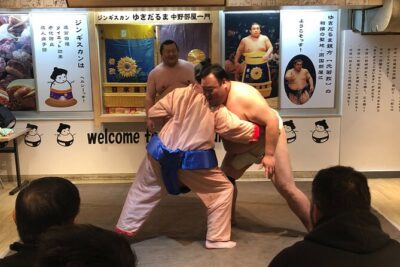 ★ 5.0the SUMO showFrom $89
 ★ 5.0Tokyo Sumo Entertainment Show with Chicken Hot Pot and PhotoFrom $106
 ★ 4.6Tokyo: Sumo Tournament Tour with Chair Seat TicketsFrom $141
 ★ 5.0Tokyo Grand Sumo Tournament Viewing Tour with TicketsFrom $124