Reviewed · TOKYO FOOD TOURS
Tokyo: Shinjuku Food Tour Highlights (Best Eats)
Shinjuku’s best food experiences often hide behind narrow doors, handwritten signs, and menus you cannot read. This three-hour evening tour takes you through Omoide Yokocho and Golden Gai, where a guide helps you enter small local bars and order food and drinks with confidence.
In This Article
- Key points to know before booking
- Why Shinjuku is a good place for a guided food crawl
- Omoide Yokocho: Tokyo’s small-lane opening act
- Kabukicho and Golden Gai: tiny bars, big personality
- What the guides add to the experience
- The food: 10-plus dishes, but do not expect a banquet
- Is $80 a fair price?
- Practical details that affect your evening
- Who will enjoy this Shinjuku food tour most?
- Should you book it?
- FAQ
- How long does the Shinjuku food tour last?
- Where does the tour begin?
- Where does the tour end?
- What areas does the tour visit?
- How many dishes are included?
- Can dietary restrictions be accommodated?
- Are alcoholic drinks served to people under 20?
I like the access to places you would probably skip on your own, especially the locals’ sake bar that several participants found difficult to discover without help. I also like the friendly guides, including May, Michael, Agathe, Bell, Kay, and Yota, who bring local culture into the meal rather than simply pointing out dishes.
The main drawback is that the food and drinks may feel more like a tasting crawl than a full dinner, and you should bring enough yen for bar charges or purchases. The group is advertised as small, but the maximum can reach 12 people, so the experience may not always feel intimate.
Key points to know before booking
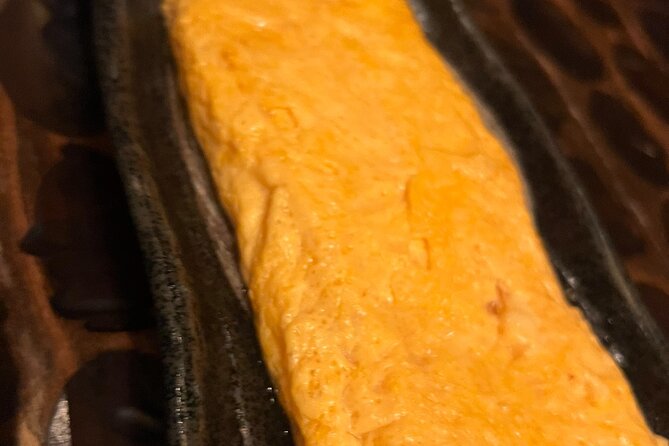
- Omoide Yokocho begins the evening: Walk through a narrow, lantern-lit quarter filled with tiny izakayas and post-war Tokyo atmosphere.
- Golden Gai brings the bar-hopping: Visit small, historic bars in Kabukicho that may have no English menus.
- More than 10 dishes are included: Expect tasting portions rather than one large restaurant meal.
- The guide matters here: May, Michael, Agathe, Bell, Kay, and Yota have all led highly praised departures, though your assigned guide may differ.
- Plan for cash: Bring enough yen for possible drink or bar expenses, especially since the included items are not fully itemized.
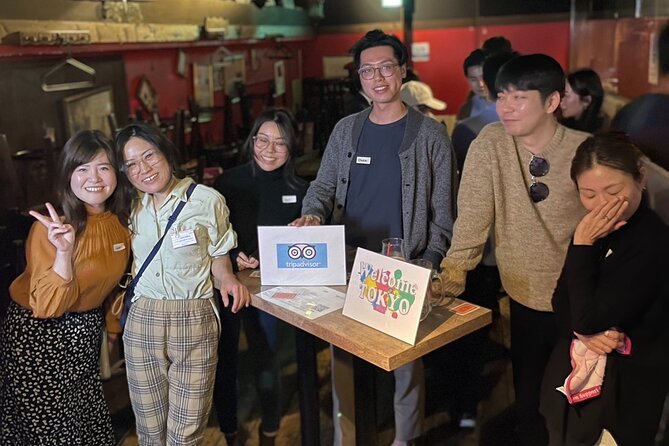
- The tour suits solo visitors: A small walking group makes it easier to meet people while getting help with local customs.
Why Shinjuku is a good place for a guided food crawl
Shinjuku can feel easy to navigate on the main streets and surprisingly hard to understand once you turn into its smaller lanes. The big signs and bright entertainment districts tell only part of the story. The real character often sits in compact bars with a handful of seats, a short menu, and no English explanation.
That is where this tour earns its keep. You are not simply shown a famous street and sent on your way. A guide takes responsibility for the awkward parts: finding the entrance, explaining what is available, helping with ordering, and giving you enough cultural context to understand what you are eating and drinking.
I particularly like this format for a first night in Tokyo. You get an introduction to two very different corners of Shinjuku without having to spend an evening guessing which doors are open to newcomers. The guide can also take photos during the walk, a useful touch when you are busy eating, carrying a drink, or trying to fit a whole alley into one picture.
The experience lasts about three hours and begins at AOKI Shinjukunishiguchi Honten at 1-chome-8-5 Nishishinjuku. It ends back at the same meeting point. The start is near public transportation, which matters in Shinjuku, where a short walk can turn into a confusing search through several station exits.
A few more Tokyo tours and experiences worth a look
Omoide Yokocho: Tokyo’s small-lane opening act
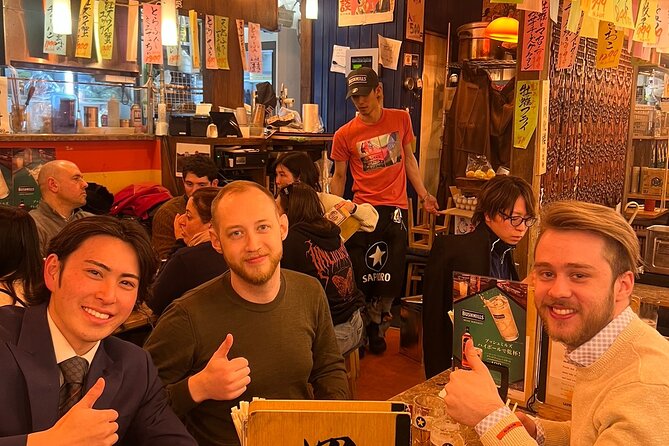
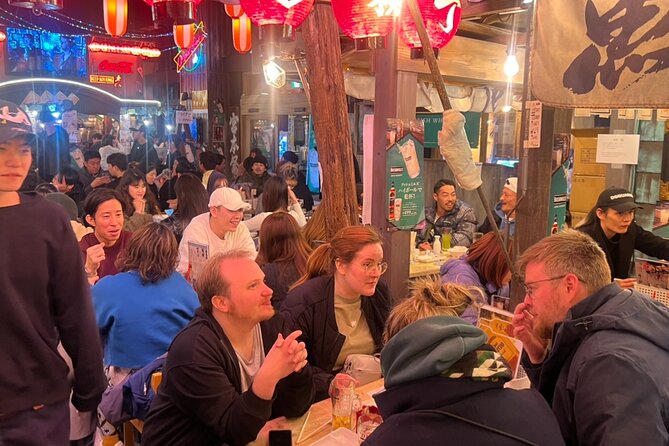
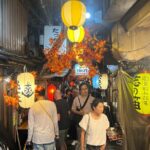
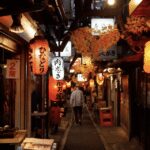
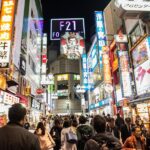
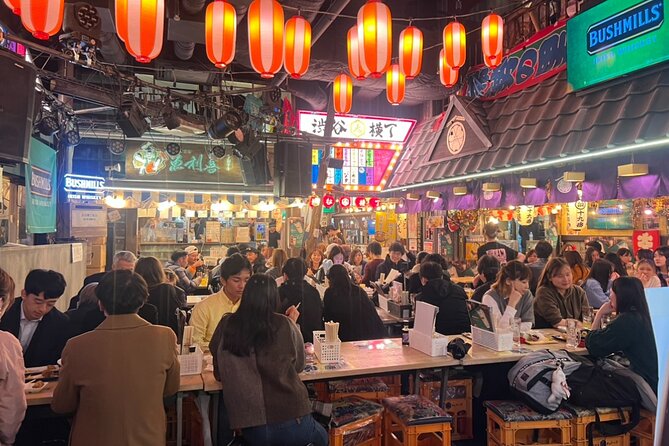
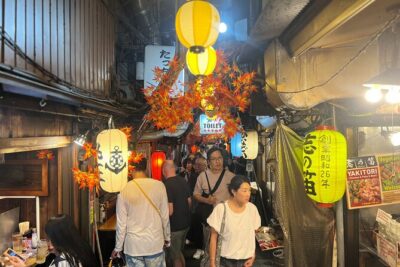
The first stop is Omoide Yokocho, also called Memory Lane. This narrow quarter is lined with tiny, lantern-lit izakayas and has a distinctly old Tokyo feel. The setting is one of the main reasons to book the tour. You are walking through a compact food district where the buildings, signs, and close seating create a very different mood from a modern department-store restaurant.
The name Memory Lane points to the area’s post-war roots, and the tour uses that setting to explain Tokyo’s drinking culture. You can expect the guide to provide local background while helping the group settle into the first food and drink stop.
This is not the place to expect spacious tables or a long, leisurely meal. The bars are small, and the appeal comes from their scale. You are close to the action, close to the cooking, and likely close to the other people in your group. If you prefer a quiet private dinner with plenty of room, this style may feel cramped.
The food is served as part of a wider tasting plan, with more than 10 dishes included across the evening. The first two stops have been described as offering light snacks and drinks, so I would treat the whole experience as a sampling tour rather than a guaranteed full dinner. Eat something small beforehand if you tend to need substantial meals, but do not arrive so full that you cannot try several dishes.
Omoide Yokocho is also a useful place to learn how much you can absorb from a guide’s explanation. A dish may look simple, yet its ingredients, serving style, or place in Japanese drinking culture can give it more meaning. The most praised guides are not only there to translate. They help you make choices and understand why the stop matters.
Kabukicho and Golden Gai: tiny bars, big personality
The second part takes you into Kabukicho, the famous nightlife district that contains Golden Gai. Golden Gai is made up of tightly packed lanes and very small bars, each with its own decoration, rules, and atmosphere. Some rooms have only a few seats. That is exactly why a guide is useful.
The tour promises access to bars that do not have English menus. This is one of the clearest reasons to choose it over an independent evening of wandering. You may find a place that looks inviting but have no idea what to order, how the seating works, or if the bar welcomes first-time visitors. A guide removes much of that uncertainty.
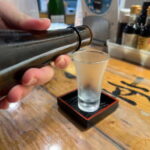
The food and drink choices include sake and cocktails, with beer also mentioned by participants. The exact selection can vary, so you should think of the drinks as part of the evening’s local introduction rather than a fixed tasting flight. Alcohol is served only to people aged 20 and older. Anyone under 20 receives non-alcoholic drinks.
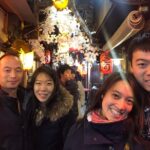
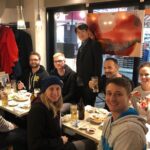
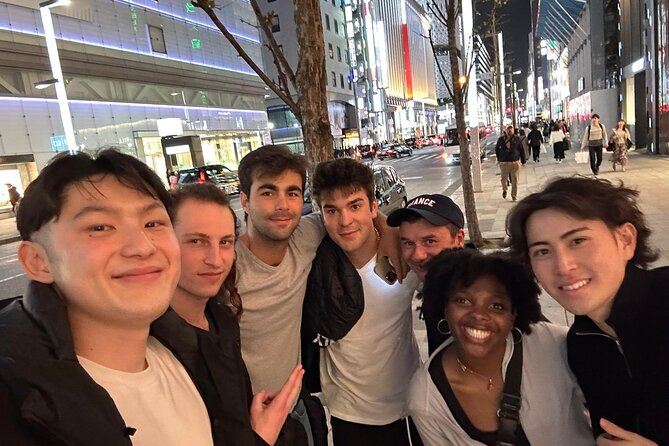
Golden Gai is also the tour’s most social section. You may be seated with people from several countries, which is helpful if you are traveling alone and want company for the evening. One departure had only a couple, which shows that group size can vary. The maximum is listed as 12 people, despite the tour highlights describing a maximum group size of 10, so do not book expecting a guaranteed tiny group.
A guide may take you to a local sake place that you would not have found or understood alone, followed by another upstairs bar with a speakeasy-like feel. Those details make the stop sound less like a standard pub crawl and more like an introduction to the small-bar culture of Shinjuku.
Still, Golden Gai is not designed for everyone. The lanes are tight, the bars are compact, and the atmosphere may be dim. If you want a broad view of Tokyo nightlife with large rooms and easy independent movement, this is not that. If you want unusual places and are happy to let the guide handle the route, it is a stronger match.
What the guides add to the experience
The guide is the most important variable on a tour like this. The supplied departures were led by May, Michael, Agathe, Bell, Kay, and Yota, and each received strong praise for a different reason.
May was noted for making the evening both informative and enjoyable. Michael was praised for showing places participants would not have considered and for creating an easygoing evening. Agathe helped with food and drink choices while explaining Japanese culture, then finished at a fun speakeasy-style bar.
Bell was singled out for local knowledge and for showing interesting parts of Shinjuku. Kay was described as entertaining and effective, while Yota was praised for warmth, local insight, and useful recommendations for the rest of a Tokyo visit.
Those comments point to the kind of help you should value here. You are paying for more than a set of dishes. You are paying for someone who can judge the mood of a bar, explain the customs, keep the group moving, and suggest what to try next.
Guide availability is not guaranteed, of course. Your booking may be assigned to someone else. The important point is that the experience depends heavily on the person leading it, so expect a social and conversational tour rather than a formal lecture.
The food: 10-plus dishes, but do not expect a banquet
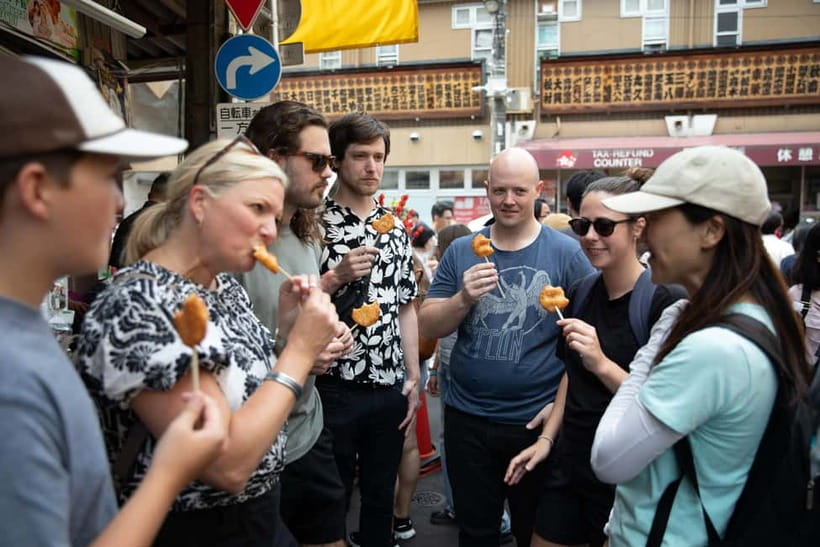
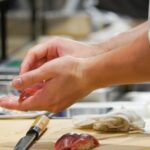
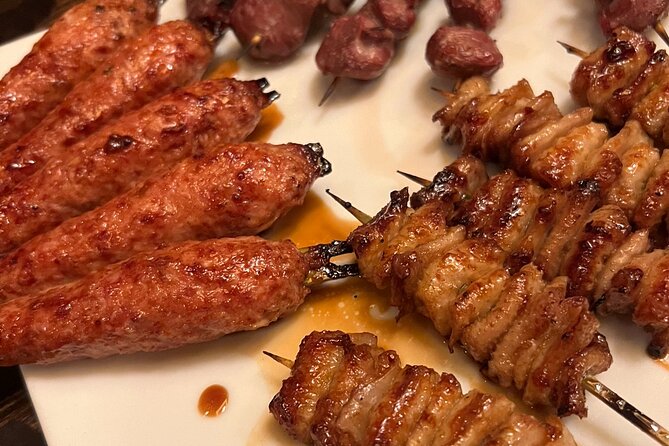
More than 10 dishes are included, which gives you a chance to sample several Japanese foods in one evening. The format is useful if you want variety and do not yet know what you like. Small portions also reduce the risk of committing to one unfamiliar dish at a full restaurant price.
The available information does not provide a complete dish-by-dish menu. That means you should not book expecting a precise list of sushi, grilled meats, noodles, or desserts. The emphasis is on local tasting and bar food, with the first stops described as light snacks and drinks.
The drink side includes sake and cocktails, and beer has been tried on at least one departure. The exact alcoholic offerings may change. Anyone aged 20 or older can receive alcoholic drinks, while minors receive non-alcoholic alternatives.
Dietary restrictions can be accommodated, including vegetarian, vegan, and gluten-free needs. You must state your requirements in the special requests section when booking. I would be specific rather than simply writing that you have a restriction, since a small bar may have fewer substitute options than a large restaurant.
The food is best understood as a way into Japanese eating and drinking customs. You can ask what a dish is, how it is normally eaten, and what drink works with it. That conversation is likely to be more valuable than checking off a long menu.
A few more Tokyo tours and experiences worth a look

Is $80 a fair price?
At $80 per person, this is not the cheapest way to eat in Shinjuku. You could spend less by choosing one casual restaurant and ordering independently. The price makes more sense when you count the guide, the route through two distinct districts, access to bars without English menus, more than 10 dishes, and photo help.
You are also paying to avoid wasted time. In Golden Gai, a wrong turn or an unsuitable bar can cost you an hour. A guide who knows where the group can enter and how to order gives the evening a clear purpose.
The value is strongest for first-time visitors, solo visitors, and anyone nervous about small Japanese bars. It is weaker for confident repeat visitors who speak Japanese, already know Shinjuku, or mainly want a large dinner.
Keep some yen with you. One participant specifically advised bringing enough cash after finding that the early stops involved light snacks and drinks without an admission price. The tour price does not clearly spell out every drink or bar expense, so ask your guide what is covered if you are unsure. Tips are optional.
Practical details that affect your evening
The experience uses a mobile ticket, and booking confirmation is received at the time of booking. Meet at AOKI Shinjukunishiguchi Honten, 1-chome-8-5 Nishishinjuku, Shinjuku City, Tokyo 160-0023. The activity returns to this meeting point rather than ending in a different part of the city.
Wear shoes you can walk in comfortably. The tour is a city walking and culture experience, and the route includes narrow nightlife lanes. The information says most people can participate, but it does not provide a detailed accessibility statement, so contact the provider if you have specific mobility needs.
The experience requires a minimum number of participants. If that minimum is not met and the tour is canceled, you are offered another date or experience, or a full refund. You can cancel for a full refund up to 24 hours before the start time. Cancellations or changes made within 24 hours are not accepted for a refund.
Who will enjoy this Shinjuku food tour most?
I would choose this tour if you are visiting Tokyo for the first time and want an evening that combines food, streets, and conversation. It is also a strong pick for solo visitors, since the group setting makes it easier to meet people while a guide handles the small-bar etiquette.
It suits curious eaters who want to try unfamiliar dishes without ordering an entire meal. It also works well for friends who want a structured night out rather than a long search through Shinjuku.
I would hesitate if you need a guaranteed full dinner, dislike alcohol-centered settings, or want to select every dish yourself. The tour is built around small bars, tasting portions, and local guidance. That brings variety and access, but less control than an ordinary restaurant reservation.
Should you book it?
Book this experience if your goal is to see the less obvious side of Shinjuku, try more than 10 dishes, and enter small bars where an English menu may not be available. The strongest reasons are the guide’s help, the local sake stop, the contrast between Omoide Yokocho and Golden Gai, and the chance to meet people if you are traveling alone.
Skip it if you want a large, predictable meal or if you already feel comfortable ordering and moving through Golden Gai independently. For most first-time visitors, $80 is reasonable when the food, guide, cultural explanation, and access are taken together. Bring cash, note your dietary needs in advance, and arrive ready for a compact, social evening rather than a formal restaurant dinner.
FAQ
How long does the Shinjuku food tour last?
The tour lasts approximately three hours.
Where does the tour begin?
It begins at AOKI Shinjukunishiguchi Honten, 1-chome-8-5 Nishishinjuku, Shinjuku City, Tokyo 160-0023, Japan.
Where does the tour end?
The experience ends back at the meeting point.
What areas does the tour visit?
The route includes Omoide Yokocho and Kabukicho, including the Golden Gai bar area.
How many dishes are included?
More than 10 dishes are included.
Can dietary restrictions be accommodated?
Yes. Vegetarian, vegan, gluten-free, and other dietary restrictions can be accommodated if you include the details in the special requests section when booking.
Are alcoholic drinks served to people under 20?
No. Alcoholic drinks are served only to people aged 20 and older. Participants under 20 receive non-alcoholic drinks.
More Food Experiences in Tokyo
More Tokyo Food Tours in Tokyo
More Shinjuku Tours in Tokyo
More tours in Tokyo we've reviewed












Tokyo Food Tours, compared.
 ★ 5.0Tokyo: Shinjuku Food Tour (13 Dishes at 4 Local Eateries)From $86
 ★ 4.9Tokyo: Shinjuku Food Tour (13 Dishes and 4 Eateries)From $97
 ★ 5.0Tokyo Night Foodie Tour in Shinjuku – Seasonal Sushi, Wagyu BeefFrom $111
 ★ 5.0Eat and Drink Like a Local: Tokyo Ueno Food Tour-Taverns&RamenFrom $95
 ★ 5.0Tokyo: Shibuya Food Tour (13 dishes and 4 Eateries)From $77
Tokyo: Shinjuku Food Tour – 15 Dishes, 3 Drinks, 4 EateriesFrom $723 hours
★ 5.0Tokyo: Shibuya Food Tour (13 dishes and 4 Eateries)From $77
Tokyo: Shinjuku Food Tour – 15 Dishes, 3 Drinks, 4 EateriesFrom $723 hours