Reviewed · KAMAKURA & ENOSHIMA DAY TRIPS
One Day Private Tour to Kamakura with English Speaking Driver
Kamakura packs Japan’s medieval story into a coastal day trip, from the 13-meter Great Buddha to samurai-era shrines and a quiet bamboo grove. Add Enoshima’s sea views, and you get far more than a temple checklist.
In This Article
- Key points at a glance
- Why Kamakura makes a strong day trip from Tokyo
- Hokoku-ji’s bamboo grove offers the quietest start
- Hase-dera combines gardens, incense, and sacred space
- The Great Buddha is Kamakura’s grandest moment
- Tsurugaoka Hachimangu connects Kamakura with the samurai era
- Enoshima adds the coast and a change of pace
- What the private vehicle changes
- Food, fees, and the real day-of cost
- Who will get the most from this tour
- Should you book this Kamakura day trip?
- FAQ
- What time does the tour start?
- How long does the tour last?
- How many people can join the private tour?
- Is pickup available?
- Are temple entrance fees included?
- What happens if the weather is poor?
I like the private format, which gives your group room to set the pace, and I like the 10-hour design, long enough to cover five major stops without turning the day into a rushed dash. Driver Hridoy is described as enthusiastic and entertaining, a useful touch on a long sightseeing day.
The main drawback is cost. At $391.22 for up to three people, this makes better financial sense for a small group than for one person, and entrance fees plus meals are extra. The plan also depends on good weather.
Key points at a glance
- Five major stops in one day: Visit Hokoku-ji, Hase-dera, Kotoku-in, Tsurugaoka Hachimangu, and Enoshima.
- A private vehicle for up to three people: Your party rides together instead of following a large group.
- Two hours planned at each stop: The schedule allows time for gardens, temples, the Great Buddha, and the coast.
- An English-speaking driver: Hridoy is described as friendly, enthusiastic, and entertaining.
- Tokyo pickup and vehicle comforts: Pickup is offered, with an air-conditioned vehicle, private transport, tolls, petrol, and Wi-Fi when available.
- Three temple admission fees are extra: Hokoku-ji, Hase-dera, and Kotoku-in are not included, while Tsurugaoka Hachimangu and Enoshima have no listed admission charge.
Why Kamakura makes a strong day trip from Tokyo
Kamakura gives you a change of rhythm. Tokyo is built around speed, height, and dense city streets. Kamakura brings stone paths, wooded temple grounds, coastal air, and places tied to Japan’s samurai past.
This tour is especially useful if you want to see several important sites but do not want to work out the connections yourself. Private transportation carries your group between the stops, and the driver can add context as you go. You still need to walk around each site, but you avoid piecing together the day with trains and local transfers.
The schedule begins at 8:00 a.m. and lasts about 10 hours. That is a full day, but the timing fits the number of places included. Each stop is allotted two hours, giving you a chance to look around instead of taking a quick photograph and moving on.
I would treat those two-hour blocks as a useful guide rather than a strict command. The tour is private, and the supplied information specifically highlights a flexible schedule. That matters at places such as Hase-dera, where gardens, religious buildings, and stone steps deserve a slower look, or Enoshima, where you may prefer coastal views over another formal monument.
A few more Tokyo tours and experiences worth a look
Hokoku-ji’s bamboo grove offers the quietest start
Hokoku-ji is a small temple best known for its tall bamboo grove. The bamboo creates a cool, hushed setting, a sharp contrast with the busy streets of Tokyo and the more imposing sights later in the day.
The two-hour allocation gives you time to walk through the grove without treating it as a five-minute photo stop. Listen to the leaves, look up through the narrow green columns, and take in the simple feeling of the place. This is the most peaceful part of the day.
Admission to Hokoku-ji is not included, so budget separately for the entry fee. The exact amount is not provided here, and prices can change, so check the current fee before departure if you want a precise total.
I like having this temple first. It starts the day with atmosphere rather than scale. The tradeoff is that anyone expecting a large temple complex may find the stop more restrained. Hokoku-ji’s appeal comes from its calm bamboo setting, not from a long list of buildings.
Hase-dera combines gardens, incense, and sacred space
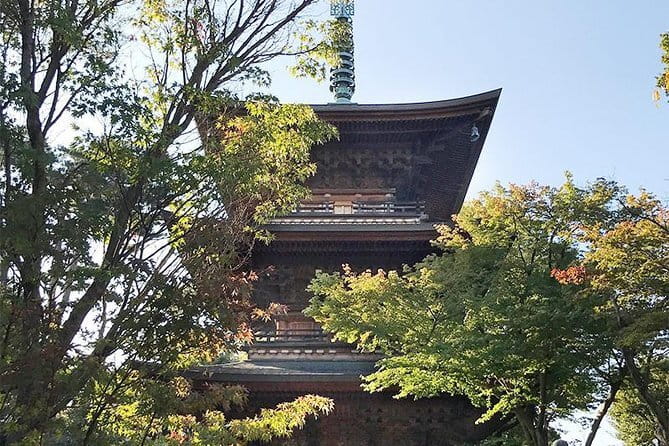
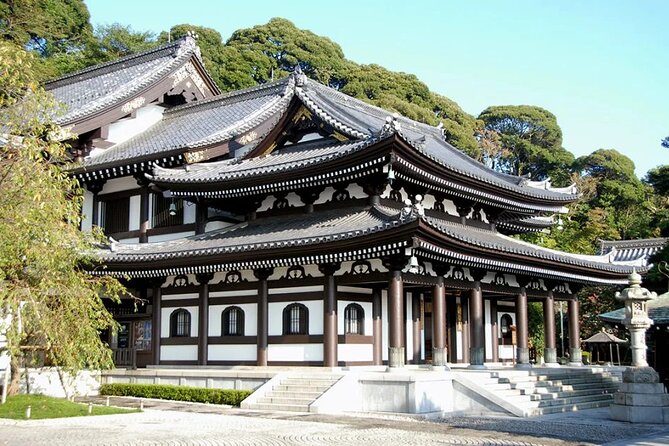
Hase-dera, also called Hase Temple, brings a different mood. You climb stone steps into a temple setting with lush gardens, fragrant incense, and a sense of long religious use. The grounds offer more variety than Hokoku-ji, so the two-hour stop feels justified.
Take your time on the ascent. The steps are part of the experience, but they also mean this stop may require more physical effort than simply strolling through a flat garden. The tour information says most people can participate, but it does not provide detailed accessibility information. If stairs are a concern, ask the provider before booking.
Hase-dera’s appeal is not only visual. Incense and the surrounding gardens help explain how these places function as spiritual sites, not just historic backdrops. An English-speaking driver who enjoys telling stories can add useful background, though the supplied information does not promise a dedicated temple guide at every stop.
Admission is extra here as well. Keep that cost in mind when comparing the advertised group price with your final spending.
The Great Buddha is Kamakura’s grandest moment
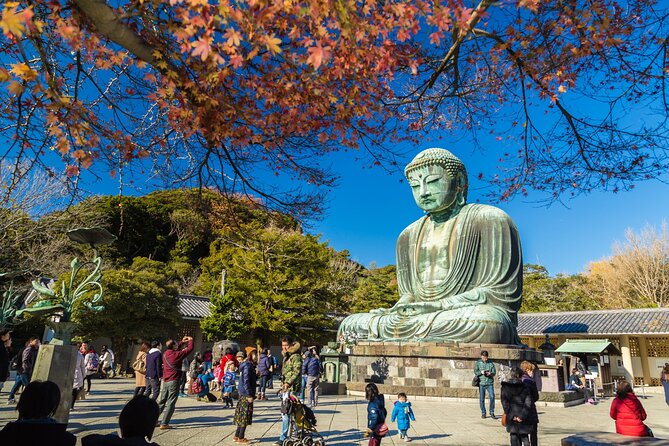
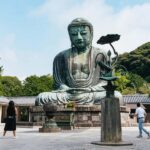
Kotoku-in Temple holds Kamakura’s best-known landmark, the Great Buddha. The bronze figure rises more than 13 meters and dates to the 13th century. Its size gives the stop immediate impact, but the simple setting around it keeps the statue from feeling lost in a huge complex.
This is the place where the city’s medieval past becomes easy to grasp. You are looking at an object made centuries ago that remains the focus of the visit today. The statue’s calm expression and scale make it memorable even if you have already seen many temples and shrines in Japan.
Two hours is generous for the Great Buddha itself, which means you can take photographs, look closely at the bronze work, and spend time around the temple grounds. It also gives the driver flexibility if your group wants less time here and more time at another stop, although you should confirm how much schedule adjustment is practical on the day.
Kotoku-in’s admission fee is not included. This is one of three paid temple entries listed for the tour, along with Hokoku-ji and Hase-dera.
Tsurugaoka Hachimangu connects Kamakura with the samurai era
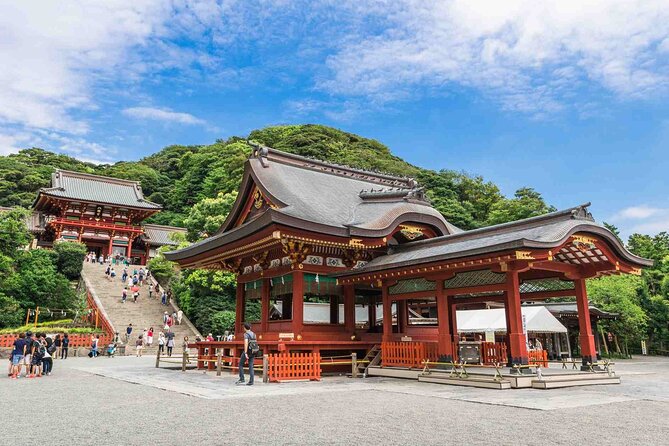
Tsurugaoka Hachimangu is the principal shrine stop and one of the clearest places to connect Kamakura with the military culture of medieval Japan. It is dedicated to Hachiman, the Shinto god of war and patron deity of the samurai.
The shrine offers a different religious setting from the Buddhist temples earlier in the day. That contrast is valuable. Instead of seeing a series of similar temple grounds, you get a broader picture of Japan’s religious traditions and Kamakura’s role in the age of the samurai.
Admission is listed as free, which helps balance the three temples with entry fees. Two hours lets you explore without immediately returning to the vehicle. The shrine is also a good point in the day to focus on the wider meaning of Kamakura, rather than only collecting famous sights.
The information provided does not identify individual buildings or ceremonies available on your date, so I would avoid planning around a particular event. Think of this as a spacious cultural stop where the setting and historical associations matter most.
Other private tours in Tokyo


Enoshima adds the coast and a change of pace
Enoshima shifts the tour from temples and shrines to the sea. The island is known for beaches, gardens, historic religious sites, small shops, cafes, and views toward Mount Fuji. The Fuji view depends on weather and visibility, so consider it a possibility rather than a promise.
This is a smart final stop. After several hours of formal sightseeing, you can walk through streets lined with shops and cafes or focus on the coastal setting. Enoshima is also listed with no admission fee, though food, drinks, and any optional purchases are your responsibility.
Two hours will let you get a taste of the island, but it is not enough for every corner if you want to explore at a slow pace. That is one reason the private format helps. Your group can decide if the priority is scenery, shopping, or historic sites.
The tour information does not specify which parts of Enoshima are included or how far the vehicle can take you. If someone in your group has limited stamina, ask about the walking involved before booking. The island portion may be the least predictable in terms of pace because your interests will shape the stop.
What the private vehicle changes
A private tour for up to three people is not the cheapest way to reach Kamakura, but it buys convenience. You do not have to match your day to a shared group, wait for strangers, or worry about splitting up after a stop.
The vehicle is air-conditioned, and private transportation, tolls, and petrol are included. Wi-Fi is available in the vehicle when offered. Pickup is available, and the listed start time is 8:00 a.m.
The group limit matters for value. At the full price of $391.22, three people would pay about $130.41 each before temple admissions and meals. Two people would pay about $195.61 each, while a solo booking would carry the full group price. If you are traveling alone, public transportation may be less expensive, though it would not provide the same door-to-door convenience or private schedule.
The driver is an important part of the experience. Hridoy is specifically described as enthusiastic and entertaining, and the tour is built around an English-speaking driver. That can make the long day feel more personal, especially when moving between sites. Still, the service is driver-led rather than clearly presented as a specialist historian-led walking tour, so choose it for convenience, flexibility, and live commentary rather than an academic lecture.
Food, fees, and the real day-of cost
The headline price covers the vehicle-based parts of the tour, but you need to add three categories of spending.
First, admission fees for Hokoku-ji, Hase-dera, and Kotoku-in are excluded. Tsurugaoka Hachimangu and Enoshima have no listed admission charge.
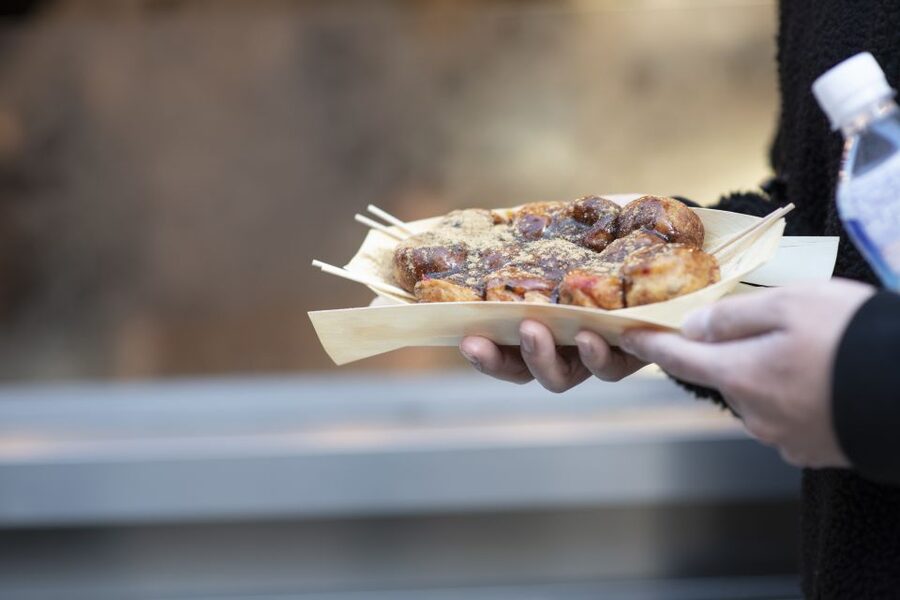
Second, food and drinks are not included. Enoshima has cafes and shops, and Kamakura is associated with seafood and traditional Japanese sweets, so you will have opportunities to buy something. The tour does not specify a restaurant or a set lunch, which gives you freedom but also means you should not expect meals to be arranged.
Third, the final per-person value depends on your group size. For three people who value comfort and time, the price can be reasonable. For one person, it is a premium day trip. I would compare it with the cost of arranging trains, local transport, and entrance fees independently, while also placing a value on not having to navigate the route.
Who will get the most from this tour
I would recommend this outing to a small group that wants Kamakura’s main sights in one organized day. Families, friends, and couples can benefit from the private vehicle, especially if they prefer not to manage several connections from Tokyo.
It also suits people who want flexibility. The strong points are the long duration, the private setting, and the ability to spend more time at a favorite stop. The positive feedback about an adaptable schedule and a friendly driver supports that choice.
You should think twice if your priority is a slow, highly specialized cultural tour. Five stops in 10 hours is a lot. Even with two hours planned at each place, the day includes travel between sites and a full amount of walking. Someone who wants to sit quietly in one temple garden for half a day may prefer a shorter, narrower itinerary.
The weather requirement is another practical point. If poor weather causes cancellation, you will be offered a different date or a full refund. Otherwise, free cancellation is available up to 24 hours before the start time. Changes or cancellations inside that 24-hour window are not accepted for a refund.
Should you book this Kamakura day trip?
I would book it if you have two or three people, want private transport, and care most about seeing Kamakura’s headline sights without planning every connection. The mix is strong: bamboo at Hokoku-ji, gardens and incense at Hase-dera, the Great Buddha, a samurai-linked shrine, and coastal Enoshima.
I would not book it solely for the low price, because it is not a budget tour for a solo visitor and three temple fees plus food are extra. But for a small group that values time, comfort, an English-speaking driver, and a flexible schedule, it is a practical way to make a full day of Kamakura.
FAQ
What time does the tour start?
The tour starts at 8:00 a.m.
How long does the tour last?
The experience lasts approximately 10 hours.
How many people can join the private tour?
The price covers one private group of up to three people. Only your group participates.
Is pickup available?
Yes. Pickup is offered, and the tour begins at the listed 8:00 a.m. start time.
Are temple entrance fees included?
No. Admission to Hokoku-ji Temple, Hase-dera Temple, and Kotoku-in Temple is not included. Tsurugaoka Hachimangu Shrine and Enoshima have no listed admission charge.
What happens if the weather is poor?
The experience requires good weather. If it is canceled because of poor weather, you will be offered another date or a full refund. You can also cancel up to 24 hours before the start time for a full refund.
More 1-Day Tours in Tokyo
More Private Tours in Tokyo
More Kamakura & Enoshima Day Trips in Tokyo


More tours in Tokyo we've reviewed












Kamakura & Enoshima Day Trips, compared.
 ★ 4.5Tokyo: Kamakura & Enoshima Day Trip including Temple TicketsFrom $589 hours - 570 minutes
 ★ 5.0Mount Fuji, Kamakura, Big Buddha, & Lake Ashi Day TripFrom $109
 ★ 4.7Tokyo: Mt Fuji, Kamakura, Lake Ashi & Big Buddha Guided TourFrom $50
 ★ 4.5From Tokyo: Kamakura & Enoshima 1-Day Bus TourFrom $66
 ★ 4.9Tokyo:Sea of Mount Fuji, Hakone Ropeway, Ōwakudani, EnoshimaFrom $5010 hours
 ★ 5.0Kamakura 8 hr Private Walking Tour with Licensed Guide from TokyoFrom $201