Reviewed · DINNER EXPERIENCES
Tokyo: Traditional Japanese Performing Arts Show and Dinner
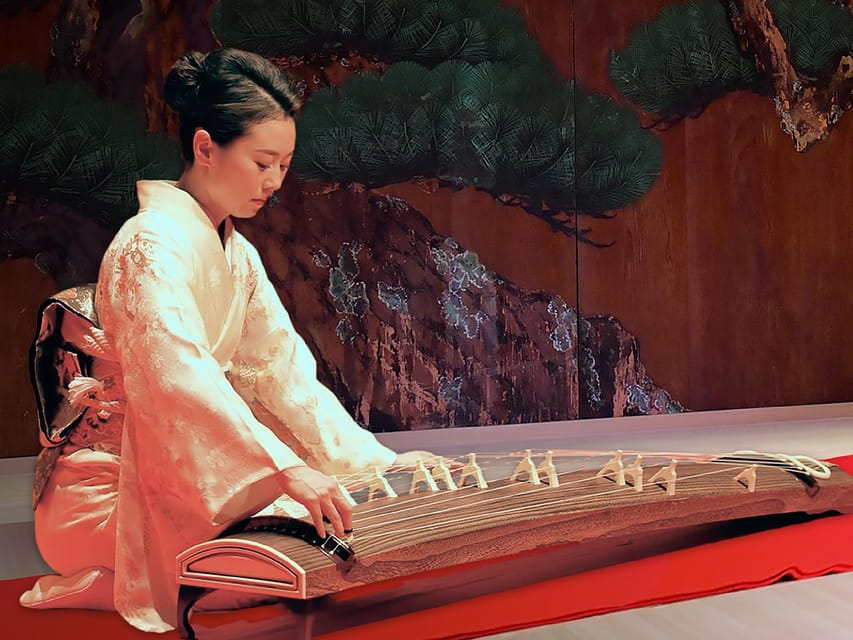
Tokyo’s SUIGIAN combines a seasonal Japanese course dinner with traditional music and dance in a small theater beneath Fukutoku Shrine. The Noh-style stage, old pine backdrop, historic dishes, and carefully paced service make dinner feel like a cultural evening rather than a simple meal.
In This Article
- Key points to know before booking
- Entering SUIGIAN beneath Fukutoku Shrine
- How the two to three hour evening unfolds
- The stage: Noh design and close-up viewing
- Choosing between kagura and nihon-buyo
- What arrives on the seasonal dinner menu
- Service, explanations, and the pace of dinner
- How much value do you get for $140?
- Dietary needs and age limits
- Who will enjoy this evening most?
- Booking details that matter
- Should you book SUIGIAN?
- FAQ
- Where is the Traditional Japanese Performing Arts Show and Dinner held?
- How do I reach SUIGIAN by train?
- How far is the venue from Tokyo Station?
- How long does the experience last?
- What type of performance will I see?
- How many performances are included?
- What food is included?
- Are drinks included?
- Can the restaurant accommodate allergies or vegetarian requirements?
- Are children and wheelchair users allowed?
I like the excellent central location and the thoughtful English explanations of the food and performance. I also like the four seat choices, which let you decide how close you want to be to the stage. The main caution is that the performances are short, usually three segments of about 10 minutes, so the dinner is the larger part of the experience.
Key points to know before booking
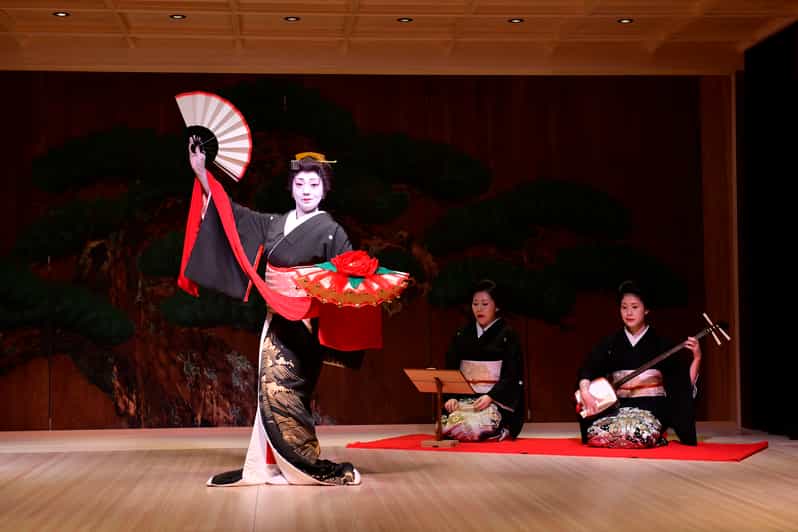
- Three short live performances: The program features either kagura, ancient Shinto music and dance, or nihon-buyo, traditional Japanese dance, depending on the date.
- A full seasonal meal: Expect a multi-course Japanese dinner with bonito broth, seasonal dishes, grilled Japanese beef, rice, dessert, matcha, and dry sweets.
- A striking underground setting: SUIGIAN sits below Fukutoku Shrine, with a Noh-style stage and displays connected to Japanese tradition.
- Four seat categories: Your selected option determines where you sit and how close you are to the stage.
- A slow, formal evening: Allow two to three hours. This is not a quick meal before another attraction.
- Dietary requests must be made early: Tell the restaurant about allergies, vegetarian needs, gluten restrictions, or other limits when you reserve.
Entering SUIGIAN beneath Fukutoku Shrine
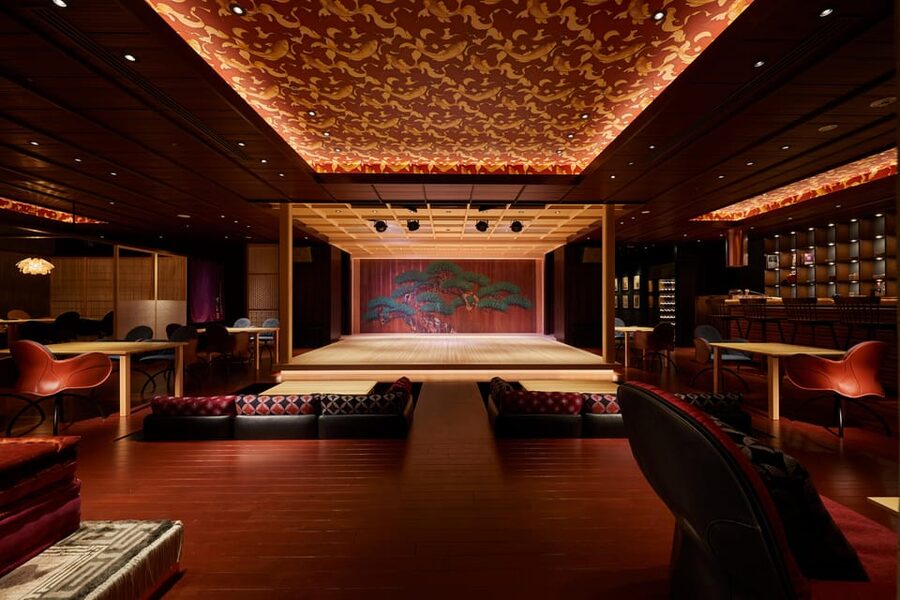
Finding SUIGIAN is part of the fun, though the directions could be clearer. The restaurant and lounge are in the basement of Fukutoku Garden, at 2-5-10 Nihonbashi Muromachi in central Tokyo. Look for the entrance at the corner of the park and go down toward the restaurant beneath the historic shrine.
From Mitsukoshi-mae Station, take Exit A6. The walk is about one minute, with access through the Coredo Muromachi 2 basement area. Shin-Nihonbashi Station is about six minutes away on foot, while Tokyo Station takes roughly 10 minutes from the Nihombashiguchi Exit.
A taxi from Tokyo Station takes about six minutes and costs around ¥600, according to the provided estimate. By car, the restaurant is about six minutes from the Kyobashi exit of the Inner Circular Route. The setting feels removed from the traffic above, even though you are in one of Tokyo’s central business and shopping districts.
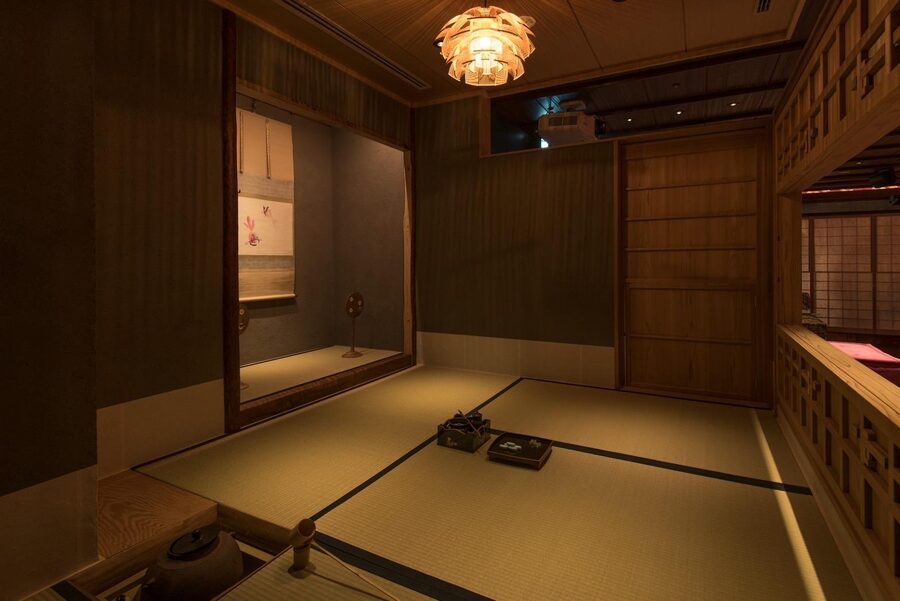
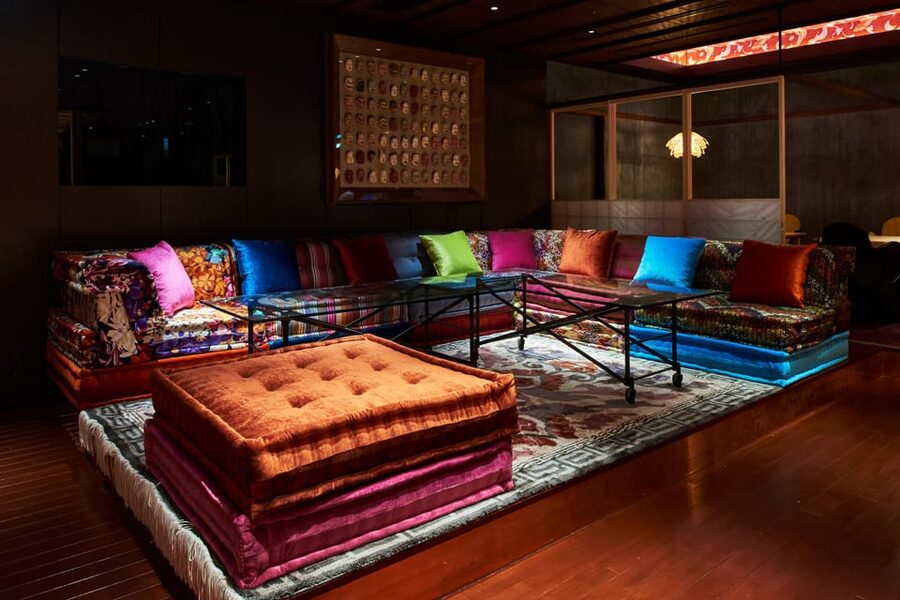
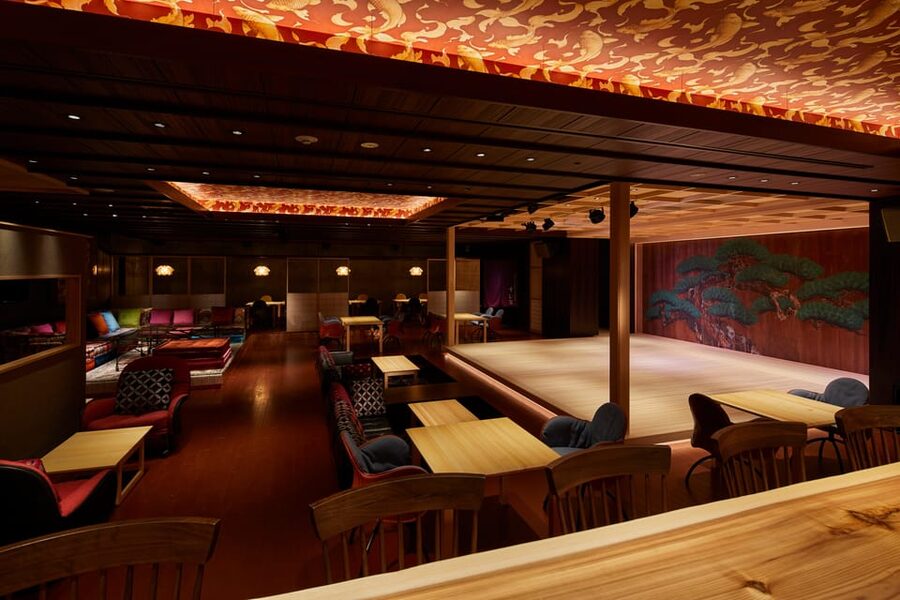
The interior is sleek but grounded in Japanese tradition. You will see artwork, traditional decoration, and trays and dishes said to be more than 350 years old, inherited from another restaurant in Nagasaki. That tableware matters because it turns the meal into more than a sequence of plates. You are also seeing objects with a long place in Japanese dining culture.
The atmosphere is formal without being stiff. Staff members are attentive and kind, and English explanations are available for the food and performances. That makes a real difference if you do not know the names, ingredients, or customs connected with a Japanese course meal.
A few more Tokyo tours and experiences worth a look

How the two to three hour evening unfolds
The experience is built around dinner, with the performances placed between courses. You are not sitting through one long stage show. Instead, you eat at a deliberate pace, then watch a short performance, then return to the meal.
The exact running order and menu can change. SUIGIAN serves an omakase course, meaning the chef selects the dishes, and both the food and performance program depend on the day. Plan on two to three hours from arrival to the end of dinner.
This slower rhythm suits the setting. The meal is intended to be enjoyed carefully, not rushed between sightseeing stops. If you have spent the day walking through Tokyo, the calm pace can be a welcome change. If you want a fast dinner followed by drinks or a late train, this is the wrong format.
A commemorative photo with the performers may be available at the end. The opportunity is especially nice for a birthday, anniversary, or other special occasion, but it should not be treated as the central feature of the booking.
The stage: Noh design and close-up viewing
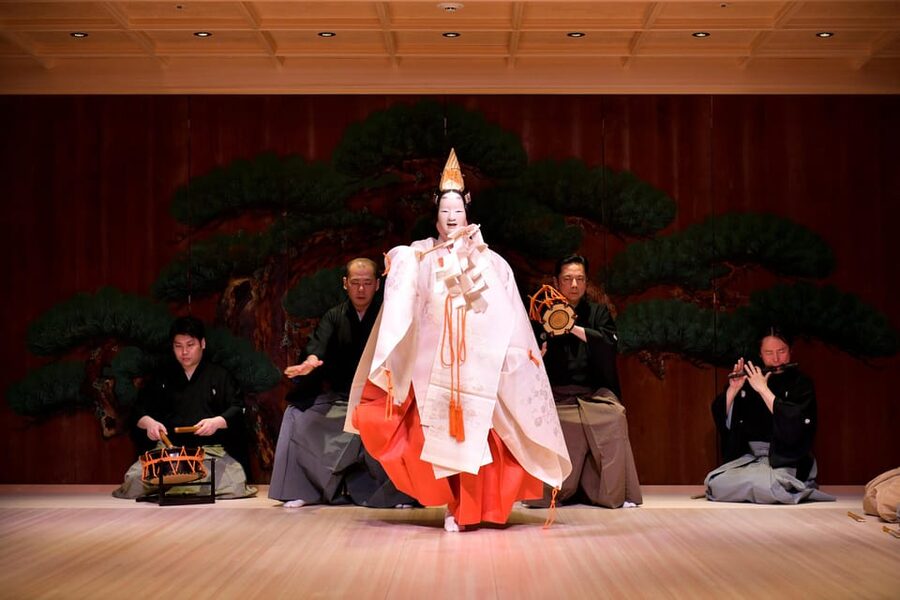
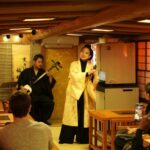
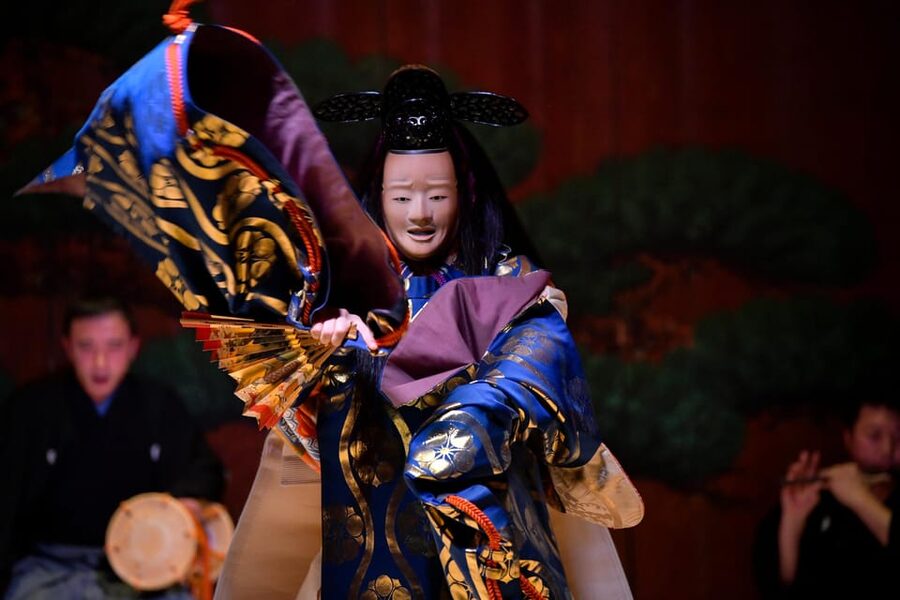
The stage is arranged in Noh style, with a backdrop showing an old pine tree. This simple design gives the room a strong sense of place and keeps your attention on the performers.
You choose from four seat options. The exact names and placement of the options are not provided, but the choice is intended to affect your distance from the stage and your viewing position. If seeing the movement clearly is important to you, check the available seat categories before paying.
The close seating can be a real advantage. Traditional dance often depends on controlled hand movements, costume details, posture, and small shifts in expression. A distant view would still give you the general effect, but a nearby seat lets you notice more of the performance.
The format is also approachable for first-time visitors. You do not need prior knowledge of Noh theater, Shinto ritual, or Japanese dance to appreciate the movement, music, costumes, and staging. English explanations help explain the basic cultural setting and the role of what you are seeing.
Choosing between kagura and nihon-buyo
The performance changes by date, so check the calendar carefully when you book.
On the listed February and March dates of February 5, 10, 17, and 25, and March 10, 17, and 24, the program is regular kagura. Kagura is ancient Shinto music and dance. On other February and March dates, the regular program is nihon-buyo, traditional Japanese dance.
Each program includes three performances of about 10 minutes. That means the total live performance time is roughly 30 minutes, although the individual segments may be described as shorter on some evenings. The schedule and pricing can vary by day.
Nihon-buyo may be the easier choice if you want to focus on traditional dance. The controlled movements and visual storytelling can be followed even when you do not understand the music or lyrics. Kagura offers a different window into Japanese culture, with a connection to Shinto music and ritual.
Do not assume that every date features the same performers, style, or amount of dancing. One evening may include a dancer with shamisen and vocalist, while another may present a different program. The attraction is the chance to see a live traditional art in a restaurant setting, not a fixed theater production with an identical script each night.
What arrives on the seasonal dinner menu
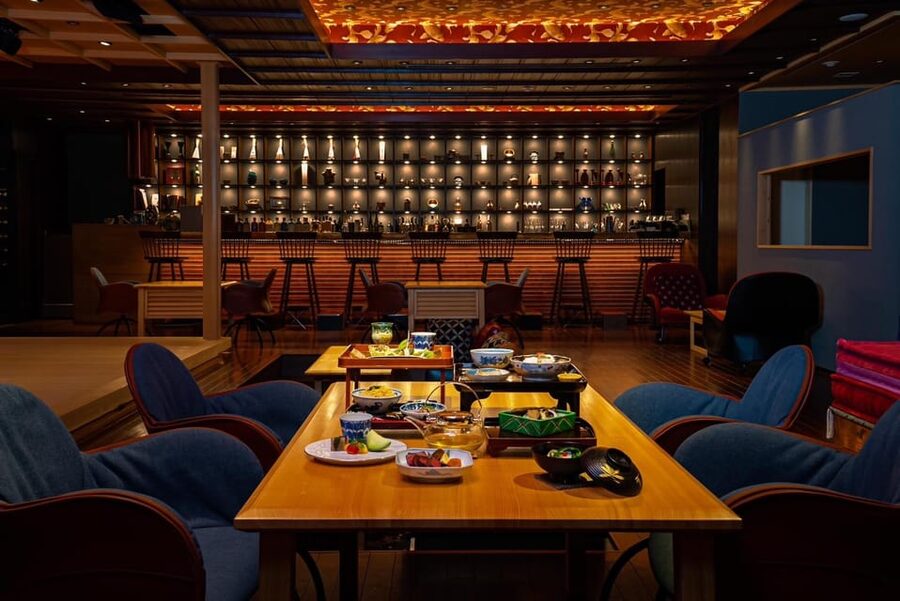
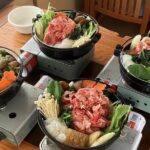
The meal is a full Japanese course dinner prepared with fresh ingredients and bonito broth. The menu is seasonal, so you should expect the food to change during the year.
A typical course includes:
- An appetizer
- A first seasonal platter
- Soup
- A later seasonal platter
- A grilled dish featuring Japanese beef
- Rice
- Dessert
- Matcha green tea and dry sweets
The presentation is a major part of the meal. Dishes arrive in a measured sequence, often on the historic trays and plates displayed throughout the restaurant. The food is designed to reflect the season, so you are not simply ordering a standard set menu that remains unchanged.
The meal is generous enough to leave you full, but it may not feel familiar if you normally prefer simple Western dishes. Seafood can feature heavily. The menu may include several seafood servings, fish soup, and tea or sweets with flavors that some diners find unusual.
That is not a criticism of the kitchen. It is a practical warning about the style of food. If you enjoy trying Japanese ingredients and seasonal preparations, the omakase format is part of the appeal. If you dislike seafood or need a predictable menu, ask about possible substitutions before you reserve.
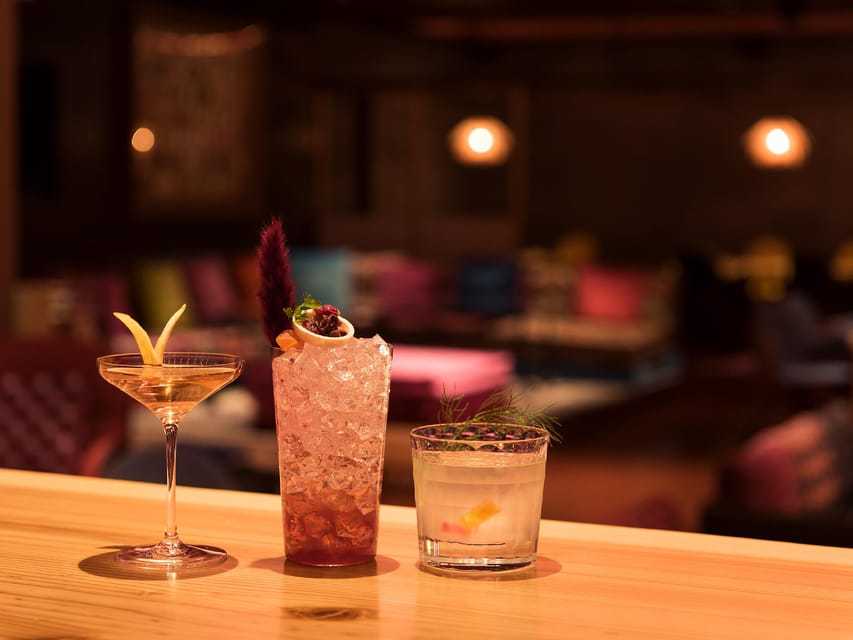
No drink other than water is included with the meal. Budget separately if you want sake, wine, beer, or another beverage. The supplied information does not specify the drink menu or prices, so confirm those details at the restaurant.
A few more Tokyo tours and experiences worth a look

Service, explanations, and the pace of dinner
Service is one of SUIGIAN’s strongest features. Staff members explain the food and cultural details in English, answer questions, and maintain a calm, attentive pace.
That help is useful because a Japanese course meal can otherwise feel like a puzzle. You may not know which dish is seasonal, what the broth contains, or how the courses fit together. Clear explanations allow you to pay attention to the taste and presentation instead of guessing.
The pace is intentionally slow. Food is served course by course, with music and dance placed between portions of the dinner. I would allow the full three-hour window rather than scheduling something immediately afterward.
This is also a good setting for a special meal with a partner or small group. The formal service, decorated interior, live performance, and photo opportunity give the evening a sense of occasion. Groups can enjoy it too. A party of nine has been accommodated, including a gluten-free request, but dietary needs should still be sent in advance.
One useful practical point: the restaurant has helped arrange taxis after dinner and waited with diners until the taxi arrived. That kind of assistance is valuable late in the evening, although you should not rely on it as a guaranteed part of the booking.
How much value do you get for $140?
The listed price is $140 per group up to one person, though you should confirm the exact charge shown for your party and date before booking. It is a high price for dinner, especially when drinks are extra.
The value comes from combining several things that would otherwise require separate planning: a seasonal Japanese meal, a decorated cultural venue, live traditional performance, English explanations, and a selected seat. You are paying for the setting and service as much as for the food itself.
Compared with a quick restaurant meal, the cost is difficult to justify if you only want dinner. Compared with a high-end Japanese course meal plus a theater or cultural performance, it can make more sense. The experience offers a compact introduction to Japanese food and performing arts in one evening, right in central Tokyo.
I would consider it best for a special occasion or for someone who wants a polished cultural evening without arranging several separate activities. It is less suitable for a budget-conscious diner, a person who dislikes seafood, or anyone who prefers casual meals.
The meal’s quality has been praised alongside the presentation. Some diners have compared the food favorably with Michelin-starred kaiseki meals in Kyoto, while another found the food only acceptable because of its strong seafood focus. That range is a useful reminder: the setting and service are consistent attractions, but the menu will not suit every palate.
Dietary needs and age limits
The restaurant asks you to provide details about allergies, vegetarianism, gluten restrictions, or other foods you cannot eat when you make the reservation. Because the meal is chef-selected, the kitchen may not be able to handle a request made only after you arrive.
Check with everyone in your party before booking. Even a food preference that seems minor can matter when the menu is built course by course around the chef’s choices.
Gluten-free accommodation has been possible for at least one party, but that does not guarantee every request on every date. Send the information in advance and ask for confirmation if your needs are strict.
Children under 10 are not permitted. The two to three hour duration and formal pacing also make this more natural for adults and older children.
The venue is wheelchair accessible. If you use a wheelchair or have specific mobility needs, it is still sensible to confirm the route from the station and the seat arrangement directly with SUIGIAN at +81-3-6262-0826.
Who will enjoy this evening most?
Book this experience if you want:
- A first taste of traditional Japanese performing arts
- A polished evening in central Tokyo
- A seasonal course meal rather than a casual bowl of noodles
- English help with unfamiliar food and customs
- A special dinner for a birthday, anniversary, or date
- A comfortable seat close to a small stage
- A quiet way to spend two or three hours after a full day of sightseeing
Think twice if you want a long theatrical production. Three performances of about 10 minutes each provide a pleasant cultural accent, but the evening is primarily a dinner with live arts between courses.
You should also think twice if seafood is not your thing. The menu usually includes several seafood elements, and the chef chooses the course. Ask before booking rather than hoping the restaurant can rebuild the meal after you arrive.
Booking details that matter
Free cancellation is available up to 24 hours in advance for a full refund. The reserve-now, pay-later option can help if your Tokyo schedule is still shifting.
Starting times vary, so check availability for your chosen date. The contents of the performance and the price may also change by day, particularly between kagura and nihon-buyo programs.
The restaurant phone number is +81-3-6262-0826. Keep the address handy: Fukutoku Garden B1F, 2-5-10 Nihonbashi Muromachi, Chuo-ku, Tokyo 103-0022.
Should you book SUIGIAN?
I would book SUIGIAN if you want one carefully planned evening that joins Japanese food, design, music, and dance. The historic tableware and shrine setting give the dinner a character that an ordinary restaurant cannot match, while the English explanations make the experience easier to follow.
Just set your expectations correctly. This is a slow, high-priced course meal with three short performances, not a full-length stage show. For a special occasion, a first visit to Tokyo, or an evening devoted to traditional culture, the combination is persuasive. For a quick dinner or a strict low-seafood diet, spend your money elsewhere.
FAQ
Where is the Traditional Japanese Performing Arts Show and Dinner held?
It is held at Theater Style Restaurant & Lounge SUIGIAN, in Fukutoku Garden B1F at 2-5-10 Nihonbashi Muromachi, Chuo-ku, Tokyo 103-0022.
How do I reach SUIGIAN by train?
Take the Tokyo Metro Ginza Line or Hanzomon Line to Mitsukoshi-mae Station and use Exit A6. The restaurant is about a one-minute walk away, near Coredo Muromachi 2 B1F.
How far is the venue from Tokyo Station?
SUIGIAN is about a 10-minute walk from Tokyo Station’s Nihombashiguch Exit. A taxi takes about six minutes and costs approximately ¥600.
How long does the experience last?
Allow two to three hours for the dinner and performances.
What type of performance will I see?
The program is either kagura, ancient Shinto music and dance, or nihon-buyo, traditional Japanese dance. The program depends on the date.
How many performances are included?
The regular program includes three performances. Each is planned for about 10 minutes, although the exact length and program can vary.
What food is included?
A Japanese full-course dinner is included. A typical meal has appetizers, seasonal platters, soup, grilled Japanese beef, rice, dessert, matcha green tea, and dry sweets.
Are drinks included?
No drink other than water is included with the meal.
Can the restaurant accommodate allergies or vegetarian requirements?
You must tell the restaurant about allergies, vegetarianism, gluten restrictions, or other dietary needs when you reserve. Requests made after arrival may not be possible to accommodate.
Are children and wheelchair users allowed?
Children under 10 are not permitted. The venue is wheelchair accessible.
More Dinner Experiences in Tokyo
More Dining Experiences in Tokyo
More Shows & Performances in Tokyo

More tours in Tokyo we've reviewed












Dinner Experiences, compared.
 ★ 5.0Tokyo Bar Hopping Tour in Shinjuku (All-You-Can-Drink + Dinner)From $106
 ★ 4.8Tokyo: Sumo Show and Dining ExperienceFrom $7990 minutes - 2 hours
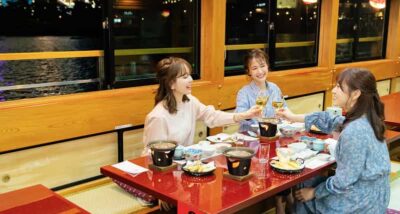 ★ 4.6Sumida River: Japanese Traditional Yakatabune Dinner CruiseFrom $1032h 30m
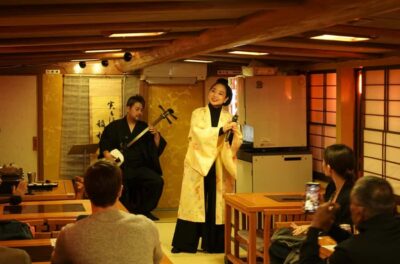 ★ 4.7Tokyo: Yakatabune Dinner Cruise with Japanese Show & DrinksFrom $104
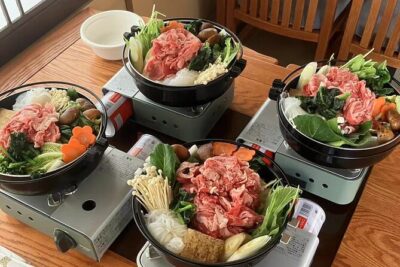 ★ 4.5Tokyo Bay Yakatabune Dinner/Day Cruise with Japan Show and DrinksFrom $65
 ★ 4.7Tokyo Bay: Traditional Japanese Yakatabune Dinner CruiseFrom $1083 hours