Reviewed · TOKYO FOOD TOURS
Tokyo: Allstar Food Tour
Tokyo: Allstar Food Tour takes you from polished Ginza to the old-school drinking alleys of Yurakucho. The best part is the contrast: one moment you are under the famous Wako clock tower, and soon after you are near red lanterns, railway-side yakitori shops, and compact izakaya where space is part of the charm. Regional food and seasonal tastes give the evening a useful introduction to Japan beyond sushi.
In This Article
- Key points at a glance
- From Wako’s clock to Tokyo’s dinner table
- What the Ginza opening adds
- Yurakucho’s railway-side izakaya
- Regional flavors in small portions
- How much food do you actually get?
- The guide makes the difference
- Is $181 a fair price?
- Who should book this food tour?
- My take: book it for orientation and access
- FAQ
- Where does the Tokyo Allstar Food Tour meet?
- Which Ginza Station exit should I use?
- How long does the tour last?
- What neighborhoods does the tour visit?
- Is the tour conducted in English?
- How large is the group?
- What is included in the price?
- Are hotel pickup and transportation included?
- Can I request dietary options?
- What documents are required?
I like the small group of up to 10, which makes a tiny pub visit much easier than it would be with a busload of people. I also like the food context, from a snack shop with more than 300 years of history to the customs of Japanese drinking and dining. The main consideration is price: at $181 per person, this is not a cheap dinner, and transportation, extra food, and additional drinks cost more.
Key points at a glance
- Ginza to Yurakucho in one evening: See Tokyo’s luxury shopping district and its retro railway-side alleys on foot.
- Three hours of guided tasting: Several food stops include dishes, snacks, two drinks, and dessert.
- A look at izakaya culture: Learn how Japanese pubs work and why these small places matter to local dining life.
- A centuries-old snack tradition: Visit a specialty shop with more than 300 years of history and taste crisp rice crackers made from a recipe dating back more than 200 years.
- Personal guide attention: The group is limited to 10, with English-speaking guides such as Sandra, Josh, Motoko, Ryan, Anne, and Satoshi having led past departures.
- Useful first-night choice: The food, neighborhood orientation, and cultural explanation can help you get your bearings early in a Tokyo visit.
From Wako’s clock to Tokyo’s dinner table
Your meeting point is in front of the Ginza Wako Building, about a minute from Ginza Station. This is a sensible place to begin. The landmark is easy to identify, and the A9 exit puts you close to the stated meeting spot at Ginza 4-chome Crossing.
Ginza gives the tour an impressive opening. This is Tokyo’s most luxurious and expensive district, known for major department stores, polished streets, and long-established businesses. You are not simply being led from one restaurant to another. The walk sets up a useful contrast between formal Ginza and the more relaxed Yurakucho area.
That contrast is one of the strongest reasons to book. Tokyo can feel like a collection of separate worlds, and these neighborhoods show the change in mood within a short distance. Ginza feels smart and carefully presented. Yurakucho brings you closer to the older drinking culture found around the railway tracks.
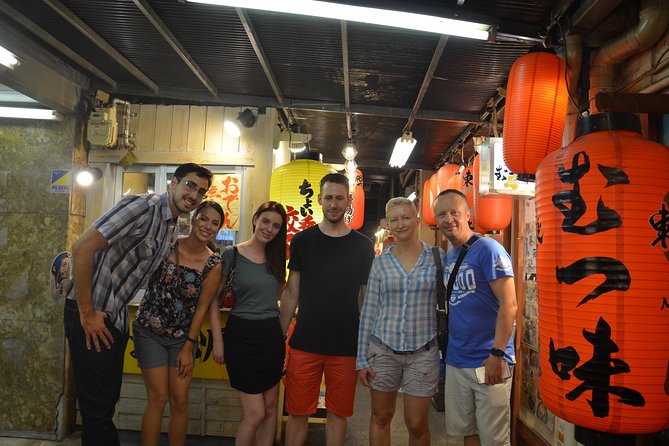
Your guide explains local food customs as the group walks. Since the tour is in English, you can ask questions as the evening unfolds rather than trying to decode every unfamiliar menu on your own. Past guides have included Sandra, Josh, Motoko, Ryan, Anne, and Satoshi. The assigned guide may vary, but the experience is built around a personal host rather than a recorded explanation.
A few more Tokyo tours and experiences worth a look
What the Ginza opening adds
The Ginza portion matters because it gives food some setting. Regional snacks and restaurant customs make more sense when you know how Tokyo combines old shops, luxury retail, department-store food halls, and small neighborhood dining rooms.
The tour includes a specialty snack shop with more than 300 years of history. The information provided describes crisp rice crackers made with a secret recipe dating back more than 200 years. That detail gives this stop more weight than a quick sample from a modern chain. You get a taste of how Japanese food traditions can survive through many generations while still being part of everyday shopping.
You may also see the kind of department-store food counters that make Ginza useful for food-minded visitors. One past route included counters with thousands of products to buy. The exact stops can vary, so I would treat that as a possibility rather than a promise, but it points to the broad range of food culture in this part of Tokyo.
The snack stop is especially useful if you want something portable to take home. The tour is not just about a large meal. It introduces the smaller tastes, gift foods, and carefully made treats that are central to Japanese food culture.
Yurakucho’s railway-side izakaya
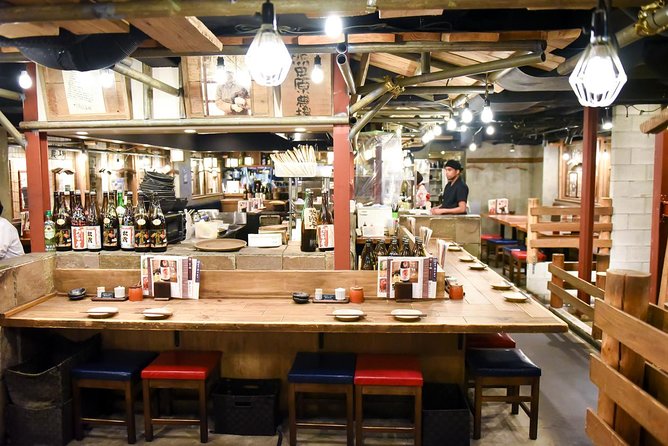
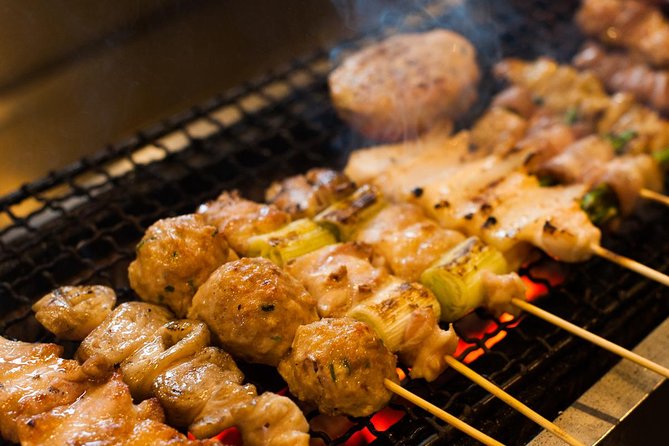
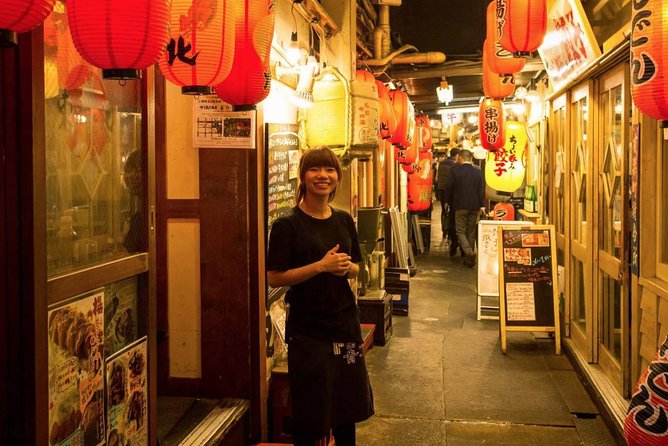
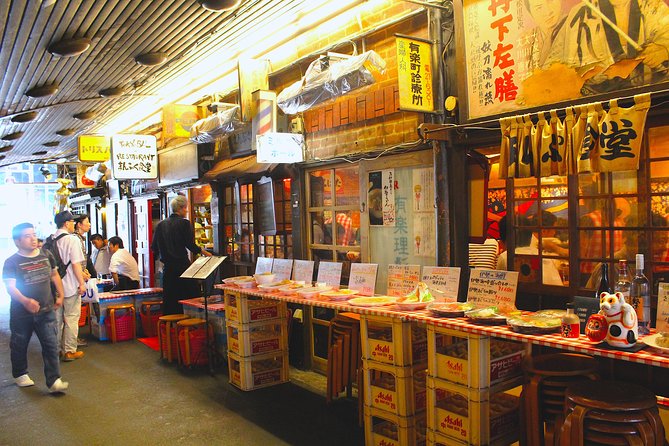
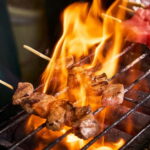
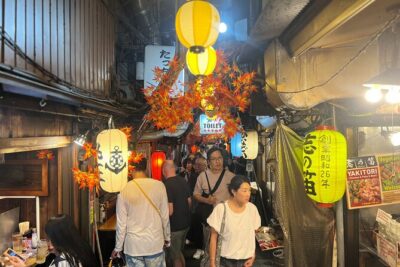
The route then shifts toward Yurakucho, where the tone changes quickly. Red lanterns, neon signs, sizzling skewers, and grilled seafood create a more casual scene. The restaurants under and around the railway line are compact, social, and tied to the Showa-era image of Tokyo.
An izakaya is often translated as a Japanese pub, but that short description misses part of the point. It is a place for drinks and shared dishes, with food arriving in several small portions rather than as one formal course. Your guide explains how to order, what kind of food may appear, and the customs that shape the meal.
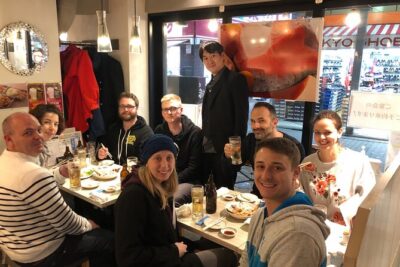
This is where the small-group format earns its keep. Tiny izakaya can be awkward for a large tour, while a group capped at 10 has a better chance of fitting into a modest room. You should still expect close seating and a lively setting. If you prefer quiet restaurants with lots of personal space, this part may feel cramped.
One particularly appealing stop from past departures was a small izakaya decorated with colorful murals. That sort of place is hard to understand from a guidebook description alone. You see how the room, the conversation, the food, and the narrow setting all work together.
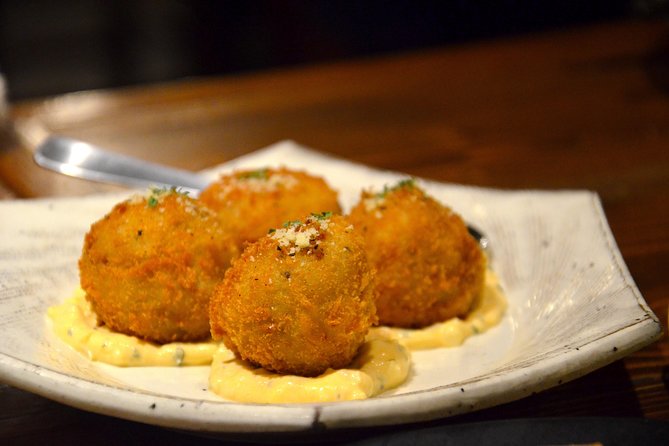
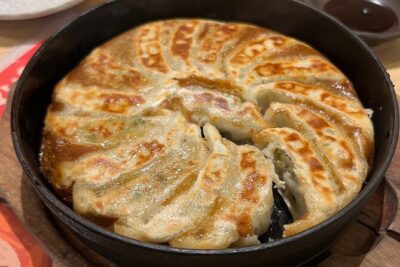
Food on the route can include regional specialties, skewers, grilled seafood, and other dishes served at several stops. Past tours also included sushi and ramen, but the exact menu is not guaranteed in the supplied details. The safe expectation is variety rather than one fixed meal, with the guide choosing stops that show different sides of Japanese dining.
Regional flavors in small portions
The tour’s food plan is a strength because it gives you several points of comparison. A single restaurant can give you a good meal, but several stops show how texture, preparation, setting, and regional identity change from one bite to the next.
The rice crackers are a good example. They are simple in appearance, but a long-running recipe and careful preparation can turn a familiar snack into a lesson in Japanese craft. You also get regional and seasonal flavors, which helps explain why Japanese menus pay close attention to the time of year.
At the izakaya stops, expect a more social style of eating. Dishes may be shared, and the guide can explain what you are tasting and how it fits into local habits. This is useful if you are new to Japanese menus or unsure about ordering in a small pub.
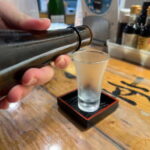
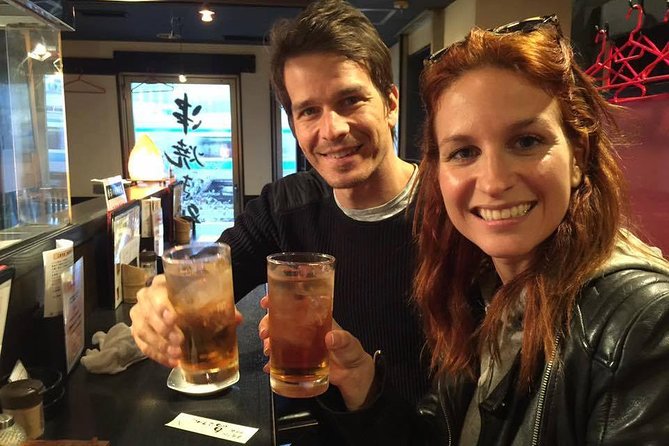
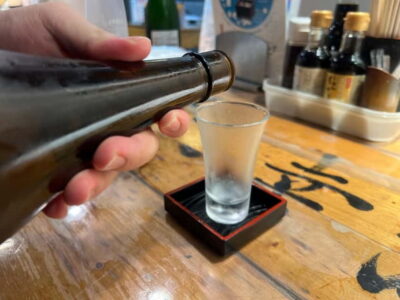
The tour includes two drinks. Those drinks are part of the stated package, while extra drinks and additional food are available at your own expense. The information provided does not specify the exact beverages, so do not book this expecting a particular sake, beer, or soft drink.
The evening finishes with dessert. That gives the route a proper ending rather than leaving you after a savory stop. The precise dessert is not stated, but it is described as a distinct sweet course, along with unique snacks during the tour.
How much food do you actually get?
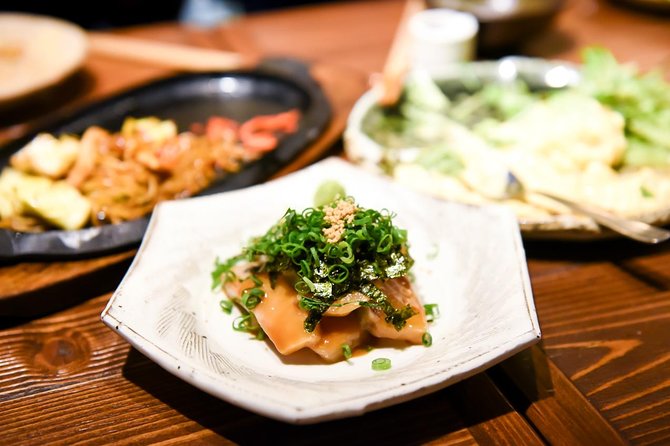
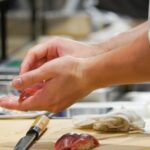
You receive a variety of dishes at multiple food stops, two drinks, snacks, and dessert. That sounds substantial, but I would think of the experience as a guided tasting dinner rather than an unlimited feast.
The pacing matters. A three-hour tour gives you time to walk, listen, eat, and move between neighborhoods without rushing from bite to bite. One past departure began early enough to avoid the worst dinner rush, which is a useful tip if several starting times are available. Check the schedule and choose a time that fits your energy level, especially if you are arriving after a long flight.
The amount you eat can also depend on the route and the group. Some people may want more food after the final stop, particularly if they have skipped lunch or have a large appetite. Extra food is possible, but it is not included in the price.
A few more Tokyo tours and experiences worth a look

The guide makes the difference
A food tour succeeds or fails on the guide’s ability to connect dishes with place and custom. This experience puts that role front and center. The guides are English-speaking, and the strongest praise has focused on clear explanations, humor, warmth, and practical local advice.
Josh was described as approachable, funny, and informative, while Motoko was praised for combining food, history, and culture with a friendly manner. Anne’s route included three distinct areas, and Ryan was valued for sharing his affection for local bars and eating places. Satoshi also received strong praise for making the evening both informative and enjoyable.
Those details suggest the tour is at its best when you want more than a list of dishes. You can ask why a food is served in a certain way, how Japanese dining differs from nearby Asian cuisines, and what makes an izakaya different from a standard restaurant.
Guide quality can vary because you are not guaranteed one particular person. Still, the repeated focus on guide personality and explanation is encouraging. I would book this for the human conversation as much as for the food.
Is $181 a fair price?
At $181 per person, this is a premium food walk. The price includes several tasting stops, two drinks, snacks, dessert, a local English-speaking guide, and a three-hour route through two central Tokyo neighborhoods.
The value depends on how you normally eat while traveling. If you are comfortable finding izakaya, snack shops, and local dishes on your own, you could spend much less by ordering independently. You would also have more control over the menu and the amount of food.
I see the price as easier to justify if this is your first Tokyo visit, your first evening in Japan, or your first time dealing with izakaya customs. You are paying for interpretation, neighborhood access, and a set route that removes much of the guesswork. The group size is also more appealing than a large coach-style food outing.
Hotel pickup is not included, though it can be arranged for an additional charge. Transportation costs are also separate. Since the meeting point is near Ginza Station, taking public transportation to Wako is the simpler value choice.
Free cancellation is available up to 24 hours before the tour for a full refund, and you can reserve now and pay later. Those terms help if your Tokyo plans are still changing.
Who should book this food tour?

I would choose this tour for a first or second night in Tokyo. It introduces two useful neighborhoods, gives you several things to eat, and helps you understand the etiquette and rhythm of Japanese pub dining before you try it alone.
It suits curious eaters who like variety. You may taste regional snacks, seasonal items, skewers, seafood, and other small dishes rather than sitting through one long formal meal. It also suits visitors who want history and culture folded into the evening.
The tour is a good match for couples, friends, and solo visitors who enjoy meeting a few other people. If you are traveling alone, contact the supplier by email before booking, as a special arrangement is requested for single participants.
Dietary options are available, but you should provide your needs in advance. Anyone aged 10 or older must provide a copy of passport information. Those requirements are easy to overlook, so handle them before the tour date.
I would be more cautious if you dislike walking, close restaurant seating, or shared tasting portions. The supplied details do not give a precise walking distance, but the route moves between Ginza and Yurakucho on foot. The compact izakaya atmosphere is part of the appeal, yet it will not suit every diner.
My take: book it for orientation and access

Book Tokyo: Allstar Food Tour if you want a guided introduction to Ginza and Yurakucho, especially if Japanese pub customs are new to you. The best features are the neighborhood contrast, the small group, the old snack tradition, and the chance to eat in places that may feel difficult to approach on your own.
At $181, I would not call it a bargain dinner. I would call it a structured introduction with food included. You get the most from it when you value explanation, local context, and a well-planned first taste of Tokyo more than maximum food quantity.
If you already know Tokyo’s izakaya scene and prefer choosing each restaurant yourself, spend the money elsewhere. For a first-night food orientation with a friendly English-speaking guide, this is a practical and enjoyable choice.
FAQ
Where does the Tokyo Allstar Food Tour meet?
The meeting point is in front of the Ginza Wako Building, about a minute’s walk from Ginza Station.
Which Ginza Station exit should I use?
Follow signs for the Ginza 4-chome Crossing Gate, pass through the fare gate, and leave through Exit A9.
How long does the tour last?
The tour lasts three hours.
What neighborhoods does the tour visit?
The route covers Ginza and Yurakucho, including Yurakucho’s railway-side alleys and izakaya area.
Is the tour conducted in English?
Yes. The tour has a live English-speaking guide.
How large is the group?
The group is limited to 10 participants.
What is included in the price?
The price includes dishes at multiple food stops, two drinks, snacks, dessert, and a local English-speaking guide.
Are hotel pickup and transportation included?
No. Hotel pickup is not included, though it can be arranged for an additional charge. Transportation costs are also separate.
Can I request dietary options?
Yes. Dietary options are available.
What documents are required?
A copy of passport information is required for every participant aged 10 and over.
More Food Experiences in Tokyo
More Tokyo Food Tours in Tokyo
More tours in Tokyo we've reviewed












Tokyo Food Tours, compared.
 ★ 5.0Tokyo: Shinjuku Food Tour (13 Dishes at 4 Local Eateries)From $86
 ★ 4.9Tokyo: Shinjuku Food Tour (13 Dishes and 4 Eateries)From $97
 ★ 5.0Tokyo Night Foodie Tour in Shinjuku – Seasonal Sushi, Wagyu BeefFrom $111
 ★ 5.0Eat and Drink Like a Local: Tokyo Ueno Food Tour-Taverns&RamenFrom $95
 ★ 5.0Tokyo: Shibuya Food Tour (13 dishes and 4 Eateries)From $77
Tokyo: Shinjuku Food Tour – 15 Dishes, 3 Drinks, 4 EateriesFrom $723 hours
★ 5.0Tokyo: Shibuya Food Tour (13 dishes and 4 Eateries)From $77
Tokyo: Shinjuku Food Tour – 15 Dishes, 3 Drinks, 4 EateriesFrom $723 hours