Reviewed · GUIDED
Private Tour Guide in English or Spanish (Español)
Tokyo can feel like several cities stitched together by trains, and this private tour gives you a local guide to help make sense of it. Your guide meets you at your hotel, then helps shape the outing around places such as Asakusa, Meiji Jingu, Tsukiji, Akihabara, Shibuya, Shinjuku, and Ueno. Hotel pickup and a private group are the big comforts.
In This Article
- Key points to know before booking
- Why this private Tokyo tour works best on your first day
- Hotel pickup removes the hardest first step
- Asakusa and Sensoji: the traditional opening
- Meiji Jingu: a calm break in the city
- Tsukiji: food culture without the old wholesale market
- Akihabara: anime, electronics, and pop culture
- Shibuya Crossing: Tokyo in one short burst
- Shinjuku: neon, towers, and a change of pace
- Ueno: museums, park space, and local texture
- The real itinerary is the one you build
- What the guides add beyond directions
- Price, pace, and what you still pay
- Who should book this Tokyo introduction
- Should you book it?
- FAQ
- Where does the tour take place?
- How long does the tour last?
- Does the guide pick me up at my hotel?
- Is this a private tour?
- Can I choose English or Spanish?
- Is public transportation included?
- Are attraction entrance fees included?
- Are food and drinks included?
- Are the listed stops guaranteed?
- What is the cancellation policy?
I especially like two things here: you get practical help with Tokyo’s public transport, and the plan can change to suit your interests. Guides including Taisei, Himena, Chisato, and Junsei have helped families, honeymooners, first-time visitors, and people seeking anime, gardens, shopping, temples, or food. The main drawback is time. At two to four hours, you cannot properly explore all seven listed districts, and you pay your own train fares, meals, and attraction fees.
Key points to know before booking
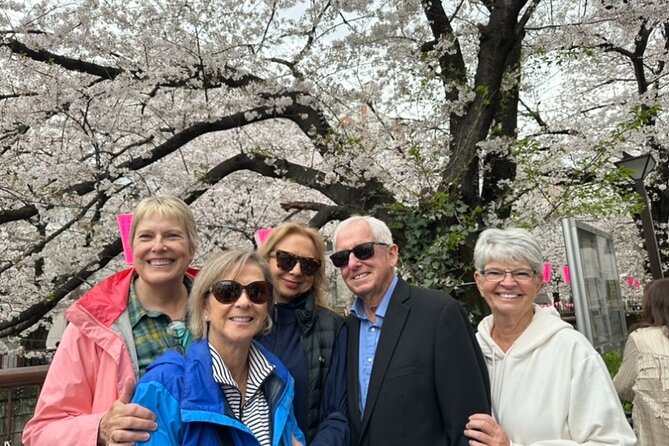
- Your guide meets you at your hotel: You skip the stress of finding a meeting point, though airport pickup is not included.
- The route is private and adjustable: Only your party takes part, so you can focus on temples, food, shopping, pop culture, or a broad city overview.
- Tokyo transport becomes part of the lesson: Guides can help you handle the subway and train system, an especially useful skill for the rest of your stay.
- English or Spanish is available: The tour can be arranged in either language, while the included details specifically list an English-speaking guide.
- The listed stops cover very different Tokyo moods: Asakusa and Meiji Jingu offer traditional Japan, while Akihabara, Shibuya, and Shinjuku show the modern city.
- The price is modest for a private introduction: At $58.27 per person, the value depends on your group size and how much planning and navigation help you need.
Why this private Tokyo tour works best on your first day
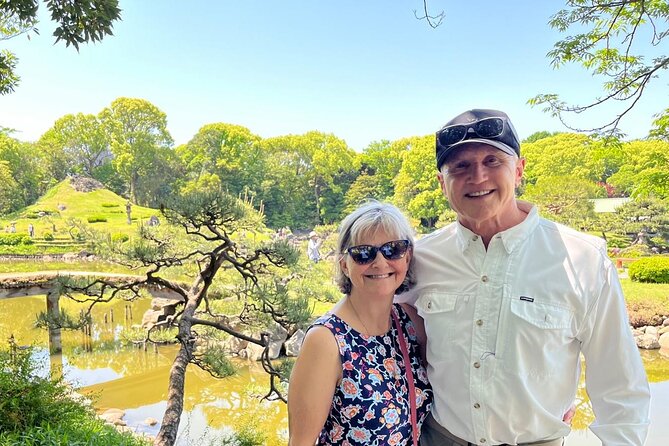
The clever part of this experience is not simply seeing famous sights. It is learning how Tokyo fits together while someone else handles the route.
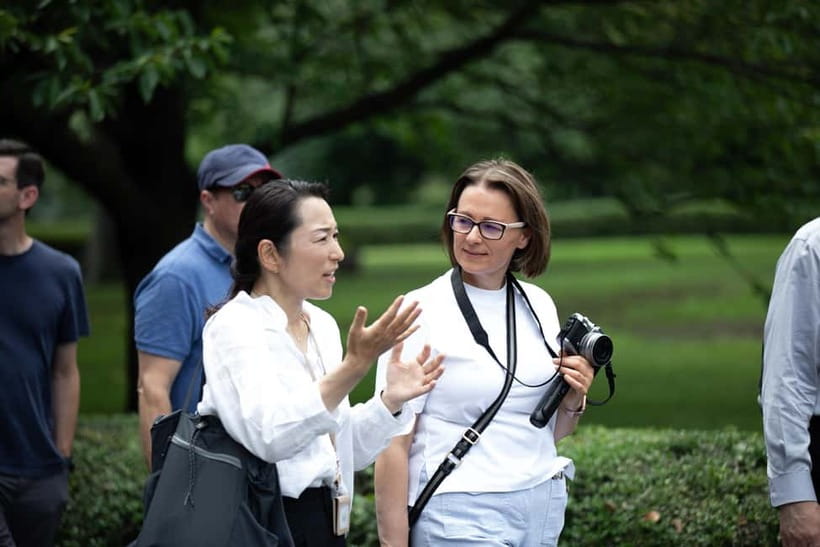
If this is your first visit, a guide can show you how to move between neighborhoods by public transport, point out useful customs, and explain what you are seeing without forcing you to spend your first morning studying maps. Taisei, one of the guides, has been praised for showing people where they were on the metro map and explaining each move along the way. That kind of help can save time long after the tour ends.
You can also send your interests ahead of time. A family might combine a shrine with manga, Nintendo, or shopping. Another group might ask for gardens and tea spots. Some people use the time for a broad overview, while others build a very specific route around museums, art, food, or neighborhoods.
The format is friendly to different energy levels. Chisato has been especially good at adjusting the pace for people who walk slowly, while Taisei has helped families with a stroller and young children. If you are jet-lagged, tired, or unsure how much ground you can cover, say so before the tour begins.
Other guided tours in Tokyo
Hotel pickup removes the hardest first step
You do not need to make your way to a central meeting point. The guide comes to your hotel lobby, which is useful after a long flight or when your hotel is not near the main sightseeing areas.
Several guides have contacted participants before the outing to discuss plans. That early exchange matters because Tokyo is too large for a one-size-fits-all route. Send a short list of priorities, your walking pace, the ages of children, and any fixed plans you already have.
The pickup offer does not include the airport. It also does not include private transportation. You and your guide use public transport and walk, with you paying your own train or subway fares. That keeps the tour price down, but you should have a transport card or another way to pay for rides before setting out.
Asakusa and Sensoji: the traditional opening
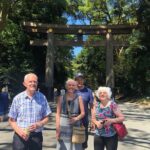
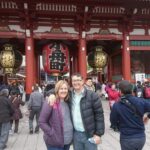
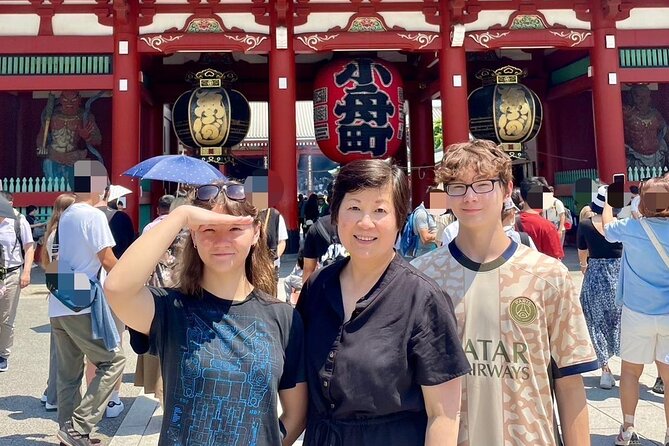
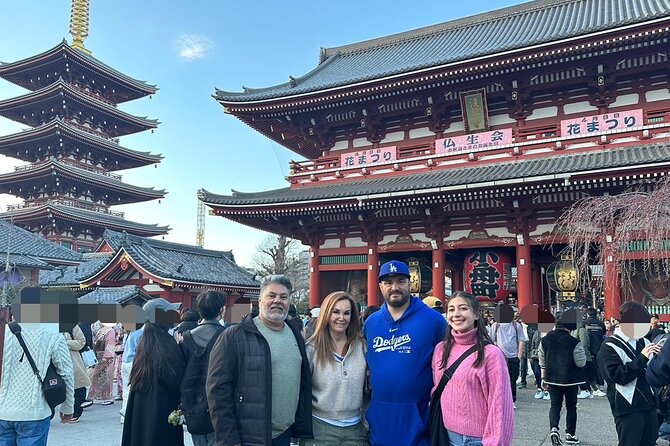
A 30-minute stop in Asakusa centers on Sensoji, Tokyo’s oldest Buddhist temple. The approach gives you an immediate sense of old Tokyo, with a major place of worship set among busy streets and shops.
This is a good first stop because it offers cultural context without requiring an entrance ticket. Your guide can explain the temple’s role and help you understand the customs you see. Thirty minutes is enough for an introduction and a few photos, but not enough for a slow visit to every corner of the surrounding district.
If Asakusa is a priority, tell your guide. The suggested time is short, and the full area can easily take longer than a quick orientation. Pairing it with Ueno makes geographic sense, but fitting both into a short tour means accepting a brisk pace.
Meiji Jingu: a calm break in the city
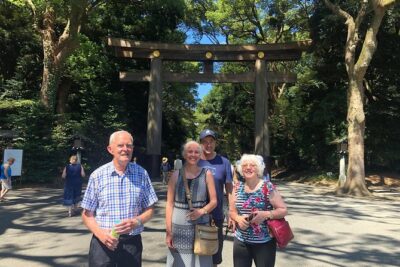
Meiji Jingu is a Shinto shrine created in 1920 to honor Emperor Meiji, a key figure in Japan’s modernization during the Meiji Restoration. The shrine gives your route a different tone from Asakusa, with a quieter setting and a chance to learn about Shinto practice.
The listed visit lasts 30 minutes and has no admission charge. That makes it easy to add to a first-day plan, especially if you want history and customs rather than only shopping streets and city views.
The timing is also a limitation. A half-hour visit gives you the basic story and atmosphere, but you will not have unlimited time for a slow walk or extended photography. If your main goal is modern Tokyo, you may prefer to trade some shrine time for Shibuya or Akihabara.
Tsukiji: food culture without the old wholesale market
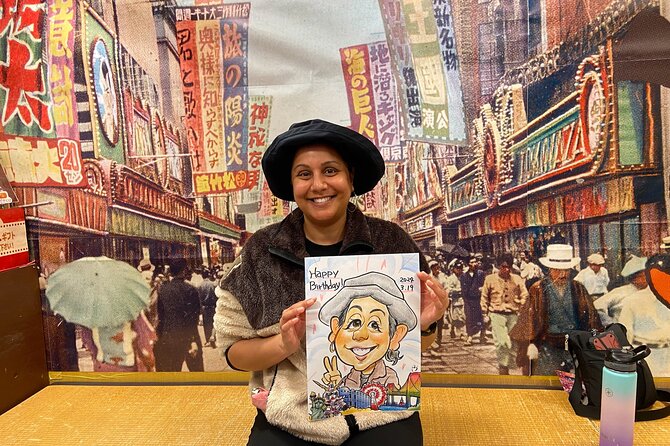
The Tsukiji stop lasts about 40 minutes. You can expect a busy food district centered on seafood, with opportunities to see and smell ingredients associated with Tokyo’s culinary life.
Be clear about what you want here. The area is often discussed as a famous fish market, but this tour data does not promise a special tasting, a reserved food experience, or a meal. Food and drinks are your responsibility, so budget separately if you want to eat.
Forty minutes can work well as a guided introduction. Your guide can help you understand what you are seeing and suggest how to use the area later. If food is central to your visit, ask in advance how much time can be devoted to browsing or eating, since lunch is not included and the full route contains many other districts.
Other private tours in Tokyo


Akihabara: anime, electronics, and pop culture
Akihabara, known as Electric Town, shifts the tour into Tokyo’s modern, playful side. The district is associated with electronics, anime, manga, games, and Japanese pop culture.
The planned 40-minute visit is useful for getting your bearings and identifying the parts that interest you. It is not enough for serious shopping across multiple stores, so think of this as a sampler rather than a shopping expedition.
This is one of the clearest examples of why a private guide helps. You can tell the guide if you care more about anime, games, electronics, or general atmosphere. Families have used the flexible format to keep teenagers interested while still making room for temples, gardens, or tea.
Shibuya Crossing: Tokyo in one short burst
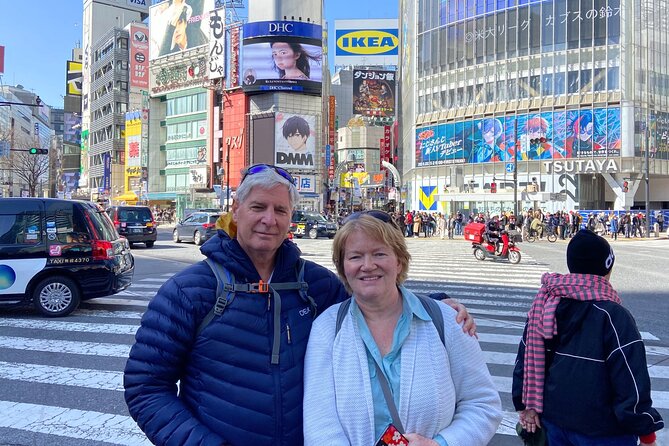
The Shibuya stop is scheduled for 20 minutes. That is enough to see the famous crossing, watch the waves of pedestrians, and take in one of Tokyo’s most recognizable city scenes.
It is a quick photo and orientation stop, not a full exploration of Shibuya’s department stores, side streets, or shopping districts. If shopping is your main purpose, say so before the tour and ask how the time can be adjusted.
The crossing also works well as a lesson in Tokyo’s scale. A guide can show you how the neighborhood connects to the train system and help you return later on your own. Several guides have made subway navigation less intimidating for first-time visitors, which may be more useful than simply pointing out the crossing.
Shinjuku: neon, towers, and a change of pace
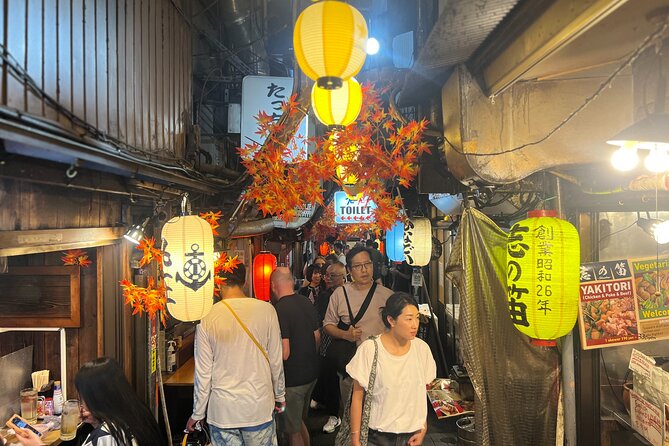
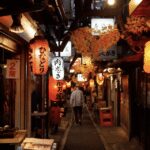
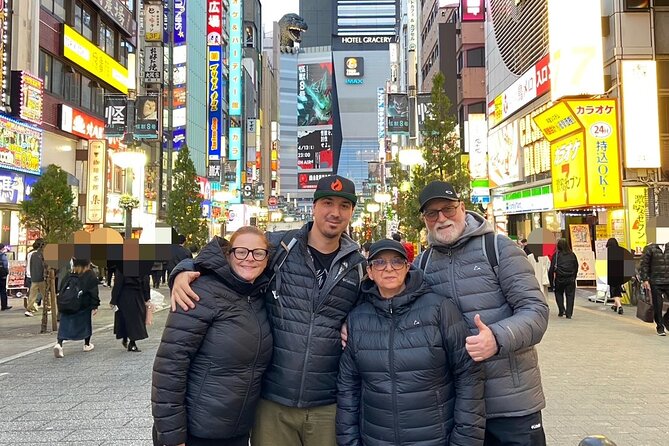
The 40-minute Shinjuku visit introduces one of Tokyo’s biggest entertainment and business districts. You can expect tall buildings, bright streets, shops, restaurants, and a strong sense of the city after dark, though the tour time itself may be scheduled at any hour.
Shinjuku covers a lot of ground, so a short stop works best when you choose a focus. You might use it to understand the district’s layout, see a particular type of street scene, or learn how to return by train.
Do not expect a full night out within the tour. Meals and drinks are not included, and the guide is not providing private transport between far-flung parts of the city. The value here is orientation and selection: your guide helps you decide which parts deserve a longer visit later.
Ueno: museums, park space, and local texture
Ueno receives about 40 minutes and adds a more cultural, open-air side of Tokyo. The district is known for Ueno Park, museums, seasonal cherry blossoms, and a varied neighborhood atmosphere.
This can be a strong choice for families and anyone who wants more than major commercial districts. One family combined Ueno, Asakusa, and Tokyo Skytree during a half-day outing, with the guide helping them manage the subway and even fitting in a child-friendly sushi train lunch. Keep in mind that Skytree admission was not part of the tour price, and the listed itinerary does not guarantee that attraction.
Ueno also pairs naturally with Asakusa because both are in the Taito area. Still, if you visit Ueno, Asakusa, Shibuya, Shinjuku, Akihabara, Tsukiji, and Meiji Jingu in a single four-hour period, you will get quick looks rather than full visits.
The real itinerary is the one you build
The seven stops are best read as a menu, not a promise that every place receives a full visit. The advertised duration is approximately two to four hours, while the listed stop times add up to nearly four hours on their own, before walking and train connections. That makes customization essential.
A sensible short route might include Asakusa and Ueno for traditional and cultural Tokyo. Another could pair Meiji Jingu with Shibuya. A pop-culture plan might focus on Akihabara and Shibuya, while a food-focused outing could include Tsukiji and one nearby district.
Your guide can also suggest places outside the listed stops. The experience has been shaped around gardens, art museums, caricature drawing, shopping, manga, Nintendo, and less obvious neighborhoods. Kiyosumi Gardens, for example, became a favorite stop for one guest, but it is not guaranteed as part of the standard route.
What the guides add beyond directions
The strongest reason to choose this tour is the person guiding you. Taisei has been praised for excellent English, advance planning, patient pacing, and taking photos. Himena has been especially good at building a day around a group’s priorities and working with children and teenagers.
Chisato has helped slower walkers feel unhurried, while Junsei has offered polished English and clear explanations of the metro, shrines, temples, and neighborhoods. The guide names available from past bookings include Taisei, Himena, Chisato, Junsei, and others, but a specific guide is not guaranteed unless confirmed when you book.
The language choice is useful for Spanish-speaking visitors. English is explicitly included in the tour details, and the experience is offered in English or Spanish. Confirm your preferred language when arranging the tour so the match is clear.
Price, pace, and what you still pay
The listed price is $58.27 per person. For a private two-to-four-hour introduction, that is a fair price if you value planning help, hotel pickup, and a local person who can guide you through trains and stations.
The value changes with group size. A solo visitor pays the full per-person amount, while a family or small group may find the private format more economical than arranging several separate activities. Group discounts are offered, though the exact savings are not provided.
Bring extra money for:
- Public transportation fares
- Entrance fees
- Lunch, dinner, snacks, and drinks
- Optional attractions such as Skytree or TeamLab
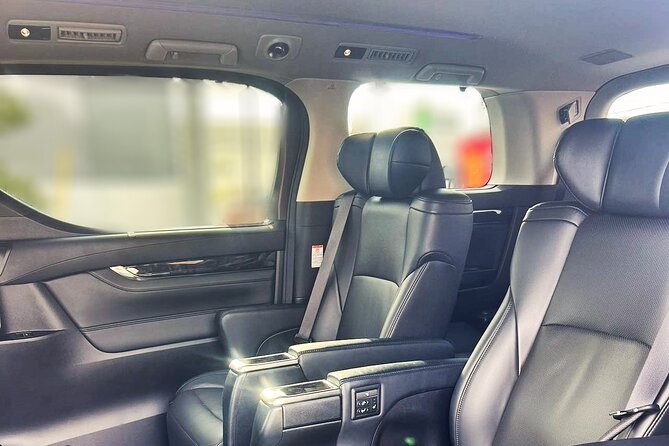
There is no bicycle use or private vehicle included. For most people, that is not a problem. Tokyo’s rail network is part of the experience, and learning it early can help you save both time and money during the rest of your stay.
Who should book this Tokyo introduction
I would choose this for a first visit, a short stay, or a first full day after arriving in Japan. It is also a strong fit if Tokyo’s subway system feels confusing, if your group has mixed interests, or if you want a private guide rather than a fixed group schedule.
Families should consider it because the guide can adjust the pace and combine adult interests with child-friendly stops. The experience can also suit couples and honeymooners who want a personal route, as well as solo visitors who would rather not spend their first day decoding train maps.
It is less suitable if you want a slow, detailed visit to one temple, a full food tour, extensive shopping, or admission to major attractions. In those cases, ask for a narrower plan or choose a dedicated activity. The short format rewards clear priorities.
Confirmation arrives at booking. Most people can participate, and the tour is near public transportation, but you are responsible for judging your own fitness, following safety directions, and protecting your belongings. The operator recommends travel insurance, and its terms limit responsibility for accidents, medical issues, theft, and damaged items to the amount paid, except in cases of willful conduct or gross negligence.
Should you book it?
Book this tour if you want a private Tokyo orientation with hotel pickup and practical help using trains. Tell the guide exactly what matters to you before the day begins, and choose two or three priorities rather than trying to conquer the whole city.
At $58.27 per person, it offers good value for a small group that wants personal planning and less navigation stress. Just keep your expectations in check: this is a guided introduction, not a full sightseeing day. If you accept the quick pace and pay for your own transport and admissions, it can give your Tokyo visit a very useful start.
FAQ
Where does the tour take place?
The tour takes place in Tokyo, Japan, with possible stops including Asakusa, Meiji Jingu, Tsukiji, Akihabara, Shibuya, Shinjuku, and Ueno.
How long does the tour last?
The experience lasts approximately two to four hours.
Does the guide pick me up at my hotel?
Yes. Hotel pickup is included, and the guide can meet you in your hotel lobby. Airport pickup is not included.
Is this a private tour?
Yes. Only your own party participates in the activity.
Can I choose English or Spanish?
Yes. The experience is offered in English or Spanish. The included tour details specifically identify an English-speaking guide, so confirm your preferred language when booking.
Is public transportation included?
No. Private transportation is not included, and you are responsible for your own public transportation fees.
Are attraction entrance fees included?
No. Entrance fees are not included. Examples given include Skytree and TeamLab. The guide may wait outside or join you if you provide a ticket.
Are food and drinks included?
No. Lunch, dinner, snacks, and drinks are at your own expense.
Are the listed stops guaranteed?
The route is flexible and can be customized, but the available information does not promise that every listed district will receive a full visit during a two-to-four-hour tour.
What is the cancellation policy?
You can cancel at least 24 hours before the start time for a full refund. Cancellations or changes made less than 24 hours before the start time are not accepted for a refund. Cut-off times follow Tokyo local time.
More Private Tours in Tokyo
More Guided Tours in Tokyo


More tours in Tokyo we've reviewed












Guided, compared.
 ★ 5.0Tokyo 6hr Private Tour with Government-Licensed GuideFrom $155
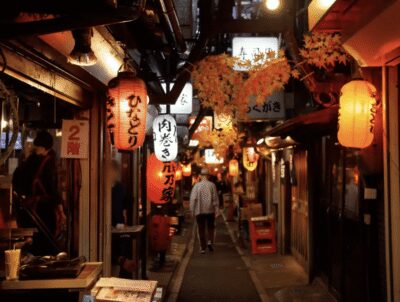 ★ 4.9Tokyo: Shinjuku Local Bar and Izakaya Guided Walking TourFrom $343 hours
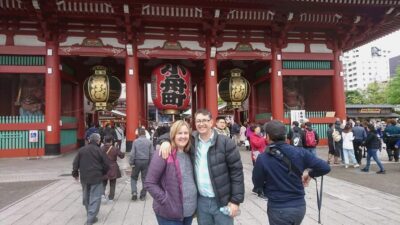 ★ 4.8Tokyo: Private City Highlights Tour with Local GuideFrom $1064 - 8 hours
 ★ 4.9Tokyo: Tsukiji Fish Market Guided Walking TourFrom $222 hours
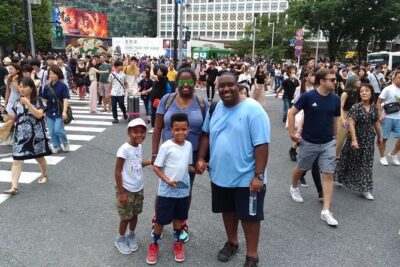 ★ 5.0Tokyo 4hr Private Tour with Government-Licensed GuideFrom $109
 ★ 5.0Tokyo Guided Small-Group Biking TourFrom $106