Reviewed · TSUKIJI MARKET TOURS
Tokyo Tsukiji Fish Market Food&Culture Walking Tour With a LOCAL!
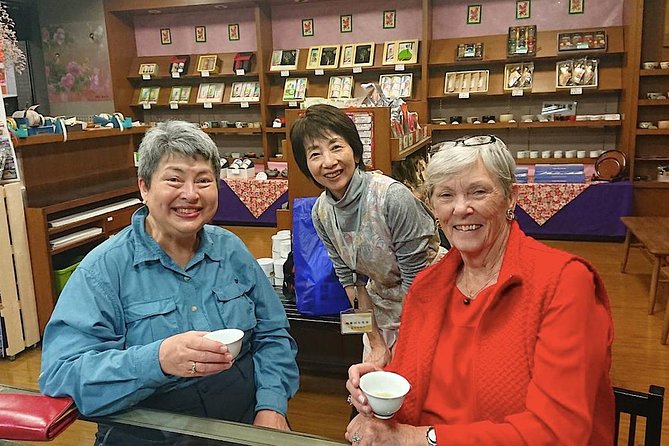
Tsukiji is easiest to enjoy when someone else helps you read the signs, choose the right stalls, and avoid wandering past the good food. This three-hour walk combines market tastings at your own cost with visits to Tsukiji Hongwanji Temple and Namiyoke Shrine. Guide Ronnie has led the route, including busy Saturday mornings before Christmas.
In This Article
- Key points at a glance
- Why a guide helps at Tsukiji Market
- Start at Tsukiji Hongwanji Temple at 10 a.m.
- A quick Japanese lesson at 38KIOSK
- One hour and 20 minutes in Tsukiji Jogai Market
- Namiyoke Shrine adds a local food connection
- Lunch at 38KIOSK
- What the $75 price really covers
- Walking, timing, and group comfort
- Who will get the most from this Tsukiji walk
- My take on the experience
- Should you book the Tsukiji food and culture tour?
- FAQ
- How long is the Tsukiji Fish Market food tour?
- Where does the tour begin?
- Where does the tour end?
- Is lunch included in the $75 price?
- Do I have to pay for market tastings?
- Can I store luggage during the tour?
- How many people can join the tour?
I like the six-person group limit, which keeps the walk personal and makes it easier to ask questions. I also like that you are not locked into a fixed tasting menu: you choose what to buy, from sushi and Wagyu skewers to other market specialties, and pay only for what you want. The catch is that lunch is not included in the $75 price, so your final bill depends on your appetite.
Key points at a glance
- Meet at Tsukiji Hongwanji Temple: Begin with a short lesson in Buddhist rituals before entering the market.
- Small group of six: The capped size makes it easier to follow your guide through the narrow market streets.
- Food is paid separately: You choose the dishes you want instead of receiving a preset tasting menu.
- Free small luggage storage: Leave small suitcases and similar bags at 38KIOSK during the tour.
- Finish with lunch at 38KIOSK: The final hour includes a shared meal made with fresh ingredients found during the market walk.
- Learn useful Japanese: A quick survival-language lesson helps you handle simple food and travel situations later in Japan.
Why a guide helps at Tsukiji Market
Tsukiji’s outer market is not a single indoor hall with an obvious route. It is a network of food shops, counters, stalls, tools, ingredients, and small eateries. You can walk through it alone, but it is easy to miss the best stops or hesitate over unfamiliar foods.
This tour gives you a plan without turning the morning into a rigid procession. Your local guide points out fresh ingredients, explains how food is prepared, and helps you understand local manners. That matters in a market where a little awareness goes a long way.
You are not simply looking at seafood behind glass. The route also touches on handmade knives and tools passed down through generations. Those details give the market a wider food-culture setting, showing you the work behind the meal as well as the finished dish.
The group maximum is six people. That is a useful number in a crowded market. You should be able to hear the guide, ask about an unfamiliar item, and get help deciding what to try without being lost in a large tour crowd.
A few more Tokyo tours and experiences worth a look


Start at Tsukiji Hongwanji Temple at 10 a.m.
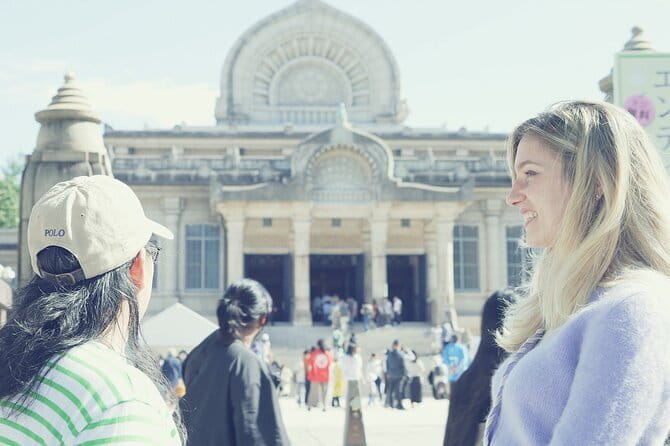
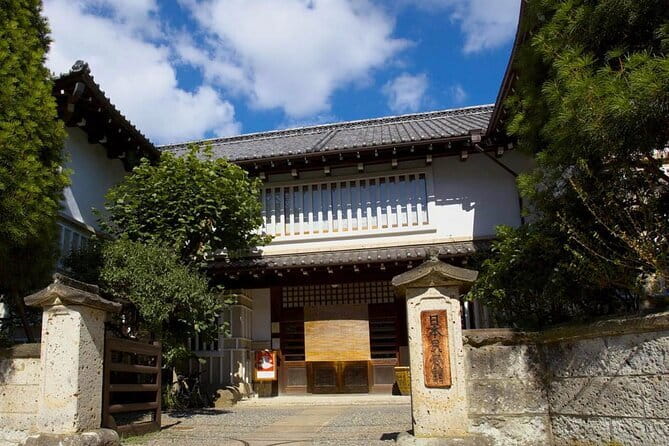
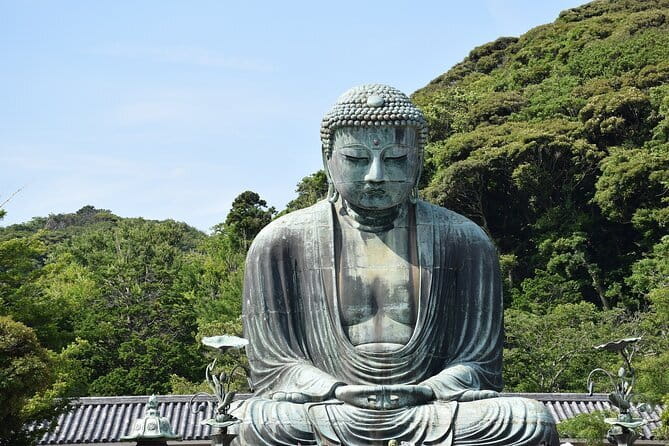
The tour begins at Tsukiji Hongwanji Temple, at 3-chome-15-1 Tsukiji. This is a practical meeting point near public transportation, and the temple gives the morning a calm starting place before you head into the food market.
The first stop lasts about 10 minutes. Your guide introduces a few Buddhist rituals and explains basic temple behavior. This is short rather than scholarly, but it gives you useful context for other temples you may visit in Japan.
You should arrive ready to walk. The temple is not the main event, yet it helps set the tone. You start with local customs, then carry that awareness into the market, shrine, and food stops.
Guide Ronnie has met the group at the temple’s main gate. If you have a mobile ticket, keep it easy to access and confirm the exact gate instructions when booking. The published start time is 10 a.m., so do not treat this as a flexible drop-in activity.
A quick Japanese lesson at 38KIOSK
The next stop is 38KIOSK, the tour’s base and eventual lunch spot. The introduction takes around 10 minutes, and this is also where you can leave small suitcases or similar luggage at no charge during the tour.
The quick Japanese lesson is aimed at survival language. You should not expect a full language class, but a few useful words and simple etiquette tips can make ordering and shopping less awkward later in your trip.
The luggage service is especially handy if you are moving between hotels or arriving in Tokyo with a small case. The information specifically mentions small suitcases and similar items, not unlimited luggage, so pack light and confirm if you have anything larger or unusual.
Starting at a hub also gives the group a clear place to return to. That is helpful in Tsukiji, where narrow lanes and busy food counters can make the area feel confusing even when you know roughly where you are.
One hour and 20 minutes in Tsukiji Jogai Market
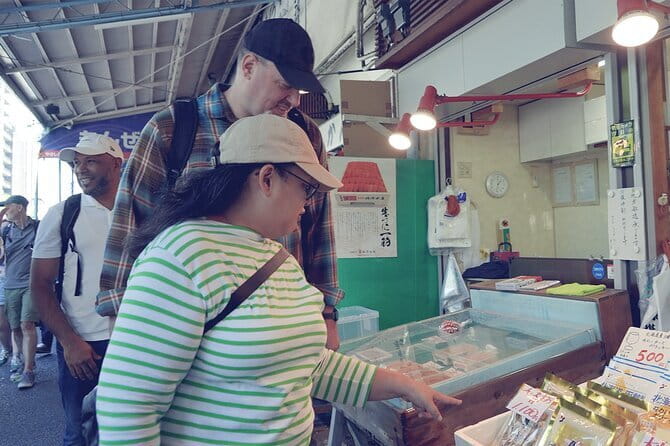
The main market walk lasts about one hour and 20 minutes. This is the heart of the experience, and the guide’s role matters most here.
You will look at fresh ingredients and learn about Japanese food culture through the market’s shops and working tools. Handcrafted knives are part of the route, with attention to tools made and passed down through generations. This gives you something more substantial than a quick parade of snack counters.
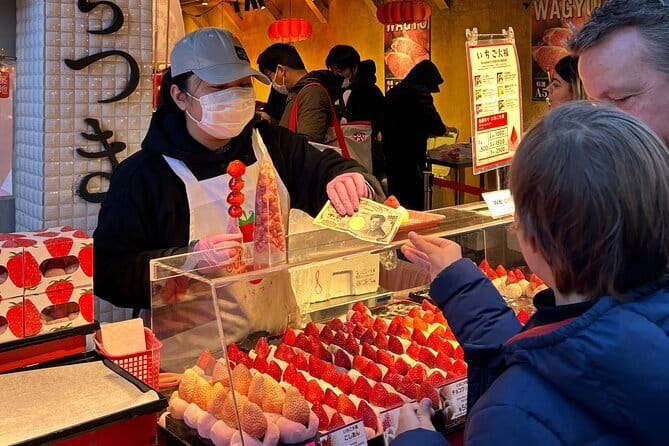
The exact food choices are deliberately open. Your guide helps you find places for sushi, Wagyu skewers, and other market food, but no preset dishes are included. That arrangement has a clear advantage: you can spend only on the foods that appeal to you, skip items that do not, and adjust your meal to your appetite.
It also means you need to budget beyond the $75 tour fee. The price covers the guide, market access, temple and shrine entry, the language lesson, and luggage storage, but not lunch or alcoholic drinks. If you want several tastings, your total cost will rise.
The food arrangement works best for people who enjoy making choices. If you want a fixed menu with every bite included, this may feel less tidy. If you prefer to decide as you go, it offers more control.
Your guide can also explain etiquette. At a Japanese market, manners may include where to stand, how to handle food, and how to avoid blocking working shopkeepers. That advice is one reason a local-led walk is more useful than simply following a map.
A Saturday morning can be busy, especially before Christmas. The market may become more crowded later in the day, so the 10 a.m. start has an advantage. Still, you should expect narrow paths and a fair amount of walking. This is not a sit-down food tour from beginning to end.
Namiyoke Shrine adds a local food connection
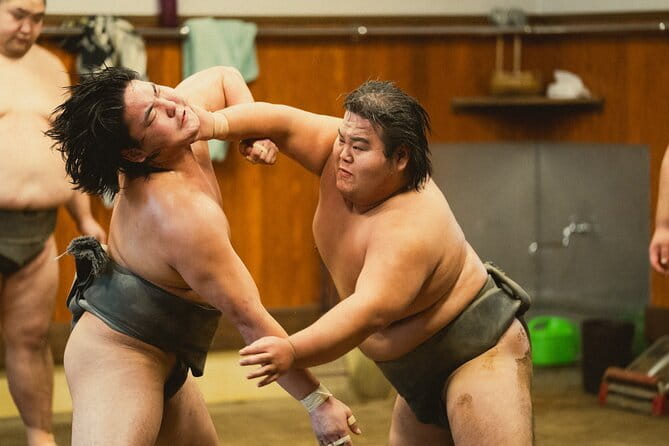
Namiyoke Shrine is included in the tour, along with Tsukiji Hongwanji Temple. The supplied schedule does not give a separate duration for the shrine, but it is part of the cultural portion of the experience.
A shrine visit works well alongside the market because it links everyday food activity with local custom and ritual. Your guide can help you understand the basic behavior expected at a Japanese shrine, just as the temple stop covers Buddhist practice.
The benefit here is scale. You are not spending half a day at a major sightseeing site. Instead, the shrine adds a short cultural layer to a food-focused morning. If you want a detailed religious history tour, this will be too brief. If you want practical context while exploring Tsukiji, it fits the schedule.
Other walking tours we've reviewed in Tokyo



Lunch at 38KIOSK
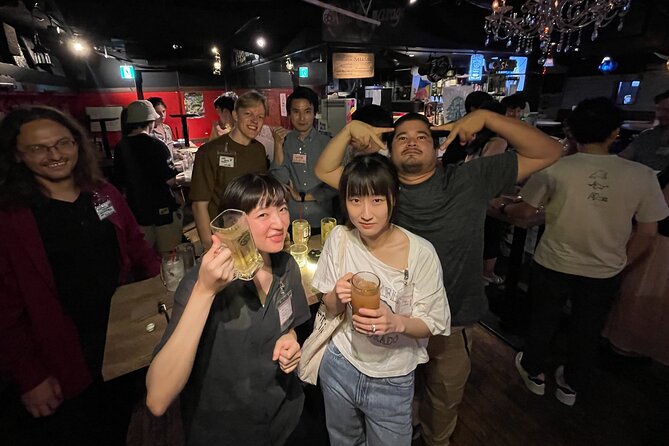
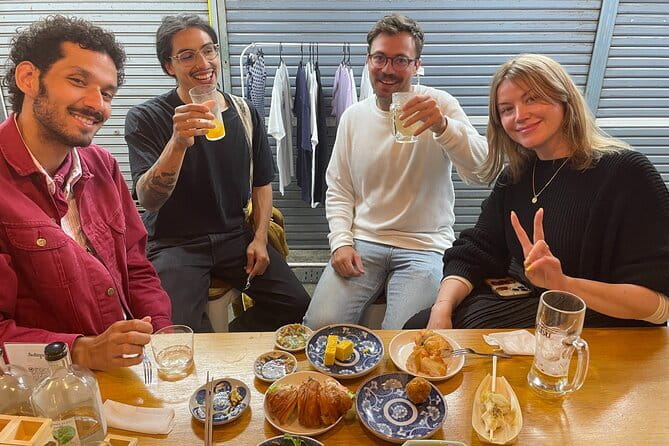
The final scheduled stop is back at 38KIOSK for about one hour. Lunch is described as a party-style meal using fresh ingredients sourced during the market visit.
This is more than a simple end-of-tour handoff. It gives you a place to sit down after walking and turns the market finds into a shared meal. The venue is described as a tucked-away spot in a quiet alley, popular with locals as a place to relax after work.
The exact lunch menu is not fixed in advance. Your guide helps you hunt down the best options during the market portion, then the group returns to 38KIOSK. Alcohol is also extra, though you can ask your guide for food and drink pairings.
The open pricing is worth keeping in mind. You pay the $75 tour cost, then cover lunch and any market tastings or alcohol separately. That can be good value if you are selective. It can be less predictable if you want to try everything.
After the three-hour tour ends, 38KIOSK remains open until closing time, so you can stay and relax if you want to continue the meal. The tour itself ends there, and any additional food or drinks are your responsibility.
What the $75 price really covers
At $75 per person, this is not a cheap market stroll. The value comes from the combination of a small group, a local guide, cultural stops, market access, a language lesson, and luggage storage.
The included items remove several small costs and practical problems. You do not need to pay separate admission for Tsukiji Hongwanji Temple or Namiyoke Shrine, and the market entry is included. The free luggage storage can also be useful enough to change your plans on a transfer day.
The strongest value is the guidance. You are paying to make sense of the market, not just to enter it. A local who can direct you to food stalls, explain customs, and help with basic Japanese can save time and reduce the uncertainty of ordering unfamiliar dishes.
Still, calculate your food budget honestly. Lunch is not included, and neither are alcoholic drinks. Since the tour encourages you to choose what you want, the final total can be modest or much higher depending on how many foods you sample.
For a food-focused visitor who wants help choosing, the price is easier to justify. For someone happy to wander alone and eat one simple meal, the tour may cost more than needed.
Walking, timing, and group comfort
The activity runs for about three hours, beginning at 10 a.m. It includes roughly two hours of walking and market exploration before the one-hour lunch period. You should be comfortable on your feet for an extended stretch.
The tour is not suitable for anyone who may have difficulty walking for two hours. That is the main physical consideration. The market can also be crowded, and the group will move between several locations, so comfortable shoes and a light bag make sense.
Most people can participate, and service animals are allowed. Vegetarian, gluten-free, allergy-related, and religious food needs can be accommodated if you state them when you reserve. Do not wait until lunch to mention a restriction, since the food choices are made along the way.
The experience runs in good weather. If poor weather causes cancellation, you are offered another date or a full refund. The tour also requires a minimum number of participants, so a cancellation for that reason brings the same choice of another date or a full refund.
You can cancel free of charge up to 24 hours before the start time. Changes or cancellations inside that 24-hour window are not accepted for a refund.
Who will get the most from this Tsukiji walk
I would point this tour toward a first visit to Tokyo, especially if Tsukiji is high on your food list but you are unsure how to approach it.
It is also a good match for:
- Food lovers who want sushi, Wagyu, and other market dishes without a fixed menu
- Couples or friends who prefer a small group
- Visitors carrying small luggage between hotel stays
- People interested in Japanese customs as well as food
- Anyone who wants a local to help with simple ordering and etiquette
Families and older visitors should consider the walking requirement and the crowds. The six-person limit helps, but it does not turn the market into a quiet or fully accessible space.
Strict vegetarians and people with serious allergies should provide exact details at booking. The tour can accommodate several dietary needs, but the food plan is based on ingredients found in the market, so clear communication matters.
You should also choose this tour if you like flexibility. The guide points you toward good options, but you decide what to eat. That is a strength for curious eaters and a weakness for anyone who wants every detail settled ahead of time.
My take on the experience
The best part of this tour is its combination of practical help and local detail. You get a market guide, but you also get a short lesson in temple manners, a shrine visit, survival Japanese, and a final meal in a quiet 38KIOSK setting.
The small group is another major advantage. Tsukiji can be manageable in the morning and much more crowded later, as happened on a Saturday before Christmas. A group of six is far easier to keep together than a large busload, and you have a better chance of asking about the food in front of you.
The main weakness is the open-ended food cost. The $75 fee does not buy your lunch, so you need to see it as a guiding and cultural experience with food purchased separately. That model gives you freedom, but it makes the final price less certain.
Should you book the Tsukiji food and culture tour?
Book it if you want help making sense of Tsukiji, prefer a small group, and enjoy choosing your own food. The temple, shrine, Japanese lesson, luggage storage, and shared meal make it more than a simple market tasting.
Skip it if you already know Tsukiji well, want an all-inclusive price, or prefer to explore at your own pace without a fixed three-hour schedule.
For most first-time food-focused visitors, I think the tour makes a strong morning plan. Just arrive at the temple by 10 a.m., wear shoes suited to extended walking, mention dietary needs early, and set aside extra money for the dishes and drinks you choose.
FAQ
How long is the Tsukiji Fish Market food tour?
The guided experience lasts approximately three hours, starting at 10 a.m.
Where does the tour begin?
The meeting point is Tsukiji Hongwanji Temple, at 3-chome-15-1 Tsukiji, Chuo City, Tokyo.
Where does the tour end?
The scheduled tour ends at 38KIOSK in Tsukiji. The venue remains open until closing time if you want to stay longer.
Is lunch included in the $75 price?
No. Lunch is not included. Your guide helps you choose food during the market visit, and the final meal takes place at 38KIOSK.
Do I have to pay for market tastings?
Food tastings are not included, and you pay separately for the dishes you choose. Alcoholic drinks are also extra.
Can I store luggage during the tour?
Yes. Free storage is available at 38KIOSK during the tour for small suitcases and similar luggage.
How many people can join the tour?
The group is limited to a maximum of six participants.
More Food Experiences in Tokyo


More Walking Tours in Tokyo
More Tsukiji Market Tours in Tokyo
More tours in Tokyo we've reviewed












Tsukiji Market Tours, compared.
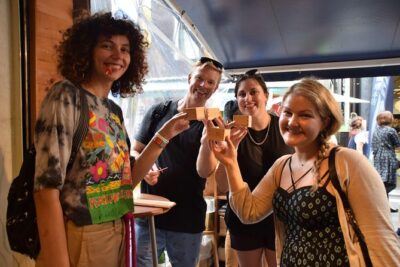 ★ 5.0Tokyo Tsukiji Fish Market Food and Culture Walking TourFrom $99
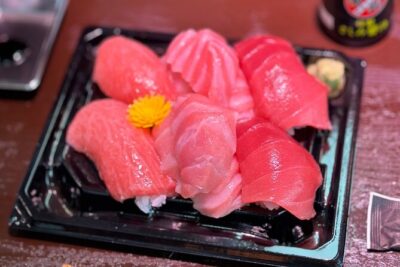 ★ 5.0Tokyo: Tsukiji Fish Market Food and Walking tourFrom $30
 ★ 4.9Tokyo: Tsukiji Fish Market Guided Walking TourFrom $222 hours
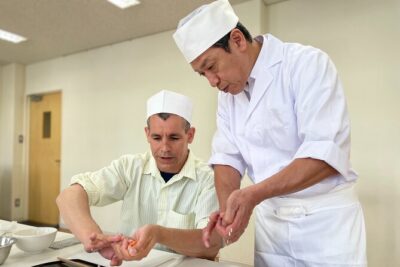 ★ 5.0Tokyo Sushi Making Class in Tsukiji with Professional ChefFrom $49
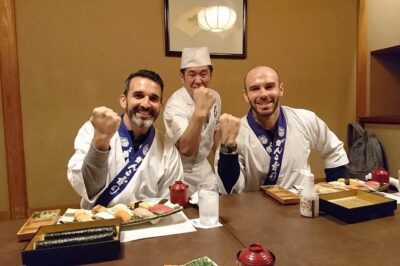 ★ 5.0Tsukiji Fish Market Guided Tour and Sushi Making with Pro ChefFrom $104
★ 4.7Tokyo: Tsukiji Fish Market Food and Culture Walking TourFrom $963 hours
★ 5.0Tsukiji Fish Market Guided Tour and Sushi Making with Pro ChefFrom $104
★ 4.7Tokyo: Tsukiji Fish Market Food and Culture Walking TourFrom $963 hours