Reviewed · GUIDED
Private Tokyo Tour with Local Guide
Tokyo can feel like five cities stitched together by train lines. This private tour gives you a head start, linking Tsukiji, Asakusa, Ueno, and Akihabara with a guide who can explain what you are seeing and show you how to get around afterward. Guides named Maruf, Amir, Abu, Erica, and Nami have led highly praised outings, with Maruf and Abu receiving especially strong comments for personal service.
In This Article
- Key things to know before you book
- Tokyo made manageable in four to five hours
- Tsukiji: begin with Tokyo’s food culture
- Asakusa links the old city to the river
- Sumida River Side Park offers a breathing space
- Ueno brings museums, park paths, and local shopping
- Akihabara turns the tour toward modern Tokyo
- The real tour is walking plus public transportation
- How much personal attention can you expect?
- Who will get the most from this tour?
- Practical details that affect your decision
- Should you book this private Tokyo tour?
- FAQ
- How long does the private Tokyo tour last?
- Can I choose the tour start time?
- Is hotel pickup available?
- Which Tokyo areas are included?
- Are meals and attraction tickets included?
- What is the cancellation policy?
I like the custom start time and the practical lesson in using public transportation. I also like the private format: you can focus on temples, food, shopping, anime, photographs, or a mix of all four. The main caution is that this is a walking and subway tour, not a chauffeured sightseeing ride. One outing covered about five miles, so comfortable shoes matter.
Key things to know before you book

- You choose the start time, unlike a fixed group departure.
- Tsukiji and Asakusa bring two different sides of Tokyo into one morning or afternoon.
- Your guide helps with public transportation, a useful skill for the rest of your stay.
- Akihabara adds electronics, anime, gaming, and otaku culture to the route.
- Private means flexible, but the exact pace and route depend on your group and guide.
- The $130 price buys personal attention, while lunch, private transport, Skytree, and TeamLab tickets cost extra.
Tokyo made manageable in four to five hours
The best use of this tour is as an introduction to Tokyo. In several hours, you can get a feel for the city’s major districts, learn how the subway works, and ask the practical questions that are hard to solve alone on your first day.
You are not simply carried from sight to sight. You walk, ride public transportation, and learn the basic rhythm of moving through Tokyo. That has lasting value. Once you know how to reach a station, read the route, and transfer, the city becomes far less intimidating.
The private setup is especially useful for families, couples, and groups with mixed interests. A group of seven has taken the tour with different preferences, and a family with two adults and two children used it as a first-day orientation. A private guide can slow down for children, adjust the route for a shopping list, or spend more time at a temple if that suits you.
Still, the four to five hour duration puts a limit on the day. Tokyo’s districts are spread out, and moving between them takes time. If you try to see every stop in detail, the tour may feel brisk. Tell your guide what matters most before you start.
Other guided tours in Tokyo
Tsukiji: begin with Tokyo’s food culture

Tsukiji is a strong opening because it connects everyday food with Tokyo’s past. The tour can begin early here, with the aim of catching the energetic morning auction period. The supplied details do not promise a particular auction viewing arrangement, so you should treat that as an intended early-morning focus rather than a guaranteed feature.
Even without spending hours at the market, Tsukiji gives you a useful introduction to Japanese food culture. You might find stalls, seafood shops, prepared foods, and small places selling breakfast items. The guide can help you understand what you are seeing and point out the difference between a market visit and a regular restaurant meal.
This is also where timing matters most. A late start may not offer the same morning atmosphere, while an early start can make the first part of the tour feel more active. If food is a priority, say so when arranging the tour. Lunch is not included, so plan to pay for anything you eat along the way.
Asakusa links the old city to the river
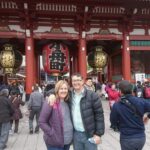
From Tsukiji, the route can continue toward Asakusa. The short stops at Nakamise Shopping Street, Kaminarimon Gate, and Senso-ji Temple form one of the clearest cultural sequences in Tokyo.
Nakamise Shopping Street runs from Kaminarimon Gate toward Senso-ji. The 20-minute stop gives you time to walk through the shop-lined approach and see the traditional goods and snacks sold along the way. It is a shopping street, but it is also part of the approach to one of Tokyo’s best-known temples.
Kaminarimon Gate gets about 10 minutes. The huge red lantern makes it an easy meeting point and a memorable first view of Asakusa. Your guide can provide context for the gate and explain how it relates to Senso-ji, rather than leaving you with only a quick photo stop.
Senso-ji receives roughly 20 minutes, with no admission charge. That is enough for an introduction, though not enough for a slow, detailed exploration of every corner. If temple architecture and religious customs are high on your list, ask to give Asakusa extra time and accept a shorter visit elsewhere.
The order works well. You move from the gate, through the shopping street, and into the temple grounds. This makes the area easy to understand, even if you have never visited a Japanese Buddhist temple before.
Sumida River Side Park offers a breathing space

The Sumida River Side Park provides a pause from dense streets and station corridors. Along the river, you can look across toward Tokyo Skytree and take in a broader view of the city.
This stop is less about checking off a major monument and more about changing the pace. After walking through Asakusa, a riverside view gives you room to orient yourself. The park can also be useful for photographs, especially if your guide knows which views best suit your group.
Do not confuse this stop with a visit to Tokyo Skytree itself. Skytree admission is not included, and tickets are an extra cost. The tour gives you the view from outside, not entry to the observation decks.
Ueno brings museums, park paths, and local shopping

Ueno offers a different feel from Asakusa. Ueno Park covers a large area and includes museums, temples, gardens, and open paths. The tour information does not specify museum entry, so you should expect an outside overview or a walk through the park unless you arrange otherwise.
I like Ueno as part of a first look because it shows how Tokyo places cultural sites inside a major urban center. You can move from a busy station area into a broad park without leaving the city. If you are interested in museums, ask your guide which ones fit your interests, but remember that a four to five hour tour cannot cover the whole park in depth.
Nearby Ameyoko Shopping Street adds a more commercial, street-level side of Ueno. The market began as a postwar black market and developed into a lively shopping area with varied goods and food. It is a good contrast to the formal temple grounds of Asakusa.
Ameyoko is also the sort of place where a guide can save time. You can ask what is worth browsing, what fits your shopping plans, and how to move on without wandering through every side street. The exact balance between Ueno Park and Ameyoko should be discussed early in the tour.
Other private tours in Tokyo


Akihabara turns the tour toward modern Tokyo

Akihabara is the sharpest change in mood. The district is known for electronics, anime, gaming, and otaku culture, with shops aimed at both serious shoppers and curious newcomers.
A guide can add value here by explaining what different stores focus on and helping you avoid a random walk through a district that can feel overwhelming. If you want electronics, character goods, games, or anime-related shopping, say so clearly. If you are only curious about the culture, your guide can help you sample the area without turning the whole outing into a shopping mission.
Akihabara also shows why a private tour is more useful than a rigid group route. One group may want stores and gaming. Another may prefer a short look followed by more time at temples or food markets. The route can respond to those differences, within the time available.
The tour does not include TeamLab Planets or TeamLab Borderless tickets. Those are separate attractions, so do not expect them to be folded into the standard route without additional planning and admission costs.
The real tour is walking plus public transportation

The included transportation is public transportation, with pickup offered using public transit. That wording matters. You meet your guide and travel through Tokyo by train or subway, rather than riding in a private car.
For many people, this is the tour’s strongest practical feature. Tokyo’s train system can seem confusing at first, but a guide can show you how to move between districts and help you gain confidence for later independent outings. A guest described learning the subway system as one of the most useful parts of the experience.
The tradeoff is physical effort. One outing involved about five miles of walking, and another group reported reaching roughly 20,000 steps. Those figures are not a fixed promise, but they show what can happen when you choose a broad route. Wear good shoes, carry water, and tell the guide if you need a slower pace or more sitting breaks.
Pickup also needs a clear conversation. Pickup is offered with public transportation, and private transportation is not included. Confirm where you will meet and how you will reach the starting point before the day begins.
How much personal attention can you expect?

The private format is the main reason to consider the $130 per person price. The amount may represent good value if you want a route built around your interests, help with transit, and one-on-one explanations instead of a standard group script.
The value is less obvious if you only want transportation between famous sights. Since you pay for your own food, private transport, Skytree entry, and TeamLab admission, the total cost can rise if you add extras.
The guide’s quality also matters greatly. Maruf has been praised for helping visitors understand the meaning behind places, not just moving them from one point to another. Abu has received strong recognition for adjusting the walk to personal interests, finding less obvious places, helping with food and shopping, and taking photographs. Amir has been singled out for listening carefully and changing the plan to fit the group.
That said, the experience can vary. One dissatisfied participant felt the guide provided little explanation and simply moved from point to point. Another expected a driving tour and was disappointed to find a walking experience. These are useful warnings: confirm that you want a walking and subway tour, and make your expectations for commentary clear at the start.
Communication also deserves attention, especially for last-minute bookings. One outing began late after a scheduling problem. The guide was described as kind, but the delay still affected the experience. Booking around 20 days ahead on average may help avoid rushed arrangements, though it does not guarantee a particular guide or schedule.
Who will get the most from this tour?
This tour fits you well if you are visiting Tokyo for the first time and want help getting oriented quickly. It is also a good match if you have a short stay and want several major districts connected in one outing.
Families can benefit from the private structure because the route can respond to children’s energy and interests. Couples may like the freedom to combine temples, food, shopping, and photographs without waiting for a large group.
I would also recommend it for travelers who are nervous about Tokyo’s rail system. The subway lesson has value beyond the tour itself. Afterward, you may feel ready to return to Asakusa, Ueno, or Akihabara on your own.
You may want something else if you prefer a vehicle, a fixed sightseeing circuit, or long visits inside museums and attractions. This tour is not a private car tour, and its broad route means some stops are brief. It is best understood as a flexible introduction, not an exhaustive study of Tokyo.
Practical details that affect your decision
The experience lasts about four to five hours, with multiple duration choices available. You select the start time, which makes it easier to fit around jet lag, hotel check-in, or another reservation.
A mobile ticket is provided, and confirmation arrives at booking. The tour operates near public transportation, and most people can participate. Since the route involves walking and trains, give the provider any needs that could affect pace or route planning.
The cancellation policy is simple but strict close to departure. You receive a full refund if you cancel at least 24 hours before the local start time. Cancellations or changes within 24 hours are not refunded or accepted.
The overall rating is 4.7 from 21 ratings, with 90 percent recommending the experience. That is a strong result, but the spread in individual experiences shows why the guide match, route expectations, and amount of walking deserve attention.
Should you book this private Tokyo tour?
Book it if you want a personal Tokyo orientation, practical subway help, and the freedom to shape a half-day around your own interests. The combination of Tsukiji, Asakusa, Ueno, and Akihabara gives you a useful cross-section of the city, from food and temples to markets and modern pop culture.
Before paying, be clear that you want to walk and use public transportation. Ask your guide to explain places, not just lead you between them, and name your top priorities in advance. If you do that, the $130 price can be worthwhile, especially on your first day in Tokyo.
FAQ
How long does the private Tokyo tour last?
The tour lasts approximately four to five hours. Multiple tour duration options are available.
Can I choose the tour start time?
Yes. Unlike a fixed group tour, this private experience allows you to choose the start time.
Is hotel pickup available?
Pickup is offered using public transportation. Private transportation is not included.
Which Tokyo areas are included?
The planned route can include Tsukiji Fish Market, Nakamise Shopping Street, Kaminarimon Gate, Senso-ji Temple, Sumida River Side Park, Ameyoko Shopping Street, Ueno Park, and Akihabara.
Are meals and attraction tickets included?
No. Lunch is not included. Tickets for Tokyo Skytree, TeamLab Planets, and TeamLab Borderless are also not included.
What is the cancellation policy?
You can cancel at least 24 hours before the local start time for a full refund. Cancellations and changes made within 24 hours are not accepted, and the amount paid is not refunded.
More Private Tours in Tokyo
More Guided Tours in Tokyo


More tours in Tokyo we've reviewed












Guided, compared.
 ★ 5.0Tokyo 6hr Private Tour with Government-Licensed GuideFrom $155
 ★ 4.9Tokyo: Shinjuku Local Bar and Izakaya Guided Walking TourFrom $343 hours
 ★ 4.8Tokyo: Private City Highlights Tour with Local GuideFrom $1064 - 8 hours
 ★ 4.9Tokyo: Tsukiji Fish Market Guided Walking TourFrom $222 hours
 ★ 5.0Tokyo 4hr Private Tour with Government-Licensed GuideFrom $109
 ★ 5.0Tokyo Guided Small-Group Biking TourFrom $106