Reviewed · TEMPLES & MEDITATION
Tokyo: Locals Secret Shrine Tour // Walk with a Guide
Tokyo’s shrine culture becomes much easier to understand when someone explains the small acts that visitors often miss. On this two-hour walk, you learn how to approach a shrine, purify yourself, pray, and behave with respect while visiting five important sites between Ochanomizu and Ueno.
In This Article
- Key points
- Why this shrine walk is different from a standard Tokyo tour
- Starting at Ochanomizu and meeting your guide
- Yushima Seido and the Chinese roots of Japanese thought
- Kanda Myojin and the shrine of local protection
- Yushima Tenjin, plum blossoms, and academic success
- Shinobazu-no-ike Benten-do and Benzaiten
- Ueno Toshogu and the Edo-period finish
- What the guide adds to the experience
- Is $42.44 a fair price?
- Who should book this Tokyo shrine tour?
- Should you book it?
- FAQ
- Where does the Tokyo shrine tour begin?
- Where does the tour end?
- How long does the experience last?
- How many people can join the tour?
- Is the tour conducted in English?
- Which sites are included?
- Are shrine admission fees included?
- Do I need a certain fitness level?
- Can I cancel for a full refund?
I like the small maximum group of four, which gives you a better chance to ask questions. I also like the route’s variety: Neo-Confucian thought, local protection, academic success, music, knowledge, and Edo-period history all appear in one compact outing. The main consideration is pace. Five stops in two hours means you will not have long at every site, and the inner grounds of Ueno Toshogu require a separate ticket.
Key points
- Five shrines in two hours: The route links Ochanomizu, Akihabara, Kanda, Yushima, and Ueno.
- Practical shrine etiquette: Your guide shows you the correct way to wash, bow, pray, and behave.
- Lakki is a history-focused guide: His tours cover Japanese culture and history in clear detail, with useful advice for the rest of your trip.
- A group of no more than four: This is a much more personal format than a large city tour.
- Free shrine admissions: Most stops do not require an admission fee, but Ueno Toshogu’s inner grounds are paid.
- Useful one-way route: You start near Ochanomizu Station and finish at Ueno Station, so the walk fits neatly into a day of sightseeing.
Why this shrine walk is different from a standard Tokyo tour
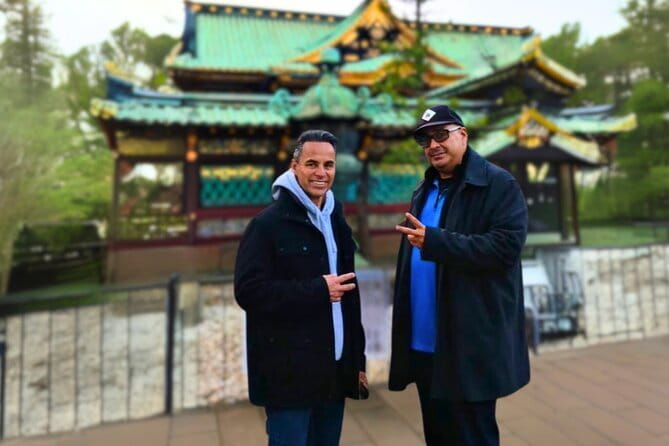
Many Tokyo sightseeing tours rush past shrines, temples, and gates while giving you only a name and a date. This walk focuses on how to visit. That makes it useful from the first shrine onward, since the customs you learn can be used at other sacred sites during your time in Japan.
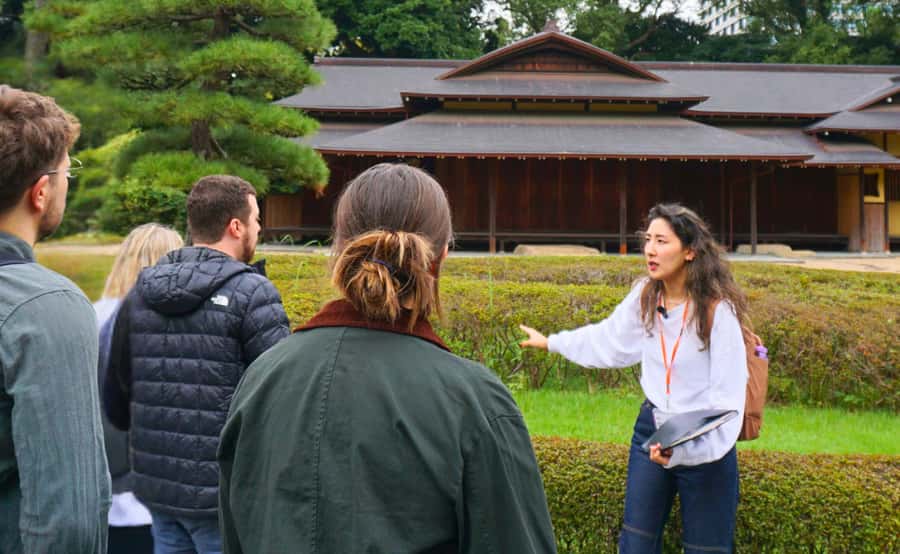
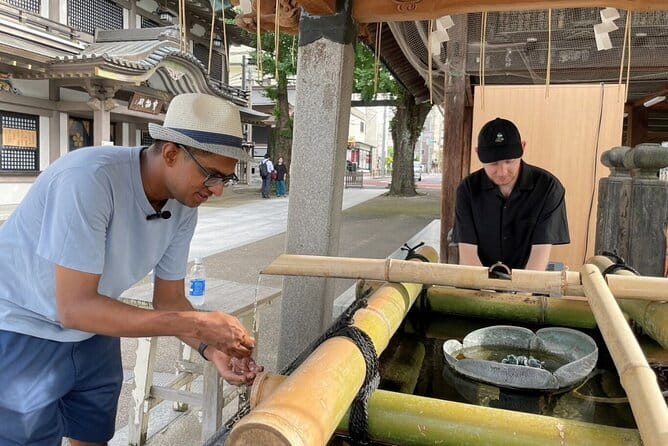
Your English-speaking guide explains the meaning behind the rituals rather than treating them as a checklist. You learn the correct way to approach a shrine, use the purification fountain, and pray. Those details matter because Japanese shrine etiquette is simple once someone shows you the order, but easy to get wrong when you are relying on a guidebook photograph.
The route also gives you a broad look at Tokyo’s religious and cultural life. You are not seeing five versions of the same place. Each stop has a different focus, from Chinese-influenced philosophy to school success and traditional performing arts.
The format is particularly appealing if you prefer conversation over a scripted lecture. With a maximum of four people, your guide can respond to questions and adjust explanations to the group. Lakki has been praised for his strong grasp of Japanese history and culture, and for explaining it in a way that remains engaging during the walk.
A few more Tokyo tours and experiences worth a look


Starting at Ochanomizu and meeting your guide
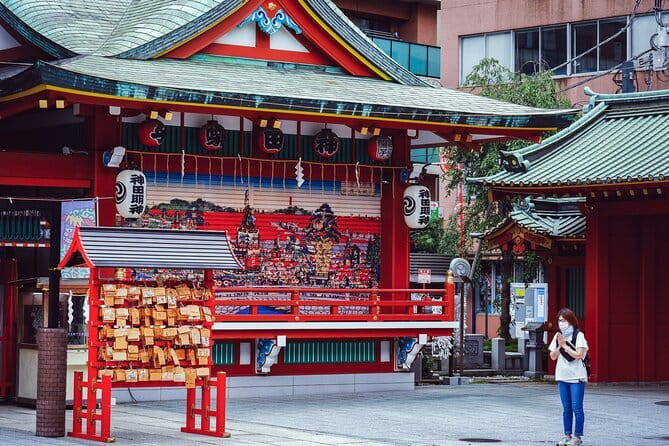
The tour begins at Starbucks Coffee, Ochanomizu Saint Clair, at 4 Chome-3 Kanda Surugadai, Chiyoda City. It is near public transportation, and the listed meeting point is a practical reference if you are coming from the Ochanomizu Station area.
I would allow extra time to find the exact Starbucks and confirm the meeting details before setting out. The tour ends at Ueno Station, so this is not a loop back to the starting point. That is helpful if you plan to continue around Ueno afterward, but less convenient if you have left luggage or other plans near Ochanomizu.
The walk requires a moderate level of physical fitness. The route includes several shrine stops and is conducted on foot, so wear shoes you can comfortably use for two hours. Transportation costs are not included, and you should handle your own train or subway fare to the meeting point and from the end point.
The operator keeps the group very small, but the experience can still be affected by the day’s conditions. Good weather is required. If poor weather causes cancellation, you are offered another date or a full refund.
Yushima Seido and the Chinese roots of Japanese thought
The first major stop is Yushima Seido, where your guide introduces the influence of Neo-Confucianism from China on modern Japanese society. This is a valuable opening because it moves the tour beyond shrine ritual and into the ideas that shaped education, social order, and public life.
You may already know that Japanese culture has drawn from several outside traditions, but the details can be hard to sort out on your own. A guide gives you a clearer frame for understanding how Chinese thought affected Japan and why places connected with learning and moral teaching matter.
This stop may appeal most to you if you enjoy history and ideas more than scenic viewpoints. It is not presented simply as a quick photo stop. The point is to connect the site with wider Japanese society, giving the rest of the tour a useful cultural base.
Kanda Myojin and the shrine of local protection
Kanda Myojin brings you into a different part of shrine life. Here, the focus turns to the shrine’s history, its deities, lively festivals, and role in protecting the local community.
That community role is important. Shrines are not only places where you ask for private good fortune. They can also serve neighborhoods through festivals, seasonal events, and shared traditions. Your guide helps you see the shrine as part of daily local life rather than as an isolated monument.
Kanda Myojin is also a good place to ask questions about the difference between a shrine and a temple, though the exact explanation will depend on your guide and the time available. You will have photo opportunities, but the real value is the context. Without it, a large shrine complex can look impressive but remain hard to interpret.
The stop is likely to be especially useful for first-time visitors who want to understand why local people return to the same shrine for festivals, prayers, and community occasions.
Yushima Tenjin, plum blossoms, and academic success
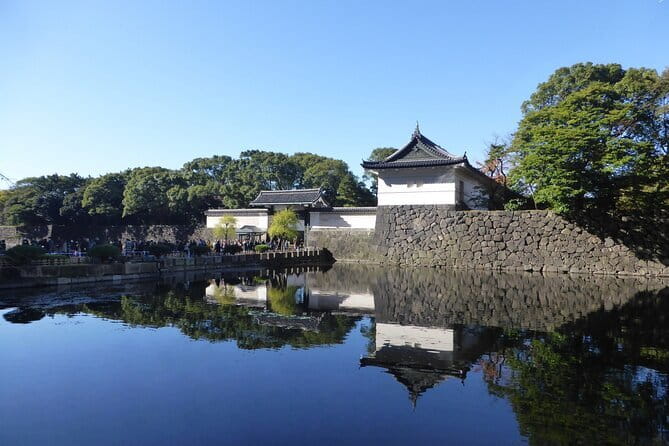
Yushima Tenjin is dedicated to academic success, giving the route another clear theme. If you are interested in Japanese education, exams, or the way people seek support for important life goals, this stop adds a practical human angle to the tour.
The shrine is also known for seasonal plum blossoms. Timing matters here. The flowers are not guaranteed throughout the year, so you should not book this walk solely for plum viewing. Still, their presence adds a seasonal layer when conditions are right.
The shrine’s connection with learning also fits well after Yushima Seido. One site introduces the intellectual influence of Neo-Confucianism, while the other shows how people ask for help with study and academic achievement. The link gives the route more shape than a simple list of famous buildings.
Your guide can also show you how prayer customs work in a setting where many people come with a specific wish. You will leave with a better sense of how worship connects to ordinary concerns, not just major historical events.
Other walking tours we've reviewed in Tokyo



Shinobazu-no-ike Benten-do and Benzaiten
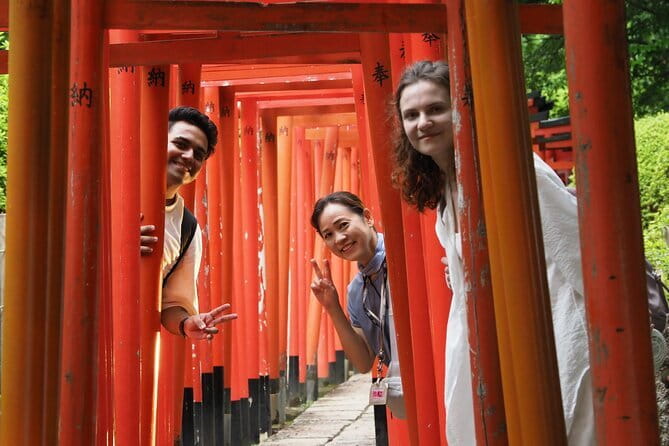
The route then reaches Shinobazu-no-ike Benten-do, a peaceful shrine on a pond. It is dedicated to Benzaiten, the goddess associated here with music and knowledge.
This stop gives the walk a change of mood. After sites tied to philosophy, community protection, and exams, the pond setting and connection with music offer a quieter way to think about Japanese belief. You get another example of how shrines and sacred sites may be linked with particular hopes, skills, and forms of good fortune.
The stop is also useful for photography, since the pond provides a different setting from the urban streets around Ochanomizu and Kanda. Still, keep your expectations realistic. The tour lasts about two hours and includes several locations, so you may have time for a short look and photos rather than a long pause beside the water.
I like this part of the route because it prevents the experience from becoming too focused on dates and names. The guide can explain the figure of Benzaiten and the connection with music and knowledge, while you also get a calmer visual break before the final shrine.
Ueno Toshogu and the Edo-period finish
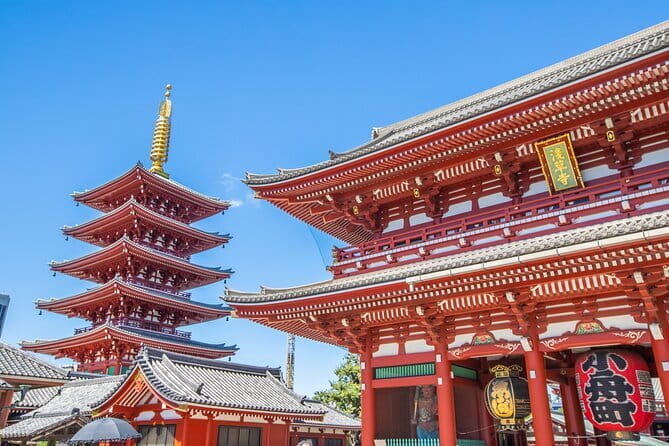
The final stop is Ueno Toshogu, where you admire an Edo-period shrine connected with one of Tokyo’s major historic areas. It provides a strong finish because the route ends with a site that brings together architecture, history, and the long political past of Japan.
There is one important cost detail. Most of the shrine stops are free, but the inner grounds of Ueno Toshogu require a ticket. The tour explores nearby areas as well, so you are not left without anything to see if you decide not to pay. Still, budget for the separate admission if seeing the inner grounds is important to you.
This is also where the two-hour schedule may feel tight. Five stops spread across Ochanomizu, Kanda, Yushima, and Ueno leave little room for extended independent exploration. I would treat the tour as an introduction, then return to any site that catches your interest if your schedule allows.
The end point at Ueno Station is convenient for continuing your day. It also means you can combine the tour with other plans in the Ueno area, although the tour itself does not include transportation.
What the guide adds to the experience
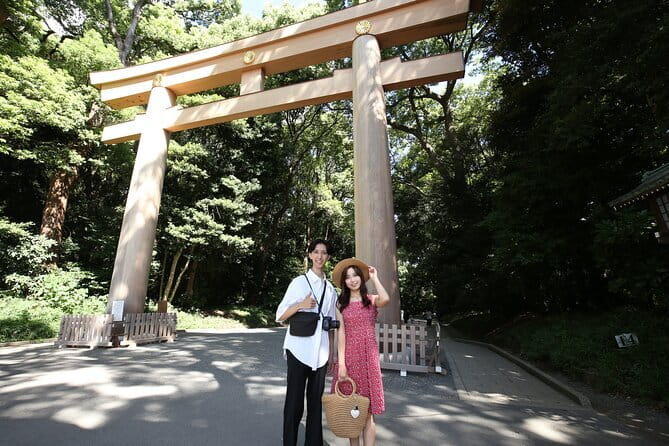
The guide is the main reason to choose this walk instead of visiting the same places alone. Shrine etiquette can be learned from a sign or a travel book, but a person can explain why the steps matter and answer questions in the moment.
Lakki is the guide name most closely associated with the experience. He has been praised for explaining Japanese history, culture, shrines, and temples with clear enthusiasm. His support has also extended beyond the scheduled walk, including recommendations for the rest of a Japan trip.
Mari has also led part of the experience. On one unusual occasion, she and Lakki helped a participant who had become lost, and the tour began later than planned because of the situation. That suggests a personal, hands-on style, but it also shows that small tours can sometimes be affected by individual circumstances.
You should not expect a formal academic seminar. You should expect an approachable guide who explains what you are seeing, teaches practical customs, and adds historical context. That mix suits you if you want enough detail to understand the sites without spending half a day in a lecture.
Is $42.44 a fair price?
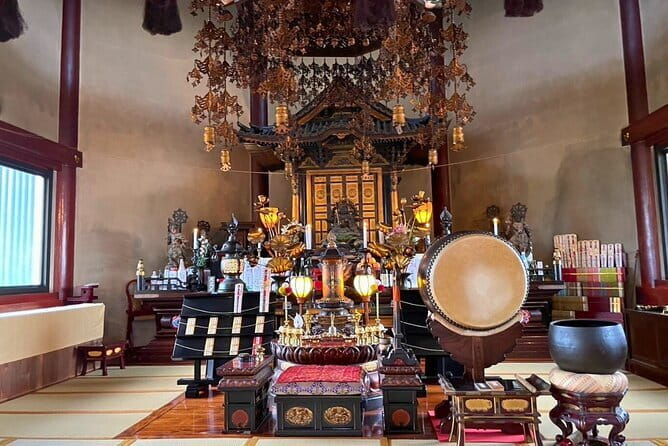
At $42.44 per person, the price is reasonable if you value guidance and cultural explanation. The admission fees are mostly free, so you are paying mainly for the guide, route planning, small group size, and the time saved figuring out shrine customs on your own.
The strongest value comes from the group limit of four. A large tour might cost less per person, but it can make questions difficult and reduce contact with the guide. Here, you have a better chance of getting explanations suited to your interests.
The price is less attractive if you are comfortable researching shrine etiquette yourself or if you plan to spend a long time at each shrine. The two-hour schedule is designed for an overview, not a full study of every site. You also need to pay your own transportation and the inner-ground ticket at Ueno Toshogu if you choose to enter.
The tour is commonly reserved well ahead of time, with an average booking lead time of 41 days. That does not guarantee that every date sells out, but it is a useful sign to book early if your Tokyo schedule is fixed.
Who should book this Tokyo shrine tour?
I would recommend it to a first-time Tokyo visitor who wants cultural background without committing to a full-day tour. It is also a good fit if shrine etiquette feels confusing, or if you want to use what you learn at other shrines later in your trip.
History fans should get plenty from the route, especially at Yushima Seido, Kanda Myojin, and Ueno Toshogu. The combination of Chinese influence, Japanese society, local deities, festivals, academic wishes, music, and Edo-period history gives you several useful entry points.
The tour may be less suitable if you want a slow photography walk, extensive free time, or a route with no walking demands. Five stops in two hours is efficient, but it is not leisurely. Families and mixed-age groups should also consider the moderate fitness requirement.
Mobile tickets make access simple, and confirmation is provided at booking. Free cancellation is available up to 24 hours before the start time. Within 24 hours, cancellations and changes are not accepted, so keep that deadline in mind.
Should you book it?
Book this walk if you want to understand how to visit a shrine correctly and prefer a small group with a guide who can explain Japanese history in person. The route is compact, varied, and well placed for ending in Ueno.
Skip it if you already know shrine etiquette, want long visits at each site, or are mainly seeking plum blossoms or paid access to Ueno Toshogu. For most first-time visitors, though, $42.44 buys useful cultural guidance rather than just a march past famous gates. That makes it a sensible early-trip activity, especially if you plan to visit more shrines on your own.
FAQ
Where does the Tokyo shrine tour begin?
The tour begins at Starbucks Coffee, Ochanomizu Saint Clair, 4 Chome-3 Kanda Surugadai, Chiyoda City, Tokyo 101-0062, Japan.
Where does the tour end?
The walk ends at Ueno Station, 7 Chome-1 Ueno, Taito City, Tokyo 110-0005, Japan.
How long does the experience last?
The tour lasts approximately two hours.
How many people can join the tour?
The maximum group size is four people.
Is the tour conducted in English?
Yes. An English-speaking guide leads the experience.
Which sites are included?
The route includes Yushima Seido Shrine, Kanda Myojin Shrine, Yushima Tenjin Shrine, Shinobazu-no-ike Benten-do, and Ueno Toshogu Shrine.
Are shrine admission fees included?
Admission is free at the listed shrines except for the inner grounds of Ueno Toshogu, which require a separate ticket. Transportation costs are also not included.
Do I need a certain fitness level?
The experience requires a moderate level of physical fitness.
Can I cancel for a full refund?
You can cancel up to 24 hours before the start time for a full refund. Cancellations or changes made less than 24 hours before the experience are not accepted. If poor weather causes cancellation, you are offered another date or a full refund.
More Guided Tours in Tokyo


More Walking Tours in Tokyo
More Temples & Meditation in Tokyo

More tours in Tokyo we've reviewed




Temples & Meditation, compared.
 ★ 4.7Tokyo: Meiji Shrine, Asakusa, Skytree Bus Tour and CruiseFrom $12210 hours
 ★ 4.8Tokyo: Asakusa Walking Tour with Sensoji Temple VisitFrom $222 hours
 ★ 4.5Tokyo: Kamakura & Enoshima Day Trip including Temple TicketsFrom $589 hours - 570 minutes
 ★ 4.5Tokyo: Nikko Toshogu Shrine and Kegon Waterfall TourFrom $8410h 30m
 ★ 4.5Tokyo Panoramic 1 Day: Meiji Shrine, Asakusa, Odaiba and SKYTREE®From $85
 ★ 5.0Asakusa Senso-ji Temple and Old Tokyo Walking TourFrom $20