Reviewed · SUMO EXPERIENCES
Tokyo: Grand Sumo Morning Training Tour
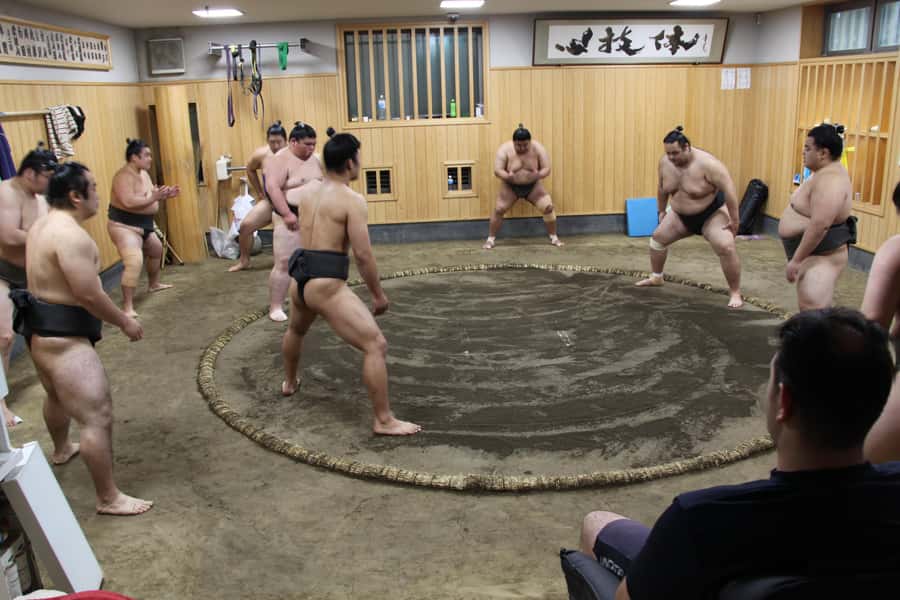
Professional sumo training is not a staged show. It is a hard, quiet morning of practice, and this two-hour visit takes you close to the wrestlers as they work through their routines. You meet an English-speaking guide at Honjo-Azumabashi Station, then walk to the sumo stable for the session.
In This Article
- Key points to know before booking
- Why a morning at a sumo stable feels different
- Meeting your guide at Honjo-Azumabashi Station
- Entering the working sumo stable
- Watching the wrestlers train
- What you can and cannot bring inside
- The closing photo and end of the visit
- Is the tour good value?
- Who should book this morning visit?
- Practical planning tips for a smooth morning
- Should you book the Tokyo Grand Sumo Morning Training Tour?
- FAQ
- How long does the Tokyo Grand Sumo Morning Training Tour last?
- Where does the tour meet?
- How early should I arrive?
- Is the tour conducted in English?
- Can I take photographs during the training?
- Will I have a chair during the training?
- Can I leave my seat and return during the visit?
- Are children allowed on the tour?
- Is the tour suitable for wheelchair users?
- Can I cancel the booking?
I like the directness of this tour. You see the wrestlers training in front of you, rather than watching a performance made for an audience, and the closing ceremonial photo with a sumo wrestler gives the morning a memorable finish. The main drawback is comfort: you sit on the floor without a chair, cannot stretch out your legs, and must follow strict rules about photography, recording, bags, and movement.
Key points to know before booking
- Training happens at close range: You watch professional wrestlers practice in the stable, where the physical effort and concentration are easy to see.
- The setting is traditional: This is a working sumo stable, not a theater show, so the atmosphere depends on the wrestlers’ morning schedule and condition.
- You sit on the floor: Chairs are not supplied, and visitors must keep their legs tucked in rather than stretching them out.
- Photography is limited: Flash photography, video, audio recording, and photography inside the stable are not allowed. A ceremonial photo is offered after the lesson.
- The meeting point is precise: Meet the guide at Exit A4 of Honjo-Azumabashi Station at least ten minutes early.
- Asakusa is close by: After the session, you can continue on your own to the historic Asakusa district.
Why a morning at a sumo stable feels different
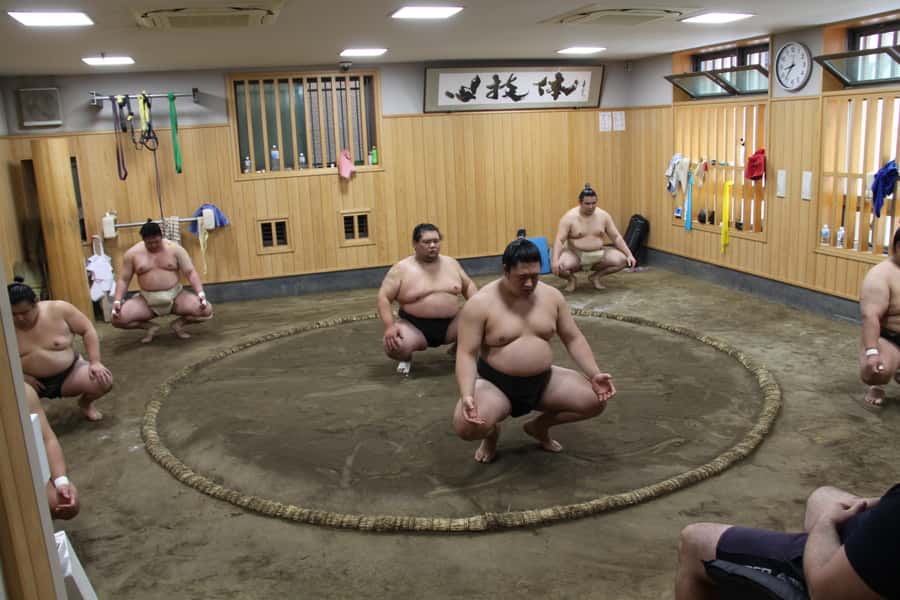
Sumo is often presented to visitors through tournament matches, souvenirs, or theatrical demonstrations. This tour gives you a different view. You see the preparation behind the public contests, including the repetitive work, force, and discipline that professional wrestlers bring to each practice.
The stable matters as much as the wrestlers. It is their training home, so the visit calls for quiet attention and respect. You are not entering a visitor center with displays and set explanations at every turn. You are observing a working place, and that makes the experience feel more personal.
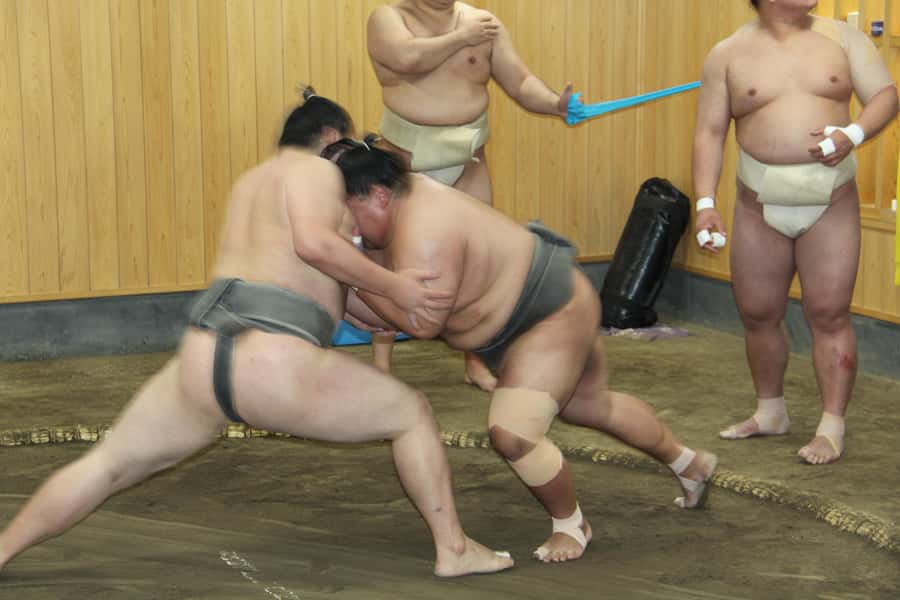
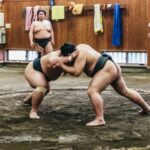
The physical side is plain to see. Wrestlers push against one another, repeat drills, and test balance and strength. Even without a detailed explanation of every movement, you can understand that this is serious athletic training. The close distance is one of the strongest reasons to choose this tour. You are not simply watching small figures across a large arena.
The atmosphere may also feel more restrained than you expect. The value is in watching concentration and routine, not in crowd noise or a constant stream of entertainment. If you want a lively show with narration, food, and arranged demonstrations, another sumo activity may suit you better.
A few more Tokyo tours and experiences worth a look
Meeting your guide at Honjo-Azumabashi Station
The tour begins at Honjo-Azumabashi Station, a useful location for combining this visit with other eastern Tokyo sights. Go to Exit A4, where the English-speaking guide will be waiting. The listed meeting point is at approximately 35.7087287902832, 139.80487060546875.
Arrive at least ten minutes before the stated departure time. This is not a meeting where you can casually catch up after the group leaves. The tour proceeds on schedule, and late arrivals are not accommodated. I would allow extra time for finding the correct platform and exit, especially if you are still learning Tokyo’s station system.
Clear meeting instructions are important here because the tour does not begin at a major sightseeing landmark. One recent French-language booking described the directions as clear, which is useful reassurance, but you should still check your route before leaving your hotel. Once you meet the guide, the walk to the stable is handled as part of the visit.
The guide provides the tour in English. That helps with basic instructions and gives you a better chance of understanding the customs expected inside the stable. It also means you do not have to navigate the arrival on your own.
Entering the working sumo stable
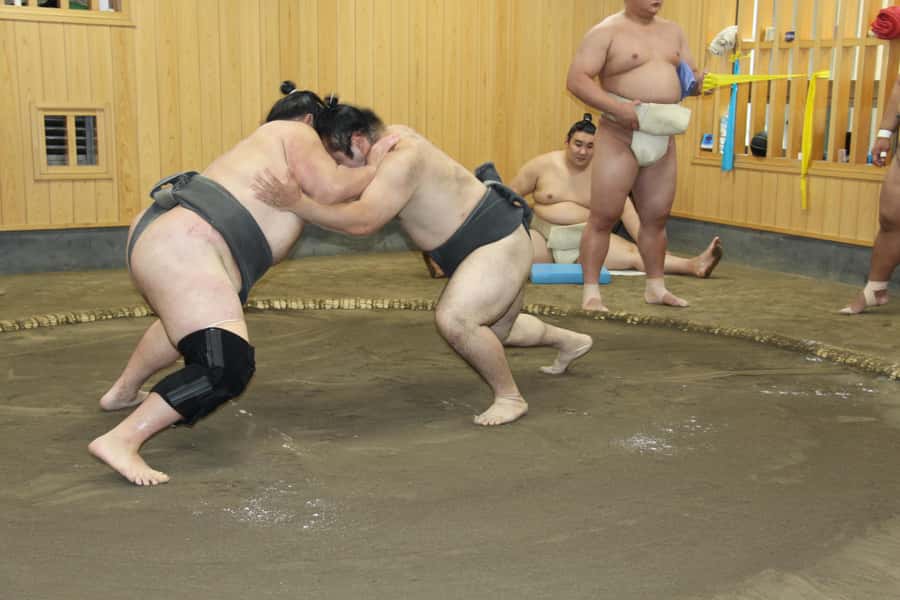
Permission is required before you enter the stable. This is a small but important point. You are entering a place where athletes live and train, not a public hall designed around visitor convenience.
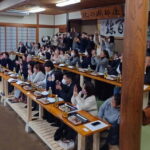
Inside, you will sit on the floor during the lesson. No chairs are provided, and you must refrain from stretching your legs out. This arrangement may be uncomfortable if you have stiff knees, limited mobility, or difficulty sitting on the floor for an extended period.
The stable rules are strict. You cannot leave your seat and re-enter, so use the facilities and settle yourself before the lesson begins. You should also listen closely to the guide and staff. Failure to follow their instructions can lead to removal from the tour without a refund.
These limits are not minor details. They shape the visit. The reward is close observation, but the price is less freedom than you would have at a normal sightseeing attraction. I would choose loose, comfortable clothing and keep your personal items to a minimum.
Watching the wrestlers train
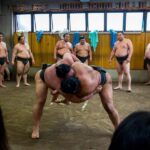
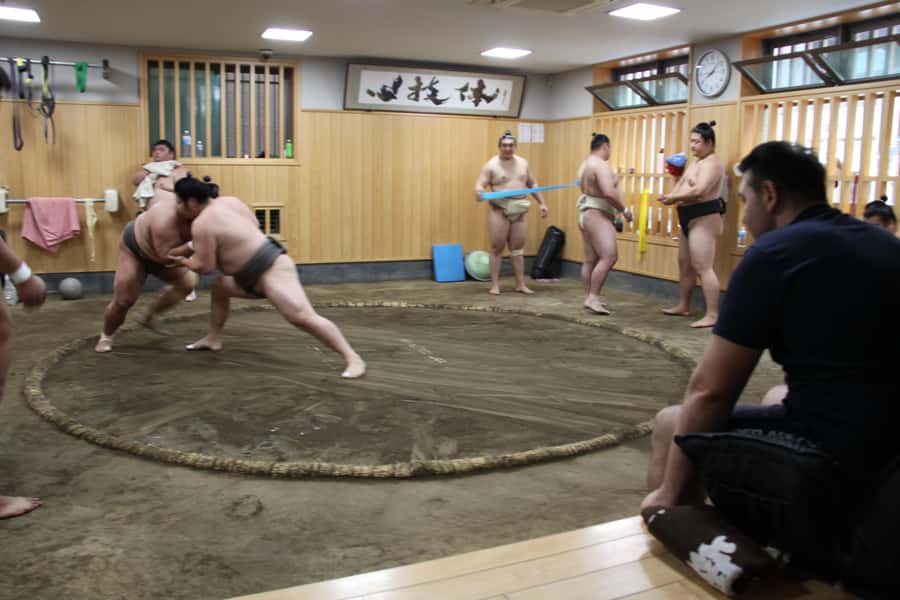
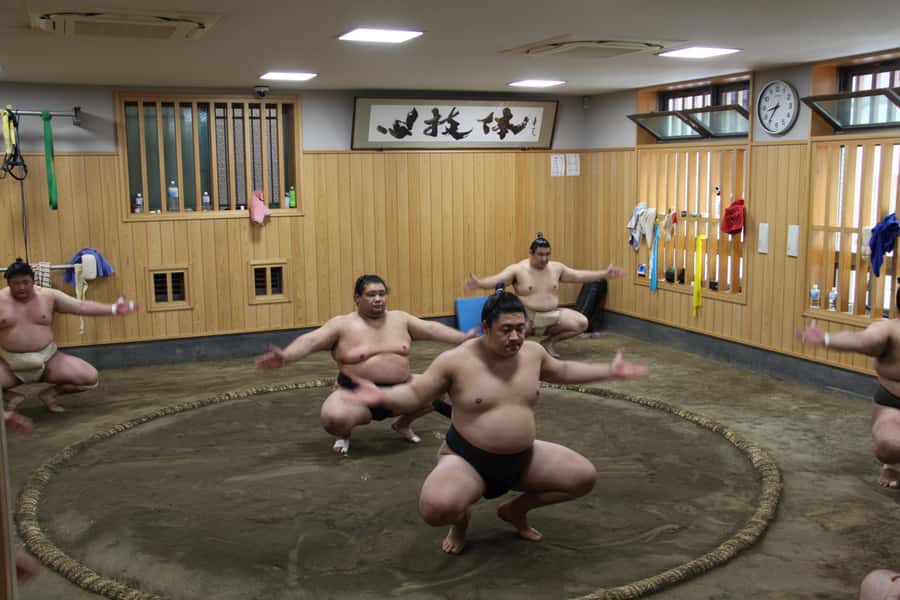
The training is the heart of the morning. You watch professional sumo wrestlers work through an intense practice session at close range. The focus is on their physical effort and dedication, not on a polished presentation for visitors.
This is where the tour earns its appeal. You can see the speed and impact of the practice from a much more personal distance than in a tournament arena. The action takes place in front of you, and the silence and concentration of the stable help you notice small details in the wrestlers’ preparation.
The exact content of the session can change. The physical condition of the wrestlers and other unexpected circumstances may affect the activity. That means you should book this as an opportunity to observe genuine training, not as a guarantee of one fixed sequence or a staged match.
For many people, that uncertainty is part of the value. A real practice session has its own rhythm. It may feel powerful and intense, or more controlled and repetitive, depending on the morning. You are seeing the work that supports sumo competition rather than a performance built around visitor expectations.
The training also gives you a better sense of sumo as a discipline. The sport is not only about the brief collision at the start of a match. It depends on repeated practice, physical conditioning, control, and mental focus. Watching those elements up close can make later sumo viewing more meaningful.
What you can and cannot bring inside
The stable has a long list of restrictions. Large bags and luggage are not allowed, and baby strollers or baby carriages cannot be brought in. Weapons and sharp objects are prohibited, as are alcohol, drugs, food, smoking, vaping, and costumes.
Photography and recording rules deserve special care. Flash photography, video recording, and audio recording are not allowed. Photography inside the stable is also listed as prohibited, so do not assume that you can take pictures during the practice.
Selfie sticks are not permitted either. You should follow the guide’s directions rather than trying to capture the session from a different angle. The aim is to watch respectfully without distracting the wrestlers.
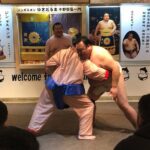
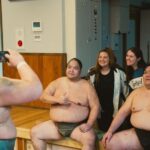
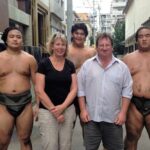
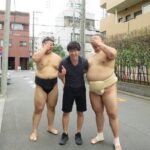
The tour does provide a photo opportunity after the lesson. This is a ceremonial photograph with a sumo wrestler, and it gives you a way to take home a visual memory without turning the training itself into a photo session.
Wear comfortable clothes. Short skirts are not allowed, and clothing that makes sitting on the floor difficult is a poor choice. I would also avoid carrying anything you do not need for the two-hour outing.
A few more Tokyo tours and experiences worth a look

The closing photo and end of the visit
After the training ends, you have the opportunity to take a ceremonial photo with a sumo wrestler. This gives the morning a clear closing moment and is especially useful for families with older children, couples, or anyone who wants a keepsake from the visit.
The photo is not a substitute for photography during training, so keep your camera or phone away until the guide says it is appropriate. The stable staff’s instructions control the timing and manner of the photograph.
Once the visit finishes, the guided portion ends. You can then make your own way to nearby attractions, including Asakusa. That pairing works well because it turns a short morning activity into a fuller half-day in eastern Tokyo.
Asakusa offers a very different mood from the quiet training stable. You can continue there at your own pace after the tour, rather than being rushed through another scheduled stop. Since the Asakusa visit is optional and self-guided, plan your own route and meal separately.
Is the tour good value?
No price is provided here, so I cannot judge the exact cost. I can judge what you receive for your time and money. The main value is access to a working sumo stable and the chance to watch professional wrestlers from close range. That is a more specialized experience than a general Tokyo sightseeing tour.
The two-hour length is also practical. It gives you a focused cultural activity without taking up an entire day, and you can follow it with Asakusa or another eastern Tokyo stop. The included English-speaking guide adds value by helping you find the stable and understand the rules.
You should compare this with sumo shows that include meals, souvenirs, former wrestlers, or staged demonstrations. Those options may offer more comfort and a fuller entertainment package. This morning visit is better suited to someone who wants to observe real practice and does not need food or a long list of activities.
The absence of chairs and the strict no-photography policy may reduce the value for some people. If you mainly want an attractive social-media photo or a comfortable show with clear sightlines from a seat, choose a different format. If your priority is proximity and a traditional setting, this tour has a stronger case.
Who should book this morning visit?
I would recommend it to adults and children over three who are curious about Japanese culture and can sit quietly on the floor. It suits people who appreciate sports training, ritual, and close observation more than fast-moving sightseeing.
It is also a good choice for a repeat visitor to Tokyo. You do not need another broad overview of the city, and the sumo stable offers a focused experience that feels tied to local practice.
Families should think carefully about the rules. Children must remain settled, and the no-food, no-stroller, and no-re-entry policies may make the visit hard for very young children. Anyone under three is not permitted.
The tour is not suitable for wheelchair users. It is also a poor fit if you cannot sit on the floor or need to stretch your legs during the lesson. Check these points before booking rather than treating them as small inconveniences.
Practical planning tips for a smooth morning
Set your route to Honjo-Azumabashi Station the night before. Aim to reach Exit A4 at least ten minutes early, with enough time to locate the guide without hurrying.
Dress for floor sitting. Comfortable trousers or another suitable outfit will make the two-hour visit easier. Leave short skirts, large bags, luggage, selfie sticks, food, and drinks behind.
Keep your phone ready for the final ceremonial photo, but do not use it for video, audio, flash, or photography inside the stable. Wait for clear permission before taking any picture.
Treat the stable as a place of work. Stay in your assigned seat, keep your legs tucked in, and follow every instruction from the guide and staff. The quality of the visit depends on the group’s respect for the wrestlers’ routine.
Build a little flexibility into your day. The session can change because of a wrestler’s physical condition or another unexpected issue. Afterward, Asakusa gives you an easy option if you want to continue sightseeing nearby.
Should you book the Tokyo Grand Sumo Morning Training Tour?
Book it if you want real training at close range, an English-speaking guide, and a short cultural activity that can lead naturally into Asakusa. The discipline, physical force, and quiet focus are the main rewards, and the ceremonial photo adds a pleasant finish.
Skip it if you need a chair, use a wheelchair, want to record everything, or prefer a lively sumo show with food and staged entertainment. The rules are firm, and the stable is not designed around visitor comfort.
For the right person, this is a memorable way to see sumo as a daily practice rather than a distant spectacle. Arrive early, dress for the floor, carry very little, and treat the stable with care. Those simple choices will let you focus on the wrestlers and the rare setting in front of you.
FAQ
How long does the Tokyo Grand Sumo Morning Training Tour last?
The activity lasts two hours.
Where does the tour meet?
Meet the English-speaking guide near Exit A4 of Honjo-Azumabashi Station.
How early should I arrive?
Arrive at least ten minutes before the stated departure time. Late arrivals will not be accommodated.
Is the tour conducted in English?
Yes. The activity includes a live English-speaking guide.
Can I take photographs during the training?
No. Photography inside the stable, flash photography, video recording, and audio recording are not allowed. A ceremonial photo opportunity is available after the lesson.
Will I have a chair during the training?
No. Chairs are not provided. You must sit on the floor and refrain from stretching out your legs.
Can I leave my seat and return during the visit?
No. Visitors must obtain permission before entering the stable and cannot re-enter after leaving their seats.
Are children allowed on the tour?
Children under three are not permitted. The activity is suitable only for children who can follow the stable’s rules and sit quietly on the floor.
Is the tour suitable for wheelchair users?
No. The activity is not suitable for wheelchair users.
Can I cancel the booking?
You can cancel up to 24 hours in advance for a full refund. The reserve-now, pay-later option is also available, subject to the booking terms.
More Morning in Tokyo
More Sumo Experiences in Tokyo

More tours in Tokyo we've reviewed



Sumo Experiences, compared.
 ★ 4.8Tokyo: Sumo Show Experience with Chicken Hot Pot and a PhotoFrom $1032 hours
 ★ 4.8Tokyo: Sumo Show and Dining ExperienceFrom $7990 minutes - 2 hours
 ★ 5.0the SUMO showFrom $89
 ★ 5.0Tokyo Sumo Entertainment Show with Chicken Hot Pot and PhotoFrom $106
 ★ 4.6Tokyo: Sumo Tournament Tour with Chair Seat TicketsFrom $141
 ★ 5.0Tokyo Grand Sumo Tournament Viewing Tour with TicketsFrom $124