Reviewed · TOKYO FOOD TOURS
Tokyo Your Way A Tailored Full Day Friendly Food Tour With Guide
Tokyo gets easier to understand when you stop trying to see all of it from a tour bus. This small-group food tour uses trains, subways, and your own feet to link major districts with local meals, shopping streets, and pop-culture stops. You can shape the day around three or four places that fit your interests.
In This Article
- Key points to know before booking
- A full Tokyo day built around food and trains
- Shibuya Crossing: Tokyo at full volume
- Don Quijote Shibuya: useful shopping with sensory overload
- Akihabara GiGO: a short look at game-center culture
- Pokémon Mega Center Tokyo: a focused pop-culture stop
- Takeshita Street: Harajuku’s youthful shopping lane
- Ameyoko Shopping Street: market energy under the railway
- Two included meals give the day its value
- What Chisato and Hamada add to the day
- Public transport is a feature, not a compromise
- Is $255.75 a fair price?
- Who should book this Tokyo food tour?
- My booking advice
- FAQ
- What is the price of the Tokyo food tour?
- How long does the experience last?
- What time does the tour start?
- How many people can join the tour?
- Is hotel pickup available?
- Is transportation included?
- What food and drinks are included?
- Can I choose which parts of Tokyo to visit?
- What is the cancellation policy?
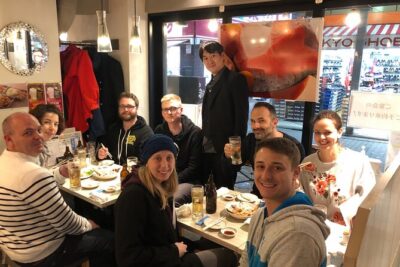
I like the practical mix of wagyu and sushi, with soft drinks and water included. I also like the chance to work with guides such as Chisato or Hamada, who can explain daily life, food, and city history while listening to what you want to see.
The tradeoff is the price, $255.75 per person, and the amount of walking and public transport. Six to seven hours can feel long if you want a slow day, and the published route names several stops even though the tour allows you to choose only three or four locations.
Key points to know before booking
- Public transport is part of the experience: You get around as people in Tokyo do, rather than staying in a private vehicle.
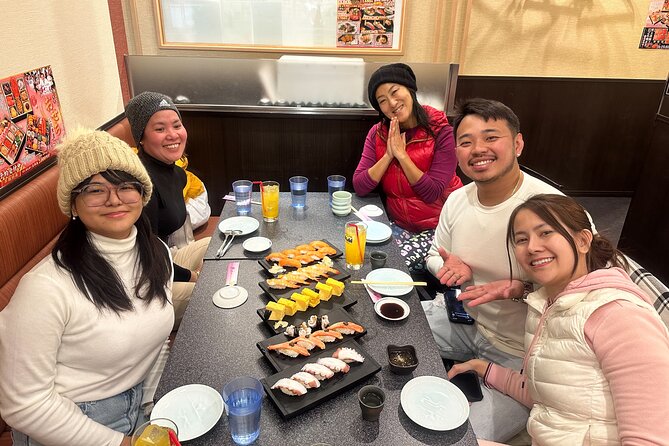
- Wagyu and sushi are included: The day includes lunch and dinner, plus soft drinks and water. Alcohol costs extra.
- You can choose three or four areas: The plan may include Shibuya, Akihabara, Harajuku, Ueno, or other agreed locations.
- The group is capped at eight people: That is small enough for personal attention without the cost of a fully private guide.
- Guides shape the day around your interests: Chisato and Hamada are named in the tour feedback, with particular praise for food knowledge, cultural insight, and flexibility.
- Hotel pickup may be available: Pickup is offered, with an optional meeting at a central accommodation. Confirm the exact arrangement before you go.
A full Tokyo day built around food and trains
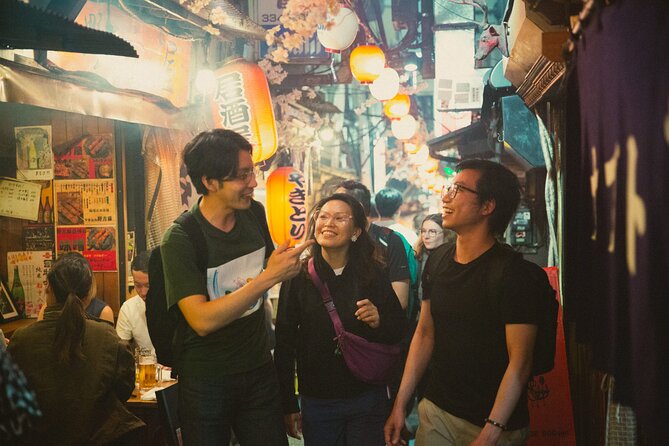
This is not a standard sightseeing loop where a guide points out landmarks from behind glass. The appeal is the connection between neighborhoods. You might begin at a major city crossing, ride to a game center, browse a market under the railway, and stop for Japanese food along the way.
The tour lasts about six to seven hours and starts at 11:00 am. That timing gives you a full afternoon and carries into the evening meal. It also means you should arrive ready to walk, stand, and board trains during busy parts of the day.
The group limit of eight matters in Tokyo. Stations can be confusing, streets can be crowded, and restaurants may have limited seating. A guide can keep the day moving and adjust the route when your interests are clear.
The tour is described as primarily walking, though public transport is used. That is a good fit for Tokyo, where trains often save time and give you a useful look at ordinary city life. It is not a good choice if you want door-to-door transport or a private car waiting at each stop.
A few more Tokyo tours and experiences worth a look

Shibuya Crossing: Tokyo at full volume
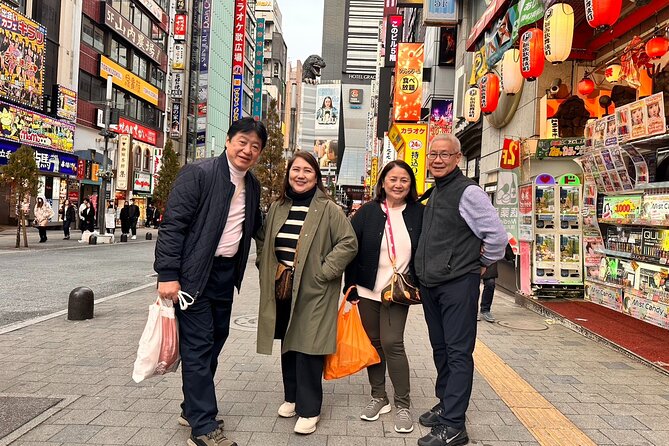
Shibuya Crossing is the natural high-energy opening. Located outside the Hachiko exit of Shibuya Station, it is the famous intersection where traffic stops and pedestrians cross in several directions at once.
You get about 30 minutes here, with no admission charge. That is enough time to see the crossing, take photographs, and get a first sense of Tokyo’s scale. Your guide can also help you understand the station exits and the district’s layout, which is useful if you plan to return on your own.
The short visit is sensible. Shibuya Crossing is exciting, but it is not a place where you need hours unless you plan to shop, eat, or visit another attraction nearby. If you prefer quiet shrines and older neighborhoods, this stop may feel more like a quick city snapshot than a major cultural visit.
Don Quijote Shibuya: useful shopping with sensory overload
The MEGA Don Quijote Shibuya Main Store gets around 45 minutes. It is a large, low-cost shop selling daily goods, food, cosmetics, souvenirs, and many items aimed at visitors.
I find a stop like this useful early in a Tokyo trip. You can see the sheer range of products sold in Japan, compare packaged foods, and pick up small gifts without spending much. It is also a practical place to ask your guide about Japanese snacks or everyday items.
The drawback is the store’s sheer amount of merchandise. Shelves are tightly packed, signs compete for attention, and 45 minutes may feel rushed if you want to browse every floor. I would treat it as a lively cultural shopping stop, not as a calm break.
Akihabara GiGO: a short look at game-center culture
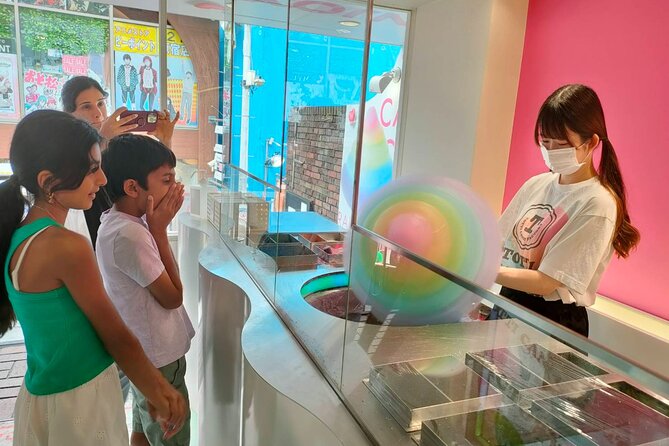
Akihabara GiGO, formerly known as Sega Akihabara Building 3, offers a 30-minute look at one of Tokyo’s famous game centers. The building includes UFO catchers, video games, sticker photo machines, and music games.
This is a good choice if you enjoy Japanese pop culture or want something different from temples and food markets. Even if you do not play, the machines and bright displays show how arcade culture remains part of city entertainment.
Thirty minutes is enough for a quick look or a game, but not enough for a long session. If Akihabara is a top priority, ask to give it more time or select it as one of your main three or four areas. The tour is flexible, but the day still has a fixed length.
Pokémon Mega Center Tokyo: a focused pop-culture stop
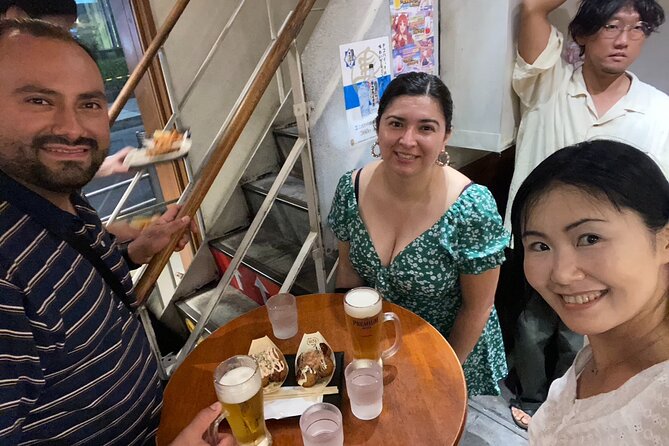
The Pokémon Mega Center Tokyo is another short stop, listed at about 30 minutes. Japan has more than a dozen physical Pokémon Centers, and these shops sell a wide range of Pokémon products.
For fans, this can be one of the most personally rewarding parts of the day. You can browse merchandise that may not be easy to find elsewhere, while your guide helps fit the stop into the larger route.
For anyone without an interest in Pokémon, this is an easy stop to skip. Since you can choose three or four locations according to your preferences, the tour does not need to become a pop-culture shopping day unless you want it to.
A few more Tokyo tours and experiences worth a look


Takeshita Street: Harajuku’s youthful shopping lane
Takeshita Street runs through Harajuku and is known for clothing shops, sweet street food, and groups of young people meeting up. The suggested visit lasts 30 minutes and is free to enter.
I like this stop because it gives you a different side of Tokyo. Shibuya shows the city’s giant crossroads, while Takeshita Street is more focused on youth fashion, snacks, and small retail shops. It is a good place to window-shop and notice how quickly Tokyo’s style changes from one neighborhood to the next.
This street can be crowded, and 30 minutes passes quickly if you want to browse or sample food. It is best approached as a short walk with a few tastes, not as a serious shopping trip. Your included meals are separate from any extra purchases you make here.
Ameyoko Shopping Street: market energy under the railway
Ameyoko Shopping Street sits beneath the railway between JR Ueno and Okachimachi stations. More than 400 stores sell seafood, clothing, dried foods, sweets, and other goods.
This is perhaps the most useful shopping stop for understanding everyday commerce. The market setting feels less polished than a department store, and the range of goods gives you plenty to look at in a compact area. It also works well with the tour’s food focus.
The suggested time is only 30 minutes, so you should not expect a slow market meal and a long shopping session at once. Ask your guide which stalls or foods fit your interests. If you like markets more than character shops, Ameyoko may deserve priority over Don Quijote or Pokémon.
Two included meals give the day its value
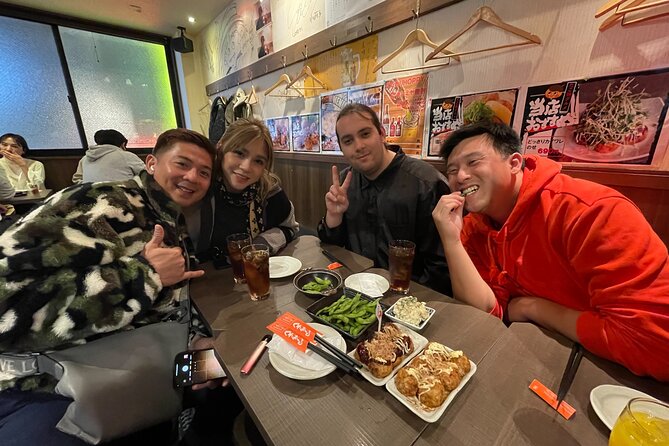
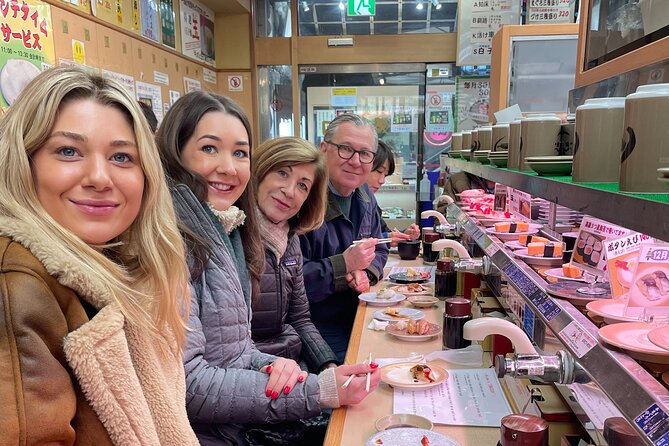
The strongest practical feature is the included food. Lunch and dinner are described as including wagyu, and the detailed feedback also refers to two meals featuring barbecue and sushi. Soft drinks and water are included, while alcoholic drinks can be bought separately.
That matters in Tokyo, where a meal can quickly push up the cost of a day. You are not simply paying for a guide and a sequence of station transfers. You are also covering substantial food stops, non-alcoholic drinks, and entry tickets where needed.
The exact restaurants and dishes are not specified in advance, so you should tell the guide about your interests, allergies, dislikes, and comfort level with Japanese food. The tour is built around personal choices, and clear communication gives the guide a better chance to arrange a satisfying day.
I would not book this solely for a guaranteed restaurant list. Book it for the combination of food, neighborhood access, and a guide who can help you make decisions in real time. The named guides Chisato and Hamada receive particularly strong praise for combining meals with cultural and city context.
What Chisato and Hamada add to the day
The guide is the main reason to choose this experience instead of assembling the same neighborhoods on your own. Chisato is described as organized and attentive to personal interests, while Hamada is praised for combining food stops with historic sites and explanations of Tokyo’s past.
Those details point to the tour’s best use. Tell your guide if you care most about food, shopping, pop culture, shrines, daily life, or transport. You can then use the limited hours where they matter most.
The tour also gives you a chance to ask questions that are hard to solve with a guidebook. You can ask what a dish is, how a market works, why a neighborhood feels different, or how to continue exploring after the tour ends.
The quality of the day will depend heavily on the guide match and your communication. The small group helps, but this is not an unlimited private itinerary. Three or four selected areas must fit alongside meals and transport.
Public transport is a feature, not a compromise
There is no private vehicle. That is worth stating clearly because some visitors see hotel pickup and assume a car-based tour. Instead, the tour is primarily on foot and uses public transport like a local day out.
I see that as a strength for Tokyo. Trains and subways connect the city’s districts efficiently, and riding them helps you understand how the city works. You also avoid losing time to road traffic.
The cost is comfort. You may stand on a train, walk between stations, and move through crowded platforms. Wear supportive shoes, keep your belongings secure, and carry only what you need. The tour is open to most participants, but the format favors people who can manage a full day of walking and transit.
Is $255.75 a fair price?
At $255.75 per person, this is not a budget sightseeing tour. It becomes more reasonable when you count the six to seven hours of guiding, two included meals, soft drinks, water, public transport support, and the effort involved in linking several far-flung Tokyo districts.
The group limit of eight also improves the value. You receive more personal attention than on a large coach tour, yet you do not pay the full rate of a private guide. Pickup, if arranged for your central accommodation, adds convenience, though you should confirm the exact pickup and drop-off details.
The price is harder to justify if you only want to see Shibuya Crossing and take a few photos. It makes better financial sense if you want help choosing food, need an introduction to Tokyo’s rail system, and value a flexible day shaped around your interests.
Who should book this Tokyo food tour?
I would recommend it to first-time visitors who want a broad introduction without planning every train and restaurant themselves. It also suits people who want Japanese food included rather than spending the day making separate dining decisions.
Families and small groups may like the ability to choose among fashion, games, Pokémon, markets, and major city districts. Pop-culture fans can favor Akihabara and Pokémon, while shoppers may prefer Harajuku, Shibuya, and Ameyoko.
I would be more cautious if you dislike public transport, cannot comfortably walk for much of the day, or want a slow tour with long visits at each place. I would also look elsewhere if your main goal is a detailed temple tour, since the named route centers on shopping streets, entertainment districts, markets, and food.
Free cancellation is available up to 24 hours before the 11:00 am start for a full refund. Changes made inside that window are not accepted, and poor weather can lead to a new date or full refund because the tour requires good weather.
My booking advice
I would book this tour when you want a useful first day in Tokyo, especially if food and local transport are as important to you as famous sights. Before paying, send your preferred districts and food interests to the provider, then confirm the three or four locations, pickup plan, and meal details.
Choose Shibuya and Takeshita Street for modern city energy, Akihabara and Pokémon for Japanese pop culture, or Ameyoko for market shopping and food. The tour is at its best when you make those choices in advance and let the guide handle the connections.
For a flexible, food-centered introduction with Chisato, Hamada, or another local host, I think the price can be justified. If you already know Tokyo well and want one narrow neighborhood explored slowly, spend the money on a smaller custom experience instead.
FAQ
What is the price of the Tokyo food tour?
The tour costs $255.75 per person.
How long does the experience last?
The tour lasts approximately six to seven hours.
What time does the tour start?
The listed start time is 11:00 am.
How many people can join the tour?
The maximum group size is eight travelers.
Is hotel pickup available?
Pickup is offered, and an optional meeting at a central location accommodation is available. Confirm the exact pickup and drop-off arrangement when booking.
Is transportation included?
The tour is primarily walking, and public transport may be used. There is no private vehicle.
What food and drinks are included?
Lunch and dinner with wagyu are included, along with soft drinks and water. Alcoholic drinks are not included but may be purchased.
Can I choose which parts of Tokyo to visit?
Yes. You can customize the day by choosing three to four locations according to your preferences.
What is the cancellation policy?
You can cancel at least 24 hours before the start time for a full refund. Cancellations or changes made less than 24 hours before the start time are not accepted for a refund. If poor weather cancels the tour, you will be offered another date or a full refund.
More Guided Tours in Tokyo

More Food Experiences in Tokyo
More Tokyo Food Tours in Tokyo
More tours in Tokyo we've reviewed




Tokyo Food Tours, compared.
 ★ 5.0Tokyo: Shinjuku Food Tour (13 Dishes at 4 Local Eateries)From $86
 ★ 4.9Tokyo: Shinjuku Food Tour (13 Dishes and 4 Eateries)From $97
 ★ 5.0Tokyo Night Foodie Tour in Shinjuku – Seasonal Sushi, Wagyu BeefFrom $111
 ★ 5.0Eat and Drink Like a Local: Tokyo Ueno Food Tour-Taverns&RamenFrom $95
 ★ 5.0Tokyo: Shibuya Food Tour (13 dishes and 4 Eateries)From $77
Tokyo: Shinjuku Food Tour – 15 Dishes, 3 Drinks, 4 EateriesFrom $723 hours
★ 5.0Tokyo: Shibuya Food Tour (13 dishes and 4 Eateries)From $77
Tokyo: Shinjuku Food Tour – 15 Dishes, 3 Drinks, 4 EateriesFrom $723 hours