Reviewed · SHIBUYA TOURS
Tokyo Night Bike Tour: From Shibuya to Tokyo Tower via Roppongi
Tokyo looks different from a bicycle after sunset. This two-hour ride leaves near Yoyogi, then threads through Meiji Jingu Gaien, Aoyama, Roppongi, and Tokyo Tower, mixing famous sights with streets you would likely skip on foot.
In This Article
- Key points of this Tokyo night ride
- Why Tokyo works so well after dark
- The pace, bicycles, and road confidence you need
- Tokyo Tower and the first big views
- Meiji Jingu Gaien and a quieter side of the city
- Omotesando and Aoyama after the shops fill up
- Roppongi Keyakizaka Dori and the city lights
- Azabujuban, Nishiazabu, and the quieter routes
- Aoyama Cemetery at night
- What the guide adds to the ride
- Is $56.01 a fair price?
- Weather, cancellation, and useful planning notes
- Who should book this night bike tour?
- Should you book it?
- FAQ
- Where does the Tokyo night bike tour start?
- What time does the tour begin?
- Where does the tour end?
- How long is the bike tour?
- What is included in the price?
- Is dinner included?
- How fast do participants need to ride?
- Can the tour operate in bad weather?
I like the small group, capped at six, and the way the route reaches places that public transport cannot. I also like the cooler evening air, especially in summer, when cycling is far more pleasant than standing on a hot platform.
The main catch is simple: this is not a casual roll. You need to ride confidently at about 15 kilometers per hour, handle traffic lights, and manage crowded or tight spaces. Dinner is not included, so eat first.
Key points of this Tokyo night ride

- A two-hour route through nine Tokyo areas: The ride covers Tokyo Tower, Meiji Jingu Gaien, Omotesando, Roppongi Keyakizaka Dori, Azabujuban, Aoyama Cemetery, Roppongi, Nishiazabu, and nearby streets.
- A small group of six or fewer: The limited size makes it easier to stay with the guide and ask questions.
- Taichi is the guide most often named: He is described as friendly, fluent in English, safety-conscious, and good at explaining places beyond the standard sightseeing circuit.
- Bicycles and helmets are included: You do not need to arrange your own equipment.
- A real city ride, not a gentle park outing: You must be comfortable cycling on pavements, crossing traffic lights, and riding through tight spaces.
- A summer-friendly evening plan: The 8 p.m. start avoids much of the daytime heat and lets you see Tokyo lit up.
Why Tokyo works so well after dark
Tokyo by day can feel like a series of stations, crossings, and long walks. At night, a bicycle gives you a different rhythm. You can move from a quiet cemetery road to a bright shopping district, then reach Tokyo Tower without repeatedly entering and leaving the subway.
The route is not only about ticking off landmarks. It is about seeing how Tokyo changes from district to district. Roppongi has late-night restaurants and tall buildings. Aoyama feels more polished and restrained. Meiji Jingu Gaien opens up with broad roads and trees. The contrast gives you a better sense of the city than a single lookout often can.
The ride begins at Umayamichi Park, 5-chome-24-11 Sendagaya, close to Yoyogi Station and about ten minutes from Shinjuku Station. That location is useful if you are staying in the west side of central Tokyo. The scheduled start is 8 p.m., when the city is well into its evening routine.
You return to the same meeting point. That matters because you do not have to work out a new station or taxi ride at the end of the night.
A few more Tokyo tours and experiences worth a look
The pace, bicycles, and road confidence you need

A bicycle and helmet are included, which keeps the preparation easy. The bicycles suit riders from 155 to 185 centimeters tall. If you are outside that range, this may not be the right choice, since no alternative bicycle size is specified.
The stated pace is about 15 kilometers per hour. That is a normal cycling speed, but it can feel demanding if you rarely ride in a city. You should be able to keep moving, follow directions, cross traffic lights with confidence, and pass through crowded or narrow areas without panic.
This is an active sightseeing tour. You will not spend two hours gently coasting beside a river. Tokyo streets require attention, even at night. The guide leads the way, which reduces the risk of getting lost, but you still need to control your own bicycle and remain alert.
That point is especially important for families. A 15-year-old who cycles regularly may enjoy the ride, while a child who is still learning city riding may struggle. The maximum group size of six helps the guide keep the ride organized, but it does not remove the need for basic cycling skill.
Tokyo Tower and the first big views
Tokyo Tower is the route’s clearest landmark. Its orange-and-white structure is easy to recognize from many parts of the city, but arriving by bicycle gives the sight a stronger sense of place. You are moving through ordinary streets, then the tower appears as a bright focal point above the surrounding buildings.
This is one of the best parts of the ride for first-time visitors. You get a major Tokyo icon without spending the whole evening inside a viewing deck. The tradeoff is that the tour is not described as an observatory visit, so you should not expect time to go up the tower.
Instead, the value comes from seeing the tower within the city. Your guide may also help with photographs, something that is particularly useful when you are riding alone or as a couple.
Meiji Jingu Gaien and a quieter side of the city

Meiji Jingu Gaien offers a change of pace from the high-rise districts. The area is known for broad avenues and open stretches, making it a welcome break after tighter city streets. At night, it can feel calmer than the shopping zones nearby.
This stop helps explain why the tour is more than a fast trip between famous points. You get a look at a part of central Tokyo that does not fit the usual neon-and-crosswalk image. The route also gives you a chance to enjoy the cooler air and steady movement of the bicycle.
The exact amount of time at each stop is not specified. Expect brief viewing and photo pauses rather than long guided visits. That is a strength if you want to cover ground, but a limitation if you prefer detailed history at every location.
Omotesando and Aoyama after the shops fill up

Omotesando is one of Tokyo’s best-known shopping streets. By bicycle, you can take in its polished storefronts and evening lighting without committing to a long shopping walk. You will also pass into Aoyama, where the mood becomes less commercial and more residential or discreetly upscale.
The guide’s local knowledge matters here. The appeal is not simply identifying a designer shop. It is learning how the streets connect and seeing the less obvious routes between major districts. Taichi is repeatedly praised for explaining areas beyond the standard tourist circuit and for making the ride easy to follow.
If you are hoping for extended shopping time, this is not that kind of tour. You will pass through the district rather than stop at stores. Bring this experience into your plans as an evening overview, not a retail outing.
A few more Tokyo tours and experiences worth a look



Roppongi Keyakizaka Dori and the city lights

Roppongi Keyakizaka Dori is one of the ride’s strongest night scenes. The street is known for its lighting and upscale surroundings, giving you the polished Tokyo look many people hope to see after dark.
From the bicycle, you can take in more of the area than you would on foot in the same time. You also avoid the need to navigate every crossing yourself. The guide sets the direction, and the small group stays together.
Roppongi is also associated with bars and restaurants, including places frequented by public figures. The tour does not stop for dinner, though, so think of this part as a visual and cultural pass through the district. If you are hungry, eat before 8 p.m. or carry a snack.
Azabujuban, Nishiazabu, and the quieter routes

Azabujuban and Nishiazabu add texture to the ride. These areas help bridge the gap between central Tokyo’s famous entertainment zones and its more local streets. You may find a calmer atmosphere here, with restaurants, side roads, and a slower evening feel.
The route’s strength is the contrast. One moment you are near a major landmark or brightly lit avenue. Soon after, you are pedaling through a less obvious section of the city. Public transport can get you close to many Tokyo sights, but it rarely shows you the short connections between them.
This is also where a guide is most useful. Tokyo’s street layout can be confusing, and a wrong turn can cost time. Staying behind someone who knows the route lets you focus on the city instead of your phone map.
Aoyama Cemetery at night

Aoyama Cemetery is an unusual stop, and it may be the most memorable for some people. A cemetery at night is quieter and more atmospheric than the usual Tokyo attraction. It gives the ride a pause from shopping streets, towers, and neon.
You should know what you are signing up for. This is not a conventional sightseeing stop, and some people may prefer to pass on a cemetery after dark. For others, the peaceful setting is precisely what makes the route feel distinctive.
The cemetery also shows the range of central Tokyo. You are still close to expensive neighborhoods and major roads, yet the setting feels removed from the city’s noise. That contrast is hard to notice from a train window.
What the guide adds to the ride
The guide is a major part of this experience. Taichi is the name most often associated with the tour, while one review also identifies Ikeda. The feedback points to a guide who is friendly, fluent in English, easy to follow, and careful about safety.
That combination matters on a bike. A guide who only lists facts would not be enough. You need clear directions, a steady pace, and good judgment about where the group stops. The ride is described as organized and relaxed, with cultural conversation adding to the experience.
Solo visitors may find the format especially appealing. One solo woman specifically felt safe on the ride, and the small group gives you company without the size of a bus tour. The guide can also take pictures at suitable spots, which solves the usual problem of trying to photograph yourself while riding.
Still, you should not expect a private guide unless you book within the tour’s group rules. The experience is small-group, not necessarily one-on-one.
Is $56.01 a fair price?
At $56.01 per person, the price is reasonable if you want an active overview of several central districts in one evening. The fee includes the bicycle and helmet, and you also pay for route planning, local guidance, and the convenience of not getting lost.
The value is strongest for first-time visitors who want more than a single landmark. In two hours, you cover districts that would take much longer to connect on foot. You also see Tokyo at a time when the heat has eased and the skyline is lit.
The price is less attractive if you already own a bicycle, know these neighborhoods well, or mainly want long stops at Tokyo Tower and Roppongi. This tour is about movement and access, not extended time at one attraction.
Group discounts are available, but groups of four or more are asked to contact the organizer directly. Since the maximum is six participants, a larger party may need confirmation before booking.
Weather, cancellation, and useful planning notes
The tour runs in light rain, but sudden weather changes can lead to cancellation. If poor weather cancels the ride, you are offered another date or a full refund. You can also cancel for a full refund up to 24 hours before the start time.
Wear clothing that lets you pedal comfortably. The provided information does not specify a dress code or storage arrangements, so keep your belongings manageable and avoid bringing anything that could interfere with riding.
Plan to eat before the meeting time. There is no dinner stop, and two hours of cycling can make a missed meal especially noticeable.
The meeting point is near public transport, with Yoyogi Station only about a minute away and Shinjuku Station roughly ten minutes away. Allow enough time to find Umayamichi Park and arrive ready to ride at 8 p.m.
Who should book this night bike tour?
I would choose this for an active first or second evening in Tokyo, especially if you want a broad look at Shibuya-area districts, Roppongi, Tokyo Tower, and Aoyama without spending the night underground.
It suits confident cyclists, solo visitors, couples, and families with older children who can maintain the required speed. It is also a smart summer choice because the evening air is cooler than the daytime streets.
I would skip it if you dislike cycling near traffic, cannot comfortably ride at 15 kilometers per hour, or want a slow walking tour with long explanations. The ride is friendly and well organized, but it still asks you to be physically involved.
Should you book it?
Book this tour if you want to see Tokyo from street level, cover several districts quickly, and enjoy the city after dark without the usual daytime heat. Taichi’s friendly guidance, the six-person limit, and the mix of major sights and quieter roads give the ride real character.
Do not book it simply because Tokyo Tower is on the route. You will see the tower, but the experience is about the whole two-hour circuit. If that sounds appealing, $56.01 buys an efficient, active introduction to Tokyo’s night streets.
FAQ
Where does the Tokyo night bike tour start?
The tour starts at Umayamichi Park, 5-chome-24-11 Sendagaya, Shibuya, Tokyo 151-0051, Japan.
What time does the tour begin?
The scheduled start time is 8 p.m.
Where does the tour end?
The ride returns to the original meeting point at Umayamichi Park.
How long is the bike tour?
The experience lasts approximately two hours.
What is included in the price?
A bicycle and helmet are included.
Is dinner included?
No. The tour does not stop for dinner, so eat before the ride or bring a snack.
How fast do participants need to ride?
The group travels at about 15 kilometers per hour. You should be comfortable cycling at that speed and riding through crowded or tight spaces.
Can the tour operate in bad weather?
The tour proceeds in light rain, but sudden weather changes may cause cancellation. If poor weather cancels the experience, you can receive a different date or a full refund.
More Cycling Tours in Tokyo
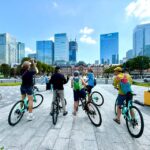

More Night Tours in Tokyo
More Shibuya Tours in Tokyo

More tours in Tokyo we've reviewed












Shibuya Tours, compared.
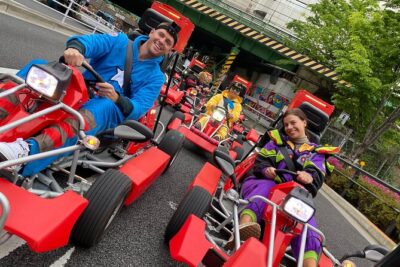 ★ 5.0Official Street Go-Kart in ShibuyaFrom $76
 ★ 5.0Shibuya Meltdown Nightlife Tour: All-You-Can-Drink Bar HoppingFrom $106
 ★ 4.9Tokyo: Street Kart Experience in ShibuyaFrom $99
 ★ 5.0Shibuya Official Street Go-Kart in Shibuya AnnexFrom $69
 ★ 5.0Tokyo: Shibuya Food Tour (13 dishes and 4 Eateries)From $77
 ★ 5.0Best of Shibuya Food TourFrom $217