Reviewed · SHOWS & PERFORMANCES
BUNRAKU performance by National Theatre in Kita-Senju, Tokyo
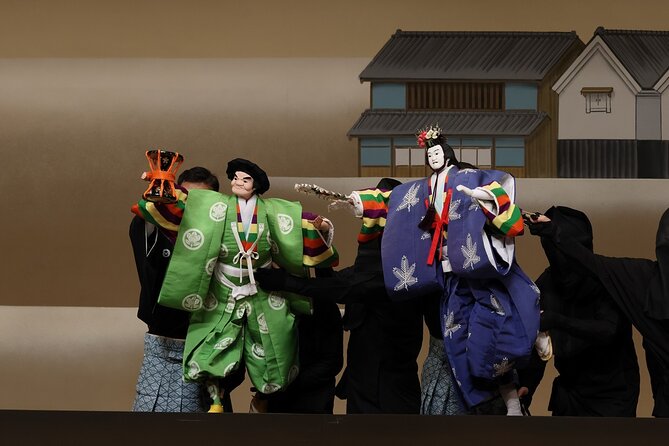
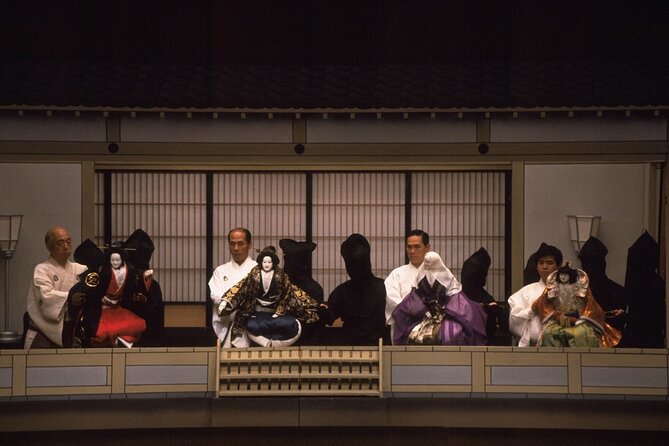
Bunraku is puppet theater for adults, but forget any picture you have of a simple children’s show. At Theatre-1010, large puppets move with striking control while a narrator tells the story at full force and a shamisen player supplies the sharp, dramatic pulse. The English audio guide helps you follow the plot instead of guessing at every gesture.
In This Article
- Key points to know before booking
- Why Bunraku feels unlike ordinary puppet theater
- At Theatre-1010 in Kita-Senju
- What your first-class ticket includes
- How the English audio guide changes the experience
- The narrator, shamisen, and puppets work as one
- How long should you allow?
- Is $69.74 a fair price?
- Who will enjoy this most?
- A practical plan for your afternoon
- The best and weakest parts of the experience
- Should you book this Bunraku performance?
- FAQ
- Where does the Bunraku performance take place?
- What time does the experience start?
- How long does the performance last?
- Is transportation to the theater included?
- Is an English audio guide provided?
- What type of seat is included?
- How much does the experience cost?
- Can service animals attend?
- Can I cancel for a full refund?
I like the combination of first-class seating and a complimentary English audio guide. I also like the chance to see a traditional Japanese art in a modern Tokyo theater, without needing Japanese-language skills. The main drawback is the wide possible running time, from 1 hour 20 minutes to 3 hours 30 minutes, so you should keep your evening open.
Key points to know before booking
- Bunraku joins three performers’ arts: dramatic narration, shamisen music, and puppetry work together as one performance.
- The English audio guide matters: it gives you a way to follow the story and makes the production far more approachable.
- Your ticket is first class: seating is included, but you arrange your own transportation to Theatre-1010.
- The venue is in Kita-Senju: the ticket redemption point is on the 10th floor of Mildix I Building.
- The running time can vary: performances may last from about 1 hour 20 minutes to 3 hours 30 minutes.
- Cancellation is flexible: you can receive a full refund if you cancel at least 24 hours before the start time.
Why Bunraku feels unlike ordinary puppet theater
Bunraku is one of Japan’s major traditional theater forms and is listed by UNESCO as an Intangible Cultural Heritage of Humanity. That recognition matters less as a label than as a clue: this is a carefully preserved performance craft, not a casual stage novelty.
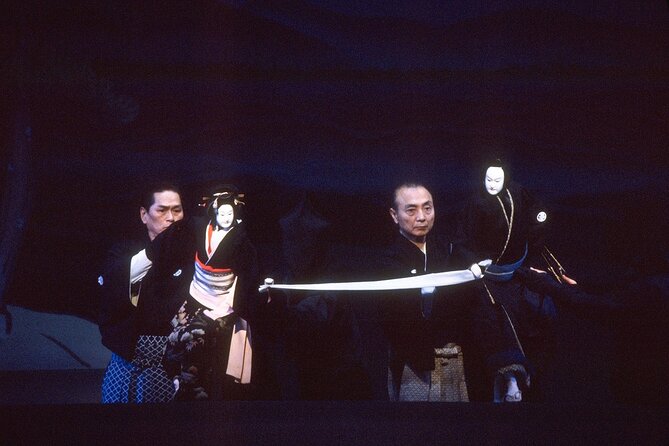
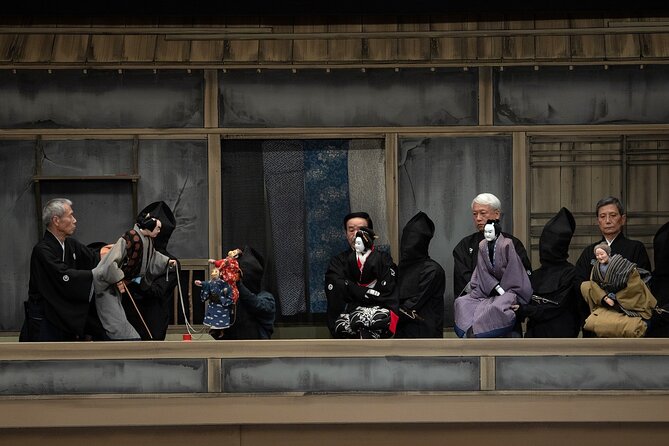
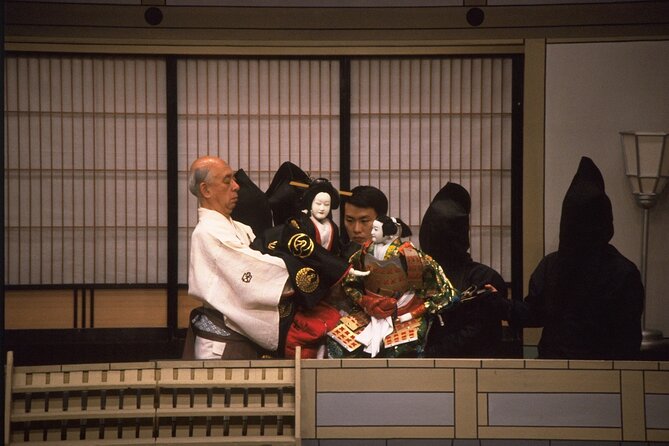
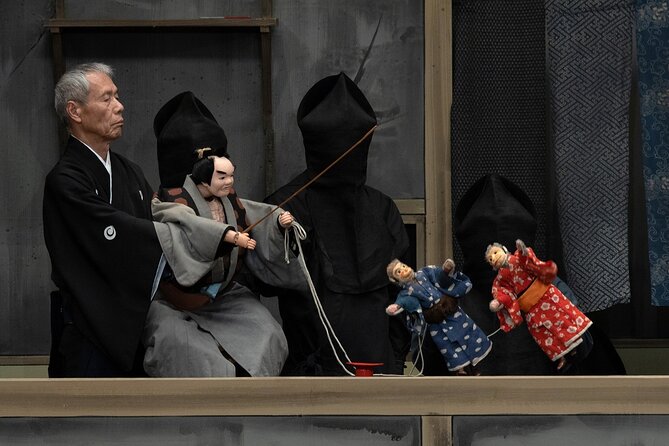
The magic comes from the close teamwork. A narrator delivers the story with an intense, highly expressive voice. A shamisen player creates the music with a dynamic, sometimes delicate sound. Puppeteers guide the figures through controlled movements that can suggest emotion, tension, grief, or resolve.
The result is a strange and fascinating mix of obvious theatrical mechanics and convincing human feeling. You can see that the puppets are operated, yet their gestures can still feel precise and alive. Bunraku asks you to watch the hands, listen to the voice, and follow the music at the same time.
I find that this makes the art rewarding even when you do not understand Japanese. You may not catch every word, but you can still sense the emotional shifts through sound, rhythm, and movement. The audio guide adds the missing layer by explaining the story in English.
A few more Tokyo tours and experiences worth a look

At Theatre-1010 in Kita-Senju
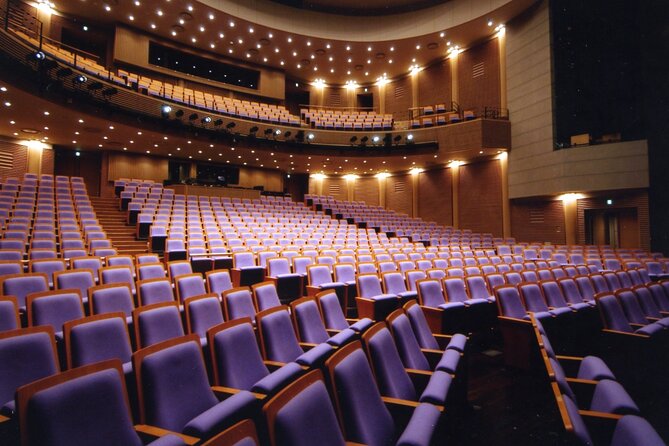
The performance takes place at Theatre-1010 in Kita-Senju, a Tokyo venue located in Adachi City. The ticket redemption point is Theatre-1010, Mildix I Building, 10th floor, at 3-chōme 92 Senju, Tokyo 120-0034.
Your stated start time is 3:15 pm. You do not receive transportation with the experience, so getting to the theater is your responsibility. Plan this part carefully. The venue is near public transportation, but the building address and 10th-floor location are worth saving before you leave your hotel.
The setting gives the experience a useful balance. You are not being dropped into an obscure hall with no context. You are attending a scheduled performance in a proper theater, with a reserved first-class seat. That matters because Bunraku rewards sustained attention, and a good seat makes it easier to watch both the puppets and the stage action.
The venue also has restrooms, listed among the included facilities. You should still arrive with enough time to find the right building, reach the theater floor, redeem your ticket, and settle in before the performance begins.
What your first-class ticket includes
The experience provides a first-class seat ticket. That is an important part of the value, since you are buying access to a live traditional performance rather than simply entering a general admission cultural attraction.
The exact seat location is not specified, so I would not promise a particular view. Still, first-class seating gives you a more secure arrangement than leaving your place to chance. For Bunraku, that can make a real difference. The puppets’ movements are often subtle, and a clear view helps you notice how small changes in posture or gesture carry meaning.
The seat also gives you a fixed place for a performance that might last well over an hour. If the program runs closer to the longer estimate, comfort becomes more important. The duration is not fixed at the short end, so avoid scheduling a tight dinner reservation immediately afterward.
How the English audio guide changes the experience
The English audio guide is the strongest practical feature for anyone who does not speak Japanese. Bunraku depends heavily on narration, and the spoken story carries much of the plot and emotional detail. Without help, you could admire the sound and movement while losing track of who is doing what.
The guide lets you follow the story while watching the stage. One person who enjoyed the performance found the plot understandable because of the complimentary English guide. Another described the earphones as making the event more special, especially while watching the large puppets being controlled.
That does not mean you should stare at the guide the whole time. Use it as support, then return your attention to the stage. The best part of Bunraku is the way the narration, music, and puppets operate together. If you spend the entire performance reading, you will miss some of the physical skill.
A sensible approach is to listen for the basic situation, characters, and turning points. Then watch how the puppet movements and shamisen respond. Even if you miss a line, the performance can still make sense as a blend of voice, music, and action.
The narrator, shamisen, and puppets work as one
The narrator is not merely reading lines in the background. The voice is described as forceful and full-bodied, giving the story its dramatic drive. You should expect a style that feels more heightened than everyday speech.
The shamisen provides the other major sound. Its music can be energetic and sharp, but it can also become delicate. This contrast helps set the mood and gives the stage action a strong rhythm.
Then come the puppets, which are the visual focus. They are large enough to produce clear, expressive movements, and their control is a major part of the art. Bunraku is not based on flashy motion alone. A small turn, pause, or change in position can matter.
I like this three-part structure because it gives you several ways into the performance. You can follow the guide for the story, listen to the shamisen for mood, and watch the puppets for character. Even if one element feels unfamiliar, the other two help hold your attention.





How long should you allow?
The published duration ranges from 1 hour 20 minutes to 3 hours 30 minutes. That is a very broad window, and it is the biggest planning issue to consider.
A shorter performance could fit neatly into an afternoon cultural stop. A longer one becomes a major part of your day, with enough time afterward for a relaxed meal or a quiet evening in Tokyo. Since the exact running time can vary, I would not pair this with a timed activity across town.
The 3:15 pm start also shapes your schedule. You have the morning and early afternoon available, but you need to reach Kita-Senju in time for the 3:15 performance. Allow extra time for transportation and for locating the theater inside the building.
If you are planning a packed sightseeing day, this experience asks you to slow down. That is not necessarily a fault. Traditional theater is best appreciated when you are not checking the clock every few minutes.
Is $69.74 a fair price?
At $69.74 per person, this is not a budget theater ticket. You are paying for a first-class seat, entry fees, and the English audio guide, with no separate charge listed for taxes or fees.
The value depends on what you want from Tokyo. If you only want a quick taste of Japanese culture, the price may feel high, especially if the performance runs closer to the short duration. You also need to pay for your own transportation to the theater.
If you want a serious introduction to one of Japan’s recognized traditional arts, the calculation looks better. You are not just watching puppets. You are seeing a coordinated performance tradition built around narration, shamisen music, and detailed puppet control. The English guide also removes one of the biggest barriers for international audiences.
The first-class seat strengthens the offer. So does the fact that the experience is easy to understand without Japanese fluency. I would consider it good value for someone who has already seen Tokyo’s major sights and wants an evening or afternoon built around a distinctive local art form.
Who will enjoy this most?
This experience suits adults who like theater, music, visual performance, or traditional arts. You do not need prior knowledge of Bunraku. The audio guide gives you enough help to follow the story, and the performance’s sound and movement offer an immediate way to engage.
It is also a good choice if you want a cultural activity that is more focused than a large sightseeing tour. You arrive at one theater, take your seat, and give the performance your attention.
You may enjoy it less if you need constant action, dislike narrated theater, or want a short attraction with a guaranteed end time. The possible 3 hour 30 minute duration makes this a poor match for a tightly packed schedule.
The experience is described as suitable for most people, and service animals are allowed. It is also near public transportation. Those details make access more straightforward, but they do not remove the need to arrange your route to the venue yourself.
A practical plan for your afternoon
Start by saving the full address: Theatre-1010, Mildix I Building, 10th floor, Senju, Adachi City, Tokyo 120-0034. The ticket redemption point is at the theater itself, not at a separate downtown office.
Aim to arrive before the 3:15 pm start. You need time to reach the building, find the correct floor, redeem the ticket, and get settled. This is especially useful in a large city where a small navigation mistake can cost more time than expected.
Once seated, give yourself a few minutes to adjust to the audio guide. You want the device ready before the performance begins, not while the narrator is already telling the story.
Afterward, leave room in your schedule. Because the running time may vary, a flexible dinner plan near the theater or along your route back is wiser than a prepaid reservation with a strict arrival time.
The best and weakest parts of the experience
The best feature is the English explanation paired with the live performance. Bunraku can be hard to follow if you cannot understand the narration, so the guide turns an impressive but distant art form into a story you can track.
The second major strength is the quality of the artistic combination. The narrator’s powerful delivery, the shamisen’s changing tone, and the puppets’ careful movement each bring something different. You are not watching one performer carry the show. You are seeing several disciplines depend on one another.
The main weakness is uncertainty around timing. A performance of 1 hour 20 minutes and one of 3 hours 30 minutes require very different plans. The exact show content and seat location are also not specified, so you should book for the overall art form rather than a particular story or named performer.
The location is another consideration, though not necessarily a problem. Kita-Senju is not described as a central tourist landmark in the experience details, and you must arrange transportation. The theater is near public transit, which helps, but you should treat the journey as part of the planning.
Should you book this Bunraku performance?
Book it if you want a focused, adult cultural experience and are curious about Japanese theater beyond temples, shopping, and food. The first-class seat and English audio guide make the performance easier to follow, while the narrator, shamisen, and puppets give you a genuine look at a highly developed Japanese art.
Skip it if your schedule is rigid, you need a guaranteed short program, or you want entertainment that requires little concentration. The price is reasonable for a first-class traditional performance with English support, but it is harder to justify as a casual stop.
For the right audience, this is a memorable way to spend an afternoon in Tokyo. Keep your schedule open, arrive early at Theatre-1010, and let the audio guide introduce you to the story while you watch the puppets do the work that makes Bunraku so distinctive.
FAQ
Where does the Bunraku performance take place?
It takes place at Theatre-1010 in Kita-Senju, Tokyo. The ticket redemption point is on the 10th floor of Mildix I Building, 3-chōme 92 Senju, Adachi City, Tokyo 120-0034.
What time does the experience start?
The listed start time is 3:15 pm.
How long does the performance last?
The approximate duration can range from 1 hour 20 minutes to 3 hours 30 minutes. The exact length may vary.
Is transportation to the theater included?
No. You are responsible for transportation to Theatre-1010. The venue is near public transportation.
Is an English audio guide provided?
Yes. An English audio guide is included and helps you follow the story during the Japanese-language performance.
What type of seat is included?
A first-class seat ticket is included. The exact seat location is not specified.
How much does the experience cost?
The listed price is $69.74 per person.
Can service animals attend?
Yes. Service animals are allowed.
Can I cancel for a full refund?
Yes, if you cancel at least 24 hours before the experience start time. Cancellations made less than 24 hours before the start are not refunded, and changes within that period are not accepted.
More Shows & Performances in Tokyo

More tours in Tokyo we've reviewed












Shows & Performances, compared.
 ★ 4.0Mt Fuji & Hakone Cruise, Drum Show Bullet Train 1 Day from TokyoFrom $149
 ★ 4.8Tokyo: Sumo Show Experience with Chicken Hot Pot and a PhotoFrom $1032 hours
 ★ 4.8Tokyo: Sumo Show and Dining ExperienceFrom $7990 minutes - 2 hours
 ★ 4.8Tokyo: Japanese Dance Cabaret Theater Asakusa-Kaguwa TicketFrom $492 hours
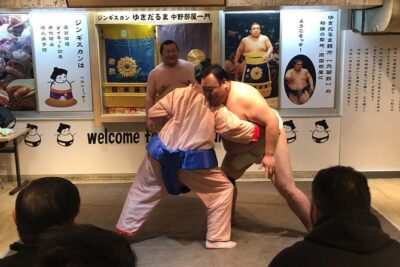 ★ 5.0the SUMO showFrom $89
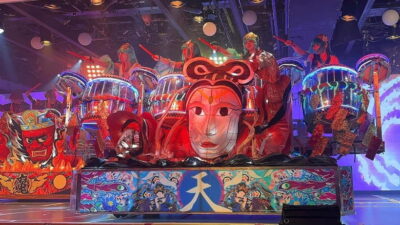 ★ 4.5Tokyo: Samurai Restaurant Show Ticket with 2 DrinksFrom $551h 30m