Reviewed · COOKING CLASSES
Japanese Cooking class in Tokyo
Japanese cooking becomes much less mysterious when you learn it at the stove, one small step at a time. At Morimi’s Home Kitchen, you make dashi, cook rice in a regular pot, and use traditional tools such as a suribachi mortar and an oshizushiki pressed-sushi mold.
In This Article
- Key points to know before booking
- Morimi’s home kitchen in Setagaya
- The first lesson: dashi and rice
- Choosing the tofu course
- Shaping sushi with color and care
- Building Japanese-style curry from the ground up
- A meal you actually prepare
- What makes the teaching useful
- English recipes and a souvenir
- Is $71 a fair price?
- Who should choose this class?
- Should you book Morimi’s Home Kitchen?
- FAQ
- How long does the Japanese cooking class last?
- What time does the class begin?
- Where does the class meet?
- What course options are available?
- Can vegetarian or vegan participants take part?
- Are gluten-free options available?
- Is transportation included?
- What is included in the price?
I like the private home setting, which keeps the class personal and relaxed. I also like the choice of three courses: tofu for plant-based cooking, sushi for hands-on presentation, or curry for a hearty Japanese meal with tonkatsu and fried shrimp.
The main consideration is the fixed meeting point in Setagaya, away from central Tokyo’s best-known sightseeing districts. Private transportation is not included, so you need to plan your route carefully and confirm what pickup means for your booking.
Key points to know before booking
- Three distinct menus: Choose tofu, sushi, or Japanese-style curry when you reserve.
- Real cooking skills: You learn dashi and rice preparation, not just food assembly.
- Traditional tools: Try a suribachi mortar and an oshizushiki pressed-sushi mold.
- Good for special diets: The tofu course can accommodate vegetarian, vegan, and gluten-free diets. Gluten-free choices are also available with the sushi course.
- Private and intimate: Only your own group takes part in the activity.
- Useful take-home extras: English recipes, unlimited green tea and mineral water, and a small souvenir are included.
Morimi’s home kitchen in Setagaya
The class begins at 10:30 a.m. at Morimi’s Home Kitchen, located at 3-chōme-19-5 Matsubara in Setagaya City. This is a home-based cooking studio rather than a large school, which shapes the whole feel of the morning.
I like this kind of setting because the food makes sense in its proper context. You are not simply watching someone prepare a polished dish behind a counter. You are learning how Japanese home cooking works, including the small habits that make everyday meals easier.
The activity lasts about three hours and ends back at the same meeting point. Since private transportation is not included, allow time to reach Matsubara by public transportation. A pickup option is listed, but the supplied details do not explain its exact terms, so I would confirm this before you count on door-to-door service.
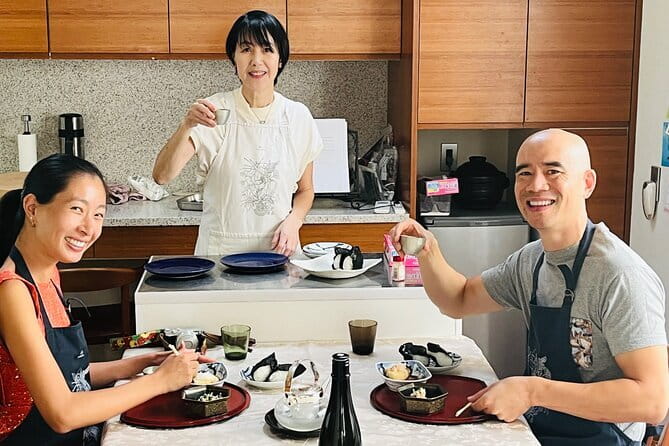
The class is private for your group. That matters if you want to ask questions, cook at your own pace, or take part in a birthday or anniversary activity without strangers at the table. It also makes the class a better fit for families and couples who prefer a calm morning over a large demonstration.
Other cooking classes in Tokyo


The first lesson: dashi and rice
The most useful part of the class may come before the main menu. Morimi-san introduces dashi, the basic stock that gives many Japanese dishes their savory flavor.
Dashi is not just another recipe ingredient. It is a foundation for soups, sauces, curry, and other Japanese dishes. Learning how it is prepared gives you a better sense of why Japanese food can taste full without relying on heavy sauces or large amounts of fat.
You also learn to cook rice in a regular pot. This is a practical touch. You do not need a specialist rice cooker to repeat the lesson at home, and the method helps you understand the timing and texture that support sushi, rice balls, curry, and other dishes.
The class also introduces traditional cooking tools. A suribachi is a Japanese mortar used for grinding and mixing, while an oshizushiki is a mold for pressed sushi. These tools are simple, tactile, and fun to use, but they also show how Japanese kitchens have long relied on careful preparation rather than complicated machinery.
Choosing the tofu course
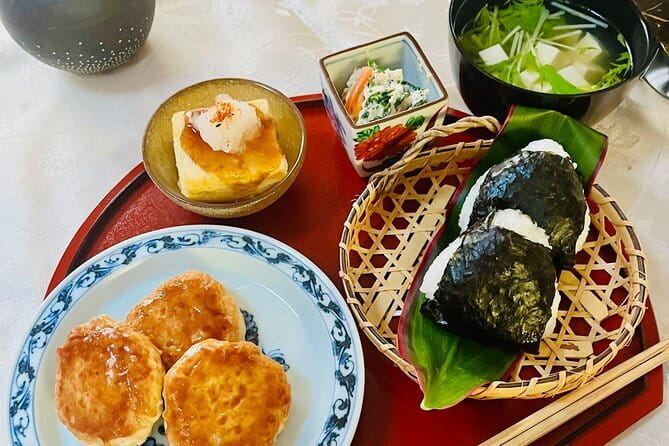
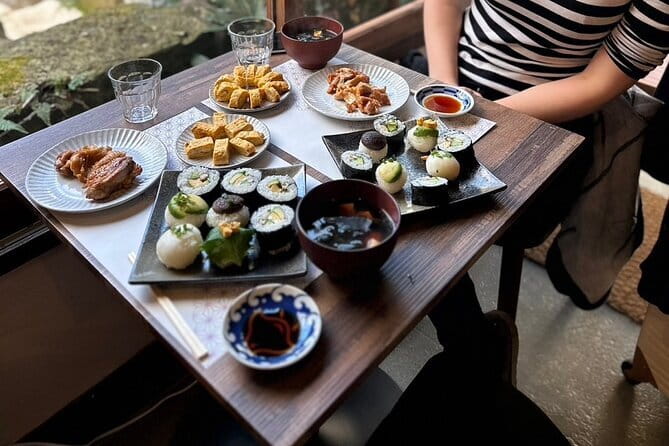
The tofu course is the best choice if you want the broadest plant-based lesson. You prepare tofu hamburgers, agedashi tofu, shiraae tofu salad, tofu soup, and two rice balls.
That is a lot of variety for a three-hour class. You work with tofu in several forms: seasoned and shaped for the hamburgers, deep-fried for agedashi tofu, mixed into a salad, and added to soup. The result is a useful lesson in texture, seasoning, and presentation rather than one dish repeated in different ways.
The tofu course also includes dashi and rice preparation. You receive three types of tofu dishes, two rice balls, and soup for lunch, so the meal gives you a clear taste of the work you completed.
This course can accommodate vegetarian, vegan, and gluten-free diets. You still need to report allergies and foods you cannot eat when booking. That is important because the kitchen needs accurate information before the class, not after cooking begins.
I would choose this course if you want recipes you can use often at home. It also makes the most sense for anyone who wants Japanese cooking beyond sushi, since tofu appears in several everyday preparations.
Shaping sushi with color and care
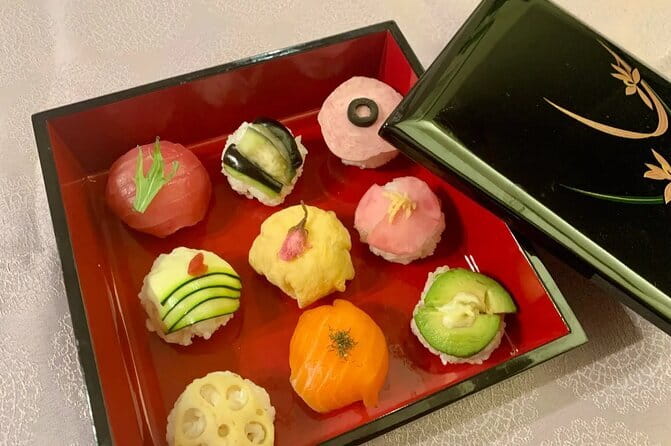
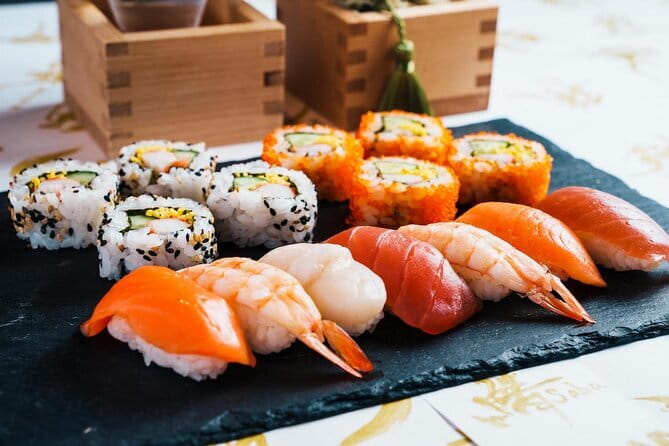
The sushi course starts with sushi rice. After that, you choose from a range of sashimi and vegetables to make six temari sushi of your choice.
Temari sushi are small, rounded pieces that look more like decorated food gifts than standard restaurant nigiri. The format gives you room to play with color and arrangement, while the small size makes the finished food easy to share.
You also make one roll of oshizushi using shrimp and smoked salmon. Pressed sushi has a different character from hand-shaped sushi. The mold gives the rice and filling a firm, neat form, and using the traditional tool adds a physical skill that you will remember long after the meal.
The course includes temari sushi, pressed sushi, and soup. Gluten-free preparation is available with this option, but you should state your needs when reserving.
Choose sushi if presentation matters to you or if you have always wanted to make sushi but felt unsure about the technique. Keep in mind that the menu centers on six small temari pieces and one pressed-sushi roll, so this is a structured lesson rather than an unlimited sushi feast.
Building Japanese-style curry from the ground up
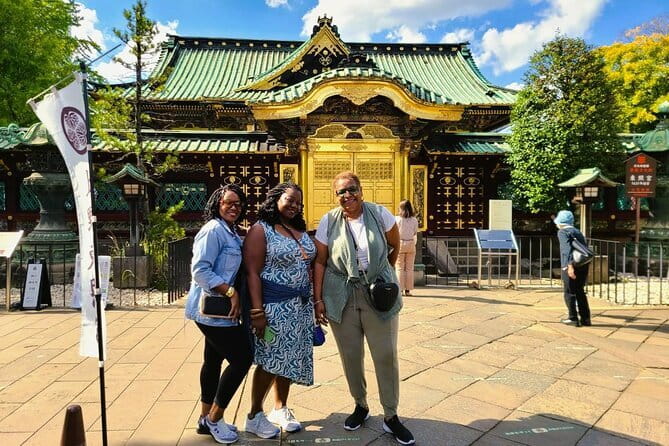
The curry course offers the heartiest meal of the three. You prepare Japanese-style curry with roux, tonkatsu, ebi fry, grilled vegetables, and Japanese-style potato salad.
The curry uses dashi as part of its Japanese flavor. That is worth noting because Japanese curry differs from the hot, spice-forward curries found in many Indian restaurants. It is generally thicker, milder, and shaped by the roux and stock.
Tonkatsu is a breaded pork cutlet, while ebi fry is a fried shrimp preparation. Together, they give the curry plate a satisfying mix of crisp coating, soft rice, sauce, and seafood. Potato salad and grilled vegetables add more texture and keep the meal from becoming only a fried-food lesson.
The curry course includes rice, curry, tonkatsu, fried shrimp, grilled vegetables, and potato salad. It is probably the best choice if you want a substantial lunch and a dish that is easy to recreate with ingredients from a well-stocked supermarket.
The limitation is that this course is not the right pick for vegetarians or vegans because it includes pork and shrimp. If you need a meat-free or gluten-free option, look first at the tofu course, or ask about the sushi course for gluten-free preparation.
Other cooking classes in Tokyo

A meal you actually prepare
Lunch is included in every course, but the meal is different depending on your choice. That makes the class feel like a full food activity rather than a short demonstration followed by a separate snack.
The tofu menu provides three tofu dishes, two rice balls, and soup. The sushi menu includes temari sushi, pressed sushi, and soup. The curry menu includes rice, curry, tonkatsu, fried shrimp, grilled vegetables, and potato salad.
I like this structure because you can taste the effect of each technique while it is still fresh. You learn how the rice feels, how the stock changes a soup, and how seasoning affects tofu or curry.
Green tea and mineral water are available without limit, and herbal tea is also offered. Japanese sake and wagashi, or traditional Japanese sweets, are optional additions. Ask about sake when you make the reservation if you want it included in the session.
The sake and sweets are not part of the standard meal, so budget for them separately. They can add a pleasant cultural finish, but the class remains worthwhile without them.
What makes the teaching useful
The strongest practical feature is the attention to small cooking details. Morimi-san is described as patient and willing to explain the little techniques that make cooking easier. That is more useful than a fast class that leaves you with attractive food but no idea how to repeat it.
The setting is also meant to feel like cooking with family. You should expect a relaxed pace and direct instruction rather than a formal culinary-school performance.
This matters for beginners. Japanese food can look simple, but rice texture, stock, frying, shaping, and seasoning all require small decisions. A teacher who stops to explain those choices gives you a better chance of making the dishes again.
The class also works well as a celebration. One couple chose the tofu course as a birthday activity, and the private format suits a special day without forcing you into a larger group schedule.
The class is not designed for someone seeking a professional chef qualification. It is a home-cooking lesson with lunch, recipes, and a friendly setting. That is its strength, but it also sets a clear limit on what you should expect.
English recipes and a souvenir
English recipes are provided for all three courses. This is one of the most valuable inclusions because the class does not end when you leave Matsubara.
Many cooking activities are easy to enjoy in the moment and hard to repeat later. Written recipes give you a reference for ingredients, order, and technique when you return home. The dashi and rice lessons are especially useful here because they support several Japanese dishes beyond the menu you select.
You also receive a small souvenir at the end. The details of the gift are not specified, so I would treat it as a thoughtful extra rather than a reason to book.
Is $71 a fair price?
At $71 per person, the price is reasonable if you value instruction as much as the meal. You receive about three hours of private, hands-on teaching, lunch, tea and water, English recipes, and a souvenir.
The price also covers three different kinds of value. First, you eat the food you prepare. Second, you learn techniques that can be repeated at home. Third, you get a personal introduction to Japanese tools and ingredients that can be hard to understand from a restaurant meal alone.
The value is lower if you only want to eat sushi, curry, or tofu without cooking. Tokyo offers many faster and cheaper meals, and the class requires a morning commitment plus transport to Setagaya.
Booking is commonly made about 15 days ahead, so I would not leave this until the final days of your trip, especially if you need a specific course or dietary arrangement. Confirmation is normally sent at booking, but reservations made within two days of the date may take up to 48 hours and remain subject to availability.
You can cancel for a full refund up to 24 hours before the 10:30 a.m. start time. Within 24 hours, refunds and changes are not accepted.
Who should choose this class?
I would recommend the tofu course to vegetarians, vegans, people avoiding gluten, and anyone who wants the widest range of everyday cooking skills. It is also a good pick if you like the idea of Japanese food but do not want the class to focus only on raw fish.
Choose sushi if you enjoy careful presentation and want to use the oshizushiki mold. It suits someone who wants a memorable activity with colorful results and a strong connection to familiar Japanese food.
Choose curry if you want a filling lunch and a practical Japanese comfort-food recipe. Tonkatsu, fried shrimp, dashi, rice, and potato salad make this the most substantial menu, but it is not suitable for vegetarian or vegan diets.
The class suits couples, families, and small private groups. It may be less appealing if your schedule is tight, if you are staying far from Setagaya, or if you prefer a large class with many other participants.
Should you book Morimi’s Home Kitchen?
Book it if you want to learn how Japanese home cooking works, not simply sample another restaurant meal. The combination of dashi, pot-cooked rice, traditional tools, hands-on preparation, and English recipes gives you skills to take home.
The tofu course is the safest all-around choice for dietary flexibility. Sushi is the most playful option, while curry delivers the biggest lunch and the easiest comfort-food entry point.
Before paying, confirm your chosen course, allergies, dietary needs, and any pickup details. If the fixed Setagaya meeting point works for your morning, this private class offers a personal and useful way to spend three hours in Tokyo.
FAQ
How long does the Japanese cooking class last?
The class lasts approximately three hours.
What time does the class begin?
The start time is 10:30 a.m.
Where does the class meet?
It meets at Morimi’s Home Kitchen, 3-chōme-19-5 Matsubara, Setagaya City, Tokyo 156-0043, Japan.
What course options are available?
You can choose the Tofu Course, Sushi Course, or Curry Course when making your reservation.
Can vegetarian or vegan participants take part?
Yes. The tofu course can accommodate vegetarian and vegan diets. You should provide dietary details when booking.
Are gluten-free options available?
Yes. Gluten-free options are available with the tofu course or sushi course. Tell the provider about your needs when reserving.
Is transportation included?
Private transportation is not included. The activity ends back at the meeting point, and a pickup option is listed, so confirm the pickup terms before booking.
What is included in the price?
The price includes the selected lunch, unlimited green tea and mineral water, herbal tea, English recipes, and a souvenir. Sake and wagashi are optional additions.
More Workshops & Classes in Tokyo
More Cooking Classes in Tokyo
More Cooking Classes in Tokyo
More tours in Tokyo we've reviewed












Cooking Classes, compared.
 ★ 5.0Ramen & Gyoza Cooking Class in Tokyo with Local Supermarket VisitFrom $122
 ★ 5.0Ramen and Sushi Cooking Class with Sake Pairing Set in TokyoFrom $79
 ★ 4.9Tokyo: Wagyu and 7 Japanese Dishes Cooking ClassFrom $673 hours
 ★ 5.0Tokyo Washoku 4-hour Cooking Class: From Market to TableFrom $79
 ★ 5.0Professional Ramen & Gyoza with Ramen Chef in a restaurant!From $159
 ★ 5.0Small-Group Wagyu Beef and 7 Japanese Dishes Tokyo Cooking ClassFrom $72