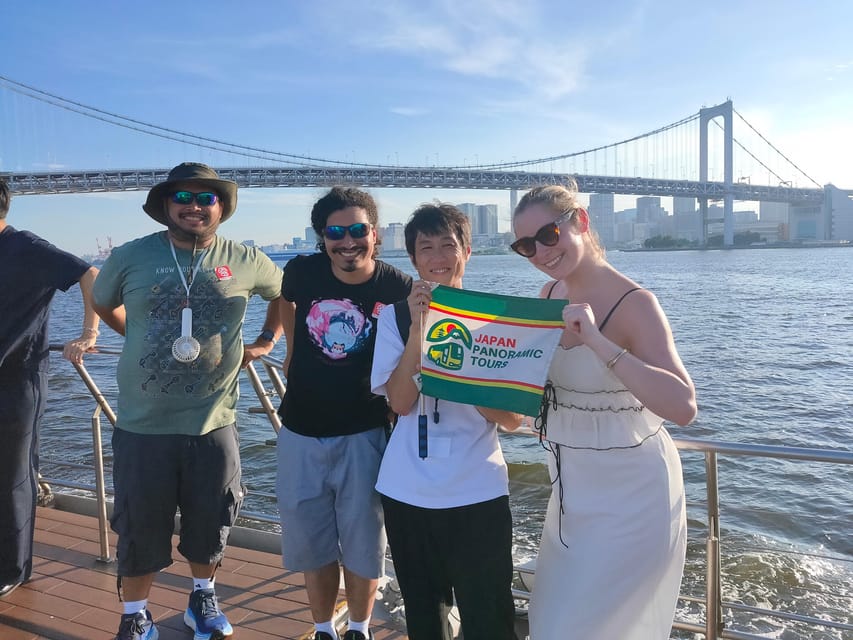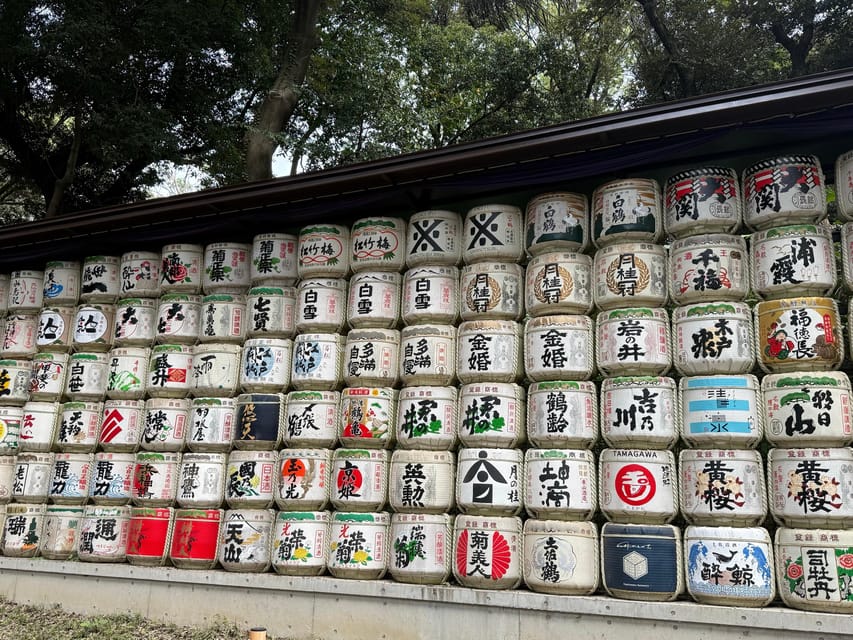
Reviewed · SHIBUYA TOURS
Tokyo: Harajuku Meiji Shrine to Shibuya Crossing Guided Tour
Meiji Jingu gives this short Tokyo tour its best contrast: one moment you are under a broad canopy of trees at Japan’s most visited shrine for Hatsumode, and soon after you are watching the human tide at Shibuya Scramble Crossing. I like that the route links old and new Tokyo without wasting time on a bus.
In This Article
- Key points
- From Meiji Jingu’s trees to Shibuya’s neon
- Finding the guide at Harajuku Station
- Meiji Jingu and the rules of a Shinto visit
- Omikuji and learning how to make a wish
- Takeshita Street and the Japanese crepe stop
- Walking toward Shibuya Crossing
- Shibuya Scramble Crossing and group photos
- Hachiko’s sad story
- Is $78 a fair price for two hours?
- What the hosting is like
- Who should book this Tokyo walk?
- Should you book it?
- FAQ
- Where does the tour meet?
- How long does the tour last?
- What language is the tour conducted in?
- How large is the group?
- Is the omikuji fee included?
- Is the Japanese crepe included in the price?
- What places does the tour visit?
- Does the tour include a guide?
- Can I cancel for a full refund?
- Can I reserve the tour and pay later?
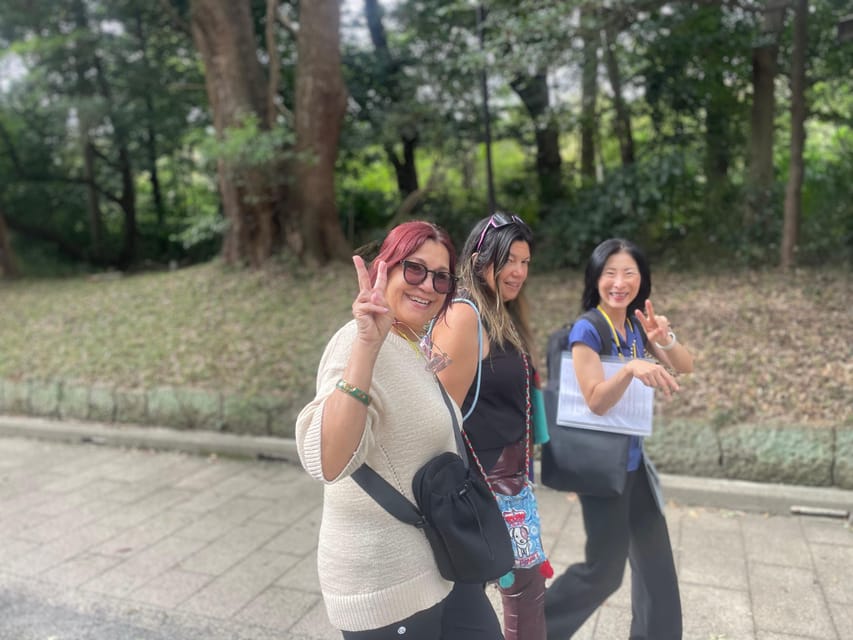
I also like the practical guidance. Your English-speaking host explains how to behave at the shrine, helps you with an omikuji fortune, and answers questions along the way. The main drawback is the tight two-hour schedule. You get a smart introduction to three famous areas, but not much free time for shopping, lingering, or exploring side streets.
Key points
- Meiji Jingu sets the tone: Learn shrine customs and the origins of one of Japan’s best-known Shinto sites.
- The route is easy to understand: Meet at JR Harajuku Station’s west exit, then walk through Harajuku toward Shibuya.
- Takeshita Street adds a sweet break: A Japanese-style crepe is part of the experience, though the price is not listed among the included items.
- Small groups keep questions practical: The group is limited to 10 people.
- Shibuya supplies the big finish: Take group photos at Scramble Crossing, see Hachiko, and look down over the crossing before saying goodbye.
- Several guides have earned warm praise: Shigure and Masahito are named examples of hosts who explain Japanese customs clearly and keep the pace comfortable.
From Meiji Jingu’s trees to Shibuya’s neon
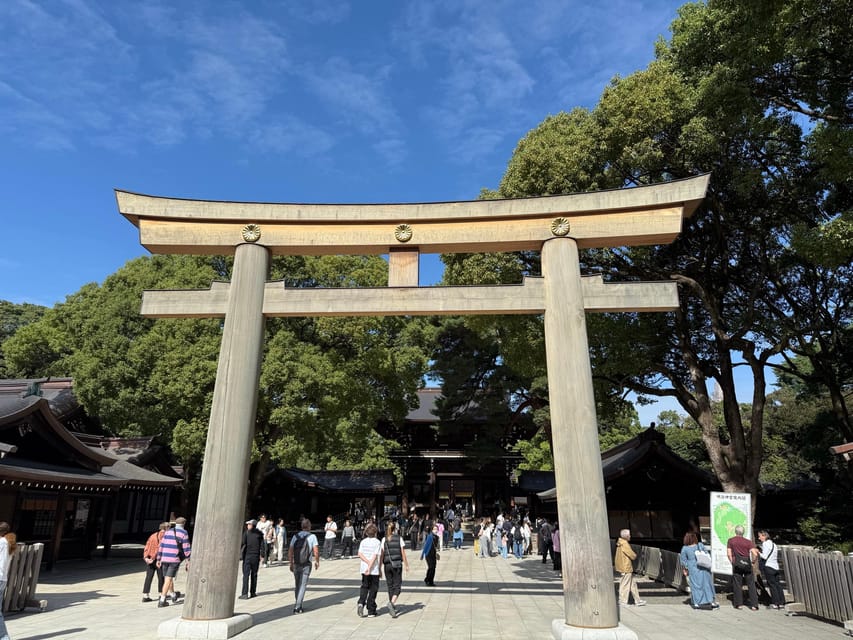
This tour works because Tokyo changes character several times in just two hours. You begin at JR Harajuku Station, enter the grounds of Meiji Jingu, move into the youth-focused streets around Harajuku, and finish at one of the world’s most recognizable urban crossings.
That route gives you more than a checklist of famous names. It lets you feel the difference between quiet religious space and high-speed city life. If you have just arrived in Tokyo and are unsure how to organize your first day, this can give you a useful map in miniature.
The walk is guided in English and limited to 10 participants. That is a sensible group size for a route where you may want to ask about shrine etiquette, Japanese wishes, local customs, or the story behind Hachiko. The experience provider is gotcha Corporation.
A few more Tokyo tours and experiences worth a look


Finding the guide at Harajuku Station
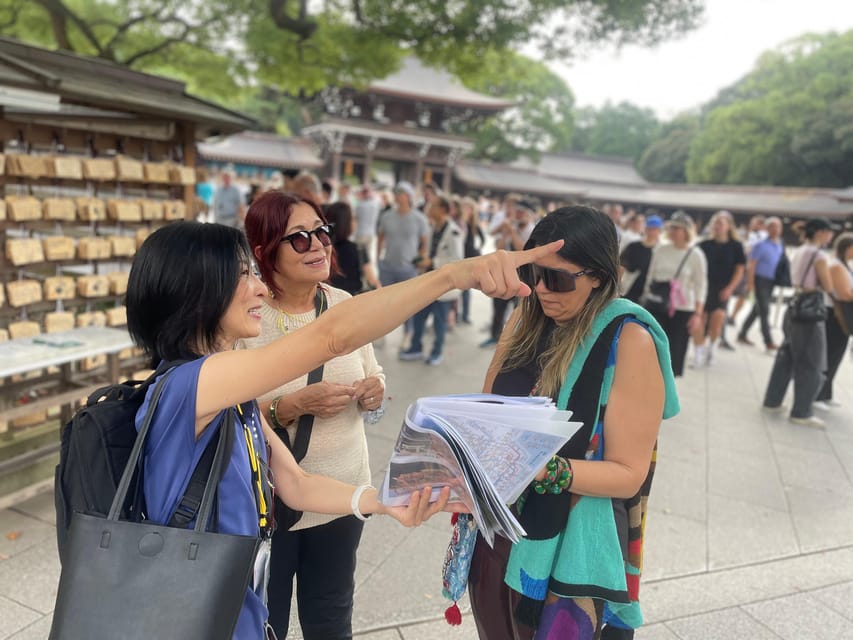
The meeting point is the west exit of JR Harajuku Station. Your guide waits there with a signboard marked gotcha. Pay attention to the exit, since large Tokyo stations can have several ways out and the wrong turn can cost you the first few minutes of a short tour.
The tour does not list hotel pickup or private transportation. Plan to reach the station before the appointed start time. Starting times vary, so you need to check availability when booking.
Harajuku is a good place to begin. The station puts you close to Meiji Jingu, Takeshita Street, and the walking route toward Shibuya. You will not spend the tour crossing Tokyo by vehicle. The value comes from seeing the changing streets at ground level.
Meiji Jingu and the rules of a Shinto visit
Meiji Jingu is the first major stop and the most reflective part of the walk. The shrine is known as Japan’s most visited shrine for Hatsumode, the first shrine visit of the New Year. That fact gives you a sense of its place in Japanese public life, but the guided explanation matters more than the statistic.
Your host explains the shrine’s origins and how to visit properly. This is useful because a Shinto shrine is not simply a place to walk through, snap a photo, and leave. Small actions have meaning, and a guide can explain the basic customs in a way that feels natural rather than like a rule sheet.
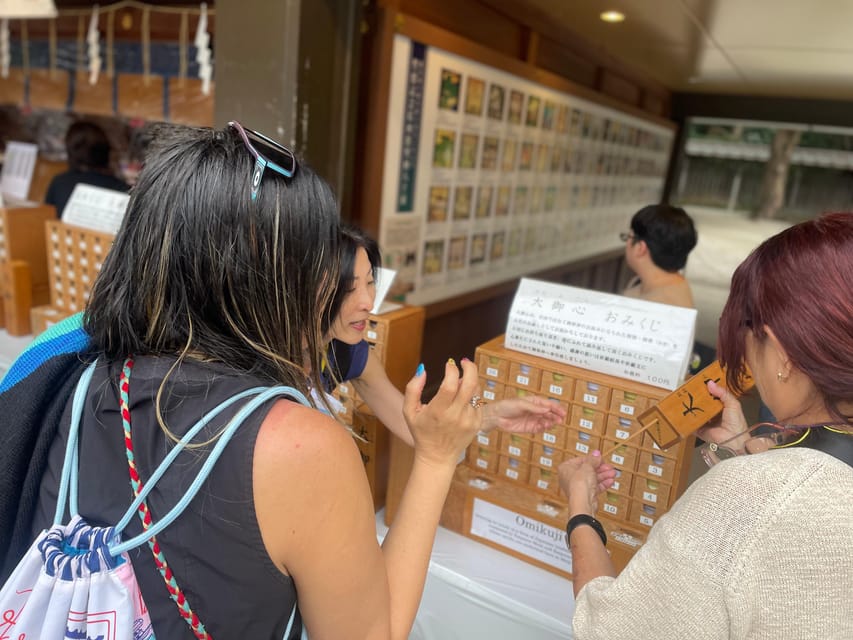
You can expect the guide to discuss how to approach the shrine and how to make a wish. One of the tour’s included features is an omikuji, a paper fortune. The omikuji fee is covered, so you can take part without handling an extra payment during the walk.
The shrine’s setting is a major part of its appeal. The tour description focuses on the feeling of natural energy around Meiji Jingu, and that is a useful reason to go beyond the buildings themselves. The trees create a strong change of mood from Harajuku Station, even though the station and the shrine sit close to one another.
I would give this portion your full attention. It is easy to rush through a shrine when you are eager to reach Takeshita Street, but the guide’s explanation is one of the clearest reasons to book a tour instead of simply visiting alone.
Omikuji and learning how to make a wish
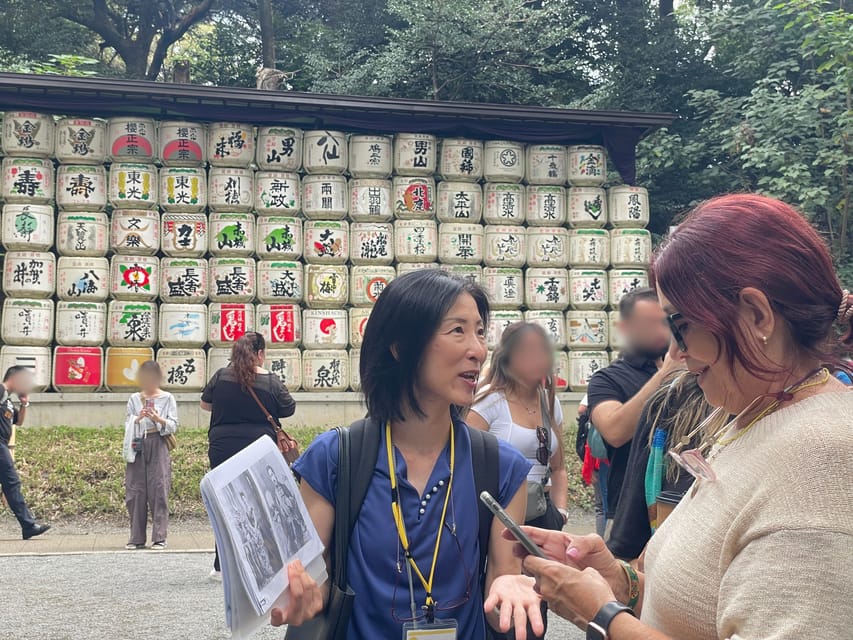
The omikuji adds a small personal moment to the shrine visit. You receive a fortune paper, and the guide can explain how it fits into the visit and Japanese customs. The supplied information does not specify the exact fortune-drawing procedure or what happens if you receive an unfavorable result, so listen to the host’s instructions on the day.
This is also where the small-group format helps. With as many as 10 participants, you may still need to wait briefly while others take part, but the group is small enough for questions. Masahito is one named guide praised for helping people learn about customs and make a wish at the shrine. Shigure is another named host described as attentive and willing to explain Japanese culture.
Guide assignments are not guaranteed, so you should not book expecting one particular person. Still, those names give you a sense of the kind of hosting the company aims to provide: friendly, personal, and focused on explanation rather than simply moving people from stop to stop.
Takeshita Street and the Japanese crepe stop
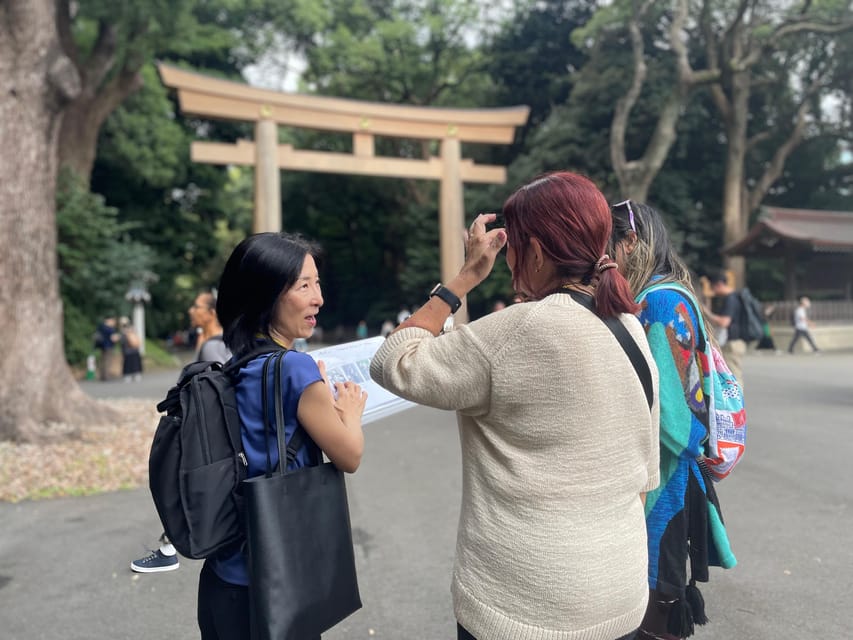
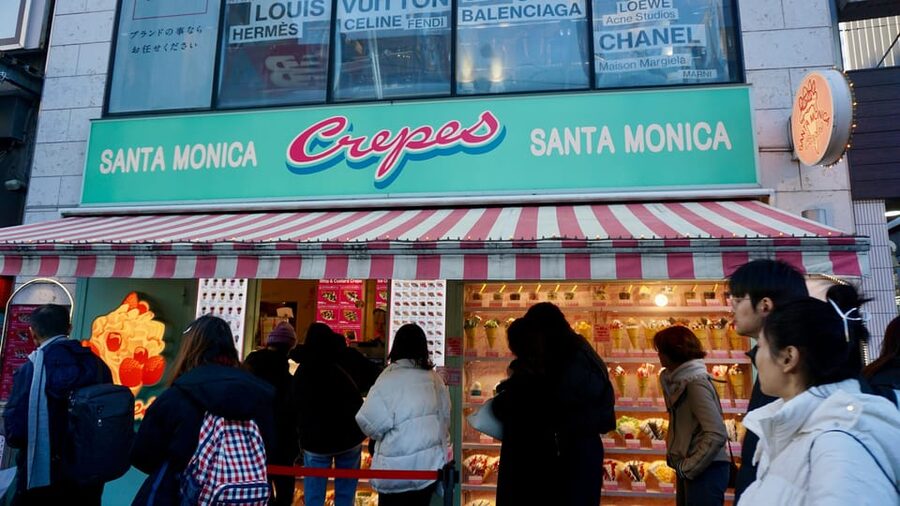
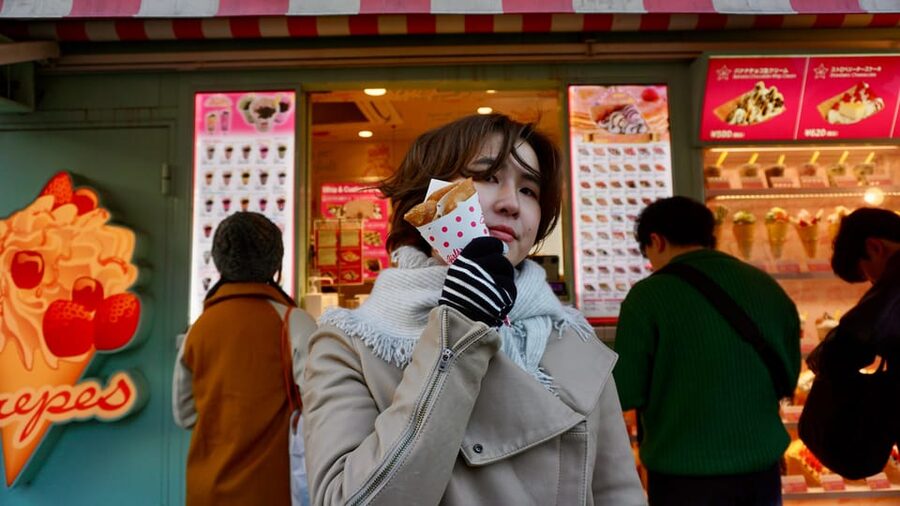
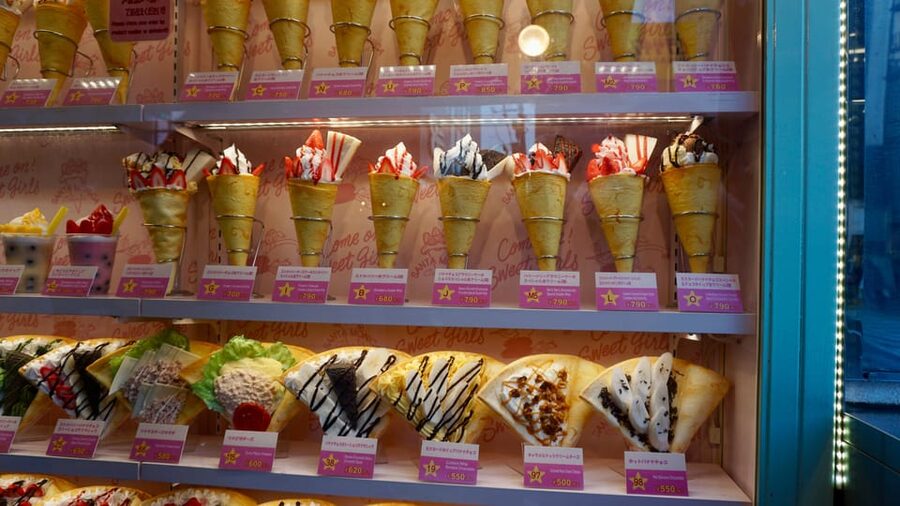
After the calm of Meiji Jingu, Takeshita Street changes the volume. This is Harajuku’s famous pedestrian shopping street, and the tour gives you time to walk through it and try a Japanese-style crepe.
The crepe is a smart choice for a short tour. It is quick to eat, strongly associated with Harajuku, and gives you a taste of the district without requiring a full restaurant meal. You get a local food experience while staying on the route to Shibuya.
One practical point matters here: the included items list names the guide and omikuji fee, but does not list the crepe as included. Treat the crepe as an additional purchase unless the guide or booking details tell you otherwise. The tour description promises the chance to savor one, but it does not give a set price or specify a particular shop.
Do not expect a long shopping session. Two hours must cover Meiji Jingu, Takeshita Street, Shibuya Crossing, Hachiko, and a final viewing point. You can look around, but the purpose is to sample Harajuku rather than browse every shop.
I like this section because it prevents the tour from becoming too solemn. Meiji Jingu teaches you how to read a traditional site. Takeshita Street shows you the playful, commercial side of Tokyo. The two stops belong together precisely because they feel so different.
A few more Tokyo tours and experiences worth a look


Walking toward Shibuya Crossing
The route continues on foot toward Shibuya. The supplied details do not give a precise distance or step count, so comfortable shoes are a sensible choice. The tour is short, but it includes several walking sections and time on your feet at crowded city sights.
Your guide keeps the route moving and can answer questions as Tokyo shifts around you. One of the strongest points reported about the hosting is the pace. Trevor described receiving plenty of detailed information while finding the speed comfortable, which is important on a compact tour. A rushed walk can turn a cultural visit into a race, while a slow one may leave you short of time at Shibuya.
The route is best for someone who wants orientation. You see how Harajuku and Shibuya connect, rather than treating each neighborhood as an isolated attraction. If you want to spend an hour choosing clothes on Takeshita Street or sit for a long coffee, this is not the right format. If you want a guided first look, it makes good use of limited time.
Shibuya Scramble Crossing and group photos
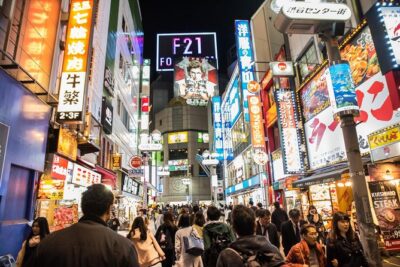
Shibuya Scramble Crossing is the tour’s most energetic stop. When the signals change, pedestrians move across the intersection from several directions while buildings and video screens frame the scene. The tour gives you time to take group photos against that city backdrop.
Your guide can help position the group and keep the photo stop organized. The exact photo location is not specified, so do not assume a particular café, rooftop, or paid viewing deck. The experience does promise a scenic vantage point for the farewell, with views over the crossing.
This is a photo-friendly finish, but it is also a place where expectations matter. The crossing is famous, yet the actual walk across it is brief. The value comes from the scale, the movement, and the feeling of being in central Shibuya, not from a long attraction visit.
I would keep your phone ready but avoid letting photography take over the stop. You are likely to get more from the guide’s context and from watching the crossing operate than from taking dozens of nearly identical pictures.
Hachiko’s sad story
The tour also stops at the Hachiko statue. Your guide explains the sad story behind this symbol of loyalty, giving the statue a human connection rather than treating it as another photo marker.
Hachiko is a useful pause between the crossing and the final viewpoint. The crossing represents motion and crowds. The statue represents memory and devotion. The contrast gives the Shibuya portion more meaning than a simple photo walk.
The visit is not described as a long museum-style presentation, and the tour has only two hours. Expect a concise explanation from your host, followed by time to see the statue and take photos. If you want extensive detail about Hachiko or Shibuya’s wider history, you would need a separate visit.
Is $78 a fair price for two hours?
At $78 per person, this is not the cheapest way to walk through Harajuku and Shibuya. You could visit Meiji Jingu, Takeshita Street, and Shibuya Crossing on your own using public information and a map.
The price makes more sense if you value clear cultural guidance in a small group. You are paying for an English-speaking host, a planned route, explanations at Meiji Jingu, help with shrine customs, an included omikuji fee, and a structured finish at Shibuya. You also avoid having to work out how to connect the stops yourself.
The value is strongest for first-time visitors, solo visitors who want company, and people who are curious about Japanese customs but do not want a full-day tour. It is weaker for independent explorers who already understand shrine etiquette and want to control every minute.
The crepe is not listed as included, so allow for that extra cost. The tour does not state that transportation, other food, or entrance tickets are included. Since the key stops are visited on foot and Meiji Jingu is a shrine complex rather than a separately priced museum visit in the details provided, the guide and the organized experience make up most of the package value.
What the hosting is like
The strongest pattern in the available feedback is the hosts’ warmth, clear explanations, and willingness to answer questions. Shigure is described as attentive and helpful with Japanese culture. Masahito is praised for making the shrine visit enjoyable and explaining customs. Other comments highlight friendly service, a comfortable pace, and a focused two-hour format.
The score is listed as 5 out of 5 from seven ratings. That is encouraging, though seven ratings are still a small sample. I would read it as a good sign about the guides, not as a guarantee that every group will have the same personality or pace.
The experience is conducted in English. If you want a guide who talks with you rather than simply points out landmarks, the format should suit you. The small group also gives you a better chance to ask about topics that interest you, from wishes at the shrine to the meaning behind local customs.
Who should book this Tokyo walk?
Book this tour if you want a compact introduction to three very different sides of Tokyo. It is especially useful during your first days in the city, when you want help with orientation and cultural manners.
It also suits families and mixed-age groups who prefer a clear plan. The route has an obvious rhythm: shrine, street food, crossing, statue, viewpoint. You do not need to spend the morning deciding what to do next.
Solo visitors may appreciate the chance to meet a few other people in a group limited to 10. Couples and friends will get photo opportunities, but the tour is not designed as a private photography session.
You may want to skip it if you prefer long unstructured time. The schedule is too short for serious shopping, extensive shrine study, or a leisurely meal. You should also choose another experience if you need a private guide, a language other than English, or a detailed accessibility plan, since those details are not provided here.
Booking is flexible: you can cancel up to 24 hours before the tour for a full refund, and the reserve-now, pay-later option lets you hold a place without paying today. Check the available starting times before you commit.
Should you book it?
I would book this for a first visit to Tokyo when you want tradition, pop culture, and a famous city view in one neat outing. The best parts are the shrine explanation, the personal help with customs, and the well-chosen contrast between Meiji Jingu and Shibuya.
The $78 price is fair only if guided context matters to you. Independent visitors can cover the route for less, but they will miss the small explanations that turn an omikuji, a shrine bow, or Hachiko’s statue into more than a quick photo. Just keep your expectations realistic: this is a brisk introduction, not a full Harajuku and Shibuya day.
FAQ
Where does the tour meet?
Meet at the west exit of JR Harajuku Station. The guide waits there with a signboard marked gotcha.
How long does the tour last?
The tour lasts two hours.
What language is the tour conducted in?
The live tour guide speaks English.
How large is the group?
The tour is limited to 10 participants.
Is the omikuji fee included?
Yes. The omikuji, or fortune paper, fee is included.
Is the Japanese crepe included in the price?
The included items list does not include the crepe. The tour includes the chance to eat a Japanese-style crepe, but the price is not specified as covered.
What places does the tour visit?
The route includes Meiji Jingu, Takeshita Street, Shibuya Scramble Crossing, and the Hachiko statue. It ends with a view over Shibuya Crossing.
Does the tour include a guide?
Yes. A tour guide is included.
Can I cancel for a full refund?
Yes. You can cancel up to 24 hours in advance for a full refund.
Can I reserve the tour and pay later?
Yes. The reserve-now, pay-later option lets you book while keeping your travel plans flexible.
More Guided Tours in Tokyo


More Temples & Meditation in Tokyo
More Shibuya Tours in Tokyo


More tours in Tokyo we've reviewed












Shibuya Tours, compared.
 ★ 5.0Official Street Go-Kart in ShibuyaFrom $76
 ★ 5.0Shibuya Meltdown Nightlife Tour: All-You-Can-Drink Bar HoppingFrom $106
 ★ 4.9Tokyo: Street Kart Experience in ShibuyaFrom $99
 ★ 5.0Shibuya Official Street Go-Kart in Shibuya AnnexFrom $69
 ★ 5.0Tokyo: Shibuya Food Tour (13 dishes and 4 Eateries)From $77
 ★ 5.0Best of Shibuya Food TourFrom $217