Reviewed · COOKING CLASSES
Small-Group Osaka-Style Okonomiyaki Cooking Class
Tokyo has cooking classes in polished studios, but this one takes you into Eri’s home near Asagaya for a more personal lesson. You’ll learn to make fluffy Osaka-style okonomiyaki, choose your fillings, flip the pancake yourself, and finish it with sauces and toppings.
In This Article
- Key points at a glance
- Meeting Eri at Asagaya Station
- The first lesson: dashi, sauce, and the fluffy texture
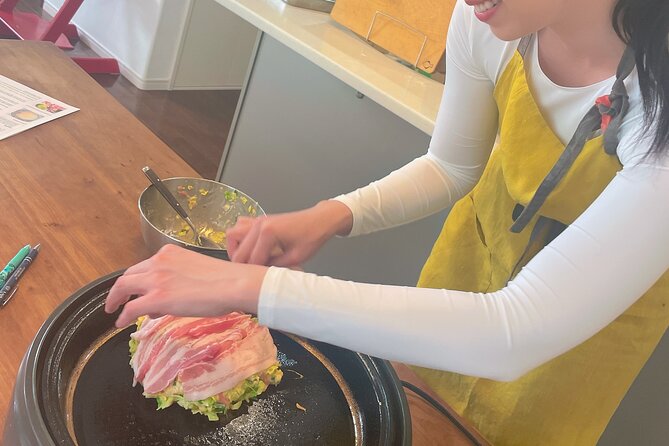
- Building your own Osaka-style okonomiyaki
- Stir-fried pork and kimchi while the pancake cooks
- Sitting down for itadakimasu
- What the small group changes
- Is $150 a fair price?
- Who will enjoy this class most?
- Booking, cancellation, and practical details
- Should you book the Asagaya okonomiyaki class?
- FAQ
- Where does the okonomiyaki class begin?
- Where does the activity end?
- How long does the cooking class last?
- How many people can join?
- Is the class suitable for vegetarians or vegans?
- What food will I prepare?
- What is the cancellation policy?
I like two things in particular: Eri explains how ingredients such as dashi and okonomiyaki sauce work, and she shows you how to replace hard-to-find items at home. The maximum group size is just five, which leaves room for questions and hands-on cooking.
The main consideration is the price: $150 per person for about two hours is a serious spend for a meal you could order cheaply in Japan. You are paying for private-home access, instruction, conversation, and recipes you can use later, not only for lunch.
Key points at a glance
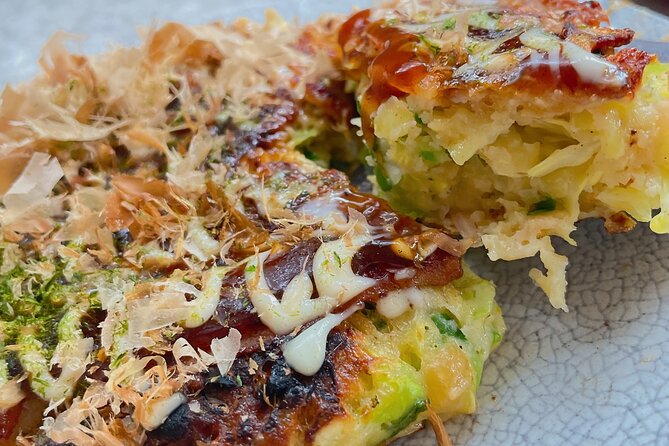
- A real home kitchen near Asagaya: This is a home-based class rather than a purpose-built cooking studio.
- Small group of five or fewer: You should have more direct time with Eri and space to ask questions.
- Choose your own fillings: Okonomiyaki is flexible, and Eri helps you adjust ingredients to your taste.
- Useful cooking advice: You learn how to make the pancake fluffy and how to substitute ingredients outside Japan.
- More than one dish: While the okonomiyaki cooks, you also prepare stir-fried pork and kimchi.
- Vegetarian and vegan adjustments: Dietary changes can be arranged, including vegetarian options.
Meeting Eri at Asagaya Station
The class begins at the NewDays shop in the outside concourse of JR Asagaya Station. The meeting point is listed as Asagayakita 3-chome, Suginami City, Tokyo, with the activity ending back at the same meeting point.
That return arrangement matters in Tokyo. Asagaya is served by the JR Chuo-Sobu Line, but station exits and Japanese addresses can still be confusing if you are moving quickly. I would arrive a little early and keep the meeting instructions available on your phone.
Eri may take you a short distance by car to her home. One person who attended the class was picked up from the station and brought back afterward because the house was a little farther away. That is a helpful touch, though you should confirm the exact pickup arrangement after booking.
The home setting gives the class its character. You are not standing at a demonstration counter while a chef does the difficult work. Instead, the idea is to share part of Eri’s daily life, cook together, and talk. If you want a formal culinary school with professional equipment and a polished presentation, this may feel more casual than expected. If you want a personal encounter in a Tokyo neighborhood, the setting is a strong part of the value.
Other cooking classes in Tokyo


The first lesson: dashi, sauce, and the fluffy texture
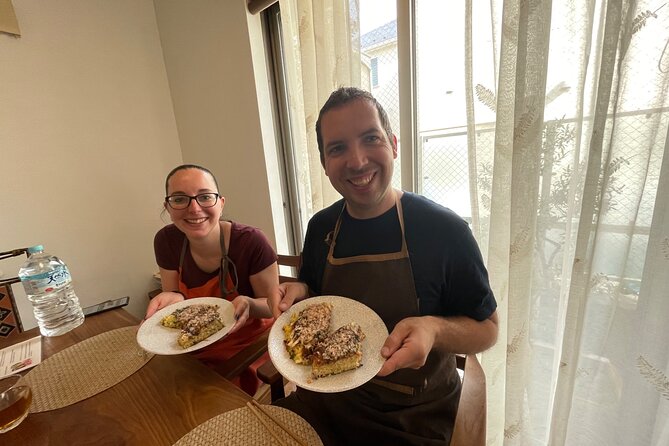
Eri begins by explaining Japanese ingredients used in okonomiyaki. The class specifically covers dashi and sauce, two elements that can make the dish seem mysterious when you first try it at home.
Dashi is important because it gives Japanese dishes savory depth. Okonomiyaki sauce brings sweetness and salt, while the other toppings add texture and contrast. The point is not just to follow a recipe once. Eri explains what each ingredient does, so you have a better chance of making a good version after you return home.
The texture lesson is especially useful. Osaka-style okonomiyaki should be soft and fluffy inside rather than dense or tough. Eri offers tips for reaching that texture and explains the cooking process in plain English. Her English is described as good enough for questions and conversation, though this is still an informal home lesson rather than a professional English-language cooking school.
You will also learn about substitutions. That may be the most practical part of the class for people living outside Japan. Japanese cooking ingredients can be difficult to find in other countries, and Eri explains alternatives so you can continue making the dish after your holiday.
Building your own Osaka-style okonomiyaki
Okonomiyaki roughly means a dish cooked as you like, and this class uses that flexibility well. You can choose what to put inside the pancake with Eri’s support. The exact fillings depend on the arrangements made for the class and your dietary needs, so you should not expect an unlimited menu of ingredients.
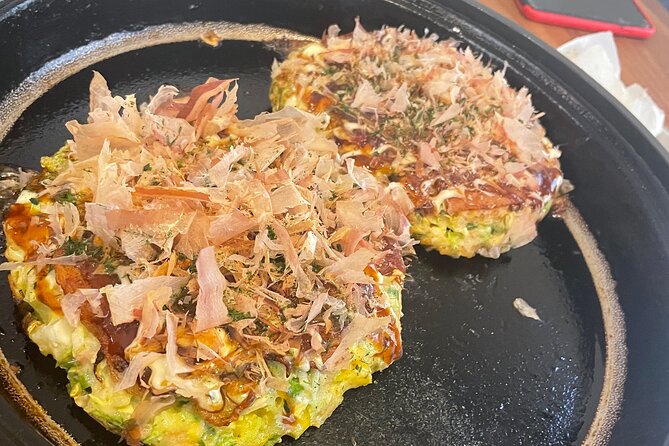
The hands-on steps are simple but enjoyable. You layer the ingredients, cook the mixture, and then face the moment that makes many first attempts memorable: flipping it over. Eri can guide you through the process, but the class is designed so you take part rather than simply watch.
The flip is not just a photo opportunity. It teaches you about timing, heat, and the firmness of the pancake. A rushed flip can break the okonomiyaki, while waiting too long can affect the texture. Making one yourself helps you understand the process in a way that reading a recipe cannot.
Once the pancake is cooked, you add sauces and toppings. This finishing stage lets you see how a plain savory pancake becomes the familiar restaurant-style dish. It also helps you understand why okonomiyaki is so adaptable. You can adjust the fillings and toppings to suit what you enjoy and what you can buy at home.
Stir-fried pork and kimchi while the pancake cooks
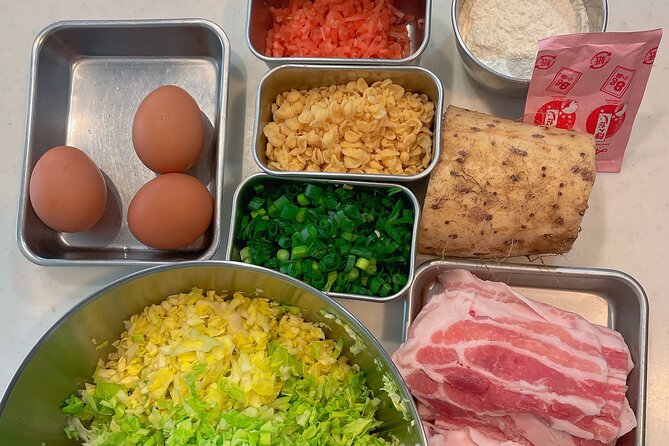
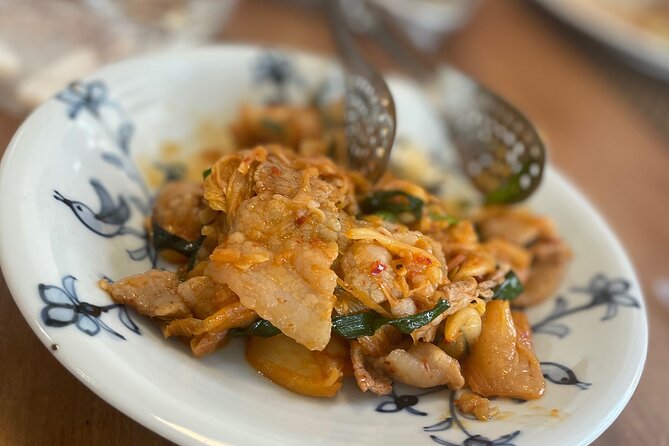
The two-hour class includes another dish: stir-fried pork and kimchi. You prepare it while waiting for the okonomiyaki to finish.
This is a smart use of cooking time. Okonomiyaki needs time on the heat, and the extra dish gives you something else to do rather than simply standing around. The pork and kimchi combination is savory and adds a different flavor from the soft pancake.
The dish also makes the meal feel more like home cooking than a single-recipe lesson. You are learning how one meal can come together in a small kitchen, with one item cooking while another is prepared. That practical rhythm can be more useful than a class built around one perfectly staged plate.
Dietary adjustments are possible for vegetarian and other restrictions. Vegan options are also mentioned. Still, you should give Eri clear details when booking, especially because the additional pork and kimchi dish may need to be changed or omitted. Do not assume that every ingredient is automatically suitable for your diet.
Sitting down for itadakimasu
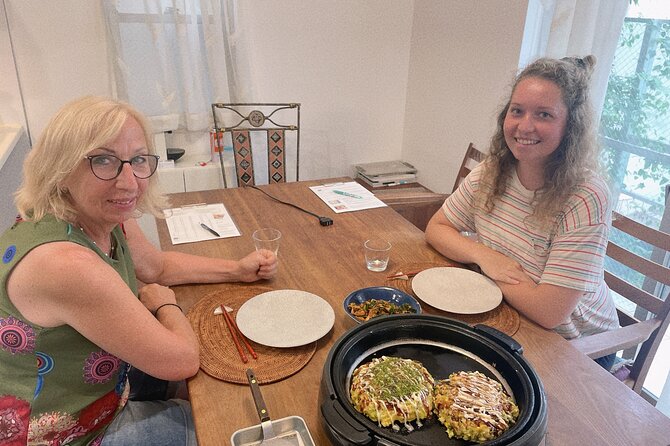
After the cooking is done, you sit down and eat the meal together. The class includes the Japanese phrase itadakimasu, traditionally said before eating as a way of expressing thanks for the food.
That shared meal is an important difference between this class and a short demonstration. You get to taste what you made, ask follow-up questions, and talk with Eri. She welcomes conversation with people from other countries, so the social side is part of the experience.
One particularly warm detail is that the class has worked well for different generations. A grandmother and grandchild attended together, and the teacher was described as patient and attentive. That makes the activity a good choice for families who want something calmer and more personal than a crowded sightseeing stop.
The home format does mean you should be comfortable with a less formal atmosphere. The setting is not a restaurant, and the experience is not built around luxury service. Its appeal comes from the chance to cook in a local home and share a meal with the person teaching you.
Other cooking classes in Tokyo

What the small group changes
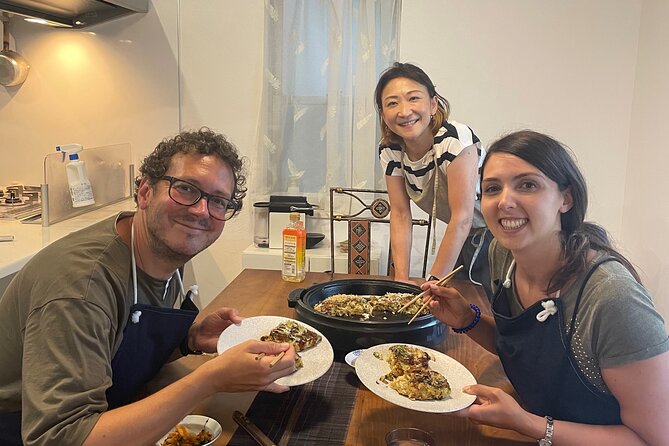
The class accepts a maximum of five people. That is a useful limit for a kitchen-based activity.
With five or fewer participants, Eri can watch your technique, answer questions, and help when the okonomiyaki needs flipping. A larger class might leave you waiting for a turn at the cooking surface or watching someone else handle the key steps. Here, the format is better suited to people who want to do the work themselves.
The small size also helps with dietary requests and ingredient choices. If you want a vegetarian or vegan version, it is easier to discuss the changes in a group this size. It should not be treated as a private class, though. Other people may join, and the maximum is five rather than one household.
The conversation may be as valuable as the recipe. Eri invites questions about cooking and daily life, and the home setting gives you a chance to talk in a relaxed way. If you prefer to focus quietly on technique, you can still do that, but this is clearly intended as a social experience too.
Is $150 a fair price?
At $150 per person, this is not a budget meal. You can find okonomiyaki for far less in Japan, and a standard restaurant visit will not require advance planning or a two-hour commitment.
The price makes more sense if you value several parts of the experience together:
- Hands-on instruction rather than a meal prepared for you
- A maximum group size of five
- A home visit near Asagaya
- Explanations of dashi, sauces, texture, and ingredient substitutions
- A second dish of stir-fried pork and kimchi
- Guidance for vegetarian, vegan, or other dietary adjustments
- A recipe approach you can repeat after returning home
I would see this as a cultural activity with food included, not as a cheap cooking lesson. The best value comes if you want to cook again at home. If you only want to taste okonomiyaki, spend your money at a local restaurant instead.
The activity is also short enough to fit into a Tokyo itinerary without taking a full day. You need about two hours for the class, plus the time needed to reach Asagaya and return to your plans. Because it is booked around a specific start time and is usually reserved about a week ahead, I would not leave it until the last morning of your trip.
Who will enjoy this class most?
I would recommend it to you if you enjoy food, small groups, and local conversation. It suits people who want to learn a dish they can make later, rather than simply collect another restaurant meal.
It is a particularly good choice for:
- Couples who want a shared activity
- Families, including older relatives and children who can take part in cooking
- Vegetarian or vegan diners who want to discuss substitutions directly
- Home cooks who have tried okonomiyaki and want better texture
- Visitors who enjoy meeting a local person in a home setting
- People with enough time in Tokyo to reach Asagaya comfortably
You may want to skip it if your schedule is packed, your food budget is tight, or you want a large, polished class in central Tokyo. The location is in Suginami City, and the class focuses on one home-style meal rather than a broad survey of Japanese cuisine.
The English support should be sufficient for the lesson, but the experience is still based on personal conversation. If you need highly technical culinary instruction in perfect English, this may not be the right fit. For everyday cooking advice and friendly discussion, it should work well.
Booking, cancellation, and practical details
The class is confirmed when you book, except when you reserve within nine hours of the start time. Last-minute bookings are confirmed as soon as possible, depending on availability.
You can cancel for a full refund up to 24 hours before the local start time. Cancellations or changes made within 24 hours are not accepted for a refund, so check your Tokyo schedule before committing.
The activity is near public transportation, begins and ends at the Asagaya meeting point, and allows service animals. The home setting may involve a short transfer from the station, so confirm the pickup details if mobility or timing is important to you.
Because the class is limited to five people, it can sell out despite its small scale. Booking about a week ahead is sensible, especially if you need a vegetarian or vegan adjustment.
Should you book the Asagaya okonomiyaki class?
Book it if you want to learn a useful Japanese dish from Eri in a local home, ask questions freely, and share a meal in a small group. The strongest reasons are the practical substitution advice, the hands-on flipping and topping, and the personal setting near Asagaya.
Think twice if $150 feels high for a two-hour meal lesson or if your main goal is simply to eat okonomiyaki. This experience earns its price through instruction and personal contact, not through expensive ingredients or a long list of attractions.
For a food-focused visitor, a family seeking a gentle shared activity, or anyone who wants to recreate Japanese flavors at home, I would book it. Arrive ready to cook, tell Eri about dietary needs in advance, and leave room in your schedule for a relaxed meal and conversation.
FAQ
Where does the okonomiyaki class begin?
The class begins at the NewDays shop in the outside concourse of JR Asagaya Station in Suginami City, Tokyo.
Where does the activity end?
The activity ends back at the same meeting point at JR Asagaya Station.
How long does the cooking class last?
The class lasts approximately two hours.
How many people can join?
The activity has a maximum of five participants.
Is the class suitable for vegetarians or vegans?
Vegetarian and vegan options are available, and adjustments can be made for other dietary restrictions. Share your needs when booking.
What food will I prepare?
You will prepare Osaka-style okonomiyaki and, while it cooks, stir-fried pork and kimchi. You can choose what to fill the okonomiyaki with, with Eri’s support.
What is the cancellation policy?
You can cancel at least 24 hours before the local start time for a full refund. Cancellations or changes made less than 24 hours before the start time are not accepted for a refund.
More Workshops & Classes in Tokyo
More Cooking Classes in Tokyo
More Cooking Classes in Tokyo
More tours in Tokyo we've reviewed












Cooking Classes, compared.
 ★ 5.0Ramen & Gyoza Cooking Class in Tokyo with Local Supermarket VisitFrom $122
 ★ 5.0Ramen and Sushi Cooking Class with Sake Pairing Set in TokyoFrom $79
 ★ 4.9Tokyo: Wagyu and 7 Japanese Dishes Cooking ClassFrom $673 hours
 ★ 5.0Tokyo Washoku 4-hour Cooking Class: From Market to TableFrom $79
 ★ 5.0Professional Ramen & Gyoza with Ramen Chef in a restaurant!From $159
 ★ 5.0Small-Group Wagyu Beef and 7 Japanese Dishes Tokyo Cooking ClassFrom $72