Reviewed · TEMPLES & MEDITATION
Shinto Shrine Tour: Explore Japanese Culture in Tokyo
Tokyo’s Shinto shrines make more sense when someone explains what you are seeing. This private three-hour tour links Meiji Jingu, Kanda Shrine, and Tokyo Daijingu, with an English-speaking guide showing you how to purify yourself, pray, and read the symbols around you. Guides such as Ami, Hitomi, Asami, and Ken have been praised for making the subject clear and personal.
In This Article
- Key points to know before booking
- Why three shrines give you a better picture of Tokyo
- Meeting at Harajuku Station at 9:00 a.m.
- Meiji Jingu: forest, imperial history, and a quiet change of pace
- Kanda Shrine: an older shrine in central Tokyo
- Tokyo Daijingu: a shrine linked with marriage
- What the guide adds to the experience
- Is $206.26 per person a fair price?
- Who will enjoy this private shrine tour most?
- Practical details that affect your choice
- Should you book the three-shrine experience?
- FAQ
- How long does the Shinto Shrine Tour last?
- Which shrines are included?
- Where does the tour begin?
- What time does the tour start?
- Is this a private tour?
- Is transportation included?
- Are entrance fees included?
- What should I wear?
- What happens if I arrive late?
I like two things right away: you see three very different shrines in one morning, and your own group gets the guide’s full attention. The tour also includes public transport and entrance fees, so you are not left to puzzle out Tokyo’s train system or shrine customs alone.
The main caution is the walking. One guest with a knee injury found the guide patient, but the route still proved tough. At $206.26 per person, this is not a budget sightseeing outing, and the value depends on how much you want cultural explanation rather than a quick look at pretty gates.
Key points to know before booking
- Three shrines in three hours: Visit Meiji Jingu, Kanda Shrine, and Tokyo Daijingu in one focused morning.
- Private group format: Only your party joins, allowing the pace and questions to stay personal.
- Start at Harajuku Station: Meet at 9:00 a.m. outside the station at 1 Chome-18 Jingumae.
- Shinto customs made practical: Learn how to wash at the purification fountain, pray properly, and understand shrine symbols.
- Expect a long walking morning: Public transport connects the areas, but you will still spend much of the tour on foot.
- Several guides receive strong praise: Ami, Hitomi, Asami, Ken, Shunsu, Atsuko Kobayashi, and Katsunori Fujiwara are named as warm and helpful guides.
Why three shrines give you a better picture of Tokyo
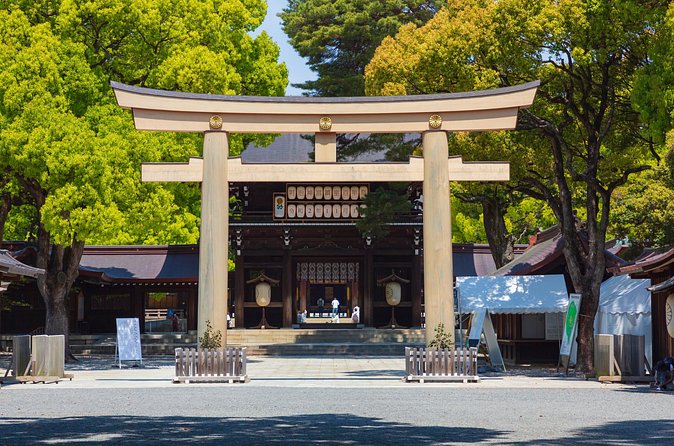
A single shrine can be beautiful without telling you much about Shinto. This route works because each stop gives you a different setting and purpose. Meiji Jingu places Shinto in a broad forest near Harajuku. Kanda Shrine brings it into central Tokyo’s long civic and commercial story. Tokyo Daijingu introduces a shrine especially associated with marriage and good fortune.
That range matters. You are not simply checking three red gates off a list. You can compare how the sites feel, what they are used for, and how Japanese religious customs fit into daily life.
Your guide also explains Shinto as a way of life and a set of practices, not only as a formal religion. That is useful in Japan, where shrine visits can be tied to festivals, family milestones, business success, marriage, and wishes for good health. The tour’s strongest purpose is helping you understand the actions you see around you.
Because it is private, you can ask basic questions without worrying about slowing down a larger party. Guides named in the feedback include Ami, Hitomi, Asami, Ken, Shunsu, Atsuko Kobayashi, and Katsunori Fujiwara. The recurring praise is for clear explanations, kindness, and a friendly manner. That personal contact is important here. Shinto customs are easy to copy incorrectly if nobody explains the meaning behind them.
A few more Tokyo tours and experiences worth a look


Meeting at Harajuku Station at 9:00 a.m.
The tour begins at Harajuku Station in Shibuya at 9:00 a.m. You are responsible for reaching the meeting point, since hotel pickup and drop-off are not included. The station is near the first shrine, making it a sensible place to begin.
Arrive early. The guide will wait up to 30 minutes after the scheduled start, but after that the activity is treated as canceled. That policy is especially worth noting in Tokyo, where a missed train connection or a confusing station exit can cost more time than expected.
Wear smart casual clothing and comfortable shoes. The dress guidance is modest rather than formal, but a morning that includes three shrines, station connections, and substantial walking is not the time for stiff shoes. If you have a knee problem or another injury, think carefully before booking. One guide allowed an injured participant to rest as needed, but patience from the guide cannot remove the physical demands of the route.
Meiji Jingu: forest, imperial history, and a quiet change of pace
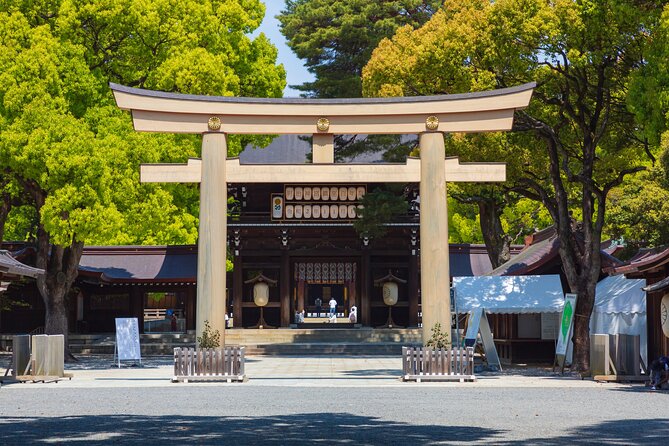
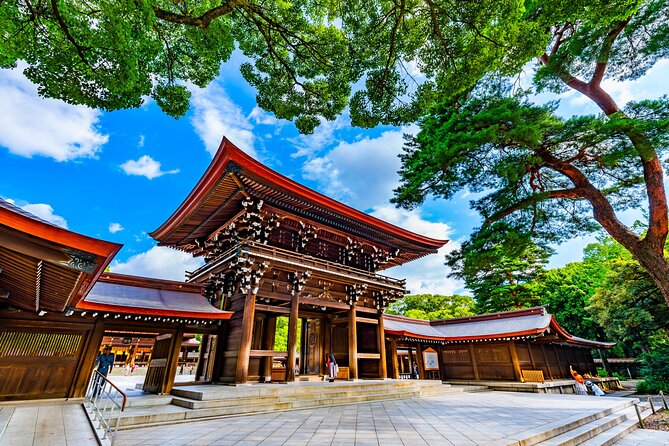
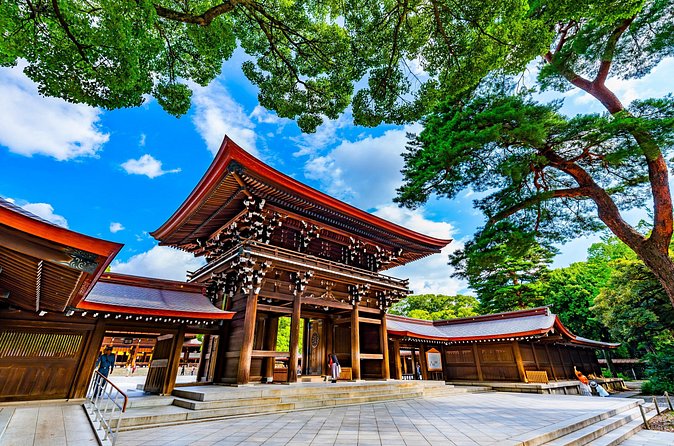
Meiji Jingu receives the first hour. The shrine is dedicated to the souls of Emperor Meiji and Empress Shoken, and it is surrounded by a large forest made from trees donated from different parts of Japan.
The setting is the first big lesson. Harajuku is known for fashion and youth culture, yet the shrine grounds offer a sharp change in mood. Once you enter the wooded approach, the city feels farther away. That contrast helps you see how Tokyo holds old and new life side by side.
Your guide explains the Meiji period and the people honored here, then places the shrine in the wider story of modern Japan. One of the strongest comments about the tour singled out this background as especially interesting. If you know little about Japanese art or Shinto, this is a useful opening because the guide can explain the objects and customs before you encounter them at the next two sites.
Expect time for photographs, but do not treat the grounds as just a picture stop. Your guide may point out the meaning of shrine features and show you the correct way to approach the sacred area. You learn the purification process, how to pray for good fortune, and how to behave respectfully.
The drawback is that Meiji Jingu’s grounds require walking. The first hour can pass quickly, especially if your guide is explaining the forest, imperial connection, and rituals in detail. Keep an eye on the pace if someone in your group tires easily.
Kanda Shrine: an older shrine in central Tokyo
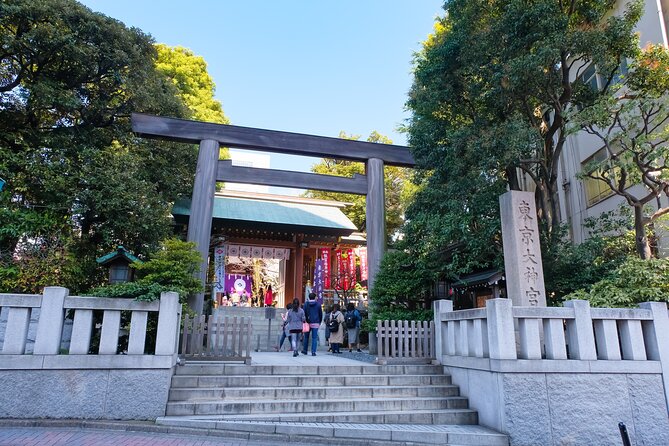
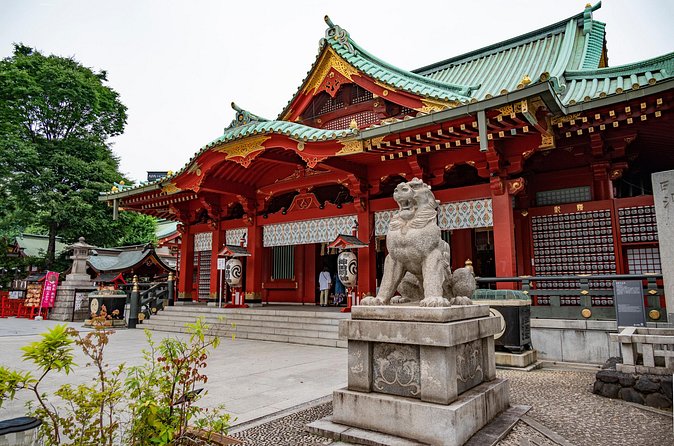
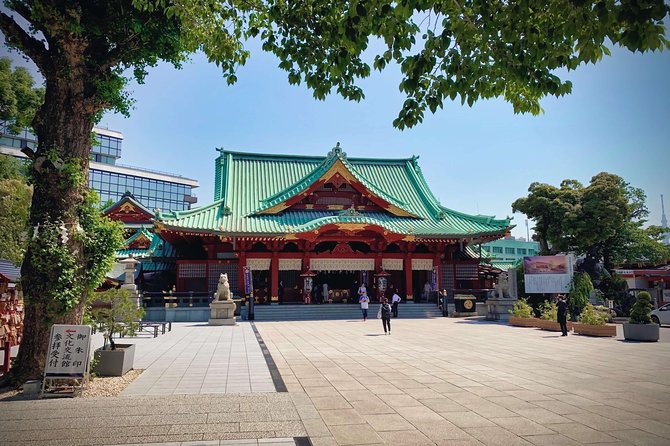
The second hour is at Kanda Shrine in Chiyoda. The site dates back 1,270 years, although fires and earthquakes have led to repeated rebuilding of the present structure.
That rebuilding is not a footnote. It helps explain why Japanese sacred places can be ancient in identity while their visible buildings are newer. Kanda Shrine gives your guide a chance to discuss continuity, disaster, and the way Tokyo has repeatedly rebuilt itself.
The setting also differs from Meiji Jingu. Instead of a broad forested approach, you are visiting a shrine in central Tokyo. That urban context makes Kanda useful for understanding how Shinto fits into a working city. The tour connects the physical site to Japanese culture, mythology, and everyday beliefs about protection, success, and good fortune.
Look closely at the statues, gates, and other features as your guide explains them. One participant valued learning what the statues represented, which is exactly the kind of detail easy to miss on your own. Without explanation, you may see color and decoration. With explanation, the shrine becomes a set of symbols and practices.
The route uses public transportation between shrines. That is convenient, but it is not a private vehicle tour. You will be moving through Tokyo’s public transit system with your guide, then walking around the shrine grounds. The arrangement keeps the tour connected to ordinary city life, though anyone expecting door-to-door transport should choose a different experience.
Tokyo Daijingu: a shrine linked with marriage
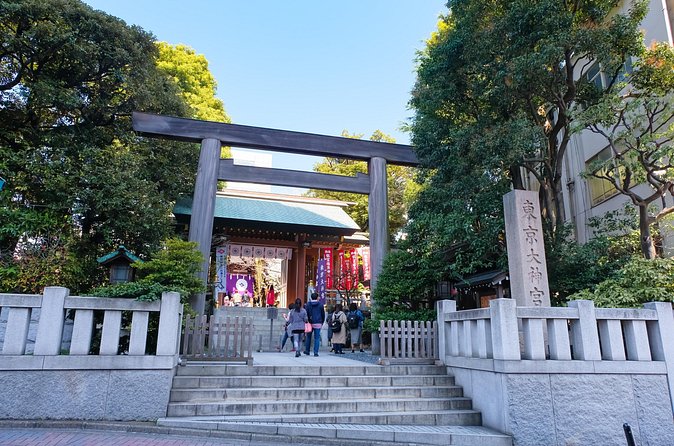
The final hour takes you to Tokyo Daijingu, known affectionately as O-Ise-sama in Tokyo because of its enshrined deities. It is particularly famous as a shrine connected with marriage, making it a different kind of stop from Meiji Jingu and Kanda Shrine.
This visit is useful for seeing how particular shrines develop particular reputations. Shinto is not presented here as one general stop with the same wish for everyone. Different sites attract people seeking different forms of help, blessing, or good fortune.
If you are interested in Japanese customs around relationships and life milestones, pay close attention to this part of the explanation. The guide can connect the shrine’s deities and reputation with broader ideas about prayer and daily life. It also gives you another chance to practice the etiquette introduced at Meiji Jingu.
By the third shrine, you have a clearer basis for comparison. You have seen a forest shrine tied to the imperial family, a long-established central Tokyo shrine shaped by rebuilding, and a site associated with marriage. That is a solid cultural sample for a three-hour tour.

What the guide adds to the experience
The guide is the heart of this tour. Shrine grounds are open and attractive, but the meaning behind them is not always obvious. A guide can explain why you purify yourself, how to pray, what certain statues represent, and how mythology connects with Japanese culture.
The strongest guide comments describe a friendly and patient style. Ami continued carefully after a guest injured a knee. Hitomi was praised for explaining the history of all three shrines. Asami helped connect shrine customs with Japanese culture and the relationship between Shinto and society. Ken combined cultural information with practical help, even suggesting a fugu restaurant afterward.
Other named guides include Shunsu, Atsuko Kobayashi, and Katsunori Fujiwara. The exact guide assigned to your booking may vary, so do not assume you will receive a particular person. Still, the range of positive comments points to a tour that depends heavily on the individual guide’s ability to explain rather than simply lead you from gate to gate.
The private format improves that exchange. Your group can ask about art, prayer, mythology, or modern customs as they come up. You can also slow down briefly for photographs or rest, although the three-hour schedule means the tour cannot become completely unhurried.
Is $206.26 per person a fair price?
At $206.26 per person, this is a premium experience. You are paying for a private guide, not merely admission to three shrines. Public transportation between the sites and entrance fees are included, along with photo opportunities and English-language guiding.
The price makes the most sense for a small group that wants a tailored cultural introduction. If several people share the private booking, the cost may feel more reasonable because the guide is dedicated to your party. Group discounts are also listed, though the exact reduction is not provided.
I would not book it solely to see the shrine buildings. You can visit shrines independently, and this tour is poor value if you prefer moving quickly with little explanation. I would consider it worthwhile if you are new to Japan, have only a short stay in Tokyo, or want to understand the rituals instead of guessing at them.
The three-hour structure saves planning time. You do not have to choose which shrines to visit, work out the route, or research the etiquette in advance. That convenience has real value in Tokyo, especially on a first visit.
Who will enjoy this private shrine tour most?
This experience suits you if you want cultural context, ask questions, and prefer a private guide to a large group. It is also a good fit for families, couples, and friends with different levels of knowledge about Japan, since the guide can adjust explanations to your group.
It works well early in a Tokyo visit. The lessons about purification and prayer can help you feel more at ease when you visit other shrines on your own. The tour also gives you a useful framework for noticing the differences between sacred sites across Japan.
Children may participate, but they must be accompanied by an adult. Most people can take part, according to the activity details, yet the walking deserves serious attention. A participant with a knee injury was able to continue with rest breaks, but the route was still difficult. If anyone in your group has limited mobility, ask yourself if several hours of walking and public transport will be comfortable.
The tour is also weather-dependent. In a typhoon or other extreme weather, you are offered an alternative date or a full refund. Ordinary rain may still affect comfort, so check the forecast and dress sensibly.
Practical details that affect your choice
The tour starts at Harajuku Station and finishes somewhere different, with the ending details provided at booking. Transportation to the meeting point and from the end point is not included. Plan extra time after the tour if you have a train, meal, or timed attraction booked.
Food and drinks are not included. This is easy to manage because the activity lasts about three hours, but do not expect a planned meal stop. Gratuities are optional.
Mobile tickets are available, and confirmation is normally sent when you book. If you book within seven days of the date, confirmation may take up to 48 hours and depends on availability.
The cancellation terms are strict. Cancellations 20 days or less before the event incur a 25 percent fee, cancellations 14 days or less before incur 50 percent, and cancellations seven days or less before incur 100 percent. The activity is described as non-refundable and unchangeable, so check your schedule before paying.
Should you book the three-shrine experience?
Book this tour if you want meaning and instruction, not just photographs. The private setting, three contrasting shrines, English-speaking guide, and practical lessons in Shinto etiquette give you a strong introduction to Japanese culture in a short amount of time.
Skip it if $206.26 feels high for a three-hour outing, if you dislike walking, or if you would rather explore shrines independently. The route is active, and the private price is justified mainly by the guide’s explanations.
For a first visit to Tokyo, I see the appeal. Meiji Jingu gives you forest and imperial context, Kanda Shrine shows an older urban tradition shaped by repeated rebuilding, and Tokyo Daijingu adds the personal focus of marriage and good fortune. With a good guide, you leave with more than a few shrine photos. You understand what to do next time you pass through a torii gate.
FAQ
How long does the Shinto Shrine Tour last?
The tour lasts approximately three hours, with about one hour planned at each of the three shrines.
Which shrines are included?
The route includes Meiji Jingu Shrine, Kanda Shrine, and Tokyo Daijingu Shrine.
Where does the tour begin?
You meet at Harajuku Station, at 1 Chome-18 Jingumae, Shibuya, Tokyo 150-0001, Japan.
What time does the tour start?
The scheduled start time is 9:00 a.m.
Is this a private tour?
Yes. Only your group participates in the activity, giving you a private and personalized experience.
Is transportation included?
Public transportation between the shrines is included. Transportation to the meeting point and from the ending location is not included.
Are entrance fees included?
Yes. Entrance fees are included in the tour price.
What should I wear?
The stated dress code is smart casual. Comfortable footwear is a practical choice because the experience includes a long walk.
What happens if I arrive late?
The guide will wait up to 30 minutes after the scheduled start time. If you do not arrive within that period, the tour is considered canceled.
More Temples & Meditation in Tokyo
More tours in Tokyo we've reviewed












Temples & Meditation, compared.
 ★ 4.7Tokyo: Meiji Shrine, Asakusa, Skytree Bus Tour and CruiseFrom $12210 hours
 ★ 4.8Tokyo: Asakusa Walking Tour with Sensoji Temple VisitFrom $222 hours
 ★ 4.5Tokyo: Kamakura & Enoshima Day Trip including Temple TicketsFrom $589 hours - 570 minutes
 ★ 4.5Tokyo: Nikko Toshogu Shrine and Kegon Waterfall TourFrom $8410h 30m
 ★ 4.5Tokyo Panoramic 1 Day: Meiji Shrine, Asakusa, Odaiba and SKYTREE®From $85
 ★ 5.0Asakusa Senso-ji Temple and Old Tokyo Walking TourFrom $20