Reviewed · PRIVATE
Private Harajuku Omotesando Architecture Tour
Harajuku and Omotesando are more than youth fashion and luxury shopping. This private walk shows you how bold buildings, small neighborhood streets, Japanese design, and daily life fit together. I especially like the private format, which lets guides such as Fuki, Taka, or Mari Sakai shape the walk around your interests. I also like the stop for a drink, since three and a half hours on foot is easier with a short rest.
In This Article
- Key points at a glance
- Why Harajuku and Omotesando make such a good architecture walk
- Meeting beside Meiji Shrine at Café Mori no Terrace
- The opening view toward Yoyogi Gymnasium
- The Iceberg, Dior, Louis Vuitton, Sunny Hills, and Prada
- Back streets, Cat Street, and the everyday side of Harajuku
- A short café break on the route
- Why the private format matters
- Is $129 per person a fair price?
- Choosing the best time and preparing for the walk
- Who should book this Omotesando architecture tour?
- Should you book it?
- FAQ
- Where does the Private Harajuku Omotesando Architecture Tour meet?
- How do I reach the meeting point from JR Harajuku Station?
- Is the meeting café inside Meiji Shrine?
- How long does the tour last?
- What language is the tour offered in?
- Is this a private tour?
- What buildings are included?
- Does the tour include a café break?
- Are meals included?
- Is transportation included?
- Is the tour wheelchair accessible?
- What should I bring?
- Can I take the tour at night?
- Can I cancel for a full refund?
- Can I reserve now and pay later?
The main consideration is the price: $129 per person is a serious spend for a walking tour, especially if you are traveling alone. You are paying for a private guide and a focused architecture lesson, not transportation, meals, or entry to indoor attractions.
Key points at a glance
- Start at Meiji Shrine’s Jingubashi bridge: Meet at Café Mori no Terrace in the open space by the large wooden shrine entrance, not at the café inside the shrine.
- See major works in one walk: The route includes distant views of Yoyogi Gymnasium and buildings such as The Iceberg, Dior, Louis Vuitton, Sunny Hills, and Prada.
- Go beyond the polished avenue: A side trip through back streets shows ordinary Japanese homes, shops, and local life beside major designer buildings.
- Ask for an architecture-focused guide: Past guides have included urban planner Taka, architecturally focused Fuki, and guides such as Yoshi, Hal, and Mari Sakai.
- Use the private format well: Tell the guide before you begin which buildings, architects, shopping streets, or design details matter most to you.
- Consider an evening departure: Night changes the look of glass, steel, lighting, and store façades, giving familiar buildings a different feel.
Why Harajuku and Omotesando make such a good architecture walk
Harajuku is often reduced to youth fashion, colorful shops, and Takeshita Street. Omotesando is often treated as Tokyo’s answer to Rodeo Drive, with luxury brands lined along a broad avenue. Both descriptions are partly right, but they miss the reason this area is so rewarding on foot.
The district brings together major international brands, Japanese architects, small lanes, residential streets, cafés, and long-established shrine surroundings. You can move from a highly polished store façade to a much quieter neighborhood in a few minutes. That contrast gives the walk its purpose.
I like this tour because it explains why designers and architects choose Omotesando. The buildings are not simply containers for shops. Their shape, materials, glass, lighting, and relationship to the street are part of the brand experience.
The tour also helps you compare Omotesando with Ginza. Ginza is famous for its grand avenues, department stores, and formal luxury-shopping feel. Omotesando has major names too, but its appeal comes from the mix of architecture, trees, side streets, young fashion, and smaller-scale neighborhoods.
Other private tours in Tokyo


Meeting beside Meiji Shrine at Café Mori no Terrace
The walk begins near the Jingubashi bridge in front of Meiji Shrine. The meeting point is Café Mori no Terrace, located at 1 Yoyogikamizonocho, Shibuya City, Tokyo 151-0052.
This detail matters because there are cafés with similar names in the area. You want the café in the large open space by the big wooden entrance gate of Meiji Shrine. From JR Harajuku Station, leave through the Omotesando exit and walk toward the forest. Do not pass through a Shinto gate from the station to reach the meeting point.
The setting gives you a useful start. Meiji Shrine’s wooded approach feels far removed from the shopping streets ahead. That change in mood helps frame the whole tour: Tokyo here is not one single experience, but a series of different districts pressed close together.
You will want comfortable shoes. The duration is 210 minutes, and the route involves steady walking with stops to look, talk, and take photographs. The included drink break gives you a chance to rest, but this is still a walking tour rather than a vehicle-based architecture circuit.
The opening view toward Yoyogi Gymnasium
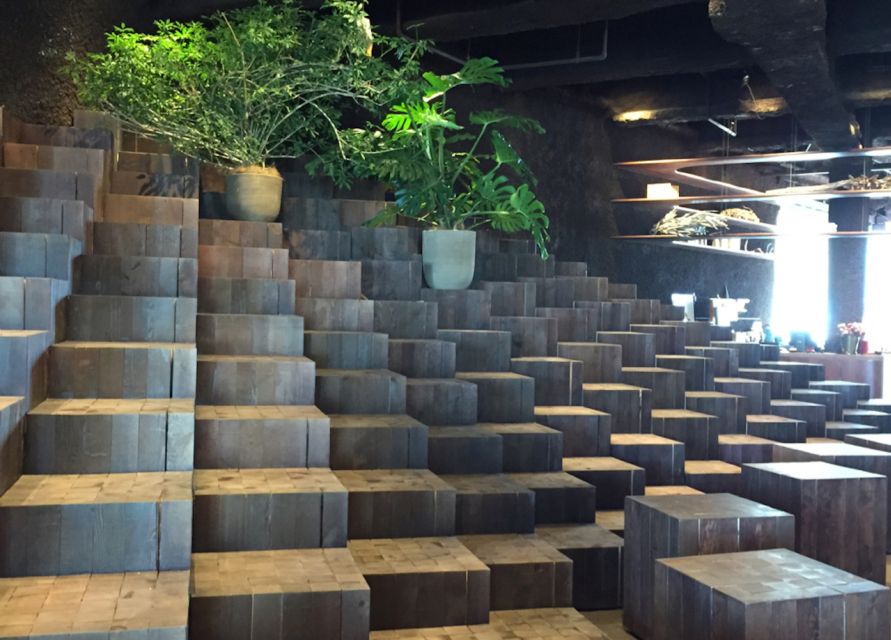
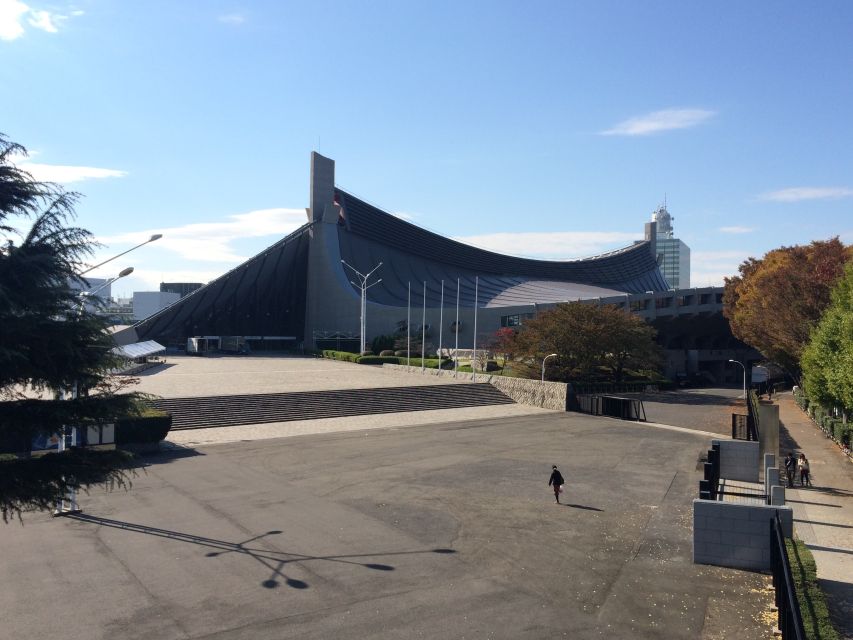
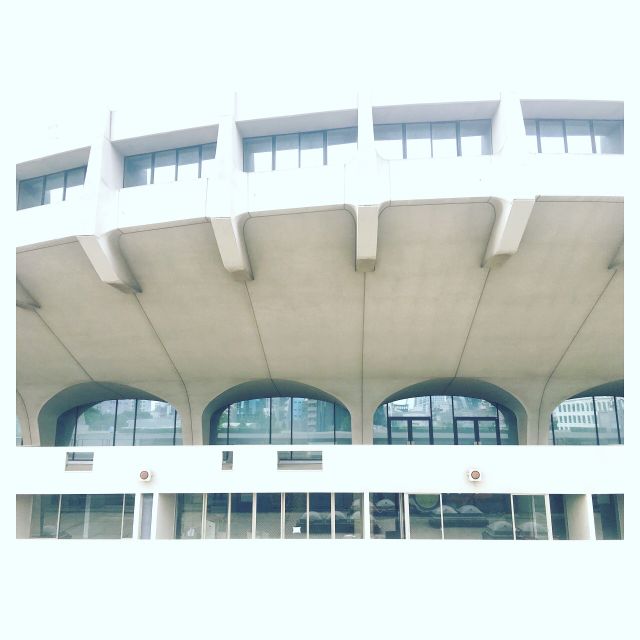
One of the first architectural sights is Yoyogi Gymnasium, viewed from a distance. The tour does not present it as an isolated building visit. Instead, you see how one of Tokyo’s major landmarks relates to the surrounding area.
A distant view can be useful for architecture because it lets you take in the overall form before getting distracted by doors, signs, and passing foot traffic. Your guide can then connect the building to the wider story of Japanese design and the architects who helped shape modern Tokyo.
This stop is also a reminder that the area is not only about retail buildings. Omotesando’s famous boutiques attract the eye, but the district’s architectural interest includes public and civic works as well as commercial projects.
If your main goal is to go inside buildings, take note: the experience is a street-level architecture walk. The listed sights are viewed from the route, and the tour does not include meals or indoor attraction admissions.
The Iceberg, Dior, Louis Vuitton, Sunny Hills, and Prada
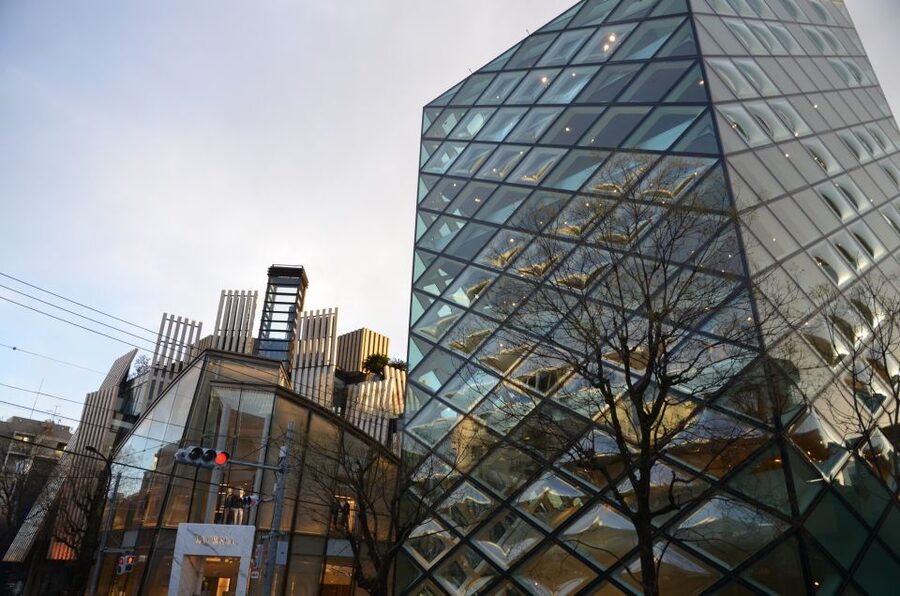
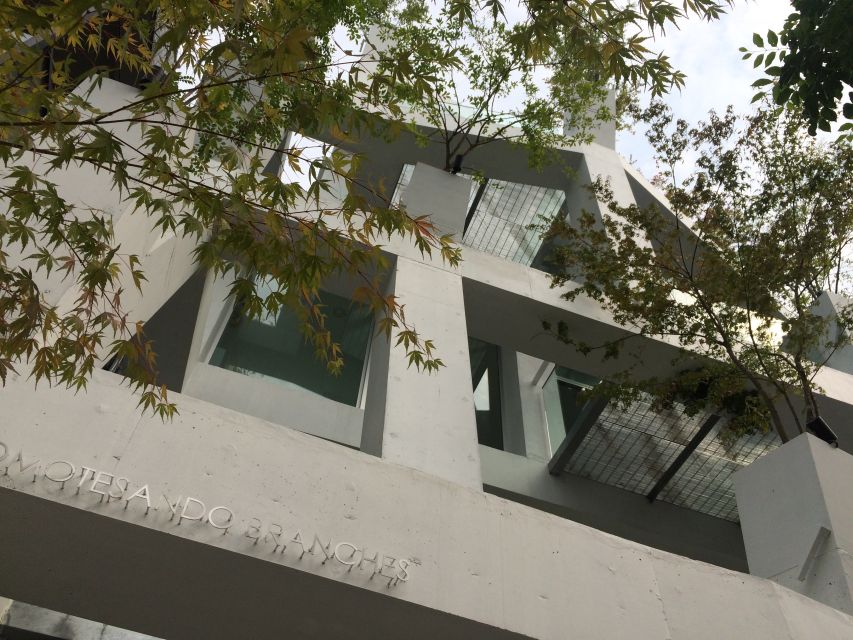
The central part of the route focuses on contemporary buildings that have made Omotesando a reference point for design. The Iceberg, Dior, Louis Vuitton, Sunny Hills, and Prada each offer a different way to combine retail with architecture.
You will see these buildings from the street, where their façades have to work at several levels. They need to attract shoppers, express a brand, respond to a busy avenue, and fit into a district that is also used by people who live, work, and walk there.
The value of a guide becomes clear here. Without context, you may notice an unusual façade and take a photograph, then move on. With a strong guide, you can pay attention to the structure, surface, scale, and the way each building changes your view as you walk past it.
Past guides have brought different strengths. Taka was a retired urban planner who studied at MIT and discussed Japanese architects, including several Pritzker Prize winners. Fuki has led walks with a strong personal interest in architecture and has adjusted the route to specific buildings requested in advance. Other guides have included Yoshi, Hal, and Mari Sakai.
Because the guide may vary, the tone can vary too. That is not necessarily a weakness. It means you should tell the operator what you want from the walk. Ask for more architect and design detail if that is your priority. If you care about shopping streets, local life, or photography, say so before the tour begins.
Back streets, Cat Street, and the everyday side of Harajuku
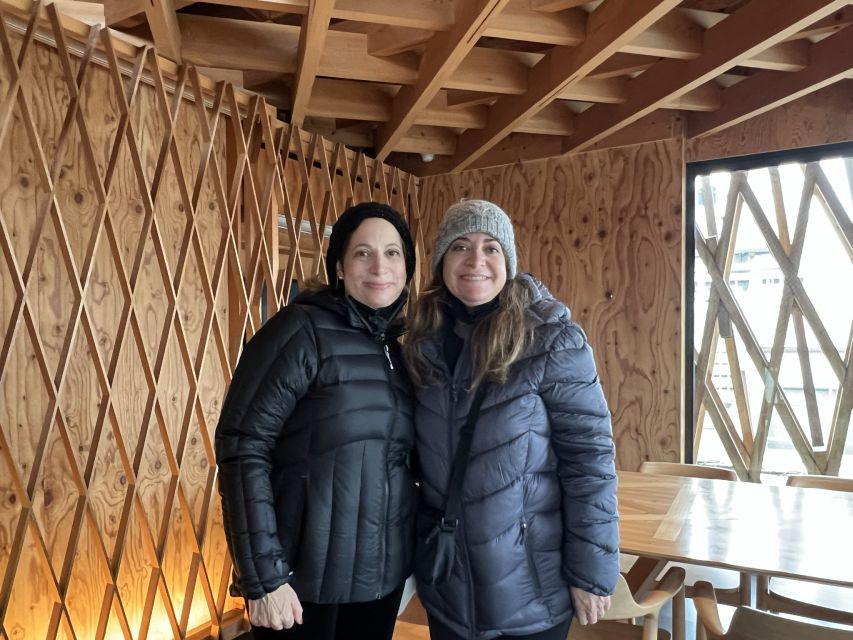
The tour leaves the main avenue for a side trip through back streets. This is one of the most useful parts for anyone who already knows the famous store names.
The smaller streets show a different side of the district, including a wider range of Japanese lifestyles. The contrast is sharp. On Omotesando, buildings are carefully designed to command attention. In the back streets, the scale is quieter and more ordinary.
The route may also include Cat Street, a lively neighborhood that links the Harajuku and Omotesando areas. It gives the walk a different rhythm from the formal avenue. You can see why people return to this part of town for more than luxury shopping.
I would pay close attention here rather than treating the side trip as a break from the architecture. The back streets provide the comparison that makes the grand buildings easier to understand. They show the neighborhood’s human scale and explain why Omotesando feels different from a purely commercial district.
One past guest returned to Cat Street alone after the tour because the area had made such an impression. That is a practical benefit of the experience: you finish with a clearer idea of where you may want to spend more time later.



A short café break on the route
A drink break is included. The exact café stop is not specified, so do not plan on a full meal or a particular menu. Think of it as a short pause while you watch people move through the sleek Omotesando streets.
This matters more than it might sound. A long architecture walk can become tiring if every stop requires standing on a pavement while listening. A café pause gives you time to reset and discuss what you have seen with the guide.
It also fits the character of the neighborhood. Omotesando is a place where shopping, design, cafés, and people-watching overlap. The break lets you experience the street as a place used by locals and shoppers, not only as a sequence of buildings for photographs.
Meals are not included, so eat before or after the tour if you need something substantial. You may also want to reserve time afterward for shopping or for revisiting a street that caught your attention.
Why the private format matters
A private group can make this tour much more useful than a standard group walk. You are not locked into a fixed lecture aimed at the broadest possible audience. You can ask why a building looks the way it does, how Japanese architects work with international brands, or why Omotesando feels different from Ginza.
The format also suits mixed interests. One person may care about architecture, another about fashion, and another about street photography. The guide can respond to those interests more easily when the group is private.
The available feedback points to this flexibility as a major strength. Fuki has included every building requested by a group, while another guide answered detailed questions for a solo participant. That suggests you should send your priorities ahead of time rather than waiting until the first stop.
Private does not automatically mean luxurious. You still walk outdoors, share public streets with other people, and view the buildings from outside. The extra cost buys attention, flexibility, and an English-speaking guide, not exclusive access to the stores.
Is $129 per person a fair price?
At $129 per person, the tour costs more than a basic public walking tour. The value depends heavily on your interest in architecture and on the number of people in your private group.
For a solo participant, the cost is harder to justify unless you genuinely want a focused architecture lesson and the freedom to ask questions. For two or more people, the private format becomes easier to defend because the group shares the guide fee while still receiving a personal route.
You are paying for 210 minutes with a licensed English-speaking guide, a tailored private experience, and a drink break. Transportation to and from Harajuku and Omotesando is not included, nor are meals.
I would choose this tour if you are already planning to visit the area and want more than shopping photos. I would skip it if your main aim is casual browsing, if you dislike long walks, or if you only want to see the buildings quickly without architectural explanation.
The strong rating of 4.9 from 18 reviews supports the idea that the tour delivers well for its intended audience. The repeated praise centers on guide passion, clear English, architecture expertise, and the ability to adapt the route. Those are the qualities that determine the value here.
Choosing the best time and preparing for the walk
A daytime departure gives you clear views of façades and materials. It may be best if you want to study the buildings closely or take detailed photographs.
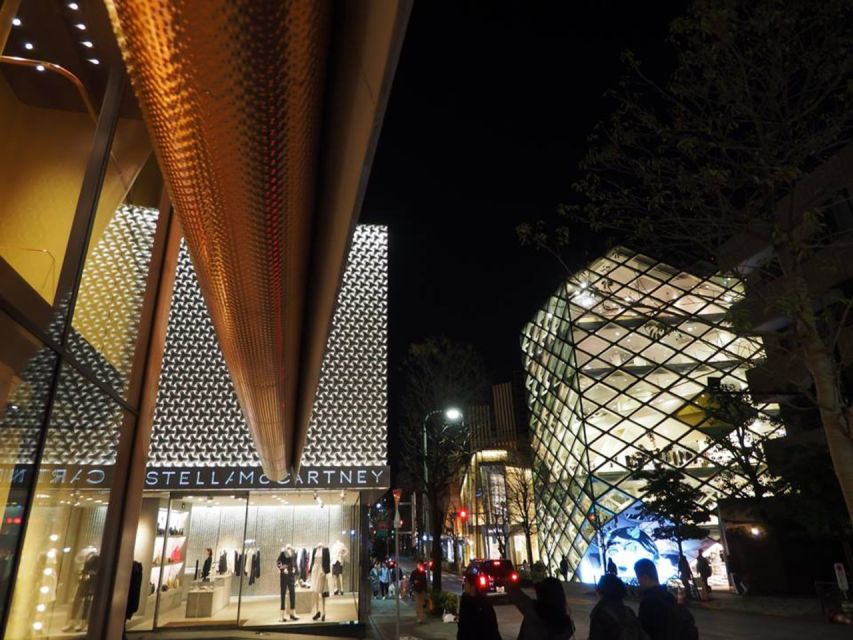
An evening tour offers a different experience. Store lighting, reflections, and illuminated surfaces can change the look of Prada, Dior, Louis Vuitton, and the other major buildings. The tour specifically allows you to appreciate the architecture at night, so this is worth considering if you have already seen Omotesando during the day.
Wear comfortable shoes and allow the full three and a half hours. The walk is wheelchair accessible, which is useful information when planning, though the route still takes place on public streets and includes a variety of urban spaces.
The cancellation policy gives you some room to adjust plans: you can cancel up to 24 hours in advance for a full refund. You can also reserve now and pay later, which helps if your Tokyo schedule is still changing.
Who should book this Omotesando architecture tour?
I would recommend it first to architecture students, designers, photographers, urban planners, and anyone who likes understanding why a place looks the way it does. It also suits repeat visitors who have already seen the main shopping streets and want a more thoughtful reason to return.
It works well for couples, families with an interest in design, and small private groups. The guide can adjust the conversation instead of forcing everyone through a large group’s fixed pace.
The tour is less suitable if you want a shopping guide, a food tour, or a history-heavy visit to Meiji Shrine. The shrine provides the meeting setting and opening context, but the main focus is contemporary architecture, urban form, designer stores, and neighborhood contrast.
Should you book it?
Book this tour if you want to look at Omotesando with fresh eyes. The best part is not simply checking famous buildings off a list. It is learning how luxury retail, Japanese architecture, public landmarks, back streets, and local routines share the same few blocks.
The decision comes down to price and interest. At $129 per person, it is a specialist walking tour, not a cheap way to get around Harajuku. But if you value a private English guide, want to ask detailed questions, and plan to spend time photographing or revisiting the buildings, it can be a worthwhile use of an afternoon or evening.
Before booking, request the guide’s name if possible and share your must-see buildings. That small step can help turn a good architecture walk into a route that fits your own interests.
FAQ
Where does the Private Harajuku Omotesando Architecture Tour meet?
The meeting point is in front of Café Mori no Terrace at 1 Yoyogikamizonocho, Shibuya City, Tokyo 151-0052. It is in the large open space beside the big wooden entrance gate of Meiji Shrine.
How do I reach the meeting point from JR Harajuku Station?
Leave JR Harajuku Station through the Omotesando exit and walk toward the forest. You do not go through any Shinto gates from the station to reach the café.
Is the meeting café inside Meiji Shrine?
No. The meeting café is different from the café inside Meiji Shrine, although the names are similar.
How long does the tour last?
The tour lasts 210 minutes, or three and a half hours.
What language is the tour offered in?
The tour is offered in English with a live English-speaking guide.
Is this a private tour?
Yes. It is offered for a private group.
What buildings are included?
The route includes a distant view of Yoyogi Gymnasium and contemporary buildings such as The Iceberg, Dior, Louis Vuitton, Sunny Hills, and Prada.
Does the tour include a café break?
Yes. A break with drinks is included.
Are meals included?
No. Meals are not included.
Is transportation included?
No. Transportation fees to and from the Harajuku and Omotesando area are not included.
Is the tour wheelchair accessible?
Yes. The activity is listed as wheelchair accessible.
What should I bring?
Bring comfortable shoes, since the experience lasts 210 minutes and takes place on foot.
Can I take the tour at night?
Yes. Nighttime departures are available when offered in the schedule, and the buildings can be appreciated from a different perspective after dark.
Can I cancel for a full refund?
You can cancel up to 24 hours in advance for a full refund.
Can I reserve now and pay later?
Yes. The activity allows you to reserve now and pay later.
More Private Tours in Tokyo

More tours in Tokyo we've reviewed












Private, compared.
 ★ 5.0Tokyo 6hr Private Tour with Government-Licensed GuideFrom $155
 ★ 5.0Private Tour to Mt. Fuji and Hakone (Fully Licenced Operator)From $497
 ★ 5.0Tokyo Customized Private Tour (Must See Places in 1 Day)From $145
 ★ 4.8Tokyo: Private City Highlights Tour with Local GuideFrom $1064 - 8 hours
 ★ 5.0Private Custom Tour: Tokyo in a DayFrom $159
 ★ 5.0Tokyo 4hr Private Tour with Government-Licensed GuideFrom $109