Reviewed · TEMPLES & MEDITATION
Tokyo War History Tour: Yasukuni Shrine & War Museum
Yasukuni Shrine is not just another Tokyo shrine. It is a place where religion, military memory, and national identity meet, sometimes uneasily. This private tour helps you understand why the site matters, what the Yushukan Museum chooses to show, and how Japan remembers its war dead.
In This Article
- Key points to know before you book
- Why Yasukuni Shrine needs more than a quick visit
- The approach from the First Torii
- Inside the Yushukan Museum
- The extended route to Chidorigafuchi
- What the private format changes
- Is $87 per person a fair price?
- Who will get the most from this tour?
- How to plan the day around the visit
- Should you book the Yasukuni and Yushukan tour?
- FAQ
- Where does the tour begin?
- How long does the experience last?
- What language is the tour offered in?
- Is this a private tour?
- Does the price include Yushukan Museum admission?
- Is the shrine visit guided?
- What does the Yushukan Museum cover?
- Is Chidorigafuchi National Cemetery included in every option?
- Can I take photographs inside the museum?
- What should I bring?
I like the tour for two clear reasons: you get a private English-speaking guide, and the museum visit comes with historical context rather than a quick walk past old weapons and photographs. The optional stop at Chidorigafuchi National Cemetery is another strong point because it lets you compare religious enshrinement with a secular government memorial.
The main caution is simple: this is a serious history experience, not a light sightseeing stop. The museum presents a distinct Japanese wartime narrative, and some subjects may be difficult or politically sensitive. You should also expect moderate walking, up to three and a half hours on the extended version.
Key points to know before you book
- Yasukuni Shrine dates to 1869: Learn how the shrine grew alongside Japan’s transformation from a feudal society into a modern nation-state.
- The Yushukan takes about 110 minutes: This is the heart of the tour, with military objects, photographs, documents, and a broad account of Japan’s modern conflicts.
- Your guide supplies needed context: Guide Tatsuo is specifically praised for explaining Japanese history clearly, and the private format gives you room to ask questions.
- The extended tour adds Chidorigafuchi: Compare a Shinto memorial for war dead with a secular cemetery for unidentified remains repatriated from overseas battlefields.
- The price is $87 per person: That is a fair rate if you want a private guide and museum admission, especially for a small group interested in modern history.
- Plan for outdoor walking and museum rules: Wear comfortable shoes, bring water and sun protection, and do not expect unrestricted photography inside the museum.
Why Yasukuni Shrine needs more than a quick visit
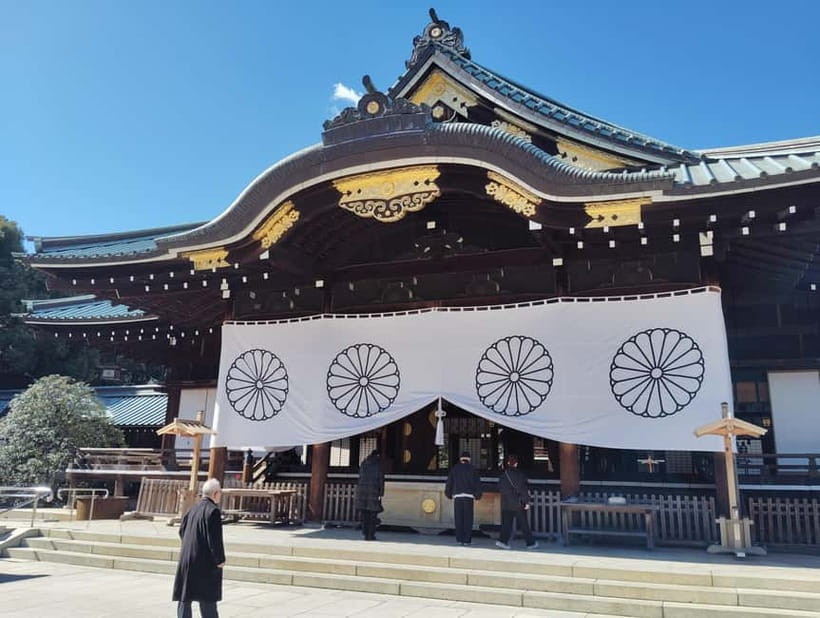
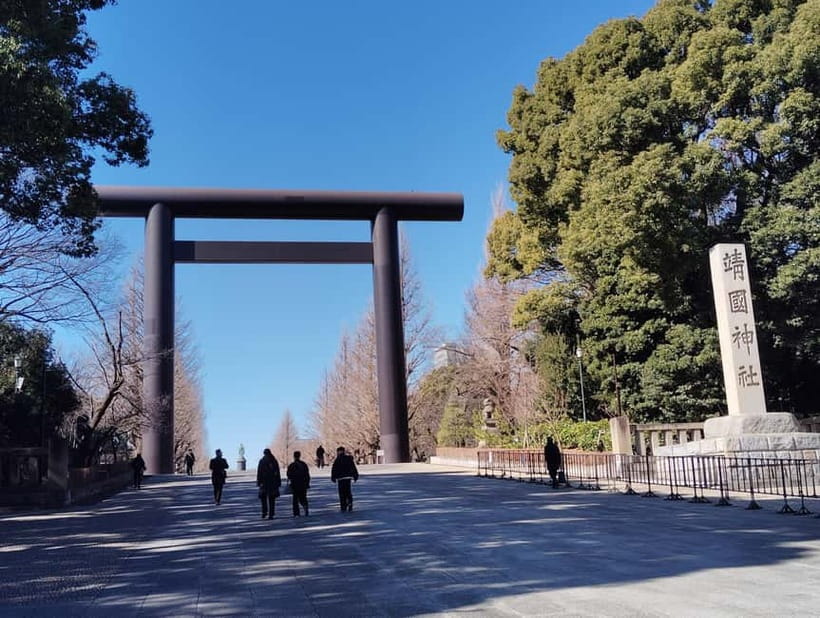
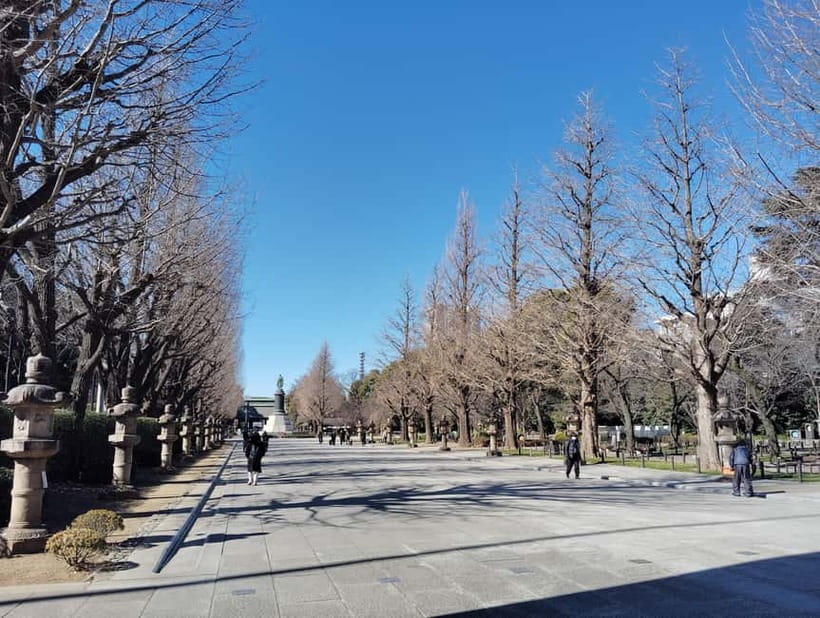
Many visitors first notice the scale of the entrance torii. From there, the approach gives your guide a useful setting for explaining how Japan changed during the Meiji period and how military service became tied to the modern state.
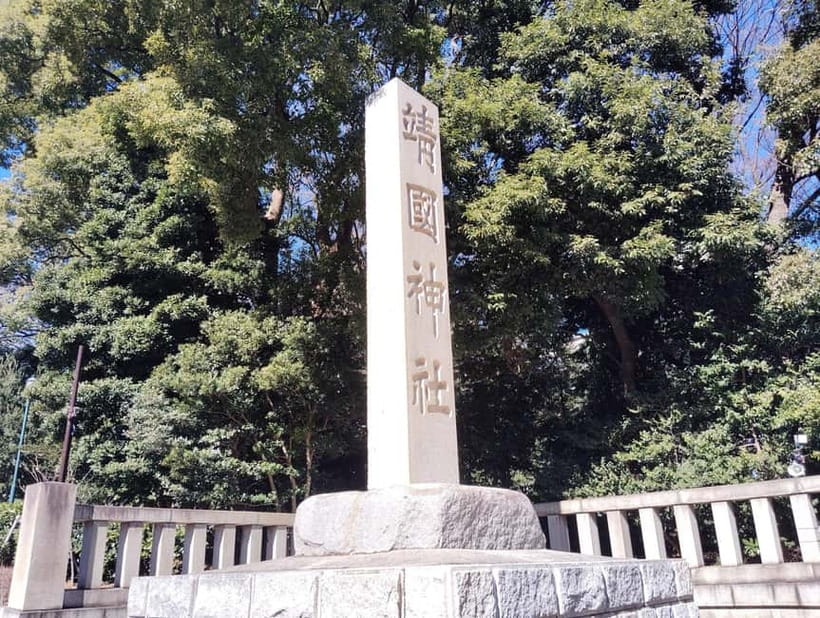
Founded in 1869, Yasukuni was created to commemorate people who died in conflicts from the Meiji Restoration through the Asia-Pacific War. Unlike an ordinary Shinto shrine, it enshrines the spirits of war dead rather than a traditional deity. That difference is the key to understanding the place.
For some Japanese families, Yasukuni remains a site of private mourning. At the same time, its connection with wartime memory and national politics has made it a subject of international debate. A guide can explain these two realities at once: this is a place of personal grief, and it is also a powerful public symbol.
I like that the experience does not ask you to accept one political position. Instead, it gives you the background needed to ask better questions. How did the shrine’s role change as Japan modernized? How did imperial ideology affect military development? Why can one memorial feel comforting to one person and troubling to another?
You also learn basic shrine etiquette along the way. That matters because ritual is not decoration here. The way you enter, walk through the grounds, and behave at the shrine helps connect present-day practice with the institution’s earlier purpose.
The first shrine visit lasts about 40 minutes. That is enough time for a guided introduction without letting the outdoor portion take over the day. Still, conditions matter. You will be outside, so a hat, sunscreen, and water make sense, especially in warm weather.
A few more Tokyo tours and experiences worth a look


The approach from the First Torii
The meeting point is at the First Torii, also called the large torii, though the exact starting point can vary by booking option. Check your confirmation carefully before setting out, since the meeting point and final drop-off may not be identical.
Beginning at the torii gives the tour a clear visual opening. You are not simply being led into a shrine compound. You are entering a place built to commemorate a particular chapter in Japan’s development, one shaped by restoration, modernization, empire, and war.
Your guide can help place the buildings and grounds in time. The tour description specifically links the visit with samurai ethics, imperial ideology, and Japan’s military growth. Those subjects are easier to follow when you are looking at the actual approach and ritual spaces instead of hearing them as abstract classroom topics.
This part is also where a private tour earns its keep. In a large group, a guide might deliver a set speech and move on. With only your party, you can stop to clarify terms, ask how a custom developed, or discuss the difference between a religious ceremony and a state event.
Do not expect a long architecture tour. The real value is historical framing. The shrine grounds are the setting for a discussion about memory and nationhood, not the final subject by themselves.
Inside the Yushukan Museum
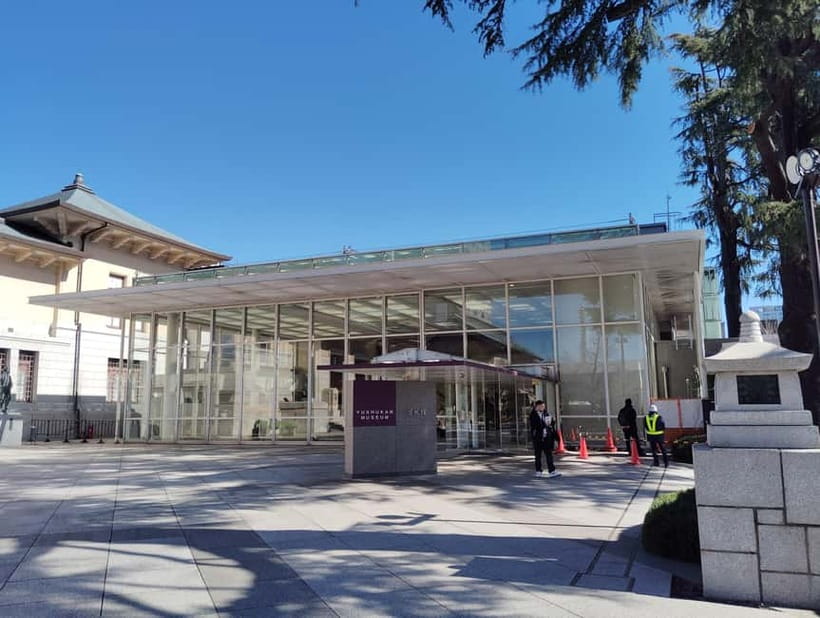
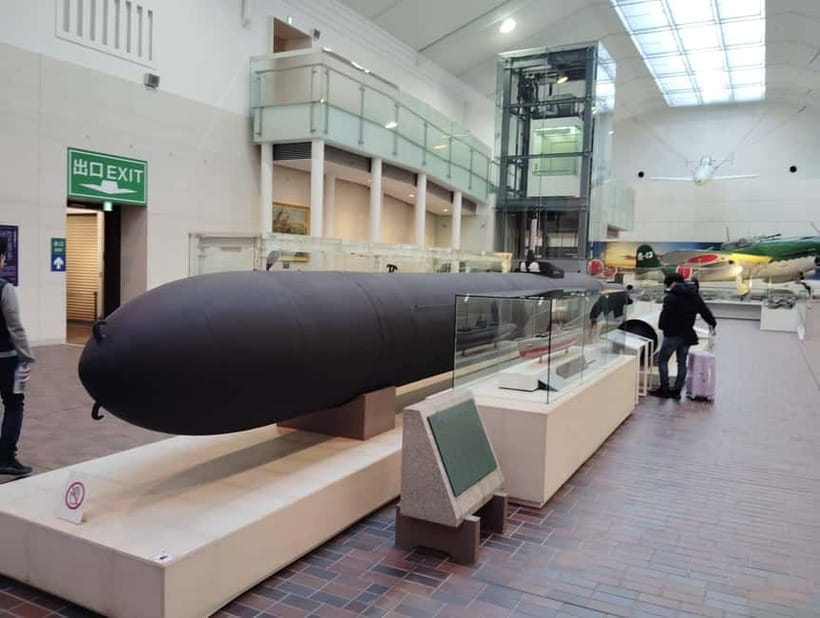
Allow about 110 minutes for the Yushukan War Museum. That is a substantial visit, and it tells you something about the experience. You are not being rushed through a few display cases before moving on to another Tokyo sight.
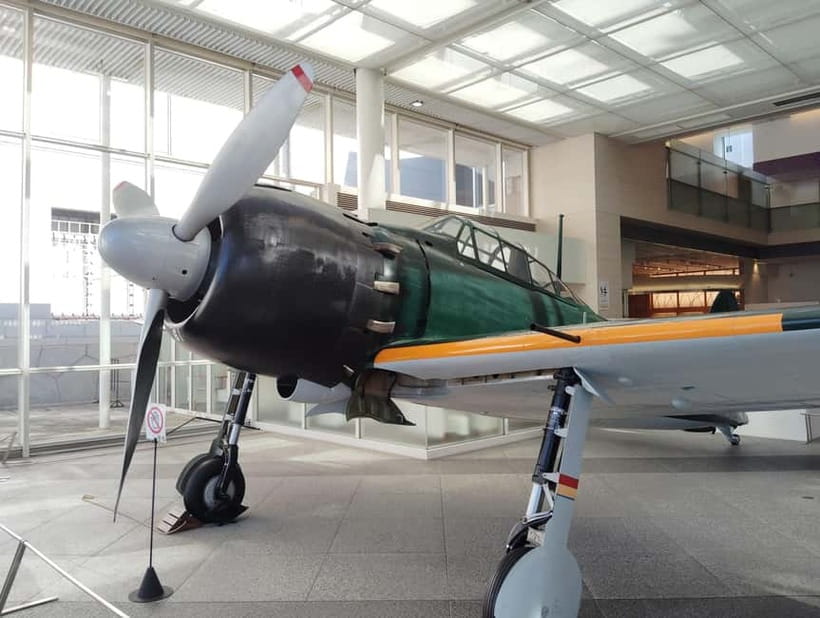
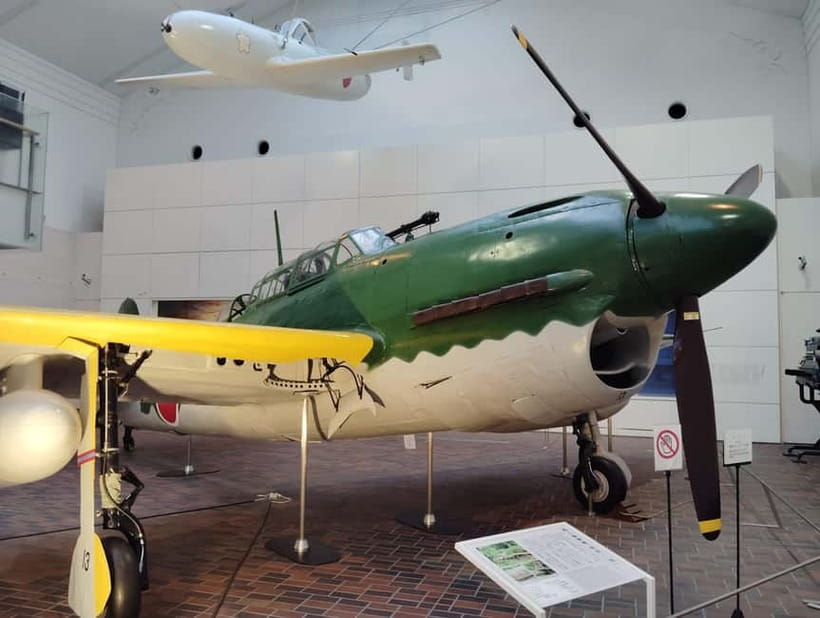
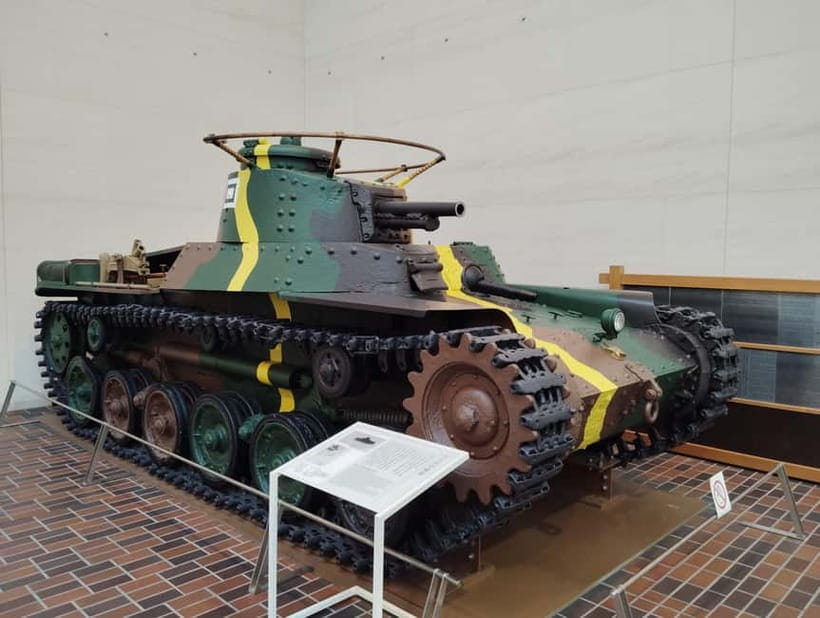
The museum traces Japanese military history from the late Tokugawa period through World War II. It includes unique artifacts, photographs, and documents, along with material relating to the Pacific War and the period often called the Greater East Asia War in Japan.
The museum’s presentation has its own viewpoint. You should know that before entering. It offers a particular account of Japan’s wars, sacrifice, and military conduct. The guide’s role is to explain what you are seeing, provide historical context, and help you compare the museum’s presentation with wider scholarship and competing interpretations.
That balance is especially useful when the exhibits raise hard questions. What events receive attention? Which words are used? How are soldiers, civilians, victims, and national goals described? A guide can help you notice the choices made by a museum rather than treating every display as a neutral statement of fact.
One particularly appealing feature is the range of material. The visit is not limited to battlefield equipment. Photographs and documents can show how war was recorded and remembered, while artifacts give the period a physical presence. One past visitor singled out the museum’s unusual objects and historical displays, along with the guide’s ability to connect them to broader Japanese history.
A small example from the tour’s feedback shows the kind of detail you may encounter. The guide reportedly connected a familiar modern habit, walking on the left side of a pavement or standing on the left side of an escalator, with customs that predate automobiles. That sort of side note can make a long historical explanation easier to remember. It also shows that the tour may connect military and social history rather than treating war as an isolated subject.
The museum may restrict photography in some areas, and flash photography is not allowed. Follow the instructions from staff and your guide. If you like taking pictures of every display, this could feel limiting. If you are visiting to understand the exhibits, the restriction is a minor tradeoff.
The extended route to Chidorigafuchi
The longer option continues to Chidorigafuchi National Cemetery and lasts about 210 minutes in total. The cemetery was established in 1959 as a secular, state-administered memorial for unidentified war dead repatriated from overseas battlefields.
This stop adds real value because it gives you a direct comparison. Yasukuni uses religious enshrinement, while Chidorigafuchi represents government commemoration without the same Shinto structure. Seeing both helps you understand that postwar remembrance in Japan is not one single system.
The contrast can also sharpen your understanding of why memorials matter. A shrine can link the dead with ritual, family mourning, and national history. A state cemetery can express public duty and mourning through a different institutional form. Neither site can be understood fully by looking only at its buildings.
The cemetery visit is not included in the shorter version, so check which duration you are choosing. If your main interest is the Yushukan, the 150-minute format may be enough. If you are studying memory, religion, politics, or postwar Japan, the extended version is the stronger choice.
The end point may be Chidorigafuchi National Cemetery for the longer tour or the Yushukan for the shorter one. That affects your next move in Tokyo, so it is worth planning your afternoon around the correct drop-off.
What the private format changes
A private tour is more than a smaller crowd. At a place as sensitive as Yasukuni, it gives you freedom to ask direct questions without holding up a busload of people.
You can ask for definitions, historical dates, or clarification about terms used in the museum. You can also tell the guide how much detail you want. A student of international relations may want more discussion of diplomacy and memory politics, while a culturally curious visitor may need a clearer explanation of Shinto ritual and the Meiji state.
The listed guide language is English, and Tatsuo is one named guide associated with the experience. The available feedback gives special credit to his grasp of Japanese history and his ability to teach a lot in a short time. Another booking describes the guide as experienced and the tour as a source of new information. Those comments fit the structure of the visit, which moves from shrine etiquette and national history into a lengthy museum discussion.
Keep in mind that guide quality is part of the value here. You are not paying mainly for transport or entertainment. You are paying for interpretation. If your priority is a fast, independent museum visit, you may find the cost harder to justify.
Other historical tours in Tokyo


Is $87 per person a fair price?
At $87 per person, the tour sits in the reasonable range for a private, museum-based history experience in Tokyo. The price includes a licensed English-speaking guide, the guided shrine visit, the guided museum visit, and admission to the Yushukan.
There is no food, drink, or transportation to the meeting point. That keeps the arrangement simple, but you need to get yourself to the First Torii or the specified meeting place. Add the cost of local transport and perhaps a drink or snack before you arrive.
The value improves if two or more people in your party are genuinely interested in modern Japanese history. A private guide can adjust the conversation, and the 110-minute museum segment would be harder to interpret on your own. The extended option gives still more value if Chidorigafuchi fits your interests.
For a casual visitor with only a short time in Tokyo, the price may feel high for a shrine and museum. For a student, researcher, history reader, or anyone trying to understand Japan beyond temples, food, and shopping, the cost is easier to defend.
Free cancellation up to 24 hours before the start and the option to reserve without paying immediately make planning less rigid. Those policies are useful if your Tokyo schedule is still shifting, though you should still confirm the exact start time and meeting point.
Who will get the most from this tour?
I would choose this experience if you want a serious look at Japan’s modern past and prefer an informed conversation to a self-guided stroll. It is particularly suited to:
- People studying military history or international relations
- Visitors interested in religious memorials and public memory
- Students who want help reading a museum’s point of view
- Culturally curious visitors who have already seen Tokyo’s major sights
- Small private groups who want to ask detailed questions
I would not make it a first choice for young children or anyone hoping for a relaxed, purely scenic shrine visit. The subject involves war, death, nationalism, and competing historical interpretations. Even adults who enjoy history should expect some emotionally difficult material.
You should also have enough energy for moderate walking and extended time inside the museum. Comfortable shoes are important. A camera is allowed in some areas, but flash photography is prohibited and certain museum spaces may limit photography altogether.
How to plan the day around the visit
Wear practical clothes and shoes. Bring water, a hat, sunscreen, and a camera if you want one, but keep it ready to put away when museum rules require it.
The tour does not include meals or drinks, so eat before you begin or plan something afterward. Because the museum portion takes about 110 minutes, you may not want to start hungry.
Allow 150 minutes for the shrine and museum version. Choose 210 minutes if you want Chidorigafuchi as well. The extended route is not just extra walking. It changes the historical question from how one institution remembers the dead to how two different institutions do so.
Confirm the meeting point because two starting options are listed in the booking information, and the endpoint depends on the version selected. The stated drop-offs are Chidorigafuchi National Cemetery or the Yushukan.
Should you book the Yasukuni and Yushukan tour?
Book it if you want context, patience, and a private discussion of Japan’s modern conflicts. The strongest reasons are the long museum visit, the English-speaking guide, and the chance to compare Yasukuni with Chidorigafuchi.
The tour is especially worthwhile when you do not want to accept a museum’s narrative without asking how it was built. The guide’s explanation can help you separate religious practice, family mourning, state commemoration, and political symbolism.
Skip it if you want cheerful sightseeing, dislike war museums, or have no interest in modern history. For everyone else, the $87 price is sensible, particularly with the extended cemetery option and a small group that can shape the conversation.
FAQ
Where does the tour begin?
The starting point is generally the First Torii, also called the large torii, at Yasukuni Shrine. The exact meeting point may vary by the option you book, so check the booking details.
How long does the experience last?
The tour lasts between 150 and 210 minutes. The longer duration includes the visit to Chidorigafuchi National Cemetery.
What language is the tour offered in?
The tour is offered in English with a licensed, live guide.
Is this a private tour?
Yes. Only your group participates, rather than joining a larger shared group.
Does the price include Yushukan Museum admission?
Yes. Admission to the Yushukan War Museum is included.
Is the shrine visit guided?
Yes. The tour includes a guided visit to Yasukuni Shrine, including historical explanation and traditional shrine etiquette.
What does the Yushukan Museum cover?
The museum presents Japanese military history from the late Tokugawa period through World War II, including the Pacific War and the era often called the Greater East Asia War in Japan.
Is Chidorigafuchi National Cemetery included in every option?
No. Chidorigafuchi is part of the extended option. The shorter version focuses on Yasukuni Shrine and the Yushukan Museum.
Can I take photographs inside the museum?
Photography may be restricted in some museum areas, and flash photography is not allowed. Follow the museum’s instructions.
What should I bring?
Bring comfortable shoes, a hat, sunscreen, water, and a camera if desired. Smoking is not allowed during the experience.
More Museum Experiences in Tokyo
More Historical Tours in Tokyo
More Temples & Meditation in Tokyo

More tours in Tokyo we've reviewed












Temples & Meditation, compared.
 ★ 4.7Tokyo: Meiji Shrine, Asakusa, Skytree Bus Tour and CruiseFrom $12210 hours
 ★ 4.8Tokyo: Asakusa Walking Tour with Sensoji Temple VisitFrom $222 hours
 ★ 4.5Tokyo: Kamakura & Enoshima Day Trip including Temple TicketsFrom $589 hours - 570 minutes
 ★ 4.5Tokyo: Nikko Toshogu Shrine and Kegon Waterfall TourFrom $8410h 30m
 ★ 4.5Tokyo Panoramic 1 Day: Meiji Shrine, Asakusa, Odaiba and SKYTREE®From $85
 ★ 5.0Asakusa Senso-ji Temple and Old Tokyo Walking TourFrom $20