Reviewed · TEA CEREMONY & MATCHA
Tokyo Small-Group Ramen, Gyoza & Matcha Class with a Pro Chef
The best part of this Tokyo class is that you do not simply sit down to eat ramen. You learn the steps behind it, from making authentic dashi to shaping gyoza, then finish with your own matcha and Japanese sweets. The small group, capped at four, gives the chef room to answer questions and adjust the pace.
In This Article
- Key points at a glance
- What you actually learn in two hours
- Starting with dashi and miso ramen
- Folding gyoza and getting the texture right
- A quieter finish with matcha and seasonal sweets
- Why the four-person limit matters
- Location in Zoshigaya, with Ikebukuro nearby
- What the $104.51 price includes
- The important dietary limit
- Who will enjoy this class most
- Should you book the ramen, gyoza, and matcha class?
- FAQ
- How long does the cooking class last?
- Where does the experience start and end?
- How many people can join the class?
- Is the class taught in English?
- What food and drinks are included?
- Can the class accommodate vegetarian, vegan, halal, or gluten-free diets?
- What is the cancellation policy?
I like two things here: dinner is included, and you take home recipes so the meal does not end when you leave. I also like the setting in Zoshigaya, close to Ikebukuro, where you can pair the class with shopping or a walk past Kishimo Shrine. The main drawback is firm: this class cannot handle vegetarian, vegan, halal, or gluten-free diets.
Key points at a glance
- Miso ramen from dashi to bowl: You learn the foundation of the soup before eating the finished dish.
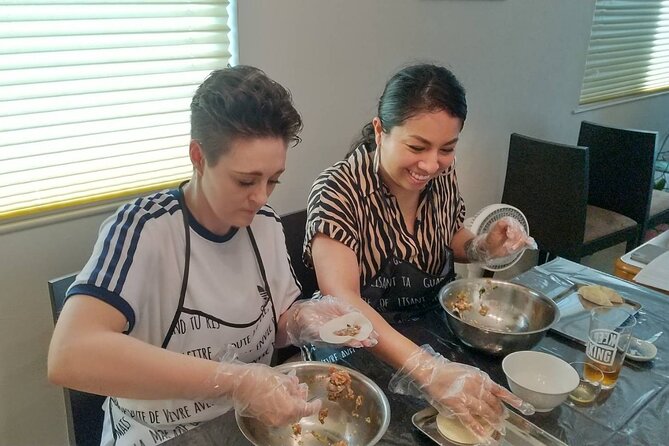
- Gyoza made by hand: The class includes practical shaping and cooking techniques, not just a tasting.
- Matcha with seasonal sweets: You prepare the tea yourself and sample it in a traditional Japanese setting.
- Maximum of four participants: The chef can respond to individual questions and keep the pace comfortable.
- Zoshigaya location near Ikebukuro: Plan time for shopping, Pokémon Center, Animate, electronic stores, or Kishimo Shrine.
- About $104.51 for two hours: The price includes food, tea, sweets, recipes, photos, and an apron, but not optional drinks.
What you actually learn in two hours
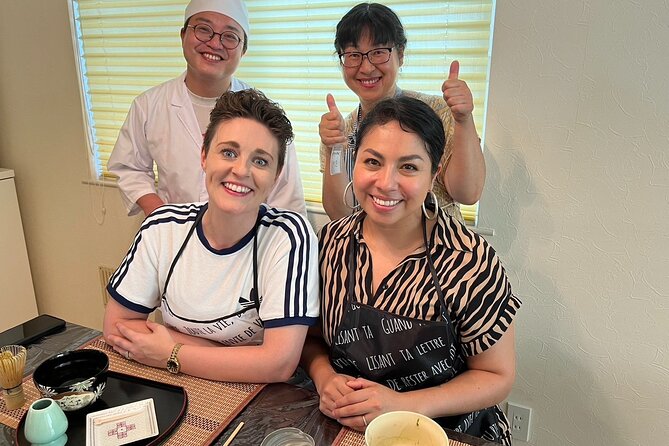
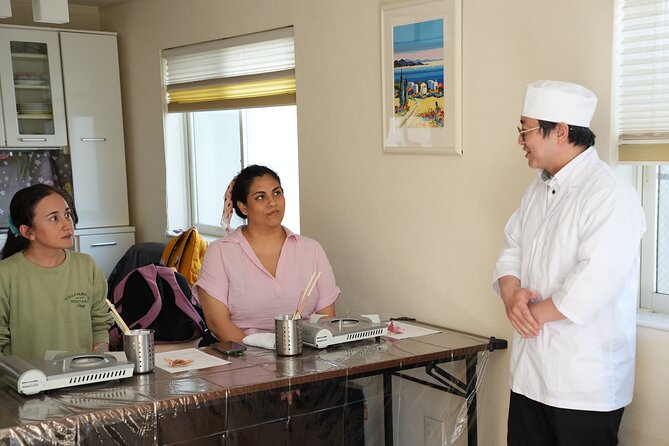
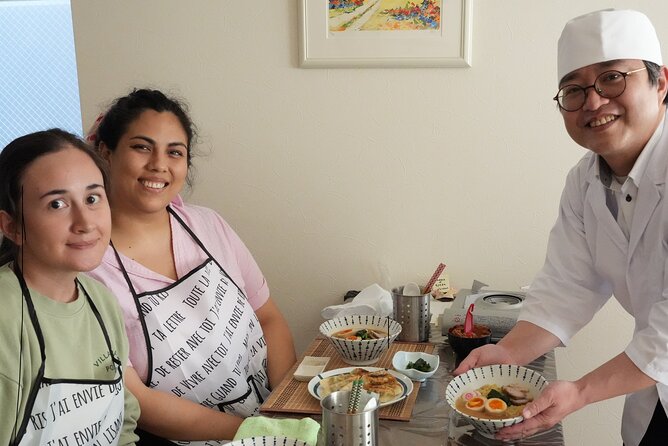
This is a compact cooking lesson, so the value comes from active participation rather than a long restaurant-style meal. You arrive at the classroom in Zoshigaya, put on the provided apron, and work with an English-speaking chef who explains the ingredients and techniques as you go.
The lesson covers three Japanese food traditions: ramen, gyoza, and matcha. Each one gives you a different kind of kitchen skill. Ramen teaches you about broth and seasoning. Gyoza calls for careful handwork. Matcha slows the pace and shifts your attention from cooking to presentation and tea culture.
The chef guides the group at its own pace. That matters in a class with several separate tasks, since some people will already know how to fold dumplings while others will need a little more help. With no more than four participants, you should have a reasonable chance to ask questions instead of simply watching from the back.
The exact order of the activities is not specified, so you should think of this as a connected cooking session rather than a tour with several fixed stops. You will make the food during the lesson, then sit down to eat the miso ramen and gyoza as dinner.
Other cooking classes in Tokyo
Starting with dashi and miso ramen
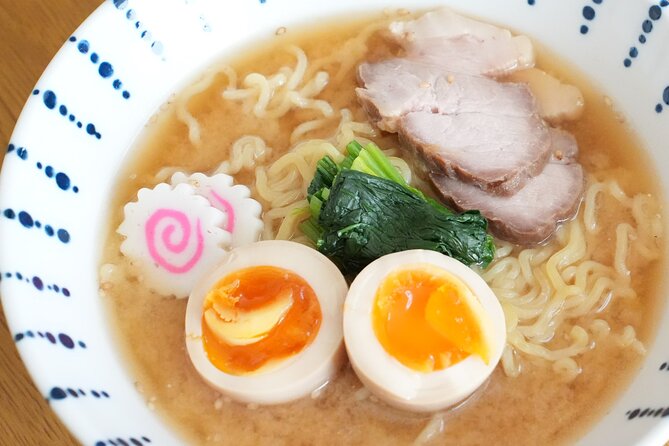
Ramen can look simple when it arrives at the table: noodles, broth, and toppings. The appeal of this class is that you see the work behind the bowl. The lesson begins with techniques for making authentic dashi, the savory stock that gives many Japanese dishes their base flavor.
From there, you work toward miso ramen. Learning the process helps you understand why the finished soup tastes different from a packet of instant noodles or a quick restaurant bowl. You are not just memorizing a recipe. You are seeing how stock and miso come together to create a fuller soup.
The class includes dinner, so you get to eat what you make. That is an important part of the experience. A cooking lesson can feel like work if you never get a proper meal at the end, but here the ramen is part of the included dinner rather than an extra purchase.
You also receive recipes to take home. I see this as one of the strongest reasons to choose the class over a standard food tour. You can try to repeat the ramen after returning home, although the final result will depend on finding the ingredients and following the techniques carefully.
Folding gyoza and getting the texture right
Gyoza adds a hands-on task that balances the more liquid-based ramen work. You will learn how to prepare juicy dumplings and shape them before cooking. The folding stage is the sort of small skill that benefits from live instruction, since a chef can show you how to seal the wrapper and correct your technique.
The word juicy is important here. Good gyoza depends on more than filling a wrapper. The filling, moisture, seal, and cooking method all affect the final bite. The class gives you a chance to connect those steps rather than eating a finished dumpling with no idea how it was made.
This part should suit families and mixed-age groups especially well. A five-star experience from a group that included grandparents and a 19-year-old foodie grandson suggests the format works across generations. The useful lesson for you is that you do not need to be a serious home cook to take part.
The class is also a good fit if you like asking questions. The chef is described as patient with each participant’s pace, and the small group size makes that more realistic than in a large cooking school. The available feedback specifically highlights that questions were answered and the scheduled time was respected.
A quieter finish with matcha and seasonal sweets
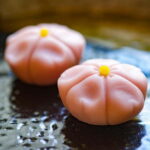
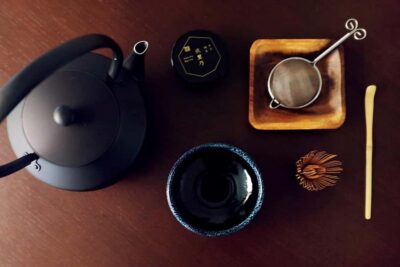
After the savory cooking, the matcha portion changes the mood. You prepare your own matcha green tea and enjoy it with seasonal Japanese sweets. This is not just a dessert add-on. It introduces the careful, focused side of Japanese tea culture after the practical work of making dinner.
Matcha has a different rhythm from ramen and gyoza. You are handling a traditional drink rather than assembling a quick meal, and the seasonal sweets give you something small to pair with the tea. Because you prepare the matcha yourself, the experience feels more useful than simply receiving a cup.
The class includes matcha tea and Japanese sweets in the price. Alcohol is separate, with sake and beer available for 500 yen each, payable in cash. Sake is listed as Hakkaisan in a 180-milliliter serving, while the beer is Kirin Ichiban Shibori in a 350-milliliter serving. You can skip both without losing any of the main activity.
Why the four-person limit matters
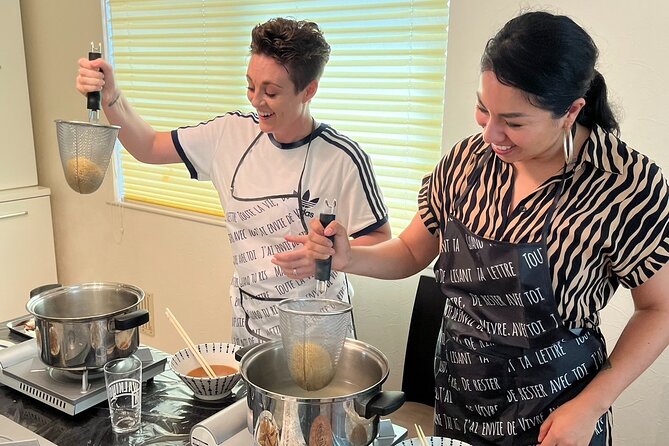
The maximum group size is four people. That is a real feature, not just a line in the booking details. Cooking classes become less useful when the instructor must demonstrate once and then leave a large group to guess at the rest.
Here, you should have more room to see the techniques and get corrections. If you are unsure about dashi, ramen seasoning, or gyoza folding, you can ask while the task is still in front of you. The chef can also keep an eye on different cooking speeds.
A small group does not guarantee a private class. Other participants may be present, and the available information does not promise exclusive use of the classroom. Still, four is small enough to feel personal, particularly compared with a class designed for a dozen or more people.
The format also works well for a family or a small group of friends. The positive experience from grandparents traveling with a young adult points to a useful strength: the class can be social without requiring everyone to have the same level of cooking ability.
A few more Tokyo tours and experiences worth a look



Location in Zoshigaya, with Ikebukuro nearby
The meeting point is at 3-chōme-1-7 Zōshigaya, Toshima City, Tokyo 171-0032. The classroom is in Zoshigaya, with access from the wider Ikebukuro area and public transportation nearby. The activity ends at the same meeting point, so you do not need to arrange a separate return transfer.
The route information makes this practical from Shibuya. The Fukutoshin Line connects the area, and the journey passes near Meiji Shrine and Shinjuku. From Ikebukuro, you can continue with shopping and entertainment before or after the class.
Ikebukuro offers plenty to fill an afternoon or evening. The area includes Animate, the Pokémon Center, and electronic stores. If those stops are on your Tokyo list, scheduling this class alongside them can save you from crossing the city again.
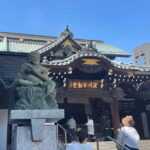
For a quieter option, Kishimo Shrine is close to the classroom. Its red torii gates make it a worthwhile place for a short walk after dinner. The shrine gives you a more local-feeling pause after the food and shopping energy of Ikebukuro.
I would allow extra time to find the meeting point, especially if you are coming from another part of Tokyo. The activity itself lasts about two hours, but your total plan should include the train ride and a little margin before the start time.
What the $104.51 price includes
At $104.51 per person, this is not a budget meal. It is also more than a simple demonstration, and the price needs to be judged as a short cooking lesson with a full dinner.
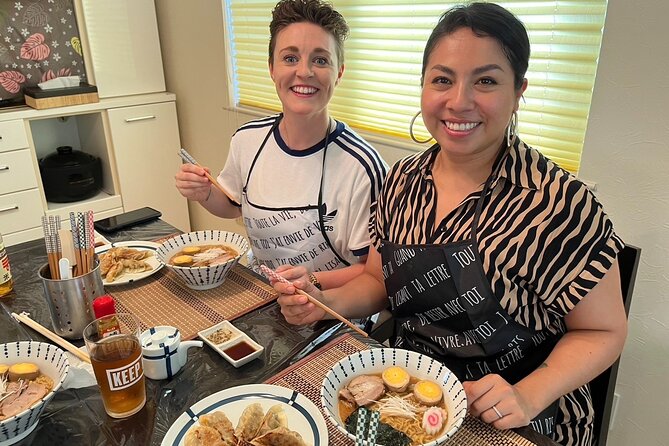
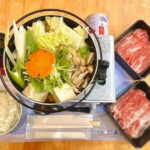
Included are the miso ramen and gyoza dinner, matcha tea, Japanese sweets, an apron, take-home recipes, and photos from the experience. The photos are given to participants as a thank-you, which adds a small record of the class without requiring you to keep taking pictures while cooking.
The recipes are the most lasting part of the package. If you plan to cook Japanese food at home, they give the experience a second use. The apron also means you do not need to bring special clothing for the lesson.
The value is strongest for people who want participation and cultural context. If your only goal is to eat excellent ramen, you can spend less at a restaurant. If you want dinner plus instruction, a small class, matcha preparation, and a recipe to use later, the price is easier to justify.
The optional drinks are modestly priced at 500 yen each, but remember to bring cash if you want sake or beer. Soda and other non-alcoholic drinks are not included. Private transportation is also not included, so you will make your own way to Zoshigaya.
The important dietary limit
This class does not offer vegetarian, vegan, halal, or gluten-free menus. That restriction affects the booking decision more than any other practical detail. You should not reserve it hoping the chef can simply remove one ingredient or make a last-minute substitution.
The core meal is miso ramen and gyoza, both of which may involve ingredients that do not fit your diet. The provided information does not list specific substitutions, so anyone with a dietary restriction should choose another activity rather than assume adjustments are possible.
For participants who eat the standard menu, the limitation is less of a concern. The class is built around traditional Japanese cooking techniques, and the included dinner is central to the experience.
Who will enjoy this class most
I would recommend this for first-time visitors who want a structured introduction to Japanese food without spending half a day in a formal cooking school. Two hours is long enough to learn several techniques but short enough to fit around other Tokyo plans.
It suits food-focused couples, families, and small groups of friends. The class can also work for solo participants, though the social feel will depend on who else is booked for that session.
You should book it if you want to ask questions, cook with your hands, and eat a meal made during the lesson. You should skip it if you prefer a quiet restaurant meal, need a special diet, or want a longer and more advanced culinary course.
A confirmed booking is sent within 48 hours, subject to availability. The mobile ticket makes the reservation easy to carry, and cancellation is free if you cancel at least 24 hours before the start time. Changes or cancellations inside that 24-hour window are not accepted for a refund.
Should you book the ramen, gyoza, and matcha class?
I would book this class if Japanese food is one of the reasons you are in Tokyo. The combination is well chosen: ramen gives you broth technique, gyoza gives you hand skills, and matcha adds a cultural finish. You leave with dinner in you, recipes in hand, and photos from the session.
The strongest reasons to choose it are the four-person limit, the chef’s English-language guidance, and the fact that the class welcomes different cooking speeds. The practical warning is just as clear: the menu is not adaptable for vegetarian, vegan, halal, or gluten-free diets.
Plan it with Ikebukuro shopping or a visit to Kishimo Shrine, and the location becomes part of a useful afternoon or evening. At $104.51, it is a splurge compared with eating ramen alone, but a fairer deal if you value the instruction, small group, matcha, recipes, and complete meal.
FAQ
How long does the cooking class last?
The class lasts approximately two hours.
Where does the experience start and end?
It starts at 3-chōme-1-7 Zōshigaya, Toshima City, Tokyo 171-0032, Japan, and ends back at the same meeting point.
How many people can join the class?
The activity has a maximum of four participants.
Is the class taught in English?
An English-speaking guide explains the ingredients and cooking techniques.
What food and drinks are included?
The price includes miso ramen, gyoza, matcha tea, and Japanese sweets. Alcohol is not included. Sake and beer are available for an additional 500 yen each, payable in cash.
Can the class accommodate vegetarian, vegan, halal, or gluten-free diets?
No. The class cannot accommodate vegetarian, vegan, halal, or gluten-free dietary requirements.
What is the cancellation policy?
You can cancel at least 24 hours before the start time for a full refund. Cancellations or changes made less than 24 hours before the start time are not accepted for a refund.
More Cooking Classes in Tokyo
More Tea Ceremony & Matcha in Tokyo
More Cooking Classes in Tokyo
More tours in Tokyo we've reviewed



Tea Ceremony & Matcha, compared.
 ★ 5.0Matcha Making Class in Tokyo with Authentic Japanese Sweets SetFrom $21
 ★ 5.0Kimono Tea Ceremony at Tokyo, Asakusa MaikoyaFrom $55
 ★ 5.0Tokyo: Traditional Tea Ceremony with a Tea MasterFrom $381 hour
 ★ 4.5Dynamic Tokyo: Tokyo Tower, Tea Experience, Bay Cruise Day TourFrom $99
 ★ 4.9Tokyo: Matcha Making Experience with Mochi Sweets in AsakusaFrom $221 hour
 ★ 4.7Tokyo: Matcha and Kimono ExperienceFrom $57